HOSA Patho: Disease Process and Terminology
 Call Kai
 Learn
Learn Practice Test
 Spaced Repetition
 Match
Match Flashcards
 Knowt Play
1/91

Earn XP
Description and Tags
Disease Process and Terminology: 12%
Name | Mastery | Learn | Test | Matching | Spaced | Call with Kai |
|---|
No analytics yet
Send a link to your students to track their progress
92 Terms
Atrophy
is the decrease in size or wasting away of a tissue or organ due to a reduction in cell size or number. This can occur as a result of disuse, diminished blood supply, inadequate nutrition, or aging.
Hypertrophy
is the increase in size of a tissue or organ due to an increase in the size of its cells. This often occurs as an adaptive response to increased workload or stress on the tissue.
Hyperplasia
is the increase in the number of cells within a tissue or organ, often resulting in its enlargement. This process can occur in response to increased demand or stimulation, such as hormonal changes or injury.
Metaplasia
is the reversible replacement of one differentiated cell type with another. This process often occurs in response to chronic irritation or injury and can be a precursor to dysplasia. It involves a change in cell type due to environmental factors, often seen in epithelial tissues.
Examples of metaplasia
Barret’s esophagus: GERD (gastro-eso[hageal reflux disease), acid is constantly making contact with the esophagus, so the previously squamous epithelium is replaced by columnar epithelium, which is more resistant to acid. Other examples include respiratory epithelium changes in smokers.
Dysplasia
is the abnormal growth or development of cells, tissues, or organs. It is characterized by a loss of uniformity and architectural organization, often considered a precancerous condition. Abnormal appearance of cells.
Carcinoma
Cancer originating in epithelial cells.
Examples of carcinomas
adenocarcinoma, renal cell carcinoma, basal cell carcinoma, squamous cell carcinoma
Adenocarcinoma
Typically found in glandular tissues, such as the breast and prostate.
Squamous cell carcinoma
originates from squamous epithelial cells, commonly seen in the skin, lungs, and cervix.
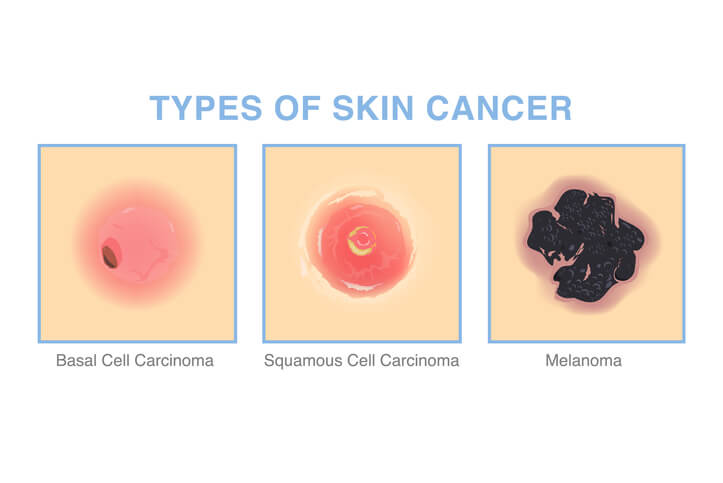
Basal cell carcinoma
a form of skin cancer that originates from basal cells in the dermis.
Test to identify basal cell carcinoma + what would it reveal
skin biopsy. The test would reveal abnormal cells that are characteristic of basal cell carcinoma. They would present with enlarged nuclei, irrregular shapes, disorganized growth patterns. These cells invade surrounding tissues, FORMATION OF NODULAR LESIONS or ULCERATIONS on the skin.
Renal cell carcinoma
a type of kidney cancer that begins in the lining of the kidney tubules
Carcinoma causing agents
chemical carcinogens, radiation, infectious agents, and hormonal factors.
CCA: Chemical carginogens
Tobacco smoke
Benzene
(Both can damage DNA and lead to cancer)
CCA: Radiation
exposure to UV radiation from the sun or ionizing radiation that can cause cellular mutations.
Basal cell carcinoma (most common type of skin cancer) —> caused by ultraviolet radiation (UV radiation)
CCA: infectious agents
Human papillomavirus (HPV) or hepatitis B virus (HBV) can trigger cancer development.
How can HPV and HBv trigger cancer development
These viruses contain proteins that health cancer-preventative proteins.
—> these viruses have E6—a virus protein— which binds to the host cells’ p53 protein—suppresses tumor growth/health cell growth/trigger apoptosis
—> these viruses also have E7—a virus protein—which binds to the host cells’ Rb/retinoblastoma protein. This protein acts as a “brake” for cell growth.
CCA: hormonal factors
hormonal imbalances.prolonged exposure to certain hormones may contribute to carcinoma development.
ex.
Estrogen —> could lead to breast cancer/ovarian cancer. It promotes uncontrolled cell division.tumor progression.
Sarcoma
cancer originating in the bones, muscles, or connective tissues.
Examples of sarcomas
osteosarcoma (most common type of primary bone cancer), eqing sarcoma, chrondrosarcoma
Homeostasis
the steady, balanced state of the body’;s internal environment
Pathophysiology
the study of functional and biochemical changes in the body that result from disease or injury.
Etiology
the study of the proposed case or causes of a particular disease process
idopathic
unknown cause. A disease or condition that arises spontaneously or for which the cause is unknown.
Pathogenesis
the development of disease. The step-by-step biological development and progression of a disease.
Acute
Brief/short onset (usually less than 6 months)
Chronic
persists for more than 6 months.
Ischemia
An obstruction or lack of blood flow to a tissue, which can lead to an infarction (tissue death/necrosis causes by an obstruction in blood flow)
Asymptomatic
not presenting with any symptoms/signs
Symptom
subjective and are typically felt/experienced by the patient, rather than visually seen.
Sign
objective, visually evident piece of evidence that characterizes the state of a patient.
Exacerbation
a period when the symptoms of a disease become worse or more severe
Remission
A temporay or permanent period when the symptoms of a chronic disease subside
Hematocrit (Hct)
the percentage of blood volume occupied bu red blood cells.
Erythrocyte sedimentation Rate (ESR)
a blood test that detects inflammatory activity in the body
necrosis
cellular death (pathologic manner(
apoptosis
programmed cell death
Iatrogenic
adverse condition(s) that results from medical treatment or a medical procedure
Noscomical
An infection acquired during a hospital or health care facility stay
Anaphylaactic shock
a severe allergic reaction
Cardiogenic shock
heart failure
Hypovolemic shock
blood/fluid loss
Neurogenic shock
nervous system failure
TNM classification
Tumor size, node involvement, and metastasis
Diapedesis
White Blood Cells move through capillary walls
chemotaxis
directed movement of cells in response to a chemical stimulus. It is a vital mechanism in the body’s immune response and inflammatory process. ex. Acute Respiratory Distress Syndrome/Acute Bacterial Pneumoni.
explanation: when cells become damaged, they release chemokines, which signal to WBC to arrive at the site of damage immediately.
Paplioma
Benign, wart-like growth
Transitional cell carcinoma
a transitional carcinoma —> (epithelial tumor) that arises from the urothelium/transitional epithelial layer of the urinary tract.
Prevalence
Rate of new cases of a disease in a particular population (over time)
Percentage of population affected by a disease at a particular time
pandemic/endemic/epidemic
pandemic
worldwide epidemic
epidemic
unsually high disease prevalence in a geographical region
endemic
a disease that is constantly and steadily present within a specific geographical causregion
etiology
cause of disease
contaigious
communicable
direct or indirect from reservoir to human
horizontal transmission
Fomites
inanimate objects contaminated with pathogens, that become vehicles for indirect contact transmission
Vertical transmission
mother to newborn
Parenteral
not through the mouth or the rectum
most used dietary supplement
ginkgo biloba (brain health, memory, blood circulation, lessen anxiety)
Acupuncture
needles on meridians to adjust chi
Acupressure
acupoints with finger pressure instead of needles
Shiastu
Japanese acupressure message therapy.
Reiki
healing energy transfer
Agglutiantion tests
tests to detect bacteria/bacterial infections by clumping with specific antigens. This is also used for blood typing.
Enzyme immunoassay
laboratory diagnostic test used to detect specific antigens (pathogens, for example). Indicated/measure in color change.
Western bolt (steps)
detects the antigen by introducing antibodies into the tissue samples.
1) electrophoresis (separate proteins by size)
2) transfer proteins to membranes
3) blocking (prevent non-specific bonding)
4) antibody incubation (primary/secondary antibodies bind to targets)
5) detection/analysis
Flow cytometry
identifies and counst cells with a particular antigen (ex. FACS for HIV measures)
term for genetic diseases from several abnormal genes
polygenic diseases
Autosomal
on a non-sex chromosome
x-linked
only on the x-xhromsome, so men are more likely to display
Acute inflammation
vasodilation, increased blood flow, increased capillary permeability, chemotaxis, and irritation of nerve endings
increase in capillary permeability inflammation
leads to edema and pain, and permits phagocytic chemical through the contained chemicals (chemotaxis —> phagocytosis) .
Leads to clot and fibrin mesh to wall of the area.
Cardinal signs of a local infection
fever, pus, enlarged lymph glands, red streaks, redness, swelling, heat, pain
Cardinal signs of a widespread infection
fever, headache, body ache, weakness, fatigue, delirium
two mechanism disease-causing organism use to cause disease
invasion/local destruction of living tissue
intoxication/production of poisonious substances
terms for pain from overuse of the musculoskeletal system
dull and aching
words to describe pain along a nerve route
burning (peripheral nerve insult)
words that describe abdominal visceral pain
cramping
head pain/pain felt along a blood vessel
throbbing
2 pain rating systems
Painometer, Wong-Baker FACES (helps children assess the extent of the pain they are in)— by Dana Wong and Connie Baker
How do pain impulses travel?
travel from the nerve ending, through the spinal cord, to the thalamus, then the sensory cortex in the parietal lobe
why does organ pain end up referred?
sensory nerves converge on the same neural pathways of the spinal cord, resulting in the brain to misinterpret the sender of the signal (the brain also does not receive signal from the internal organs often, so it instead interprets it as coming from more familiar tissues (skin, muscle etc).
how does referred pain work?
the sensory nerves that receive the pain signals converge with the peripheral nerves from the spinal cord, which leads to the brain misinterpreting the signals, resulting in pain in one body part (internal organ) to be felt in a completely other body part
Analgescis
pain relievers
Asymptomatic
Patients who do not exhibit any symptoms
Auscultation
listening to organ sounds for traits
ischemia
inadequate blood flow to a tissue/organ/area of the body
Chromosomal diagram.photographs of all chromosomes
karyotype
necrosis (2)
premature tissue death
cancer cells carried by blood or lymphatics to other locations
metastatic/circulating tumor cells