The Cell Membrane & Cellular Transport day 3
 Call Kai
 Learn
Learn Practice Test
 Spaced Repetition
 Match
Match Flashcards
 Knowt Play
1/14

There's no tags or description
Looks like no tags are added yet.
Name | Mastery | Learn | Test | Matching | Spaced | Call with Kai |
|---|
No analytics yet
Send a link to your students to track their progress
15 Terms
Why is the cell membrane model called the "Fluid Mosaic Model"?
Fluid: The phospholipid molecules and proteins can move laterally and smoothly past one another within the layer.
Mosaic: The membrane is embedded with a diverse pattern of different molecules, including proteins, cholesterol, and carbohydrates.
phospholipid bilayer
two layers
. hydrophilict head: ( watre loving) faces out and inside the cell
. hydrophobic tail: ( water- fearing) point inwards hding from water, fatty oil in the middle to block most things passing through
Cholesterol
role: Regulates membrane fluidity, keeping it stable and intact across different temperatures.
.tiny fat molecule wedged between the hydrophobic tails
Glycoproteins and glycolipids
role:Act as cellular id tags for cell signaling and immune system recognition. ( check if a cell belongs to your body or not
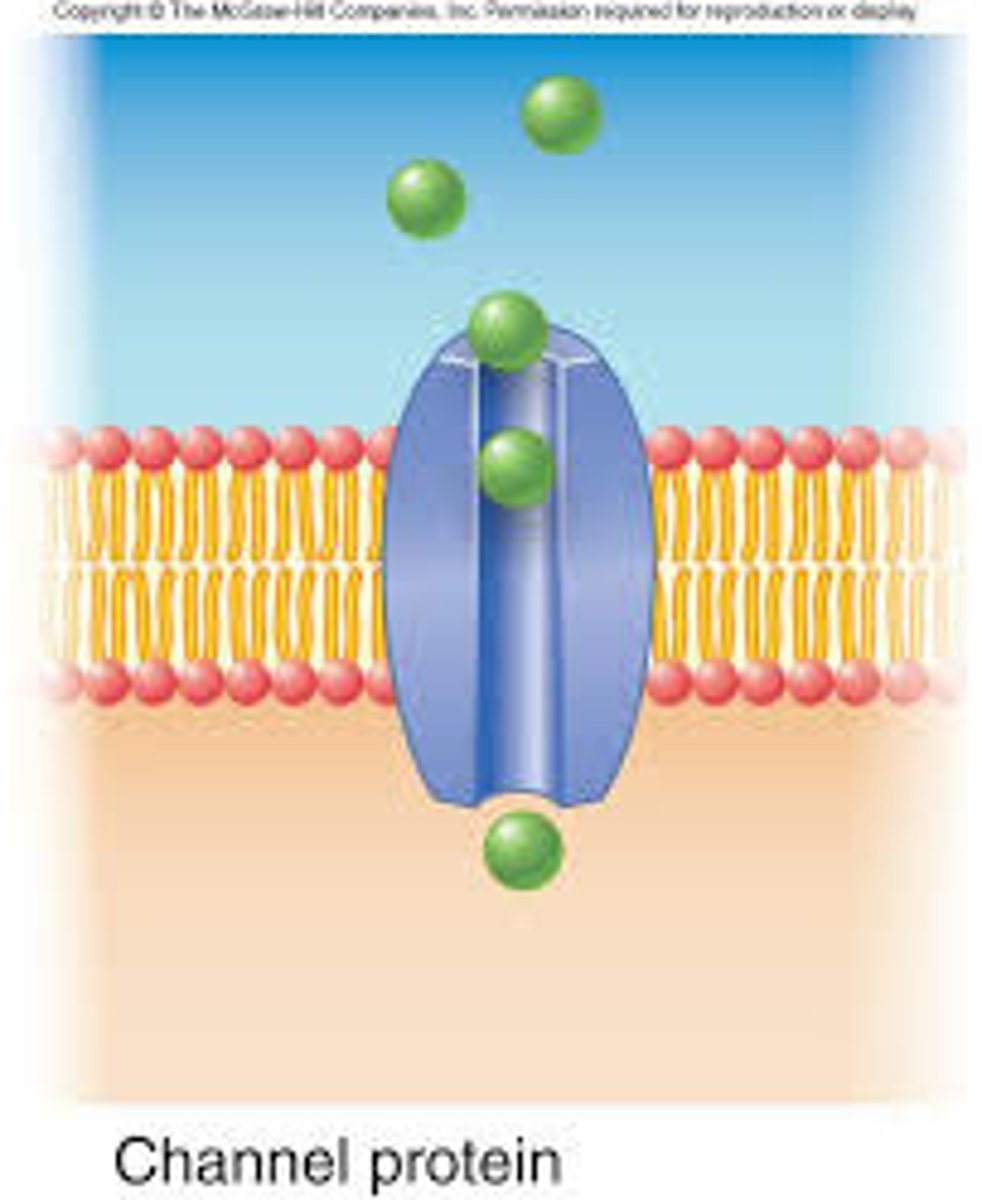
protein channel
penetrate either all the way through the membrane or part of the way
most act as tunnel, channel or moving pump for entry and removal of specific molecules through the membrane
passive transport
move down the concentration- high to low concentration
simple diffusion
small nonpolar molecules slip through the gaps between the moving phospholipids
facilitated diffusion
large, polar or charged molecules (glucose or sodium ions) diffuse down through the protein channel or carrier protein
osmosis
diffusion of water molecules low to high concentration to balance things out.
active transport
cell force molecules against their concentation
Protein-Mediated Active Transport
A specific carrier protein pump binds to a molecule
use atp
force the The protein pump changes shape and moves the molecule to the crowded side of the membrane.
bulk transport.
when the cell moves a bacterium or a clump of protein at once with the use of ATP
vesicles
made from a membrane (like a tiny skin) and are used to transport substances in and out of the cell.
endocytosis
(move in) takes material into the cell with a bubble called vesicles
exocytosis
(move out) is when materials are moved out of the cell using vesicles, which fuse with the cell membrane and release the materials into the extracellular environment."