1. Hospice and palliative care
 Call Kai
 Learn
Learn Practice Test
 Spaced Repetition
 Match
Match Flashcards
 Knowt Play
1/35

There's no tags or description
Looks like no tags are added yet.
Name | Mastery | Learn | Test | Matching | Spaced | Call with Kai |
|---|
No analytics yet
Send a link to your students to track their progress
36 Terms
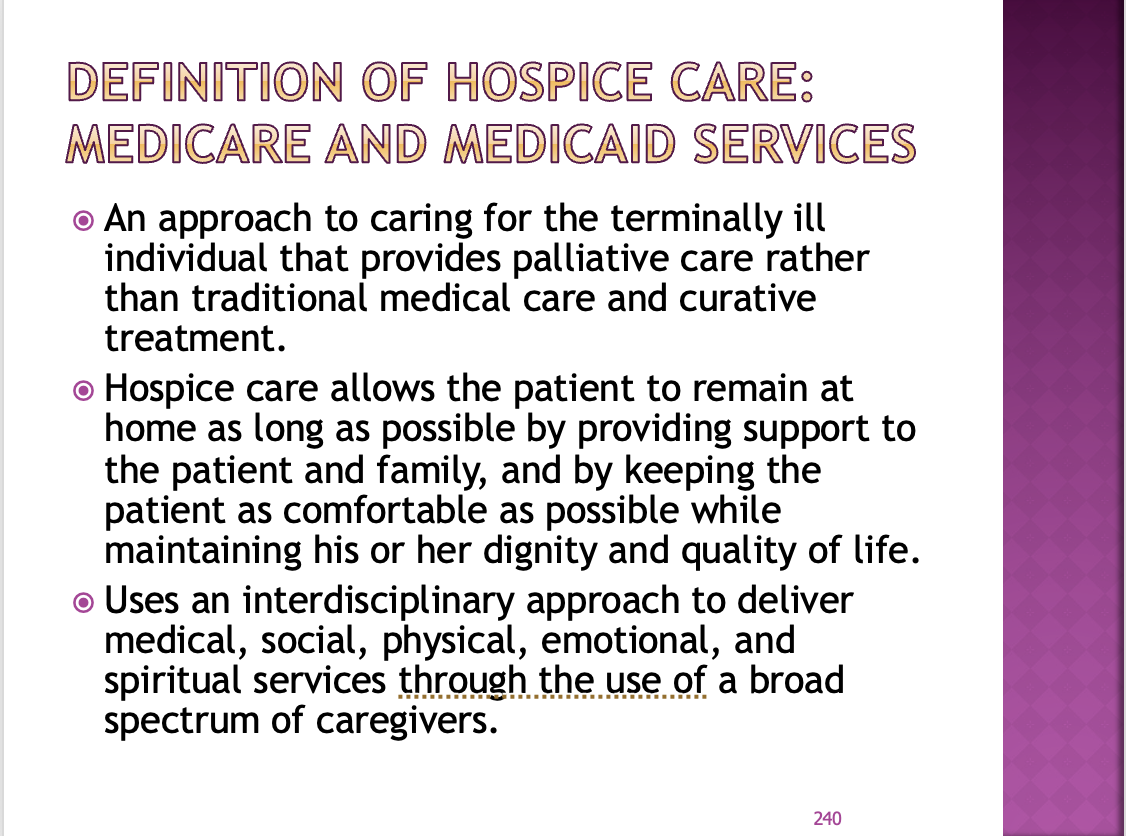
definition of hospice care: medicare and Medicaid services
In order to be in a hospice unit you need to be actively dying (not even with a short life expectancy they have to literally by dying)
Palliative care is NOT limited to terminal illness
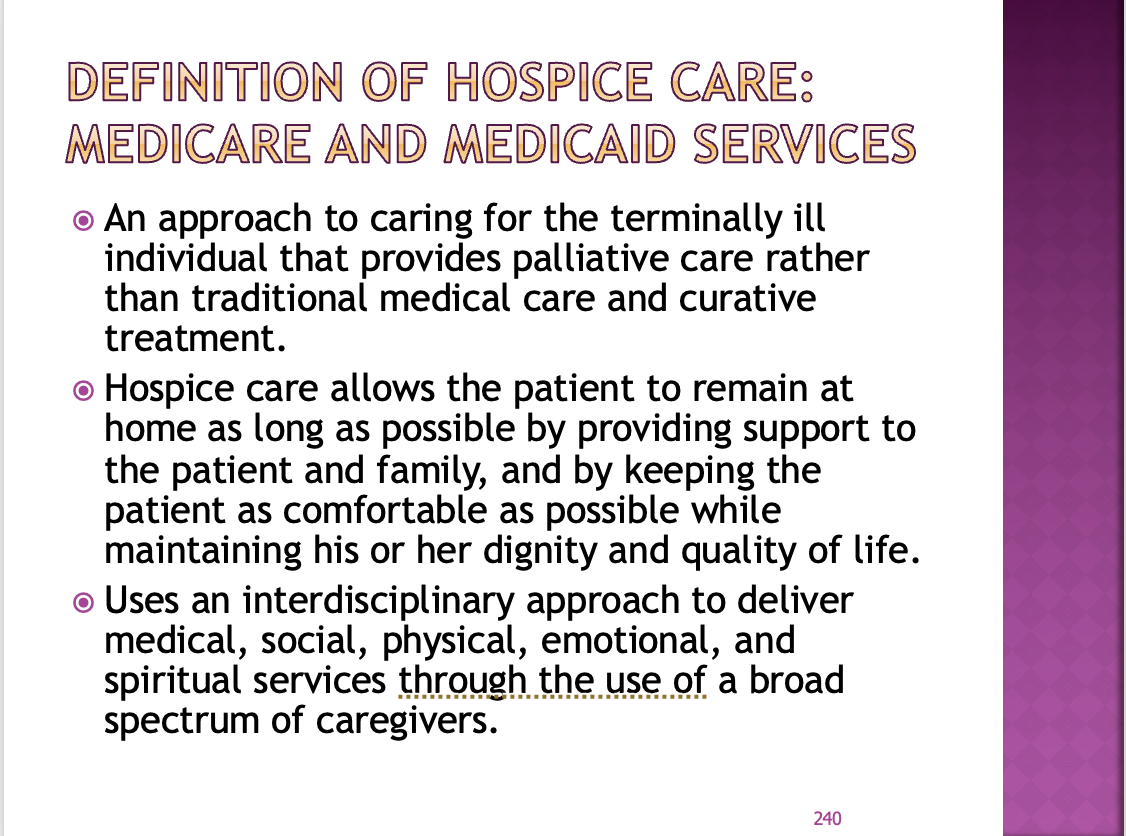
Hospice care allows the patient to
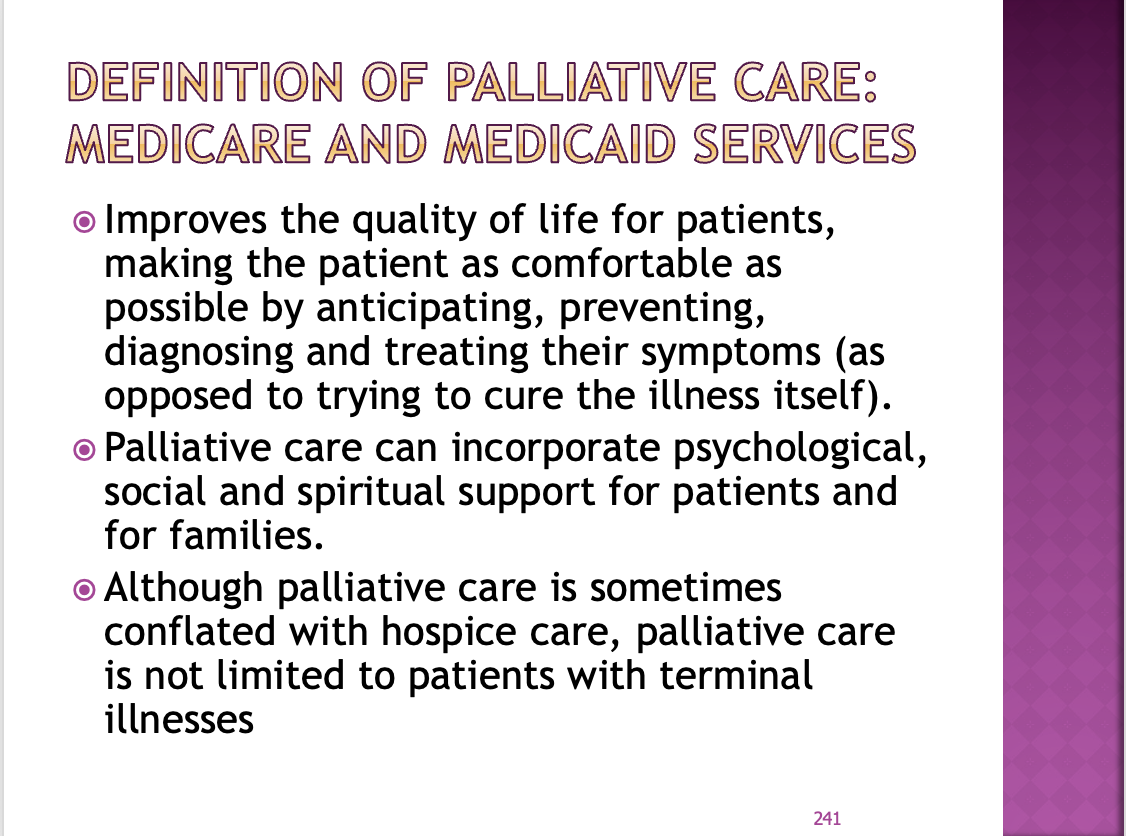
definition of palliative care: medicare and medicaid services - improves ___ for patients
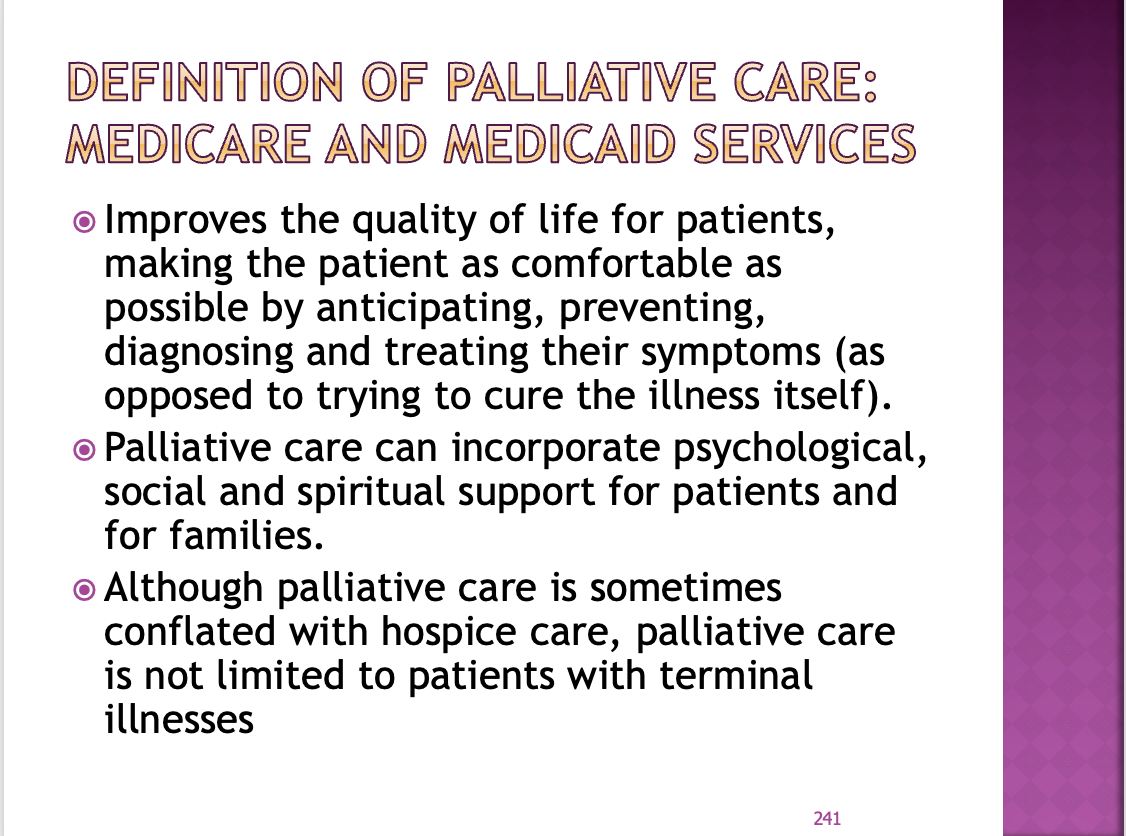
definition of palliative care: medicare and medicaid services - palliative care can incorporate ____. ____, and ____ for patients and for families
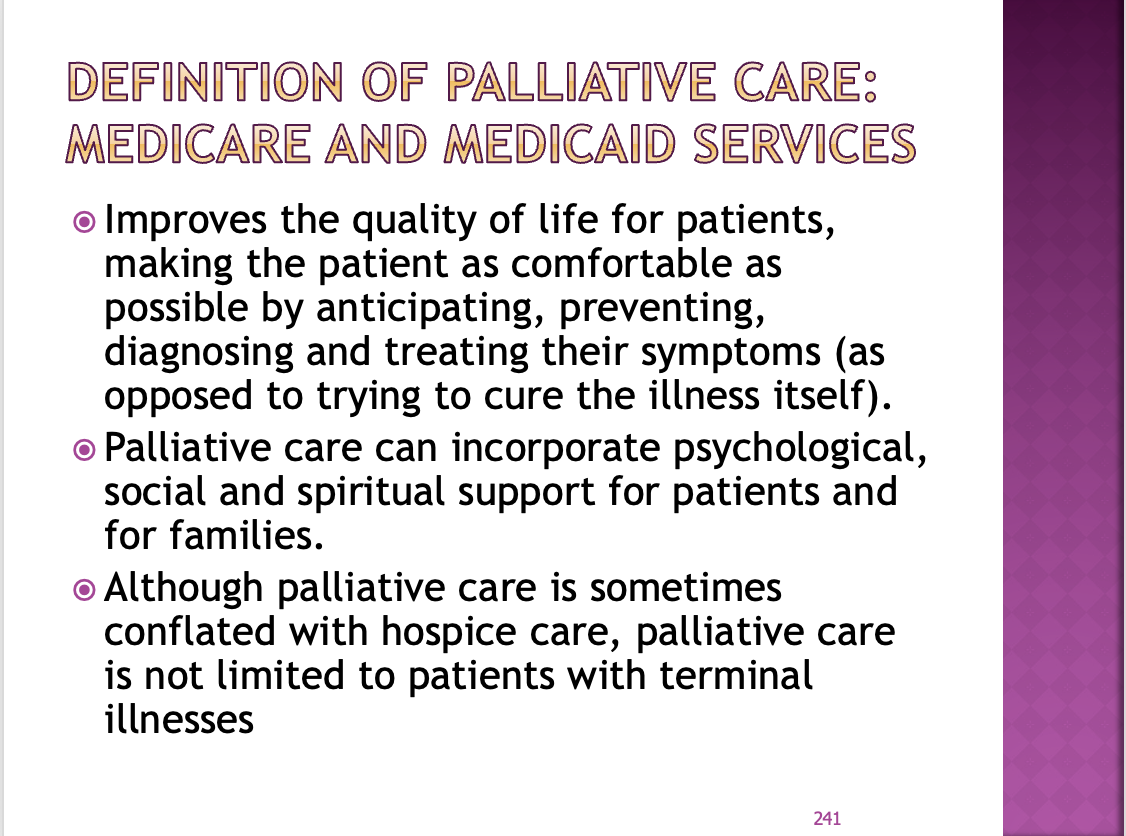
definition of palliative care: medicare and medicaid services - although palliative care is sometimes conflated with hospice care, palliative care is not limited to _____
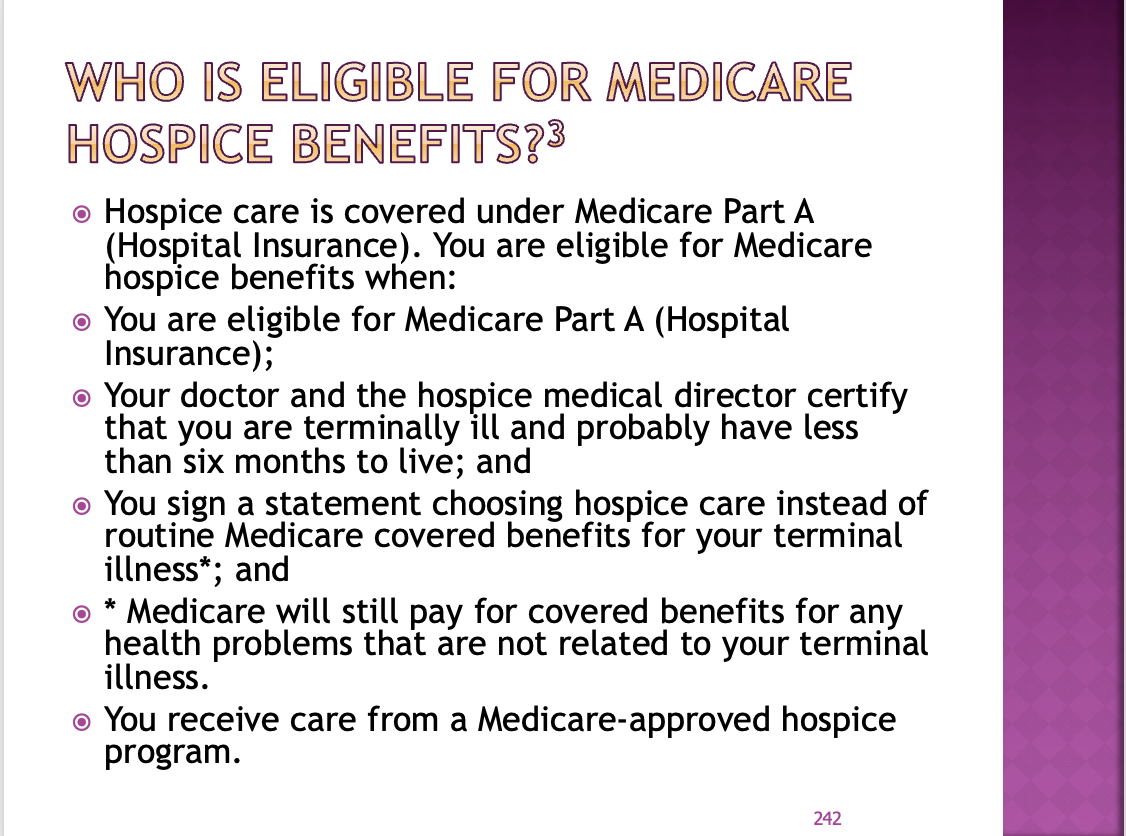
which type of insurance will still pay for covered benefits for any health problems that are not related to your terminal illness
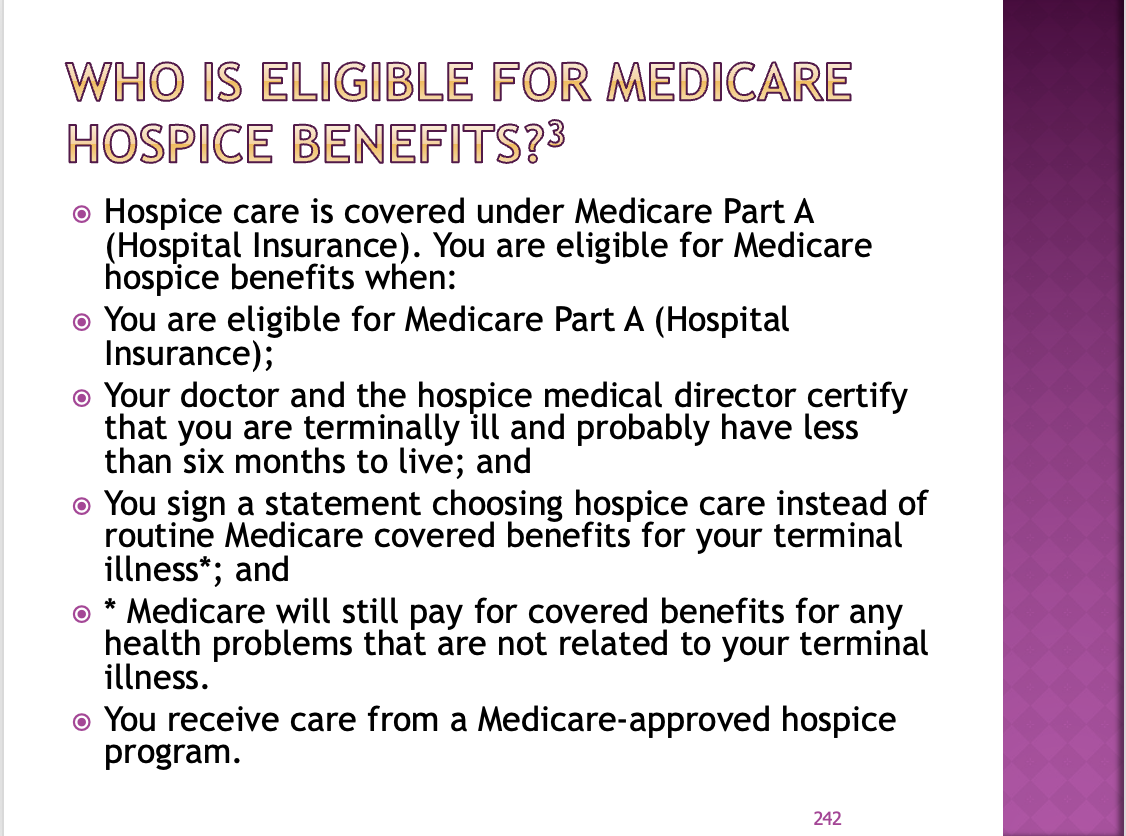
who is eligible for medicare hospice benefits
Dx for hospice for longer: end stage heart failure or COPD – they can go on in the end stage condition for a long time
If you want hopice you not longer want active treatment: chemo, meds to improve blood count, gets the inplanted defibrillator taken out
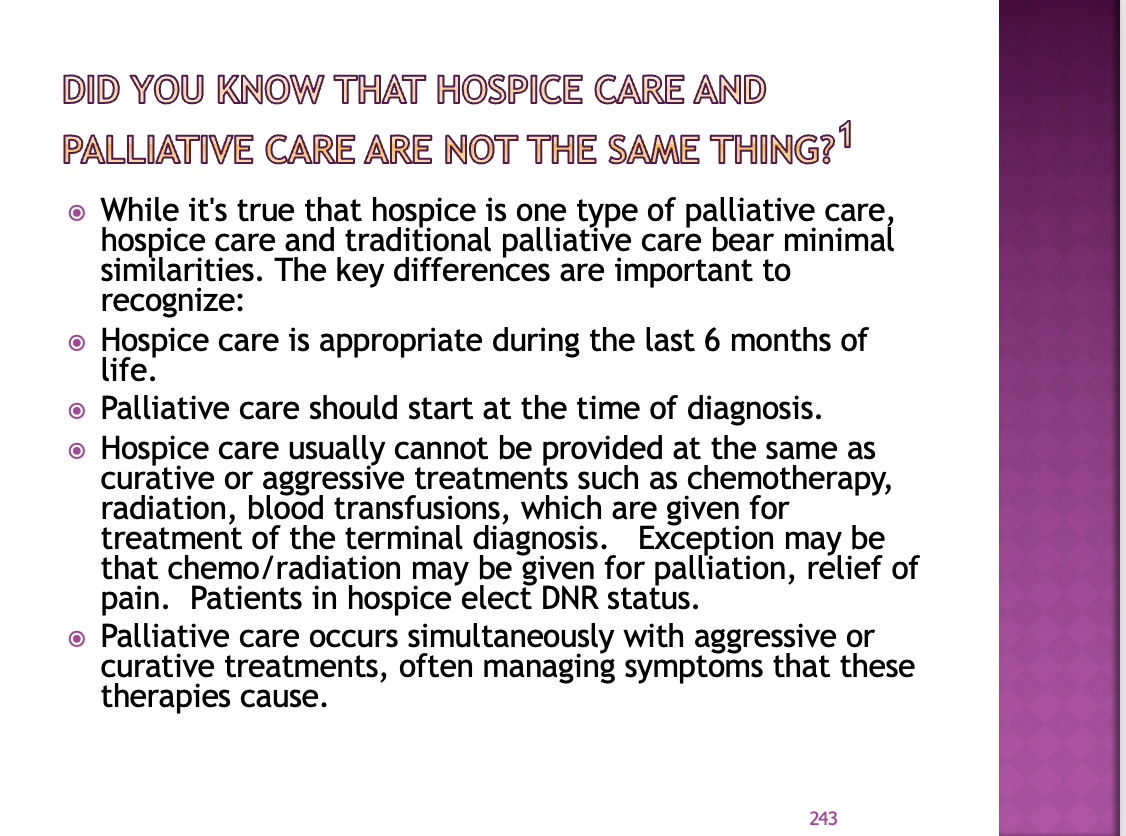
did you know that hospice care and palliative care are NOT the same thing (when does palliative care start?)
Pallitive care: you can get out of it – if they get really good care and they choose to go back to chemo or something they can
the interdisciplinary hospice/palliative care team
For pain, typically they talk to the family and ask if they want to be lucid (if yes they give anxiety meds more then morphine) if not they use morphine till they are not in pain
Will teach them how to use a hoyer lift, and other things for comfort
Respit care – they bring them into an inpatient unit for a week so the family can go on vacation (wherever they go, hospice goes with them)
Signing up for hospice: does not mean you die tomorrow, some people don’t want hospice because they want to be home and with their loved ones
Hospice however, can provide the family with a lot more help sooner at home
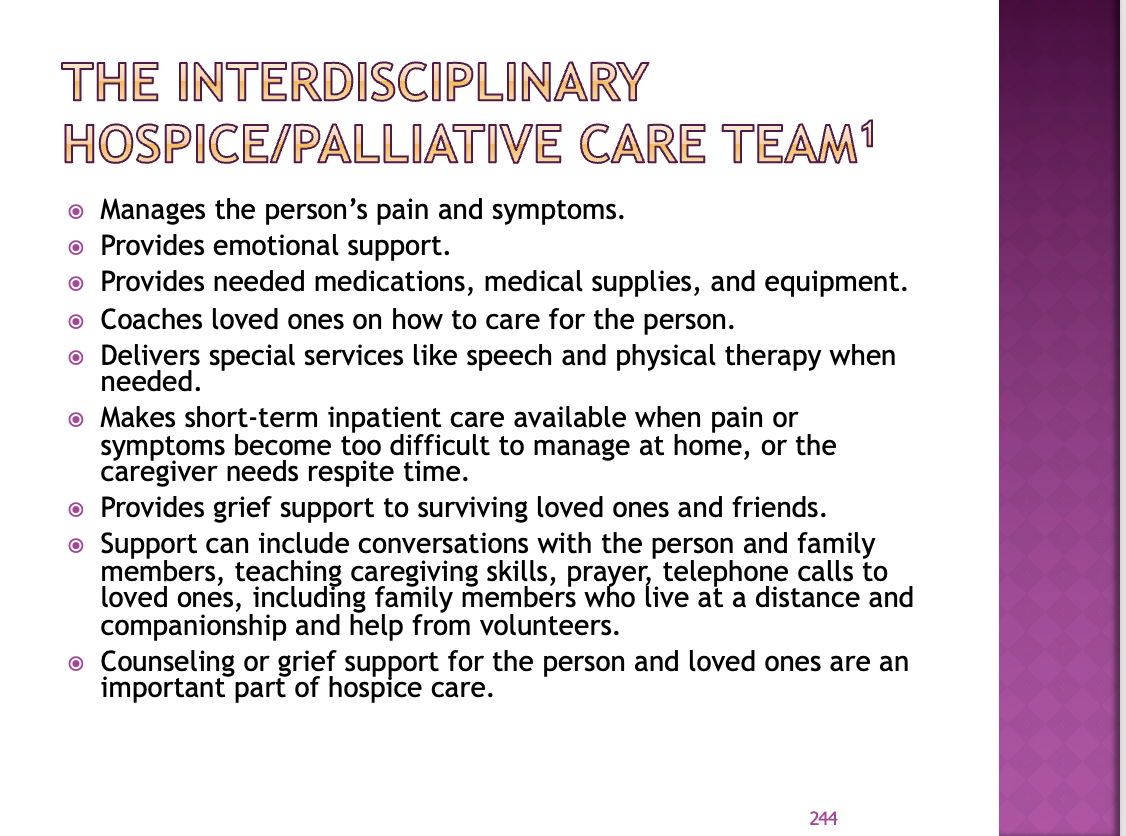
when is it time to consider hospice/palliative care?
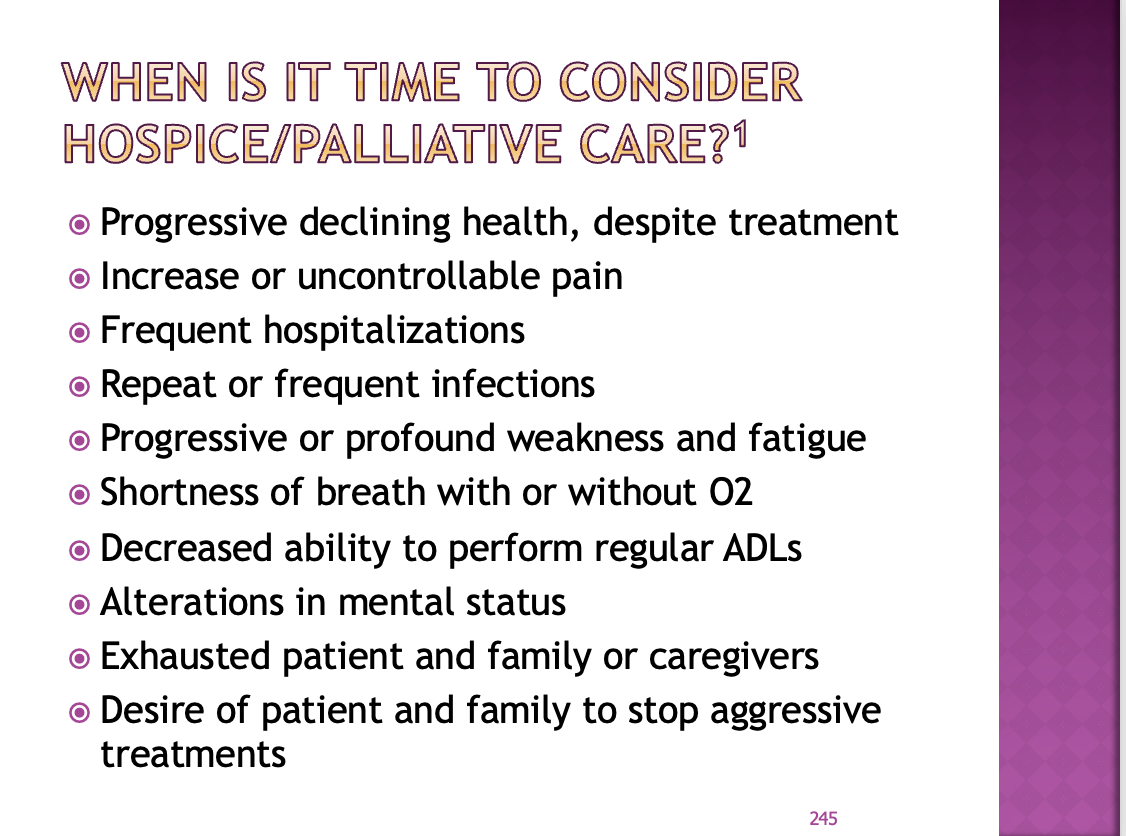
examples of an appropriate referral to hospice
When would edema really concern you and you think its ends stage heart failure: when we see it up to their knee or above the knee (we call the doc if they gait a couple pounds) if you see this park it with a pen to track
What if they don’t want to get care: the toxins will build up
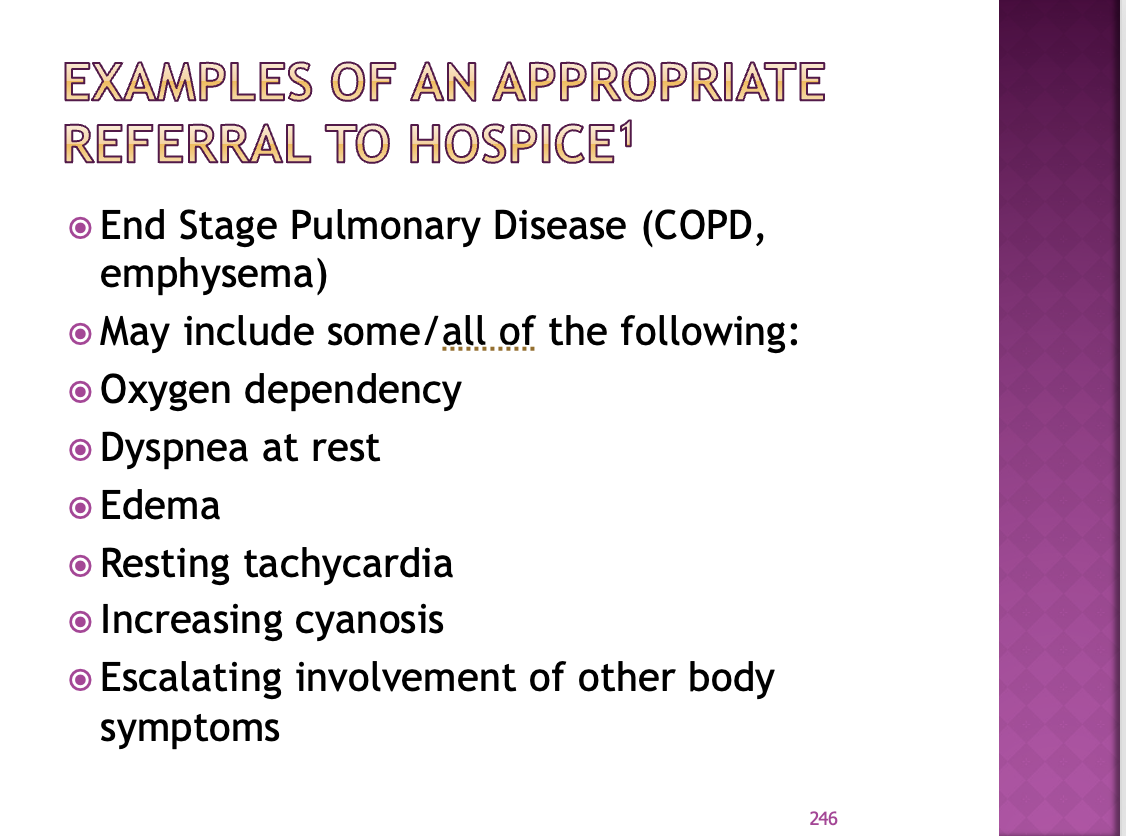
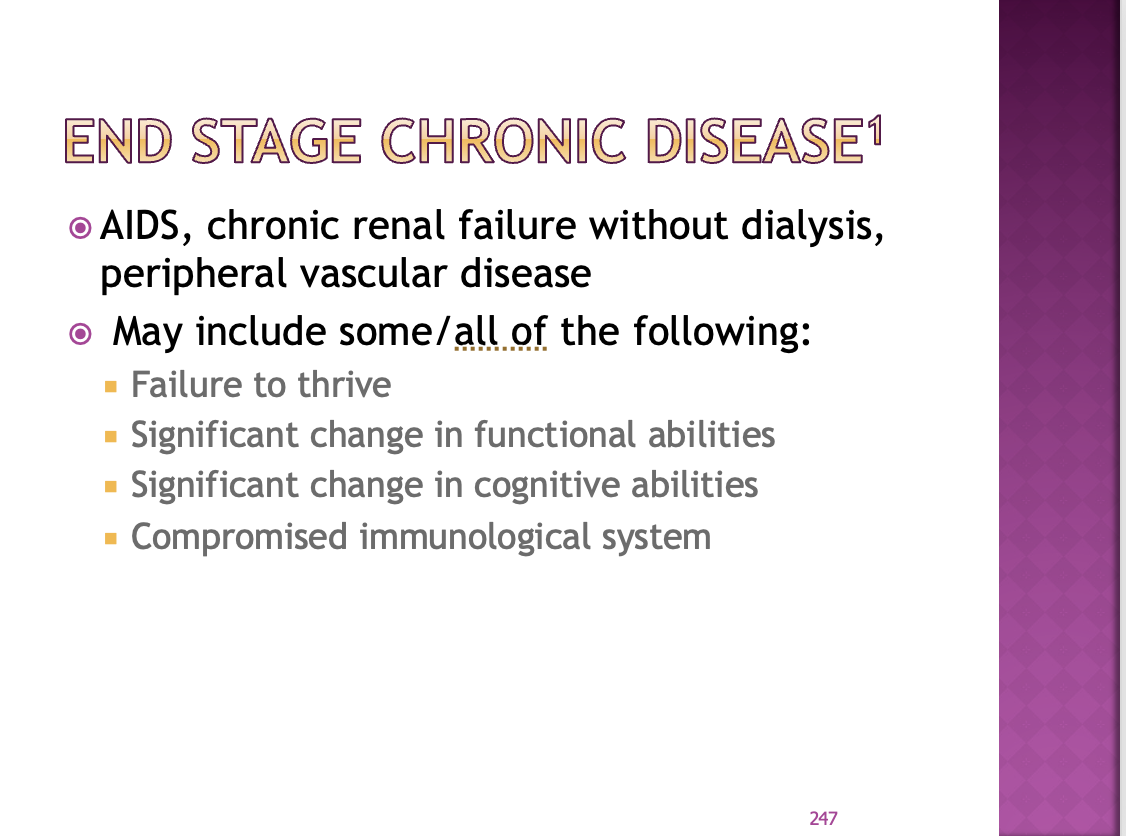
end stage chronic disease
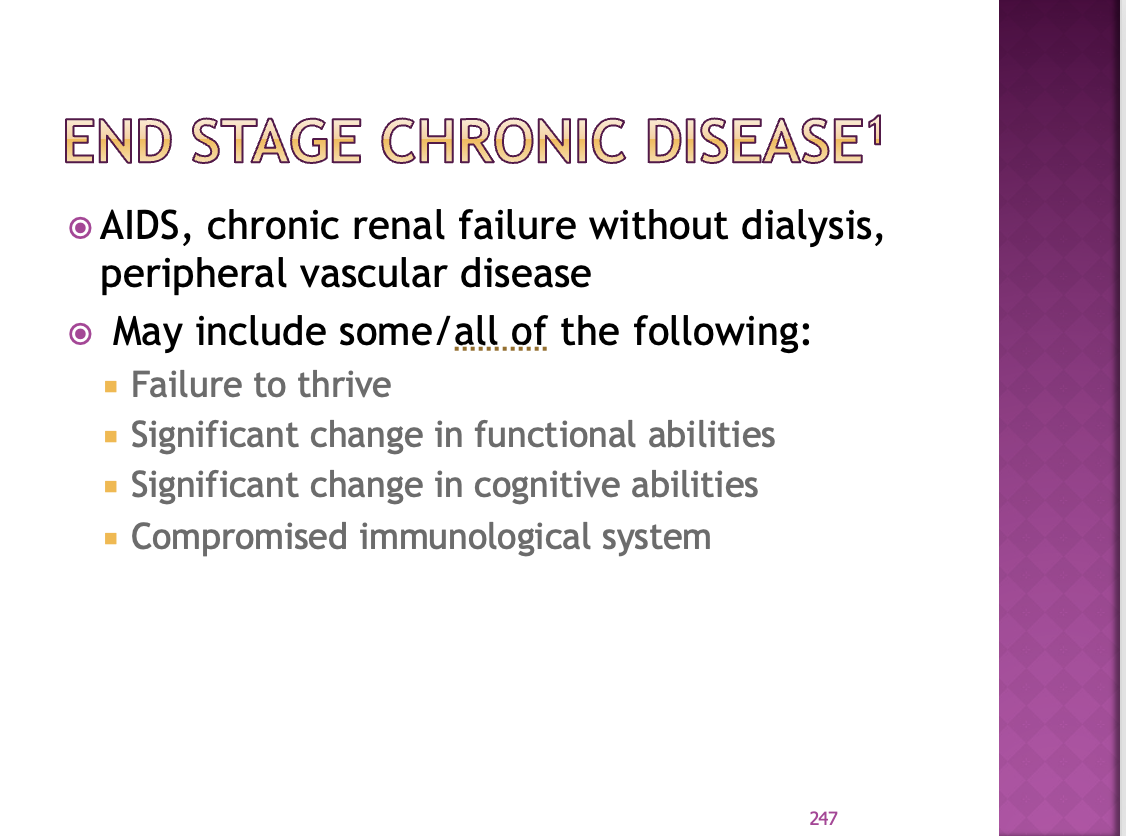
end stage chronic disease may include some/all of the following
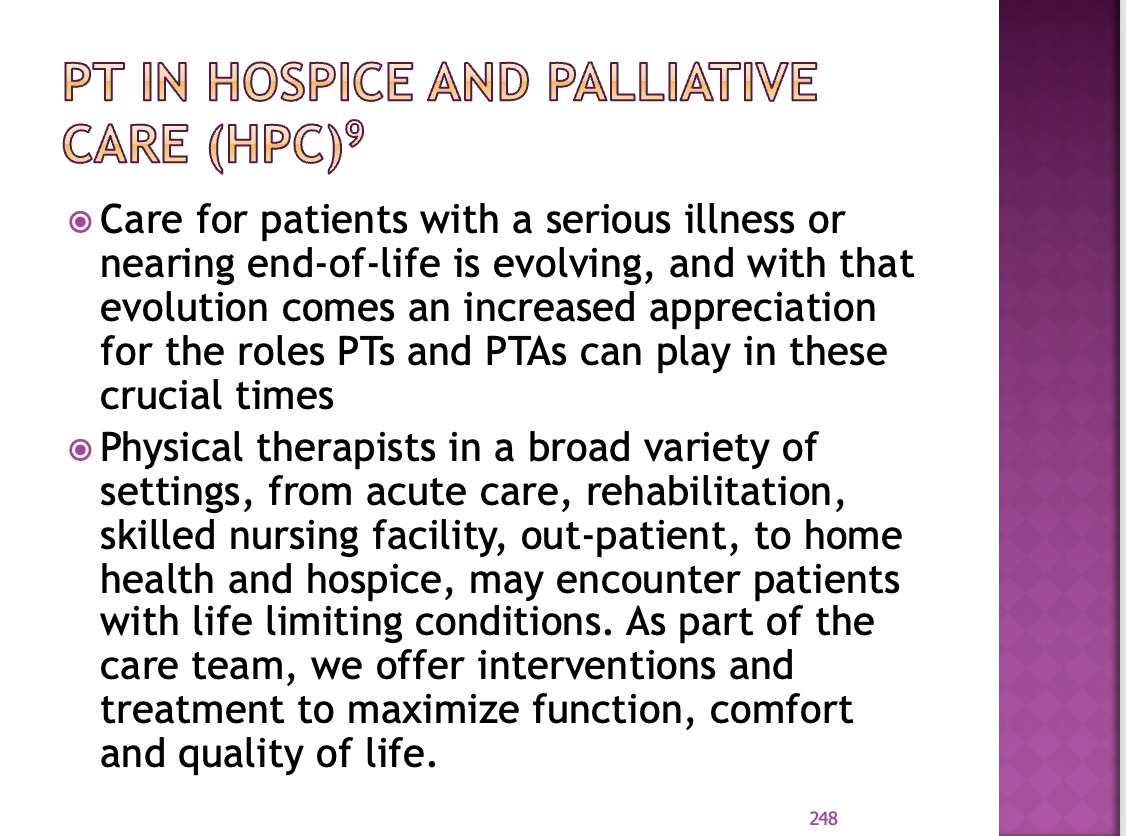
PT in hospice and palliative care (HPC)
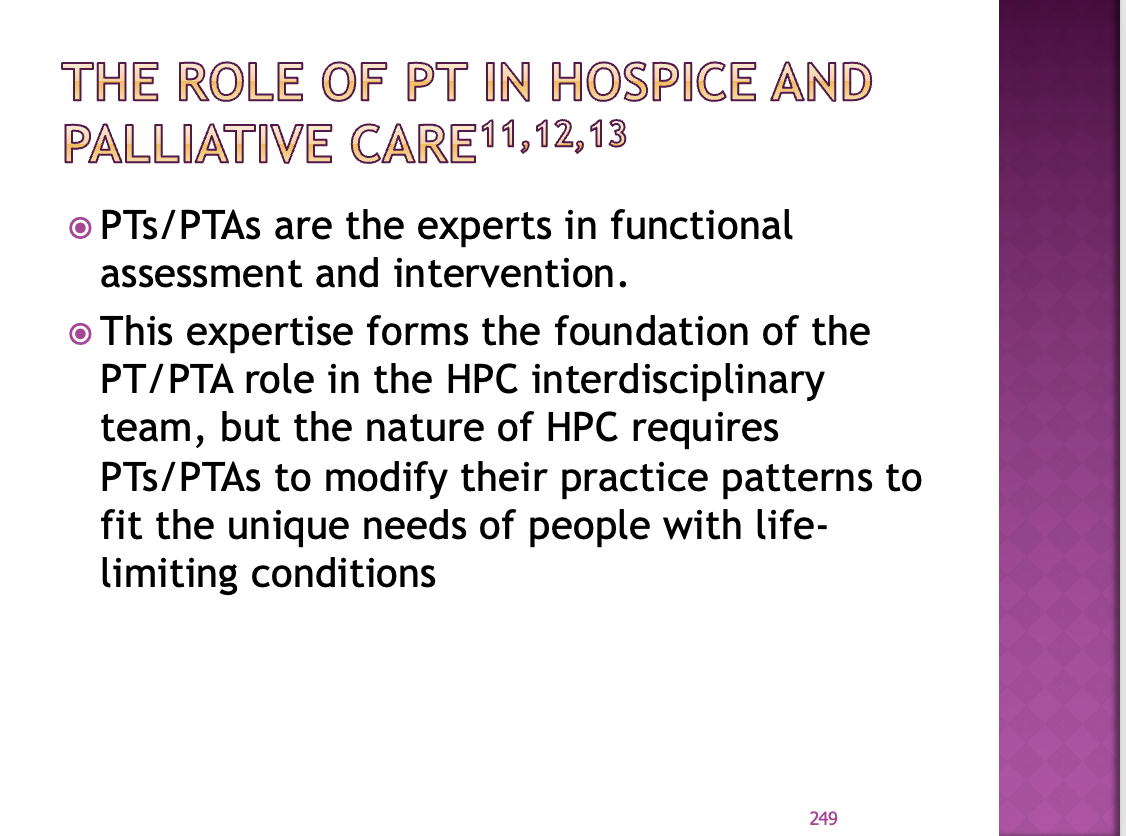
the role of PT in hospice and palliative care
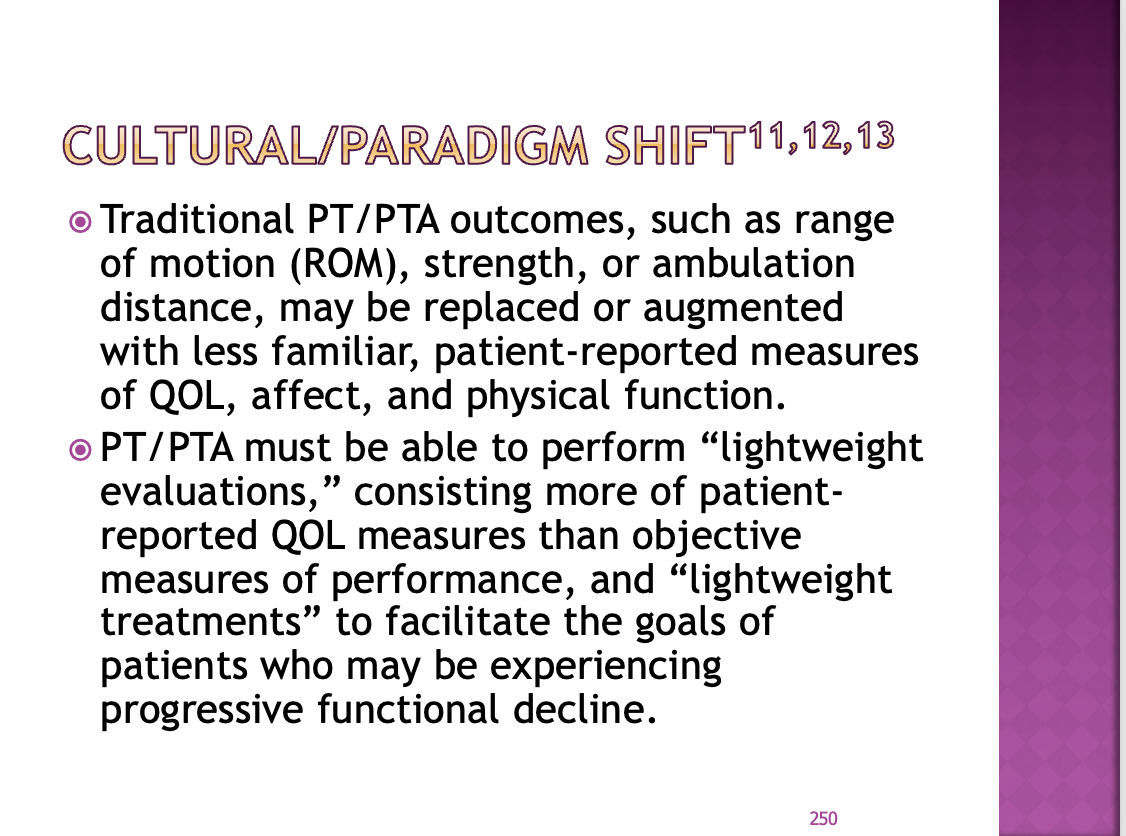
cultural/paradigm shift
A lot of the time you have to ask the patient and the family what they want to be able to do
Prescribe the right assistive device
Start with: we are going to roll to the side and sit up on the edge of the bed, can they scoot forward and get their feet on the floor, check vitals, sit there and see if they are okay, look for ROM deficits in hips, knees, ankles,
If they are on O2 get extra tubing just incase they can walk/stand up
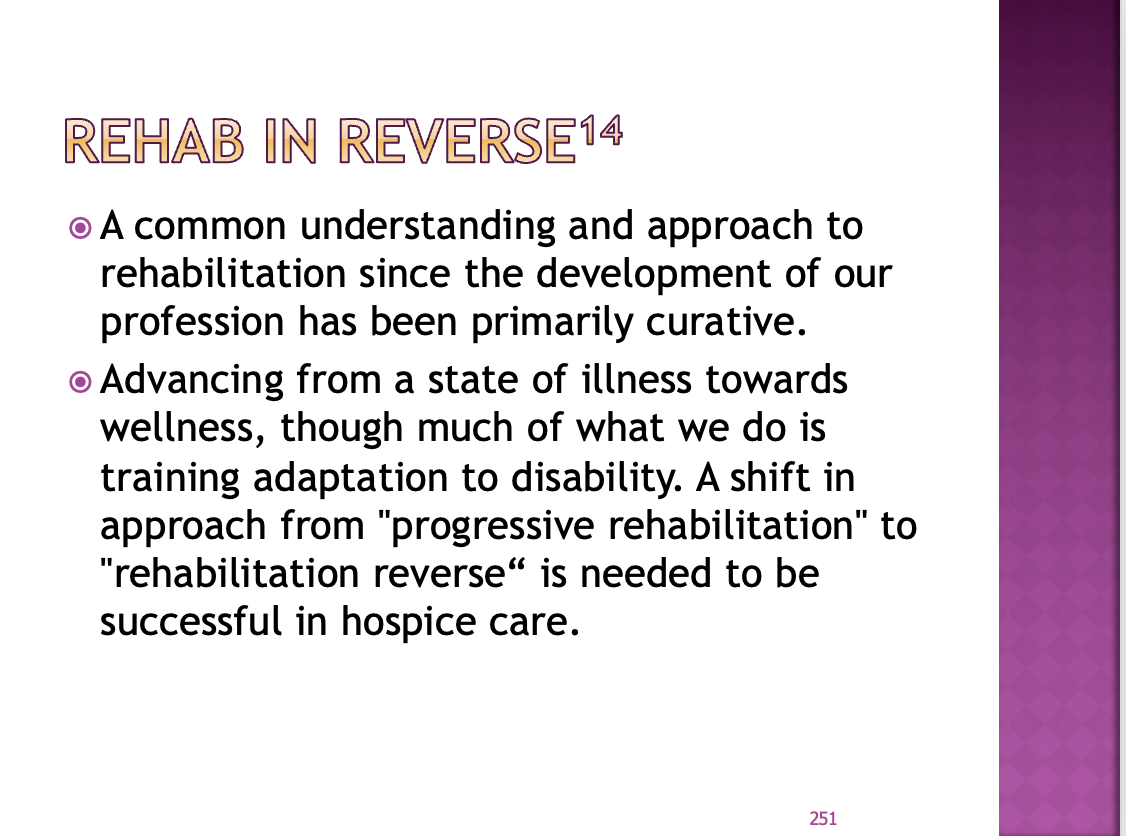
rehab in reverse
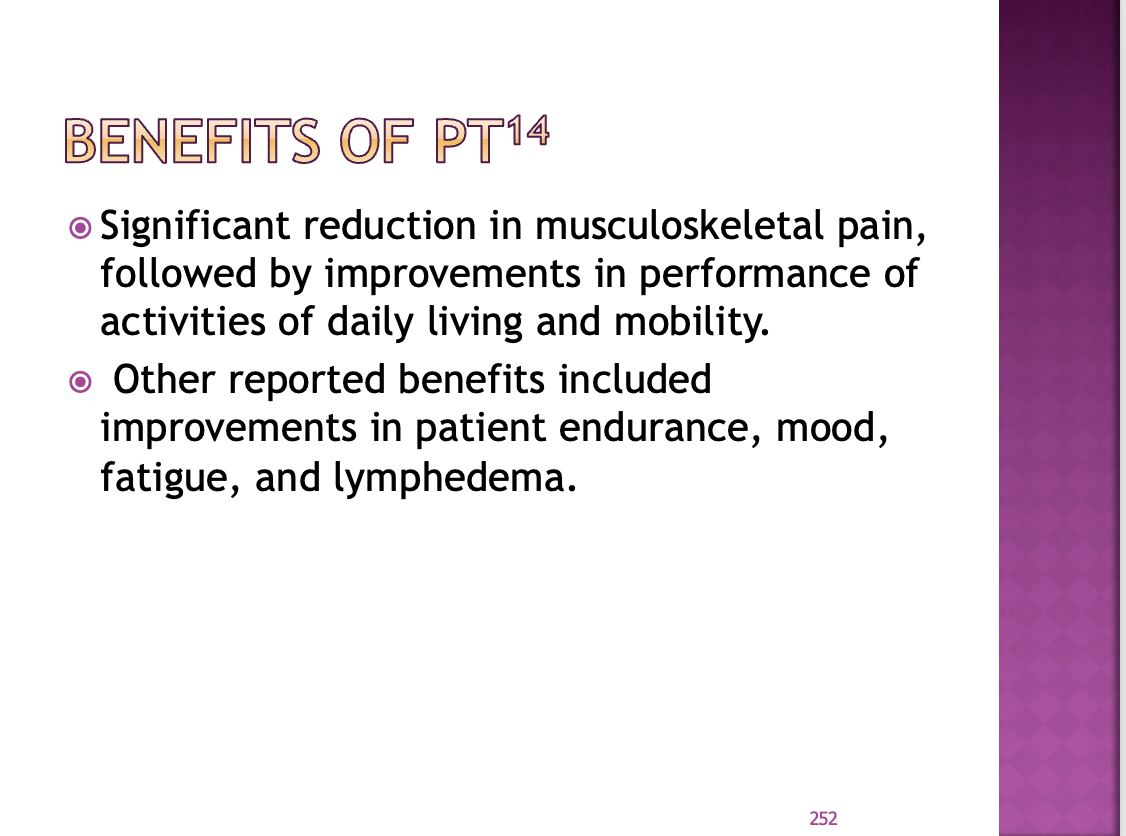
benefits of PT
For modalities, if they are in hospice if you have something that can reduce their pain, you can do it to get QOL
Tens, massage, slow deep breathing techniques for pain
Teach them how to be safe and be more independent in their disease restrictions
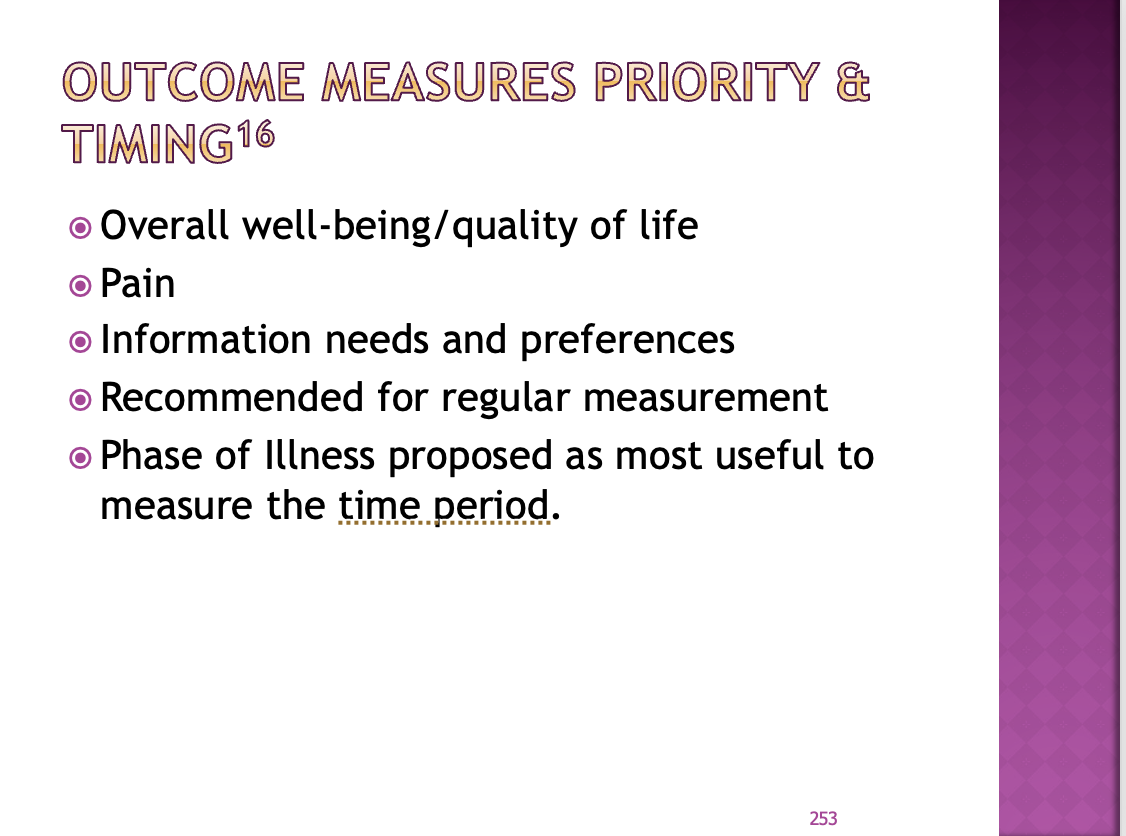
outcomes measures priority and timing (what is the most useful to measure timing)
Mainly looking at quality of life – pain, what is important to them
Measure as you can
outcomes measures
Collins has never used the first one
TUG: don’t have to walk that far/have good endurance, has some transfers,
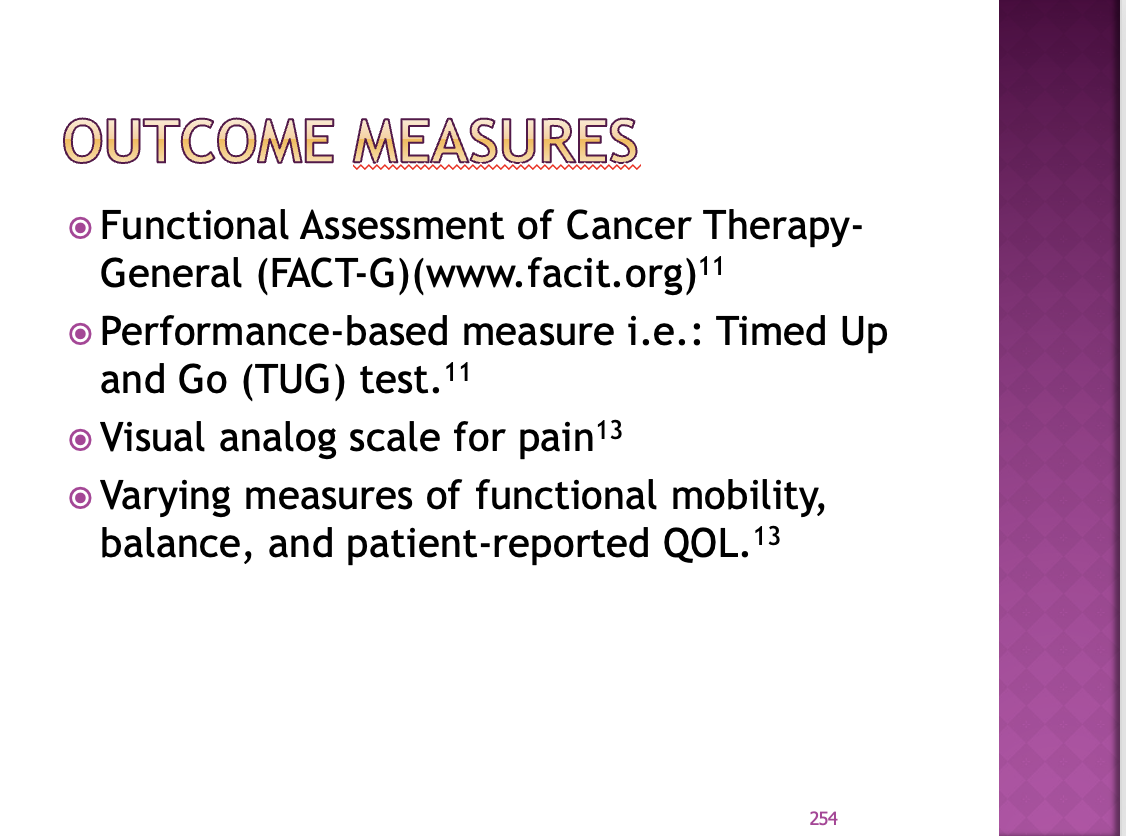
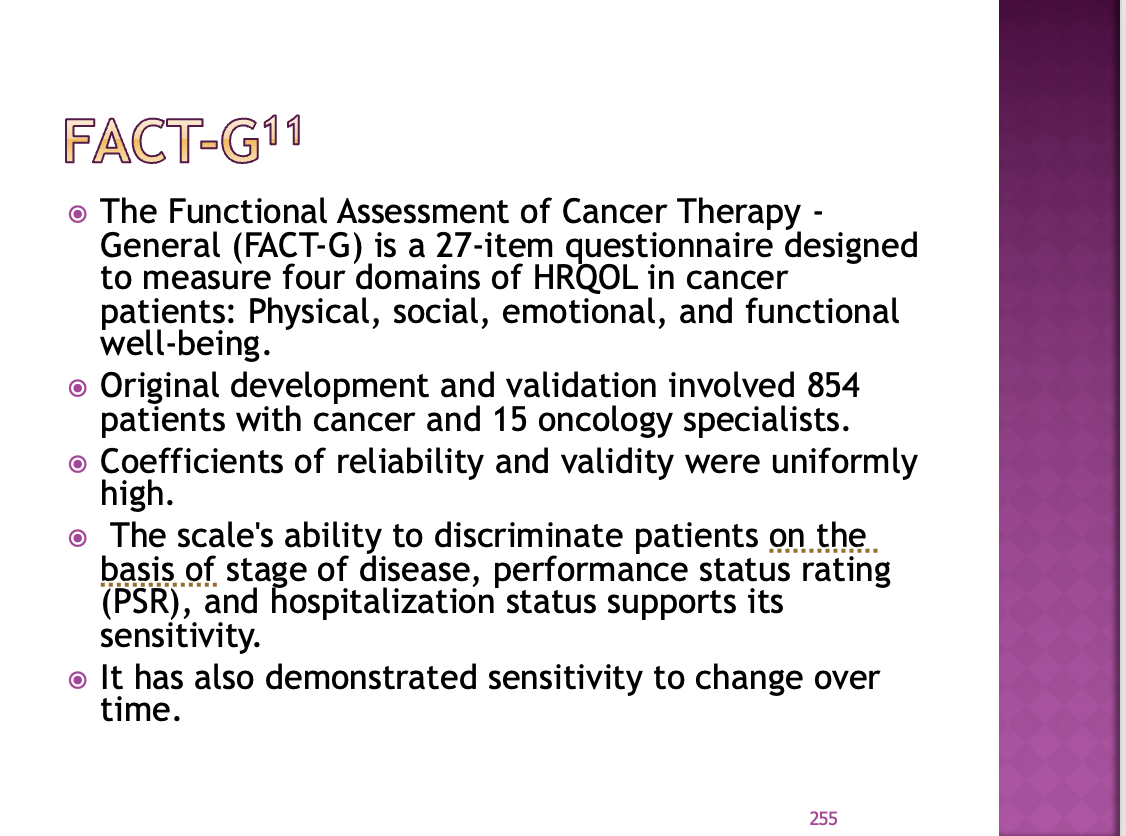
FACT-G
Common forms of PT intervention
As they decline you need to be honest and say they can do some things like stair in order to be safe
PT’s role in opioid use and management during palliative and hospice care
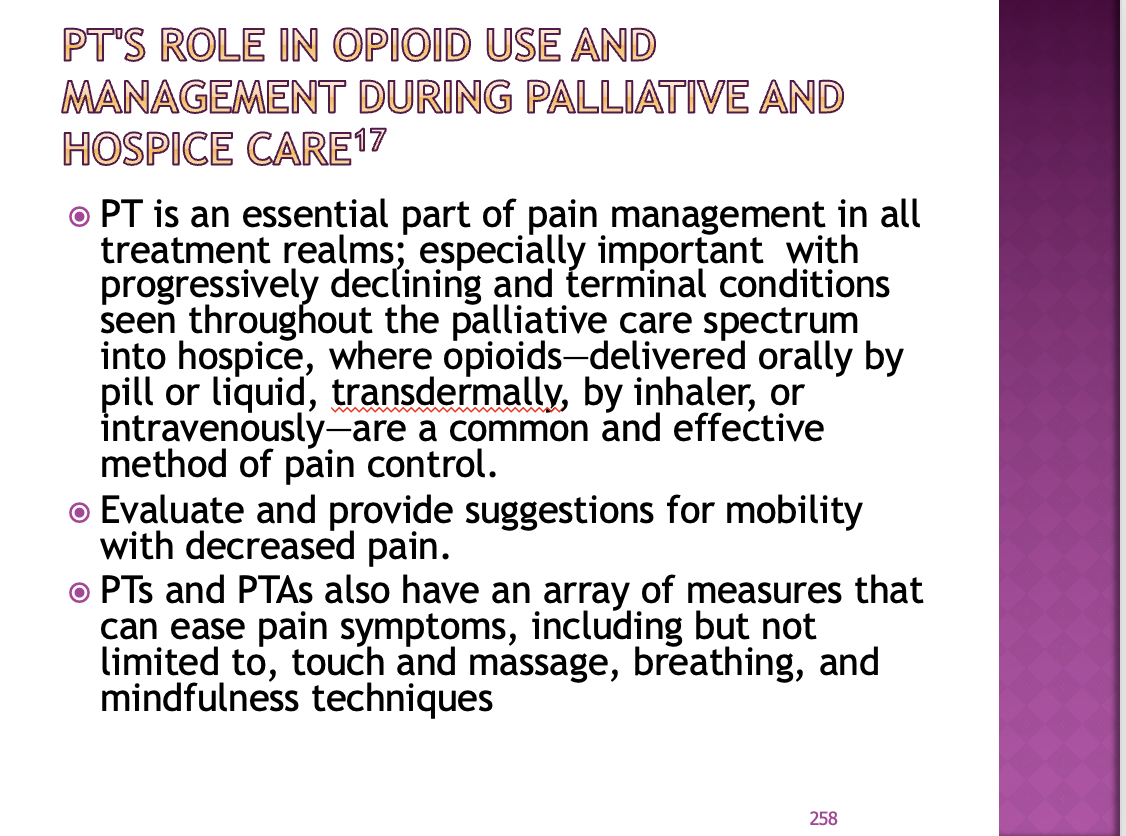
We have lots of things to manage pain – if they don’t want drugs we come into play for other methods
quality toward end-of-life
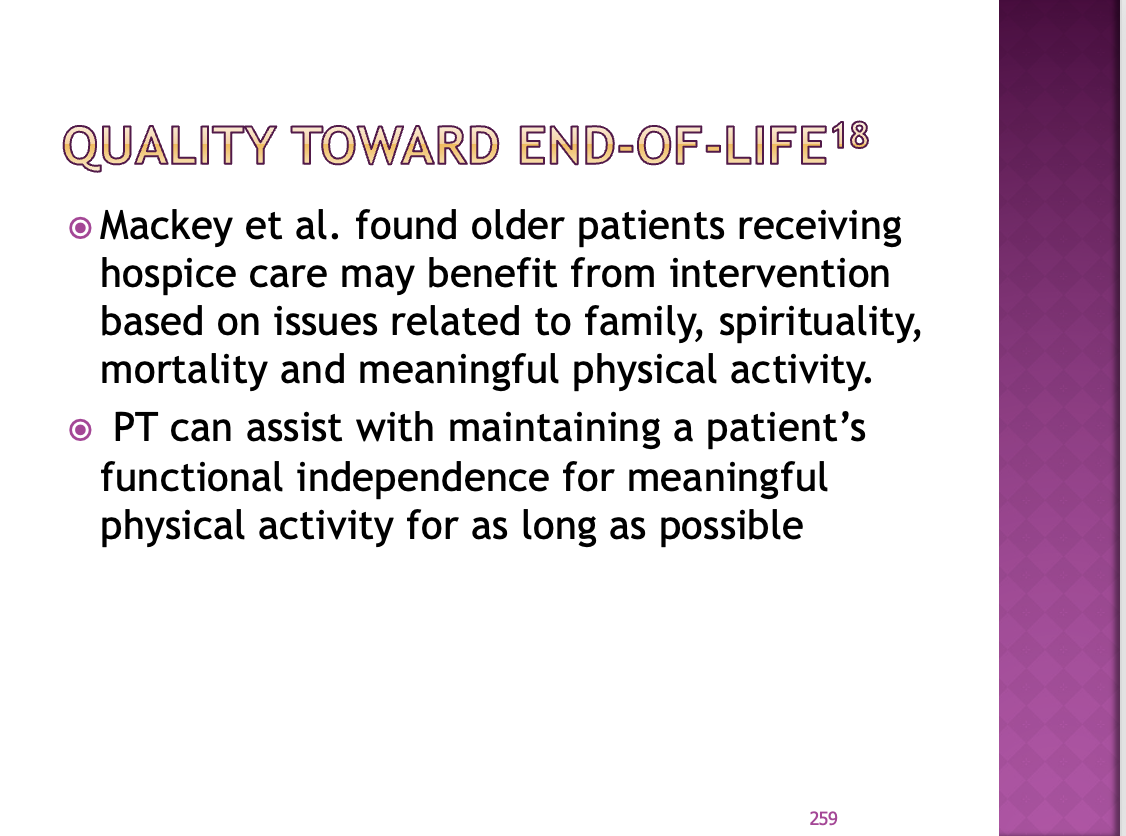
Meaningful physical activity: what do they want to do?
She has walked a patient on oxygen outside and then passed the following day
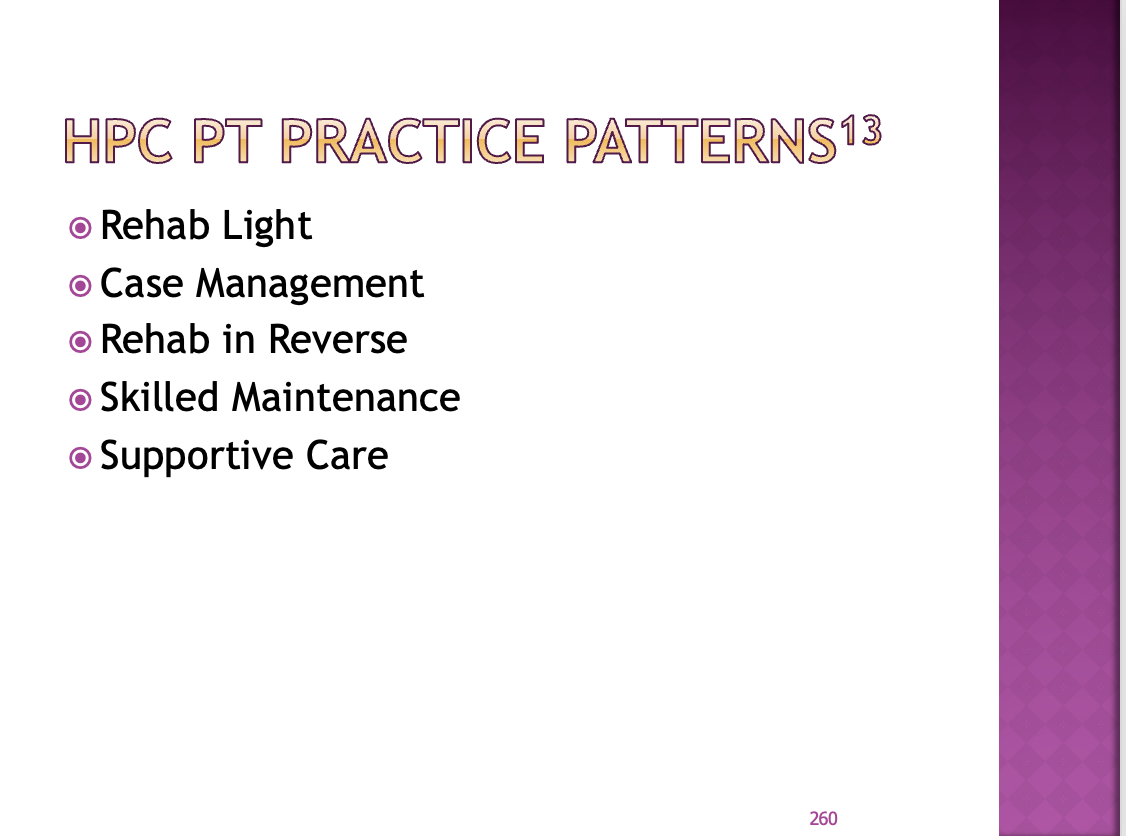
HPC PT practice patterns
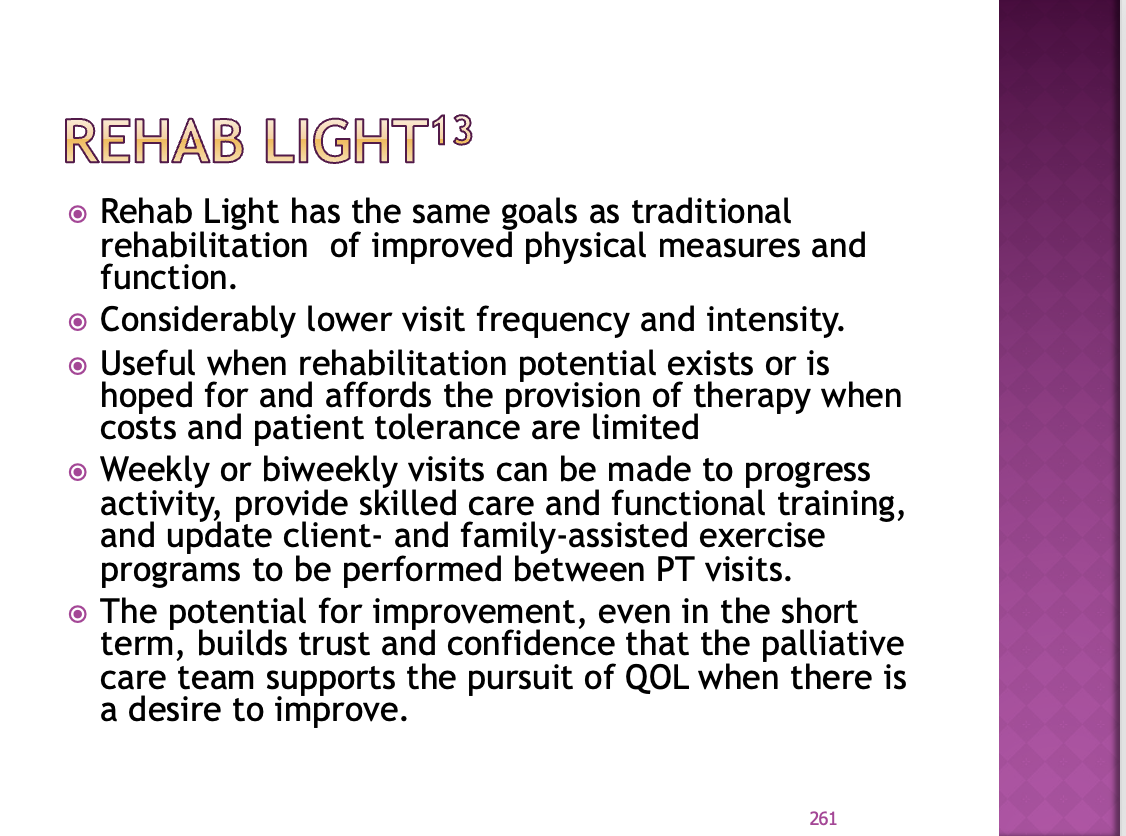
Rehab light
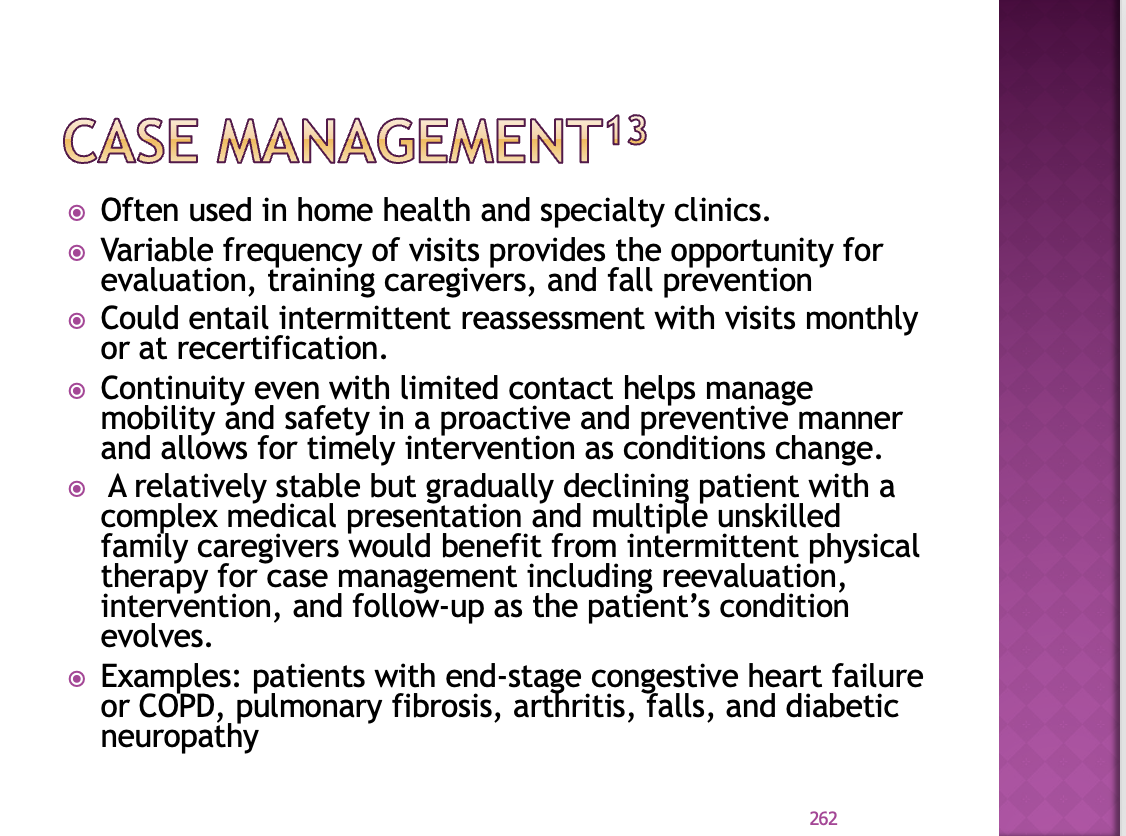
case management
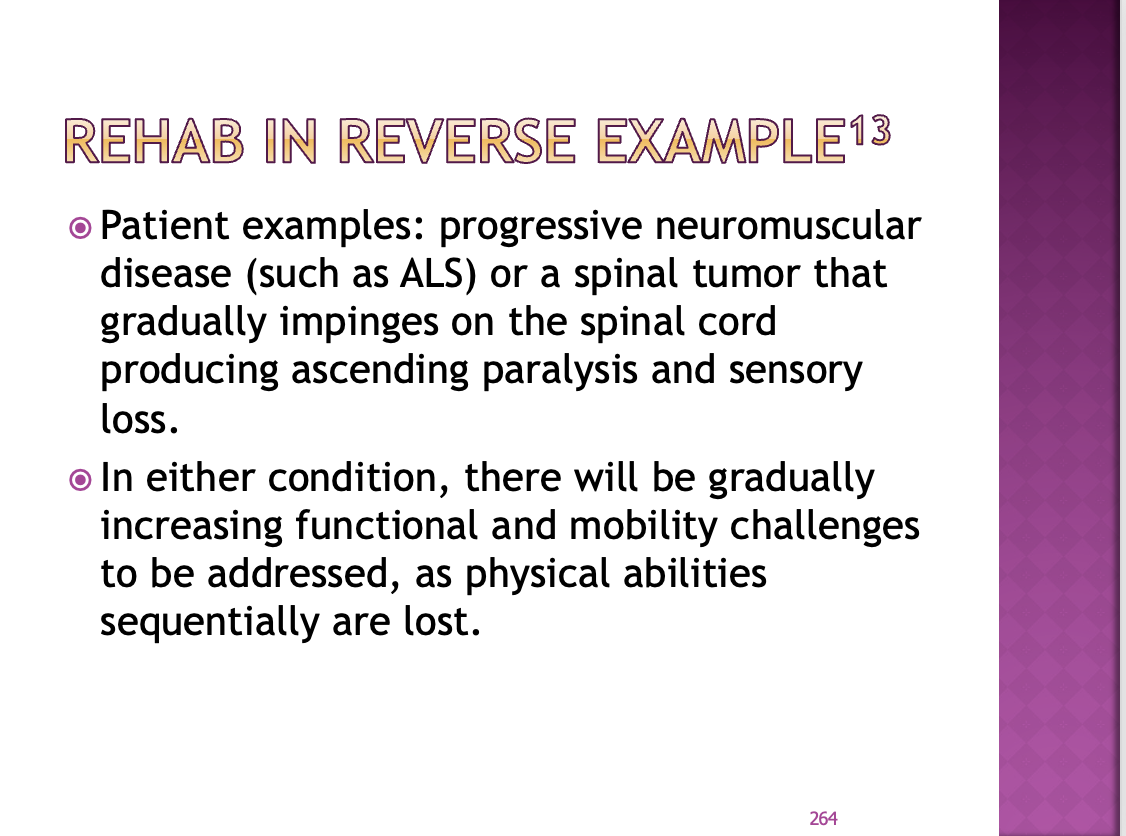
rehab in reverse: what is it
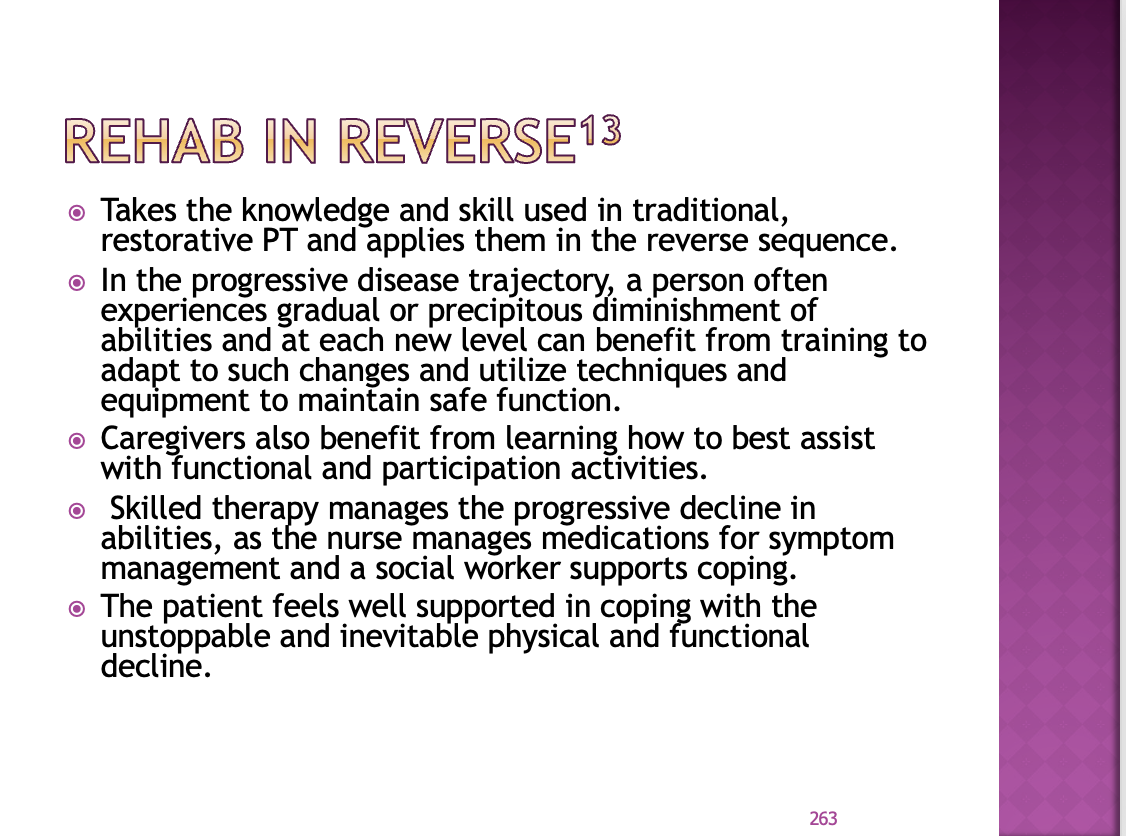
rehab in reverse patient example
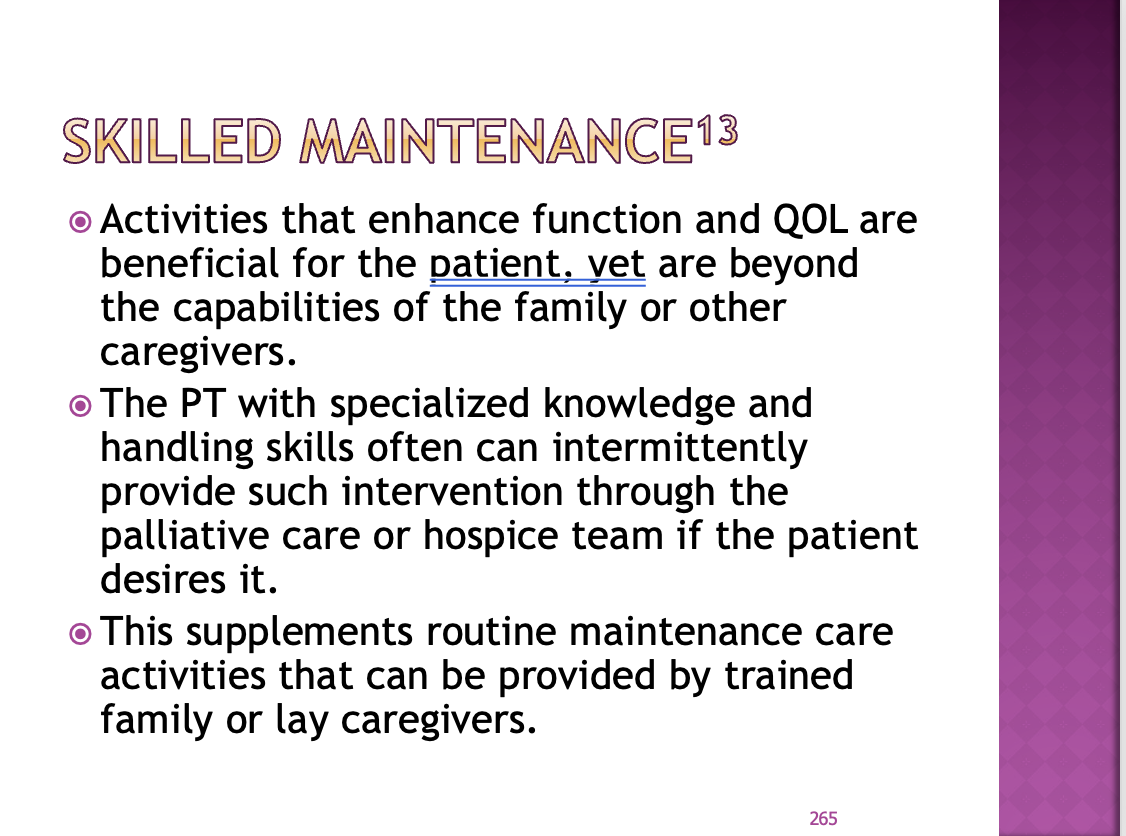
skilled maintenance
PT: weightshifting and advancing food (caregiver cant do high level gait training)
But if it keeps them walking and theptwants to we would have to be doing the maintenance
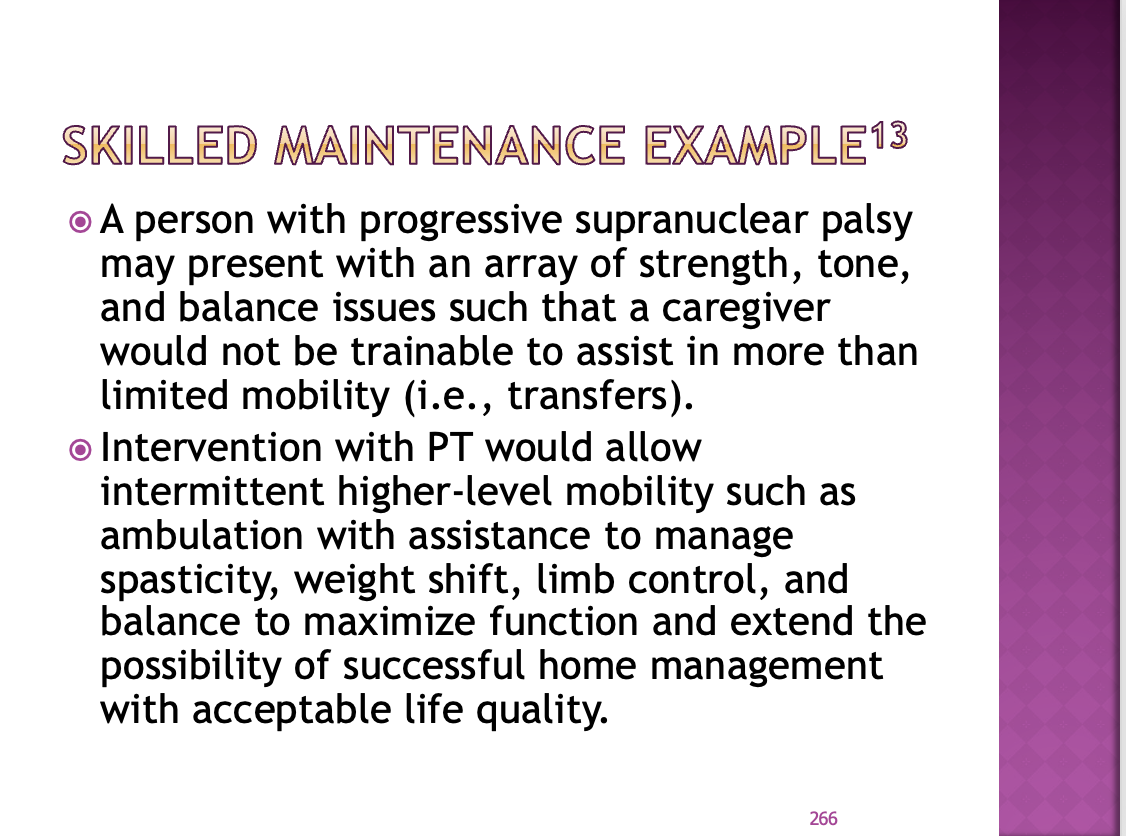
skilled maintenance example
Other dx that may need help include alzheimers, severe stroke, etc
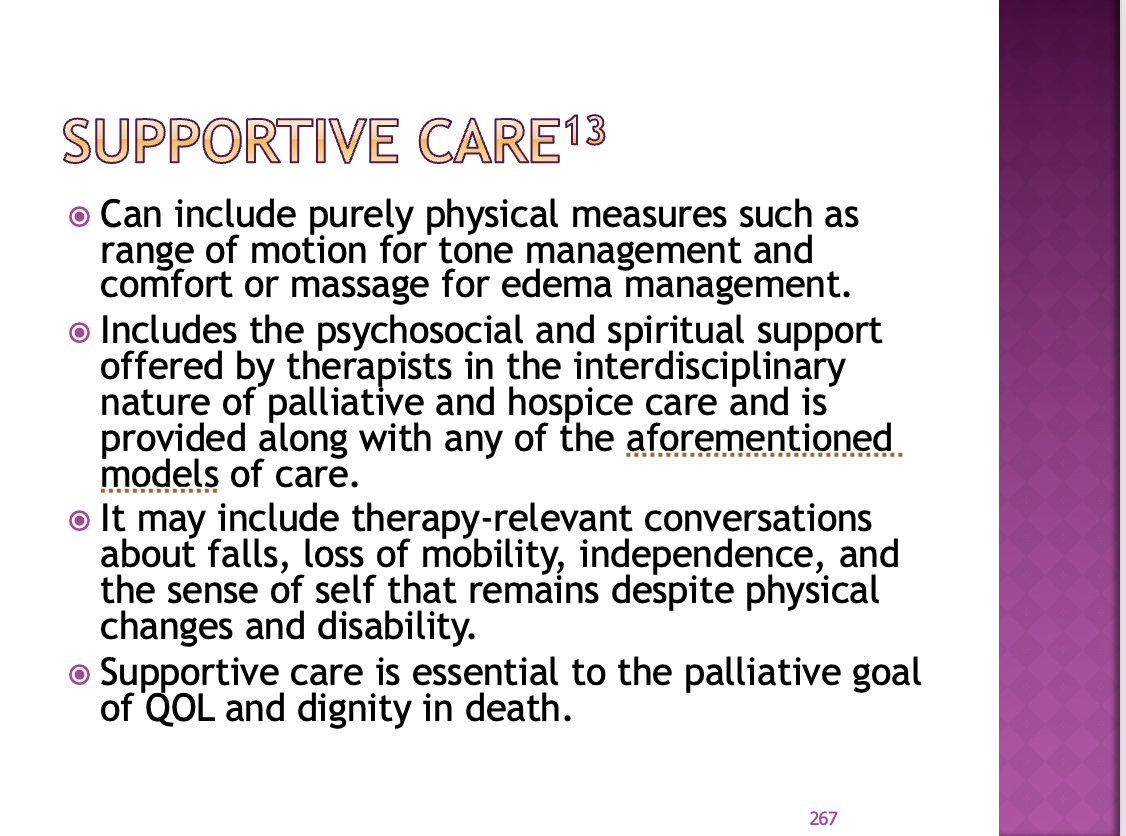
supportive care can include ___
Tone management, massage, spiritual or psychosocial support
May have conversations about falls, abou tnot being able to use the steps, about getting care for at night if the wife is not sleeping, making them sleep on the first floor so they don’t have the risk of stairs
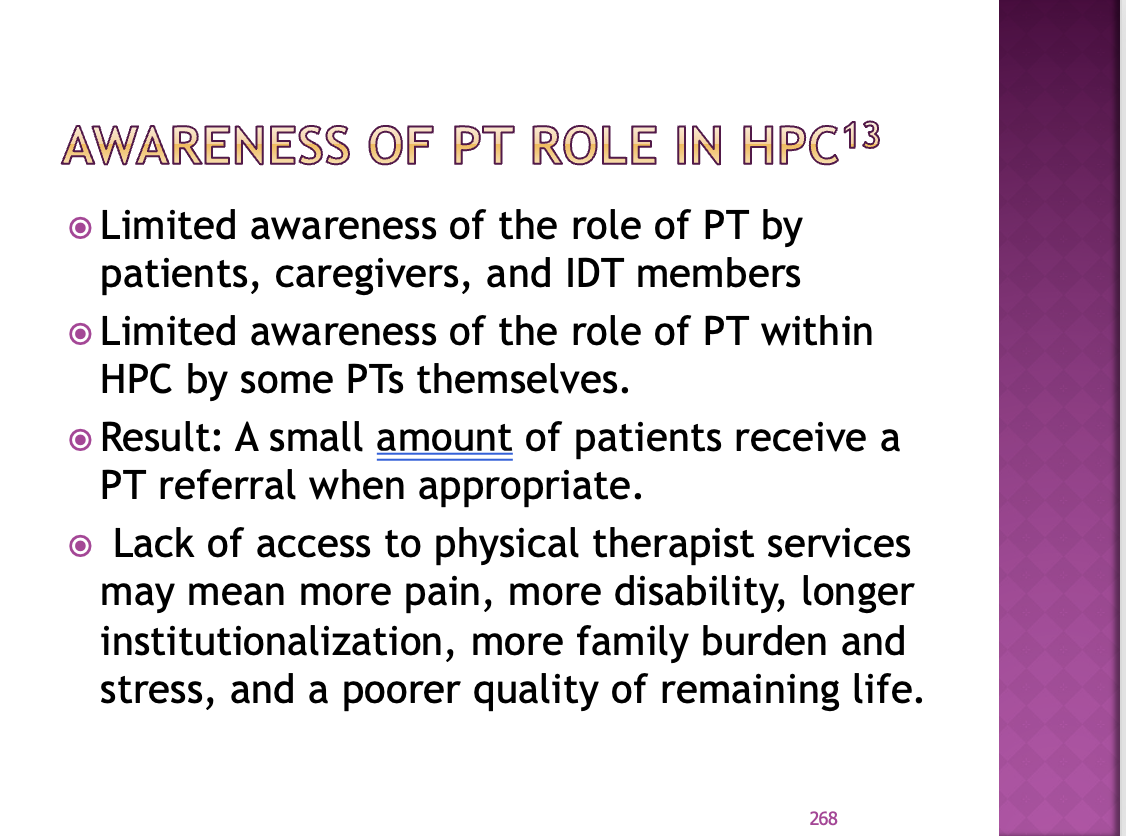
awareness of PT role in HPC
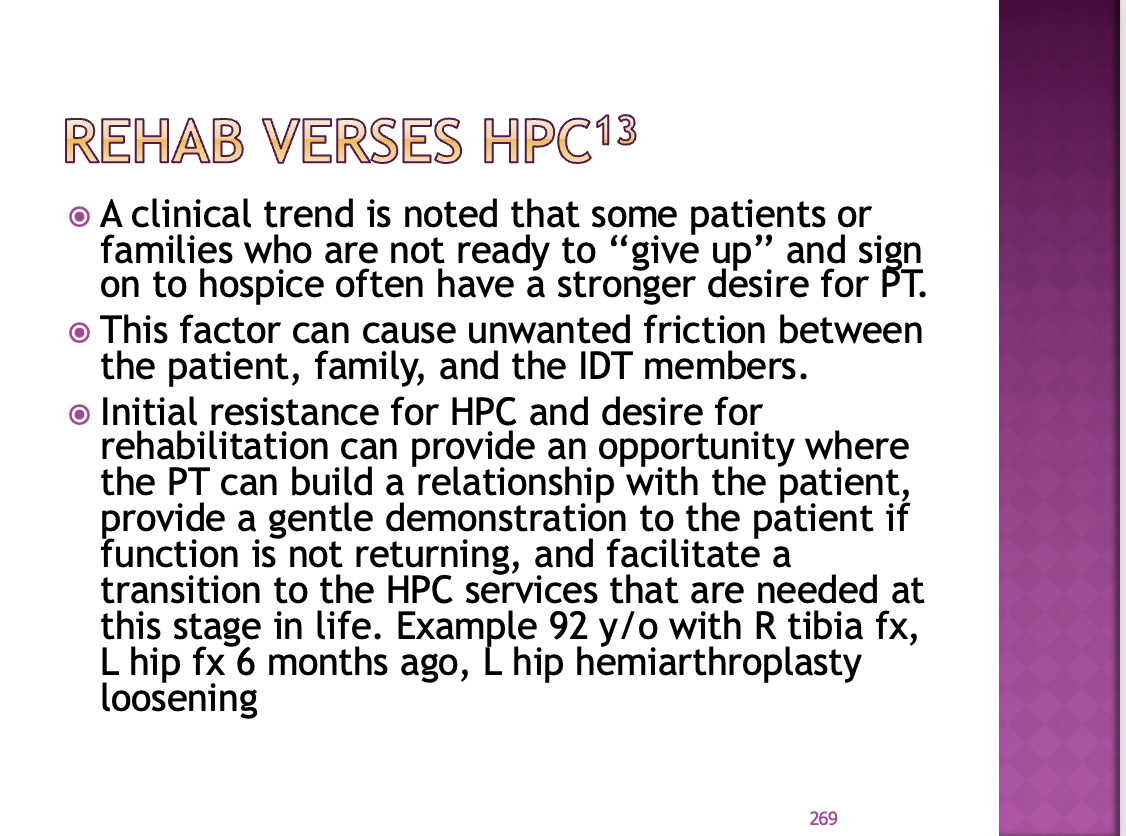
rehab versus HPC
HPC: hospice and palliative care
Sometimes families have to be convinced – example at the bottom;
Sometimes you have to gently show the family they need hospice by giving them treatment for a couple days/weeks and then when there is no improvement you can have another conversation
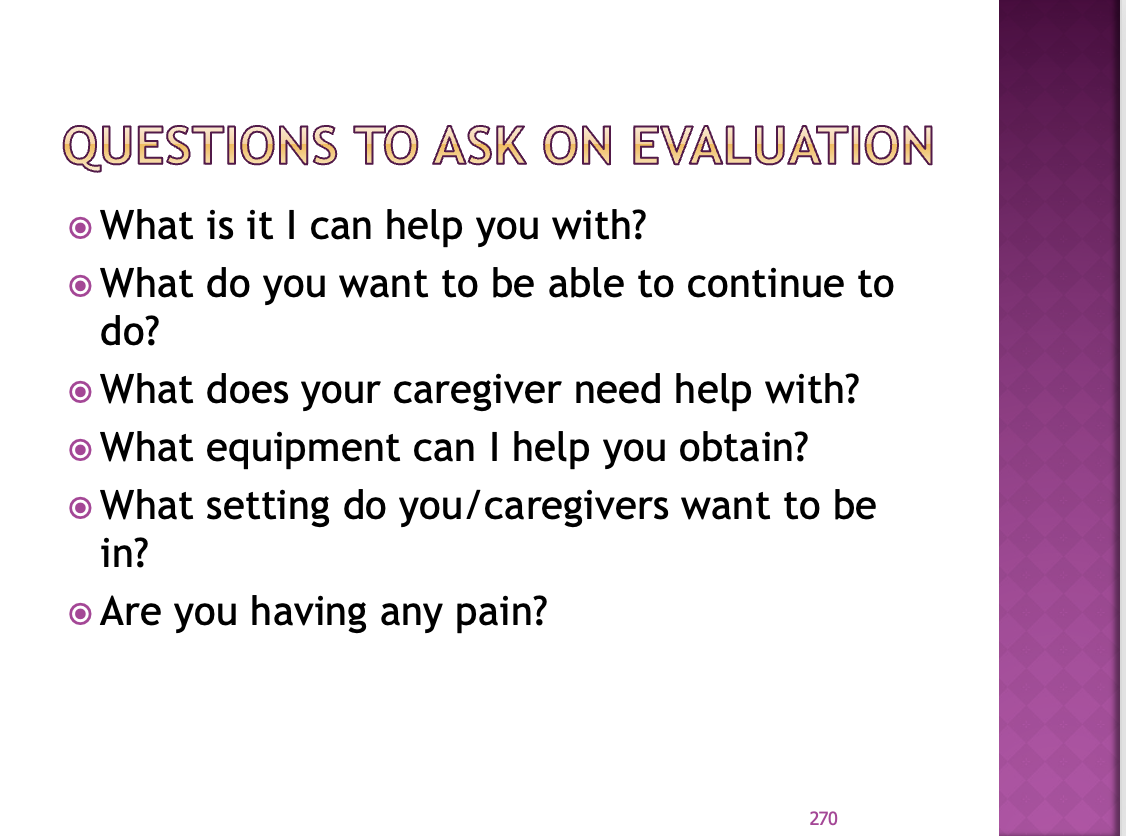
questions to ask on evaluation
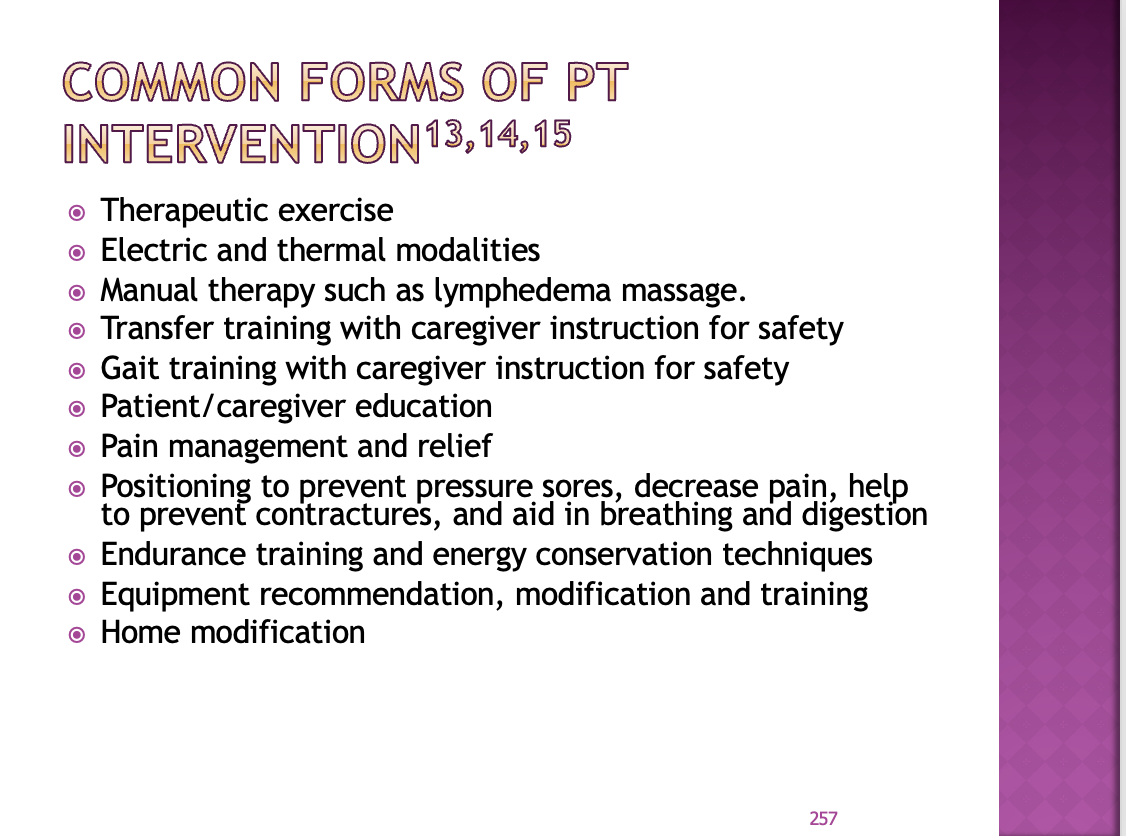
Therapeutic exercise
Electric and thermal modalities
Interventions:
Manual therapy such as lymphedema massage.
Transfer training with caregiver instruction for safety
Gait training with caregiver instruction for safety
Patient/caregiver education
Pain management and relief
Positioning to prevent pressure sores, decrease pain, help to prevent contractures, and aid in breathing and digestion
Endurance training and energy conservation techniques
Equipment recommendation, modification and training
Home modification
take home message
Hospice follows the patient to ANY setting they are in