Contract Law Term 2
 Call Kai
 Learn
Learn Practice Test
 Spaced Repetition
 Match
Match Flashcards
 Knowt Play
1/137

There's no tags or description
Looks like no tags are added yet.
Name | Mastery | Learn | Test | Matching | Spaced | Call with Kai |
|---|
No analytics yet
Send a link to your students to track their progress
138 Terms
L'Estrange v Graucob (1934)
Chapter: Setting the Terms of the Contract (Incorporation of Express Terms: Signature)
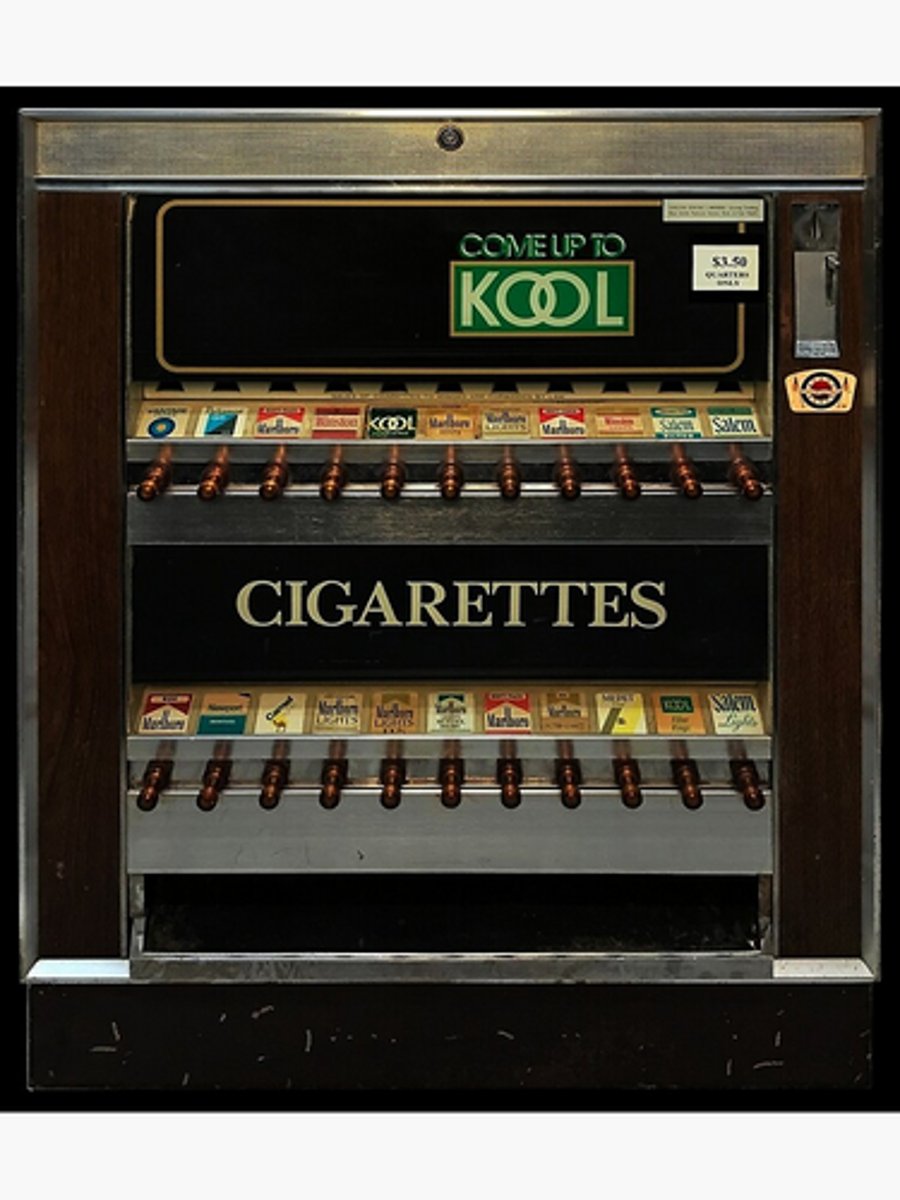
Facts: C contracted to purchase a slot machine for cigarettes, with the agreement including an express clause excluding any statutory provision. The machine was faulty and C claimed D breached the Sale of Goods Act
Principle: Express provisions are binding and the fact that the C had not properly read the contract did not impact its validity
Curtis v Chemical Cleaning and Dyeing (1951)
Chapter: Setting the Terms of the Contract (Incorporation of Express Terms: Signature)
Facts: C took her wedding dress to be cleaned and signed an exclusion of liability clause. The dress was destroyed when cleaned
Principle: Even where they had not properly read the contract, a clause ought not be deemed legally enforceable where the drafting party misrepresents the effect of a clause to the other party

Saunders v Anglia Building Society (1971)
Chapter: Setting the Terms of the Contract (Incorporation of Express Terms: Signature)
Facts: Widow induced by fraudster to sign her leasehold interest in her house over to him
Principle: Non est factum is a rare defense allowing someone to void a signed document if they were fundamentally mistaken about its nature, usually due to incapacity (i.e. age, illiteracy, etc)

Blu-Sky Solutions v Be Caring (2021)
Chapter: Setting the Terms of the Contract (Incorporation of Express Terms: Signature)
Principle: "Onerous" term is not incorporated into B2B contract if it is buried in standard terms and conditions

Olley v Marlborough Court (1949)
Chapter: Setting the Terms of the Contract (Incorporation of Express Terms: Notice)
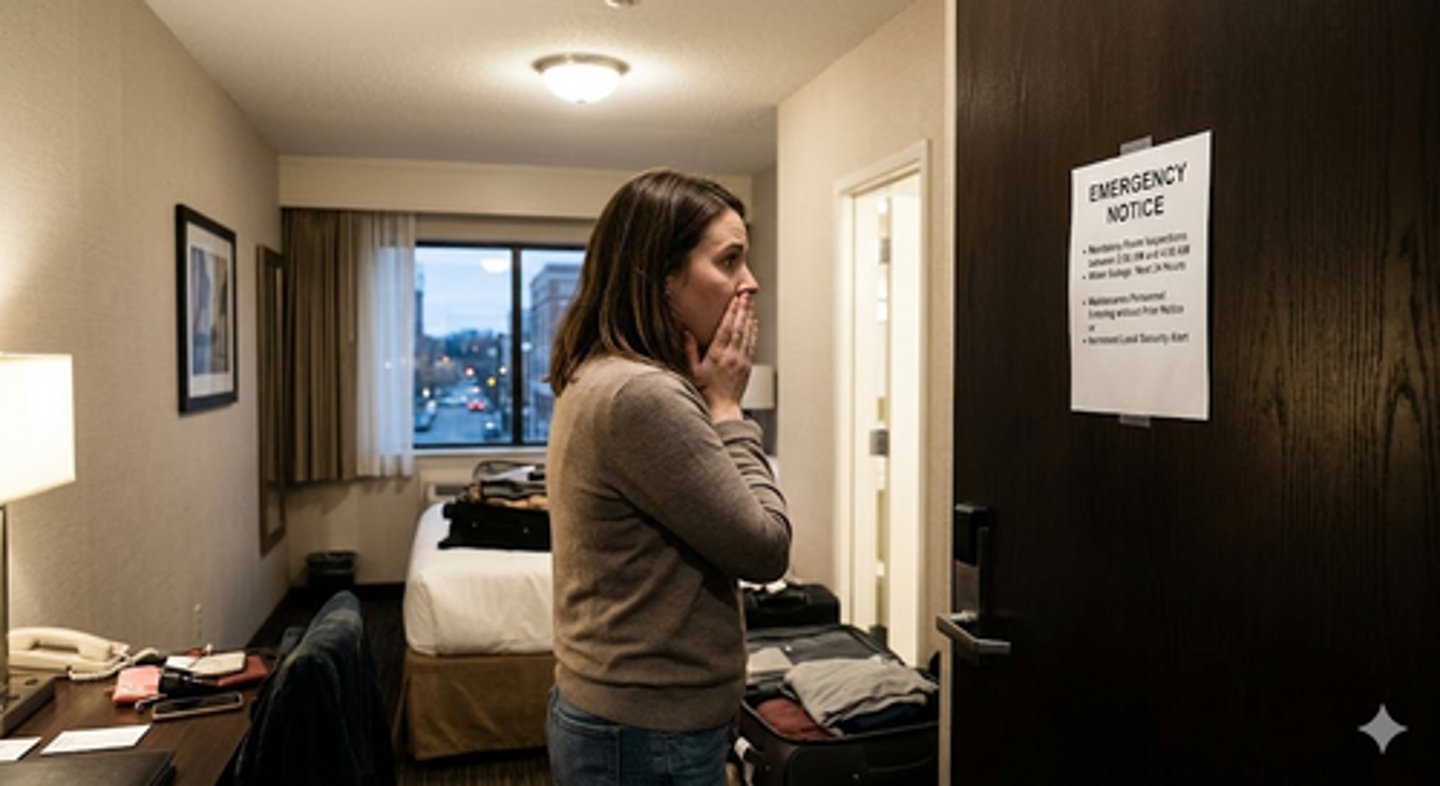
Facts: C paid for hotel room which, inside, had a notice stating the hotel would not be responsible for any lost/stolen items. C left the hotel and forgot her expensive furs
Principle: Exclusion clause had not been successfully incorporated into the contract and was only made apparent after the time of contract at the reception.
Chapelton v Barry UDC (1940)
Chapter: Setting the Terms of the Contract (Incorporation of Express Terms: Notice)
Facts: C goes to beach on date and rents deck chairs, which he is given a ticket for. The chair eventually breaks underneath him and he is injured, but D claimed the back of the ticket held an exclusion clause.
Principle: Court ruled for C, as a reasonable person would not recognise that a ticket would have contractual effect.

Parker v South Eastern Railway (1877)
Chapter: Setting the Terms of the Contract (Incorporation of Express Terms: Notice)
Facts: C checks in bag at train station and is given a ticket that stated the maximum liability the station could face for lost luggage. When C returns, the luggage is lost.
Principle: Guidelines for degree of notice: (i) did the person receiving the notice know there was writing on it? (ii) did the person know the ticket contained or referred to conditions? (iii) did the person seeking to rely on the clause do what was reasonable to bring the existence of the clause to the notice of the other party?

Thompson v London Midland & Scottish Railway (1930)
Chapter: Setting the Terms of the Contract (Incorporation of Express Terms: Notice)
Principle: Where a party is suffering from a disability that hinders them from reading/understanding the contract, they must bring it to the attention of the other party or be bound. When they do, the contracting party must take reasonable steps to inform them of the terms they are signing to.

Spurling v Bradshaw (1956)
Chapter: Setting the Terms of the Contract (Incorporation of Express Terms: Notice)
Facts: C sent 8 barrels of orange juice to be stored at D's warehouse. D sent a receipt to D which had the conditions of storage printed on it as well as an exclusion clause for any losses resulting from negligence.
Principle: The more unreasonable a clause is, the greater the notice which must be given of it (e.g. bold writing, red ink, highlighted, etc)

Interfoto Picture Library v Stiletto (1989)
Chapter: Setting the Terms of the Contract (Incorporation of Express Terms: Notice)
Facts: C ordered 47 photographic transparencies from D. On the delivery note was a clause stating that they should be returned within 14 days of delivery or face a holding fee on GBP 5 per day. C returned them 4 weeks later and amassed vast arrears, arguing they would not pay as they had never dealt with D before and were not aware of their standard terms, and the note was sent after the deal was made.
Principle: In cases where a clause is not successfully incorporated into a contract, especially where the clause is onerous and the fees exorbitant, the party seeking to rely on the clause must take reasonable steps to bring the clause to the other party's attention.

Durber v PPB (2025)
Chapter: Setting the Terms of the Contract (Incorporation of Express Terms: Notice)
Facts: C played an online slot game that, due to a coding error, displayed the GBP 1 million jackpot win when the RNG only allocated GBP 20,000, but the operator relied on buried terms saying that server records were definitive and errors could void wins.
Principle: Where the game rules and on-screen display indicate that the prize is determined by what the player sees, and conflicting hidden terms are onerous or unclear, the player is entitled to the displayed win.

Parker-Grennan v Camelot (2024)
Chapter: Setting the Terms of the Contract (Incorporation of Express Terms: Notice)
Facts: C played an online slot game and the RNG correctly awarded GBP 10 but a visual glitch also showed matching numbers for GBP 1 million, but these were not part of the winning animation. The terms clearly stated that outcomes were pre-determined by D's computer system.
Principle: Where the terms clearly state that the RNG determines the outcome, and the on-screen display does not unequivocally represent a win, the operator is not bound by a misleading animation.

British Crane Hire v Ipswich (1975)
Chapter: Setting the Terms of the Contract (Incorporation of Express Terms: Course of Dealings)
Facts: Parties dealt on sale of a crane and C sent conditions stipulating that any costs arising out of the use of the crane would be covered by D after the crane was delivered. D never signed and the crane sank into the marshes.
Principle: Where parties are of equal commercial bargaining power, the conditions usually contained within industry contracts would be successfully incorporated based on the common understanding of the parties.

Kendall v Lillico (1969)
Chapter: Setting the Terms of the Contract (Incorporation of Express Terms: Course of Dealings)
Facts: C purchased poisoned bird food that killed chicks from D, who purchased it from a third party. They had an oral agreement with an exclusion clause for latent defects. C brought action against D, who brought action against the third parties
Principle: A clause must be clear if it is to exclude liability under a statutory implied term

McCutcheon v Macbrayne (1956)
Chapter: Setting the Terms of the Contract (Incorporation of Express Terms: Course of Dealings)
Facts: C delivered car to D to ship across to mainland. The ship sunk due to negligence and the car was destroyed. D gave exclusion clauses on previous occasions to C when he dealt with them in a commercial capacity (even though he never read it) for his employers but not this time.
Principle: C cannot be bound by a clause based on a previous course of dealing when he did not have the knowledge of a specific term, especially when dealing on a consumer basis.
ALSO
Principle: Previous dealings are only capable of importing a term into a later contract where actual or constructive knowledge of the terms is established, and the parties assent to them.
Hardwick Game Farm v Suffolk (1966)
Chapter: Setting the Terms of the Contract (Incorporation of Express Terms: Course of Dealings)
Principle: Constructive knowledge is enough for commercial dealings
Evans v Merzario (1976)
Chapter: Setting the Terms of the Contract (Incorporation of Express Terms: Overriding Oral Warranty)
Principle: If there is an overriding oral warranty that is agreed upon, the contracting party cannot then rely on its initial written contract

The Moorcock (1889)
Chapter: Setting the Terms of the Contract (How Terms are Implied into Contracts: Implied in Fact or by Custom/Usage)
Facts: C contracted to unload its ship at D's jetty. The ship was damaged when it settled on a hard ridge at low tide, and C argued there should be an implied term that D should be responsible for the safety of its ship while docked
Principle: The law will imply terms necessary to give business efficacy to the contract, but not merely because they appear reasonable or desirable.

Shirlaw v Southern Foundries (1939)
Chapter: Setting the Terms of the Contract (How Terms are Implied into Contracts: Implied in Fact or by Custom/Usage)
Facts: S was appointed managing director of SF for a fixed term of 10 years. SF was taken over by another company that altered pre-existing articles and sacked S prior to the expiration of their contract, bringing a claim to recover damages for breach of contract.
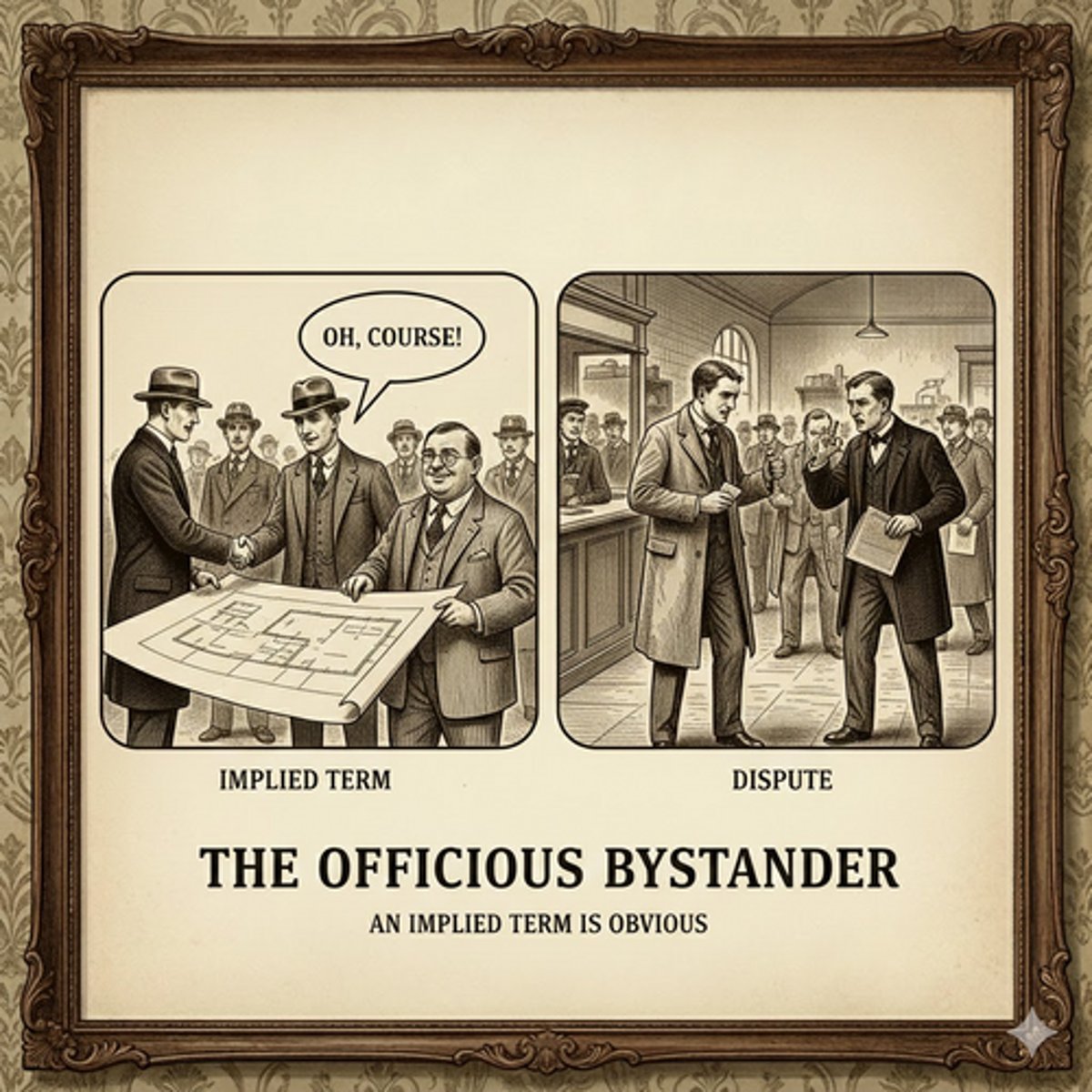
Principle: It is an implied term of a contract that neither party will do anything to render performance of the contract impossible. A company may alter its articles of association but will be liable in damages if alteration breaches a pre-existing contract. A term is implied that if an officious bystander were to suggest it, the parties would reply, "Oh, of course!"
Marks and Spencer v BNP Paribas (2015)
Chapter: Setting the Terms of the Contract (How Terms are Implied into Contracts: Implied in Fact or by Custom/Usage)
Principle: A term will be implied into a contract if a 'reasonable reader' reading the contract at the time it was made 'would consider the term to be so obvious as to go without saying.' Business efficacy and obviousness are alternative, not cumulative.
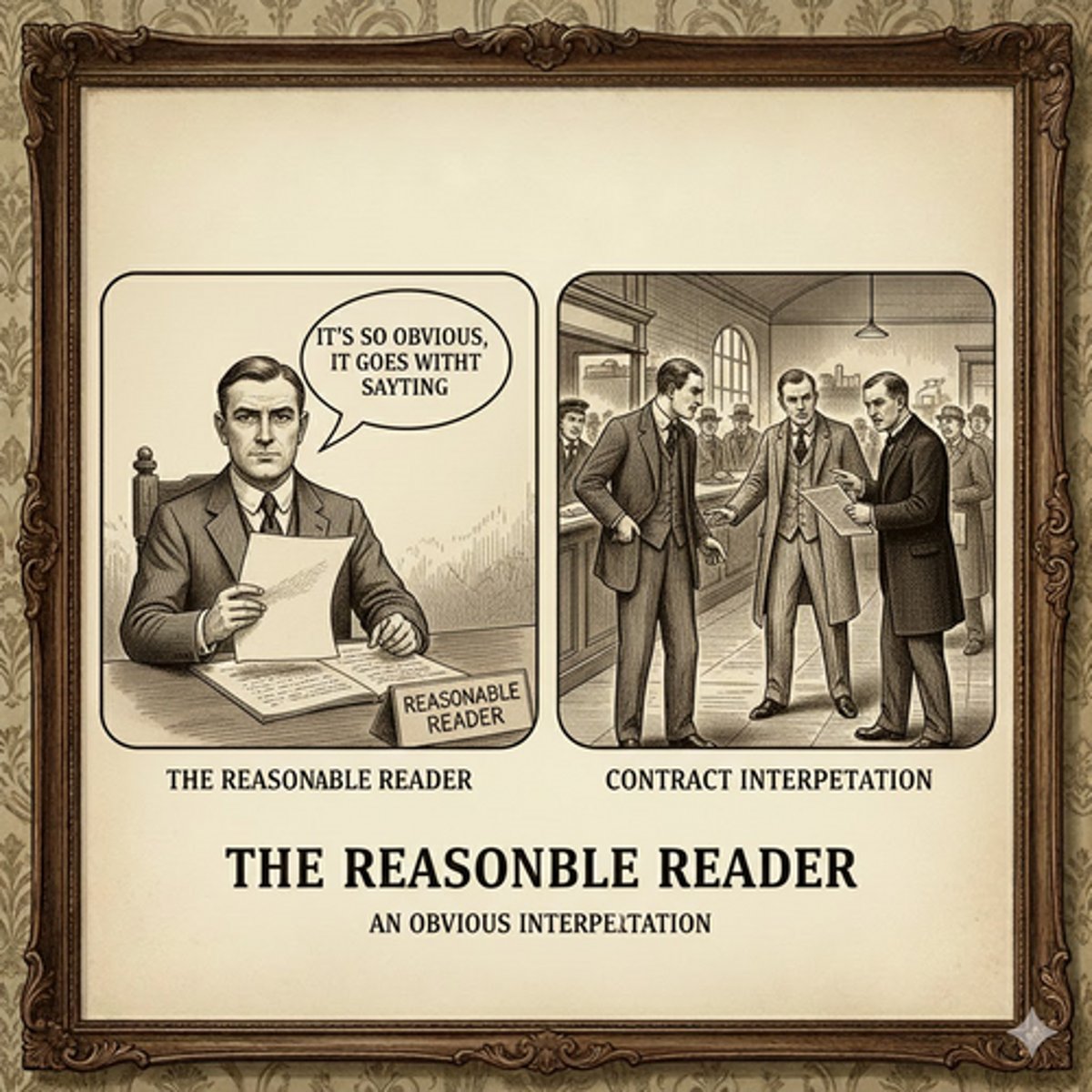
Liverpool City Council v Irwin (1977)
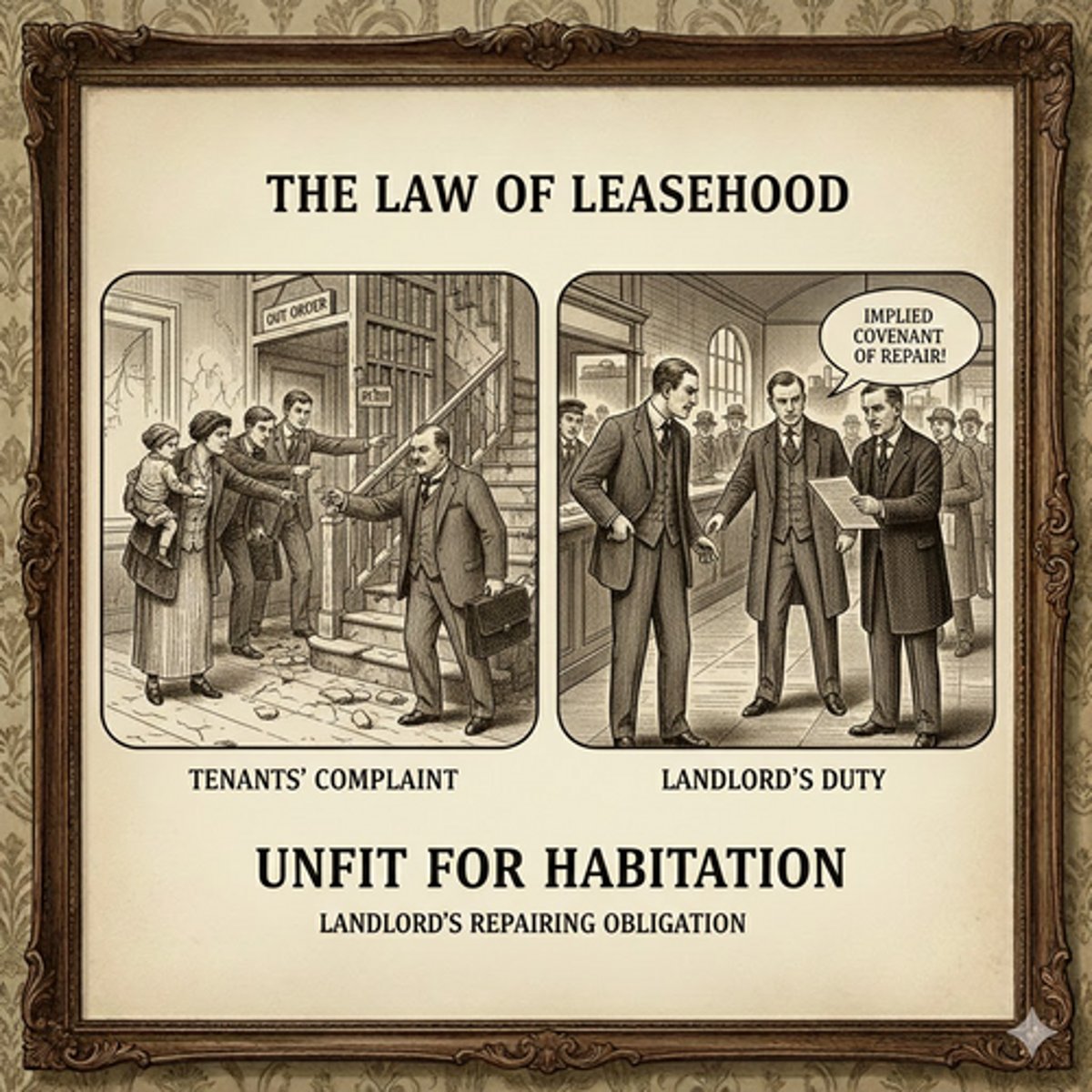
Chapter: Setting the Terms of the Contract (How Terms are Implied into Contracts: Implied by Law at Common Law)
Facts: Tenants stopped paying rent to the landlord who sued for possession. Tenants counterclaimed that the court should imply into their tenancy agreements a duty of their landlord to repair the common parts of the building such as the staircases and lifts.
Principle: Court held that a term should be implied if necessarily required by the nature of the contract, not merely because it would be reasonable (an absolute obligation goes beyond what is necessary). In comparison with the business efficacy test, the necessity test is more stringent.
Decro-Wall v Practitioners in Marketing (1971)
Chapter: Setting the Terms of the Contract (The Classification of Contractual Terms: Warranties)
Facts: Decro-Wall sold mock self-adhesive wall tiles and sold to French company in France. DW kept getting late payments for bills and eventually stopped supplying to French company
Principle: Breach of warranty gives rise only to damages, not a right to terminate. Wrongful termination may itself amount to repudiation

Hongkong Fir Shipping v Kawasaki (1962)
Chapter: Setting the Terms of the Contract (The Classification of Contractual Terms: Conditions)
Facts: Old ship chartered for sale of goods, and ship became off-hire for long period due to engine failure (is seaworthiness/hire condition a warranty or a condition?)
Principle: There are many contractual undertakings which cannot be categorized as being conditions or warranties. Established existence of innominate terms, which are neither conditions nor warranties until the term is breached, upon which they are classified as one of the two depending on the seriousness of the breach. The test is whether the breach deprives the innocent party of substantially the whole benefit of the contract.
ALSO
Chapter: Discharge of Contract (Discharge by Breach: Classification)
Principle: If a party tries to terminate when they do not have the right to do so, they themselves become in breach of contract for wrongful termination

The Mihalis Angelos (1971)
Chapter: Setting the Terms of the Contract (The Classification of Contractual Terms: Conditions)
Facts: Owners of the ship chartered it to the D to use for the carriage of cargo. A clause stated that it would be ready to load by July 1 but the owners knew it would not be ready until at least July 14. D cancelled the contract on July 17 and C brought action for breach of condition. D counterclaimed that the owners were in breach of condition.
Principle: An expected ready to load clause is a condition even if it causes no loss to the injured party. The classification as a condition is because of the need for commercial certainty in shipping contracts.

Couchman v Hill (1947)
Chapter: Setting the Terms of the Contract (The Classification of Contractual Terms: Conditions)
Facts: In a cow auction, the catalogue stated that they were unserved (had never borne a child) and were sold with all faults and imperfections. C asked if the cows were truly unserved which was confirmed. He then purchased a pregnant cow which later died from pregnancy and sued for breach of contract.
Principle: An oral statement made at the time of contracting may amount to a contractual term, overriding exclusion clauses if reliance is shown

Bunge v Tradex (1981)
Chapter: Setting the Terms of the Contract (The Classification of Contractual Terms: Conditions)
Facts: Late notice was given by the buyer of soya bean meal (D) to the seller (C) as to the time of shipment. C sued D for damages for wrongful repudiation of contract on the ground that the term fixing the notice period (time clause) was a condition. D argued the time clause was an innominate term.
Principle: The parties' intention is relevant as to whether a term is a condition, warranty, or innominate term, and the express use of the words in the contract is not required. Time clauses are typically conditions in commercial contracts as time is of the essence to commercial parties

Bentsen v Taylor (1893)
Chapter: Setting the Terms of the Contract (The Classification of Contractual Terms: Conditions)
Principle: To determine whether a term is a warranty or condition, the courts must look at the contract in light of the surrounding circumstances and then make up their mind whether the intention of the parties will be best carried out by treating the promise as a warranty sounding only in damages, or as a condition.
Schuler v Wickman Machine Tool (1974)
Chapter: Setting the Terms of the Contract (The Classification of Contractual Terms: Conditions)
Facts: Man would come on a regular basis to service machine in factory (condition in contract)
Principle: The use of the word condition does not make something a condition (not determinative). The parties must have intended, upon using the word condition, that a breach would immediately leave the injured party in a position to set it aside.

The Hansa Nord (1976)
Chapter: Setting the Terms of the Contract (The Classification of Contractual Terms: Conditions)
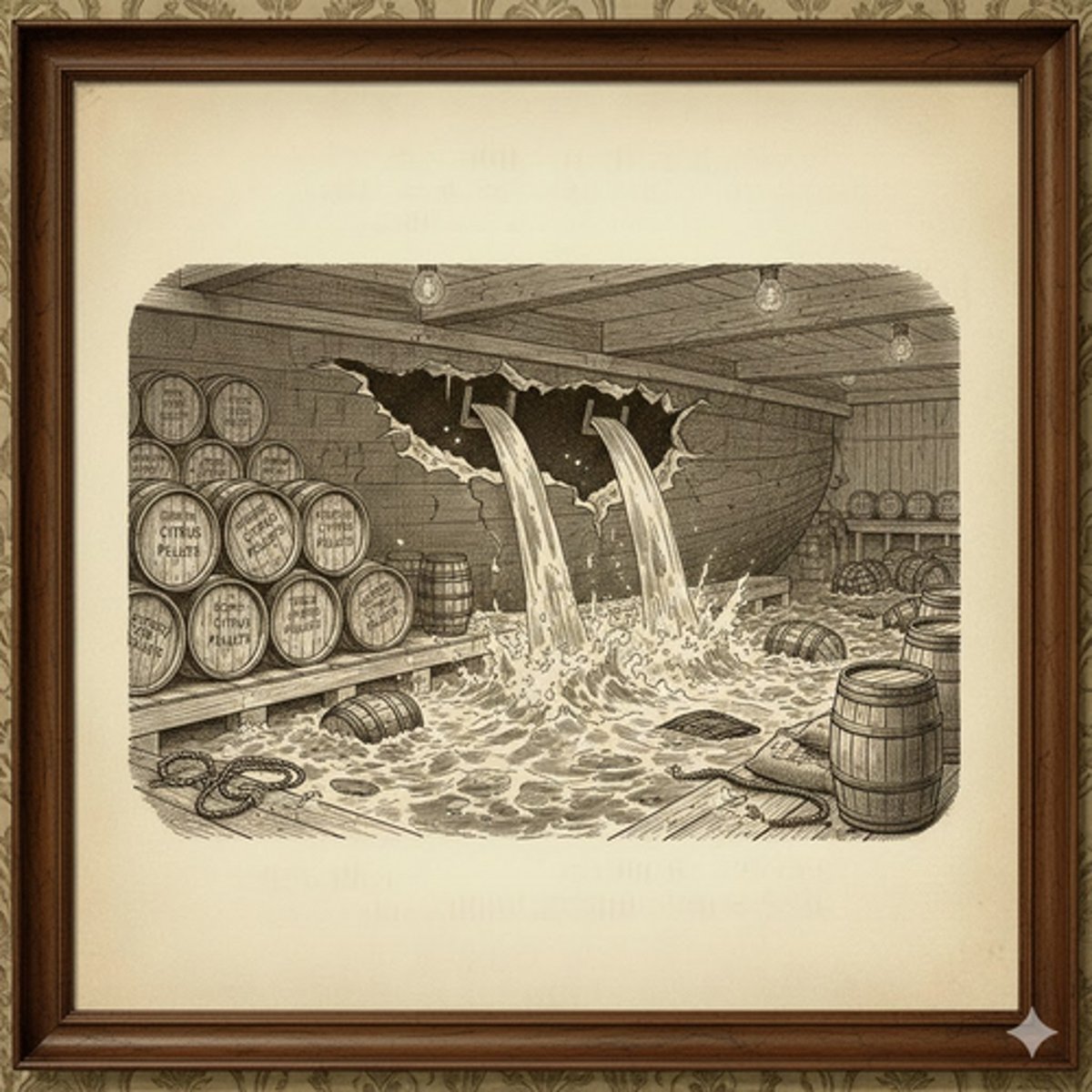
Facts: Seawater enters hull of vessel and damages citrus pellets being sold. On arrival, the buyer refuses to take the goods, arguing that they are not fit for purpose. Goods are auctioned at port and original buyer purchases at much lower price
Principle: Injured buyer entitled to damages but not rejection in cases of intermediate stipulations where the goods are only partially damaged
Rainy Sky v Kookmin Bank (2011)
Chapter: Freedom of Contract
Principle: More than one possible meaning is possible in the terms of the contract. The one that should be construed by the courts is the one that is consistent with business common sense, and the other is to be rejected. However, it cannot override clear language.
Chartbrook v Persimmon Homes (2009)
Chapter: Freedom of Contract
Principle: Where a written agreement does not reflect the parties' true agreement, the court may order rectification; prior negotiations remain inadmissible for interpretation.
Arnold v Britton (2015)
Chapter: Freedom of Contract
Principle: Where drafting is poor, the court will still give primacy to the natural meaning of the words unless ambiguous.
Yam Seng v ITC (2013)
Chapter: Freedom of Contract (Good Faith)
Facts: Under a distribution contract, D gave rights to C to distribute fragrances bearing 'Manchester United' in Asia. C alleged breach of contract as orders were not shipped promptly, and that D offered the same products for sale at a lower price in Asia and provided false information it knew C would rely on for marketing. C sought a declaration that there was an implied term for good faith in the performance of the contract and that the term was breached
Principle: Held that the courts could imply a term of good faith in a contract, which would be breached when the conduct would be regarded as commercially unacceptable by reasonable and honest people. (mainly relevant to B2B contracts as consumers now benefit from the CRA 2015).

Barganza v BP Shipping (2015)
Chapter: Freedom of Contract (Good Faith)
Facts: Officer on vessel owned by BP Shipping disappeared on board. Wife argued there was a policy of insurance on his life were he to die, and BP argued he committed suicide so they had no liability (yet no evidence of this).
Principle: Took Wednesbury unreasonableness principle and applied it to contract law (a decision that is so unreasonable that no reasonable person could have made it)

Tesco Stores v USDAW (2024)
Chapter: Freedom of Contract (Good Faith)
Facts: D remodelled distribution centres by closing old ones and opening new ones. To incentivise workers who worked at an old distribution centre to work at new one (further away), they offered greater pay for "indefinite" period that could only be terminated by mutual consent. After 15 years, D threatened to fire workers and re-hire them on standard contracts if they did not mutually consent to lower their enhanced pay contracts.
Principle: Court ruled that the term "indefinite" has one meaning (as long as employees worked at Tesco). Withdrawing the benefit defeated the contractual purpose.
ALSO
Chapter: Equitable Remedies (Specific Performance: Settled Principles)
Principle: Established exception where specific performance may be awarded against the employer in a personal services contract where it is just to make the order, and the employer retains sufficient confidence in the employee

Aisla Craig Fishing v Malvern Fishing (1983)
Chapter: Freedom of Contract (Commercial Contracts and Exemption Clauses)
Facts: C's vessel sank after being negligently struck by another vessel while moored in a harbour that the D had contractually agreed to protect. The security contract contained a clause limiting the defendant's liability for negligence or breach of contract to £1,000 per claim or £12,000 per year, except in cases of fire or theft.
Principle: Clause was not an exclusion but a limitation clause. Although courts are less hostile to such clauses and make less effort to interpret them in a way that strains the language of the clause, a limitation clause can be so strict as to make the distinction futile.
Triple Point Technologies v PTT Public (2021)
Chapter: Freedom of Contract (Commercial Contracts and Exemption Clauses)
Principle: Unless a contract clearly provides otherwise, liquidated damages for delay accrue up to termination and any liquidated damages that have accrued before termination survive as accrued rights; termination merely stops further accrual. Limitation clauses are construed by ordinary principles of interpretation, and a party will not be taken to have surrendered valuable rights (e.g. for negligence) unless the contract uses clear words to that effect.
George Mitchell v FInney Lock Seeds (1983)
Chapter: Freedom of Contract (Commercial Contracts and Exemption Clauses)
Principle: The fact that an exemption or limitation clause is typically not enforced in practice by commercial parties will be treated as evidence by the court the clause is unreasonable under UCTA 1977 s11. "Whenever the wide words - in their natural meaning - would give rise to an unreasonable result, the judges either rejected them as repugnant to the main purpose of the contract, or else cut them down to size in order to produce a reasonable result."
ALSO
Principle: Case on the SGA 1979 with the belief of reasonableness will apply to UCTA as well. Court looked at D's practice, and saw he had a tendency to settle in these disputes and it would have been easier for him to insure, and the breach being cause by D's negligence. They conclude the term was not reasonable.

Persimmon Homes v Ove Arup (2017)
Chapter: Freedom of Contract (Commercial Contracts and Exemption Clauses)
Principle: Contra proferentem is a legal doctrine where ambiguous contract language is interpreted against the party who drafted or proposed it. It acts as a penalty for using vague terms, shifting the benefit of the doubt to the weaker party. This principle is frequently applied to exclusion, limitation of liability, and insurance contracts. Does not apply when interpreting commercial contracts negotiated between parties of equal bargaining power.
Transocean Drilling v Providence Resources (2016)
Chapter: Freedom of Contract (Commercial Contracts and Exemption Clauses)
Principle: The contra proferentem rule should only apply where an exclusion clause is one-sided and ‘genuinely ambiguous’.
Canada Steamship v The King (1952)
Chapter: Freedom of Contract (Commercial Contracts and Exemption Clauses)
Facts: Canada Steamship Lines leased dock property from the Crown under a contract containing an exclusion clause for damage to goods stored in a freight shed, which the Crown was contractually obliged to maintain. The shed was negligently destroyed by a Crown employee during maintenance, and the Crown relied on the exclusion clause to deny liability for the resulting damage.
Principle: Sets out test: (i) if the clause contains language which expressly exempts the person in whose favour it is made from the consequences of his negligence, effect must be given to the clause, (ii) if there is no express reference to negligence, the court must consider whether the words used are wide enough to cover the negligence, (iii) if the words used are wide enough to cover such negligence, the court must then consider whether liability may be based on some ground other than that of negligence.
Amiri Flight Authority v BAE Systems (2003)
Chapter: Freedom of Contract (Regulation by Statute: Unfair Contract Terms Act 1977)
Facts:
Principle:
Balmoral Group v Borealis (2006)
Chapter: Freedom of Contract (Regulation by Statute: Unfair Contract Terms Act 1977)
Facts: Aircraft supplied in England but contract formed in Abu Dhabi.
Principle: Not an international supply contract under s26. Just because the contract involved a foreign party and was formed abroad, it does not automatically make it an "international supply contract" under s26. The key factor is whether the contract meets the precise conditions in s 26 ("Supply is to a person whose business is outside the UK") which it did not.

Trident Turboprop v First Flight Couriers (2009)
Chapter: Freedom of Contract (Regulation by Statute: Unfair Contract Terms Act 1977)
Principle: Confirmed Amiri Flight Authority. Where the supply of goods is taking place to a person whose business is outside the UK, it may fall under the s26 exclusion and does not require a reasonableness test.
Thompson v Lohan (1987)
Chapter: Freedom of Contract (Regulation by Statute: Unfair Contract Terms Act 1977)
Facts: D hired plant machinery with operators; one operator was killed due to the negligence of another. The deceased's estate sued the D under a clause stating that operators were considered the hirer's servants and that the hirer would bear liability for losses from using the machinery. C argued the clause was unclear or an unenforceable exclusion clause under UCTA 1977 s 2(1).
Principle: Clauses that allocate liability between parties, rather than exclude liability to victims, are valid at common law and do not fall within UCTA s2(1).

St Albans City and District Council v International Computers (1995)
Chapter: Freedom of Contract (Regulation by Statute: Unfair Contract Terms Act 1977)
Principle: A computer disk onto which software has been encoded, is a "good" for the purposes of SGA 1979 which can be subject to the UCTA reasonable requirements. Software in itself, without a disk, is not a "good".

Keen v Commerzbank (2006)
Chapter: Freedom of Contract (Regulation by Statute: Unfair Contract Terms Act 1977)
Principle: An employee could reasonably be regarded as a 'consumer' under UCTA if the employer supplied him with services or goods for consumption
Britvic v Messer (2002)
Chapter: Freedom of Contract (Regulation by Statute: Unfair Contract Terms Act 1977)
Facts: M supplies CO2 with dangerous carcinogen and B realised later and sued, forcing them to recall their soft drinks from the market. M had a term excluding liability for fitness for purpose under SGA and was reasonable as they did not manufacture the CO2 but sourced it from another supplier so they did not know.
Principle: Court ruled this was unreasonable through a test in s11 despite equal bargaining power
ALSO
Chapter: Remedies for Breach of Contract: Compensation (Principles Limiting Compensatory Damages: Mitigation)
Principle: The law takes a tender approach to those who have been placed in a predicament by a breach of contract (no need to do everything possible, merely take reasonable steps to mitigate)

FG Wilson v John Holt (2012)
Chapter: Freedom of Contract (Regulation by Statute: Unfair Contract Terms Act 1977)
Principle: A limitation or exclusion clause in a commercial contract between parties of equal bargaining power will generally be upheld under UCTA where it is part of a negotiated agreement allocating risk, even if the clause limits liability for breach of implied terms under the SGA.
Smith v Eric S Bush (1989)
Chapter: Freedom of Contract (Regulation by Statute: Unfair Contract Terms Act 1977)
Principle: For the UCTA reasonableness test, courts must examine: (i) were the parties of equal bargaining power? (ii) in the case of advice, would it have been reasonably practicable to obtain the advice from an alternative source taking into account considerations of costs and time? (iii) how difficult is the task being undertaken for which liability is being excluded? (iv) what are the practical consequences of the decision on the question of reasonableness?
Watford Electronics v Sanderson (2001)
Chapter: Freedom of Contract (Regulation by Statute: Unfair Contract Terms Act 1977)
Principle: Court must examine scope and effect of the term when determining reasonableness
Barclay's Bank v Kufner (2008)
Chapter: Consumer Contracts and Unfair Terms (Application of CRA 2015: Definitions)
Principle: Sophisticated, wealthy guarantors cannot rely on UCTA to avoid obligations when dealing on commercial terms. "No set-off" clauses in bank guarantees are reasonable when negotiating with sophisticated parties and that shareholders cannot claim for "reflective loss" suffered by their company.
Ashfaq v IIC (2017)
Chapter: Consumer Contracts and Unfair Terms (Application of CRA 2015: Definitions)
Facts: A bought property and let it to students. Question arose with insurer with regards to whether A was a consumer or not
Principle: An individual acting for purposes wholly or mainly outside that individual's trade, craft or profession is a consumer. Selling to students is done on a business basis

Office of Fair Trading v Abbey National (2009)
Chapter: Consumer Contracts and Unfair Terms (Application of CRA 2015: Core Terms)
Facts: Appellants ran banks. Banking with the appellants was free so long as the customer was in credit. This was subsidised by heavy fees on unauthorised overdrafts, which accounted for 30% of the banks' revenue stream. C challenged the overdraft fees, arguing that they were excessive and unfair under the Unfair Terms in Consumer Contracts Regulations 1999
Principle: Overdraft fees fall within the concept of price or remuneration (which must be adequate and not excessive under the Regulation). It did not matter that the charges were contingent and most customers would never incur them
ALSO
Chapter: Consumer Contracts and Unfair Terms (Application of CRA 2015: Unfair Contract Terms)
Principle: Difference between simple (one main service provided) and composite (multiple services bunched together) contracts. In composite service contracts, the main subject matter must be identified at a general level, as courts cannot objectively rank individual services within a bundled offering
Director General of Fair Trading v First National Bank (2001)
Chapter: Consumer Contracts and Unfair Terms (Application of CRA 2015: Core Terms)
Facts: The D's standard terms for loans included a term governing the consequences of borrower defaulting on their payments. It provided that interest would continue to be payable at a particular rate until the bank was able to discharge any judgment obtained against the debtor
Principle: The core terms of a loan agreement cover issues such as the level of interest charged. The term in question was not a core term, but an incidental clause designed to ensure the bank's right to interest continued after judgment was entered. As a result, it could be assessed for fairness. The default clause was clear and unambiguous and applied only to contractual interest, not statutory interest. Although a consumer may not have been aware of the clause, there was no statutory or customary requirement to highlight it
ALSO
Chapter: Consumer Contracts and Unfair Terms (Application of CRA 2015: Unfair Contract Terms)
Principle: Not a core term as it occurred after the breach of the main contract (ancillary term) and is not procedural but substantive
Verein v Amazon (2016)
Chapter: Consumer Contracts and Unfair Terms (Application of CRA 2015: Unfair Contract Terms)
Principle: ECJ decision; a choice-of-law clause in consumer contracts designating the law of the seller's country is invalid if it deprives consumers of protection from mandatory laws in their home country. The court deemed such terms potentially unfair if they mislead consumers about their rights, and the fairness of terms must be assessed based on the law of the consumer's country of residence
ParkingEye v Beavis (2015)
Chapter: Consumer Contracts and Unfair Terms (Application of CRA 2015: Unfair Contract Terms)
Facts: D displayed around 20 large, prominent, and legible signs throughout the car park, clearly informing users of the parking terms, including a 2-hour maximum stay (or 4 hours for fitness centre members) and warning that non-compliance would result in an £85 parking charge. Additional details, including potential reductions and a maximum charge of £150 before court action, were set out in smaller but readable text
Principle: Private parking charges, even if high (e.g., £85), are not inherently unenforceable "penalties" if they serve a legitimate commercial interest and are clearly displayed. The ruling validated strict overstay penalties to manage traffic flow

Bairstow Eves London v Smith (2004)
Chapter: Consumer Contracts and Unfair Terms (Application of CRA 2015: Unfair Contract Terms)
Principle: A different treatment of commission rates, if inconsistent and illogical, may be unfair, and is not a core price term but a penalty-like provision thus subject to the fairness test
Munkenbeck & Marshall v Harold (2005)
Chapter: Consumer Contracts and Unfair Terms (Application of CRA 2015: Unfair Contract Terms)
Principle: Terms unfair as they were onerous and unusual under unfair contract directive, and it did not matter that the terms were part of an industry standard
Bryen & Langley v Boston (2005)
Chapter: Consumer Contracts and Unfair Terms (Application of CRA 2015: Unfair Contract Terms)
Principle: Identity of party putting forward term is important; where the term is put forward by the consumer or the consumer's personal advisor, it is less likely to be unfair
West v Ian Finlay (2014)
Chapter: Consumer Contracts and Unfair Terms (Application of CRA 2015: Unfair Contract Terms)
Facts: Consumer had extensive business dealings in the area of building houses
Principle: Court examines whether consumer has substantial experience in the area, and whether or not the term is unfair as a result. Although the experience may be in a professional capacity, the term is still less likely to be unfair if put forward by the consumer
OFT v Ashbourne Management (2001)
Chapter: Consumer Contracts and Unfair Terms (Application of CRA 2015: Unfair Contract Terms)
Principle: Significant imbalance of power is necessary to find that a term is unfair

Lambard North Central v Butterworks (1987)
Chapter: Discharge of Contract (Discharge by Breach: Classification)
Principle: Prompt sale of computers was "of the essence of the contract", so when the hirer did not pay promptly, the owners could terminate the contract and sue for damages

Schuler v Wickman Tools (1974)
Chapter: Discharge of Contract (Discharge by Breach: Classification)
Principle: Parties used word 'condition' in contract, but the court argued it only constituted a condition where the parties intended it to be used in its technical sense. The more unreasonable the use of the term was, the less likely it was an actual condition.

Poussard v Spiers (1875)
Chapter: Discharge of Contract (Discharge by Breach: Classification)
Facts: Opera singer contracted to perform did rehearsals and became ill and missed performances. Contracting party found replacement
Principle: The term goes to the root of the contract and is thus a condition. Innocent party can terminate the contract if there is a breach of condition

Bettini v Gye (1876)
Chapter: Discharge of Contract (Discharge by Breach: Classification)
Facts: Singer contracted for 3 months but became ill. Singer only missed 3 days of rehearsals but made all performances
Principle: Innocent party can claim damages if there is a breach of warranty

Grand China Logistics v Spar Shipping (2016)
Chapter: Discharge of Contract (Discharge by Breach: Classification)
Principle: The modern approach is that a term is innominate unless a contrary intention is made clear
Arcos v Ronassen (1933)
Chapter: Discharge of Contract (Discharge by Breach: Flexibility)
Facts: Purchasers stipulated barrels for purchase must be ½ inch thick but the barrels were instead barely thicker. By the time of contract, purchasers realised price of wood had dropped, so they wanted a way out of the contract and used this as an excuse to terminate
Principle: Court agreed and stated this was a breach of contract, developing a rigid approach to classifying contractual terms on the specifications of goods as conditions, even when it concerns small deviations that do not undermine 'fit for purpose.'

Stocznia Gdanska v Latvian Shipping (1998)
Chapter: Discharge of Contract (Discharge by Breach: Right of Election)
Principle: Period of time allowed for innocent party to decide between termination and affirmation. However, party cannot wait too long or court will rule that they affirmed the contract. Reasonable period to decide is based on commercial/contractual context.

The Santa Clara (1996)
Chapter: Discharge of Contract (Discharge by Breach: Right of Election)
Principle: To terminate the contract, the innocent party must communicate the decision to terminate the contract either by words or by conduct so long as it is sufficiently clear. Termination may occur by non-performance of obligations but it must be clear
The Kanchenjunga (1990)
Chapter: Discharge of Contract (Discharge by Breach: Right of Election)
Principle: Election is final. A party that affirms/terminates cannot go back and choose the other option once their decision is made

Hochster v De La Tour (1853)
Chapter: Discharge of Contract (Discharge by Breach: Anticipatory Breach)
Facts: Courier employed by C for 3 months starting on 1 June. On 11 May (before he began) he was told he was not needed anymore. Did he have to wait until 1 June for performance or could he immediately terminate before performance.
Principle: Innocent party can terminate and claim damages before the date for performance, and need not wait until the breach has occurred to bring a claim when there is an anticipatory breach (can sue immediately)

White and Carter v McGregor (1962)
Chapter: Discharge of Contract (Discharge by Breach: Right of Election)
Facts: Appellants contracted to stick adverts on the side of garage and were told their services were not needed before their contract began. However, they began performance and decided to affirm to claim contractual price for the 2-year period.
Principle: Court ruled the innocent party can affirm and claim the contractual price where there is an anticipatory breach
ALSO
Chapter: Remedies for Breach of Contract: Compelling Performance (The Award of an Agreed Sum)
Principle: The innocent party must be able to complete the contract and earn the contract price without the assent or cooperation of the other party, and have a legitimate interest in performing the contract rather than claiming damages

Hounslow v Twickenham (1971)
Chapter: Discharge of Contract (Discharge by Breach: Right of Election)
Facts: C contracted with D (builders) to construct housing, and Ds were given possession of the construction site for 4 years. Ds were told their services were not needed any longer but began construction to affirm the contract and claim contractual price
Principle: Added criteria to White and Carter: not possible in a case to affirm and claim price where the innocent party needs the contract breaker’s cooperation (they need C’s permission to get on their land to affirm)

The Dynamic (2003)
Chapter: Discharge of Contract (Discharge by Breach: Right of Election)
Principle: Not possible in this case to affirm and claim price, another criteria added to White and Carter. Requirement: innocent party must have a legitimate interest in performance. However, it is only in extreme cases where damages would be an adequate remedy and where affirmation would be unreasonable
Averay v Bowden (1856)
Chapter: Discharge of Contract (Discharge by Breach: Risks of Affirmation)
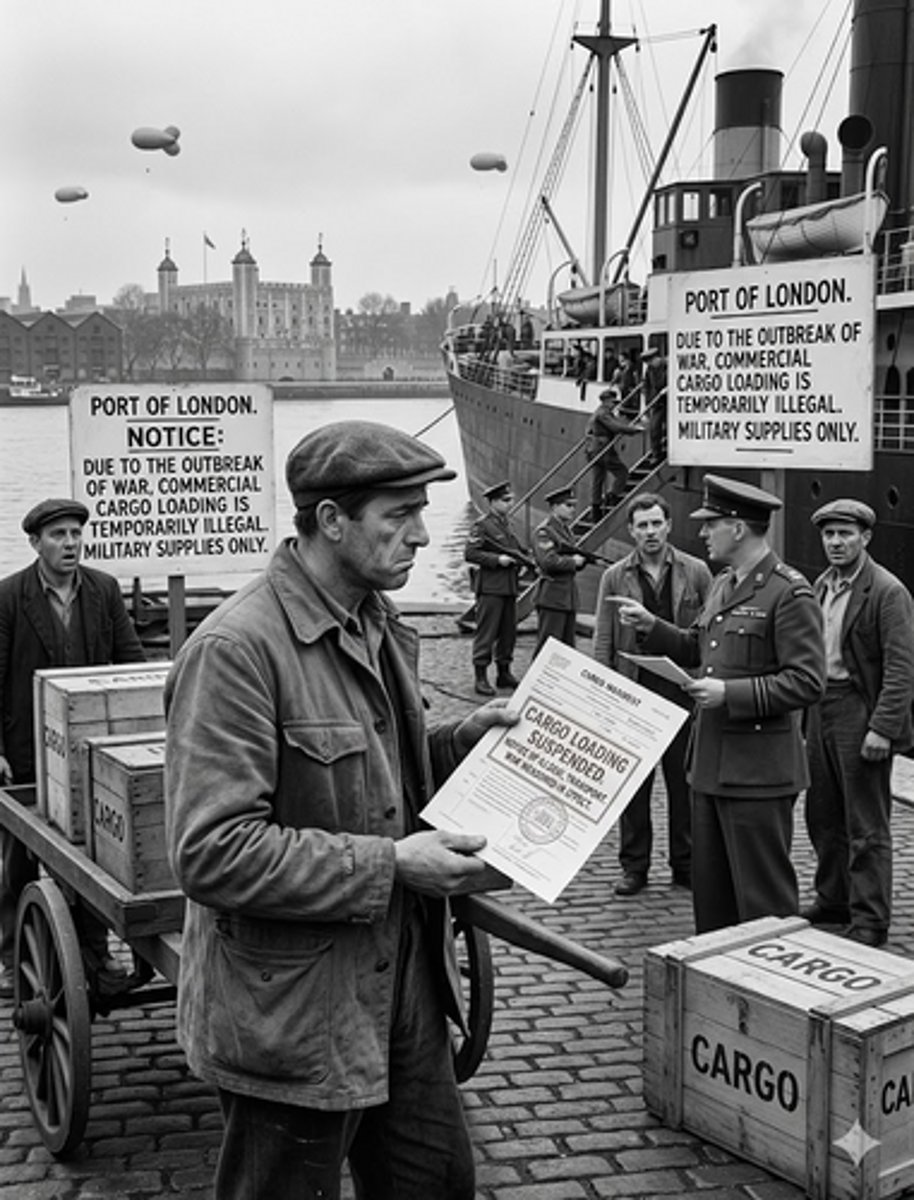
Facts: D to load cargo but was told not to before performance. D decided to remain and affirm contract and claim contract price. However, while waiting, war broke out and loading cargo was made illegal
Principle: D cannot affirm contract where there is a supervening illegality
The Simona (1989)
Chapter: Discharge of Contract (Discharge by Breach: Risks of Affirmation)
Facts: Charterers entered into agreement with ship owners for vessel with a clause allowing termination if the vessel was not ready to load by 9 July. Charterers gave noting to cancel contract prematurely but the owners did not accept and continued loading the vessel and tendering a notice of readiness on 8 July, However, the vessel was not ready and the owners claimed for damages for wrongful repudiation
Principle: In the case of wrongful repudiation by one party, the non-repudiating party has the option of either accepting the repudiation or affirming the contract by continuing to fulfil their obligations. If the innocent party affirms the contract, he must continue to tender performance thereof, however the owners failed their obligations after affirmation. As such, the charterers can exercise their contractual right of termination

Cutter v Powell (1795)
Chapter: Discharge of Contract (Discharge by Performance: General Rule)
Facts: Sailor employed on ship to act as second-mate from Jamaica to England. He died halfway through the journey but was promised 30 guineas when he got back to England. His wife tried to sue for 30 guineas
Principle: General rule: if you fail to complete your obligations under an entire contract, you receive nothing

Sumpter v Hedges (1898)
Chapter: Discharge of Contract (Discharge by Performance: Avoiding the Entire Obligations Rule)
Facts: Builder contracted to build on land for lump sum of GBP 565 but only completed part of the work amounting to a value of GBP 333 before abandoning the contract. Builder brought action against land owner for full payment of GBP 333
Principle: Under a contract of work for a lump sum payment, the contractual price cannot be recovered in whole or part until performance is completed. If you accept partial performance, the acceptance must be voluntary, and it cannot be voluntary if it is on one’s own land. C could get a quantum meruit (as much as they deserve) if there was a new contract for partial works but there was none. C could claim nothing

Hoeing v Isaacs (1952)
Chapter: Discharge of Contract (Discharge by Performance: Avoiding the Entire Obligations Rule)
Facts: Builder paid lump sum of GBP 750 and, upon completion, there remained an outstanding balance of GBP 350. There were certain defects the cost of repair of which was GBP 55. The employer refused payment of the outstanding balance claiming a repudiatory breach
Principle: If the contract was almost (substantially) completed, the contract price can be claimed minus the deductions for the defects. This is because only breaches that go to the root of the contract are conditions, and these defects are merely enforceable as innominate terms.

Bolton v Mahadeva (1972)
Chapter: Discharge of Contract (Discharge by Performance: Avoiding the Entire Obligations Rule)
Facts: C installed central heating in D's home. The agreed contract price was GBP 560, but the D was not happy with the work and refused to pay. Defects in the work amounted to GBP 174
Principle: Not substantial performance as they were not close to finishing. Defects may be taken into account

Alfred McAlpine v Panatown (2001)
Chapter: Remedies for Breach of Contract: Compensation (Main Rules)
Facts: Land on which building was constructed on contract was on third party's land, so innocent party could not sue as the land was owned by another company
Principle: Claimant can only recover damages in their own loss, not a third party's loss

Robinson v Harman (1848)
Chapter: Remedies for Breach of Contract: Compensation (Different Possible Objectives of Compensatory Damages: Damages Protecting the Claimant's Expectation Interest)
Principle: The rule of common law is, where a party sustains a loss by reason of breach of contract, he is, so far as money can do it, to be placed in the same situation with respect to damages, as if the contract had been performed
McRae v Commonwealth Disposals Commission (1951)
Chapter: Remedies for Breach of Contract: Compensation (Different Possible Objectives of Compensatory Damages: Damages Protecting the Claimant's Reliant Interest)
Principle: Reliance interest awarded where it is not possible to quantify the expectation measure
C&P Haulage v Middleton (1983)
Chapter: Remedies for Breach of Contract: Compensation (Different Possible Objectives of Compensatory Damages: Damages Protecting the Claimant's Reliant Interest)
Principle: Reliance interest not awarded where it would allow C to escape from a bad bargain
CCC Films v Impact Quadrant Films (1985)
Chapter: Remedies for Breach of Contract: Compensation (Different Possible Objectives of Compensatory Damages: Damages Protecting the Claimant's Reliant Interest)
Principle: If C seeks recovery for wasted expenditure, it is for D to prove that the contract would have been unprofitable
Omak Maritime v Mamola Challenger (2010)
Chapter: Remedies for Breach of Contract: Compensation (Different Possible Objectives of Compensatory Damages: Damages Protecting the Claimant's Reliant Interest)
Principle: Damages for reliance loss is a species of damages for expectation loss. As such, damages for reliance loss (i.e. lost expenditure) can only be claimed if the expectation loss (i.e. loss of gross profit/revenue) from the contract would have been of at least equal value
Radford v De Froberville (1977)
Chapter: Remedies for Breach of Contract: Compensation (Quantification of Expectation Damages)
Facts: Builder hired to remedy damage caused by Defendant
Principle: The price paid to remedy a breach of contract must also be compensated (cost of money to cure/remedy the problem)

Tito v Waddell no 2 (1977)
Chapter: Remedies for Breach of Contract: Compensation (Quantification of Expectation Damages)
Facts: Contract made in 1913 between mining company and island in the Pacific allowing mining for phosphorus so long as they replanted land with trees after. Years later, Islanders moved and mining company finished but did not replant
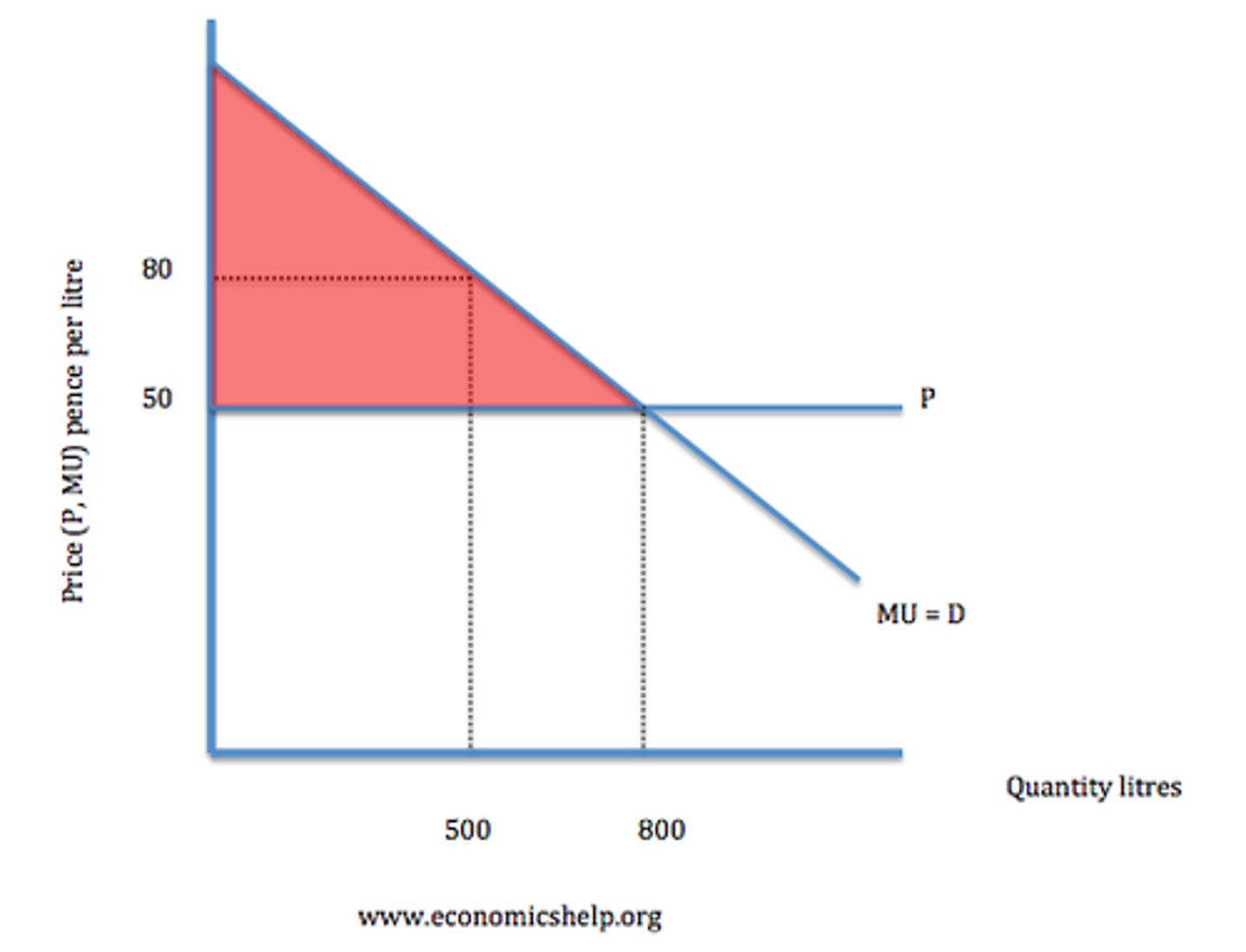
Principle: Difference in value is almost nothing (market value of the island vs market value of the island with coconut trees). Cost of cure ($73,000 per acre) is massive, and so mining company cannot be liable for that amount of money (consumer surplus: the excess utility or subjective value obtained from a "good" over and above the utility associated with its market price)

Ruxley Electronics v Forsyth (1996)
Chapter: Remedies for Breach of Contract: Compensation (Quantification of Expectation Damages)
Facts: C wanted swimming pool in his garden and contracted with D to build it. Pool meant to be 7ft 6 inches deep at its deepest point but was 6ft 9 inches. Difference in value was GBP 0, but cost of cure was GBP 21,000
Principle: Loss of amenity damages can be awarded (compensation for reduced quality of life and ability to enjoy full benefit of subject matter)

Newman v Framewood Manor Management (2012)
Chapter: Remedies for Breach of Contract: Compensation (Quantification of Expectation Damages)
Facts: C was excited to move into apartment where there was a jacuzzi but D changed the building so it was a sauna instead
Principle: Court examined C’s personal preferences and the value of what was lost and granted her loss of amenity damages, confirming Ruxley

Freeman v Niroomad (1996)
Chapter: Remedies for Breach of Contract: Compensation (Quantification of Expectation Damages)
Principle: Courts can award "consumer surplus" but it is rarely available
Addis v Gramophone (1909)
Chapter: Remedies for Breach of Contract: Compensation (Damages for Non-Pecuniary Loss)
Facts: C employed as manager by D. D gave 6 months' notice but appointed a replacement and prevented C from acting as manager
Principle: General rule that there is no reward of damages for mental distress or loss of reputation

Sunley v Cunard White Star (1939)
Chapter: Remedies for Breach of Contract: Compensation (Damages for Non-Pecuniary Loss)
Principle: In an action founded on breach of contract, the only kind of loss which is a subject for compensation is financial loss (not non-pecuniary loss)
Watts v Morrow (1991)
Chapter: Remedies for Breach of Contract: Compensation (Damages for Non-Pecuniary Loss)
Facts: Couple bought home in the country based on surveyor's report, but the surveyor failed to sport serious defects that meant it needed repairs (negligence). The repairs cost money and they had to live in the uncomfortable property for months, leading to relationship strains for the couple
Principle: Where a contract does not have the object of providing pleasure, damages for mental distress can nonetheless be awarded if it is the result of physical inconvenience caused by breach of contract
ALSO
Principle: Where the very object of a contract is to provide pleasure, relaxation, peace of mind, or freedom from molestation, damages will be awarded if the fruit of the contract is not provided or if the contrary result is procured instead.
ALSO
Principle: Damages are recoverable for physical inconvenience and discomfort caused by the breach and mental suffering directly related to that inconvenience and discomfort
Malik v Bank of Credit and Commerce (1998)
Chapter: Remedies for Breach of Contract: Compensation (Damages for Non-Pecuniary Loss)
Facts: Former employees of corrupt bank claimed damages for loss of reputation for stigma damages
Principle: Financial loss consequent upon loss of reputation is recoverable, as it is a financial/pecuniary loss
Farley v Skinner (2001)
Chapter: Remedies for Breach of Contract: Compensation (Damages for Non-Pecuniary Loss)
Facts: C considering buying a house near Gatwick Airport and worried about noise. Hired surveyor to monitor noise levels and argued it was unlikely the property would suffer from noise pollution. C purchased property based on this report and found noise levels to be higher than anticipated
Principle: It is sufficient if a major or important object of the contract is to give pleasure, relaxation, or peace of mind (broadened Watts v Marrow; no need to be the very object of the contract)
ALSO
Principle: If the cause of the inconvenience or discomfort is a sensory experience (sight, touch, hearing, smell, etc), damages can be recovered

Chaplin v Hicks (1911)
Chapter: Remedies for Breach of Contract: Compensation (Principles Limiting Compensatory Damages: Causation)
Facts: Beauty contest to select actresses saw C win first round and D deny her taking part in the final so she sued for damages (loss of chance)
Principle: No reason to deny damages as the C has been denied of a valuable chance, which in itself, holds value even if there is no certainty of a benefit

Allied Maples Group v Simmons & Simmons (1995)
Chapter: Remedies for Breach of Contract: Compensation (Principles Limiting Compensatory Damages: Causation)
Principle: Confirmed Chaplin v Hicks; loss of chance is recoverable regarding economic losses (only a percentage of damages can be recovered)
Lambert v Lewis (1982)
Chapter: Remedies for Breach of Contract: Compensation (Principles Limiting Compensatory Damages: Intervening Causes)
Facts: D sold faulty trailer coupling to farmer who realised it was broken but kept using it anyway. It later failed and caused an accident and the farmer had to compensate those injured, then attempting to claim compensation from D
Principle: 'Causal chain' broken once the farmer noticed the breach and affirmed it by failing to bring a claim