8. adapted from quizlet: ryanef123 FP 17 - Restoration of Endodontically Treated Teeth (Dr. Nui)
 Call Kai
 Learn
Learn Practice Test
 Spaced Repetition
 Match
Match Flashcards
 Knowt Play
1/147

There's no tags or description
Looks like no tags are added yet.
Name | Mastery | Learn | Test | Matching | Spaced | Call with Kai |
|---|
No analytics yet
Send a link to your students to track their progress
148 Terms
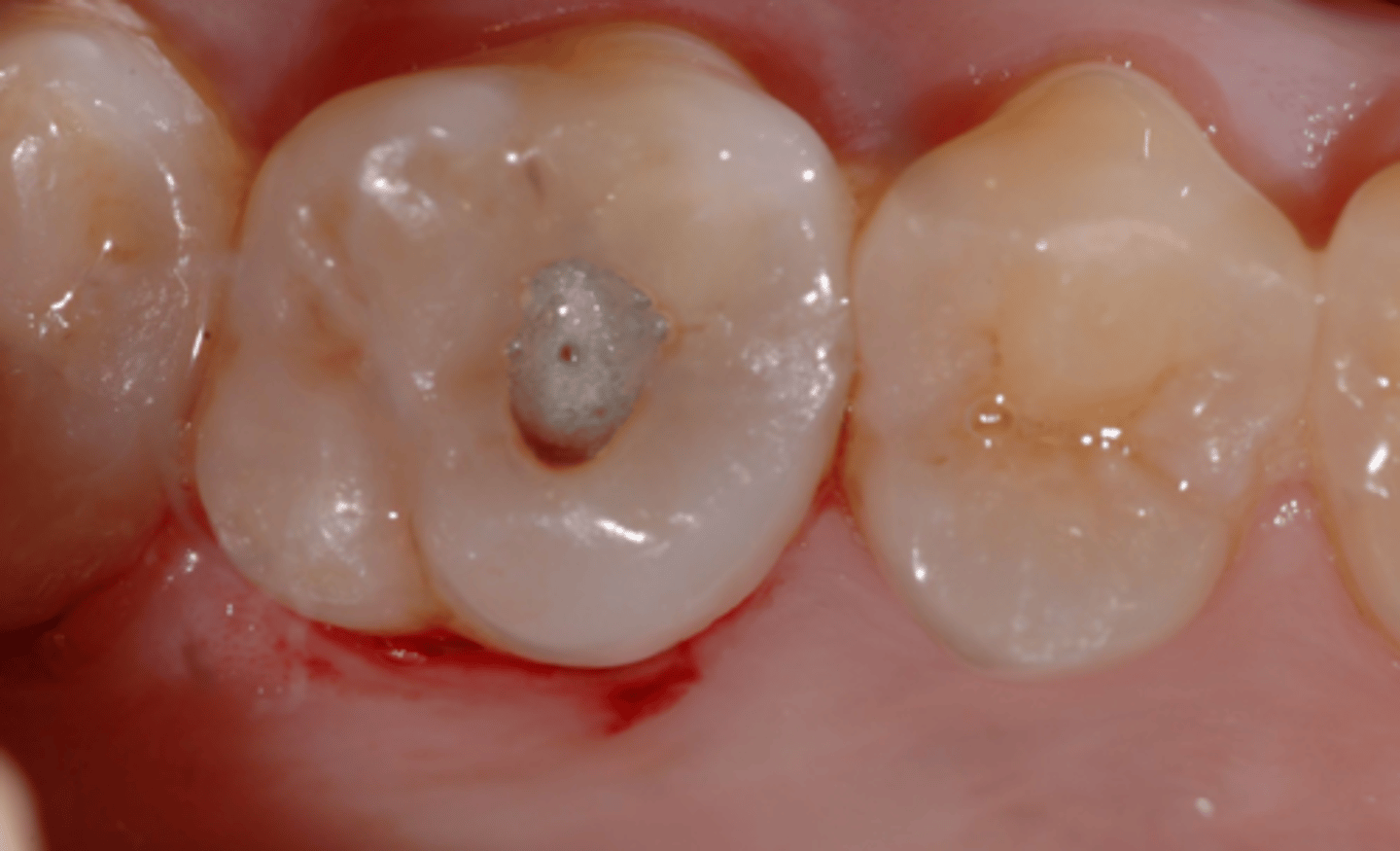
Is #19 restorable or non-restorable?
Restorable, with significant amount of tooth structure left, a direct bonded restoration can be used as a treatment of choice
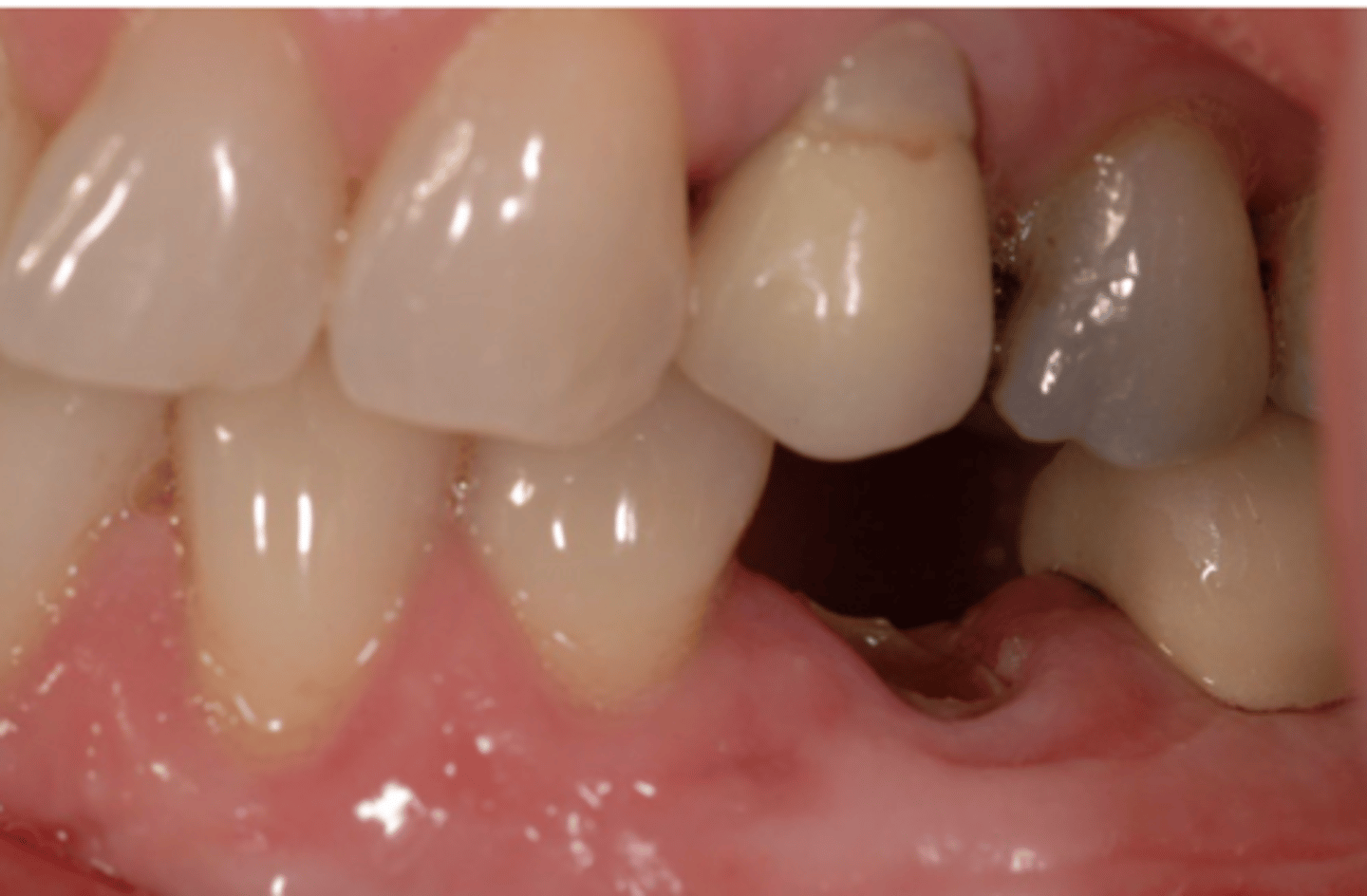
Is #21 restorable or non-restorable?
Non-restorable (RCT tx lost coronal tooth structure)
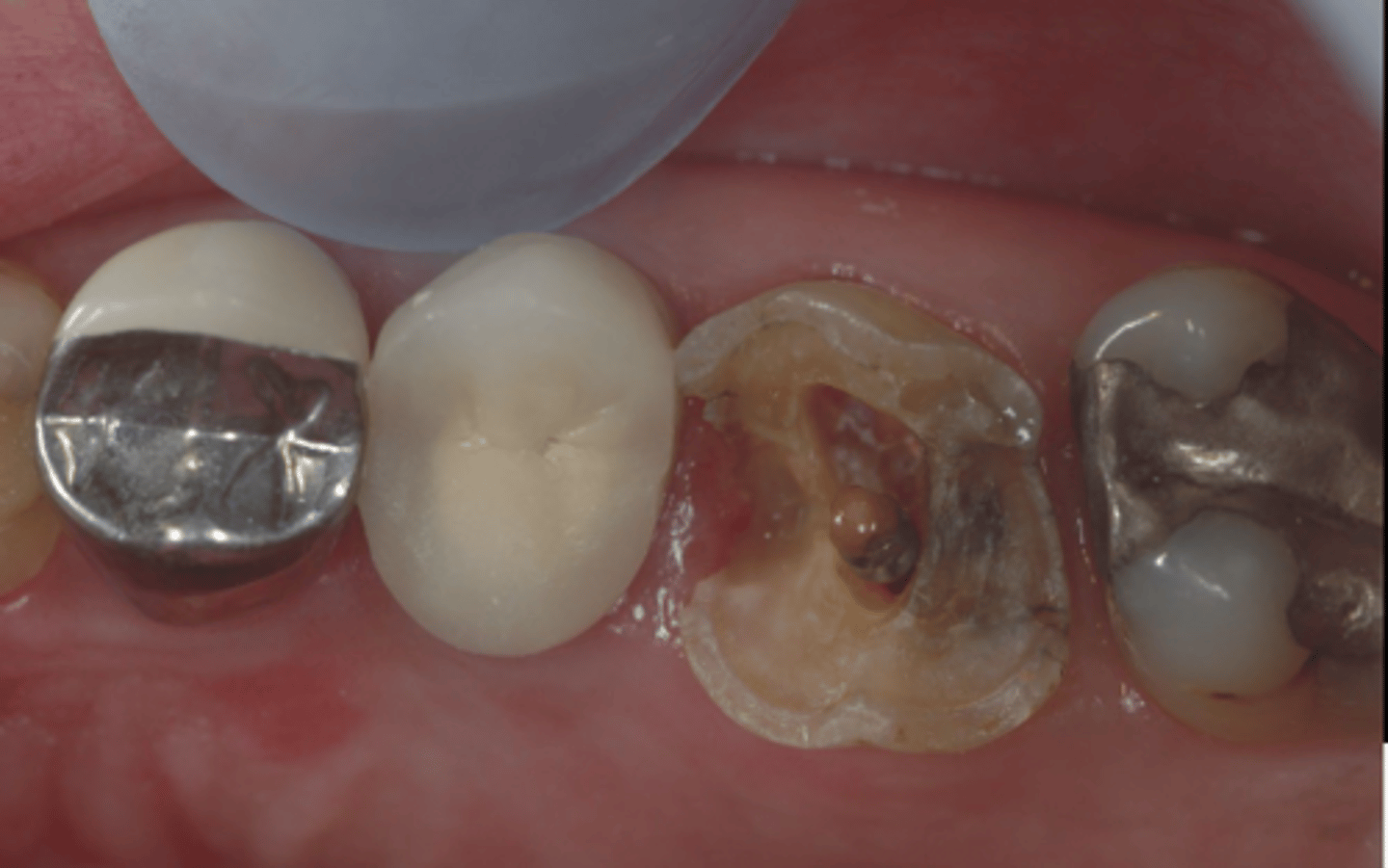
Is #30 restorable or non-restorable?
Restorable --> potentially RCT with a post (moderate)
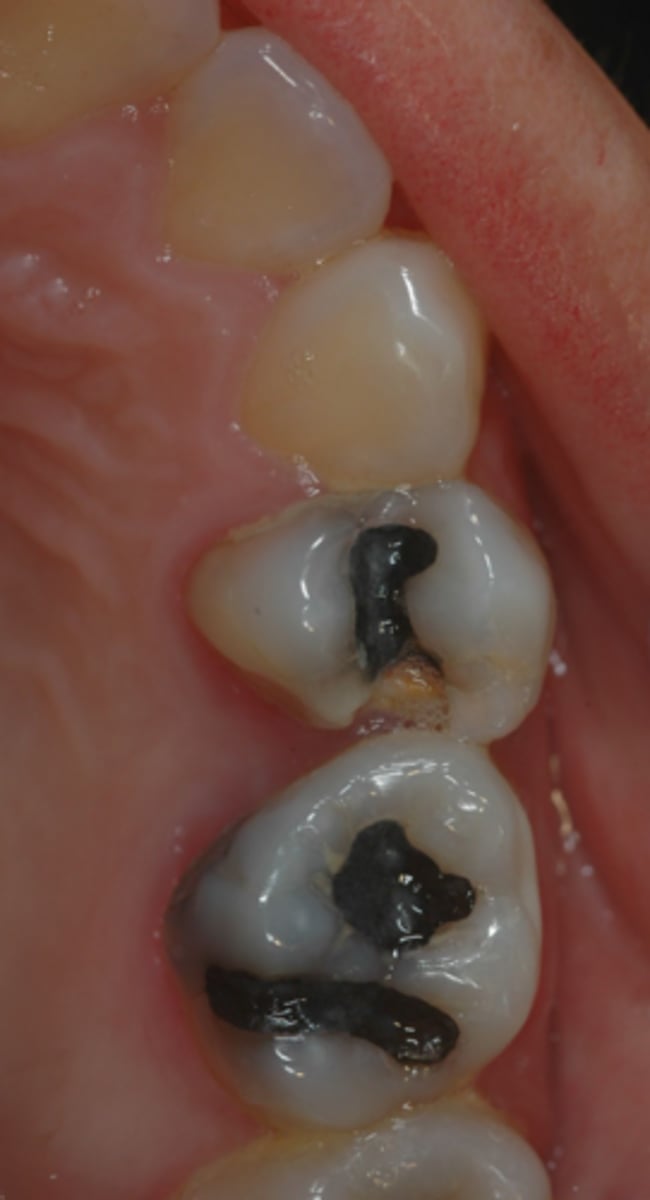
Is #13 restorable or non-restorable?
Restorable (Soon to receive RCT)
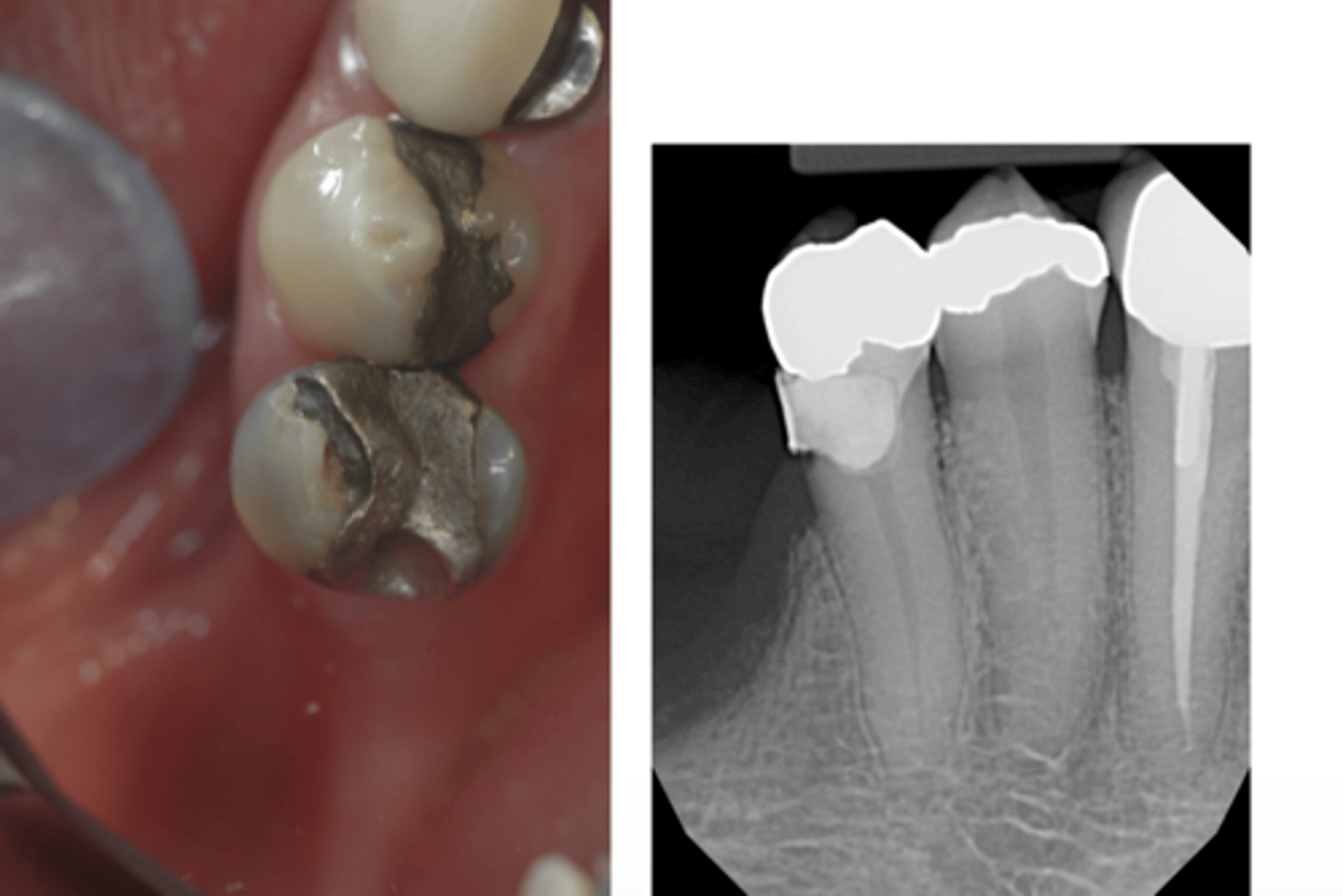
Is #29 restorable or non-restorable?
Need Restorability Test (Soon to Receive RCT) - such a large restoration not much structure left
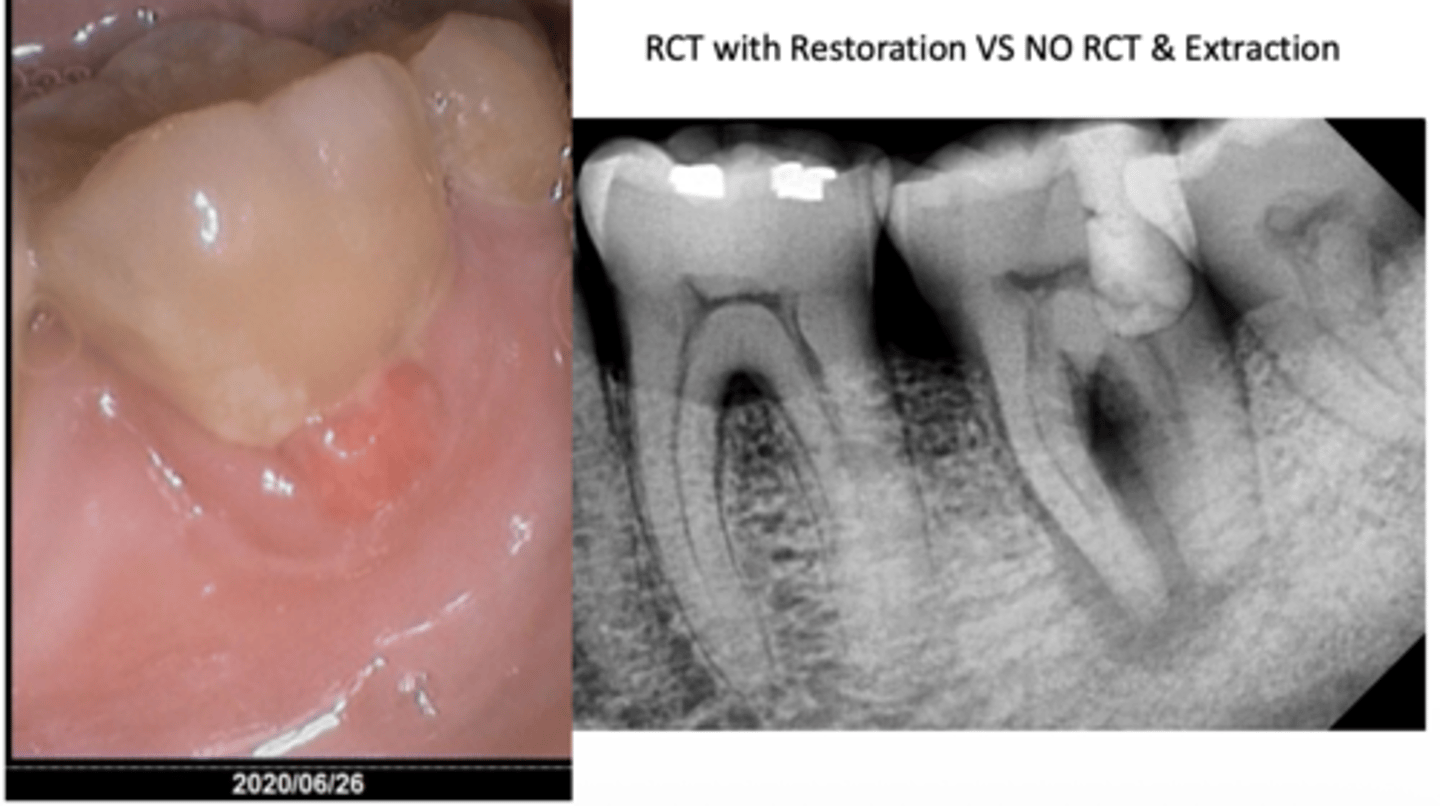
Is #18 restorable or non-restorable?
Most likely extraction - endo perio lesion
T/F: Endodontically treated tooth get weaker and more brittle as time goes on
FALSE It does not!!!
the thinking was collagen fibers are dehydrated and become brittle but actually decreased tooth structure aka structural damage which would make it weaker
With significant amount of tooth structure left, what can be used as a treatment of choice?
Direct bonded restoration
Define the following:
Replace Coronal tooth structure that was lost due to caries, previous restorations or tooth fracture and may be fabricated from various restorative material
Foundation restorations
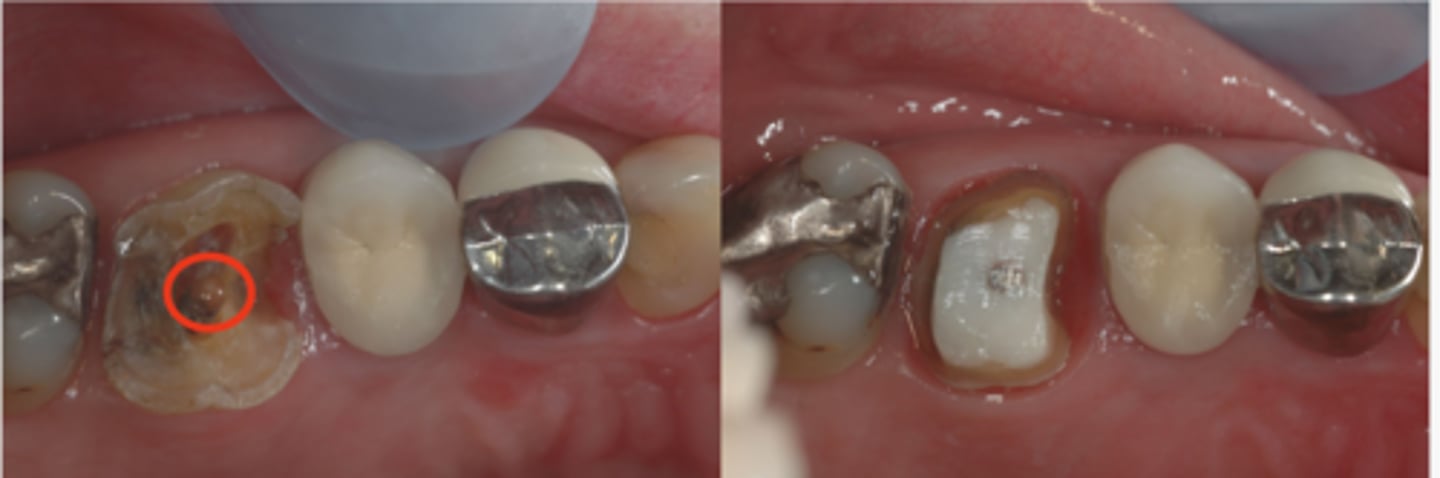
What treatment do you suspect happened here?
Endodontically Treated Tooth with Prefabricated Post and Core (composite)
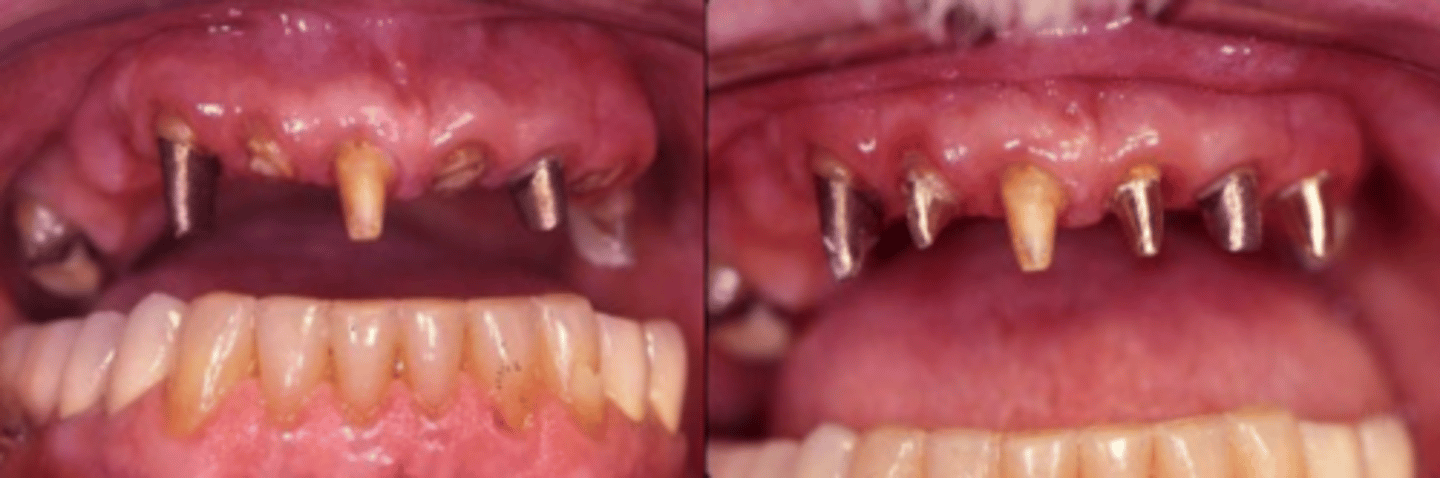
What treatment do you suspect happened here?
Endodontically Treated Tooth with Cast Post and Core
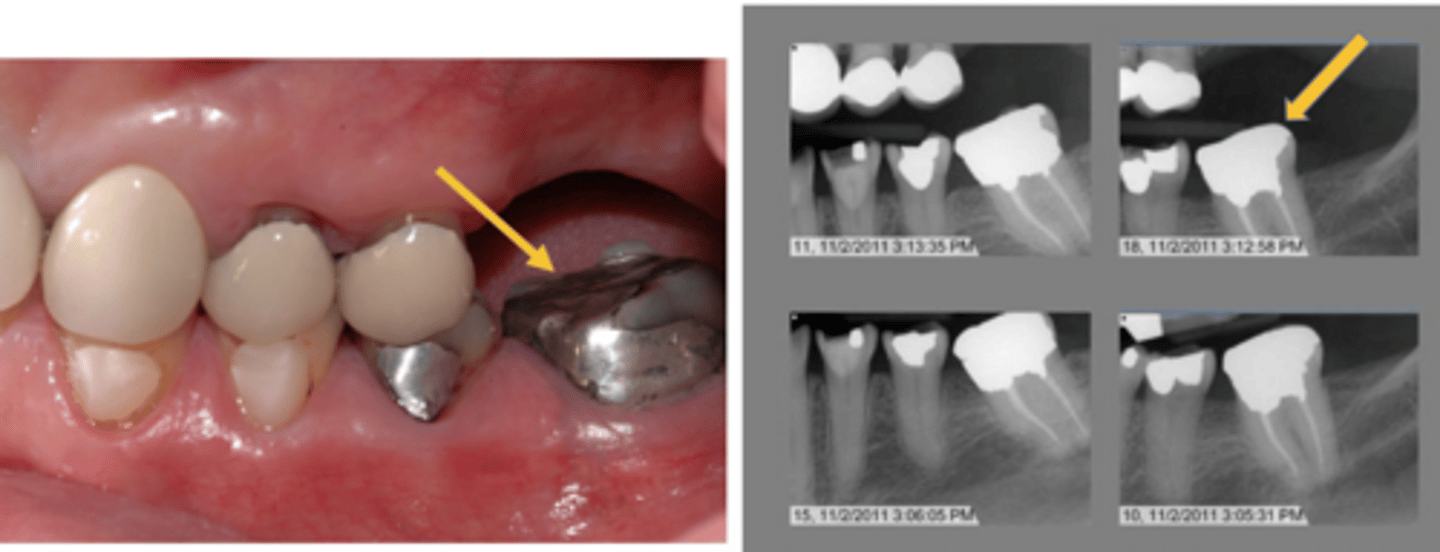
What treatment do you suspect happened here?
Endodontically Treated Tooth with Amalgam Radicular Post
pack amalgam into pulp canal after rct
What is the purpose of a post?
To retain the core
To favorably distribute of the stress to the radicular dentin from the tooth portion the apex
Does a post make the tooth stronger?
No - it just retains the core
strength comes from coronal remaining root and tooth structure
Is it required to prepare the tooth in both custom cast and prefabricated post/core techniques?
No - only REQUIRED in custom cast post/core technique. You have the option to not prepare the tooth in the prefabricated post/core technique
t'/f: cast metal posts offer higher fracture resistance
true
ideal components of the post/core at the coronal portion of the tooth
Maximum retention of core and crown
High strength and fatigue resistance
Pleasing esthetics
Simple to use
Cost effective
ideal components of the post/core at the apical portion of the tooth EXCEPT?
Maximum protection of root
Adequate retention within the root
Biocompatibility/noncorrosive
Radiopaque
t/f: cast metal posts should be stainless steel or titanium
false, stainless steel not used anymore !
What are all of the following?
Tapered, smooth sided post
Tapered, serrated post
Tapered, thread post
Parallel, smooth sided post
Parallel, serrated post
Parallel, thread post
Prefabricated Post
The following are all examples of the material for what?
Stainless Steel
Ti or Ti Alloy
Cast Gold Alloy
Carbon Fiber
Zirconia
Post/core
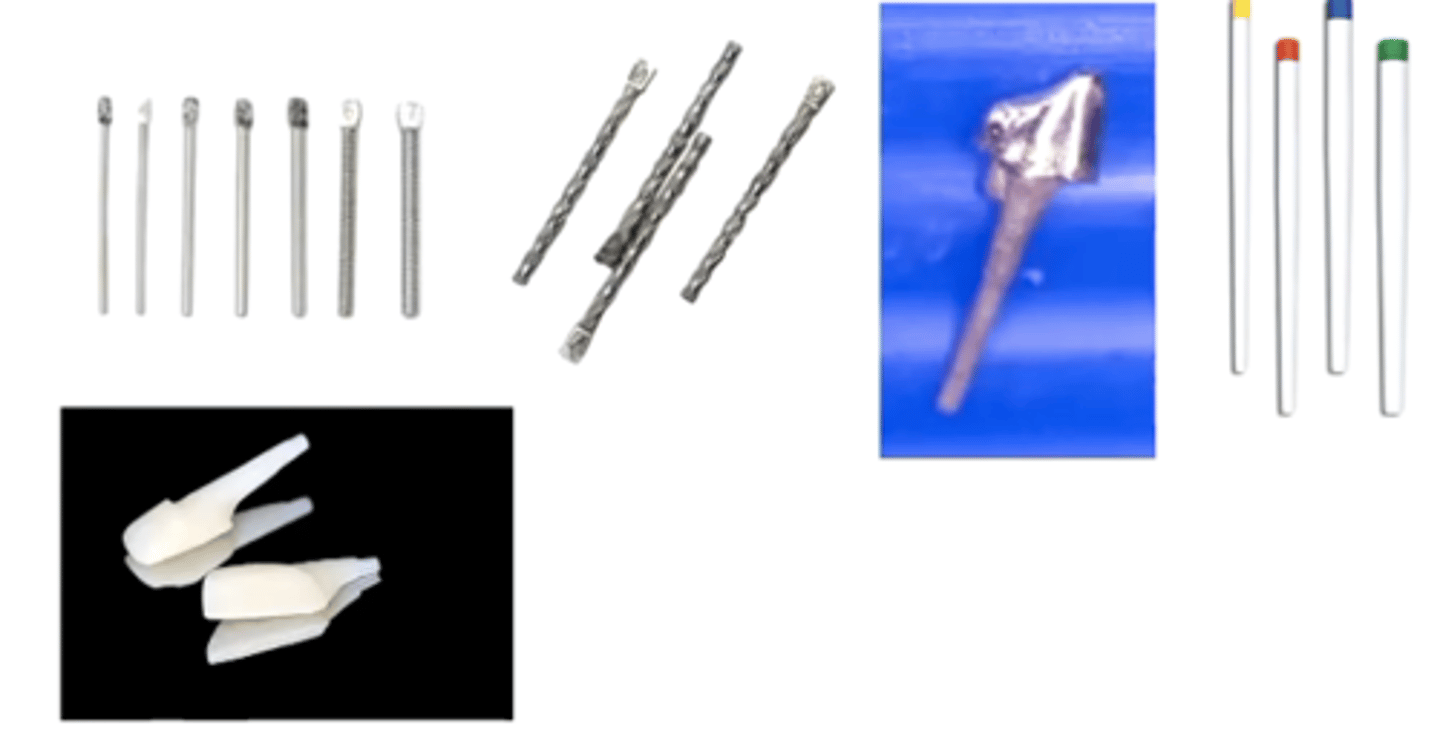
Of the following in the picture, which ones are prefabricated posts and which ones are custom?
The ones with colored background are cast custom posts
If you have a funnel shaped canal, you should use...
Cast custom posts
Prefabricated posts
Cast custom posts
prefab is symmetric, cylindrical, parallel so may not fit
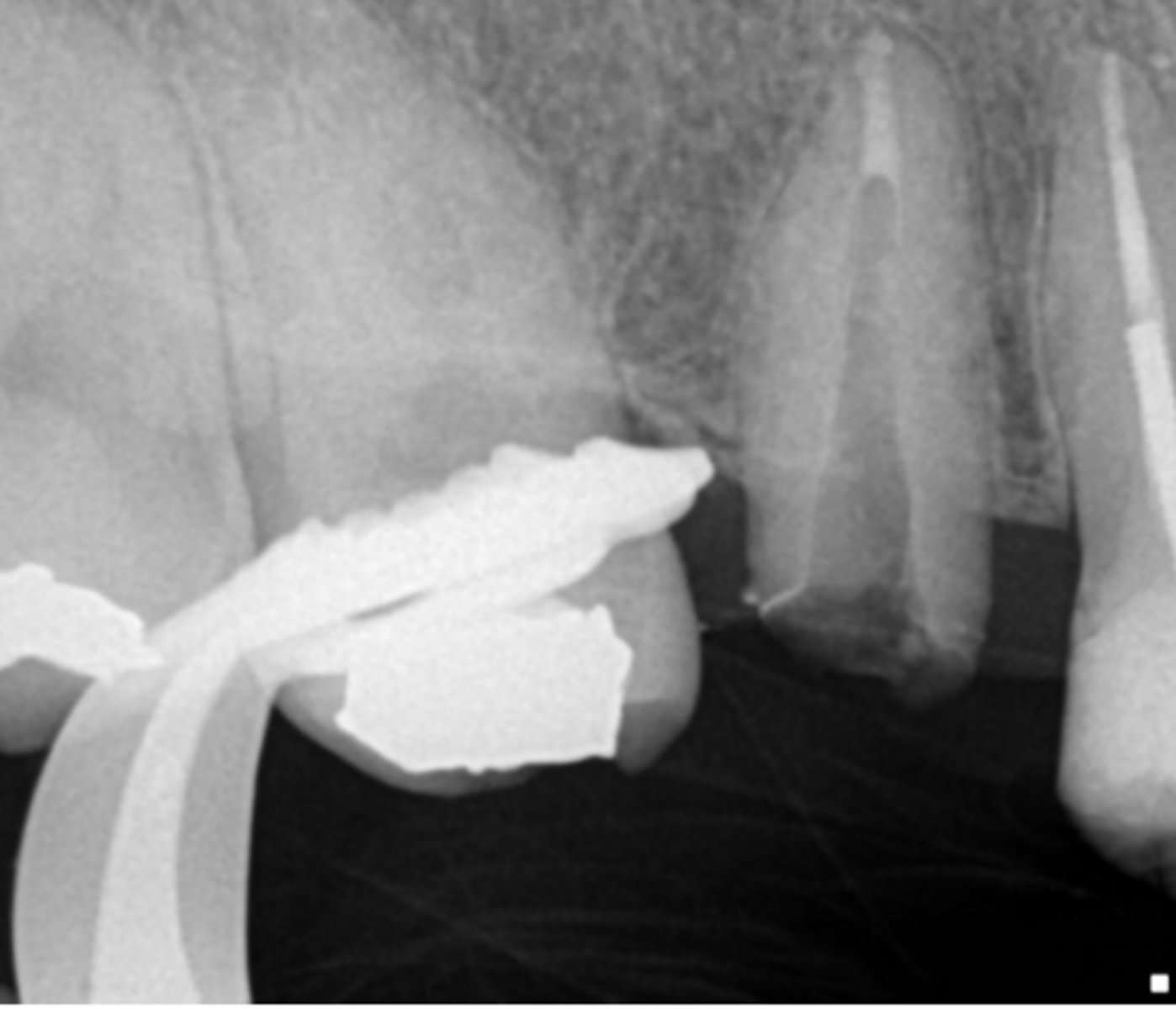
If you do not have much coronal tooth structure, you should use
Cast custom posts
Prefabricated posts
Cast custom posts
Which quality of a post is strongly associated with the amount of retention?
A) Width
B) Type of material
C) Length
D) Custom vs prefabricated
C) Length
(Post Length is strongly associated with the amount of retention)
The optimal post length should be at least equal to clinical (crown/root) length
Clinical crown length
The post should be at least (1/2 or 1/3) of the root length
1/2
(Though some studies suggest 2/3 to 4/5 of root length. Ideally, it should be as long as possible without disturbing the apical seal)
How much apical seal should the ETT have?
4-5mm, should be long as possible without disturbing apical seal
For Molars, the post length should be no more than _____ mm (measure from canal orifice)
7mm
The post should extend more than ____ mm apical to the bone
4mm
T/F: Shorter posts put less stress on the tooth, and are less prone to fracture but also lesser retention
FALSE -- shorter posts put MORE stress on tooth, and are MORE prone to root fracture as well as lesser retention
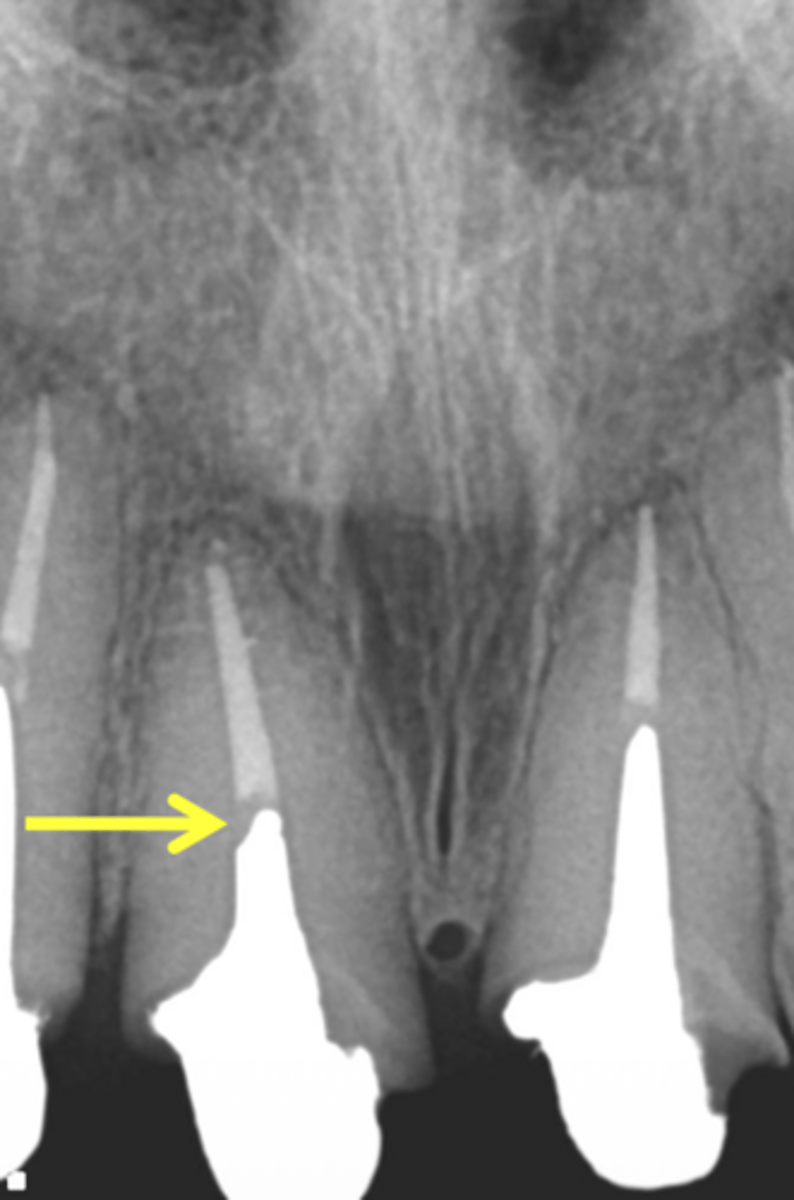
Which condition(s) of post on tooth #8 should be corrected?
A. Extend post length more apically
B. Change the direction of post
C. Both of the above
A. Extend post length more apically → more retention
8 on L is unfavorable vs 9 on R is favorable
Why is a longer post preferred in endodontically treated teeth?
Because increasing post length primarily reduces leverage and distributes occlusal forces more favorably (less chance of root fracture)
The width of the post affects what aspect of the ETT?
No effect - post width nothing to do with amount of retention
According to the conservationist approach, the post width should be ____________
a) minimal canal preparation and preserve as much root structure as possible
b) post should be surrounded by at least 1mm of sound dentin
c) should be no greater than 1/3 of the root width at its narrowest dimension
a) minimal canal preparation and preserve as much root structure as possible
According to the preservationist approach, the post width should be ____________
a) minimal canal preparation and preserve as much root structure as possible
b) post should be surrounded by at least 1mm of sound dentin
c) should be no greater than 1/3 of the root width at its narrowest dimension
b) post should be surrounded by at least 1mm of sound dentin
according to the proportionist approach, the post width should be ____________
a) minimal canal preparation and preserve as much root structure as possible
b) post should be surrounded by at least 1mm of sound dentin
c) should be no greater than 1/3 of the root width at its narrowest dimension
c) should be no greater than 1/3 of the root width at its narrowest dimension
what prefabricated post size is common?
#3 decent size, larger = more destruction and less integrity
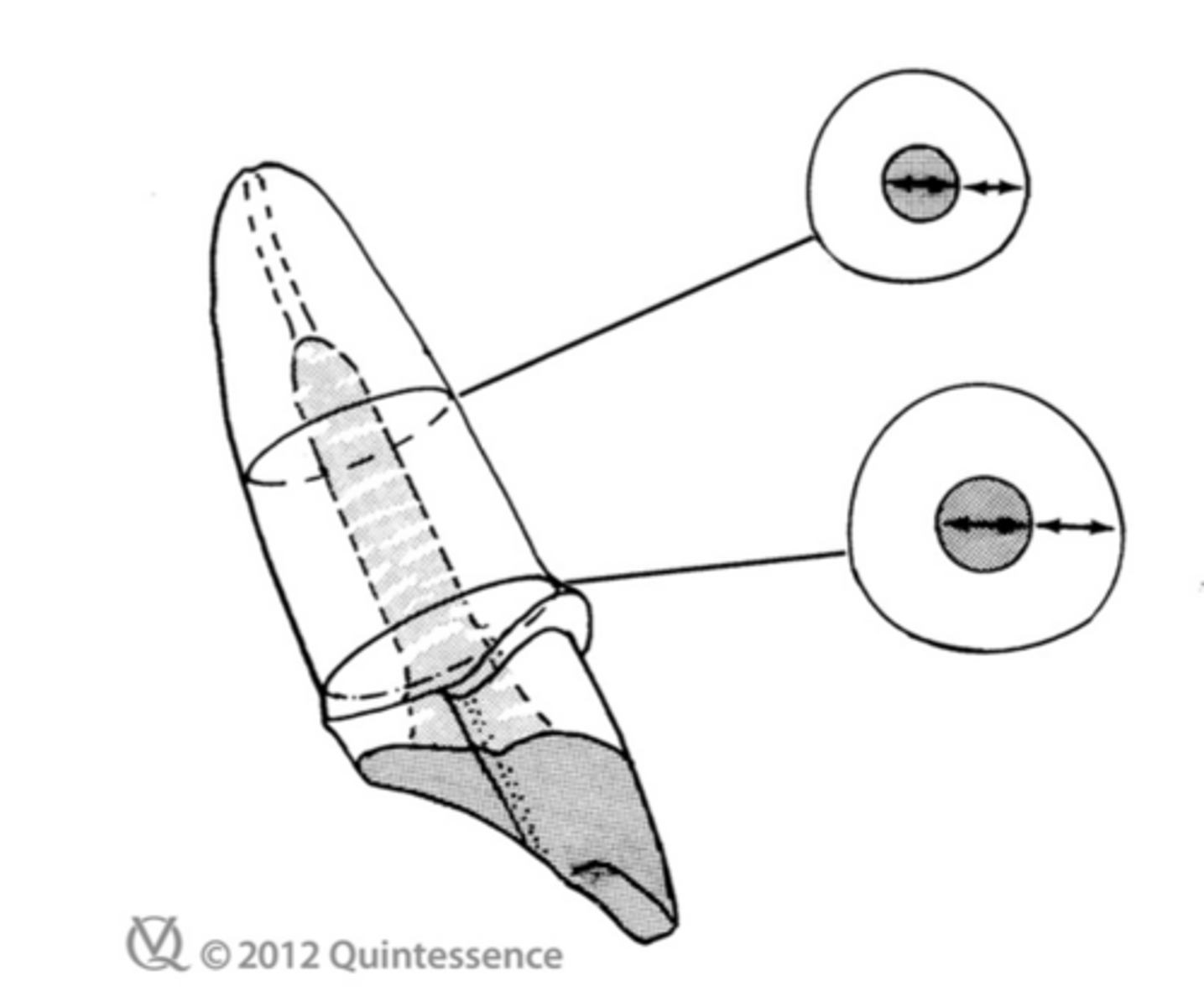
Dowel diameter should be no more than _____ the root diameter at the cementoenamel junction. It should be at least _____ mm less than the crown diameter at midroot
1/3, 2mm
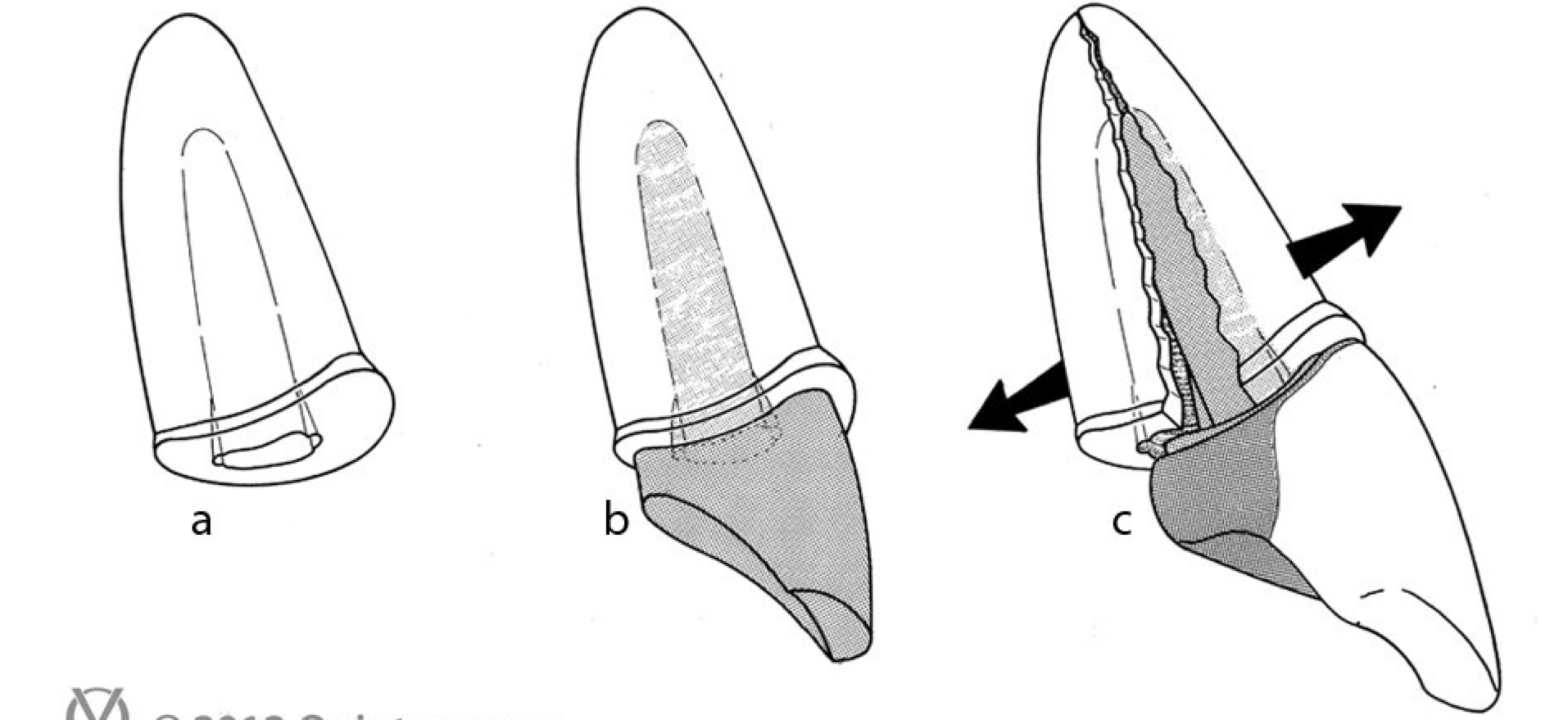
dowel core
If a tooth is flush with the gingiva (a), fabrication of a dowel core and a crown without encirclement of tooth structure by the crown walls (b) could result in root fracture (c)
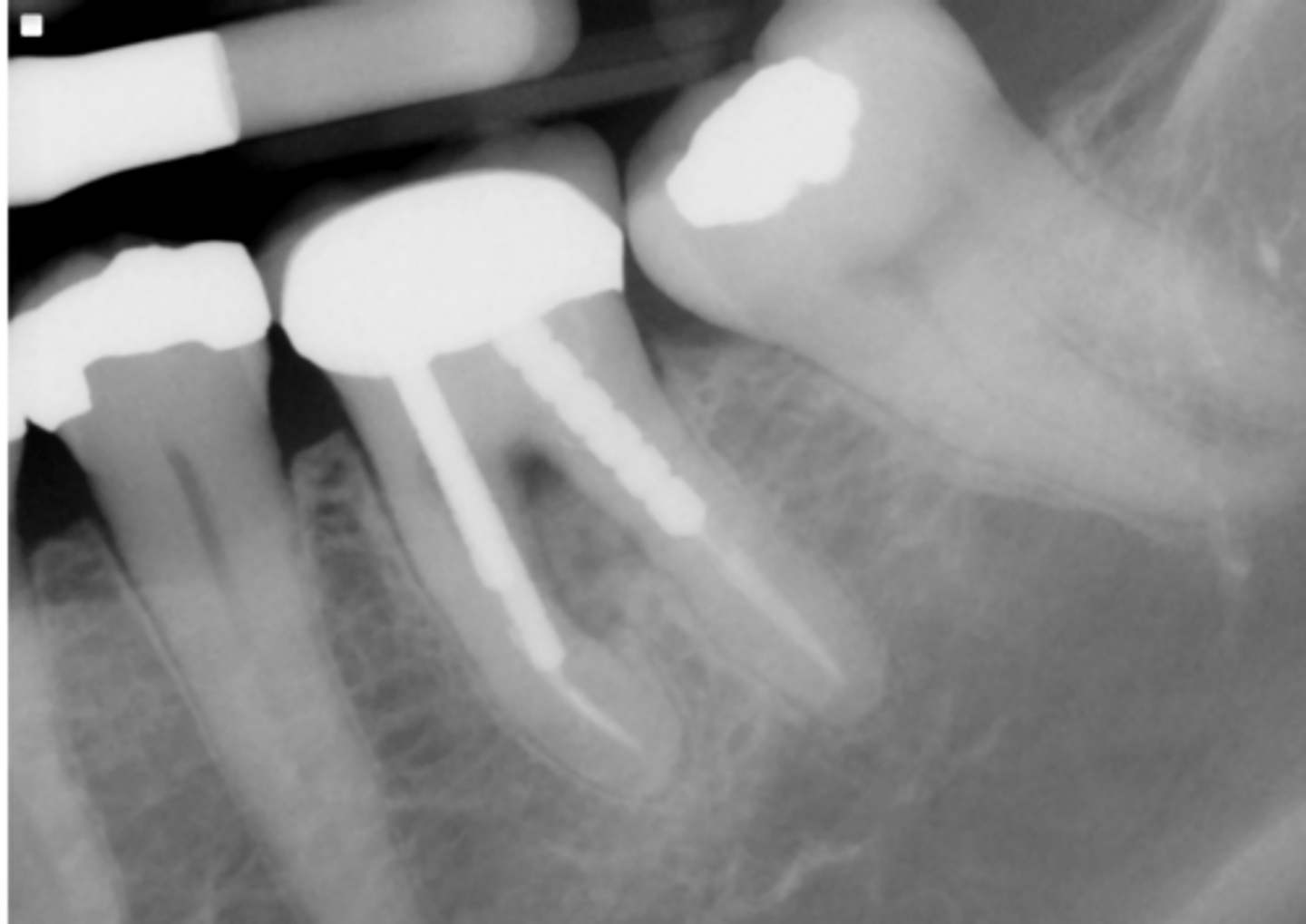
What can happen if you have a wide post?
A wide post can cause a wedging effect, and can potentially cause root fracture/perforation, especially with forces directed off the long axis
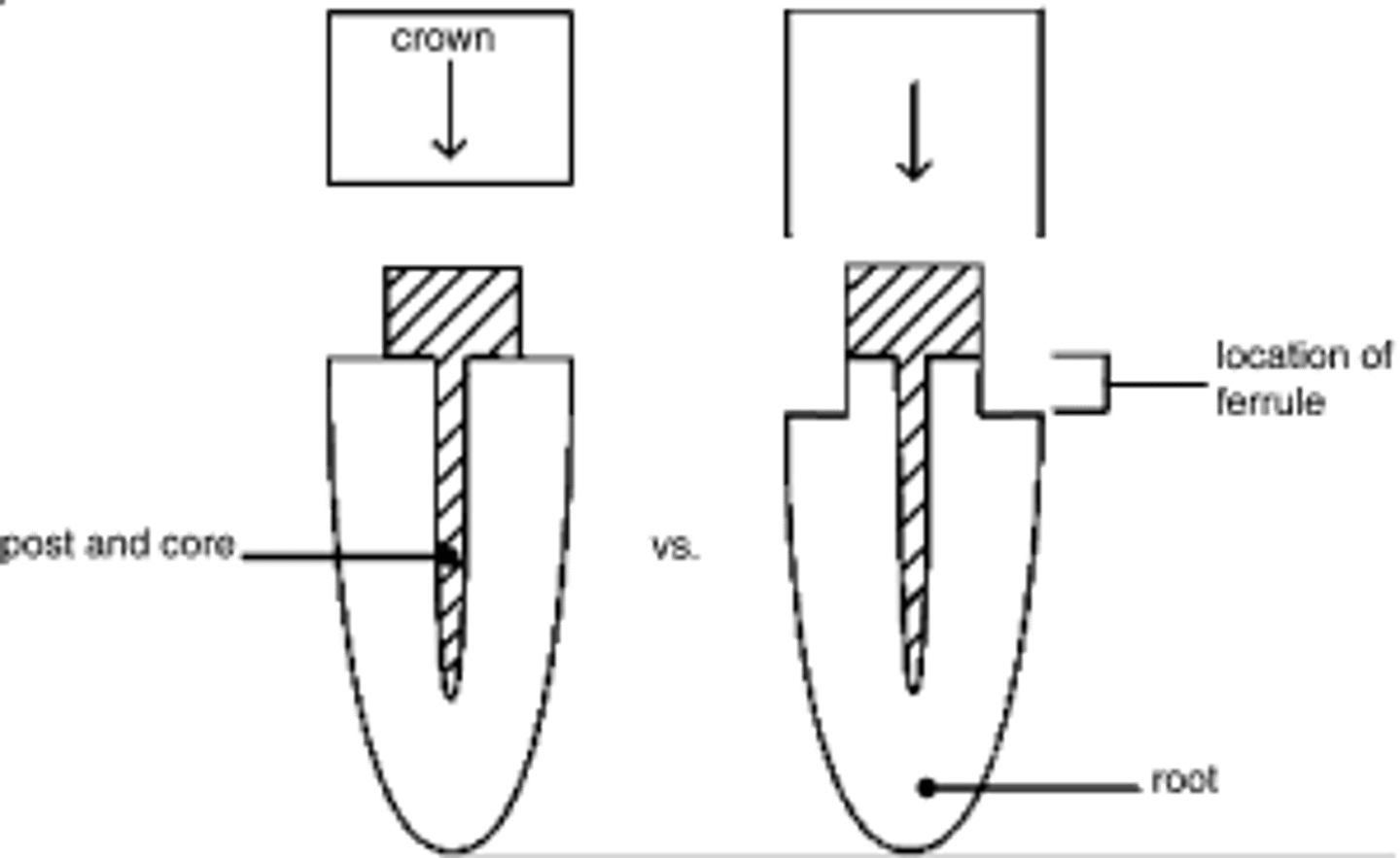
Define the following:
Band of restoration that encircles the external dimension of residual tooth structure (part of the crown that braces the tooth to provide resistance to dislodgement and prevent fracture)
2mm vertical band of healthy, natural tooth structure above gum line that crown embarces to improve stability, prevent root fracture, and increase longevity of ETT
Ferrule
What is the optimal ferrule height?
2mm
(Many studies have shown with at least 2 mm ferrule height, it significantly reduces incidence of fracture in the endodontically treated teeth. Some recent studies suggested that it should not be provided at the expense of the remaining tooth/root structure. Some studies suggest that if we cannot provide ferrule, it is better to extract the affected tooth)
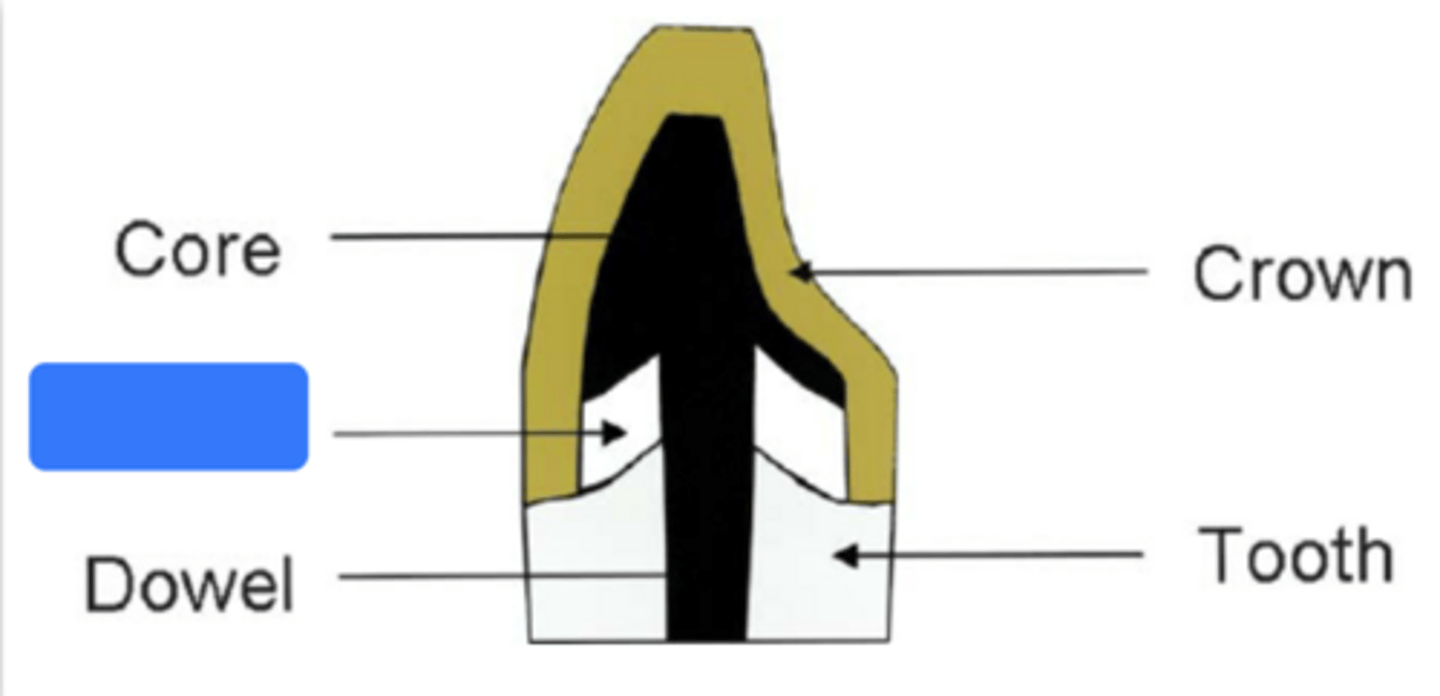
What does the blue box indicate?
Ferrule
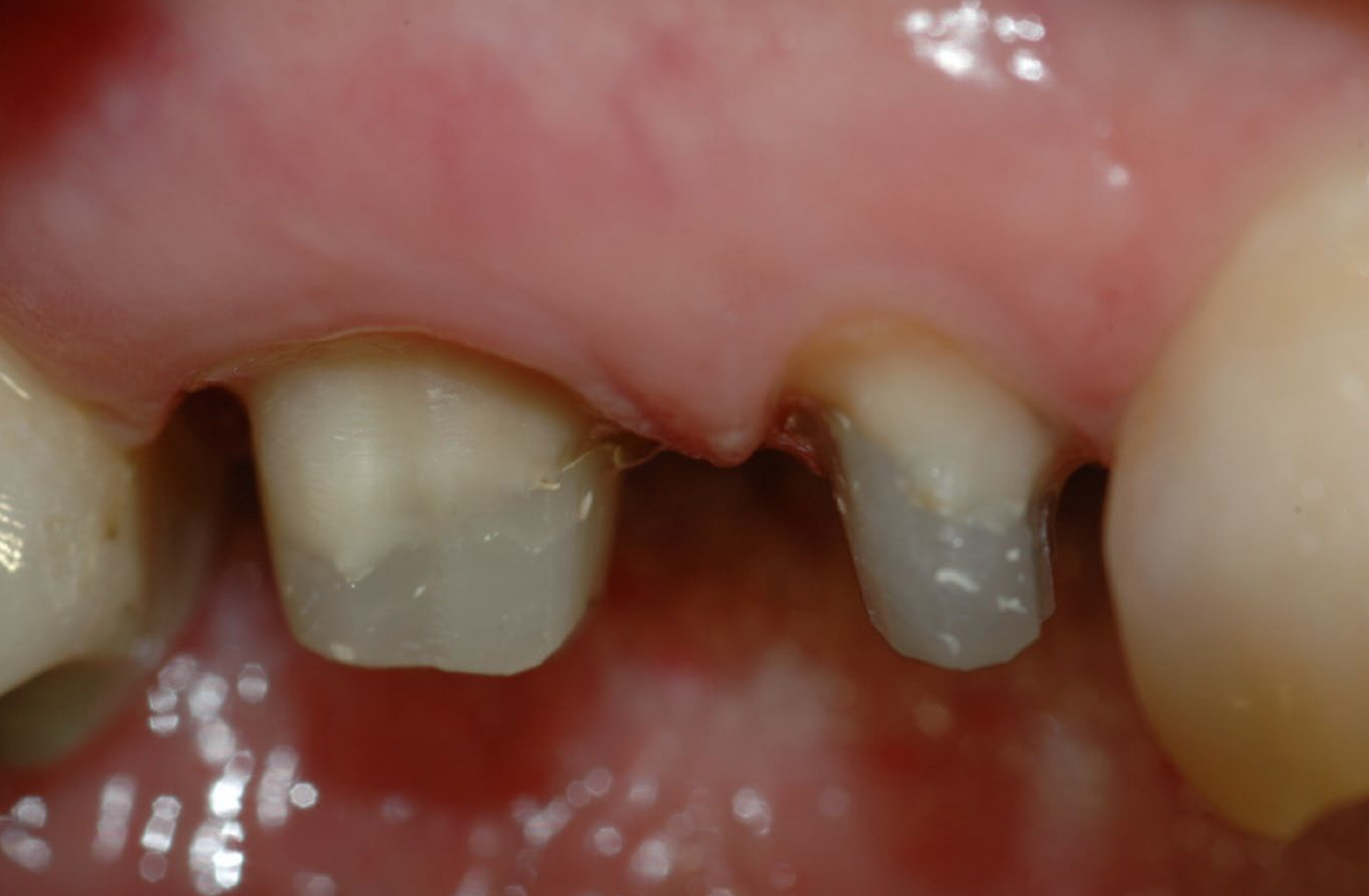
what is dentin vs composite?
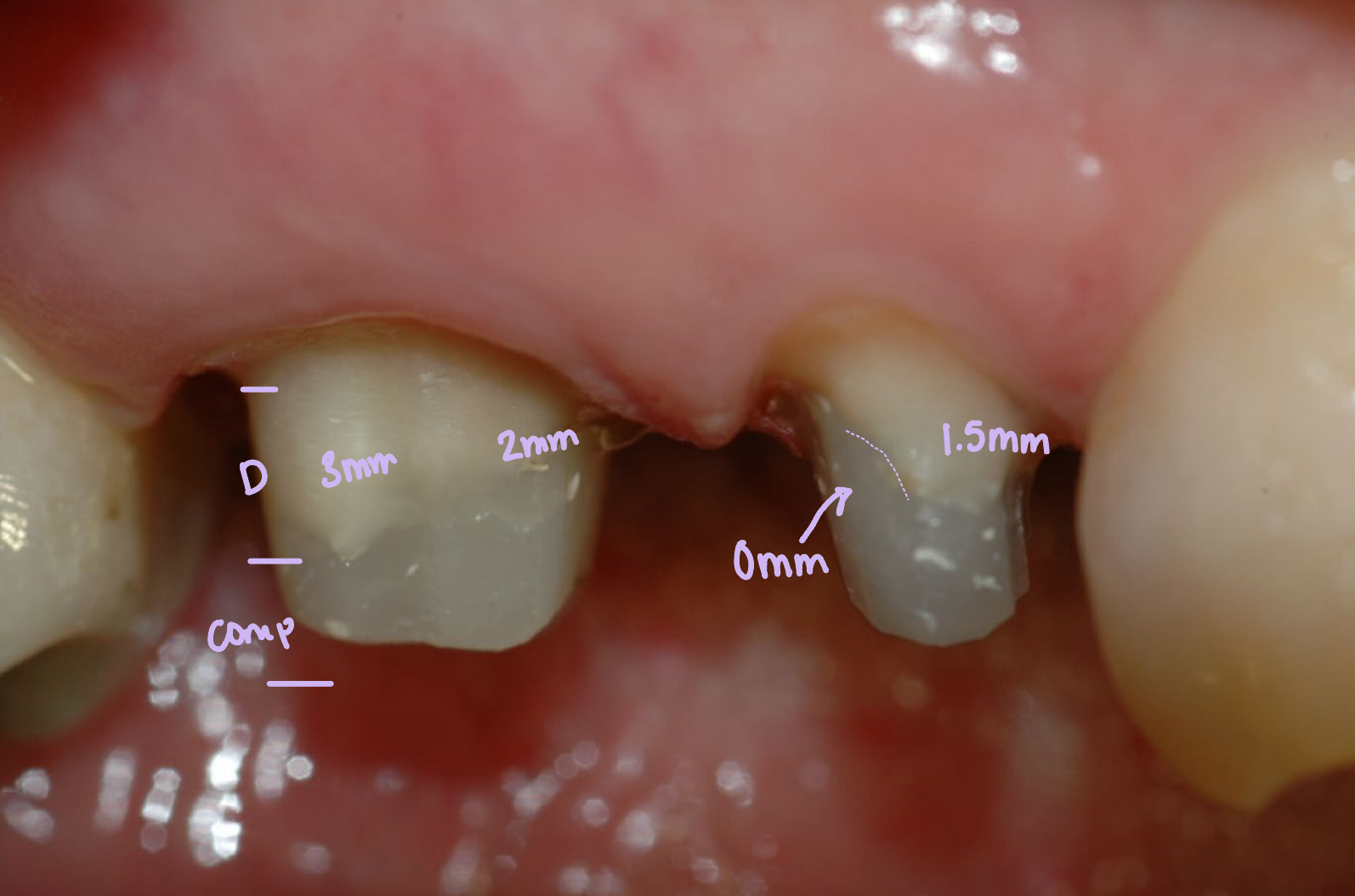
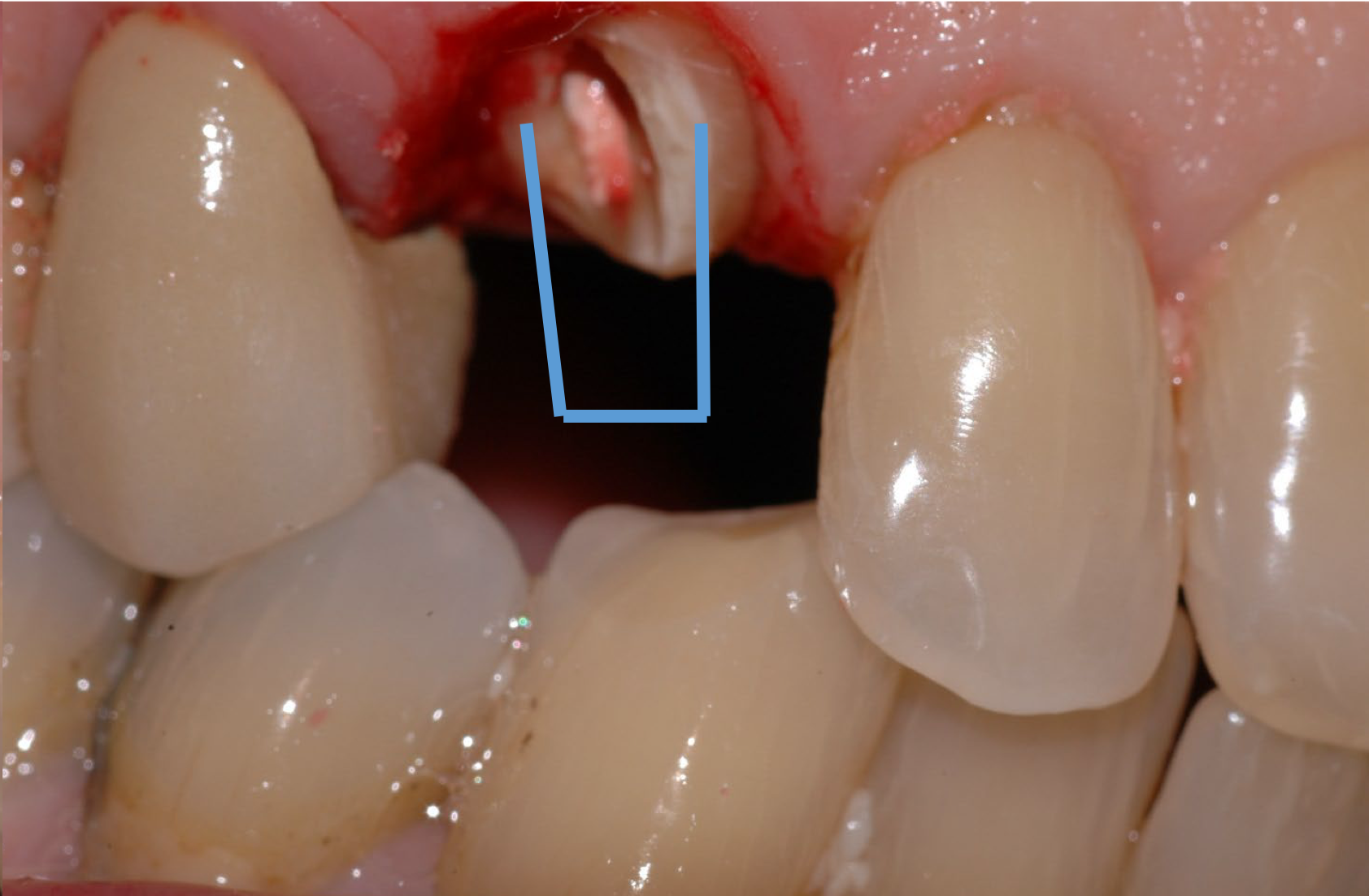
what is wrong here? what are the two options?
crown lengthening or forced eruption via ortho
How does C/R ratio play a role in fracture resistance? How does it play a role in obtaining the optimum ferrule?
The lower the crown:root ratio, the higher the load needed to cause it to fail (lower C:R = higher fracture resistance)
This means that if you do a crown lengthening to obtain the proper ferrule length, that may increase the C/R ratio, which negatively affects the fracture resistance of the tooth. It might be better to orthodontically erupt the tooth to maintain the C/R ratio
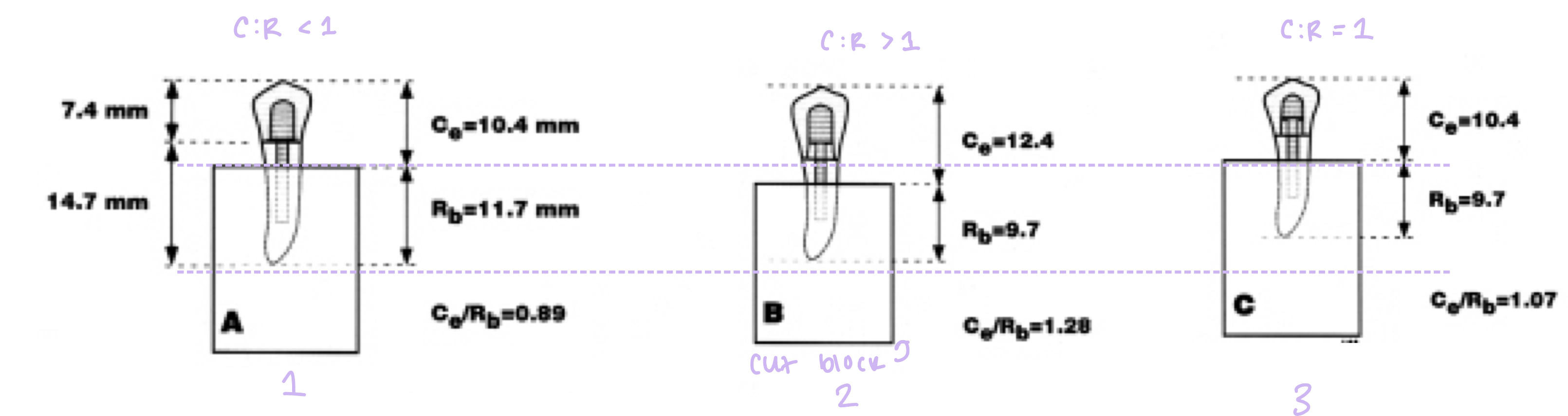
which two options have higher fracture resistance compared to the other and why?
1 and 3 higher fracture resistance bc lower C:R
2 lower fracture resistance bc higher C:R
in-vitro (on block) studies show crown lengthening procedure to increase ferrule by 2 mm made subjects have (more/less) fractured resistance load
less, no crown length + No Ferrule group had more fractured resistance before failure occurred
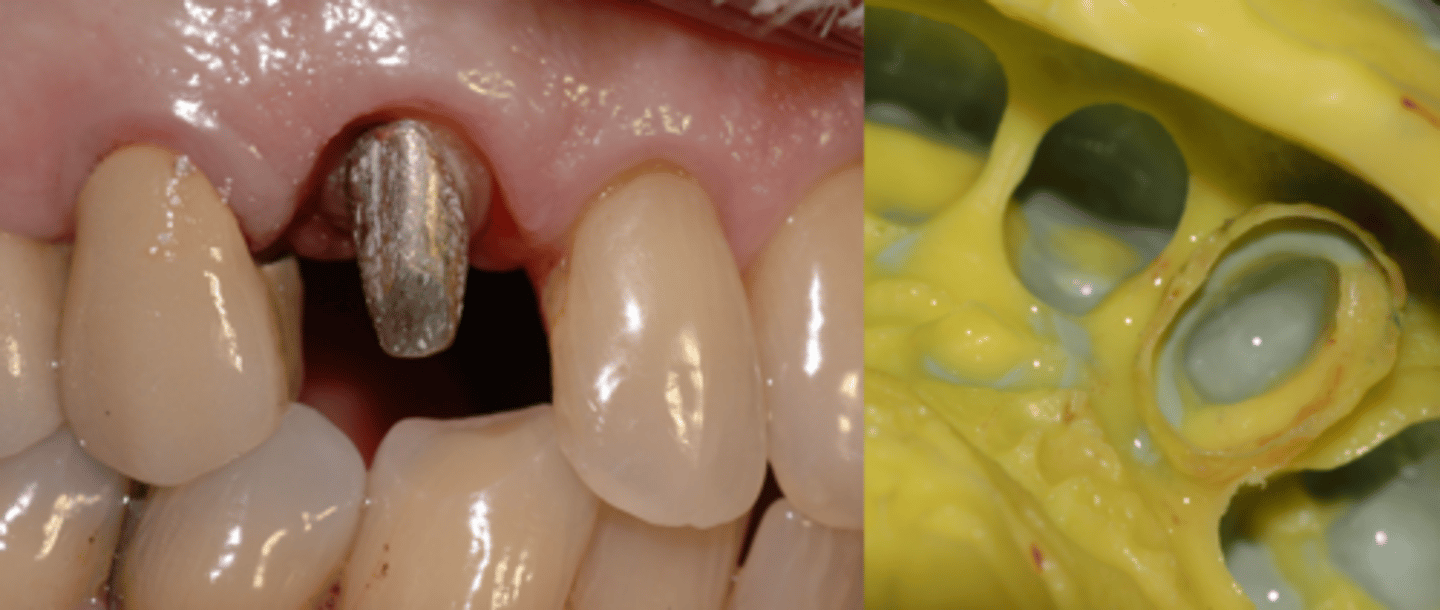
Does this look good for a crown?
Yes!
(Dr. Nui said to know this image)
does buccal or lingual wall of (anterior) maxilla have better prognosis?
lingual
A post should most strongly be considered when the remaining number of coronal walls is what?
≤ 2 remaining walls (consider w 2-4)
Should you consider placing a post if there are 4 walls remaining?
Maybe not, pending thickness of the wall
Which missing wall location most increases the need for post placement?
Functional cusp wall (B/L) or proximal wall
What is the functional cusp of maxillary molars?
Palatal cusps
What is the functional cusp of mandibular molars?
Buccal cusps
A remaining wall height of what is MOST likely to indicate consideration for a post?
1-3 mm
Should you consider placing a post if the wall height is ≥3mm?
No, but pending crown prep height & number of walls
Post placement should be strongly considered when wall thickness is _____ mm
≤ 1.5 mm
Should you consider placing a post if the wall thickness is 1.5≤x<3mm?
No, but pending crown prep height & number of walls
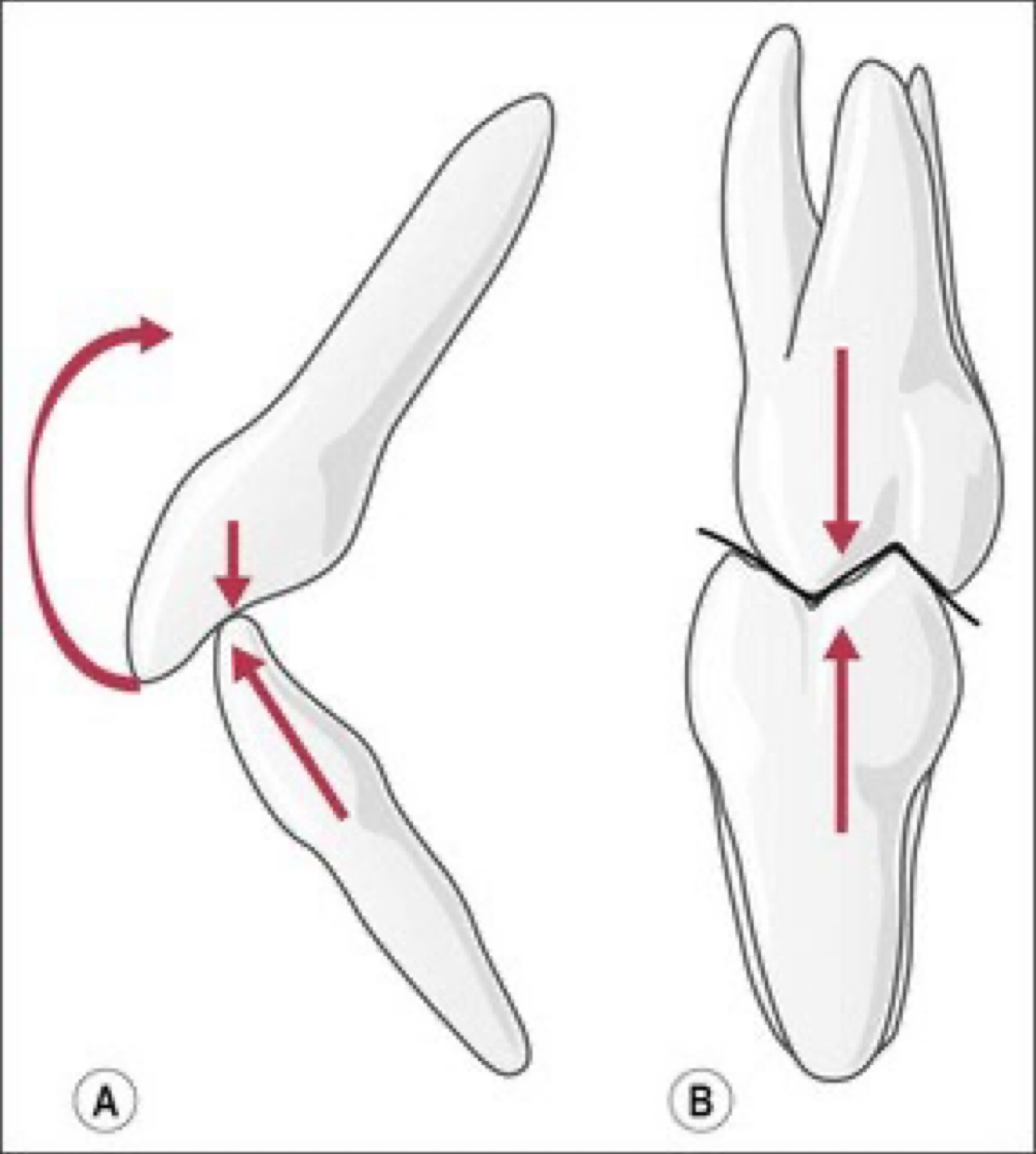
Compared with posterior teeth, anterior teeth generally experience more of what forces?
Lateral/shearing forces
T/F: A tooth serving as a surveyed crown for an RPD should generally be more carefully evaluated for post placement
True
T/F: In a shortened dental arch, a remaining supporting tooth should be carefully assessed for additional retention and support
True
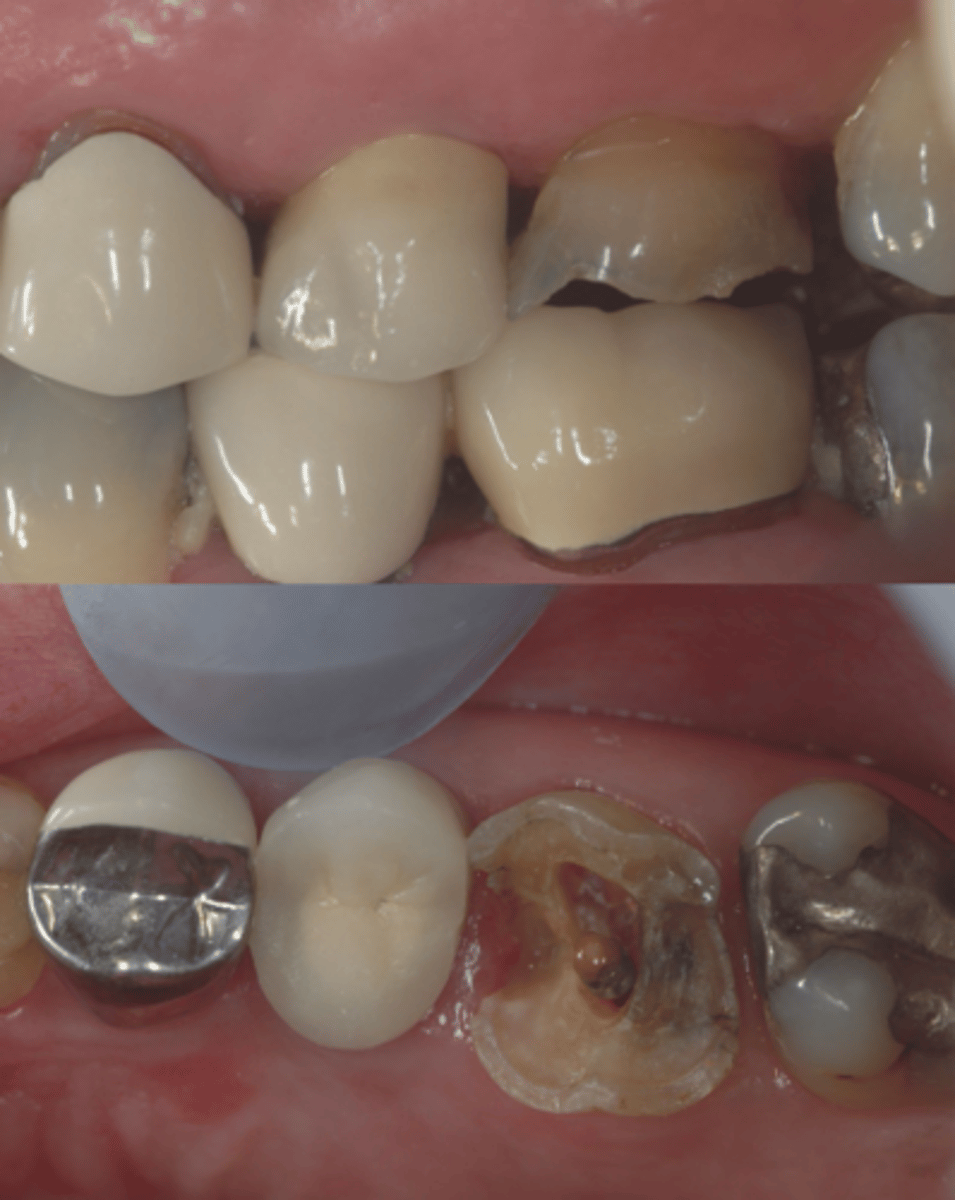
Would you consider placing a post?
Yes (Return after RCT and ready for restoration)
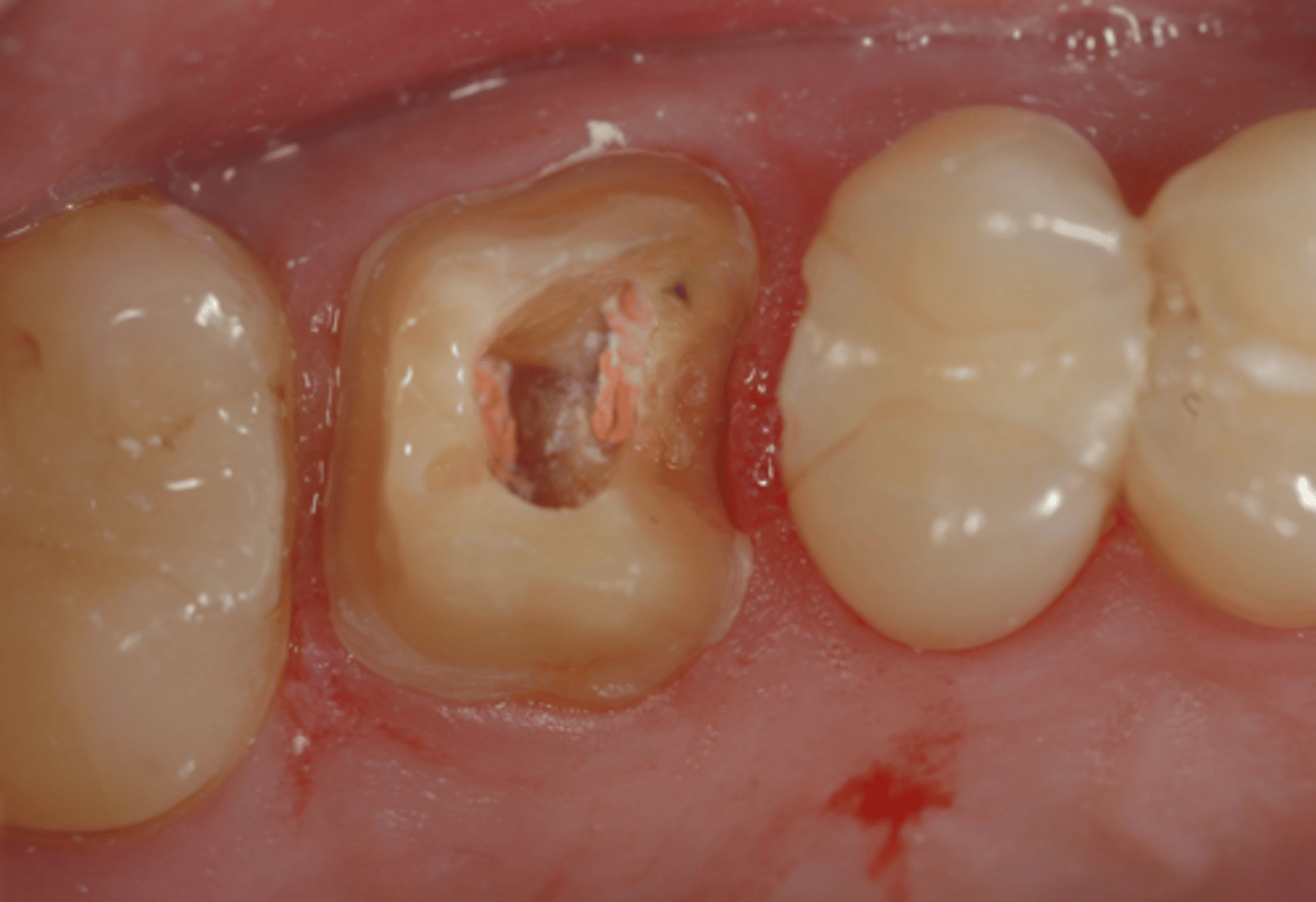
Would you consider placing a post?
No - sufficient walls
Which clinical situation for tooth #8 would generally be MORE concerning when considering the need for a post?
A. Missing only the lingual wall
B. Missing the mesial, distal, and buccal walls
A. Missing only the lingual wall
parapost XP is used for _______
a) smaller teeth
b) larger teeth
a) smaller teeth -- used most often
parapost XH is used for _________
a) smaller teeth
b) larger teeth
b) larger teeth -- less used
when a post is required, how do you select the canal to avoid weakening of the root?
You want to place the post in the largest and straightest canal
What canal do you want to place a post in mandibular molars, distal or palatal?
Distal canal
What canal do you want to place a post in maxillary molars, distal or palatal?
Palatal canal
T/F: Titanium post can be bent to accommodate for the bend in the canal
FALSE - Titanium Post should not be bent to assist in retaining the core material where tooth structure was loss (stainless steel can bend)
How do you prepare a tooth to have a prefabricated post?
Crown prep
Remove unsupported tooth structure
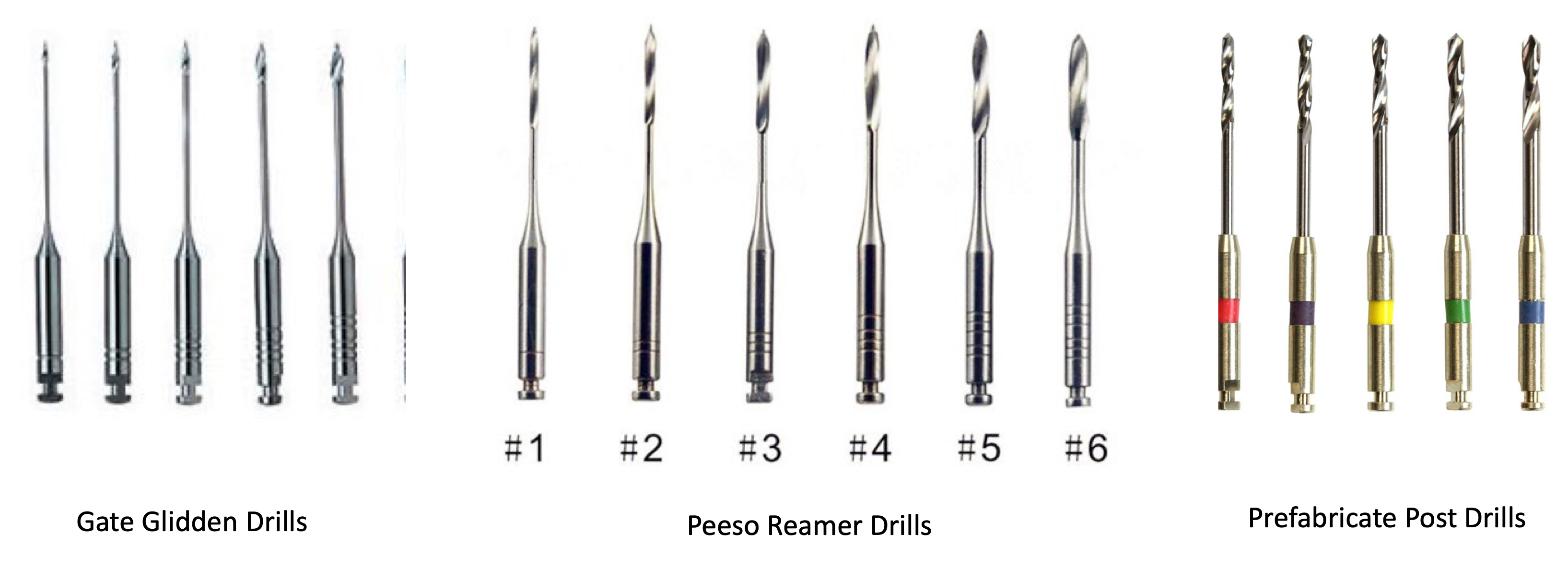
Canal is prepared with peeso reamers (use radiograph and superimposition)
A Peeso reamer with a safety tip will follow the path of least resistance, staying within the previously instrumented root canal. A bur or a drill can cut in any direction that it is pushed
Dowel space prep is finished with a specific drill or reamer for the prefabricated dowel system being used
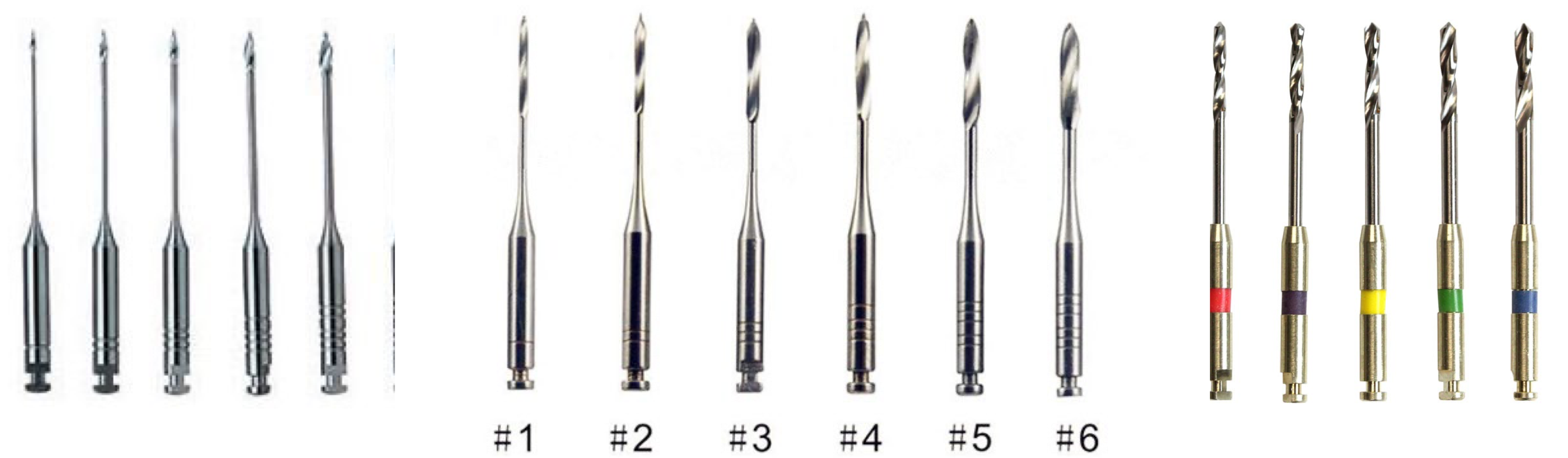
which is prefab, gate glidden, and Peeso?
What two things do you verify for post try-in?
Verify passive fit intracanal
Verify depth using PA radiograph, making sure post touches GP
After you've verified the post fits properly, if you want to adjust the length of the post so there is no excess post sitting above the prepped tooth, at which part would you cut it?
A) Apical portion of post
B) Coronal portion of post
A) Apical portion of post
Apical portion of the Post should be adjusted to have the Head of the post to retain the core portion properly
The Head portion of the post should be located ____-____ mm away from opposing dentition or depending upon the planned restorative material of the definitive restoration
1-1.5mm
If you're doing a gold crown above the post, the post head should be approximately ____-____ mm from the opposing dentition
1.0-1.5mm
If you're doing an all ceramic crown above the post, the post head should be approximately ____mm from the opposing dentition
2.0mm
pros of using resin cement for post cementation except?
Popular and simple to use
Good retention
Lowest solubility
High compressive strength
What is the most common type of cement used to cement the post?
Centrix Syringe or Rely X Universal Self Adhesive Resin cement with extended tip into the canal
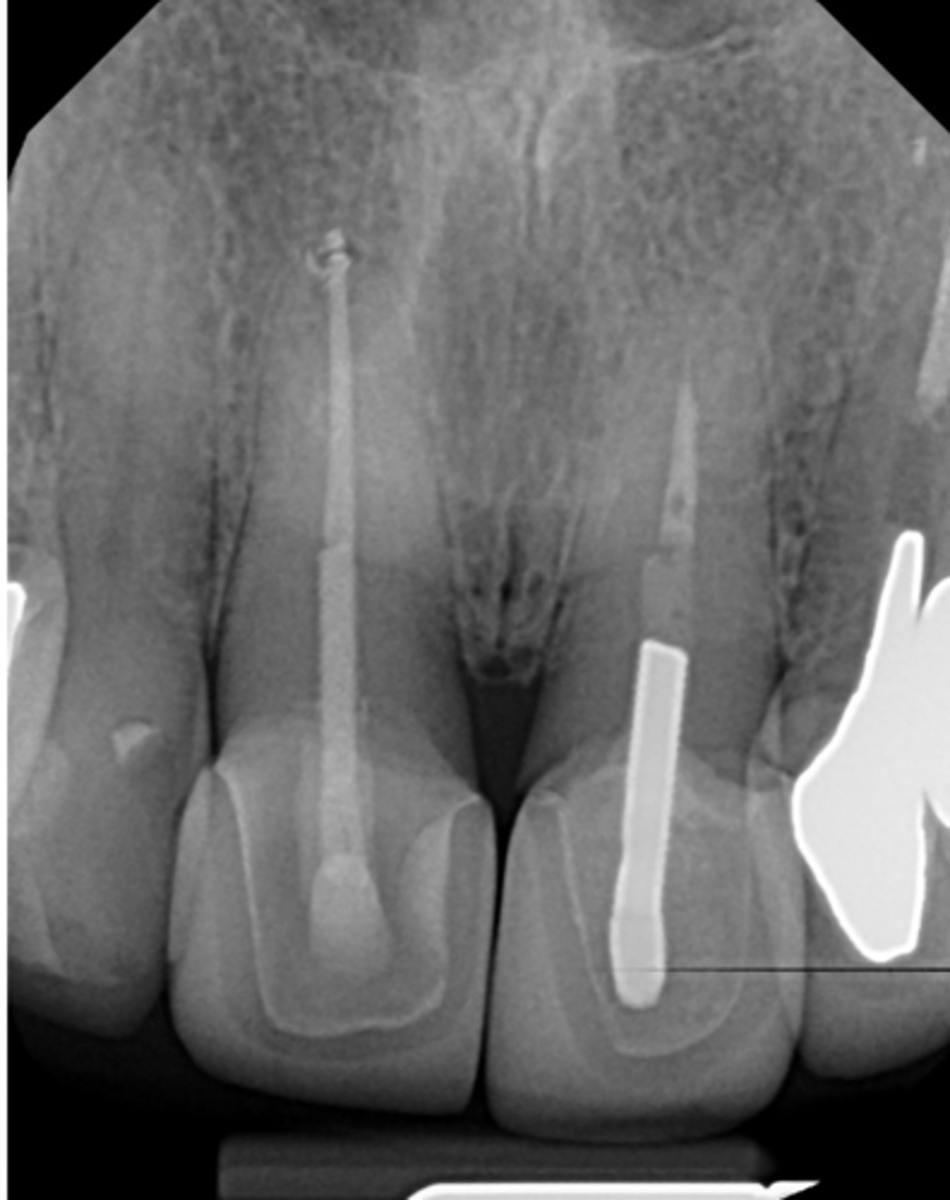
What went wrong here?
Mishap of incomplete seating of the prefabricated post due to delayed working time of an operator or early setting of resin cement
Good physical properties of core material include what five things?
High compressive strength
Good dimensional stability
Ease of manipulation
Short setting time
Ability to bond to tooth and post
components of core buildup
core can be amalgam, glass ionomer cement, resin-based composite
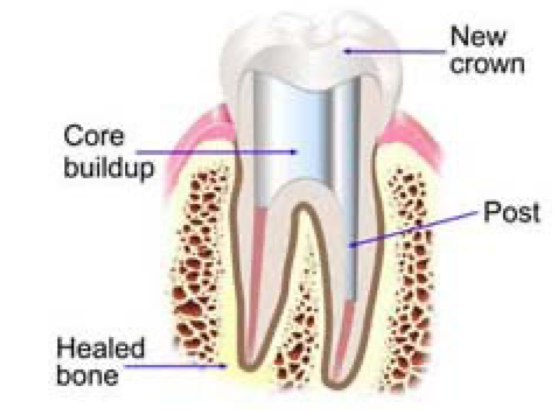
Amalgam seems to be a good core material with a long history for success except for what concerns? (4)
Not esthetically pleasing (especially under newer all-porcelain restos, lower value of final all ceramic shade)
Does not bond to dentin
Requires more time to set
Patients are concerned about the presence of mercury in amalgam
t/f: amalgam has high (highest of the core buildup options) compressive strength in static AND dynamic loading
true
Which core buildup material has the following characteristics: amalgam, glass ionomer cement, or resin-based composite?
Weak in tensile and compressive strengths (lowest)
Low fracture resistance as a core material in another study
Low modulus of elasticity, poor bonding characteristics to dentin and enamel
The use of this cement as a core material should be avoided
Glass ionomer
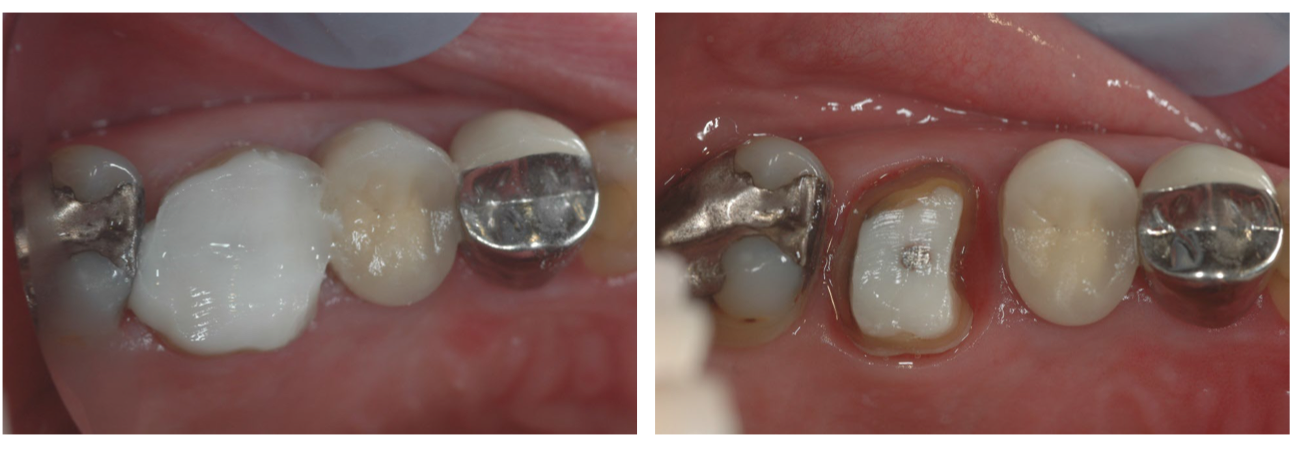
what is being shown here?
foundation restoration using comp core (“toilet bowl color demarcates tooth vs comp core material)
Amalgam is a good core material but not really esthetic and poor setting time. Glass ionomer is just a poor core material to use due to its physical properties. What should we use instead (and do use in clinic) for core buildup and why?
Resin-based composite
Which core buildup material has the following characteristics: amalgam, glass ionomer cement, or resin-based composite?
Compressive strength between amalgam and GI
Esthetic
Good strength characteristics
Low solubility
Can bond to dentin and easy to use
resin-based composite
What are some of the negative features of using resin-based composite? (2)
Polymerization shrinkage
Hydroscopic expansion
Resin-based composite is incompatible with ________ in many root canal sealers, resulting in resin that is not cured completely
ZOE (zinc oxide eugenol)
what four things do provisional crowns provide?
coronal seal
preserve integrity of the remaining tooth structure
prevent drifting of the adjacent teeth
provide some degree of oral function and appearance
which type of castings are used routinely as standard and acceptable methods to restore posterior endodontically treated teeth?
Castings such as gold onlay, gold crowns, metal-ceramic crowns, and all-porcelain restorations with cuspal coverage
What is the greatest factor influencing the strength of endodontically treated teeth?
The amount of remaining tooth structure
(If a tooth is not fractured or severely damaged by caries before endodontic treatment, it may be sufficient to treat the endodontic access with a simple restoration.)
When would you want to do a custom cast post and core?
Irregular canal shapes
Extensive tooth structure damage
Why is it required to prepare the tooth in custom technique?
To make sure there are no undercuts in the tooth
What do we use to create an impression of the canal for the custom technique?
Spee dee plastic pin as the pin to apply a resin impression, fix coronal to match prep to receive definitive resto, wrap with moist gauze and send to lab asap
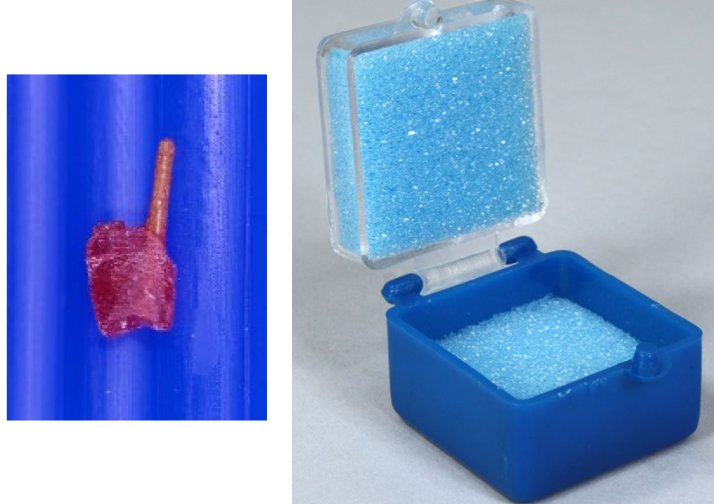
How do you take the impression for the custom technique?
Loosely fit a resin sprue into the canal
Apply GC-resin (quick set) in canal with lubrication -- should cover contrabevel
Seat into canal, making sure there are no undercuts
Bulk up the post head with resin to create shape of prepped tooth
Wrap with moist gauze and send to lab ASAP
A provisional crown is attached to a temporary post using ______
PMMA