PART 1: Skin Structure & Function, Skin Lesions, and Bacterial Skin Infections
 Call Kai
 Learn
Learn Practice Test
 Spaced Repetition
 Match
Match Flashcards
 Knowt Play
1/110

There's no tags or description
Looks like no tags are added yet.
Name | Mastery | Learn | Test | Matching | Spaced | Call with Kai |
|---|
No analytics yet
Send a link to your students to track their progress
111 Terms
What structures make up the integumentary system?
The integumentary system consists of the skin, hair, nails, sweat glands, and oil (sebaceous) glands.
What are the major functions of the integumentary system?
Protection, sensation, temperature regulation, immunity, movement and growth, excretion of waste products, and endocrine function.
Why is the skin considered an effective protective barrier?
Its large surface area forms a physical barrier between the body and the external environment, protecting against injury, pathogens, and fluid loss.
How does the skin contribute to sensation?
It contains sensory receptors that transmit information about touch, pressure, pain, temperature, and environmental stimuli to the brain.
How does the skin regulate body temperature?
Through sweating, vasodilation, vasoconstriction, insulation from adipose tissue, and heat exchange with the environment.
How does the skin contribute to immunity?
The skin acts as the first line of defense against pathogens and participates in immune responses through specialized cells and inflammatory mechanisms.
How does the skin assist movement and growth?
Its elasticity and connective tissue structure allow stretching, movement, and growth while maintaining protection.
How does the skin contribute to excretion?
Sweat glands remove small amounts of water, salts, and metabolic waste products from the body.
What endocrine function does the skin perform?
The skin participates in vitamin D synthesis and other hormone-related functions.
What is the epidermis?
outermost layer of the skin composed of stratified squamous epithelium
melanocytes = provide protection against the sun
What is the primary function of the epidermis?
To provide protection from environmental injury, pathogens, and water loss.
What are melanocytes?
Specialized cells within the epidermis that produce melanin.
What is the function of melanin?
Melanin protects underlying tissues from ultraviolet (UV) radiation damage.
What is the dermis?
The layer beneath the epidermis composed of fibrous connective tissue and elastin fibers.
What is the function of the dermis?
It provides structural support and contains blood vessels, nerves, glands, and hair follicles.
What structures are found in the dermis?
Hair follicles, sweat glands, sebaceous glands, receptor nerve endings, and blood vessels.
What is the hypodermis?
The deepest layer of the integumentary system, primarily composed of adipose tissue.
What are the functions of the hypodermis?
Insulation, energy storage, metabolism, cushioning, and temperature regulation.
Why is adipose tissue important in the hypodermis?
It protects underlying structures, stores energy, and helps maintain body temperature.
What are common skin problems?
Cuts and abscesses (could be 2nd to infection)
acne, nevi, warts
eczematous dermatitis
seborrheic dermatitis → scalp
rashes
actinic keratosis.
serious skin disorders
Extensive burns
>20% BSA
loss of body fluids
secondary infections (not the burn but the infection kills)
toxic epidermal necrolysis (TEN).
Why are burns involving more than 20% body surface area dangerous?
They can result in severe fluid loss, infection, shock, and life-threatening complications.
What is toxic epidermal necrolysis (TEN)?
A severe drug-related condition causing widespread epidermal detachment and skin sloughing.
What are major causes of skin disorders?
Injury, aging, inherited factors, medical conditions, stress, and skin trauma.
What is epidermolysis bullosa?
A genetic disorder characterized by fragile skin that blisters easily.
macule
change in skin colour
NOT raised or depressed
<10mm
patch
change in skin colour
NOT raised or depressed
> 10mm
papule
raised lesion
<10 mm
plaque
elevated lesion
>10mm
nodule
knot/lump
thick/deep solid lesion
pustule/abscess
elevated skin lesion
PUS
vesicle/bulla (blister)
bubble swelling
contain air or pus
airborne chicken pox
wheal/hibe
ridge
reddened elevation
caused by edema
scale
flaky superficial keratin
easily separates from skin
crust
hardened
adherent serum on skin over a lesion
petechia
burst blood vessel tiny rahs
can be from many things
meningitis
thrombocytopenia (decreased platelets)
vomiting = petechiae under eye
important you assess RASH + CLINICAL PICTURE
How are skin disorders classified?
Infectious disorders
inflammatory disorders
skin cancers
nonmelanoma skin cancers
melanoma.
What is a skin lesion?
Any abnormal change in the structure or appearance of the skin.
What is vitiligo?
A condition characterized by loss of skin pigmentation due to destruction of melanocytes.
What is petechia?
A small pinpoint hemorrhage caused by bleeding beneath the skin.
What is a freckle?
A small pigmented spot caused by localized melanin accumulation.
What is a nevus?
A mole or benign pigmented lesion of the skin.
What is an elevated nevus?
A raised benign mole extending above the skin surface.
What is a papule?
A small, elevated, solid skin lesion less than 1 cm in diameter.
What is a plaque?
A raised, flat-topped lesion larger than 1 cm.
What is a nodule?
A larger, deeper solid lesion extending into the dermis.
What is a tumor in dermatology?
A large solid mass that extends into deeper tissue structures.
What type of lesion is commonly produced by a mosquito bite?
A papule.
What is herpes simplex?
A viral infection characterized by grouped vesicular lesions.
What does a burn lesion represent?
Tissue injury resulting from thermal, chemical, electrical, or radiation exposure.
What is impetigo?
A highly contagious superficial bacterial skin infection.
What is varicella?
Chickenpox caused by varicella-zoster virus.
4 categories of SKIN INFECTIONS
Bacterial
viral
fungal
parasitic.
bacterial infections
acne vulgaris
folliculitis
furuncle and carbuncle
cellulitis
impetigo
What is acne vulgaris?
A chronic inflammatory disorder of the pilosebaceous units involving blocked follicles and bacterial colonization.
acne vulgaris - bacterial infection
comedones (black (oxidized) and whiteheads)
recurrent crops of pustules (face, neck, upper back)
hair follicle + sebaceous glands = clogged
comedones → Propionibacterium acne (bacteria)
blocked duct ruptures = precipitates acute inflam rxn
changes in hormones, sebum (oil, direct, dead skin = WBC to site), foods, meds)
What are the hallmark features of acne vulgaris?
Comedones, pustules, papules, inflammation, and recurrent outbreaks.
What are comedones?
Blackheads and whiteheads caused by plugged hair follicles and sebaceous glands
What causes follicular plugging in acne?
Blockage of hair follicles and sebaceous gland ducts by keratin and sebum.
Where does acne most commonly occur?
Face, neck, shoulders, chest, and upper back.
Which microorganism is commonly associated with acne vulgaris?
Propionibacterium acnes.
What happens when an acne duct ruptures?
An acute inflammatory response occurs.
Why does inflammation occur in acne?
Bacterial colonization and rupture of blocked follicles trigger immune responses.
What is a blackhead?
An open comedone containing oxidized debris and sebum.
What is a whitehead?
A closed comedone containing trapped sebum and keratin.
folliculitis - bacterial infection
infection + inflammation of 1+ HAIR follicles
pimples (white tips) + rash formation
anywhere on hair-covered skin
ingrown = pilonidal cysts (gluteal fold)
incision and drainage
What is folliculitis?
Infection and inflammation of one or more hair follicles.
How does folliculitis appear clinically?
White-tipped pimples arranged in a rash-like distribution.
Where can folliculitis occur?
Anywhere on hair-bearing skin.
What symptoms may accompany folliculitis?
Tenderness, redness, irritation, and localized inflammation.
What is an ingrown hair?
A hair that grows back into the skin rather than outward.
How can an ingrown hair lead to complications?
It may result in a pilonidal cyst.
What is a pilonidal cyst?
An abscess occurring above the gluteal fold due to ingrown hairs and infection.
How is a pilonidal cyst treated?
Incision and drainage.
furuncle (boil) - bacterial infection
1 hair
deep infection
tender, pain, pus drainage
local s/s
What is a furuncle?
A boil; a deep infection involving a hair follicle and surrounding tissue.
What are the manifestations of a furuncle?
Pain, tenderness, swelling, erythema, and drainage of pus.
Why are furuncles painful?
Inflammation and pressure from accumulated purulent material irritate surrounding tissues.
carbuncle - bacterial infection
1+ interconnecting furuncles
connecting sinus tracts + multiple opening in skin
hot, tender, erythematous + diffused border
chills, malaise, fever
What is a carbuncle?
A cluster of interconnected furuncles with multiple draining openings.
How does a carbuncle differ from a furuncle?
A carbuncle is larger, deeper, and involves multiple connected infections.
What are sinus tracts in a carbuncle?
Channels connecting multiple infected areas beneath the skin.
What are manifestations of a carbuncle?
Hot, tender, erythematous skin with diffuse borders, fever, chills, and malaise.
What systemic symptoms can occur with carbuncles?
Fever, chills, and malaise.
What treatments are used for furuncles and carbuncles?
Incision and drainage
antibiotics
warm moist compresses.
Why are warm moist compresses used for boils?
They promote drainage and improve circulation to the affected area.
What is cellulitis?
A deep bacterial infection of the subcutaneous tissue.
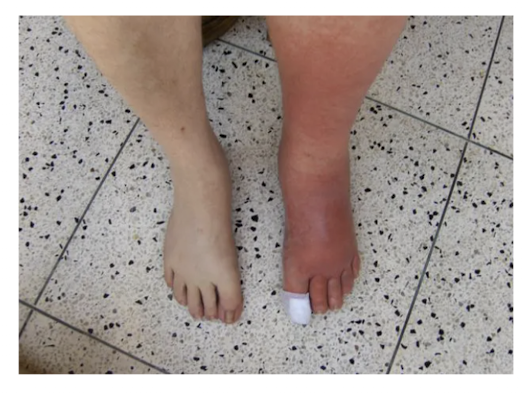
Which organisms most commonly cause cellulitis?
Staphylococcus aureus and Streptococcus species.
How does cellulitis usually begin?
Following a break in the skin that allows bacterial entry.
What are manifestations of cellulitis?
Heat
erythema
edema
tenderness
fever
chills
malaise.
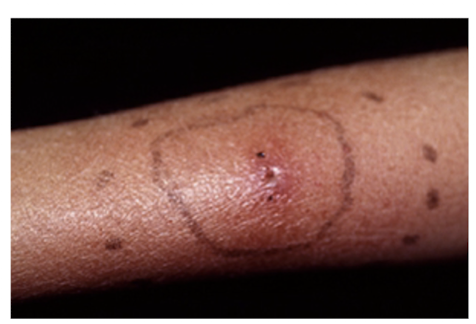
How does erythema appear in cellulitis?
Redness with diffuse, poorly defined borders.
Why is edema present in cellulitis?
Inflammation increases capillary permeability and fluid accumulation.
What serious complication can develop if cellulitis is untreated?
Gangrene.
Why should cellulitis borders be marked?
To monitor the spread or improvement of infection.
What nursing intervention helps reduce cellulitis swelling?
Elevation of the affected extremity.
Why is immobilization recommended in cellulitis?
It reduces pain and limits spread of inflammation.
How is cellulitis treated?
Antibiotics
elevation
immobilization
monitoring progression.
What is impetigo?
A superficial bacterial skin infection caused by Group B beta-hemolytic streptococci or Staphylococcus aureus.
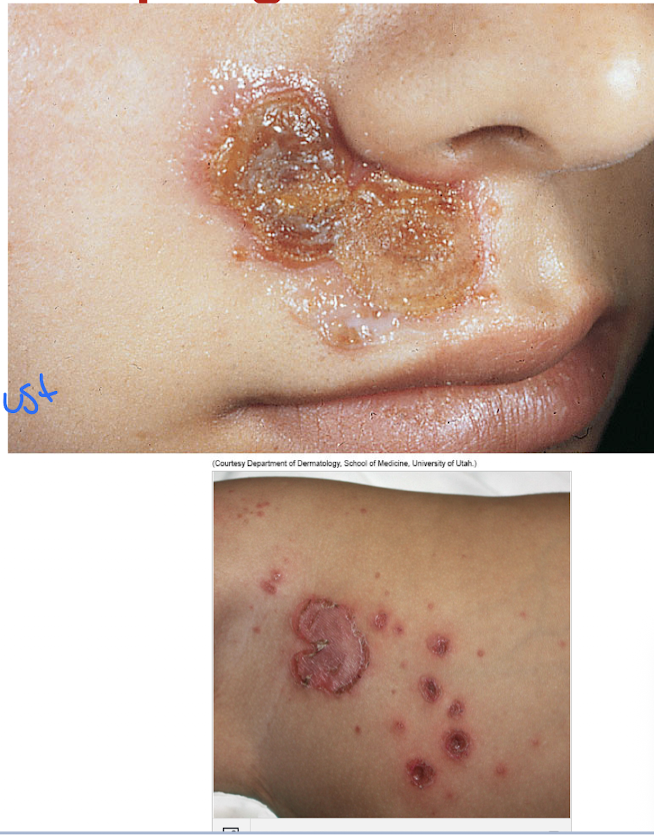
How does impetigo begin?
As pustules (pimples) that develop into vesiculopustular lesions (b/c they spilt into neighbouring skin)
What happens after impetigo lesions rupture?
They form thick honey-colored crusts surrounded by erythema.