1 & 2) Intro, Bacteria Shapes
 Call Kai
 Learn
Learn Practice Test
 Spaced Repetition
 Match
Match Flashcards
 Knowt Play
1/12

There's no tags or description
Looks like no tags are added yet.
Name | Mastery | Learn | Test | Matching | Spaced | Call with Kai |
|---|
No analytics yet
Send a link to your students to track their progress
13 Terms
How small is invisible?
0.1mm
Who is the "Father of Microbiology"? Where was he from?
Anthony Leeuwenhoek
Delf, Netherlands
There are _____________ types of bacteria in soil
There are _____________ types of bacteria in the gut
Soil: 10,000
Gut: 500-700
What is the hygiene hypothesis?
A lack of early childhood exposure to infectious agents, symbiotic microorganisms, and parasites increases susceptibility to allergic diseases by suppressing natural development of the immune system
-bacteria provide vitamins and stimulate immune system!
What is the difference between prokaryotes and eukaryotes?
Prokaryotes do NOT have organelles but eukaryotes do
Strain vs. Species
Strain: a subset of species. Any isolated colony.
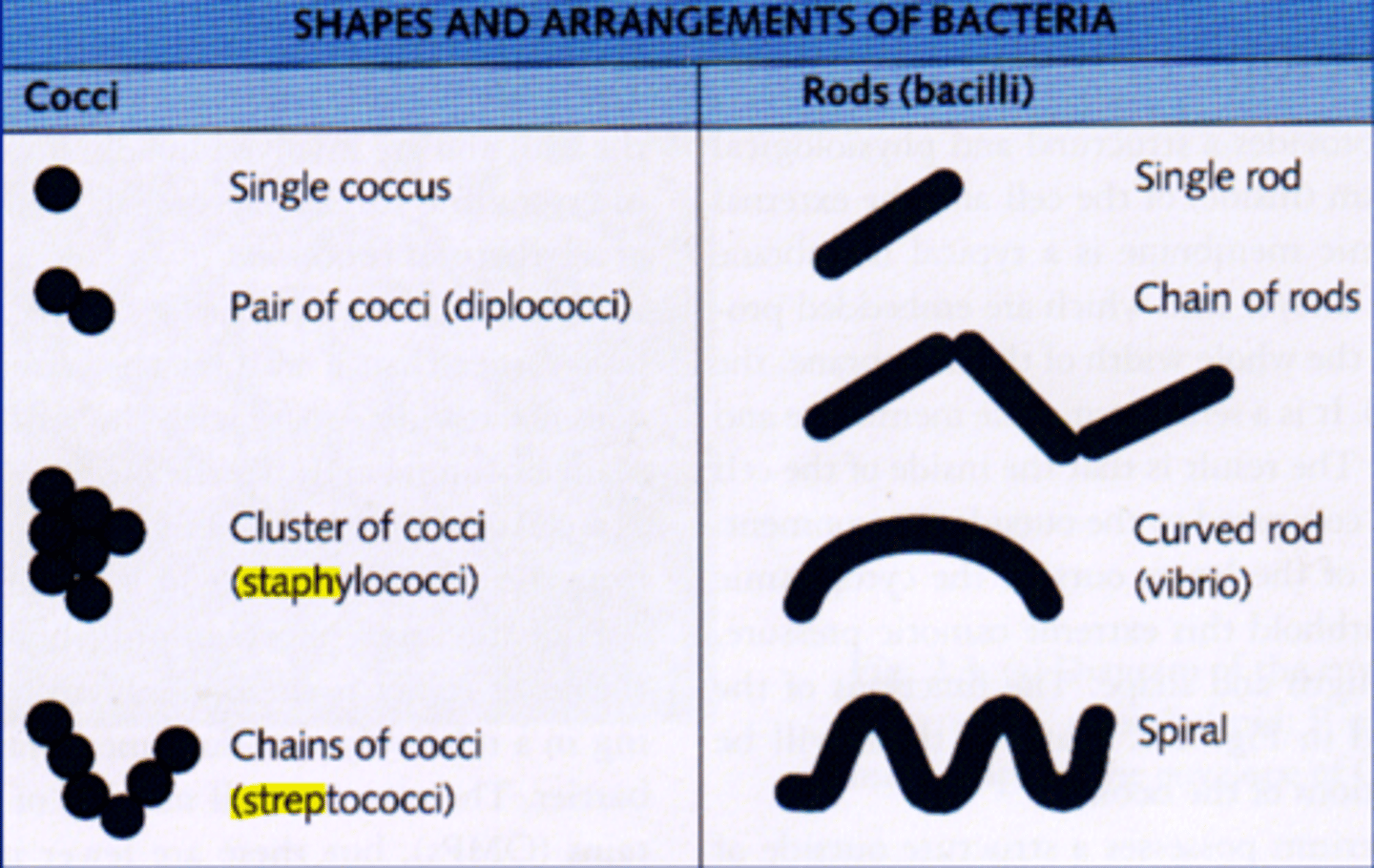
A cluster of gram positive cocci is _________________ (streptococci / staphylococci)
A chain of gram positive cocci is _________________ (streptococci / staphylococci)
Cluster gram positive cocci: staphylococci
Chains of gram positive cocci: streptococci
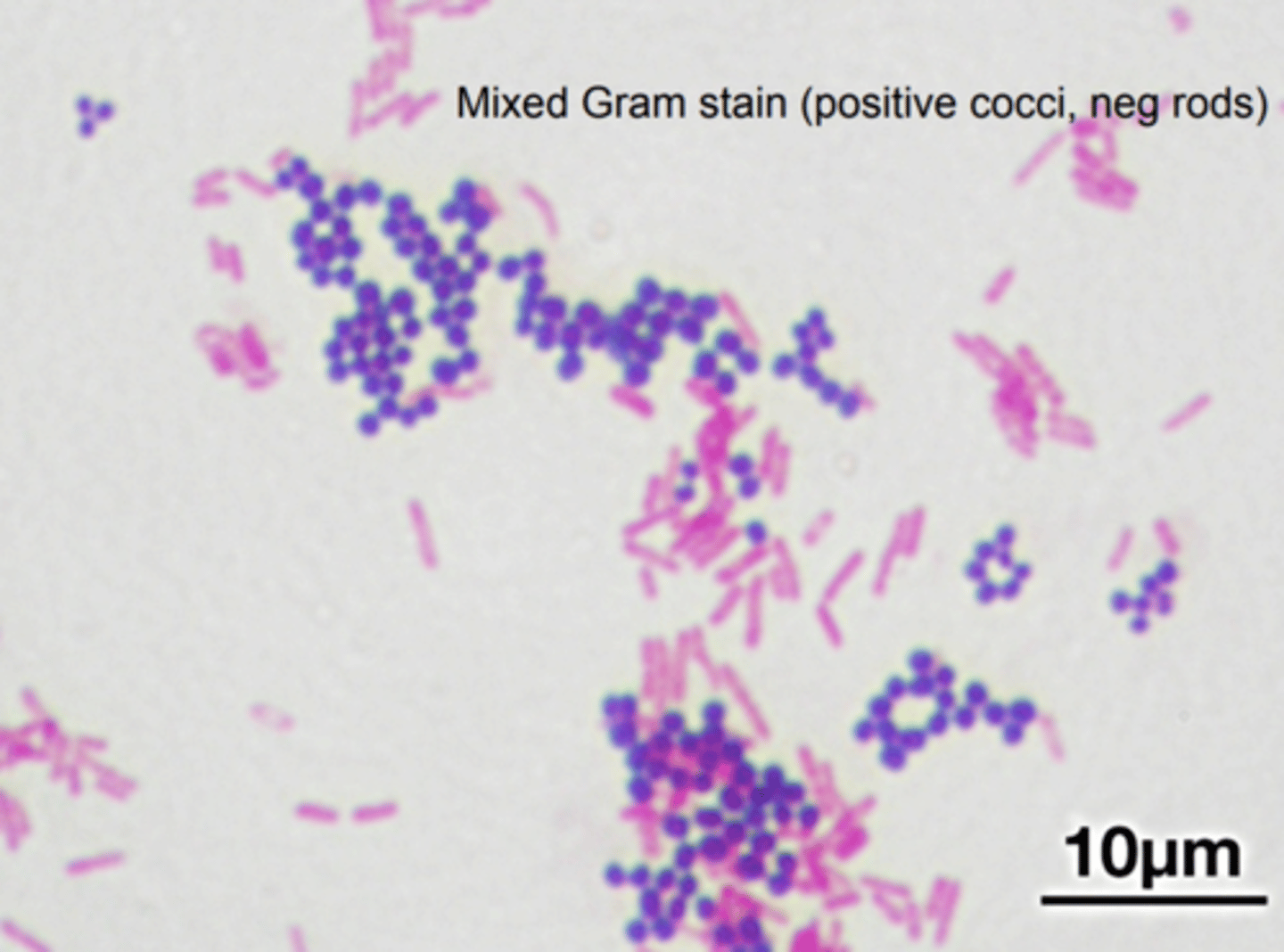
What are the steps for a gram stain? What color does gram positive and negative end up with? Why?
1. prepare heat fixed film on glass slide
2. crystal violet 1 minute then rinse
3. iodine 1 minute then rinse
4. brief decolorize with ethanol or acetone seconds then rinse
5. pink safranin 1 minute then rinse
6. blot dry
Gram negative: thin peptidoglycan so dye will NOT hold
-pink
Gram positive: thick peptidoglycan so dye will hold!
-purple
Spores are only found in gram ________________ (positive / negative)
Gram positive
-metabolically inert forms that are stable for long periods of time
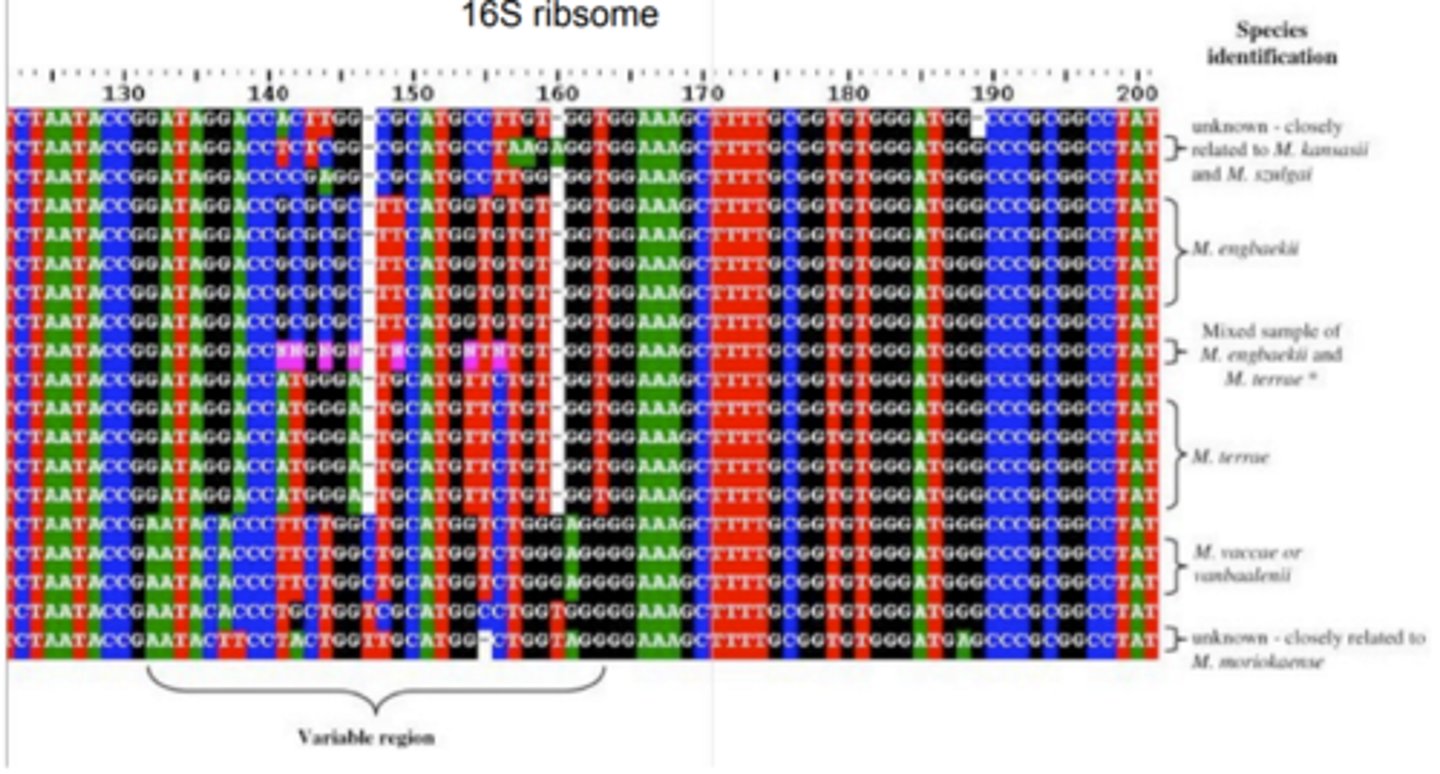
What is the best way to compare bacteria for similarities?
16S ribosomal RNA
-computer can show it as phylogenic tree with 3 domains of life (eukarya, archaea, bacteria )
What is the order of classifications from life to species?
life
domain
kingdom
phylum
class
order
family
genus
species
-usually only use genus and species (family and above used in taxonomic studies)
When writing genus and species what is the correct way?
What if its multiple species?
Genus: capitalized and italicized or underlined
-can be appreciated with capitalized single letter or lengthened to a couple letters (strep vs. staph)
Species: lowercase and italicized or underlined
-multiple species: "ssp." after genus
-or genus alone and pleura means multiple types
What is serotyping?
identification of bacteria by identifying surface antigens