Phospholipids and Plasma Membrane Structure & Dynamics
 Call Kai
 Learn
Learn Practice Test
 Spaced Repetition
 Match
Match Flashcards
 Knowt Play
1/22

There's no tags or description
Looks like no tags are added yet.
Name | Mastery | Learn | Test | Matching | Spaced | Call with Kai |
|---|
No analytics yet
Send a link to your students to track their progress
23 Terms
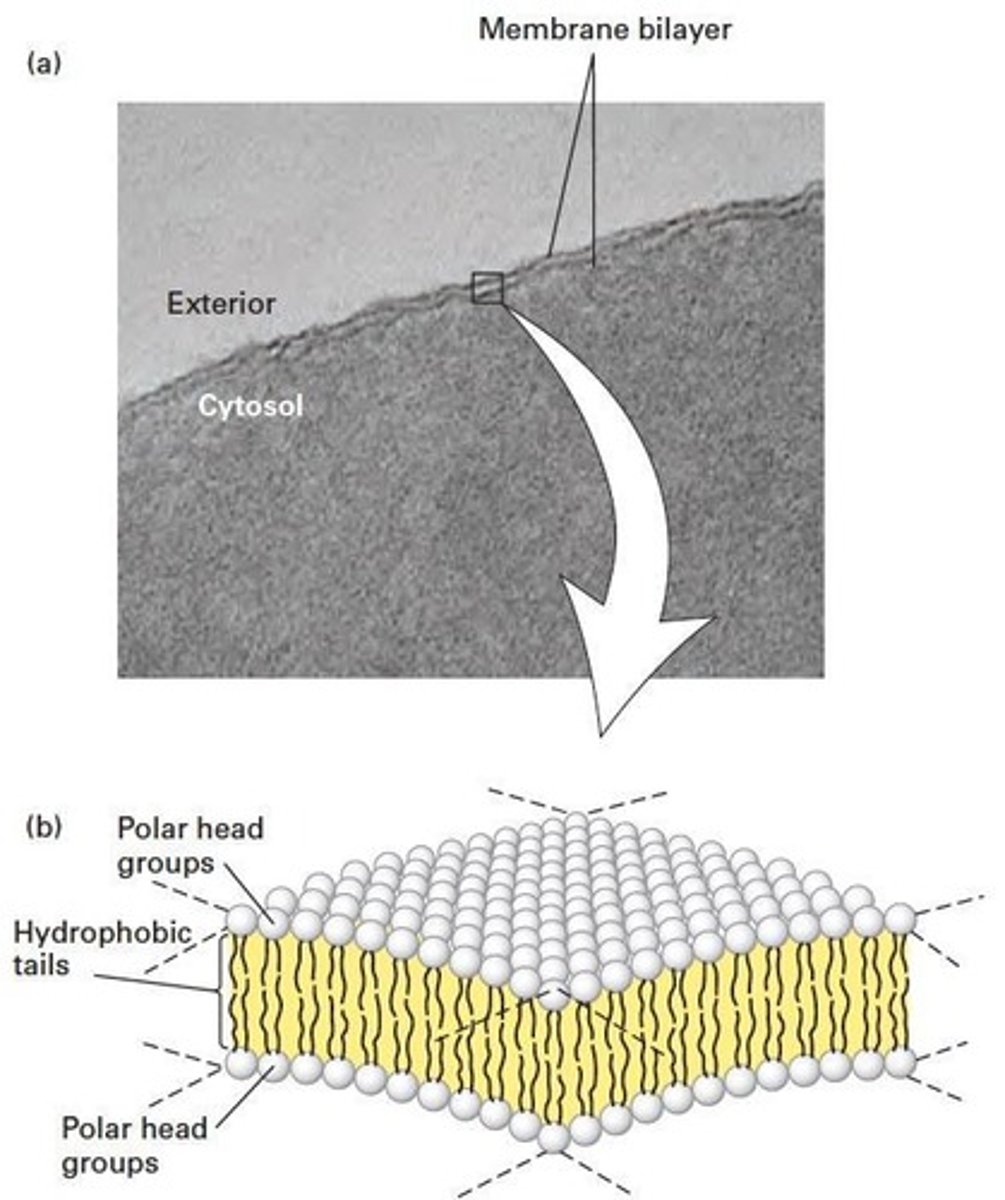
What is the structure of the plasma membrane?
The plasma membrane has a trilaminar structure and is a lipid bilayer about 6 nm thick.
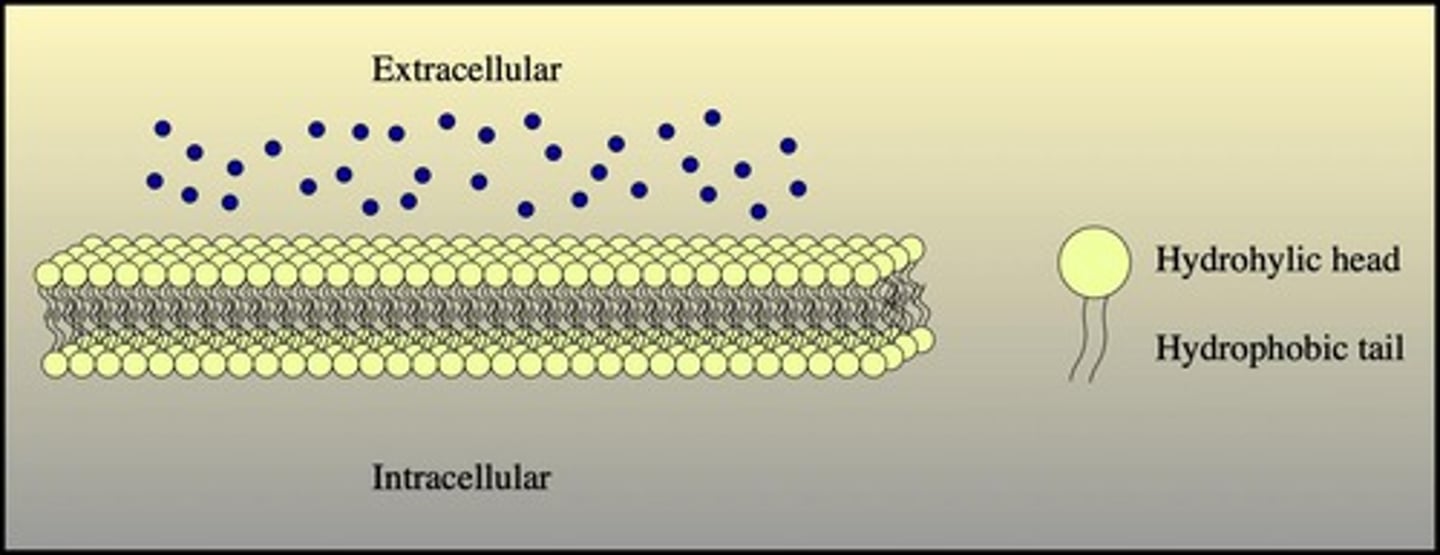
What type of molecules make up the lipid bilayer?
The lipid bilayer is made up of phospholipids.
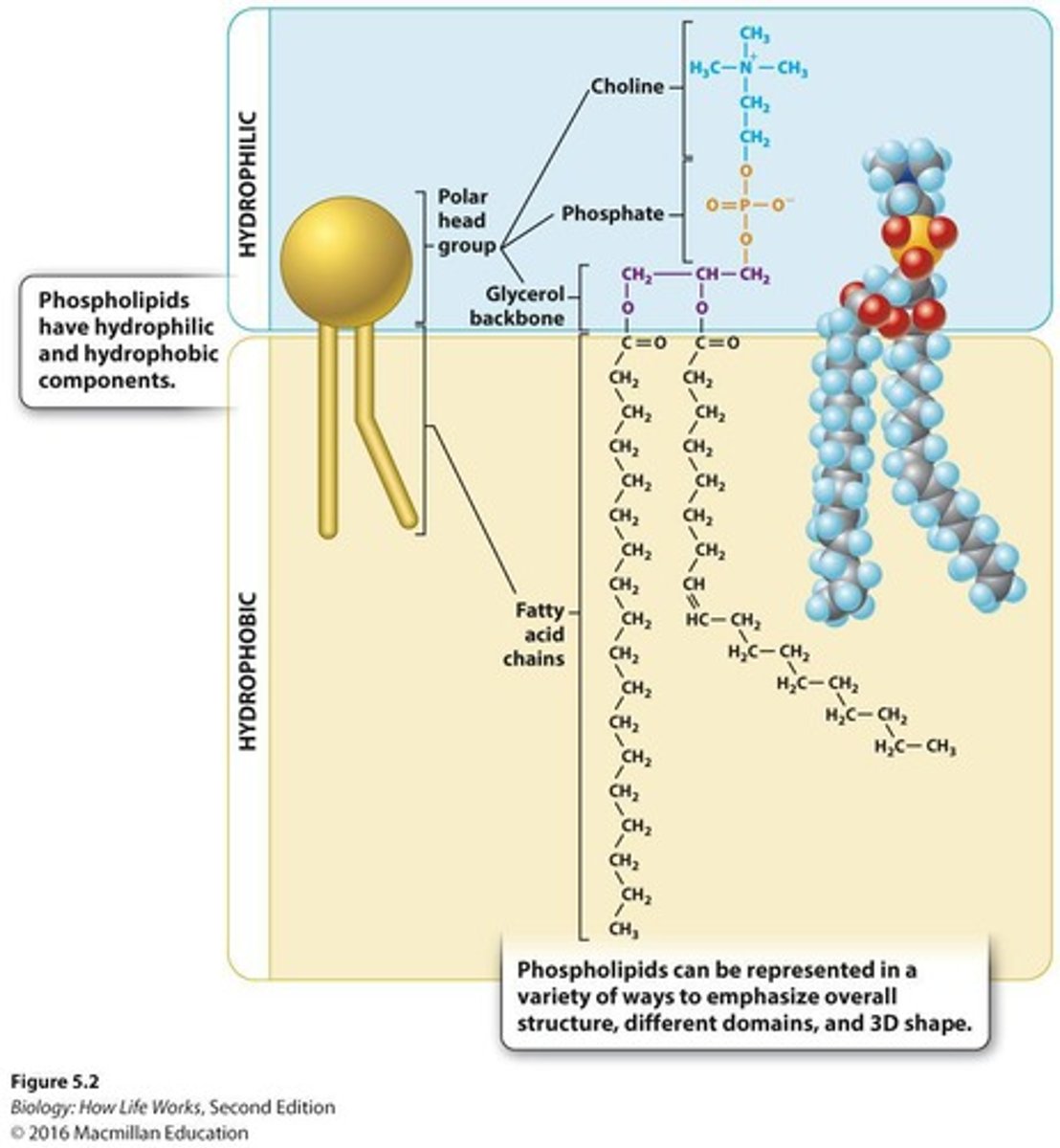
What characteristic do phospholipids have?
Phospholipids are amphipathic molecules, meaning they have both hydrophobic (non-polar) and hydrophilic (polar) regions.
What is the function of the hydrophobic tails of phospholipids?
The hydrophobic tails aggregate to bury themselves in the interior of the bilayer.
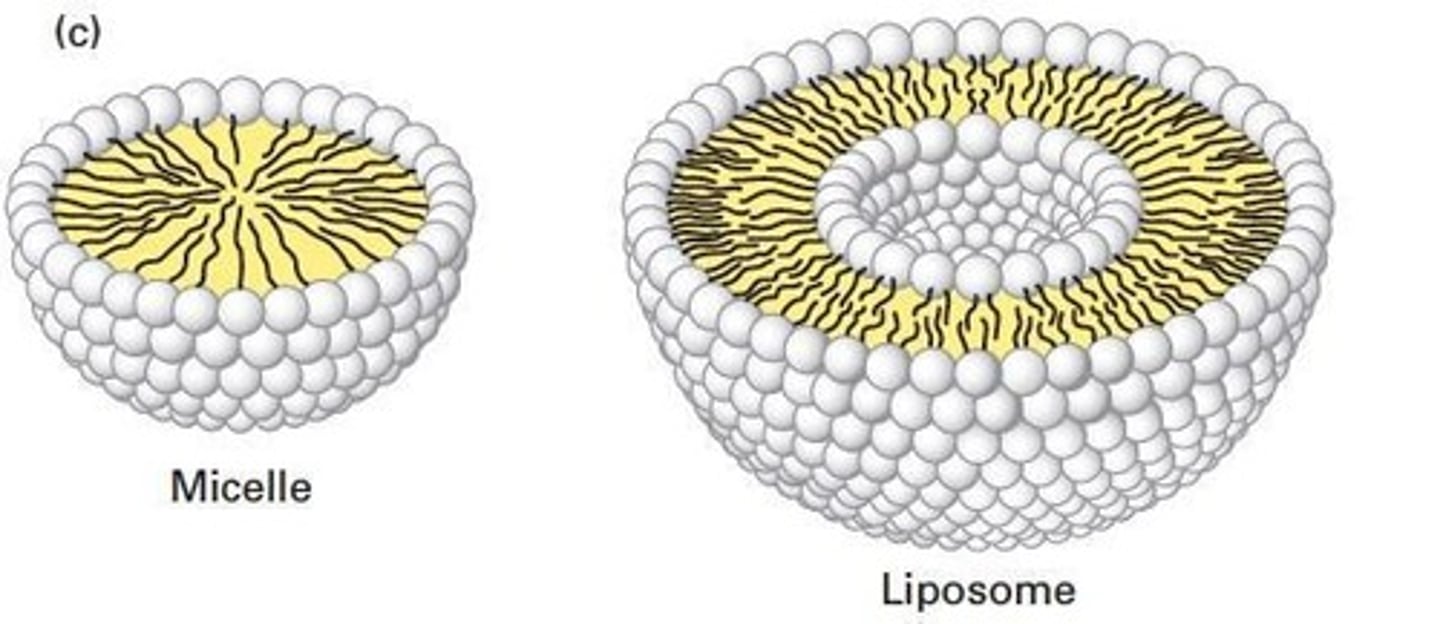
What are micelles and how are they formed?
Micelles are formed by fatty acids with only one hydrophobic chain and are stable conformations.
What is the role of the phosphate residue in phospholipid structure?
The phosphate residue links the head group to the glycerol molecule at the sn-3 position.
Where does phospholipid synthesis occur?
Phospholipid synthesis occurs at the interface of the cytosol and the outer endoplasmic reticulum membrane.
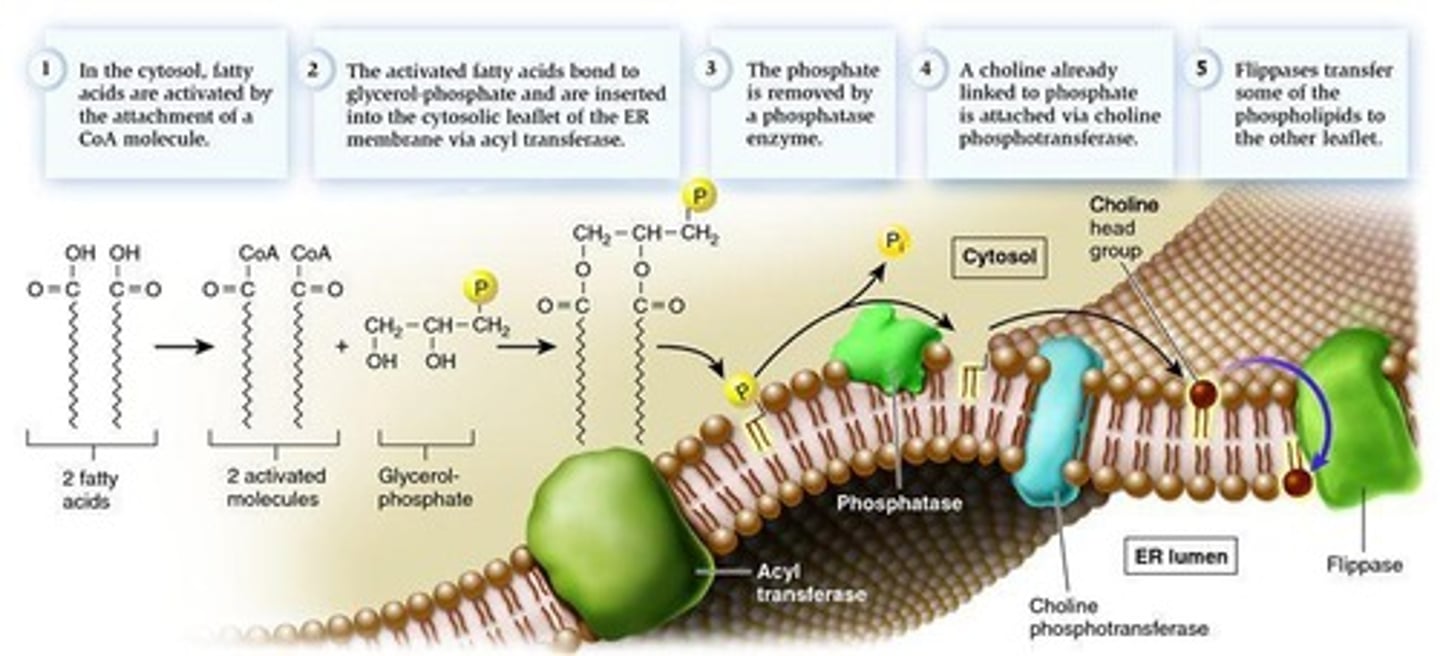
What is the significance of floppase in phospholipid synthesis?
Floppase helps in the distribution of phospholipids between the inner and outer leaflets of the membrane.
What is the Fluid Mosaic Model?
The Fluid Mosaic Model describes the plasma membrane as a two-dimensional liquid with diverse components like lipids, proteins, and carbohydrates.
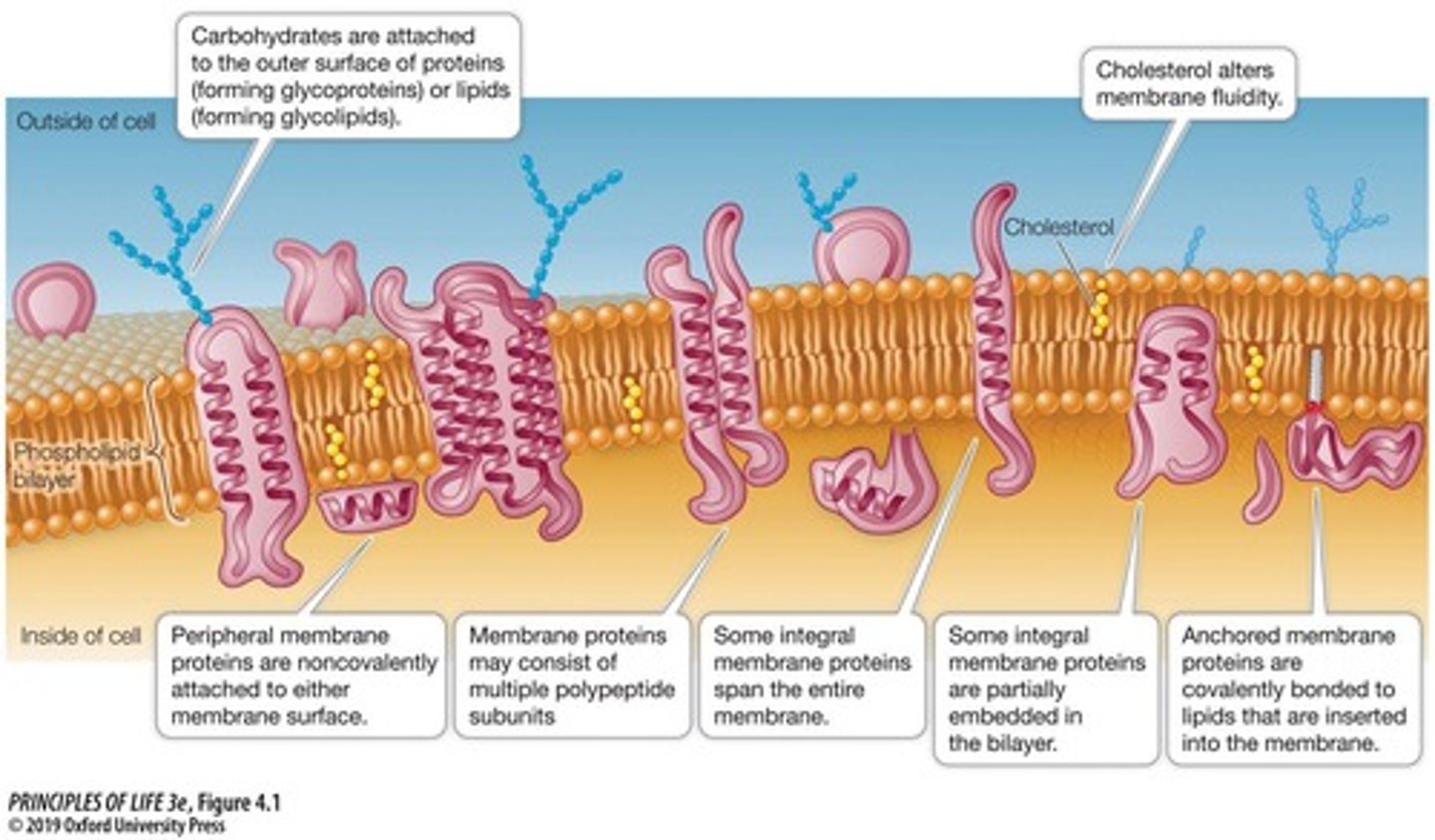
Who proposed the Fluid Mosaic Model?
The Fluid Mosaic Model was proposed by Seymour Jonathan Singer and Garth Nicolson in 1972.
What does membrane fluidity depend on?
Membrane fluidity depends on lipid composition, temperature, and the presence of cholesterol.
What happens to membrane proteins during the Frye-Edidin experiment?
Surface proteins from two fused cells initially segregate but later diffuse and intermingle across the unified membrane.
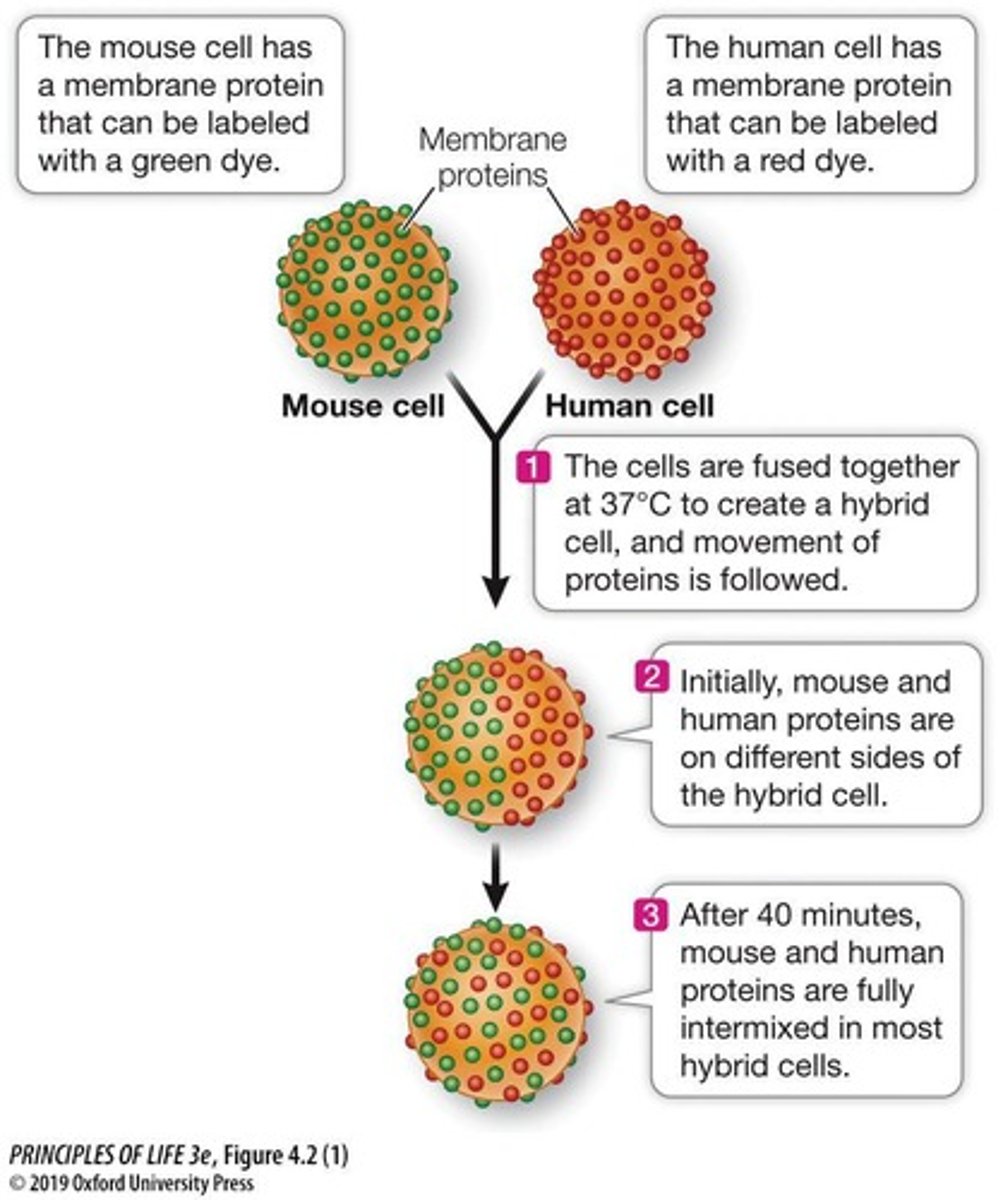
What are lipid rafts?
Lipid rafts are microdomains within the membrane that contain a high concentration of specific lipids and proteins.
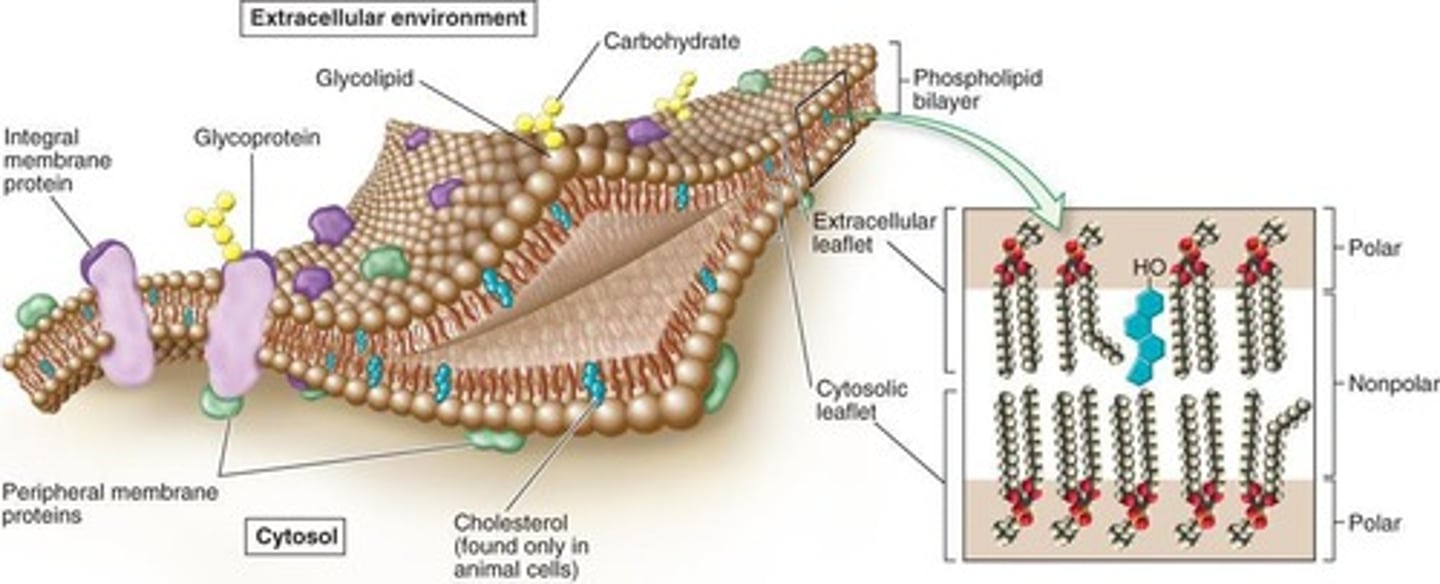
What is the thickness of biological membranes?
Biological membranes are approximately 6 nm thick.
What is the role of carbohydrates in the plasma membrane?
Carbohydrates attach to lipids or proteins on the outer surface, important for cell-cell recognition and adhesion.
How does temperature affect membrane fluidity?
Fluidity decreases in cold conditions, while higher temperatures increase fluidity and intermixing.
What is the significance of weak hydrophobic interactions in membranes?
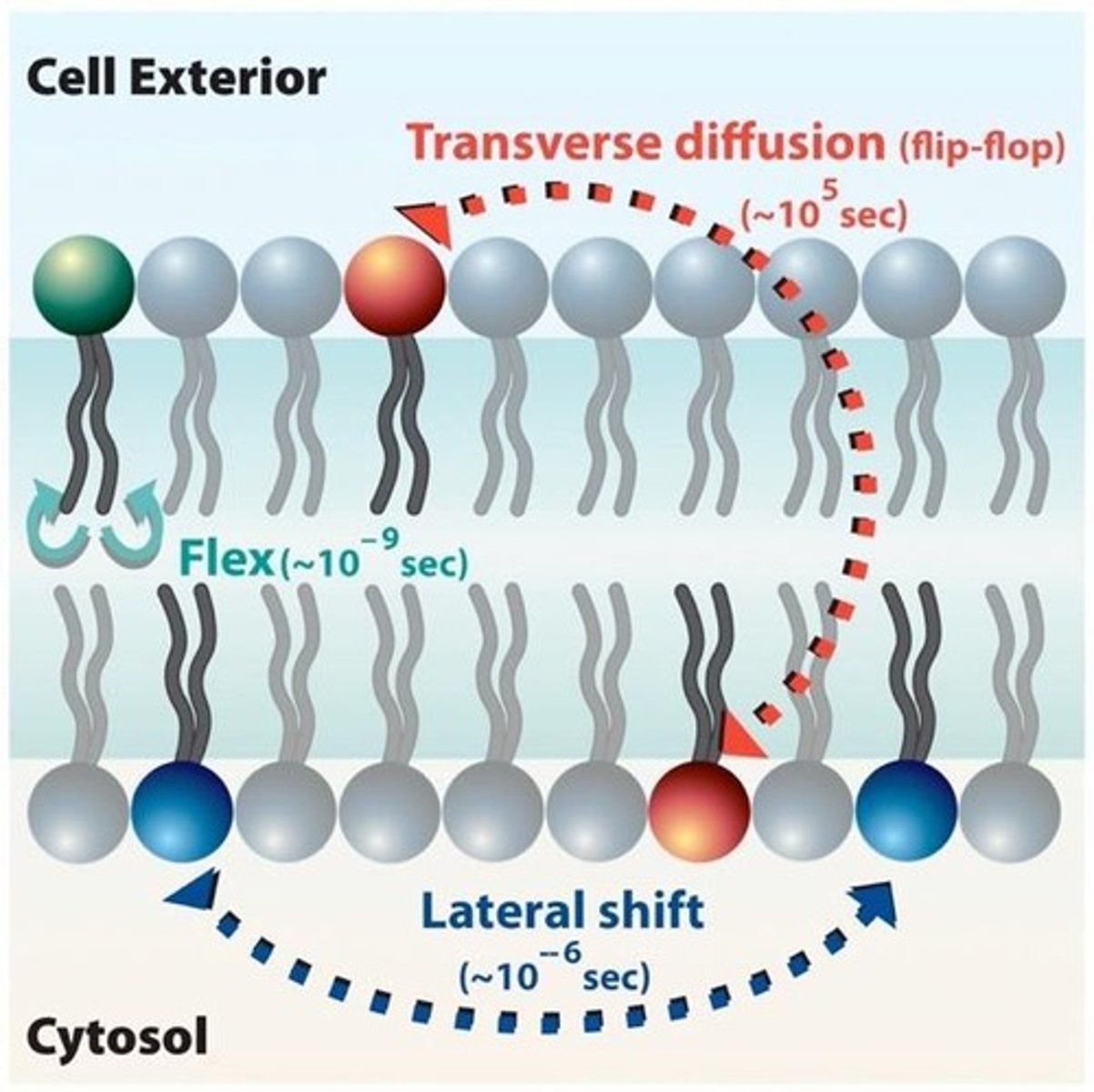
Weak hydrophobic interactions allow lipids and proteins to move laterally within the bilayer.
What is the primary function of membrane proteins?
Membrane proteins often serve as gates and pumps for substances and carry out biochemical reactions.
What is the difference between hydrophilic and hydrophobic molecules?
Hydrophilic molecules are attracted to water, while hydrophobic molecules are repelled by water.
What are the main types of phospholipids mentioned?
Phosphatidylethanolamine, Phosphatidylcholine, Phosphatidylserine, and Phosphatidylinositol.
What is the role of cholesterol in the plasma membrane?
Cholesterol alters interactions among fatty acid side chains, influencing membrane fluidity.
What is the significance of the stable and flexible nature of membranes?
Membranes must be stable to maintain structure while being flexible to allow for movement and function.
What is the process of self-assembly in biological membranes?
Self-assembly allows lipids to spontaneously organize into bilayers, forming the basis of membrane structure.