vert bio exam 2
 Call Kai
 Learn
Learn Practice Test
 Spaced Repetition
 Match
Match Flashcards
 Knowt Play
1/73

There's no tags or description
Looks like no tags are added yet.
Name | Mastery | Learn | Test | Matching | Spaced | Call with Kai |
|---|
No analytics yet
Send a link to your students to track their progress
74 Terms
what are nasolabial grooves used for?
chemoreception to find mates
what are the two special characters of plethodontids?
nasolabial grooves
no lungs
most plethodontids live in cold, fast moving water with a high O2 content; lungs would be a disadvantage (not needed + would make them too buoyant)
What are the three possible life cycles of salamanders?
completely aquatic
completely terrestrial
terrestrial adults and aquatic larvae
is salamander reproduction internal or external?
internal
via spermatophores released into the water by the male
no true copulatory organ
what are frogs and toads modified for? What modifications do they have for this purpose?
jumping
long pelvic girdle
limbs and digits elongate
forearm bones fused
what mechanism do tree frogs use to stick to trees?
wet adhesion
via mucus on toes
What allows for frogs and toads to protrude their tongues?
Specialized muscles
genioglossus and submentalis (flick out)
hyloglossus (pull back in)
What helps amplify frog sounds?
their tympanum
what is intercalary cartilage?
cartilage between the toe bones of tree frogs
allows for bending without loss of adhesion
Is frog fertilization internal or external?
external (via amplexus (copulatory embrace)) for a vast majority of frogs
one group (tailed frog) have a modified copulatory organ and internal fertilization
How do frogs care for young (3 ways)?
egg guarding
egg/tadpole carrying (in back of mouth)
gastric brooding (no extant species)
What two diseases threaten amphibians?
chytridiomycosis (fungus)
prevents gas exchange through skin
ranavirus (viral disease)
hemorrhaging of skin and organs
how did chytridiomycosis spread around the world?
the frog that spread it initially was used in laboratory testing (pregnancy tests) resulting in it ending up all around the world
What are temporal fenestrae?
holes in the side of the skull, providing room for jaw muscles to grow bigger & have more surface area to attach to
allows for better jaw movement
how many temporal fenestrae in diapsids?
2
What are the four derived characters of amniota?
lateral flange on pterygoid bone
keratin based structures on skin
costal ventilation of lung
amniotic egg
what is the benefit of the amniotic egg?
allows for egg laying on land
What is the main general character of amniota?
more developed egg compared to earlier species (more layers)
allantois (nitrogenous waste storage)
yolk (stores nutrients)
chorion, amnion (store water, protect from shock, allow for gas exchange once fused)
what group lack shells on their eggs (mostly)?
mammals
why do amniotes need a rigid trachea?
rib ventilation (present in amniotes) requires negative pressure; no support = trachea collapses
What is costal ventilation?
negative pressure system sucking air in; ribs expand, increasing lung volume and lung suction; positive pressure pushes air out as lung volume decreases
What are the two derived characters of sauropsids?
uric acid nitrogenous waste
beta keratin in skin
what are parareptiles?
extinct mesosaurs and their relatives
what is the derived character of diapsida?
two temporal fenestrae
what are the two main derived characters of squamata?
hemipenes
male copulatory organs
determinant growth
growth plates that will fuse at maturity (once mature, growth stops)
What are the two main groups of lepidiosauria?
Rynchocephalia (tuataras)
squamates (snakes, lizards)
what extant group retains the full diapsid skull?
Rhychocephalia (tuataras)
what traits separate snakes and lizards?
lizards have ear holes, snakes dont
lizards have moveable eyelids, snakes dont
lizards have two lungs, snakes have one
lizards have multiple rows of ventral scales, snakes tend to only have one
what is significant about the squamate skull?
increased cranial kinesis as a result of reduced quadratojugal
what are chromatophores?
pigment cells that can be changed depending on mood, physical condition, etc
What is caudal autotomy?
the tail can break off easily as a result of built-in fracture planes on the vertebrae
bone will not regrow; once a break happens, it cannot grow back
in what 4 ways can tail loss harm lizards?
decrease growth (energetically expensive)
worsen reproduction (energetically expensive)
decrease social status (tails are a social indicator)
cant do it again (cant regrow breakable bone)
What is the forked squamate tongue used for?
chemoreception
why have snakes and some lizards secondarily lost legs?
they inhabit dense underbrush where no legs allows for better maneuverability
what do lizards consume?
plants (large lizards)
small verts/inverts (small lizards)
What is dry adhesion?
molecular level attachment via toe pads divided into lamellae
what is unique about chameleon tails?
prehensile
grab stuff
cannot break like other lizards
What is the fear of snakes?
ophidiophobia
How do snakes consume prey?
jaws can move separately, allowing for a back-and-forth consumption of prey by protracting and retracting sides of the jaws
What are loreal pits? what snakes have them?
infared heat sensing organs
found in boas and vipers
What are three consumption strategies of snakes?
sieze and swallow
constriction
use of venom → waiting for prey to die
what kind of fertilization do snakes have?
internal
mostly egg layers
Where is viviparity seen in squamates?
skinks, boas, vipers
found in colder climates
increases survivability and embryonic development
results in female producing fewer offspring & being more vulnerable when carrying young
What is parthenogenesis?
reproduction without fertilization
results in an all-female population
likely originated from interspecies hybridization
How many temporal fenestrae do turtles have?
Zero
it is believed that they once had them, but secondarily lost them
What is the derived trait of testudinia?
skull with emarginated posterior
analagous to temporal fenestrae
what are the general traits of testudinia?
shell
loss of teeth
How do turtles ventilate their lungs?
lungs attached to guts; muscles can push/pull/spread guts to increase/decrease lung volume
turtles have fused ribs, and cannot breathe traditionally
what two environmmental factors influence turtle reproduction?
Temperature
influences rate and size of offspring (environmental s*x determination)
humidity
more humid = more water for eggs = higher survivability
what are the 3 main types of ESD, and what species most commonly and have them?
1A turtles
Male low temp, Females High temp
1B Tuatara
Females low temp, Males High temp
2 Crocs
Females at low and high temp, males at intermediate temp
what ESD type is most threatened by climate change?
1B
What are anadromous migrations?
live in oceans and return to freshwater to spawn
What are catadromous migrations?
Live in freshwater and return to oceans to spawn
In what 3 potential ways do actinopterygii care for their young?
nest attendance
males protect, clean, and aerate eggs
brooding
carrying in mouth, pouches, or attached to body
direct feeding
some produce skin secretions for larvae to eat
What are the three main threats for freshwater actinopterygii conservation?
pollution
acid mine drainage, coal silt, etc
habitat degradation
construction of dams
invasive species
asian carp, common carp, rainbow trout
What is the main threat for ocean actinopterygii conservation?
Overharvest
fishermen overestimate how abundant spp. are
attempts to farm fish instead have inadvertently spread disease and waste
What are the three derived characters of sarcopterygii?
monobasic fins
muscular lobes at fin base
intracranial joint
may improve suction + biting force
cosmoid scales
thick, dentine-like scales
Why is little known about actinista?
they inhabit deep benthic zones
what is estivation? what group undergoes estivation?
“hibernation” (reduction of physiological properties and metabolic rate) in response to environmental conditions (heat and drought)
done by dipnoi (lungfish)
For what 3 reasons did tetrapods move to land?
less predators
less competition
more food opportunities
plants, arthropods
What is the derived character of tetrapoda?
4 limbs w/carpals, tarsals, and digits.
What are zygapophyses?
contact surfaces on the front and back of tetrapod vertebrae
What are occipital condyles?
articulating surfaces on the cranium of sarcopterygians that assist with head movement
what is the stratum corneum?
a layer of dead, keratinized cells on the sarcopterygian epidermis that prevent dessication
What are pedicellate teeth?
inward bending teeth in amphibians that assist with prey swallowing
what is aposematic coloration?
bright colors to advertise distastefulness to predators
what is mullerian mimicry?
false aposematic coloration evolved by non-toxic amphibiansw
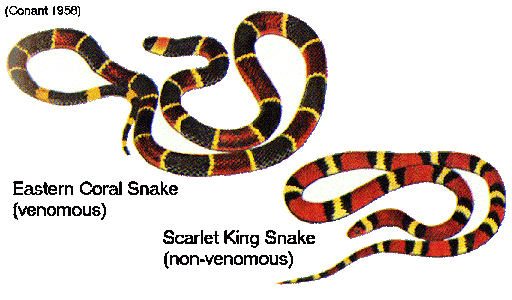
what two bones are found in the inner ear of amphibians? what does each bone specialize in detecting?
Columnella
high frequency sounds from air
operculum
low frequency vibrations from ground
What are the 4 main forms of amphibian respiration?
cutaneous gas exchange
highly vascularized skin
found in salamanders
paired lungs
buccal pumping of oxygen
found in frogs, toads
buccopharyngeal exchange
lining of mouth+pharynx vascularized
found in lungless salamanders
gills
efficient in water
salamander (larvae and some adults)
How do caecilians move around?
annuli (dermal folds)
What is paedomorphosis? what are the two types of paedomorphosis?
retention of larval traits in s*xually active adults
obligate
fully aquatic species
faculative
depends on environmental conditions (ex. delaying metamorphosis or breeding until more favorable conditions arrive to maximize offspring production)
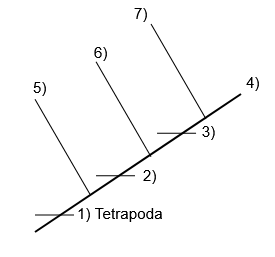
Identify the name (scientific and common) of each tetrapod group; also provide the defining character(s) for each group
Tetrapoda [vertebrates] (4 limbs w/carpals, tarsals, digits)
Amniota [mammals, birds, reptiles] (lateral flange, modified vertebrae, keratinized skin layers, costal ventilation, amniotic egg)
Sauropsida [“reptiles'“, lizards, birds] (keratinized skin, uric acid waste)
Diapsida [“Reptiles,” lizards, birds] (two temporal fenestrae)
Lissamphibia [amphibians] (variable respiration, pedicellate teeth, mucous glands, operculum)
Synapsida [mammals and relatives] (one temporal fenestrae)
Parareptiles [mesosaurs and relatives] (secondarily evolved to be aquatic; extinct]
What are the three orders under lissamphibia?
Gymnophonia (caecilians)
Urodela (salamanders)
Anura (frogs)
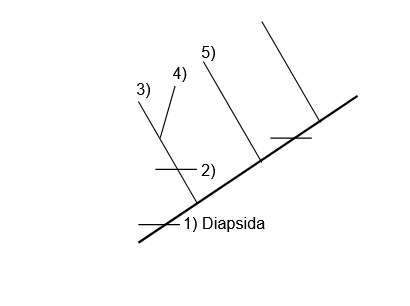
Identify the name (scientific and common) of each diapsid group; also provide the defining character(s) for each group (NOTE: The three unmarked groups are not covered on this exam and do not need to be identified at this time)
Diapsida [“Reptiles,” lizards, birds] (two temporal fenestrae)
Lepidiosauria [lizards, snakes, tuatara] (overlapping keratin scales)
Rhynchocephalia [Tuatara] (full diapsid skull)
Squamata [lizards, snakes] (paired copulatory organs, no true erectile tissue, determinate growth)
Testudinia [Turtles] (skull w/emarginated posterior, shell)