FULL Science Mid-Unit Test
 Call Kai
 Learn
Learn Practice Test
 Spaced Repetition
 Match
Match Flashcards
 Knowt Play
1/174

Earn XP
Description and Tags
- Bella + Bel
Name | Mastery | Learn | Test | Matching | Spaced | Call with Kai |
|---|
No analytics yet
Send a link to your students to track their progress
175 Terms
What does the KMT include that the Particle Model doesn’t?
How matter behaves when the kinetic energy of the particles change.
What is kinetic energy?
The energy of motion
What does the KMT explain?
What happens to matter when the kinetic energy of particles changes.
The difference between solids, liquids, and gases.
What is the 1st part of the KMT?
All matter is made up of very small particles.
What is the 2nd part of the KMT?
There is empty space between particles.
What is the 3rd part of the KMT?
Particles are constantly moving. In liquids and gases, they are colliding with each other and with the walls of their container.
What is the 4th part of the KMT?
Energy makes particles move.
How do particles of a solid move?
They are so tightly packed together they can only vibrate.
How do particles of a liquid move?
They can move by sliding past eachother because they are farther apart.
How do particles of a gas move?
They move around quickly by bouncing off each other or the walls because they are very far apart.
Particles in __________________ objects have _________________ kinetic energy, and their particles simply vibrate back and forth.
solid, low
Particles in __________________ objects have _________________ kinetic energy and move faster.
gas, high
What is an atom?
The basic building block of matter
Examples of elements
sodium, gold, oxygen
What is a compound?
A pure substance composed of the atoms of at least 2 different elements combined in a specific way.
Examples of compounds
carbon dioxide, water, organic molecule
Gold is a(n)…
element
Sugar is a(n)…
Compound
What is a physical property of matter?
A characteristic that can be observed or measured without changing its chemical identity.
What are the types of physical properties?
Qualitative and Quantitative
What are the characteristics of Qualitative Properties?
no measurements, descriptive words
What are the characteristics of Quantitative Properties?
measurable, assigned a value

What are three qualitative properties of this carrot?
orange body, rough texture, green leaf
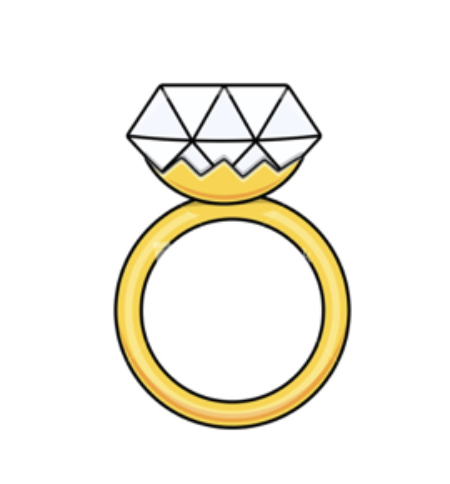
What are three qualitative properties of this ring?
shiny, gold base, diamond at the top
Texture is…
qualitative
Viscosity (a measure of a fluid's resistance to flow) is…
quantitative
Density is…
quantitative
Malleability (the quality of something that can be shaped into something else without breaking) is…
qualitative
Odour is…
qualitative
Ductility (the ability of a material to sustain significant plastic deformation before fracture) is…
qualitative
Brittleness (a material's tendency to break or fracture when stressed) is…
qualitative
Conductivity (the degree to which a specified material conducts electricity) is…
quantitative
Temperature is…
quantitative
Solubility (the ability of a solid, liquid, or gaseous chemical substance (referred to as the solute) to dissolve in solvent (usually a liquid) and form a solution) is…
quantitative
Mass is…
quantitative
Boiling point is…
quantitative
Colour is…
qualitative
Hardness is…
qualitative
Luster (how a mineral's surface reflects light) is…
qualitative
What is an element?
only one type of atom
Matter is anything that has ____ and ______
mass and volume
Mass is defined as __________
the amount of matter in a substance
Volume is defined as __________
the amount of space a substance or an object occupies
What is the basic unit of matter?
atom
Atoms are made of….
protons, neutrons, and electrons
Neutrons and protons are made of….
quarks
Elements contain….
only one type of atom
Elements can be found in ….
The Periodic Table
Elements can be….
single atoms or molecules
What’s an example of an element?
Oxygen
Compounds contain ….
two or more types of atom (elements)
Compounds can be…
molecules or giant structures
A chemical change is a…
change in matter that occurs when substances combine to form new substances
What is a new substance?
A substance that has different properties from those of the original substance
Most chemical changes are…
irreversible (but not all)
Physical changes are …
reversible
Water boiling is a _____ change
physical
Making toast is a ______ change
chemical
Signs of a chemical reaction:
precipation (solid formed from 2 liquids), bubbles/fizzing, colour change, temperature change, light/heat given off
What are the 4 states of matter?
solid, liquid, gas, plasma
Solids have a….
definite shape and volume
Liquids take the shape of its….
container/surroundings
Liquids have a….
definite volume
Liquids form a ____ in its container
surface
The shape and volume of gas is determined by ….
its surroundings
Plasma is an….
ionized gas
______ is an example of plasma
lightning
The ___________ and the _________ combine to form the basis of our understanding of how matter behaves
Particle Model of Matter, Kinetic Molecular Theory
The four main points of the Particle Model of Matter are:
All matter is made of very small particles
There are spaces between the particles, and the amount of space depends on the state of matter
These particles are always moving
The particles are attracted to one another. This attraction depends on the type of particle.
Solid —> Liquid
Melting
Liquid —> Solid
Solidification
Liquid —> Gas
Evaporation
Gas —> Liquid
Condensation
Gas —> Plasma
Ionization
Plasma —> Gas
Deionization
Gas —> Solid
Sublimation
Solid —> Gas
Deposition
The atom is made up of _ subatomic particles
3
The symbol for protons is _
p
The symbol for electrons is _
e-
The symbol for neutrons is _
n
Protons have a charge of _
+1
Neutrons have _____
no charge
Electrons have a charge of _
-1
+ve and -ve charges attract eachother, therefore ____________ attract eachother
protons and electrons
________ are found in the nucleus
Protons and neutrons
______ are found in energy shells
Electrons
________ is a region at the center of the atom
The nucleus
Electrons occupy…..
distinct electron shells/energy levels around the nucleus
The space that electrons take up accounts for ____ of an atom’s volume
99.99%
The mass in matter comes from _____ and ______ in the ______
protons, neutrons, nucleus
Protons have a relative atomic mass of _
1
Neutrons have a relative atomic mass of _
1
Electrons have a relative atomic mass of _
0
The volume of matter comes from ______ in the ________ that surround the nucleus
electrons, energy shells
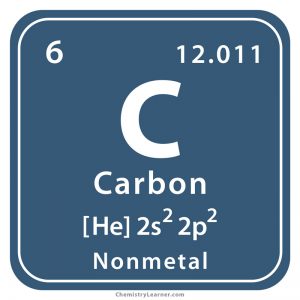
This atom’s ______ is 6
atomic number
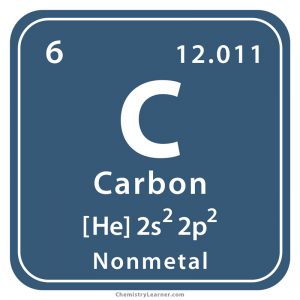
This atom’s ______ is carbon
element name
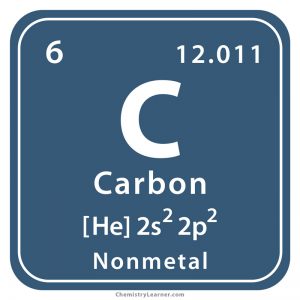
This atom’s ______ is C
symbol
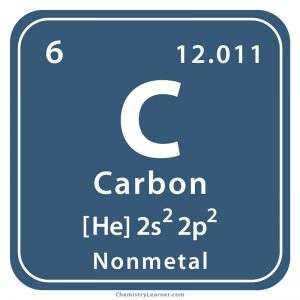
This atom’s _______ is 12.011
atomic mass
atomic _____ = number of _____ = number of ______
number, protons, electrons