atomic structure and bonding
 Call Kai
 Learn
Learn Practice Test
 Spaced Repetition
 Match
Match Flashcards
 Knowt Play
1/135

Earn XP
Description and Tags
history of atoms, periodic table, trends in pt, mass spectrometry, atomic absorption spectrometry, isotopes, pure substances, mixtures, separation techniques, ionic bonding, metallic bonding, % composition
Name | Mastery | Learn | Test | Matching | Spaced | Call with Kai |
|---|
No analytics yet
Send a link to your students to track their progress
136 Terms
Who made and what are 5 atomic structure discoveries that have lead to current understanding of atoms?
John Dalton - current understanding of atom
J.J. Thomson - electron discovery
Ernest Rutherford - discovery of nucleus and proton
James Chadwick - understanding of neutron
Neils Bohr - that electrons move in fixed energy levels
What did John Dalton discover (5)
elements are made of atoms
atoms are identical in physical and chemical properties
mass cannot be created or destroyed
chemical reactions are the rearrangement of atoms
compounds form from combinations of atoms in simple specific ratios
what did jj thomson discover
mass of electron is 9.11 × 10⁻³¹
the (shortlived) plum pudding model to illustrate arrangement of particles
emission of stream of particles and coloured light when electricity passes through cathode ray tube(electrons)
what did ernest rutherford find out
by firing alpha particles at gold sheet, he observed deflection patterns where some passed and some deflected
conclude that atom is mostly empty space with + charge in middle
firing alpha particles into N gas, discover proton due to presence of hydrogen
what did james chadwick discover
by firing alpha particles into Be, discovered the neutron
postulated that neutral particles existed in atom
what did neils bohr discover
suggested that the orbits correspond to specific energy states and e- can jump between levels through absorption and emission
who are 6 people that contributed to the construction of periodic table? and how
antoine lavoisier: categorised into gas, non metal, metal and earths
johann dobereiner: identified groups of 3 elements with similar properties as ‘triads’
Alexandre B. de Chancourtis: created ‘telluric screw’ which displays based on atomic weight
john newlands: created ‘law of octaves’ where similar property elements appear every 8 elements
julius L. meyer: arrangement by atomic weight, grouped by valency
dmitri mendeleev: first widely recognised pt. organised by increasing atomic weight with some gaps of unknown elements
alkali metals
highly reactive
1 valence eal
alkali earth metals
reactive
2 valence e
transition metals
less reactive than alkali
ion formation produces colour
rare earth metals
e.g actinides, lanthanides
highly reactive
radioactive isotopes
complex e- structure
all metals are silvery true or false
false alkali and alkali earth metals are only silvery
halogens (nm)
highly reactive
7 valence e
noble gas (nm)
not reactive
8 valence e
gas at room temp
metalloids (nm)
m and nm properties
others (nm) (6)
C, N, O, P, S, Se
4-6 valence e
what are elements, how can they exist
substances made of only one type of atom
as large networks called diamonds, small molecules or solitary atoms
what can H be used for
reacts with O in fuel cells to produce electricity for vehicles
what can Ne be used for
its gas form is collected in tube and electric current passes to ionise atoms producing light
what can W be used for
using tungsten filament, withstand high temperatures as it has high melting point, in halogen light bulb
what is first ionisation energy? what does it mean if its small/large ionisation energy?
the quantity of energy needed to remove the first electron from an atom
small ion. energy means the elements prefers to lose e- (it has fewer e)
large ion energy means element prefers to gain e- (it has many e)
Why does first ion. energy increase when moving across period?
-there are more protons
-will naturally increase the attraction on e-
-therefore more energy required to remove e
why does first ion, energy decrease when moving down a group?
-there are more energy levels
-valence e are further from nucleus and not held as tight
-less energy is required to remove e
what is electronegativity? what does it mean to have low/high electronegativity?
the tendency to attract e-
low: atoms wants to lose e rather than gain, metals have large radius
high: atoms need few e to fill. non metals have small radius
why does electronegativity increase when moving across? how is it further reinforced?
-the higher + charge attracts more strongly
therefore easier to attract e
shielding effect remains same
effective nuclear charge felt by outer e increase
enhancing E.N.
why does electronegativity decrease when moving down? how is it enhanced?
-due to the increase in e shell
-e are further, the attraction is weakened
harder to attract more e
shielding effect reduces effective nuclear charge and E.N. decrease because the more shells, the further outer shells are repelled
what are the trends in metallic character
decreases from left to right, up (F)
increases from right to left, bottom (Francium)
why does atomic radius increase when moving down group
additional e shells
valence e pushed further out
there a larger radius
why does atomic radius decrease when moving across a period
there are more protons
increase e attraction between protons and e
pulling shells inward
decreasing size of atom radius
define ionisation
the process by which atom gains or loses e to be an ion
define desolvation
the process of removing solvent molecules from solute particle’s surface
what does light move as and why
moves through space as transverse waves
because it is part of electromagnetic spectrum
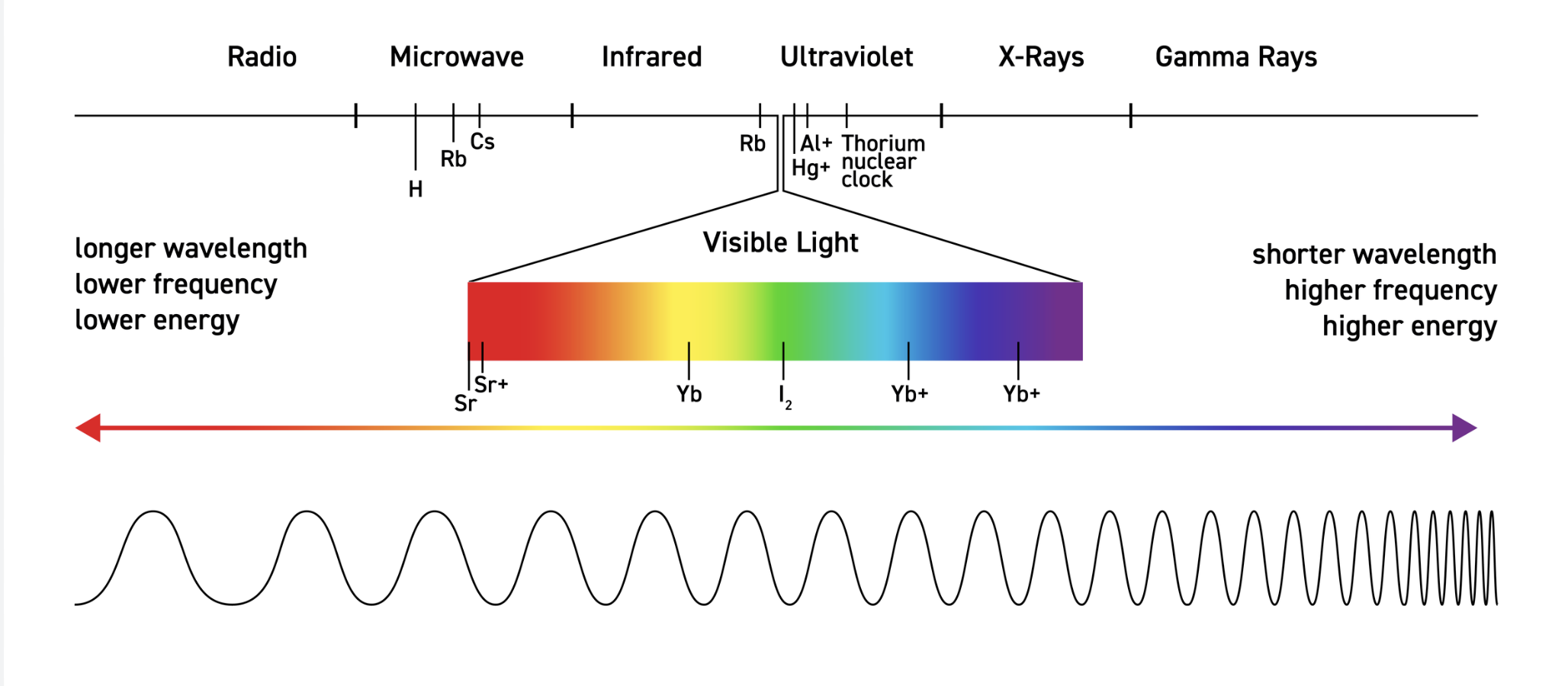
the electromagnetic spectrum consists of
wavelength - distance of one wave (m)
amplitude - distance a wave moves from rest (m)
frequency - # of waves occuring per sec (Hz)
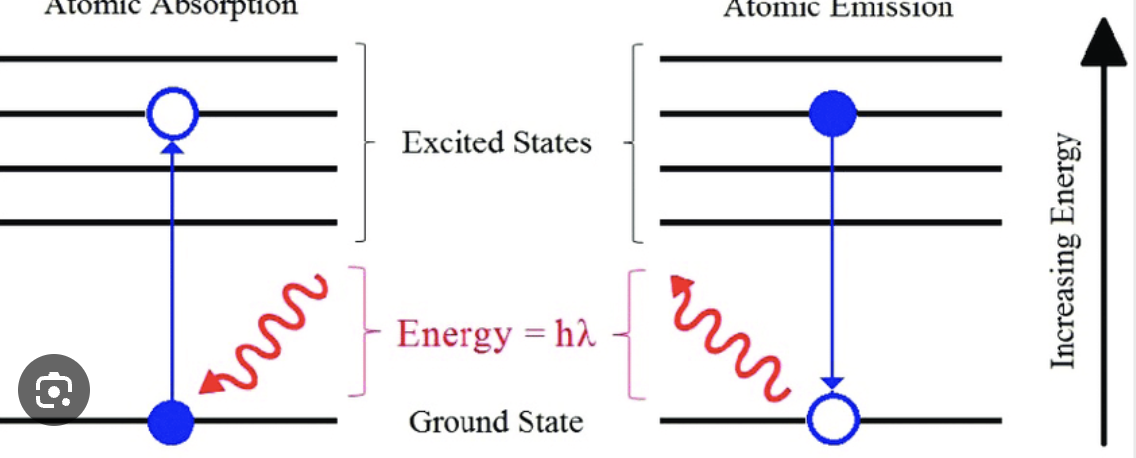
how is bohr’s discovery relevant to absorption and emission?
discovery: e- orbit in fixed energy levels at a fixed distance from nucleus
absorption: of wavelengths of light causes e- to enter ‘excited’ state, they jump from lower energy level to higher energy levels
emission: when they are in excited state and the energy is removed, e transition back to lower level to gain stability, emitting photon
-the higher the wave frequency of energy, the greater the transition
describe the absorption spectra
dark lines correspond to the wavelengths absorbed by gas showing different light that can be absorbed
describe the emission spectra
coloured lines correspond to wavelengths of electromagnetic radiation emitted during transition
what is atomic absorption spectroscopy
focusing light of a specific wavelength on atoms of a solution to measure the amount of light absorption it takes in
Different elements can be in a solution to detect one specific element true or false
false
list the process of a basic atomic absorption spectrometer (7)
solution is drawn through a thin tube and the nebuliser turns it into a fine aerosol
the fine spray is mixed with air and acetylene in spray chamber
it is pushed towards burner and ignited
spray undergoes desolvation and atoms are released into flame
the hollow cathode lamp provides thin steady beam of light of a wavelength specific to the element
light is transmitted through the flame
light is focused in the monochromator into the photomultiplier tube where the electrical signals turned into absorbance value
what are isotopes? how do they differ from normal atoms and why?
an atom of an element that has the same number of protons but different number of neutrons
they have same chemical properties as e are only involved in chem react.
but different physical properties because different atomic mass
what is mass spectrometry? how is it calculated
ions are detected and sorted based on their mass:charge ratio
mass:charge = atomic mass/charge of cation
Environmental analysis is an example of ________________. It detects ___________ in the environment to __________ and __________ it.
application of mass spectrometry
contaminants
monitor
protect
an exmaple of application of mass spectrometry is ___________ ___________. It analyses ______ or ______.
clinical diagnostics
blood
urine
Food quality can be analysed in ______ __________. It detects _________ in food to ensure _______ and ______
mass spectrometry
additives
safety
quality
list the process of mass spectrometry(4)
ionisation: atoms are turned into cations by removing the e when heated by ionisation source
acceleration: ions are accelerated towards the magnetic field by negatively charge disc
deflection: they are deflected by magnetic field to the detected based on mass:charge ratio
detection: ions of each isotope reach detector to determine abundance
what is relative atomic mass? what does it indicate
a quantity that compares the average mass of an element’s atoms to one-twelfth of carbon-12’s mass
indicate how many times heavier it is compared to C-12
relative atomic mass formula
the sum of isotopic abundance multiply by isotopic mass divided by 100

what is a pure substance
matter with fixed composition and unique properties such as oxygen
% abundance formula
peak height divided by total height multiply by 100
if an element is a pure substance can it be broken down?
no because it consists of one type of atom
e.g. gold, silver, nitrogen
if a compound is a pure substance can it be broken down?
yes because compounds are 2 or more elements chemically combined
through filtration, distillation or evaporation
what is a mixture
matter containing at least two physically combined compounds
describe a homogenous mixture and give an example
uniform composition through meaning different components are evenly distributed and cannot be easily distinguished
saltwater
descirbe a heterogenous mixture and give an example
non uniform composition meaning different components can be seen and separated. individual properties retain their properties
oil and water
what are ten physical separation techniques
filtration
separation by particle size
separation by density
evaporation
crystillisation
distillation
fractional distillation
electrostatic separation
chromatography
magnetic separation
what is filtration, what does it use to separate
separation of insoluble substances from soluble substances
the porous barrier separates solid and liquid leaving solid in filter paper
sieving - by particle size
separate different solids with particle size
gravitational filtration - particle size
rely on weight of solid particles to filter
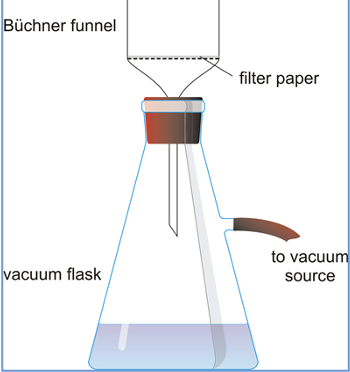
vacuum filtration - by particle size
useful is particles are light and you want mixture to be dried out
sedimentation - by density
denser material falls to the bottom allowing decantation of liquid at the top
separation funnel - by density
when liquids don’t mix, funnel has tap to let densest material at the bottom out
centrifugation - by density
use centrifuge to settle finer particles
evaporation is ______. describe the four steps of evaporation (4)
separation and purification of a substance
preparing: dissolved substance placed in evaporation dish
heating: e.g. bunsen burner, water bath
concentration: solution becomes more concentrated with the dissolved substance
completion: heat until residue left behind
crystallisation,
formation of pure solid substance from dissolved substance solution
as substance evaporations, dissolved substances collects as a crystal
distillation, describe steps for it (5), give one example
separation based on difference in boiling points of a solution’s components
heat: the lowest b.p. component vaporised first
vaporise: it travels through distillation column
condensation: reaches the condenser where cooled by water and condensed back into a liquid
collection : distillatecollected in separate container
residue: remaining mixture processed further/discards
e.g. alcoholic beverage production
fractional distillation, describe the steps and give an example
separate mixtures of liquids with different boiling points
heating: lowest b.p. component vapourise first
fractionating column: enter f.c. which has large surface area allowing repeated condensation + vaporisation
condensation + vaporisation: when it rises thru f.c. it cools and condenses. the heat from vapour causes continual vaporisation of condensed liquid improving component separation
collection: distillate collected in separate container
fractional collection: different components collected at different temperatures each separated based on boiling point
residue: processed further/discarded
chemical purification
electrostatic separation, describe steps 4 and give an example
separate based on their electrical charge
charging: particles given electrical charge by passing electrical field
feeding: fed on conveyor belt which is opposite charge to attract particles
separation: different charged particles attracted to different areas of belt
collection: in different bins
fine particles
chromatography and example
relies on stickiness of a material to static medium
paper chromatography
magnetic separation, describe steps
based on magnetic properties
feeding: onto conveyor belt/magnetic separator
magnetic field: belt passes magnetic field which is generated by electro magnet
attraction: magnetic particles attracted and adhere to surface, non magnetic particles not affected by m, field + continue along the belt
separation: magnetic particles carried away from non magnetic particles
collection: in diff bins
material with different magnetic properties
what is % composition? how do you calculate it
the % by mass of each element/component
% composition = # atoms of element x atomic mass divided by sum of atomic masses for the compound x 100
what is the formula for % composition for mixtures
mass of component divded by mass of mixture x 100
what is ionic bonding
the transfer of e between a metal which donates and non metal which accepts
what are 3 examples of uses of ionic compounds
toothpaste - NaFl used for dental hygiene
food - NaCl to improve taste
pool chemicals - sodium hypochlorite to produce chlorine in pools
what four properties of ions
can conduct electricity in liquid state only
high melting + boiling points
hard & brittle
varying solubility
Explain why ions can conduct electricity in liquid state
when solid, particles in fixed positions and are immobile
this prevents electrical charge transfer through particles
while in liquid state, particles are free to move through the medium
this allows the transfer of electrical charge
explain why ions have high melting and boiling points
large amounts of energy are needed to disrupt the strong electrostatic forces of attraction
therefore higher temperatures are needed for this to occur
explain why ions are hard and brittle
the ionic lattice structure is an alternation of cation and anions
when force is applied, interactions of similar charge particles occur
this causes repulsion causing ion to shatter/splinter
explain why ions vary in solubility
when dissolved in water, ionic bonds dissociate and form new bonds with H2O molecules
the size and charge of ion affect their solubility
substances with high lattice energy (the energy that holds cations and anions together in a compound) are less likely to be soluble
ammonium

caesium

copper(I)
Cu+
hydrogen
H+
silver
Ag+
rubidium
Rb+
copper(II)
Cu2+
cobalt(II)
Co2+
iron(II)
Fe2+
lead(II)
Pb2+
manganese(II)
Mn2+
strontium
Sr2+
zinc
Zn2+
chromium(III)
Cr3+
iron(III)
Fe3+
bromide
Br-
chloride
Cl-
cyanide
CN-
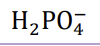
dihydrogenphosphate
ethanoate (acetate)
CH3COO-
fluoride
F-
hydrogencarbonate
