Electromagnetic Waves Order and Definitions
 Call Kai
 Learn
Learn Practice Test
 Spaced Repetition
 Match
Match Flashcards
 Knowt Play
1/17

There's no tags or description
Looks like no tags are added yet.
Name | Mastery | Learn | Test | Matching | Spaced | Call with Kai |
|---|
No analytics yet
Send a link to your students to track their progress
18 Terms
Electromagnetic Wave
transverse waves consisting of electric and magnetic fields oscillating at right angles to each other.
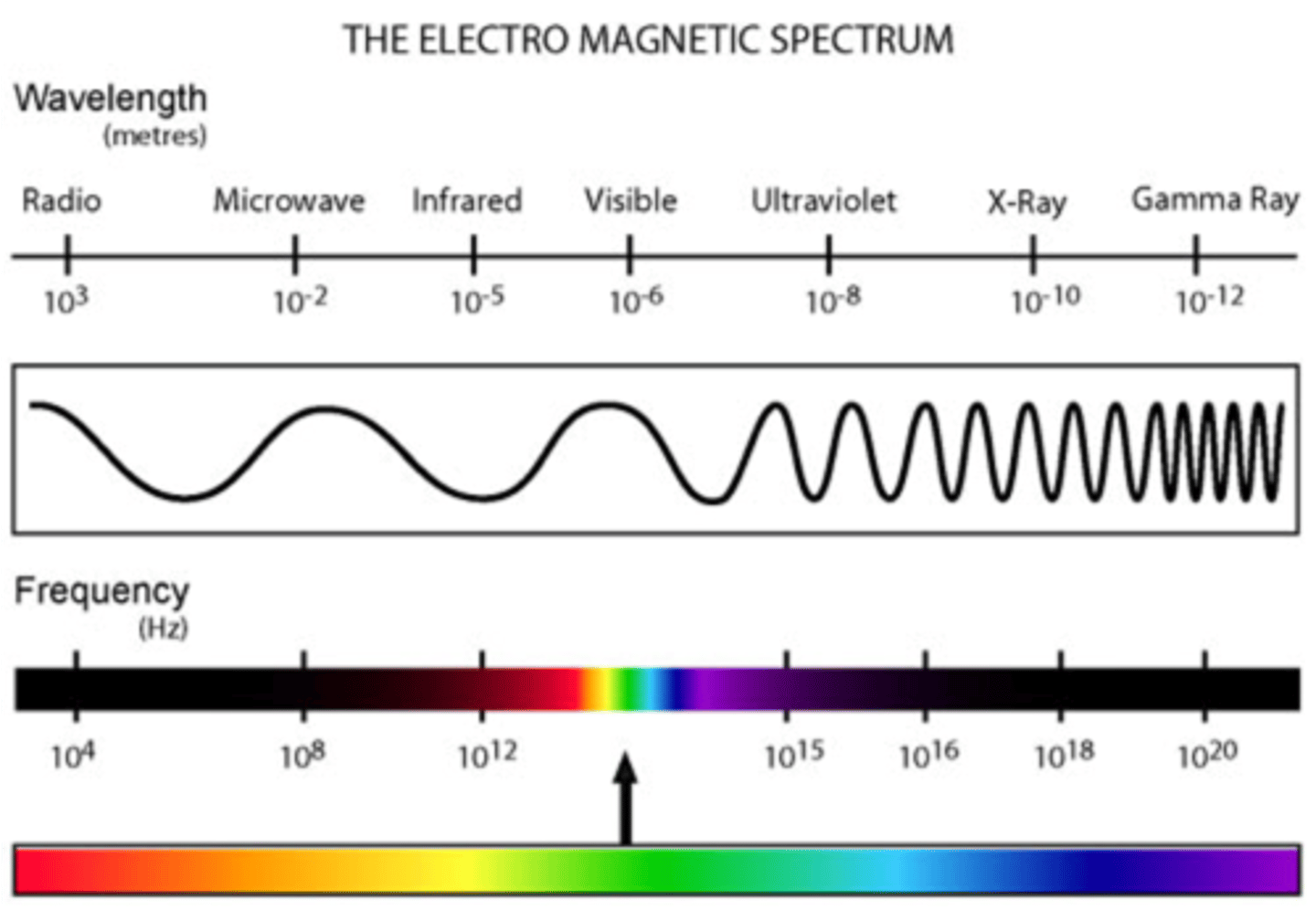
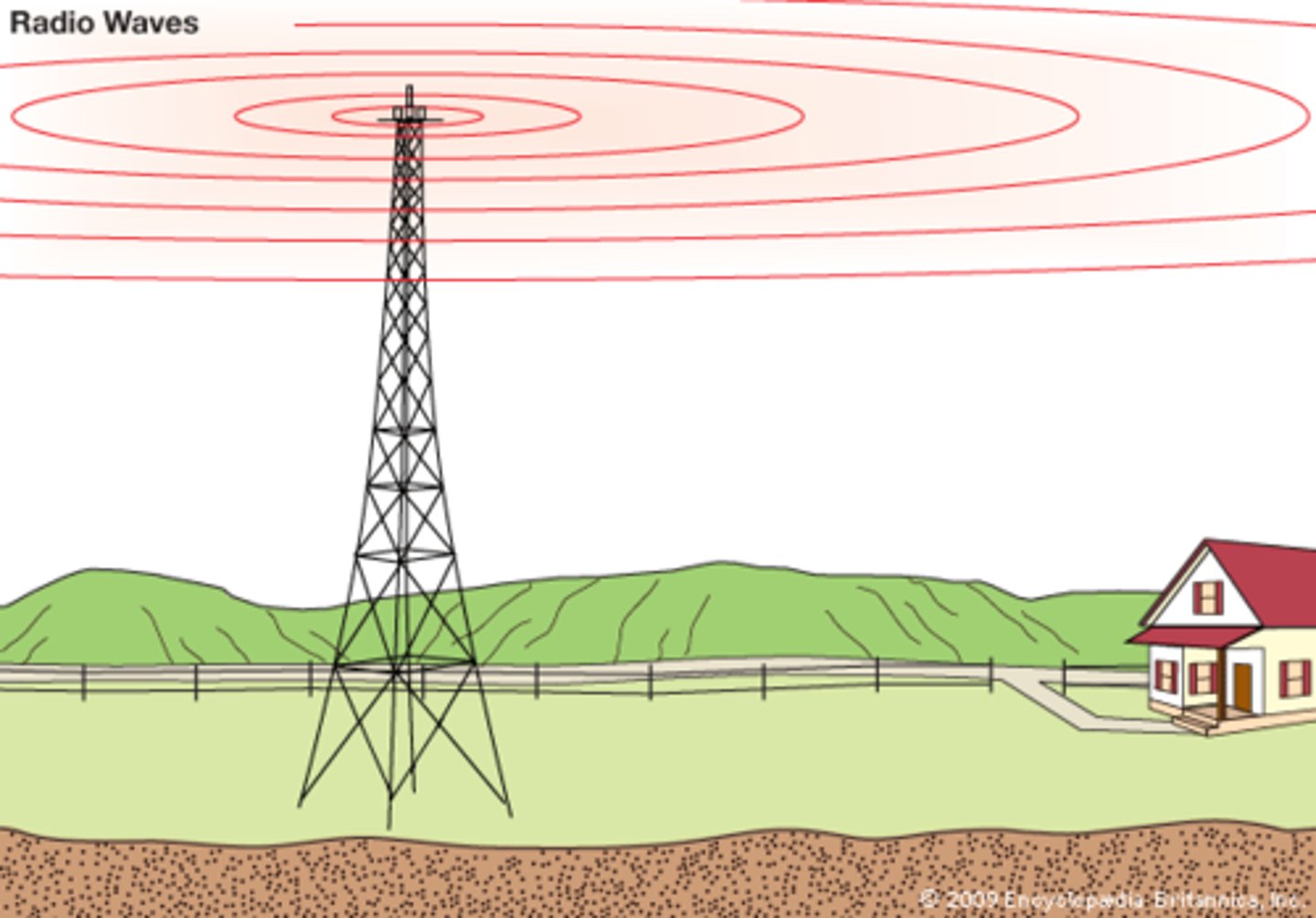
Radio Wave
Electromagnetic waves with the longest wavelengths and lowest frequencies, wavelength 1 m to 100 000 km
Gamma Rays
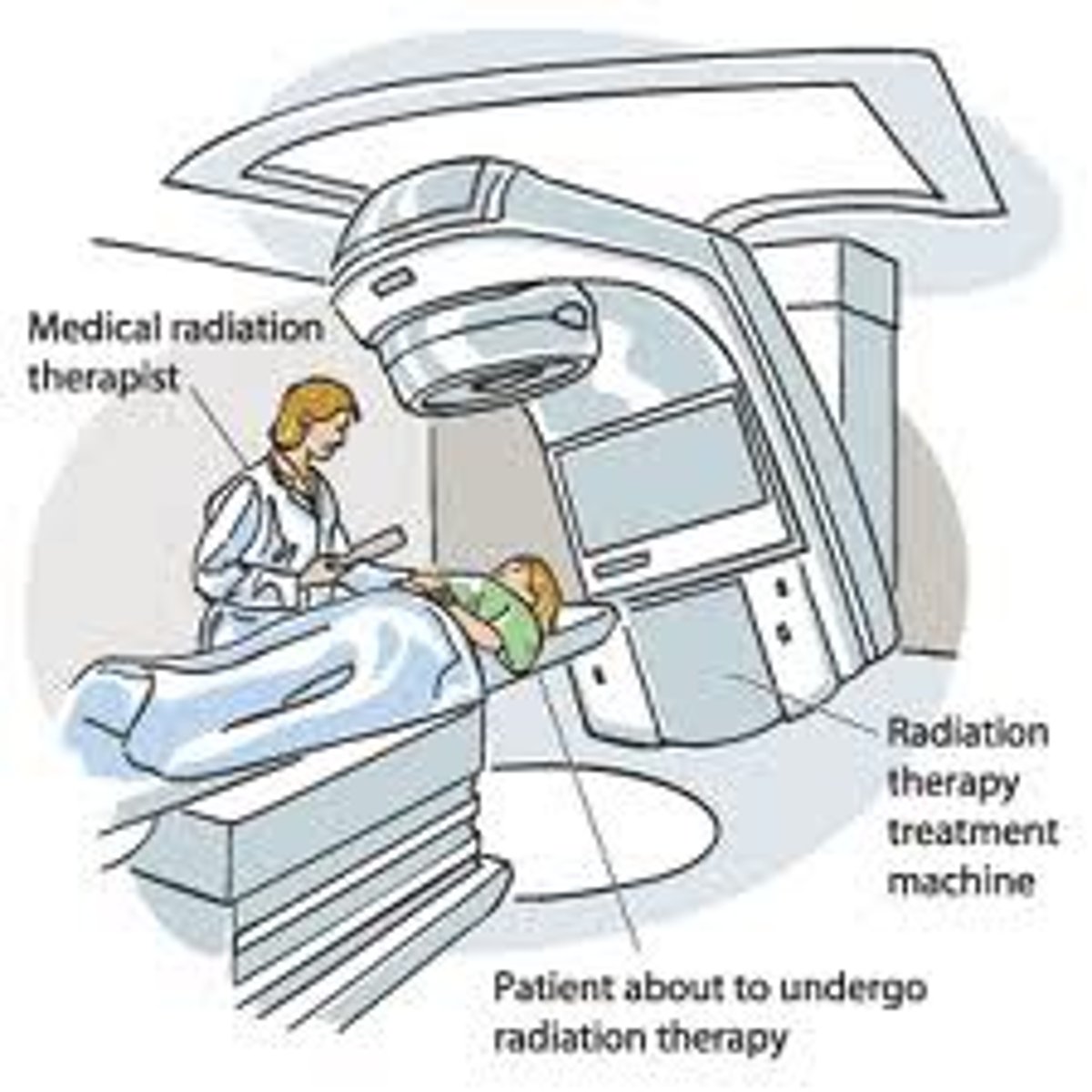
Electromagnetic waves with the shortest wavelengths and highest frequencies. Wavelength 10¹⁰ - 10¹⁶ m
Reflection
Occurs when a wave bounces off a surface that it cannot pass through

Amplitude
the maximum displacement of a wave from the equilibrium position.
EM waves
can travel through vacuum at the speed of light.
Frequency
the number of complete wavelengths that pass a point in a second.
Infrared Radiation
transfer heat. wavelengths 7 x 10⁻⁷ - 10⁻³ m
Microwaves
shorter wavelength than radio waves, mm to cm wavelengths.
Refraction
the change in direction of waves caused by a change in wave speed.
Speed of an EM wave
300,000,000 m/s
Transverse
oscillations occur perpendicular to the direction of energy transfer.
Ultraviolet Light
frequencies slightly higher than visible light, wavelength 10⁻⁸ - 4 x10⁻⁷ m.
Visible Light
the only types of electromagnetic radiation that we can see. wavelengths 400 - 700 nm
Wavelength
the distance between the crest of one wave and the crest of the next wave.
X-Rays
wavelengths 10⁻¹³ - 10⁻⁸m overlap with gamma waves
Hertz
- Unit of measure for frequency
Polarised waves
Transverse waves where the oscillations are restricted to one plane.