CPR & Placing an airway
 Call Kai
 Learn
Learn Practice Test
 Spaced Repetition
 Match
Match Flashcards
 Knowt Play
1/26

Earn XP
Description and Tags
Year 1 - Normal Animal
Name | Mastery | Learn | Test | Matching | Spaced | Call with Kai |
|---|
No analytics yet
Send a link to your students to track their progress
27 Terms
assessing a patient
Call for help
Shake and shout patient
Assess breathing - watch for rise and fall of chest
Primary survey - check pulse by placing fingers inside thigh to palpate femoral artery (don't use thumb as it has its own pulse) or metatarsal pulse at top of thigh
Check airway - firmly hold muzzle and tongue and move mandible down to check airway for obstructions
Start chest compressions
dog CPR procedure
place hands on top of each other with straight elbows and compress chest 1/3 of the way down
perform 30 compressions and allow full recoil of chest between compressions without losing contact with patient
perform 2 ventilations via ventilation or mouth-to-snout
CPR on a round chested dog
position yourself at the dorsal aspect of patient in lateral recumbency, compress widest portion of chest
CPR of a barrel chested dog
position yourself at side of patient in dorsal recumbency and perform compressions on front of chest
technique to place an ET tube
Open mouth of patient
Displace soft palate dorsally and epiglottis ventrally
Slide tube in between vocal folds
Inflate cuff if necessary to ensure appropriate fit
Tie ET tube over patient's snout if large dog and behind ears for a cat or brachycephalic dog
cardiac pump theory
cardiac ventricles are directly compressed which increases pressure in the ventricles, forcing blood out of the heart to the lungs and tissues and between compressions the ventricles relax to allow blood to return to the heart
thoracic pump theory
chest compressions increase intrathoracic pressure which forces blood out of the thorax, the elastic recoil of the chest between compressions leads to reduced intrathoracic pressure and draws blood back into the thorax and lungs from the periphery
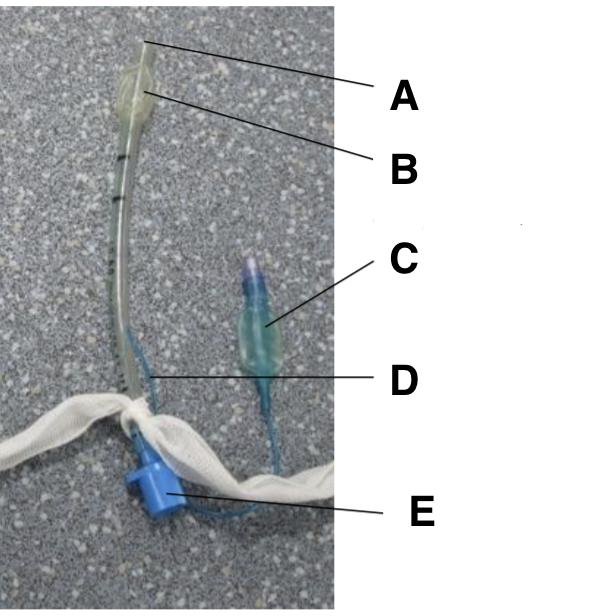
What is A?
murphy eye
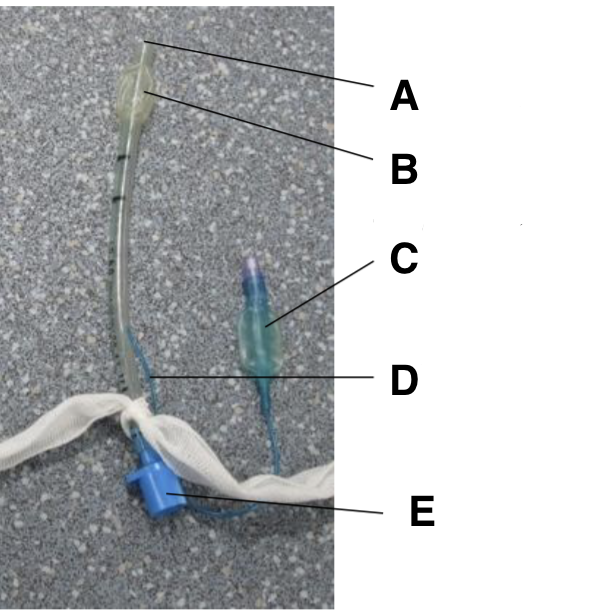
What is B?
cuff
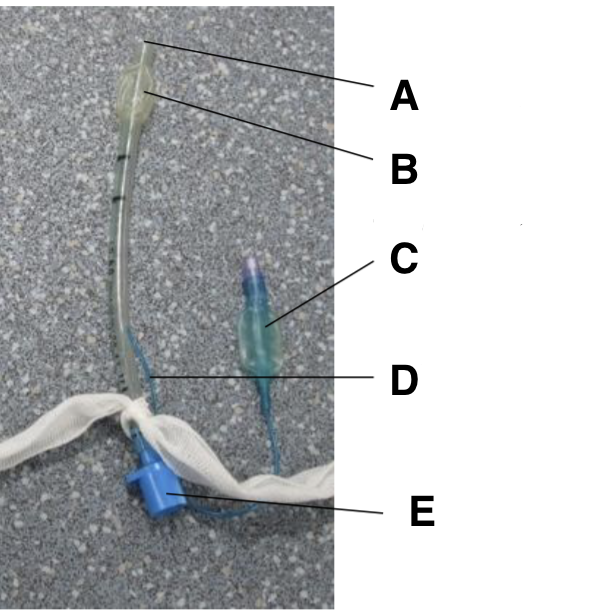
What is C?
pilot balloon and valve
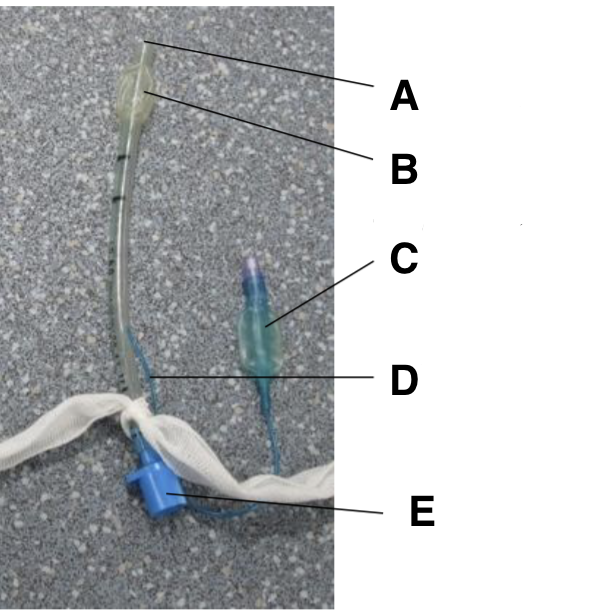
What is D?
inflating tube
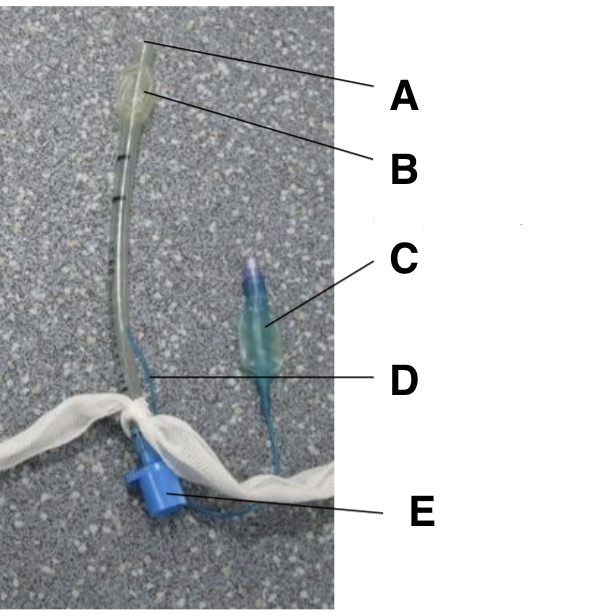
What is E?
connector
what size ET tube is typically used for a medium sized dog?
7.0-8.0
What size ET tube is typically used for a cat?
4.0
how to prepare an ET tube
select appropriate size tube
tie a bandage around the tube
ensure the cuff is deflated, empty by connecting an empty syringe to pilot baloon and pulling air out
which pump theory is used in round chested dogs?
thoracic
which pump theory is used in narrow chested dogs?
cardiac
which pump theory is used in barrel chested dogs?
cardiac
which pump theory is used in small dogs and cats?
cardiac
How long should assessment of the unconscious patient take?
10-15 seconds
What causes an animal to need CPR?
respiratory arrest, cardiac arrest, patient is close to death
How should the patient be positioned to ensure the airway is open?
snout aligned with spine
What is the aim of CPR?
to achieve the return of spontaneous circulation
What are the 2 main components of CPR?
chest compressions and ventilation
What are the different ways to perform ventilation on a patient?
ET tube intubation followed by intermittent positive pressure ventilation or blowing down the tube or mouth-to-snouth ventilation
What rate should chest compressions be performed at?
100-120 bpm
What rate should intubated patients be ventilated at?
10 breaths per minute with an inspiratory time of 1 second