Repro System: part 1 - Males
 Call Kai
 Learn
Learn Practice Test
 Spaced Repetition
 Match
Match Flashcards
 Knowt Play
1/19

There's no tags or description
Looks like no tags are added yet.
Name | Mastery | Learn | Test | Matching | Spaced | Call with Kai |
|---|
No analytics yet
Send a link to your students to track their progress
20 Terms
What commonalities are found between sexes?
Formation of gametes
Hypothalamic/pituitary control of reproduction
Gametogenesis
what is gametes
How many chromosomes
Produced from what organ system
Produced from initial what cells with how many chromosomes
What process goes it involves
Two options: what is the better one
Gametes with 23 chromosomes are produced from cells in the gonads (name for the entire system in both men and women) with 46 chromosomes
Process involves Meiosis
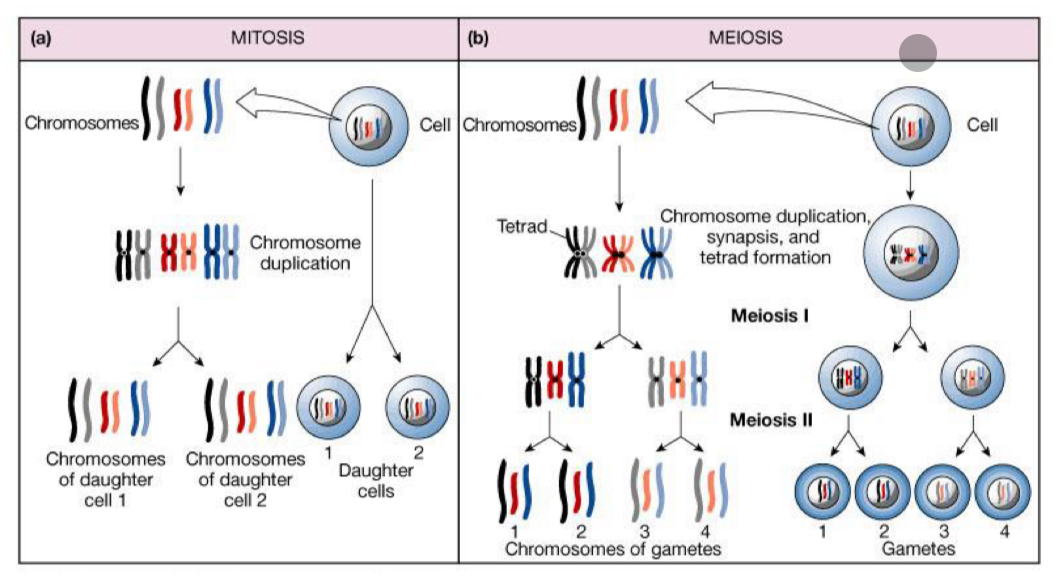
Mitosis vs Meiosis
explain the differences
Process involves Meiosis
• DNA replicated once
• Cells undergo division twice
Meiosis 1 and meiosis 2
Random assortment possible (non-homologous recombination)
In contrast: Mitosis = normal cell division
• DNA replicated once
• Cells undergo division once
Found in somatic cells
Hypothalamic/pituitary control of reproduction
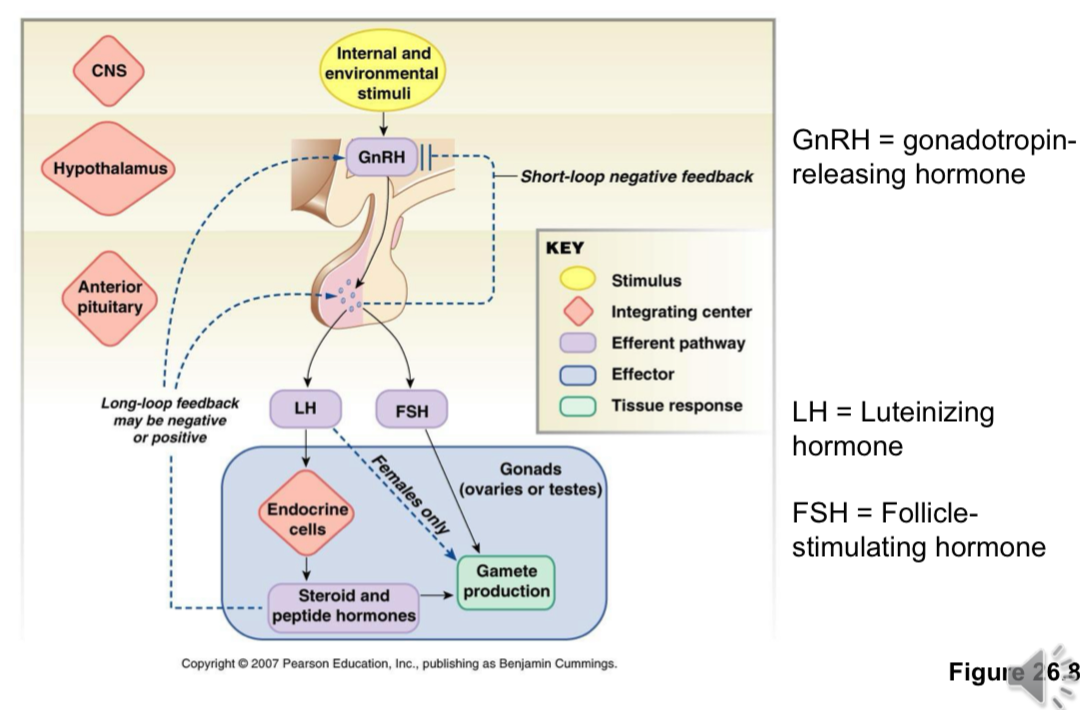
What does the hypothalmic produce what hormone
What does the pituitary produce what two hormones
What is the function of both hormones
CNS detects internal and external stimuli
GnRH = gonadotropin-releasing hormone
Produced by the hypothalamus
LH = Luteinizing hormone and FSH = Follicle-stimulating hormones
Produced by the anterior pituitary gland
LH triggers the endocrine cells to produce steroid and peptide cells
The steroid and peptide cells help in the production of gamates
In females also directs involved in gamete production
FSH directly affects the reproduction glands (testes/ovaries) for gamete production
GnRH
secretion patterns
Purpose
Changes in what type of stages in life
What type of frequency for LH productions, what type of frequency for FSH productions
Produced by what cells
Produced in what gland
Regulated by what two things
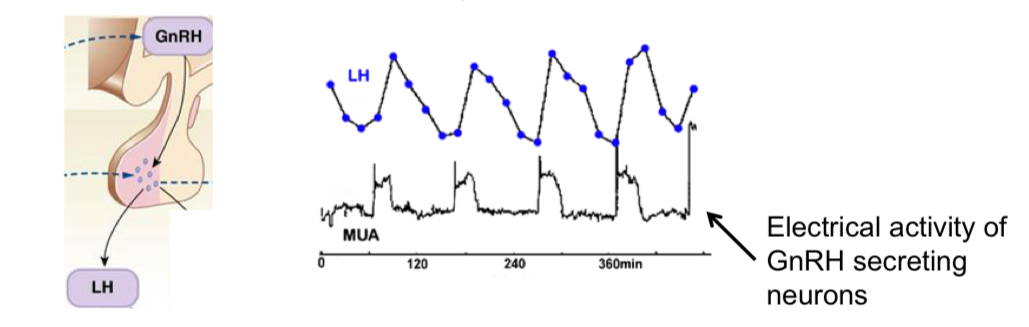
GnRH secreted in pulses from neuroendocrine cells in hypothalamus
Low freq = FSH release
High freq = LH release
Pulsatility critical for reproductive function
Regulated by hormonal feedback and higher brain centres
Pulse frequency/amplitude changes during development
Common male reproductive system
Sex chromosome letters
What is the main part for sperm production
Why is the urethra unique in males
for XY
Main part: the testis
Urthera is connected by the reproductive system and the urinart system
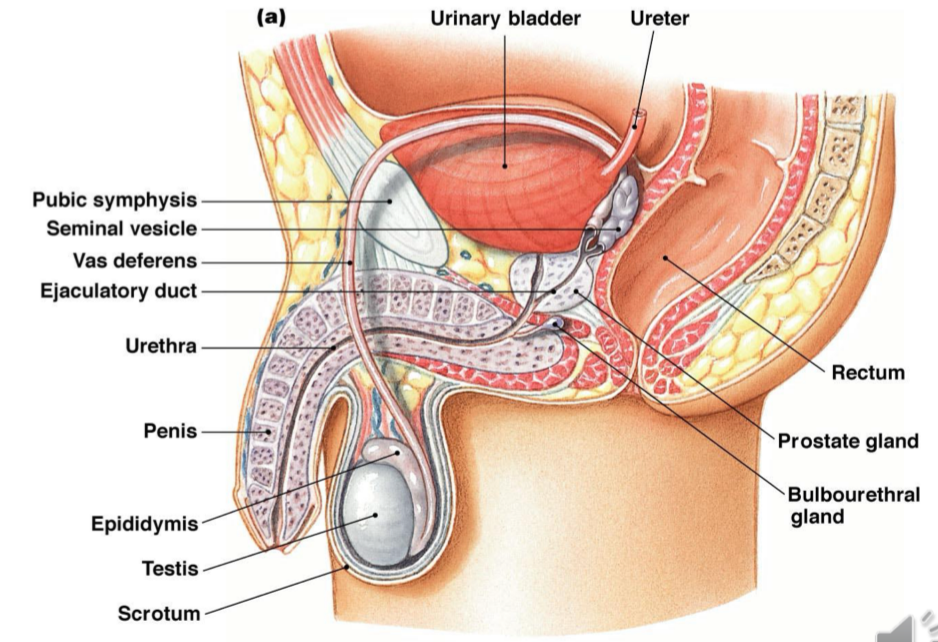
Sperm production process
Produced in which part of the reproductive organ in males
Only explain the initial part of this where the sperm gets produce \
Temp for optimal production and what part of the testis help with this
How many days to produce
How many produced in a day
Where does it further mature
Produced in testis
Initially in the seminiferous tubule
The scrotal cavity allows for the optimal at 2-3ºC lower than body temp
Takes ~64 days
200 million/day
Further mature in epididymis structures
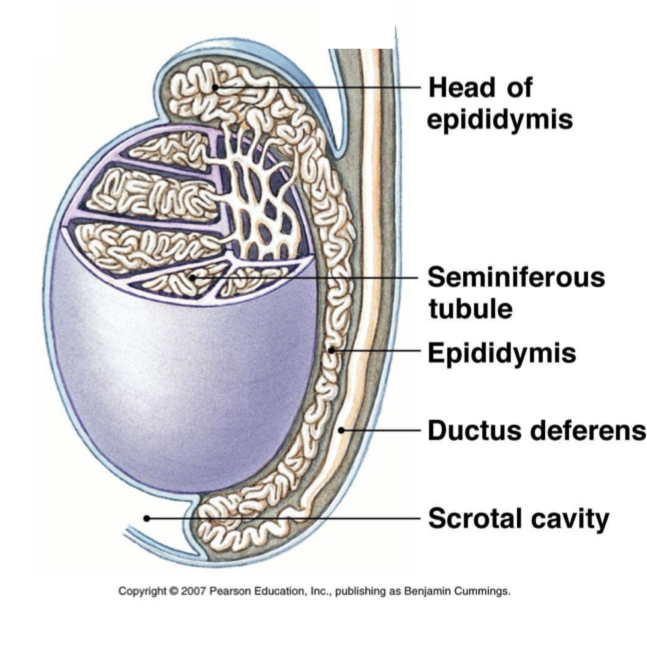
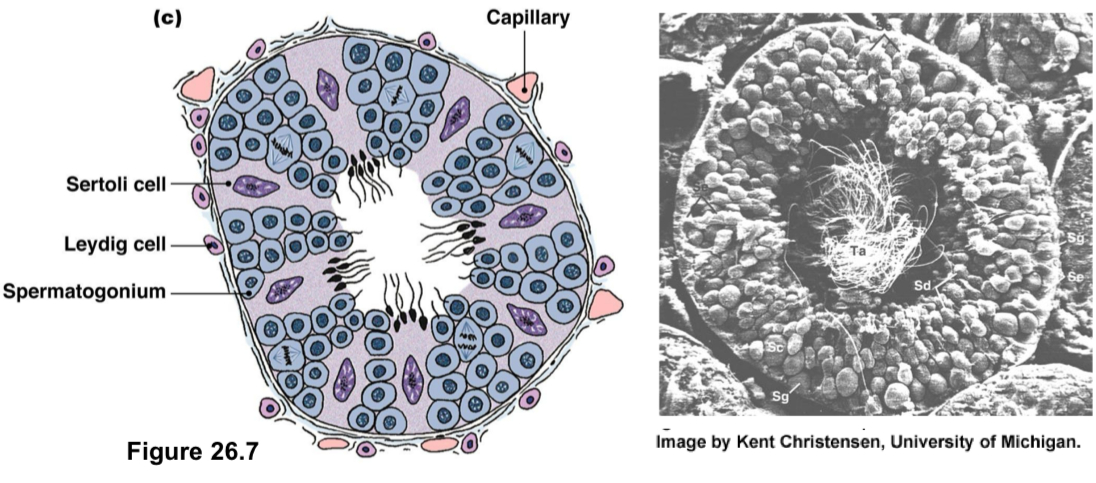
2 types of cell tissue in the testis
location of each cell
Function of each cell
Also indicate what is the precursor of sperm
Sertoli cells (sustentacular cells) -- Support sperm development
Leydig cells (interstitial cells) -- Secrete testosterone
precursor of sperm: spermatogonium
Tight junctions in testis
Function
What cell creates them
blood-testis barrier
Prevents the immune system that identifies foreign cells (e.g. the sperm cells that are only haploids with unique structures) from killing the sperm cells
Sertoli cells form the tight junctions
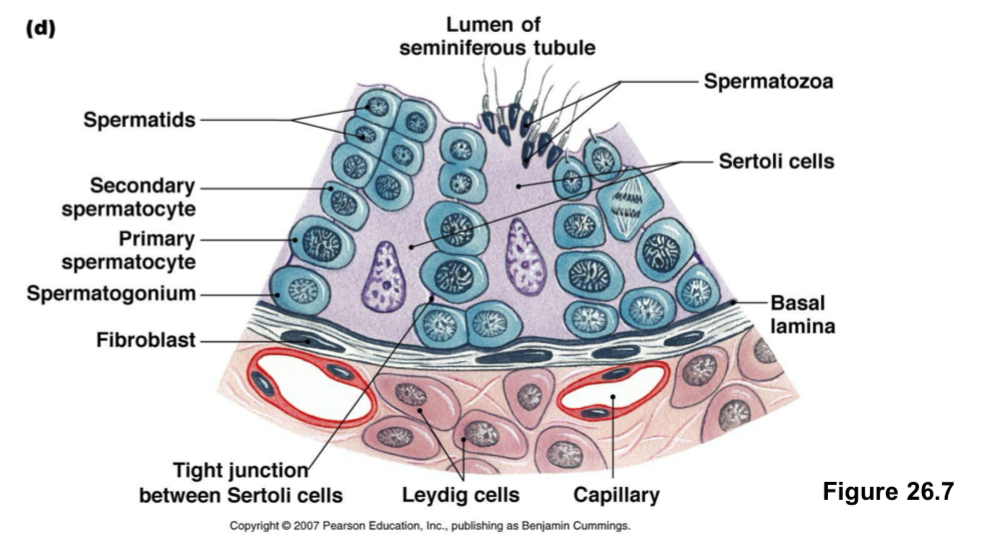
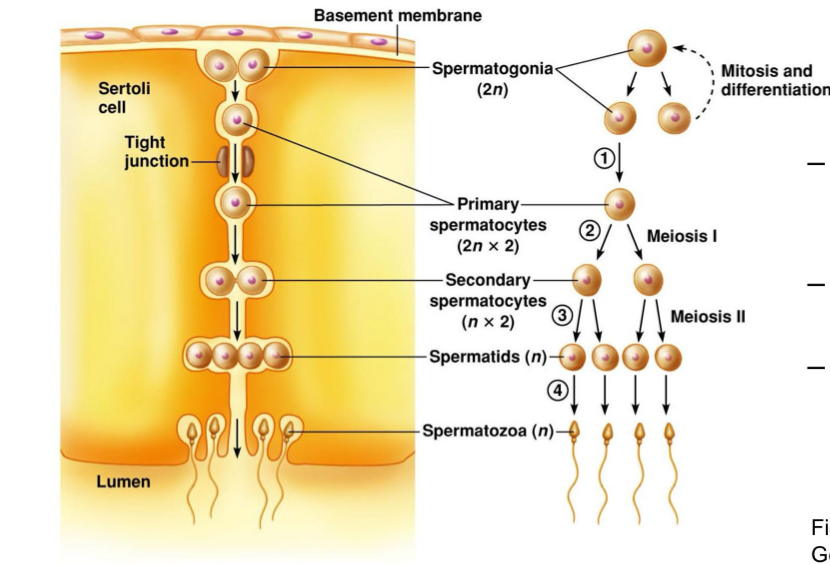
Spermatogenesis
time when formed
What stays behind and for what purpose
Spermatogonium produced during fetal development
Formed during fetal development to form two spermatogonium
Following mitosis, one spermatogonium stays to produce more
The one spermatogonium goes through the tight junction (blood-testis barrier)
The other cell begins to undergo meiosis forming spermatocytes
Four spermatids produced from one starting cell
Spermatids mature into spermatozoa
Lose cytoplasm and gain a tail (This is called spermiogenesis)
Pinches outwards away from the seminiferous tubules
Summary
one serotonin cell → two spermatogonium → primary spermatocyte (one cell to undergo meiosis 1) → secondary spermatocytes (two cells undergo meisis 2) → spermatids → spermatozoa (loss cytoplasm + get tail) (the matured sperm cell)
Spermatozoa
what is close to the head (What is it called)
Origins of the area
Contains what
Produces what three things
2 with common function
3rd with other function
What does the mitochondrial spiral do?
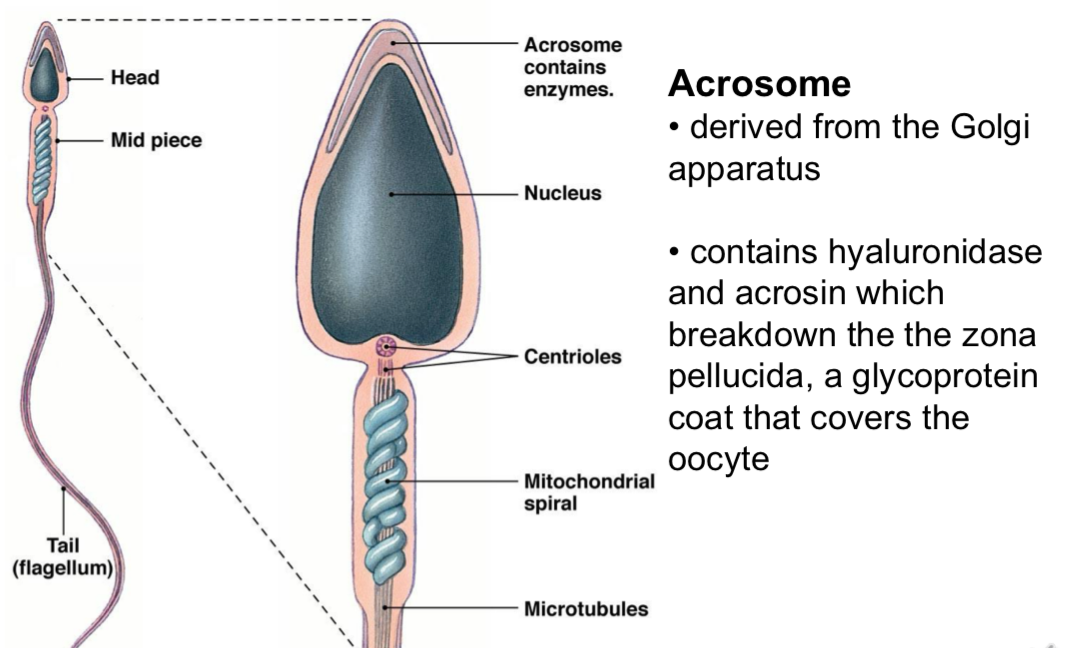
Acrosome
• derived from the Golgi apparatus (origins) and containers enzymes
• contains hyaluronidase and acrosin which breakdown the the zona pellucida, a glycoprotein coat that covers the oocyte
mitochondrial spiral: sperm movement
What is in semen?
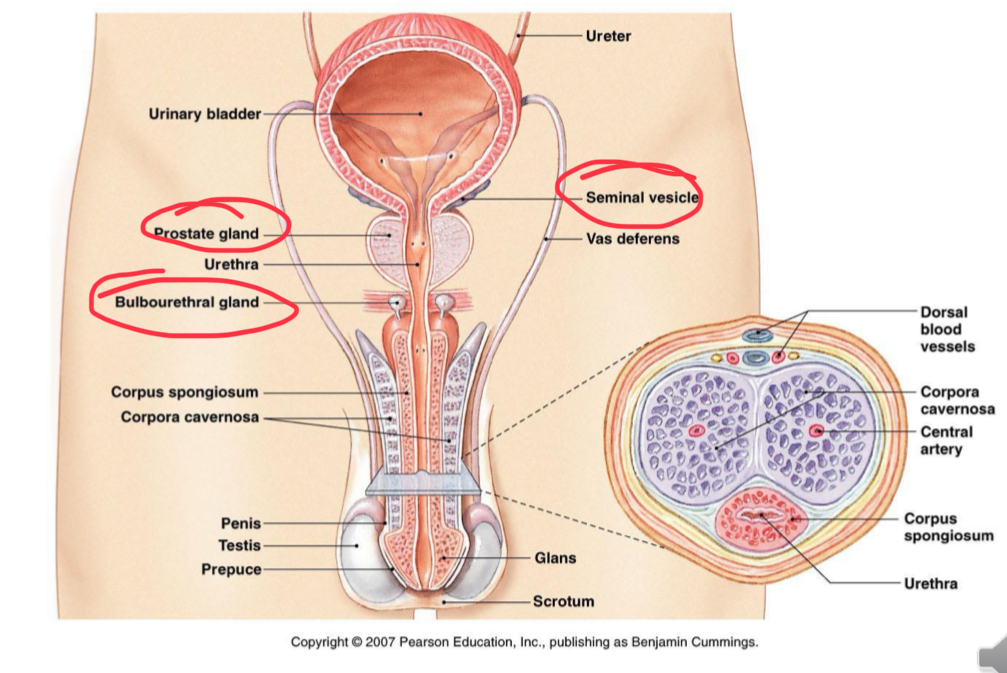
Three main accessory glands
(what type of gland are they)
How many of each gland
Main thing for production
What is the lubricant
What is the buffer
Four nutrients
3 other things (common things you would expect in the semen)
Prostaglandins
Main function
Spermatozoa (1%) + secretions of accessory glands
Accessory glands - exocrine glands (do not produce hormones)
Seminal vesicle - 2
Prostate gland - 1
Bulbourethral gland - 2
Water
Lubricant: Mucous
Buffers: Neutralize acid - secreted by the bulbourethral gland
This is because the urthera is connected b
Nutrients: - energy for sperm movement
Fructose
Citric acid
Vitamin C
Carnitine
Enzymes
Zinc
Prostaglandins: Smooth muscle contraction - move the semen outwards
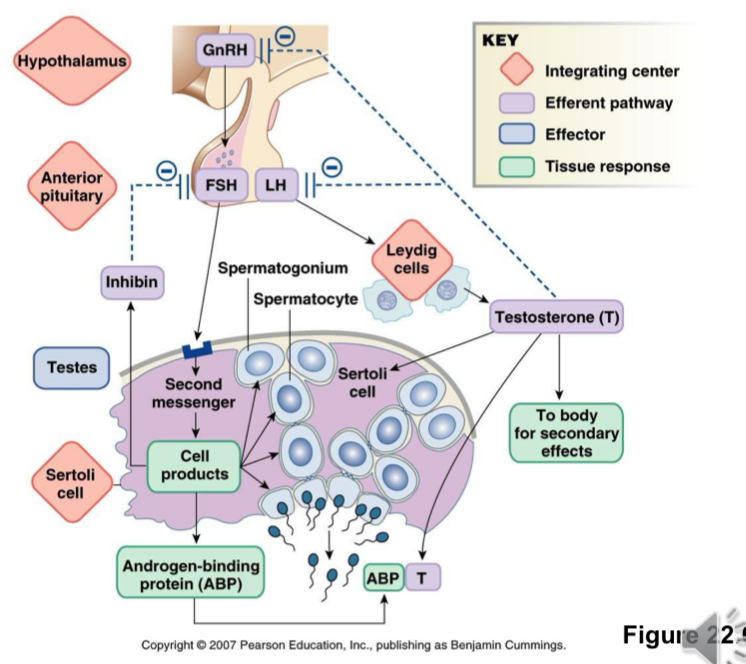
Hormonal control in males
two hormones involved
What stimulates the production of the hormone (what cell tissue is involved)
What exactly doss each hormone regulate (explain the negative feedback)
Explain the pathways (but not that important)
Inhibin
GnRH
FSH
2nd messengers
Stimulates the serotonin cells
Inhibin is produced
then inhibits FSH production only
Support sperm development
Secretes androgen-binding proteins
Concentrates the androgen in the testis
Testosterone
LH affects leading cells
Results in the production of T (testosterone)
Inhibits the production of GnR, LH, and FSH
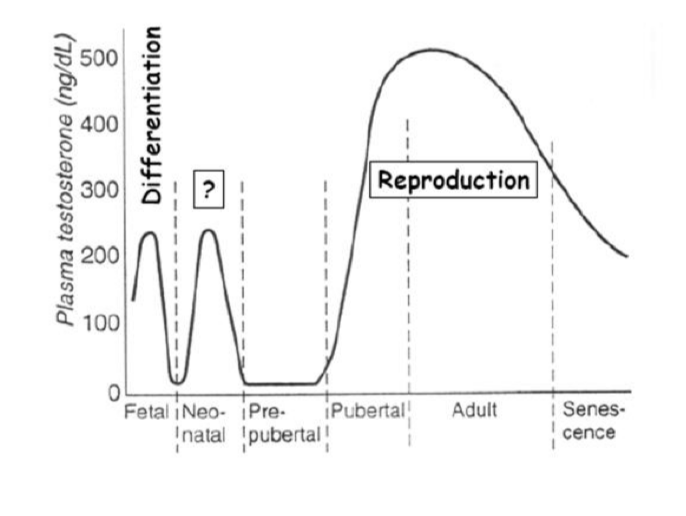
Testosterone secretion throughout lifE
more testosterone produced in adults life For reproduction
Decrease later through age
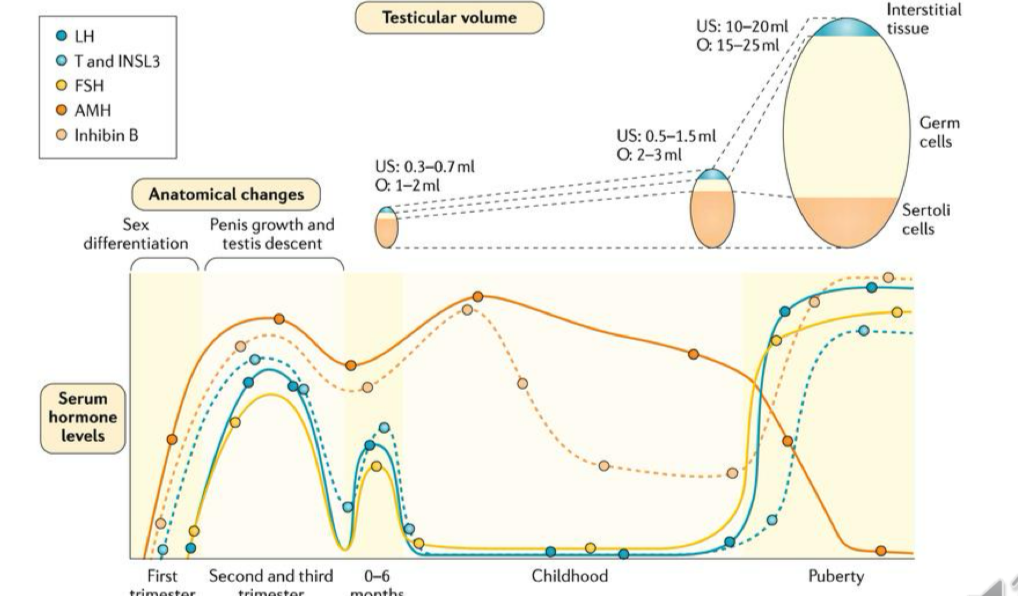
Anatomical changes and serum hormone levels in common XY
what are common patterns for hormones?
How does the testis increase in volume?
testosterone patterns
LH and FSH follows the testosterone patterns as well
Increase in germ cells = increase in volume in the testis
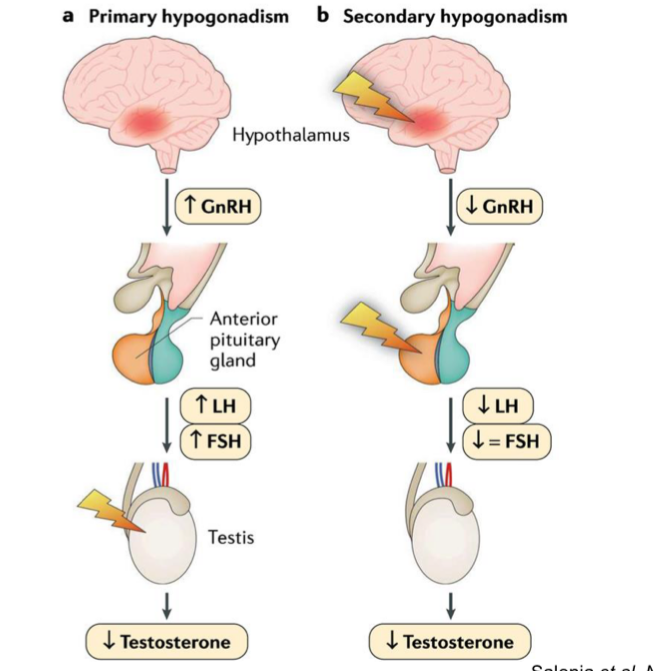
Clinical Application: Hypogonadism
what does it decrease
What hormones are affected (3)
Primary hhypoganadism
Main effect
How does it affect the other hormones
Secondary hypogonadism
Main effect where
How does it affect the other hormones
Possible solution
Possible issue with the solution
Hypogonadism in XY
decreased functional activity of the testes
decreased production of androgens, inhibin B, AMH and/or impaired sperm production
Primary hypogonadism
main effect at the testis
Decreases testosterone
Therefore, increase LH and FSH production (because there is no negative control system)
Secondary hypogonadism
main effect at the brain CNS
Which decreases GnRH
Which then decreases the LH, FSH, and testosterone
Solution
Add exogenous testosterone
However the decrease in LH and FSH is also a problem because you need them for fertilization purposes
Increase in LH and FSH is better
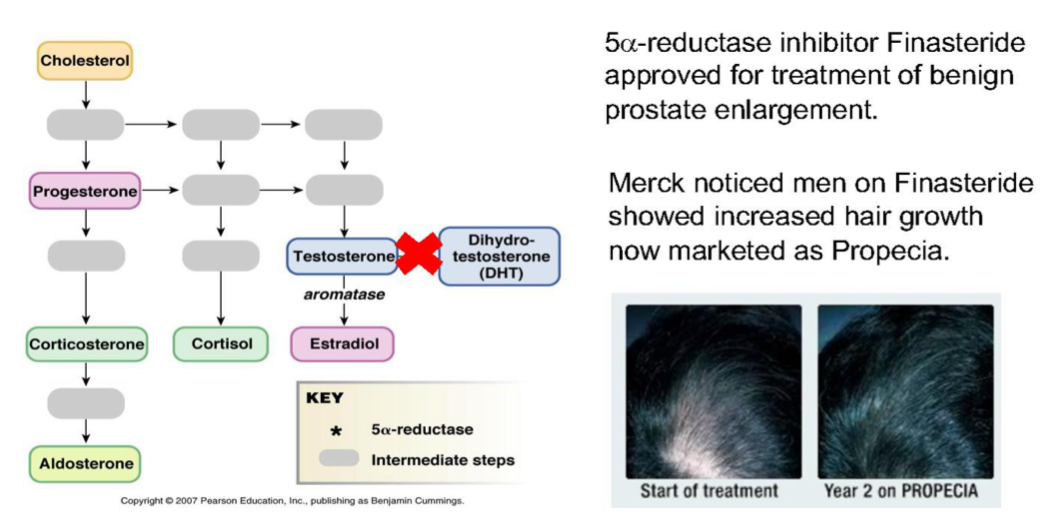
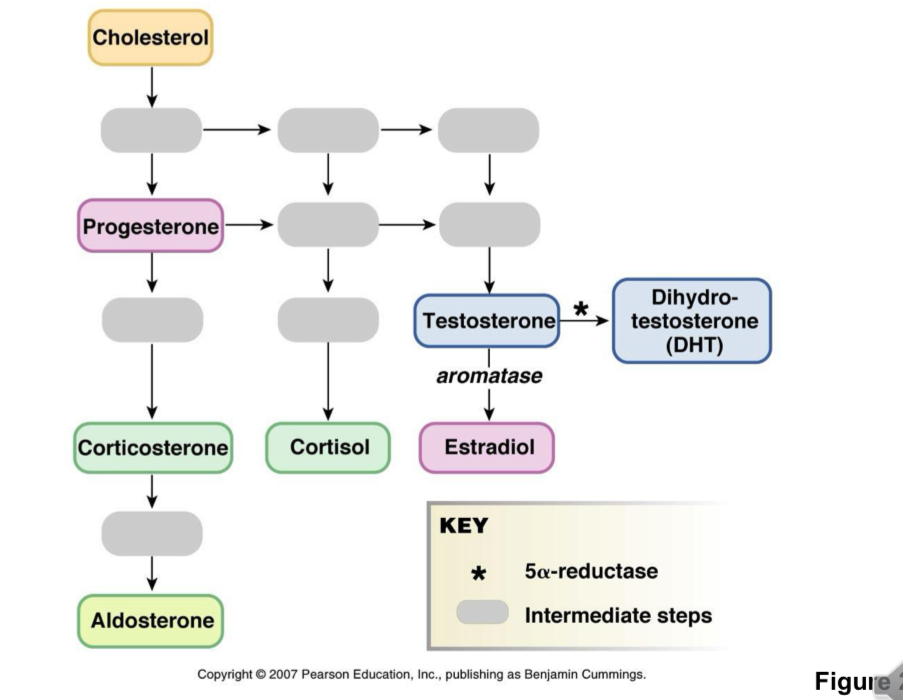
What type of hormone is testoserone
made from what precursor
steroid hormone
Made from the cholesterol precursor and then progesterone
Testogerone also gets converted into DHT
What does testosterone and other steroids do?
One common thing
what is another issue? (2 parts)
maintains spermatogensis
maintains and stimulates secretion from prostate and seminal vesicles
maintains the reproductive tract
negative effects on GnRH, LH, and FSH
Results in baldness in males and sometimes enlargement of the prostate gland
promoting muscle growth and therefore promoting protein synthesis and erythropoiesis (making of more blood)
increase sebaceous gland secretion
increase aggression
What is DHT involved in?
increasing the size of the prostate gland
affects baldness
What is used to treat benign prostate enlargement and male pattern baldness
5a-reductase inhibitor (Finasteride) used for the treatment of the enlargement for the prostate - prevents the testosterone from being converted into DHT and affected the prostate tissue
Also helps with better hair growth
A.k.a Propecia
Side effects: depression, libido, fatigue