effects
 Call Kai
 Learn
Learn Practice Test
 Spaced Repetition
 Match
Match Flashcards
 Knowt Play
1/44

Earn XP
Description and Tags
we made it!
Name | Mastery | Learn | Test | Matching | Spaced | Call with Kai |
|---|
No analytics yet
Send a link to your students to track their progress
45 Terms
characteristics of biomes
climate, soil, biotic/abiotic factors. characterized by vegetation type (terrestrial) ir physical environment (aquatic)
factors that influence climate change
greenhouse gases (especially CO2), fossil fuels, deforestation, agricultural practices (produce methane), natural factors (solar activity, volcanic eruptions). angle of earth’s tilt (more tilt is stronger seasons)
if climate changes, how is earth changed (not just thinking global warming, but also if total amount of land/water were to change)
sea levels rise, precipitation patterns change, land can become more arid, more wildfires, less freshwater
pros of disturbance/disruption
pros: moderate levels of distrubance promote greater diversity than high/low, break down dead organic matter (frees up resources and nutrients), without it one species will use resources more efficiently and reproduce more rapidly than the other (local elimination of inferior competitor will occur - competitive exclusion), small scale disturbances can create new niches
cons of disturbance
loss of biodiversity or extinction, habitat fragmentation, ecosystems can collapse if there is too much, damage to primary producers can change energy flows through food webs,
causes/effects of populations migrating into new areas
causes: environmental degradation, climate change, natural disasters, resource depletion
effects: compete w/ native species (invasive species can damage ecosystems since they have no natural predator), can introduce diseases/parasites, change food webs, change chemistry of water and land as they move nutrients
what causes populations to stabilize
carrying capacity, competition, density dependent factors (resource limitation, diseases, predation, space)
life strategies graphs (survivorship curves)
type I: high survivorship during early and middle life, steep drop at older ages
type II: survivorship declines linearly (constant death rate)
type III: low survivorship due to high death rates for young groups, stable survivorship later in life (lower death rate for survivors)
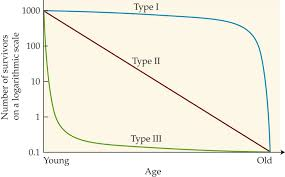
examples for each survivorship curve
type I: humans, elephants, whales, most primates
type II: rodents (squirrel, chipmunk), many songbirds
type III: marine invertebrates (oysters), fish, trees, frogs
r selection vs K selection
r selection: selection for traits that maximize reproductive success in low densities, type III survivorship curve
K selection: selection for traits that are advantageous in high densities, type I survivorship curve
r/k selection limiting factors, limits to distribution of organisms, carrying capacity
limiting factors: resources or conditions that limit growth, density dependent factors and density independent factors
limits to distribution: abiotic (climate, soil type, nutrient availabity) and biotic (predation, competition, disease, lack of mates) constraints, physical barriers
carrying capacity: max number of individuals in a species that an environment can sustain indefinitely w/o harm to the ecosystem (r selected species often overshoot this and then die, don’t maintain at carrying capacity)
logistic equation
dN: population change
dt: change in time
r: max per captia growth rate (intrinsic growth rate - a population of 1000 individuals that increases by 16 everywhere has an r of 16/1000=0.016
N: current population size
K: carrying capacity
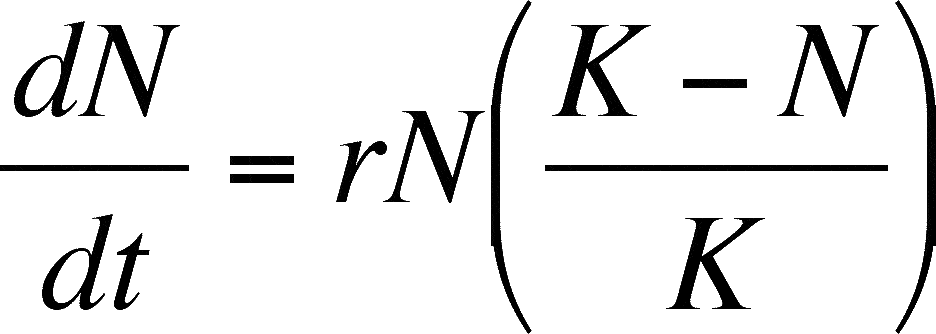
effects of competition
reproductive rates decline, can lead to competitive exclusion (local elimination of inferior competitor), character displacement (differences between two species are greater when populations are sympatric than allopatric)
effects of keystone species
exert strong control on community by ecological role - can be ecosystem engineers (cause physical changes in environment)
effects of dominant species (foundation species)
have influence because of large size or abundance, often provide habitat/food for community, can also be ecosystem engineers, can outcompete others for resources if not kept in check by a keystone species
species richness vs abundance
richness: number of different species
abundance: proportion that each species represent of a community
communities can have same richness but different abundance
top down control
predators control abundance of herbivores, which control primary producers
bottom up control
availability of mineral nutrients determines abundance of primary producers, which controls food availability and abundance for all higher trophic levels
how to read food webs
arrow points from species being eaten to the ones that consume it. species may feed at more than one trophic level
chemical cycling
movement and recycling of essential elements between organisms and physical environment (ex nitrogen cycle, water cycle), decomposers play a key role
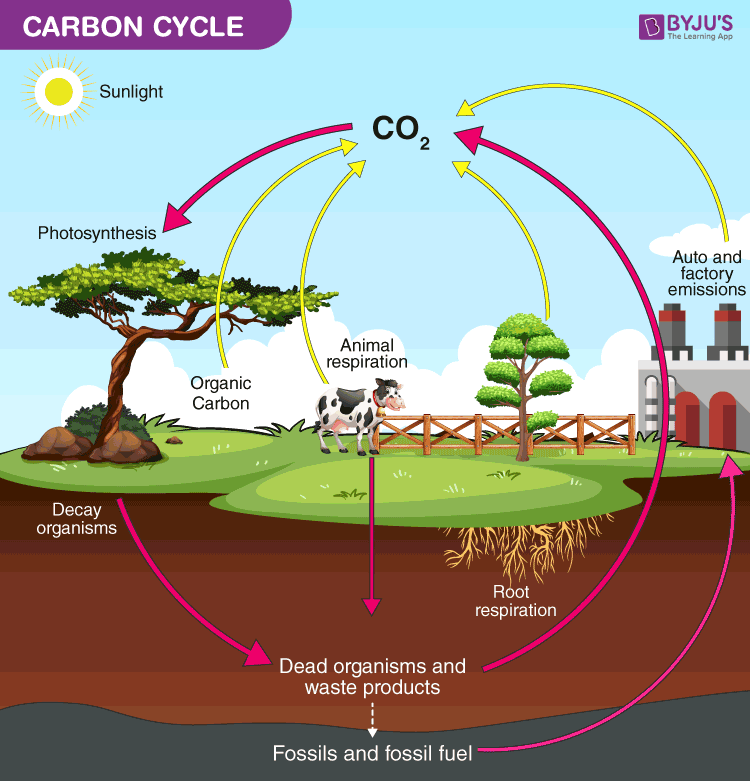
what affects rates of chemical cycling
decomposition rates, climate change, human activity (fertilizer runoff, fossil fuels, land usage - deforestation, agriculture), biological productivity (higher primary productivity cycles nutrients faster), trophic structure/predation (predators control affect herbivore populations, which determines how quickly nutrients move through the food chain)
GPP
gross primary production
NPP
net primary production (GPP - energy used for respiration)
GPP vs NPP of different ecosystems
rainforests: highest GPP and NPP
swamps/marshes: very high NPP from nutrient availability
deserts and oceans: low GPP and NPP
temperate forests: moderate GPP and NPP
tundra: low GPP and NPP
factors that lead to ecosystem collapse (easter island)
habitat loss/fragmentation, climate change, overexploitation by humans, pollution, invasive species, disease.
on easter island, there was severe deforestation from around 900, peaking around 1400, and the island was barren by 1722. there was also the introduction of invasive rats, soil erosion, and climate change (drought)
habitat fragmentation
large habitats break into smaller, isolated ones
causes for loss of biodiversity in hotspots
habitat destruction, urban growth, industrial activity, overexploitation of resources, invasive species
establishment of nature reserves in hotspots
conservation strategy to protect regions with the highest cincentrations of unique species under immediate threat. there are 35 of these, and they harbor over 50% of the worlds endemic plant species and 43% of endemic birds, mammals, repitles, and amphibians
introduced/nonnative/invasive species
organisms moved by humans to new areas. many nonnative species are harmless, but invasive species cause harm and spread rapidly from lack of predators
global warming
long term rise in average temperature. so far earth has warmed by an average of 0.9C (1.6F) since 1900, models predict a rise of at least 3C (5F) by 2100
biological magnification
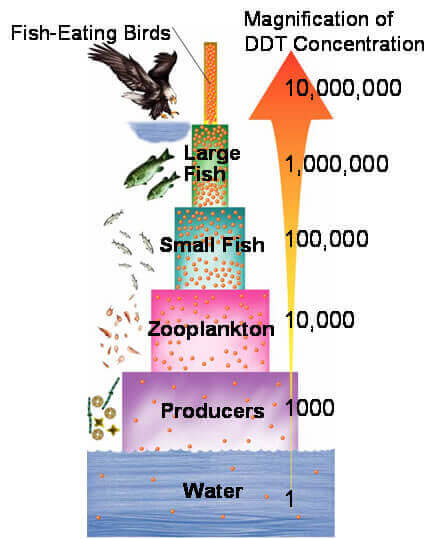
concentrates toxins at higher trophic levels - happens w many pesticides
how to read age structure pyramids
y axis is age groups, x is percentage or number of individuals.
a population experiencing rapid growth has more young than old, slow growth also has more young than old but the difference is less extreme. a stable population has relatively similar proportions of age groups. a declining population has fewer young individuals
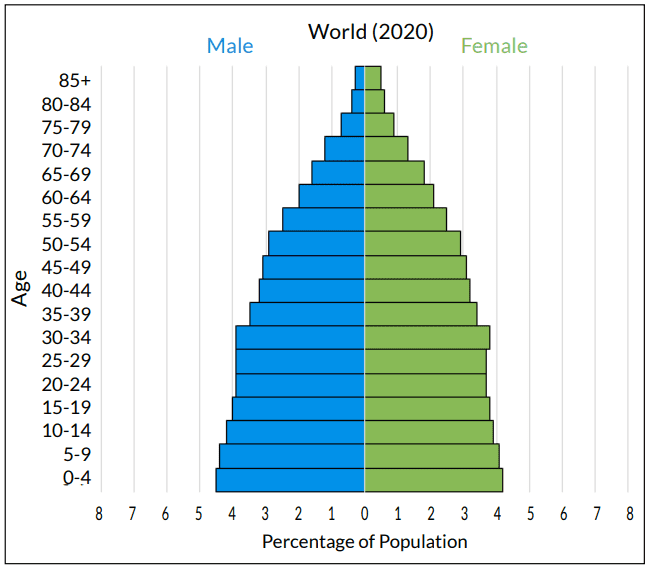
how to determine diversity
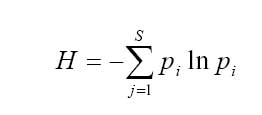
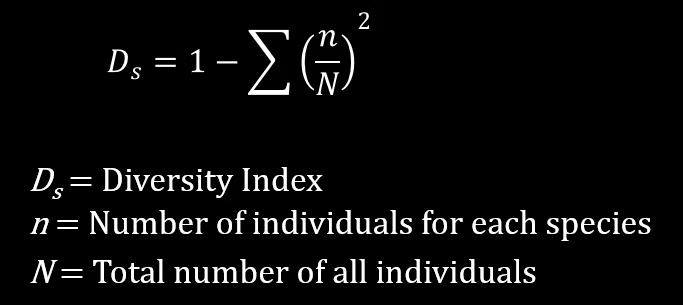
shannon’s diversity index or simpson’s diversity index
shannon’s diversity index
p: relative abundance of species
i: species
simpson’s diversity index
acid rain cause and effects
caused by emissions (burning wood and fossil fuels causes HS and nitric acid to form in the atmosphere, and precipitation has pH<5.2)
effects: harmful to many organisms - change pH of lakes/streams which can kill fish/fish eggs, damages waxy protective layer of leaves which weakens plants and makes them vulnerable to diseases and pests, can leach nutrients from soil which damages plants and microorganisms
eutrophication
dramatic increase in primary production that occurs when aquatic ecosystems go from nutrient-poor to nutrient-rich. excess nitrogen runoff fertilizes phytoplankton and causes algal blooms. when algae die, bacteria decompose them and consume nearly all the dissolved oxygen in respiration (hypoxia), which causes mass deaths of marine life. dead zones result from this
reproductive strategies (energetic tradeoffs vs reproductive success)
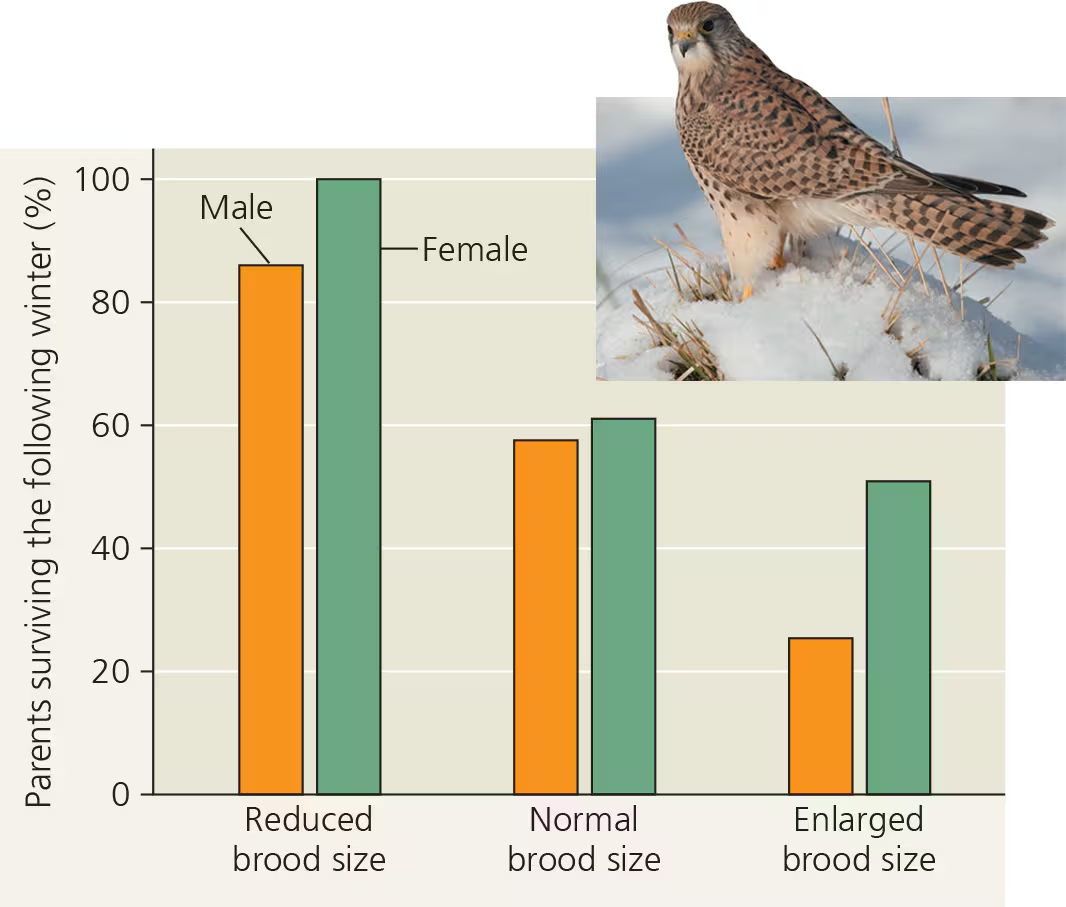
energetic tradeoffs: producing many small offspring with low survival chances or few large offspring with high survival chances. organisms who use more energy in caring for more, smaller offspring have reduced survival. plants and animals whose young are likely to die often produce large numbers of small offspring
reproductive success: r selection and k selection
resource partitioning
differentiation of niches that enables coexistence - ecologically similar species can coexist in a community if they evolve a different niche. for example, different lizard species in the caribbean occupy specific areas of trees, so they can all use its resources without competing
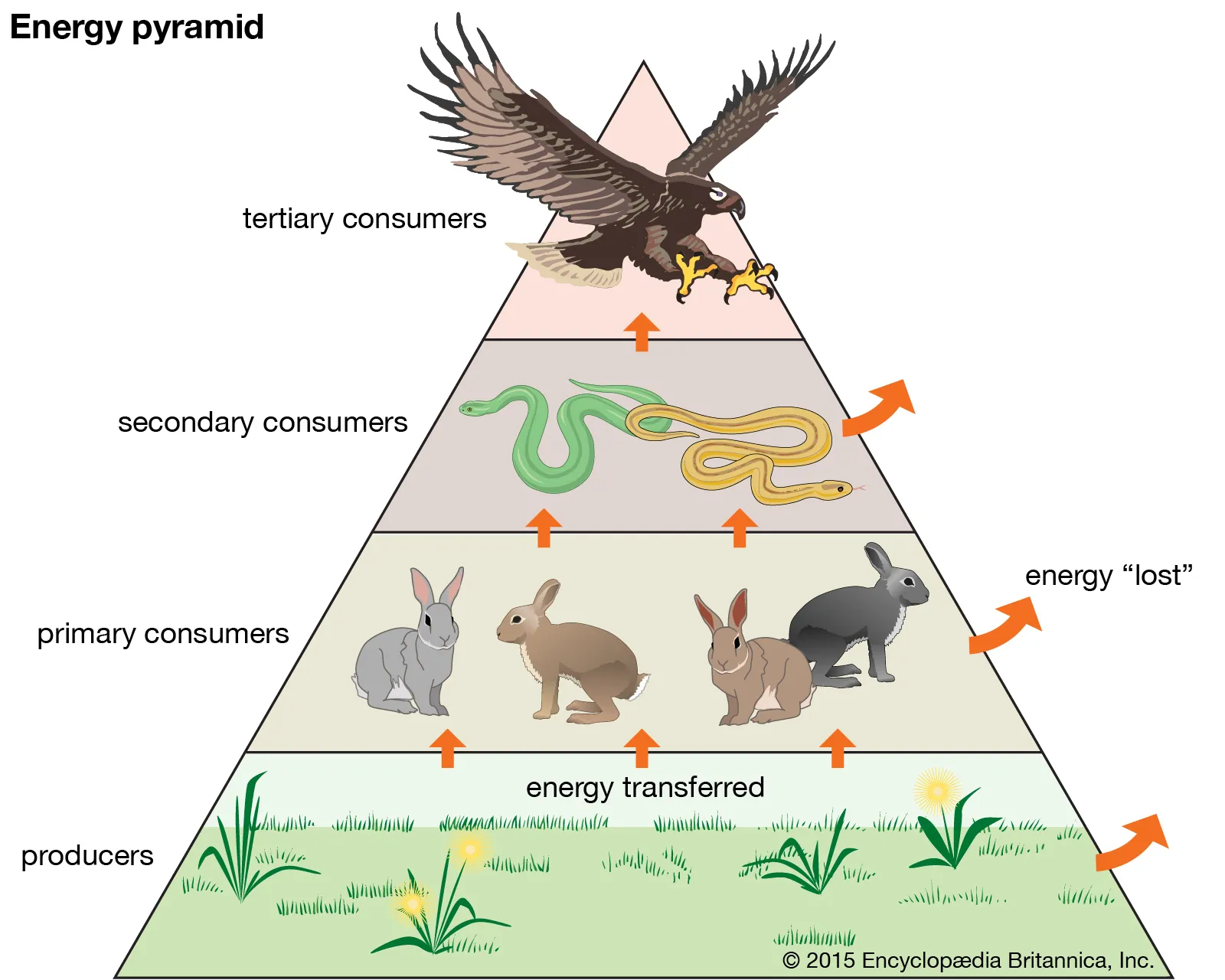
energy pyramid
measures energy transfer
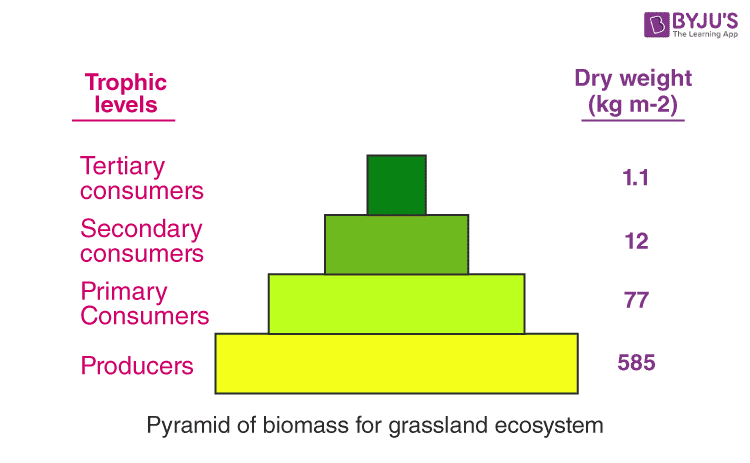
biomass pyramid
measures mass of living tissue
biomagnification pyramid
measures toxin levels in each trophic level
effects of pathogens on a new environment
massive population decline in all species who can be infected
energetic hypothesis and food chain inefficiency
length of food chains is limited by inefficiency of energy transfer between trophic levels (typically only 10% of energy stored in organic matter at one level is converetd into organic mater at the next)
effect of DDT on the environment
DDT (a pesticide) builds up in organisms and is subject to biomagnification, causes reproductive failure in birds (softer egg shells that broke during incubation - caused massive decline in populations like the bald eagle), adheres to sediments and contaminates aquatic ecosystems which harms marine life, can contaminate soil, air, and water since it breaks down very slowly, can affect non-target organisms like bees