Clep Algebra Exam Help
 Call Kai
 Learn
Learn Practice Test
 Spaced Repetition
 Match
Match Flashcards
 Knowt Play
1/66

There's no tags or description
Looks like no tags are added yet.
Name | Mastery | Learn | Test | Matching | Spaced | Call with Kai |
|---|
No analytics yet
Send a link to your students to track their progress
67 Terms
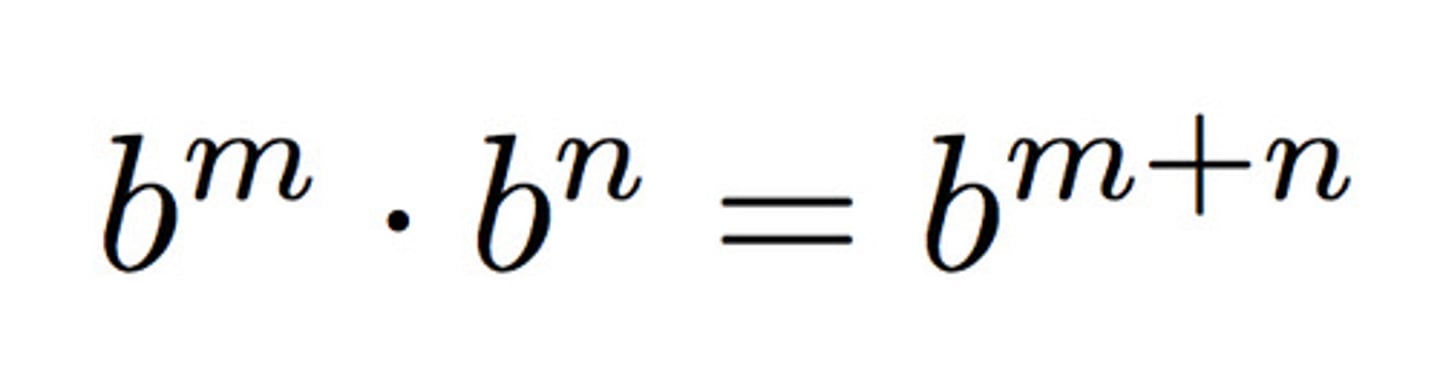
Product Rule
multiply two expressions with same base, you add the exponents
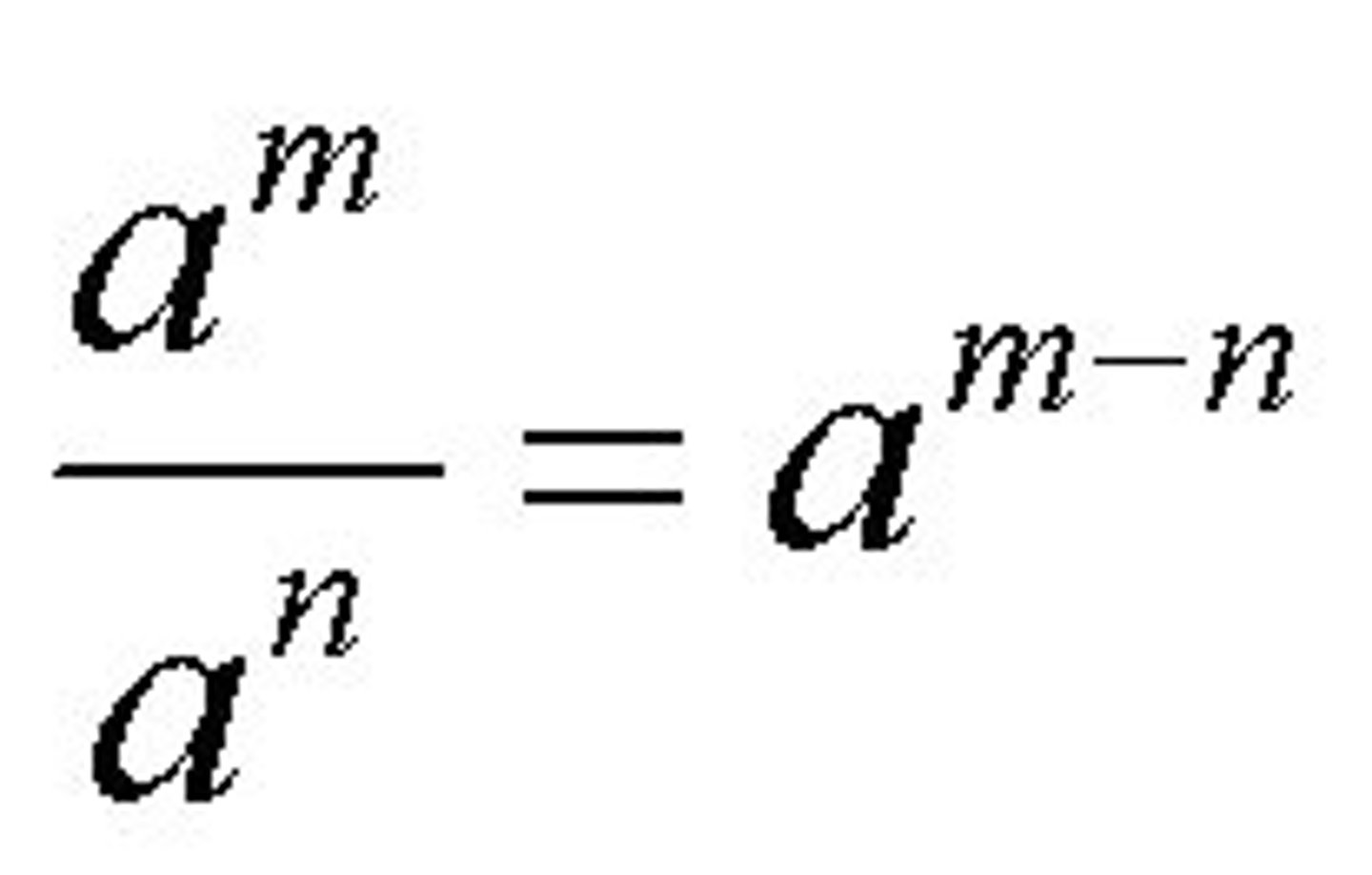
Quotient Rule
divide two expressions with same base, you subtract the exponents
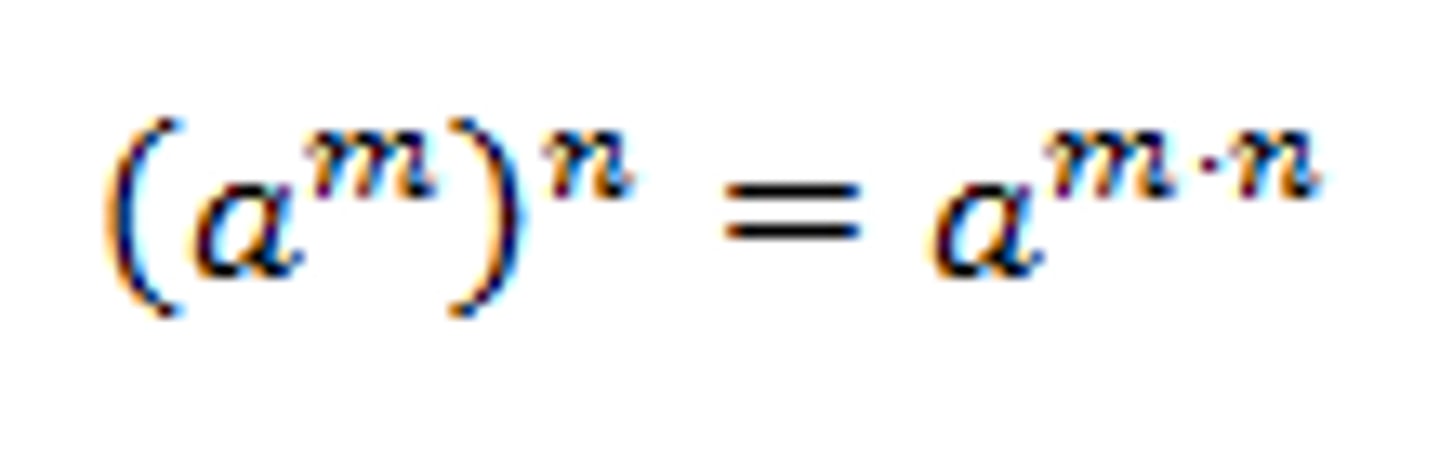
Power Rule
raising a power to a power, you multiply the exponents
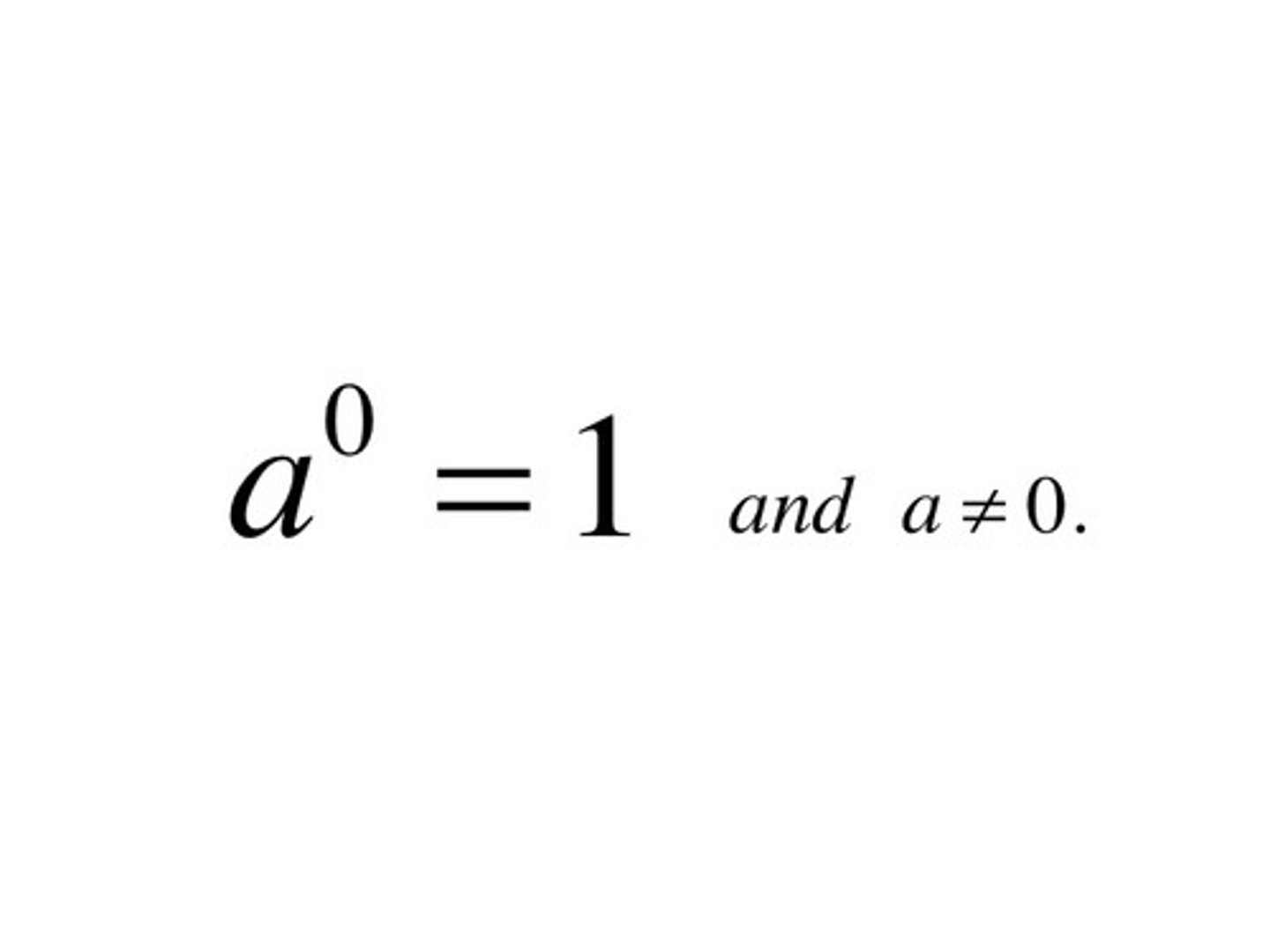
Power of Zero
anything to the 0 exponent is 1
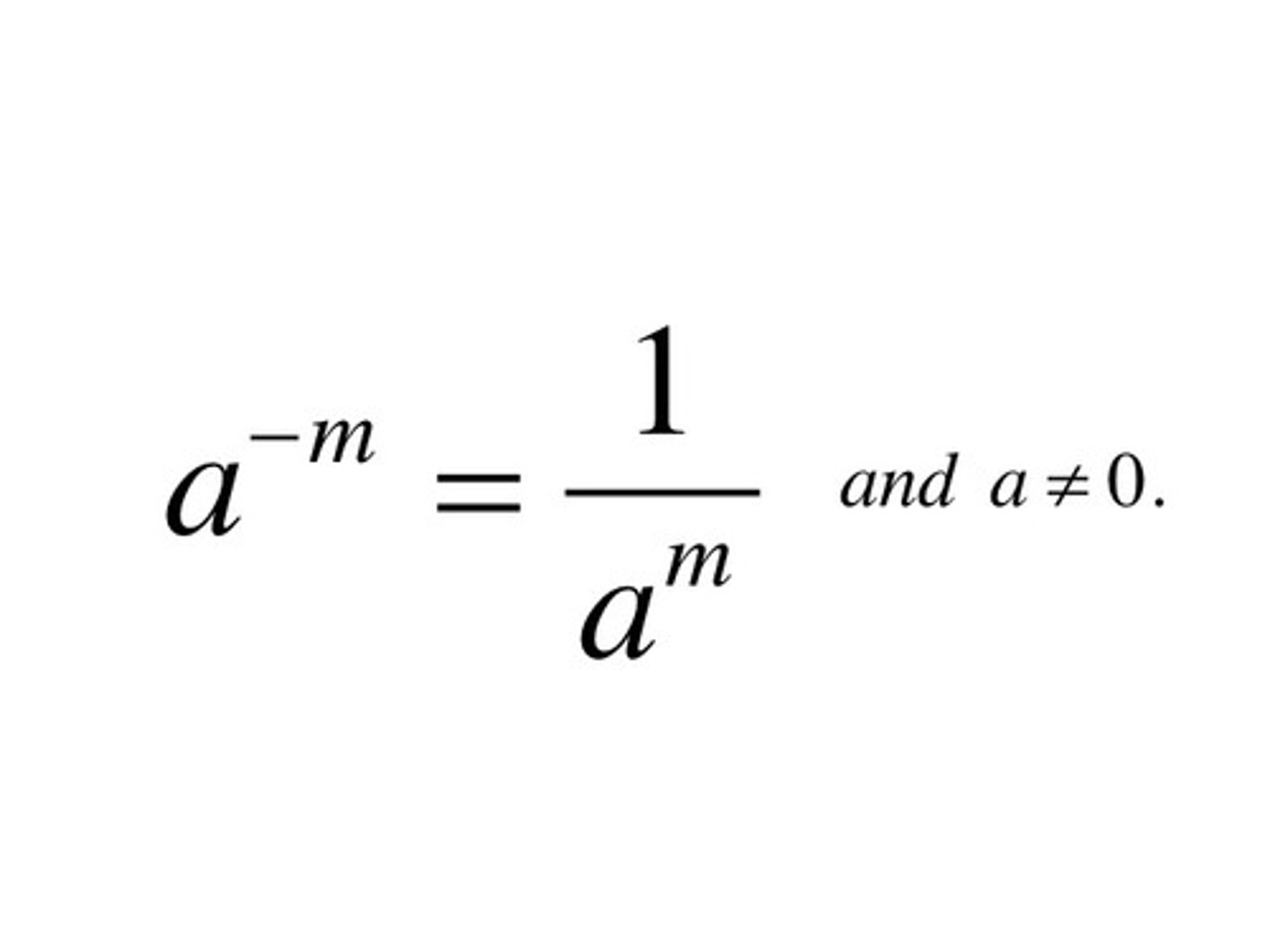
Negative Rule of Exponents
negative exponents in the numerator get moved to the denominator and become positive exponents
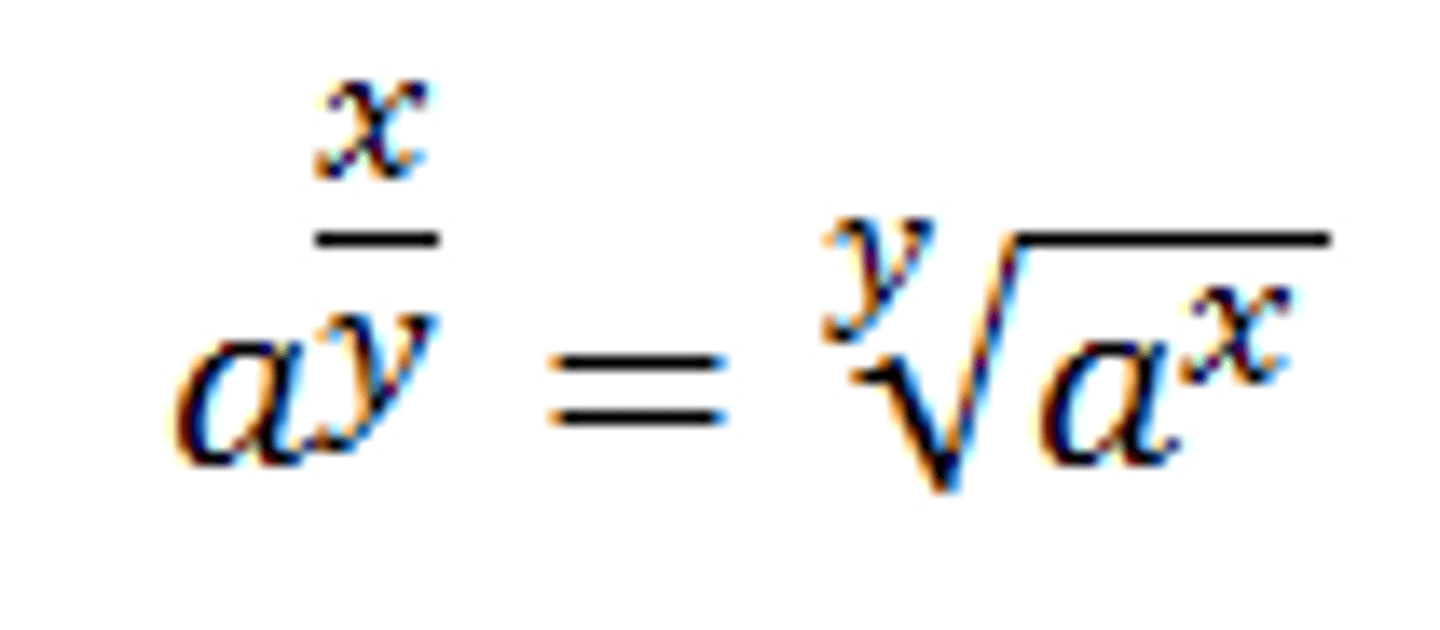
Fractional Rule of Exponents
the numerator is the power of the term inside the root and the denominator is the power of the root
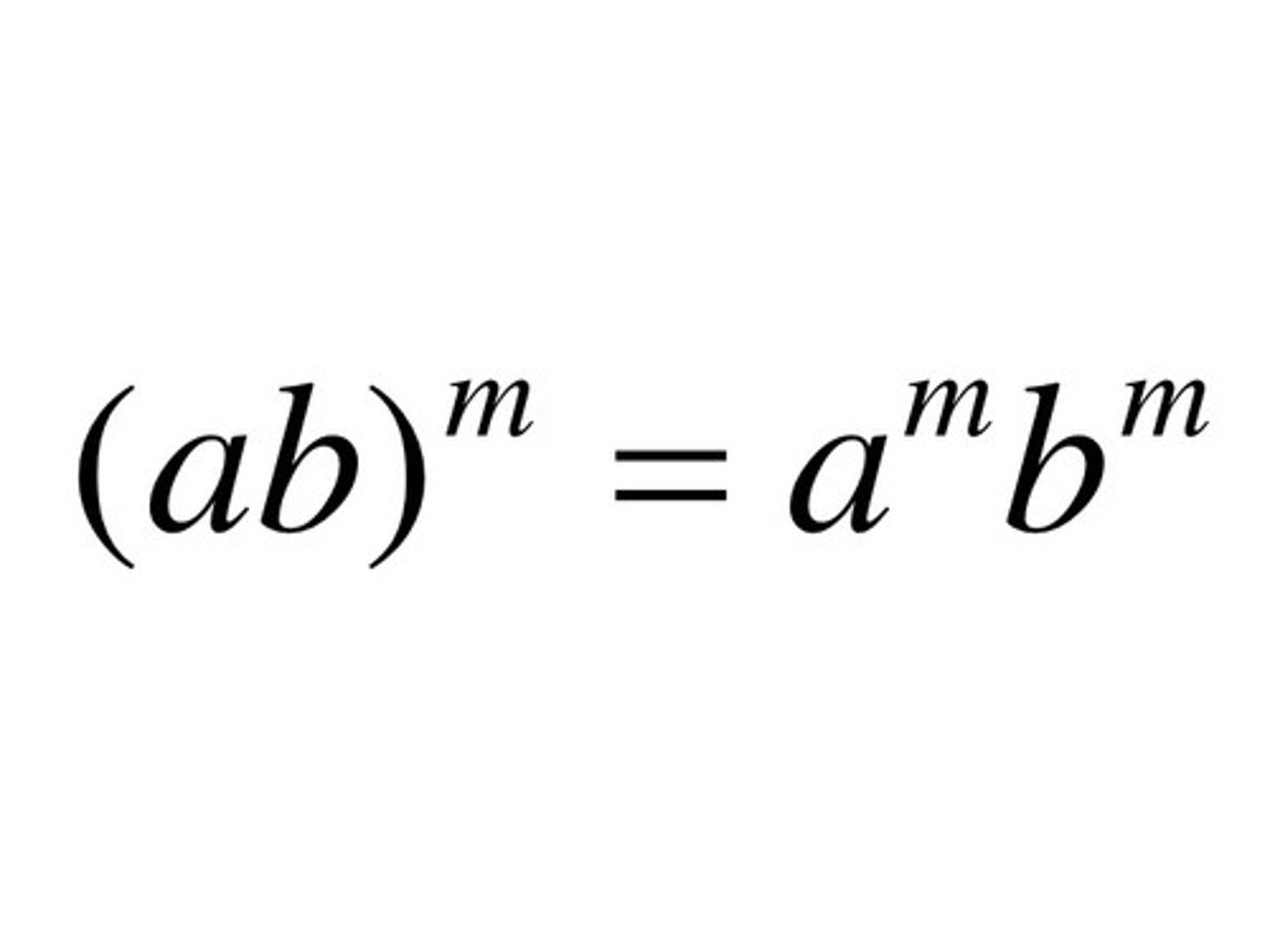
Distribute an Exponent Over a Product
When an exponent is outside of parentheses and acts on a product, it can be distributed to all terms inside the parentheses, including coefficients and bases.
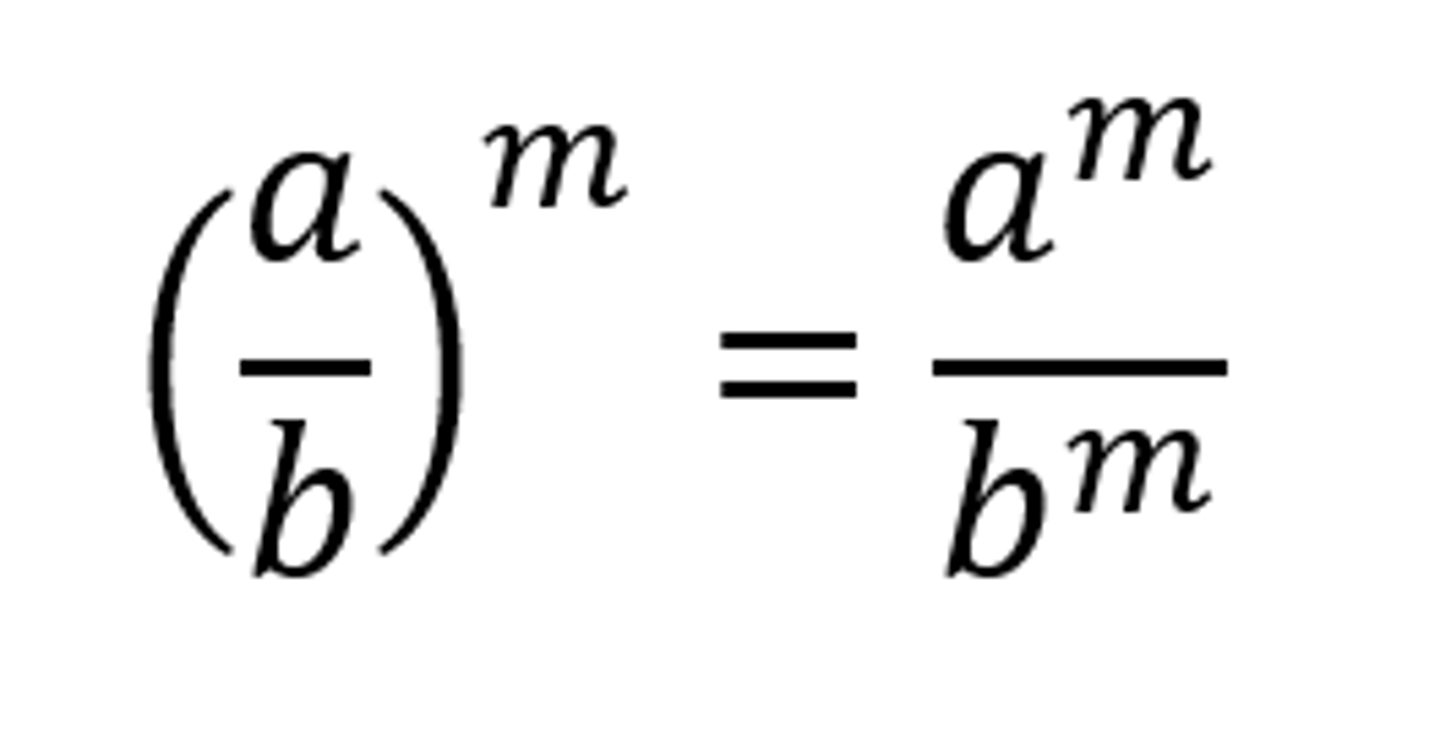
Distribute an Exponent Over a Quotient
when the quotient of two nonzero real numbers is raised to an exponent, the exponent can be distributed to each factor and divided individually.
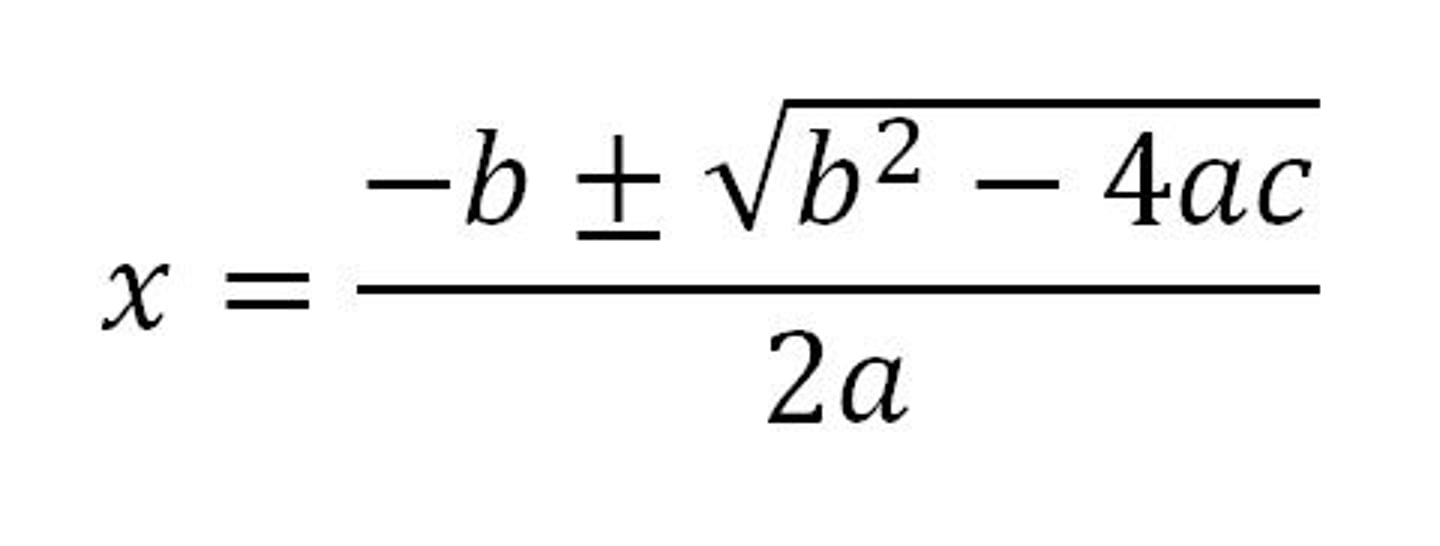
Quadratic Formula
x = negative b + or - square root, b^2 -4AC/ all over 2a
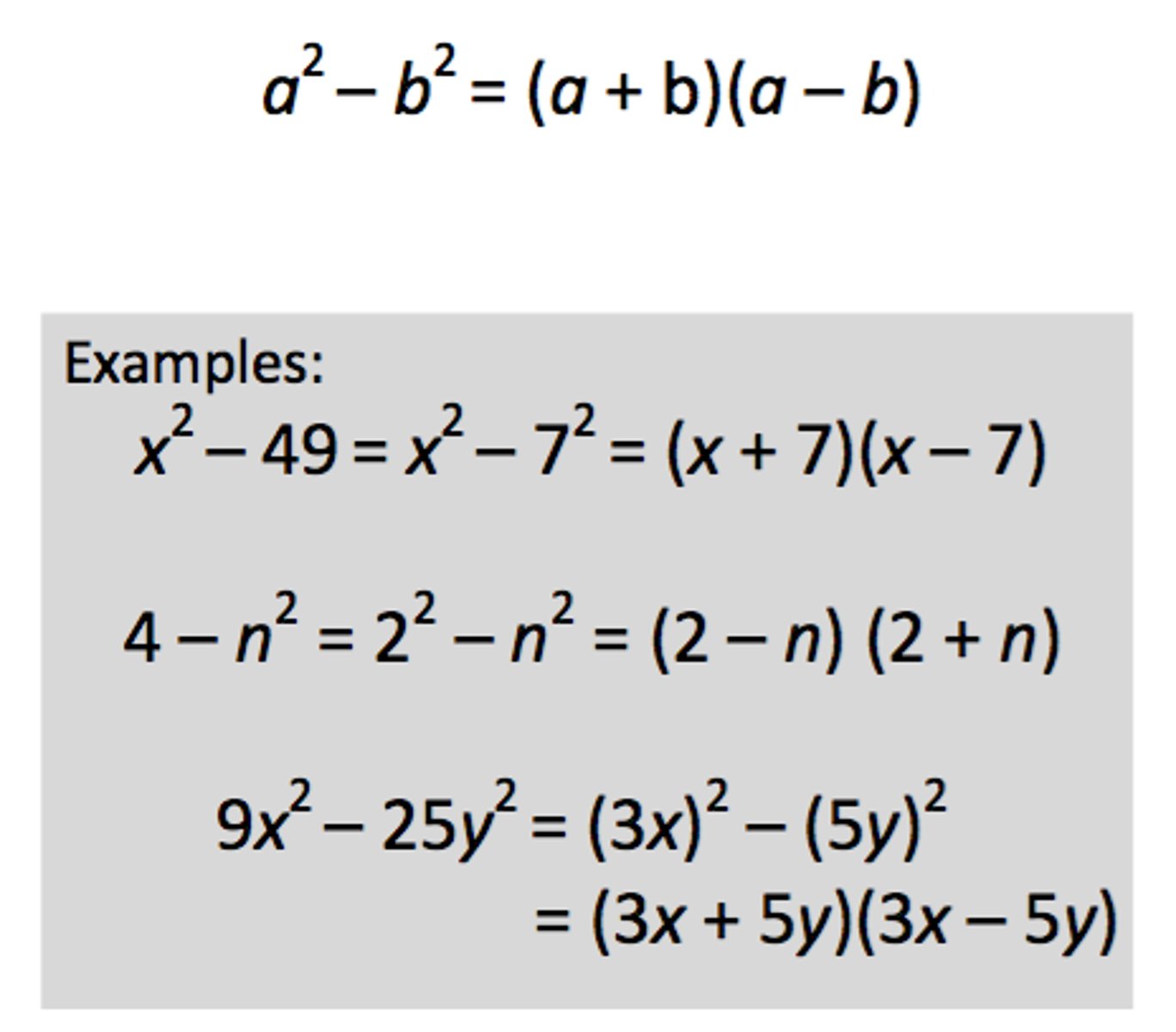
Difference of Squares
a^2 − b^2 = (a+b)(a−b)
Perfect Square
(a+b)^2 = a^2 + 2ab + b^2
or
(a-b)^2 = a^2 - 2ab + b^2

Sum of Two Square
a^2 + b^2 = (a+bi)(a-bi)
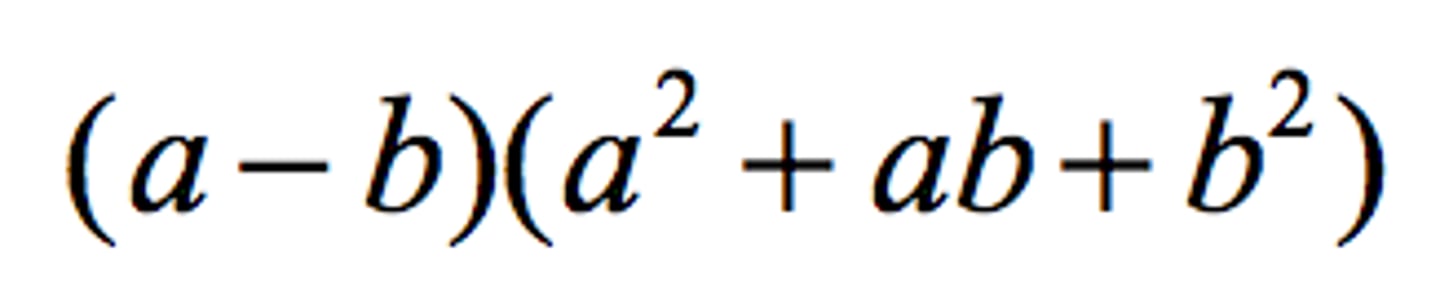
Difference of Cubes
a^3-b^3= (a-b) (a^2+ab+b^2)
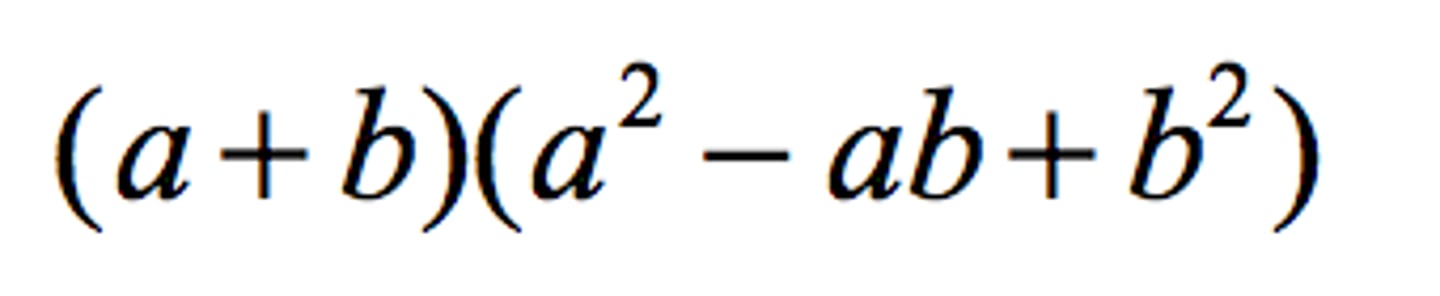
Sum of Cubes
a^3+b^3= (a+b)(a^2-ab+b^2)
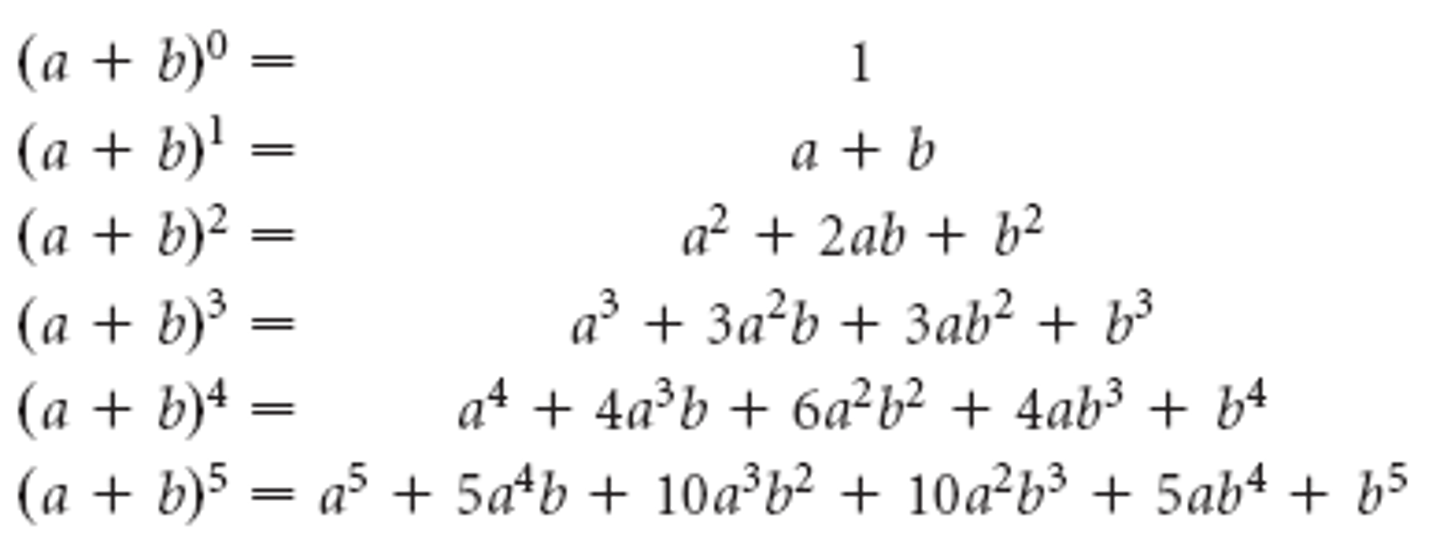
a+b Whole Cube Formula
(a + b)^3 = a^3 +3a^2b + 3ab^2 + b^3
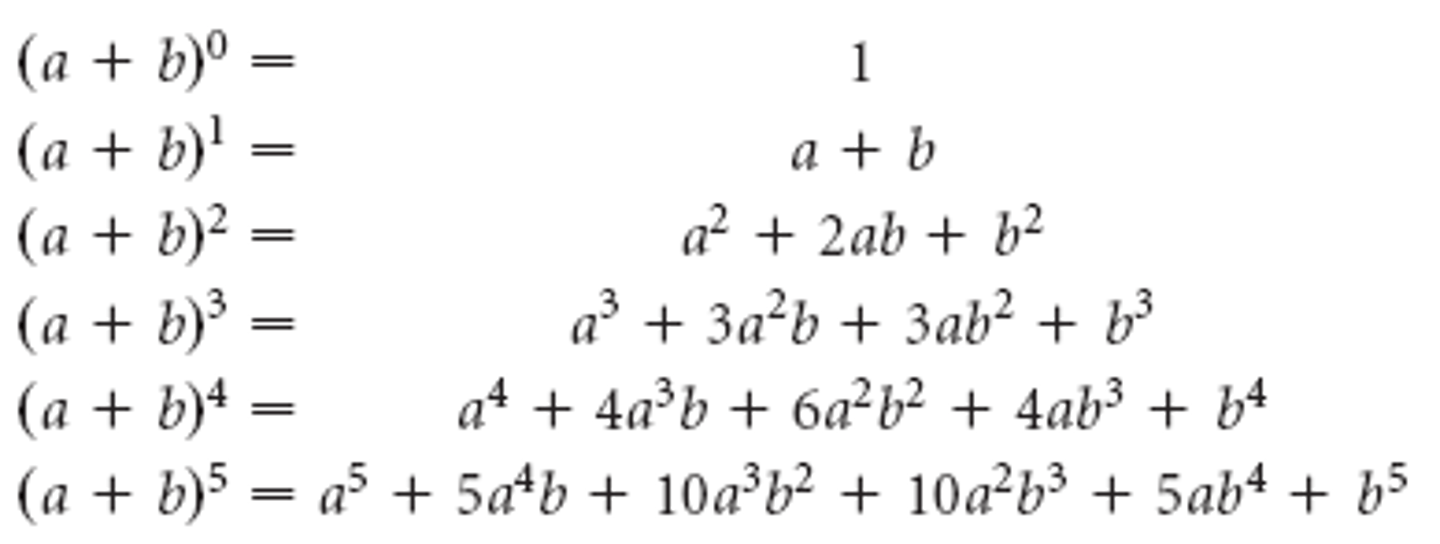
a-b Whole Cube Formula
(a - b)^3 = a^3 - 3a^2b + 3ab^2 - b^3
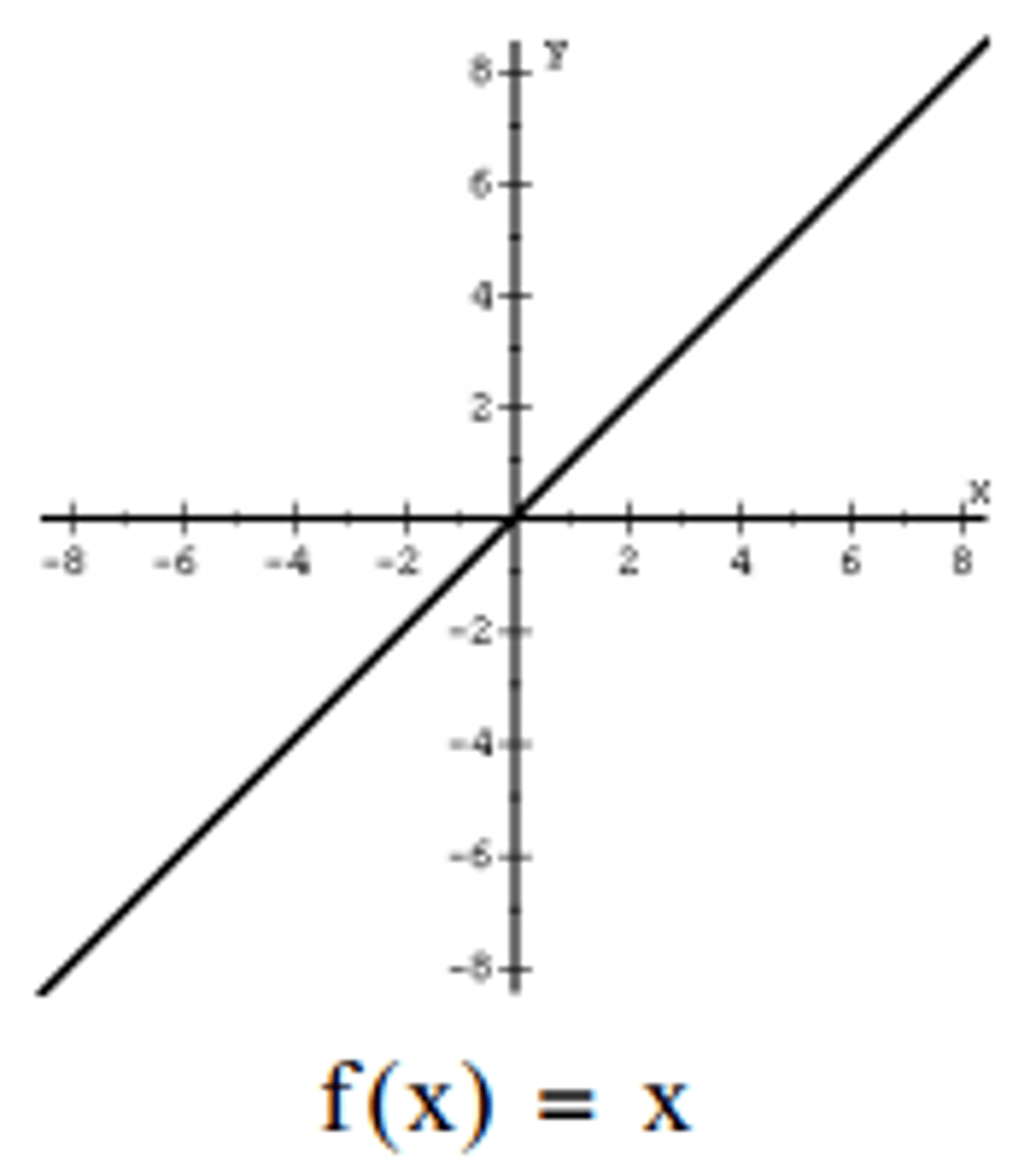
Identity Function
f(x)=x
Domain: (-∞ ,∞ )
Range: (-∞ ,∞ )
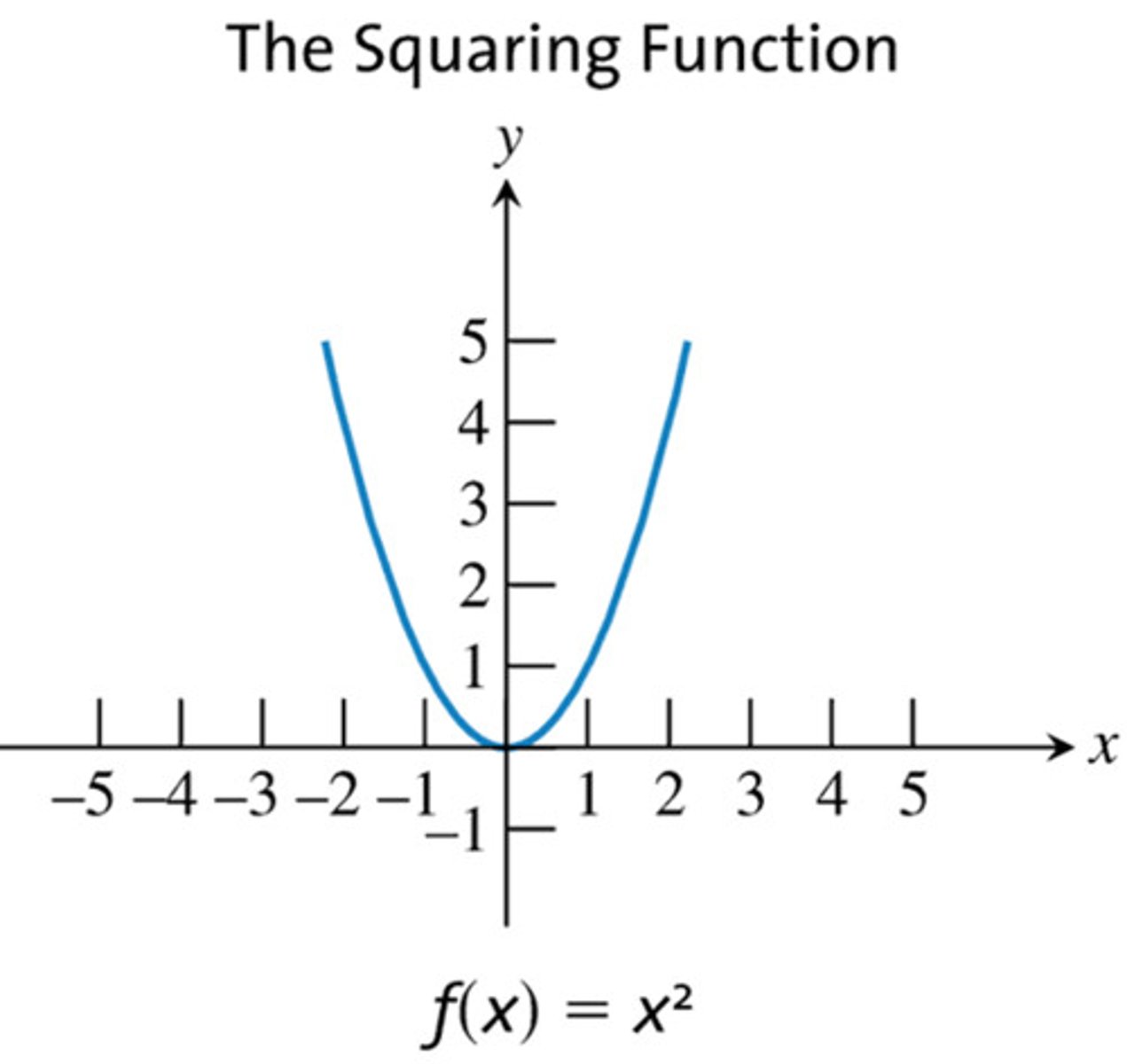
Squaring Function
f(x)=x^2
Domain: (-∞,∞)
Range: [0,∞)
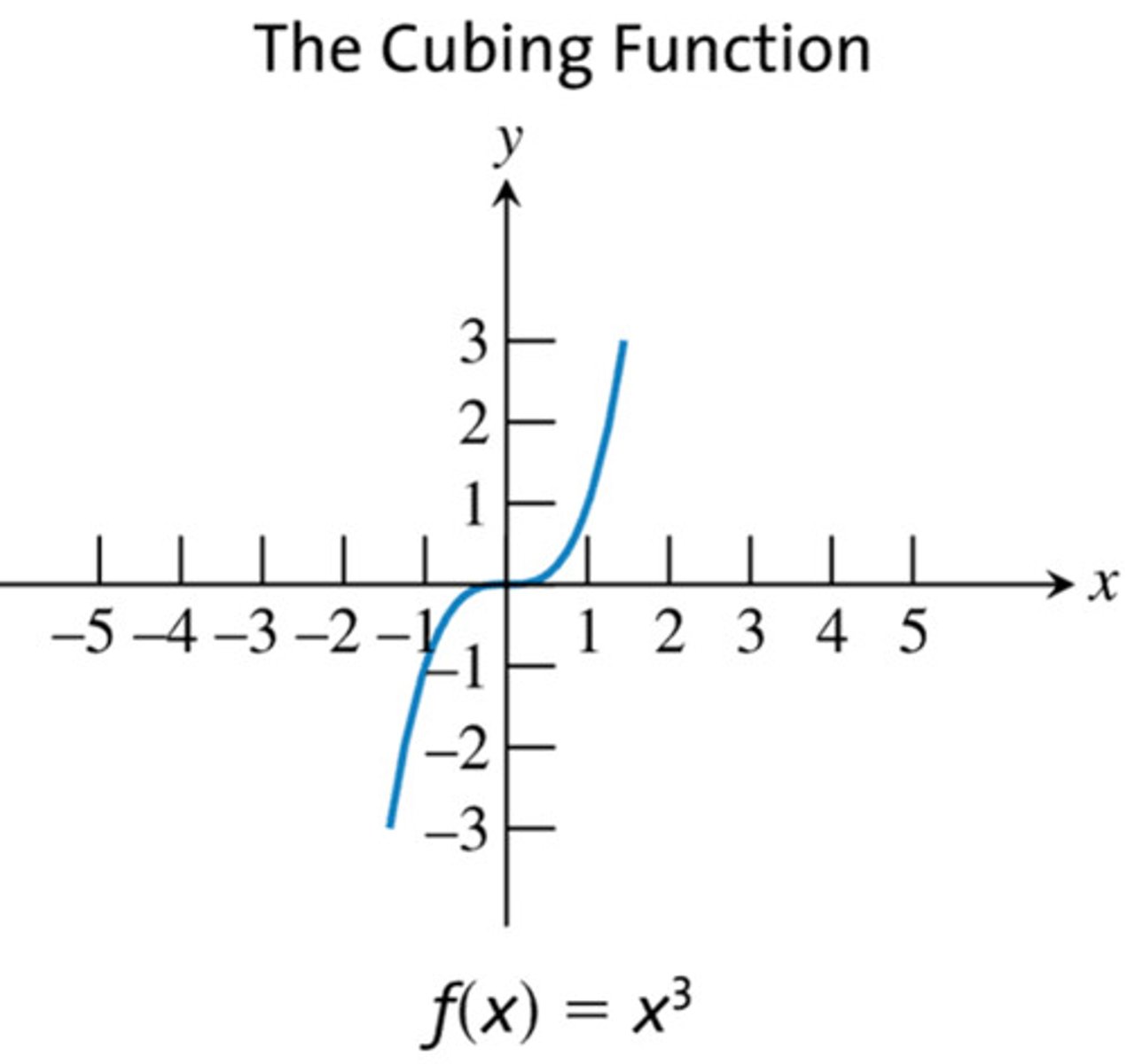
Cubing Function
f(x)=x^3
Domain: (-∞,+∞)
Range: (-∞,+∞)
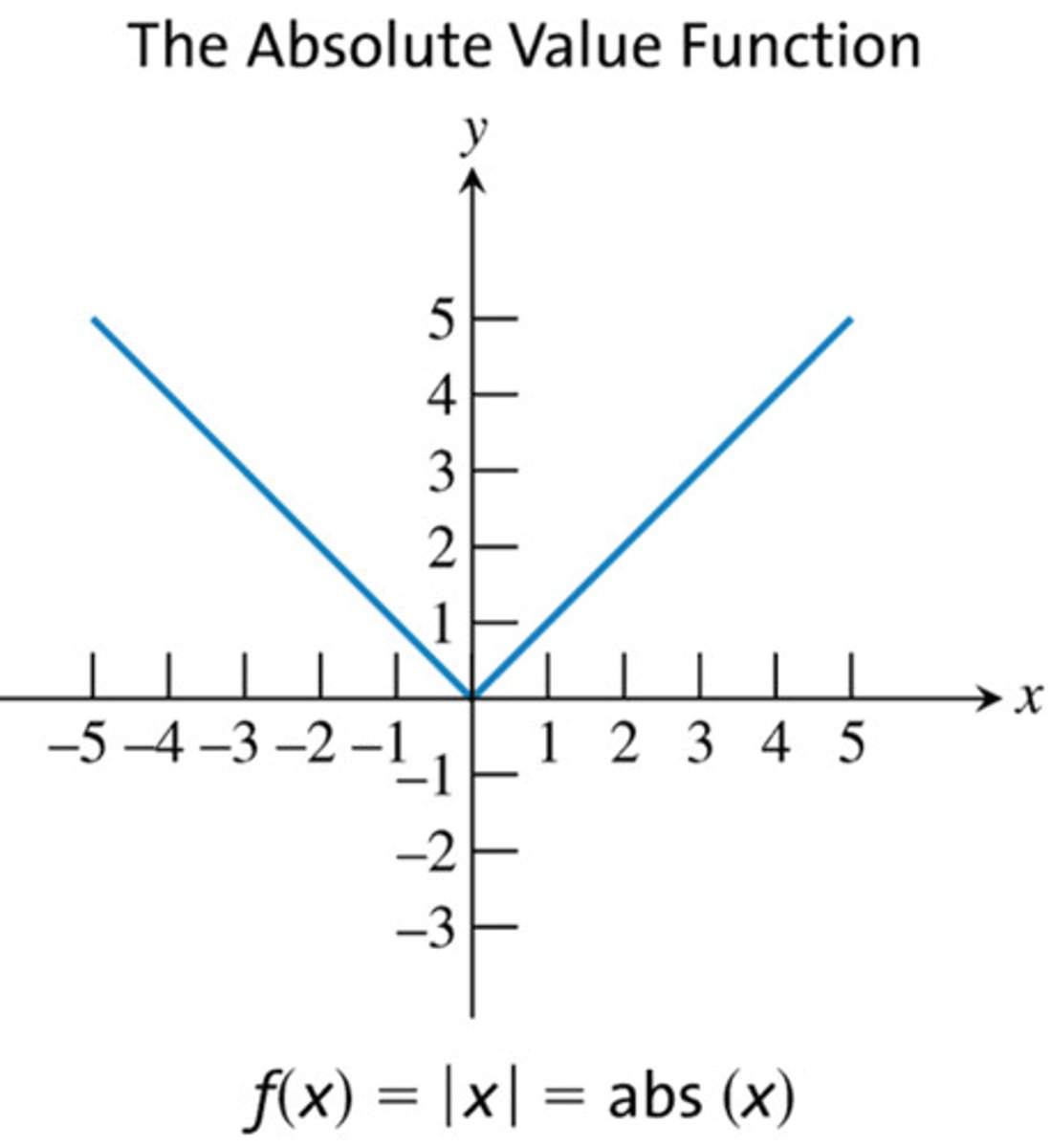
Absolute Value Function
f(x)=|x|
Domain: (-∞,∞)
Range: [0,∞)
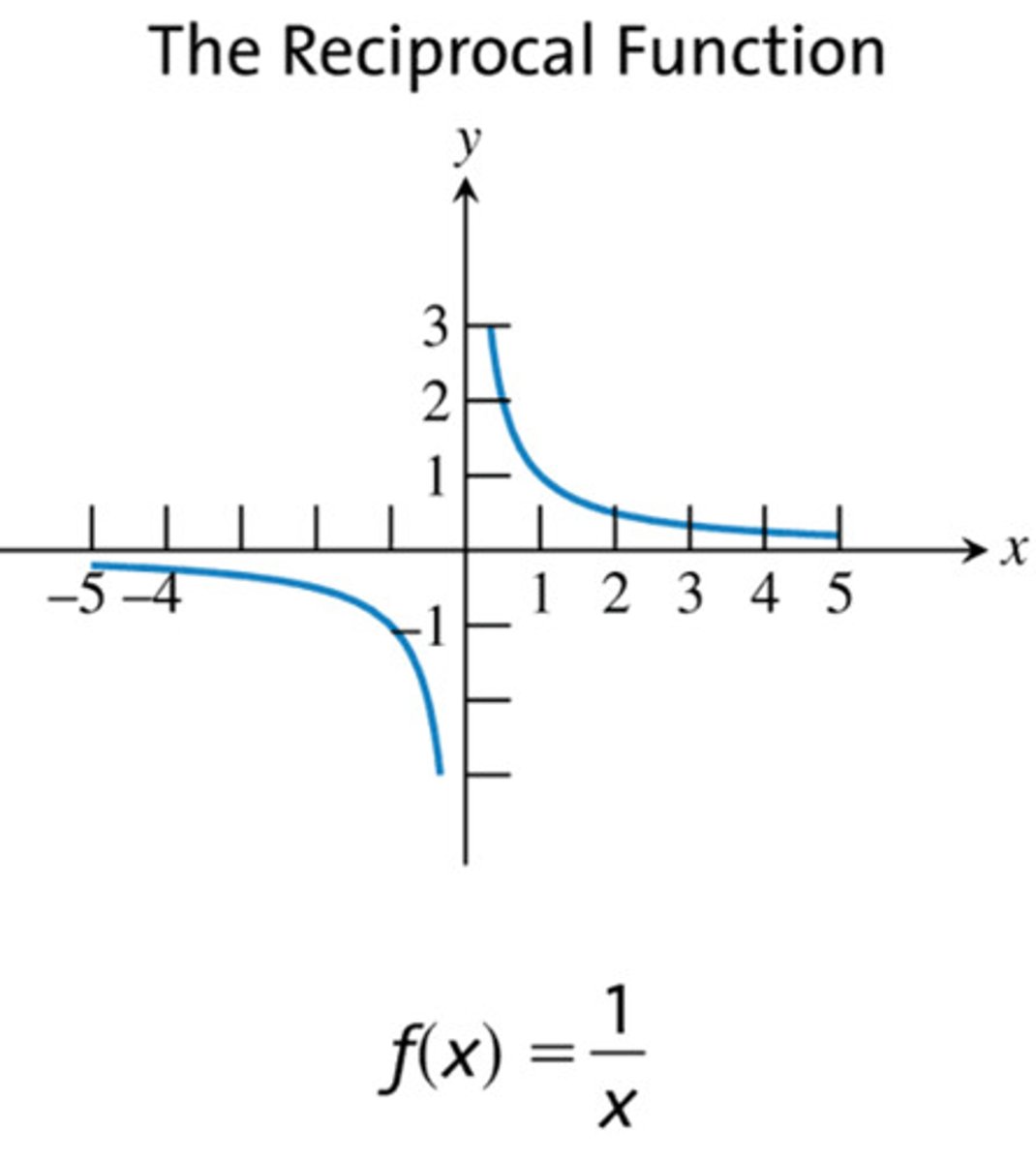
Reciprocal Function
f(x)=1/x
Domain: (-∞, 0) U (0,∞)
Range (-∞, 0) U (0,∞)
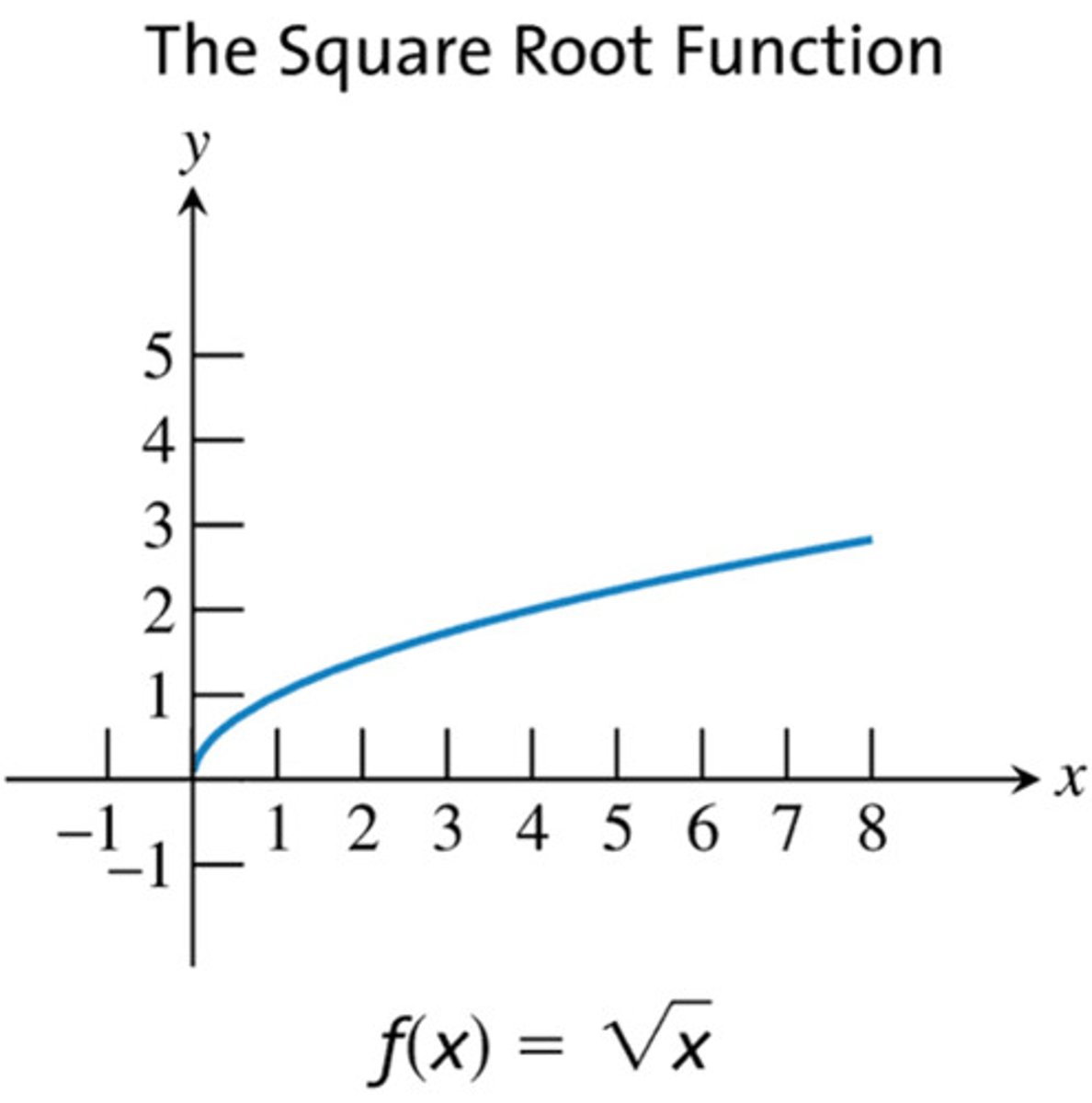
Square Root Function
f(x)=√x
Domain: [0, ∞)
Range: [0, ∞)
Exponential Growth Function
f(x)=e^x
Domain:(-∞, ∞)
Range: (0, ∞)
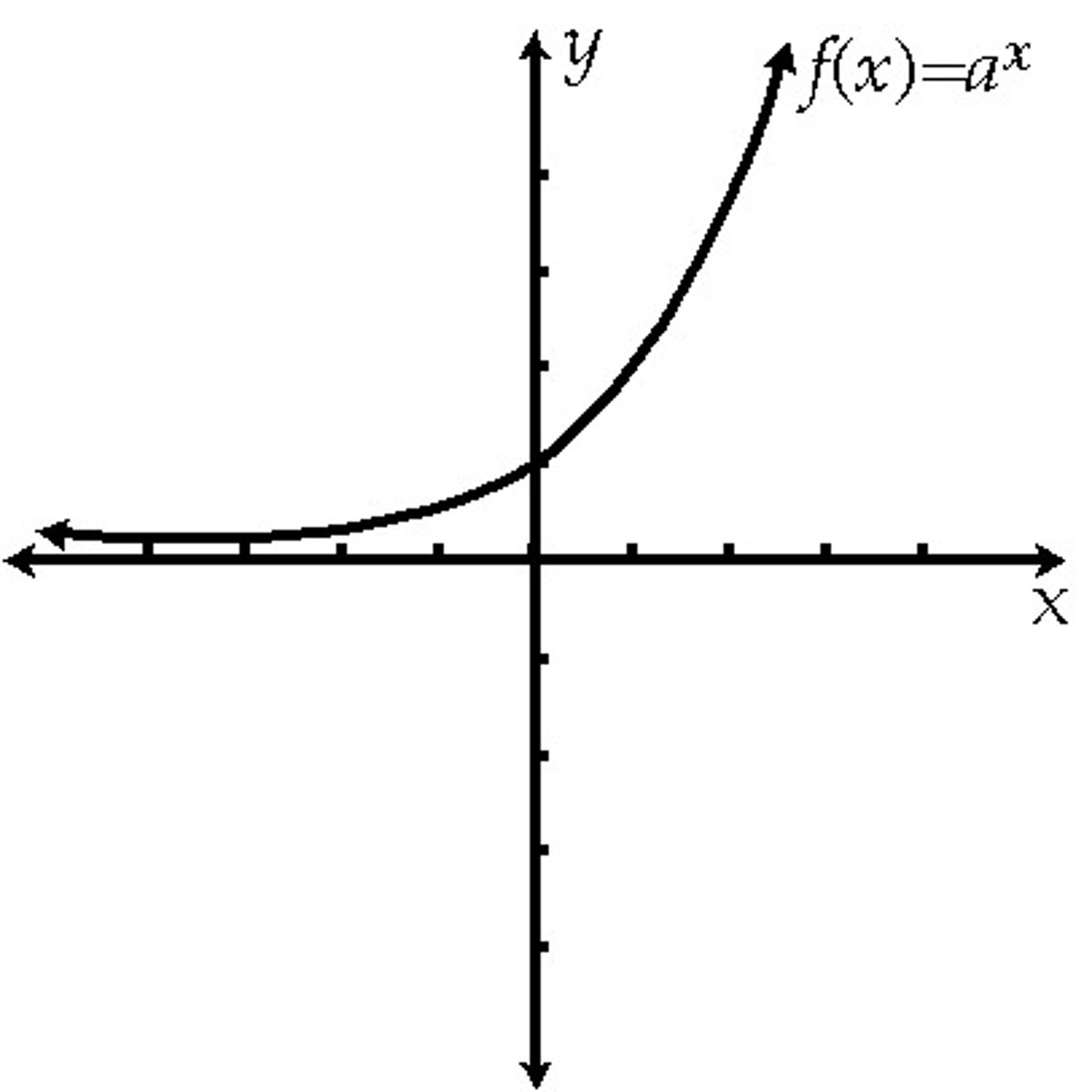
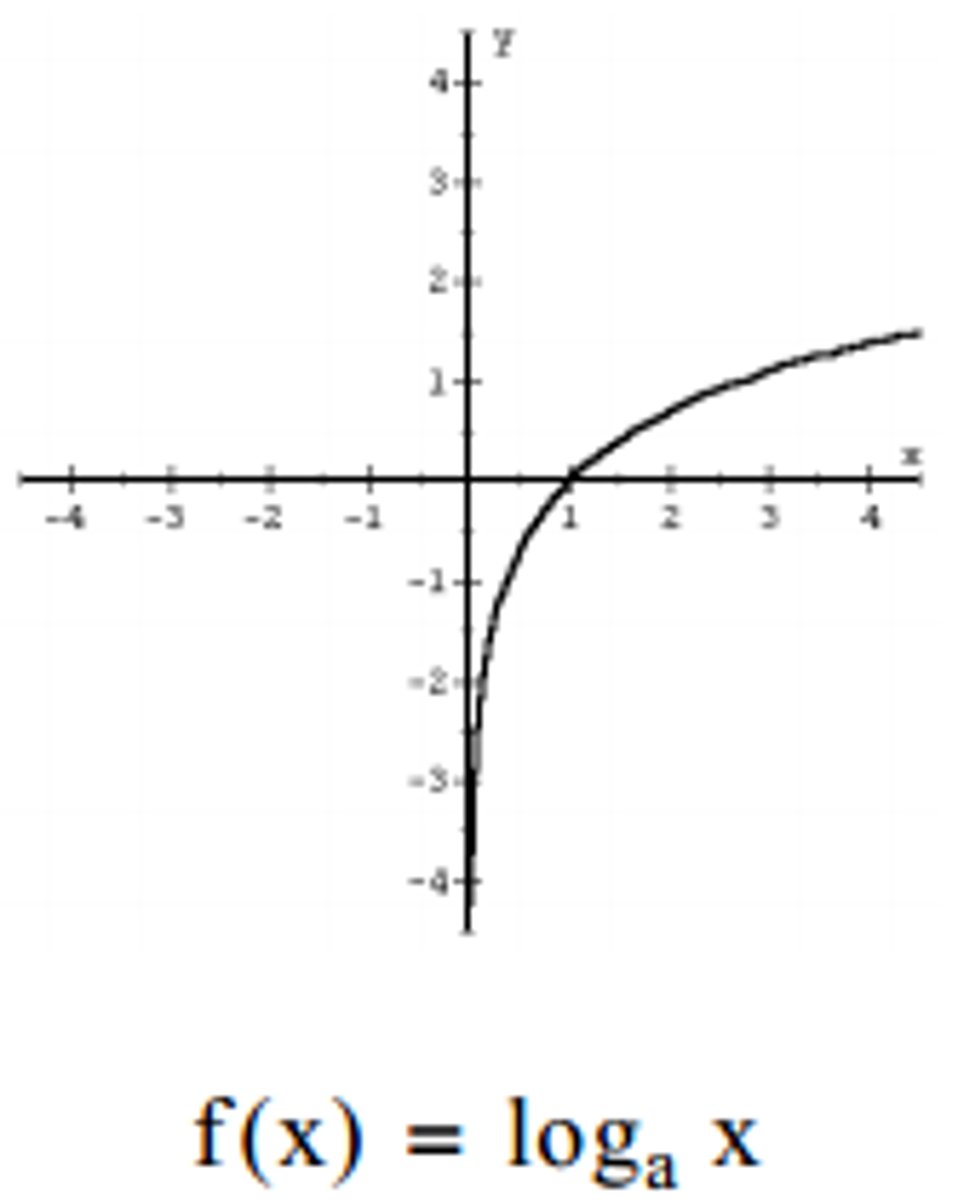
Logarithmic Function
f(x)=lnx
Domain:(0, ∞)
Range: (-∞, ∞)
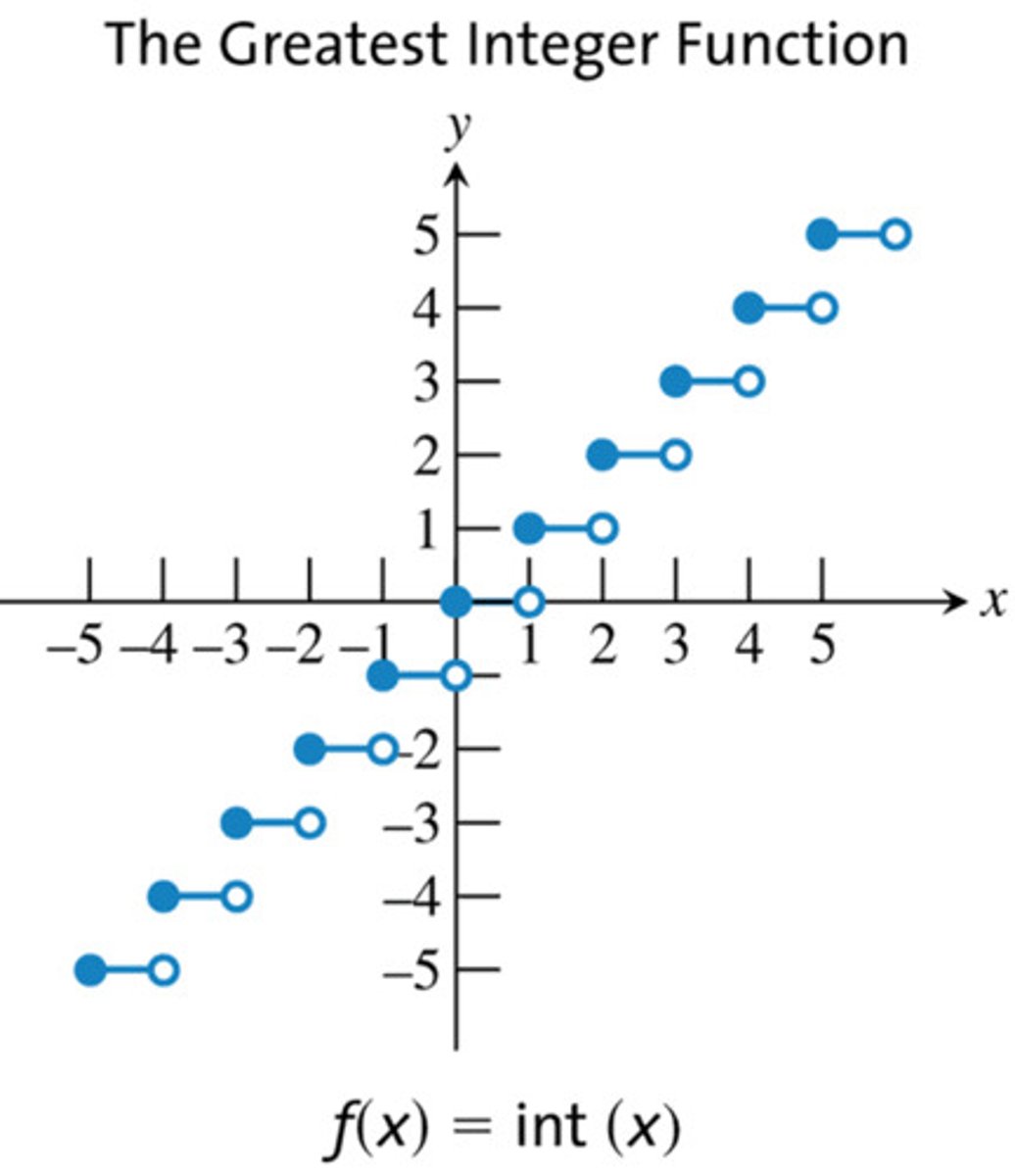
Greatest Integer Function
f(x)=x
Domain:(-∞, ∞)
Range: All integers
X-intercept
simply set y to 0 and solve for x.
Vertical line on graph
Y-intercept
simply set x to 0 and solve for y
Horizontal line on graph
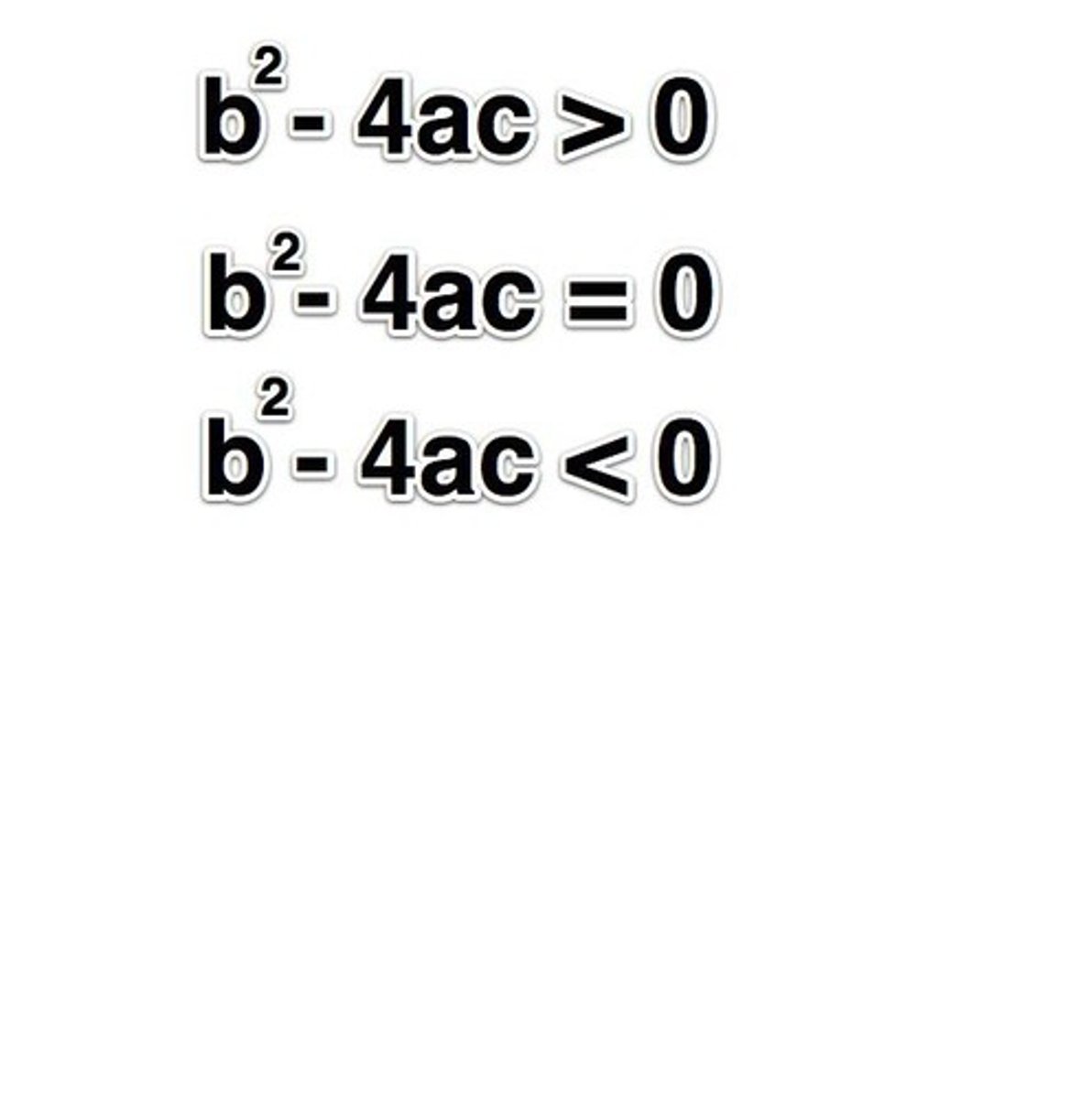
The discriminant
b^2-4ac
If positive = 2 real solutions
if 0 = 1 real solution
if negative = 0 real solutions
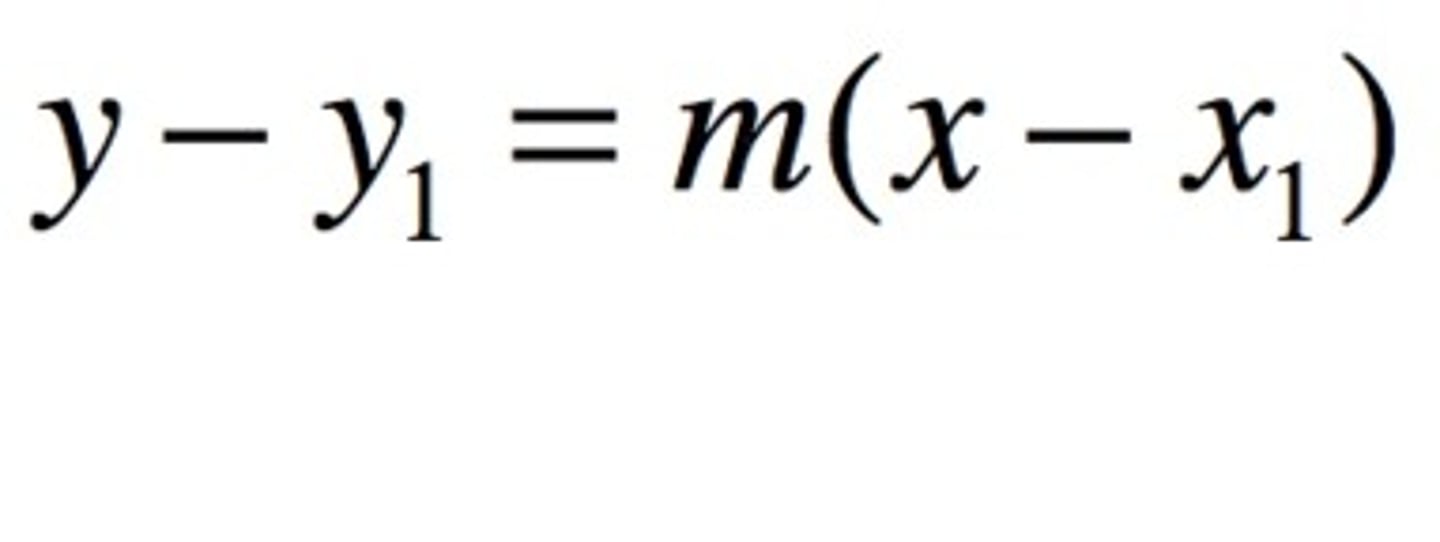
Point Slope Formula
y-y1= m(x-x1)
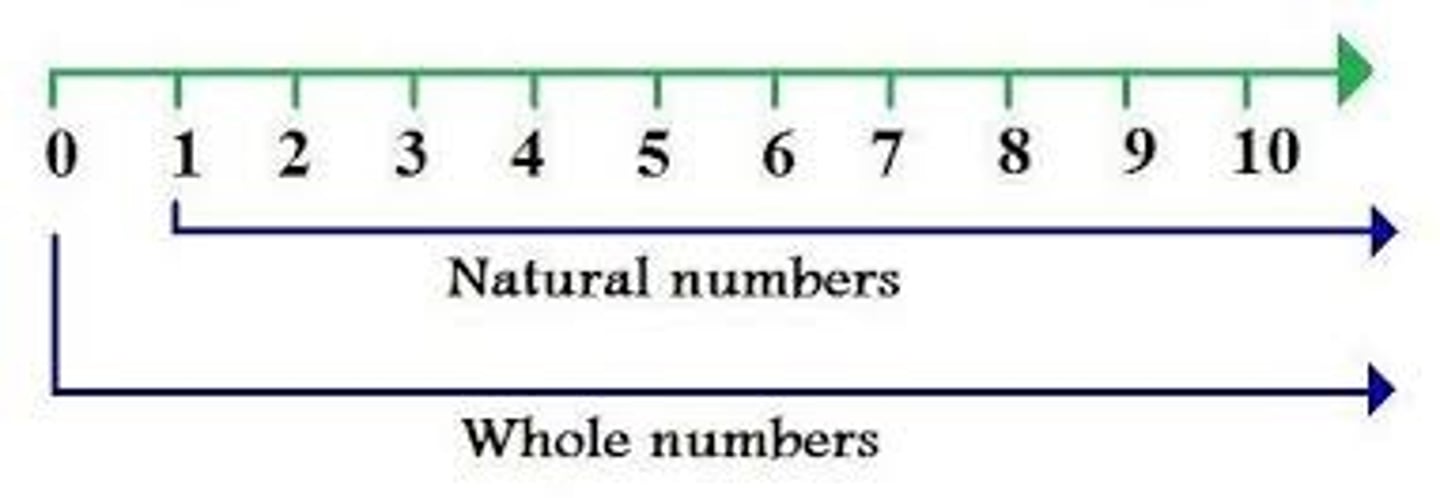
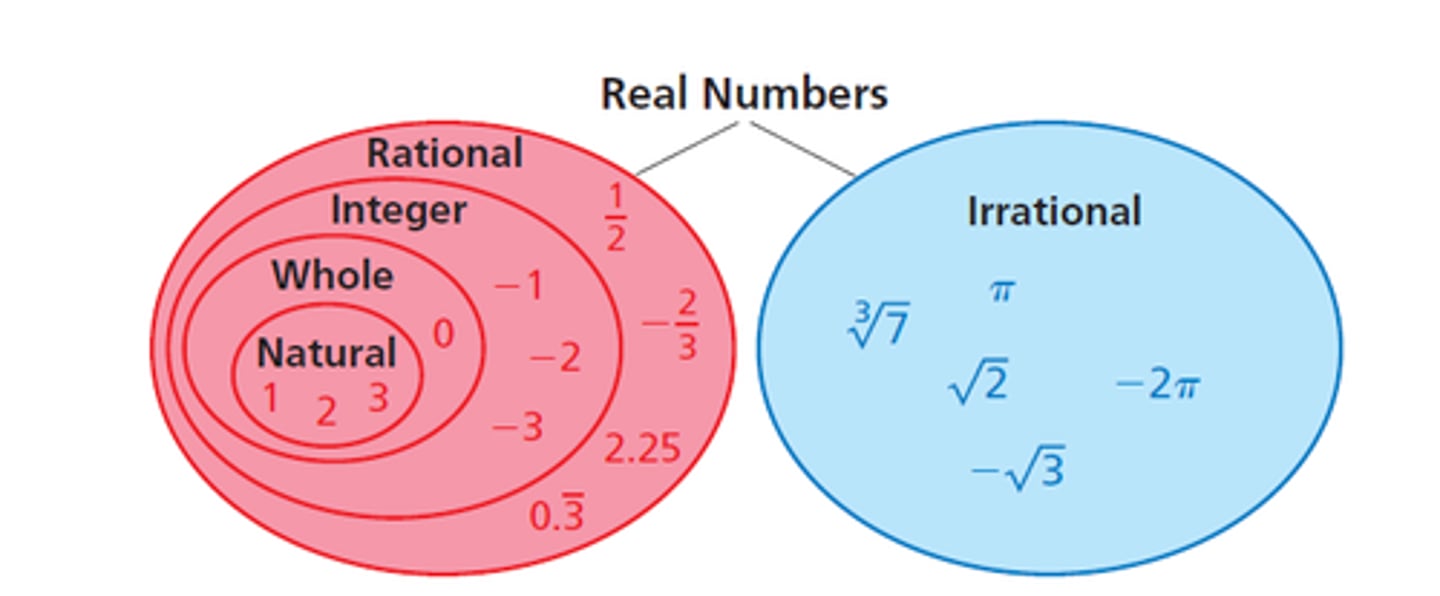
Natural Numbers
counting numbers
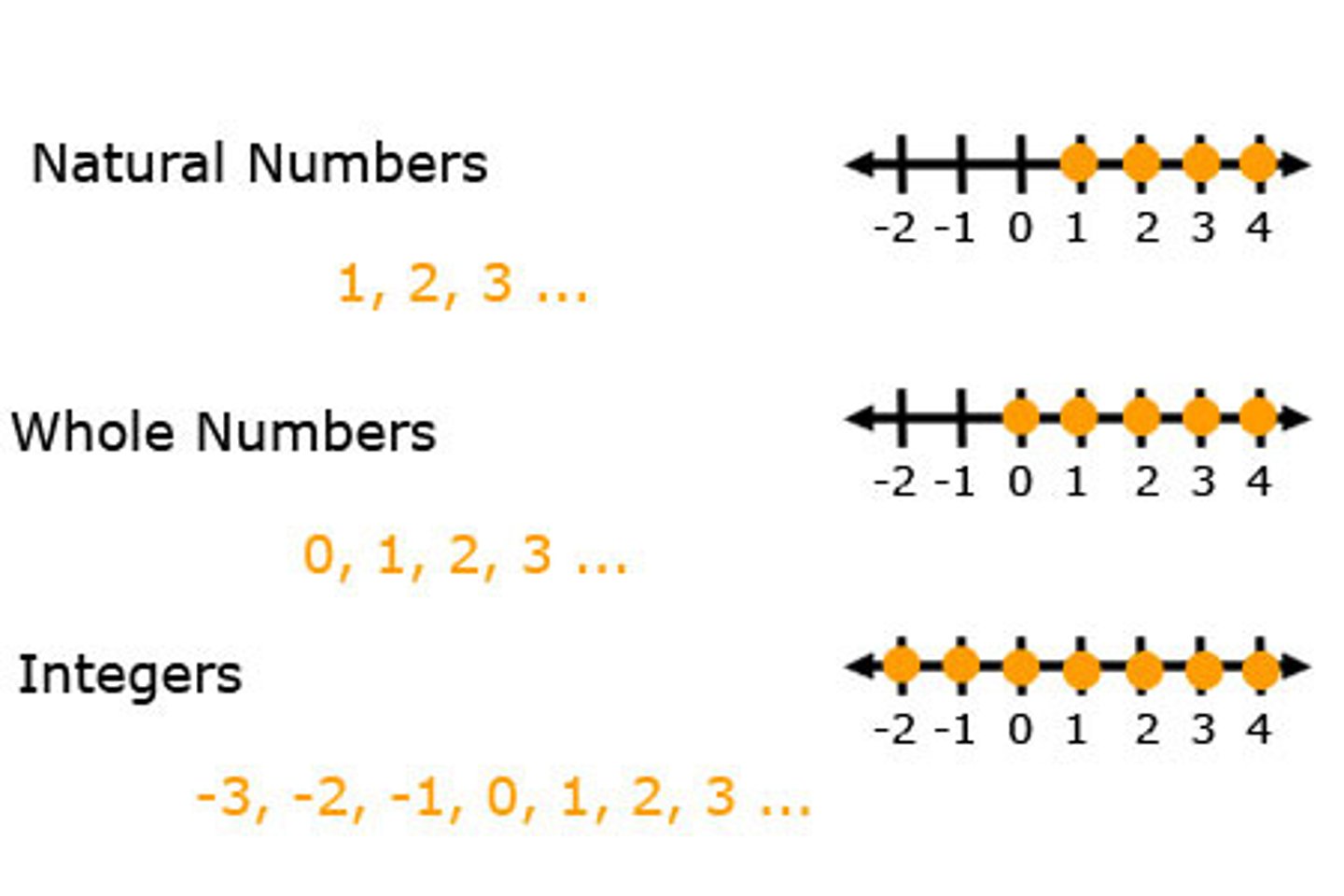
Whole Numbers
counting numbers + zero
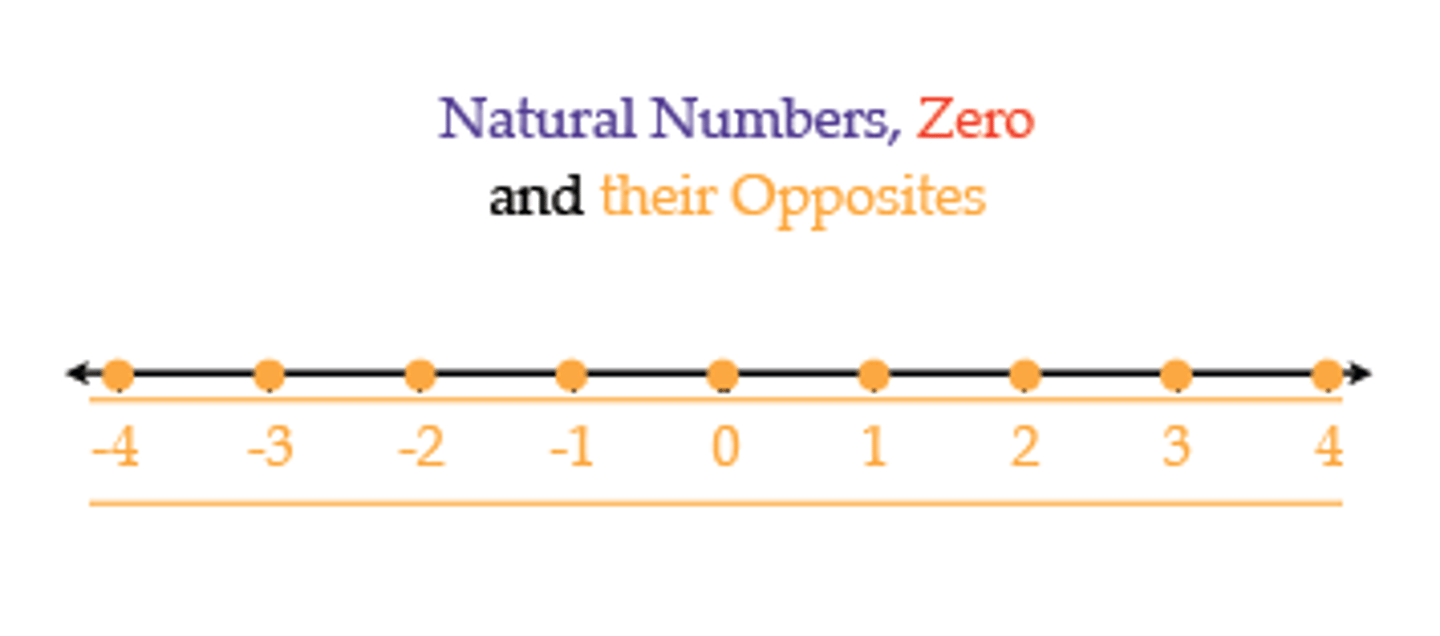
Integers
counting numbers, negative numbers, and 0
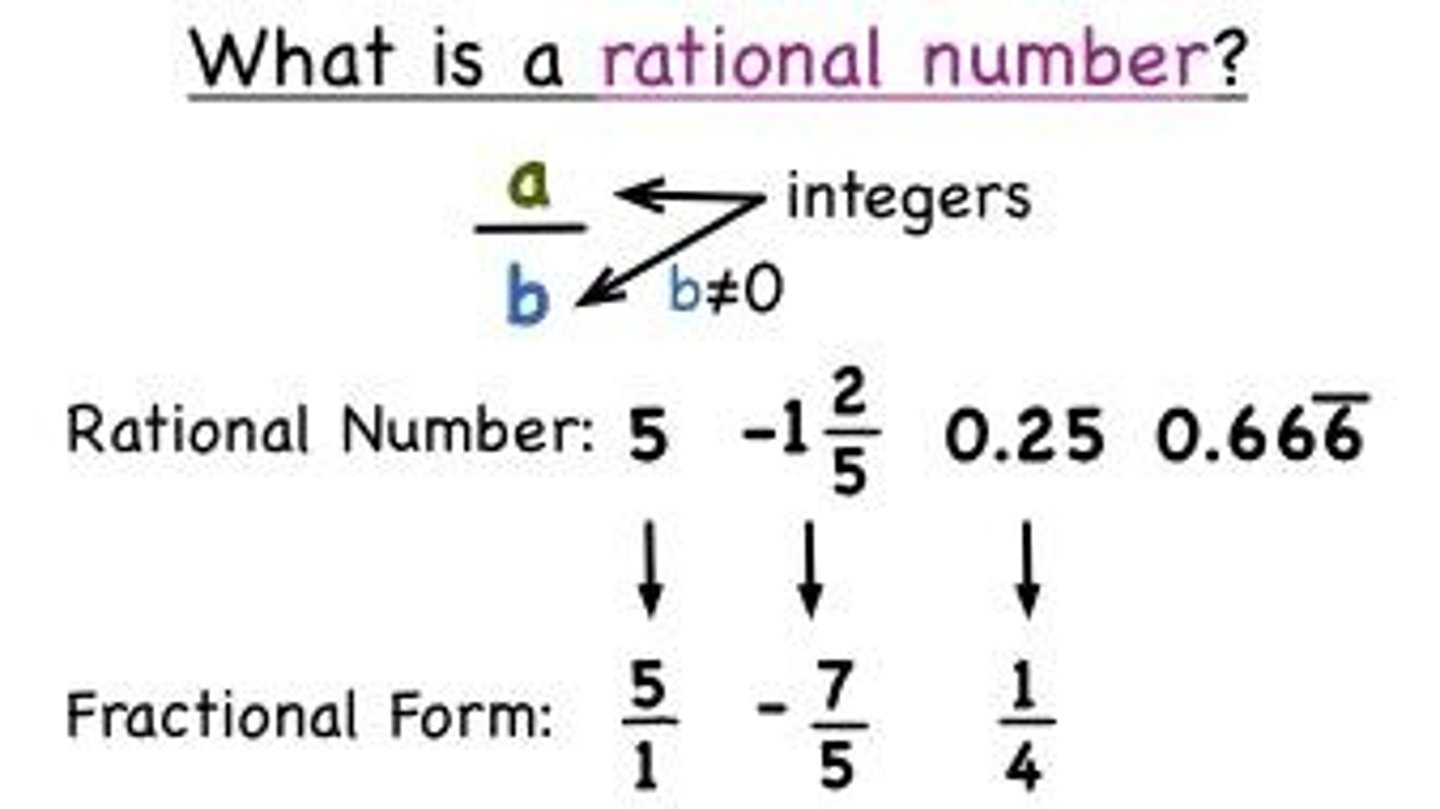
Rational Numbers
any number that can be written as a fraction.
Includes repeating decimals and decimals that terminate
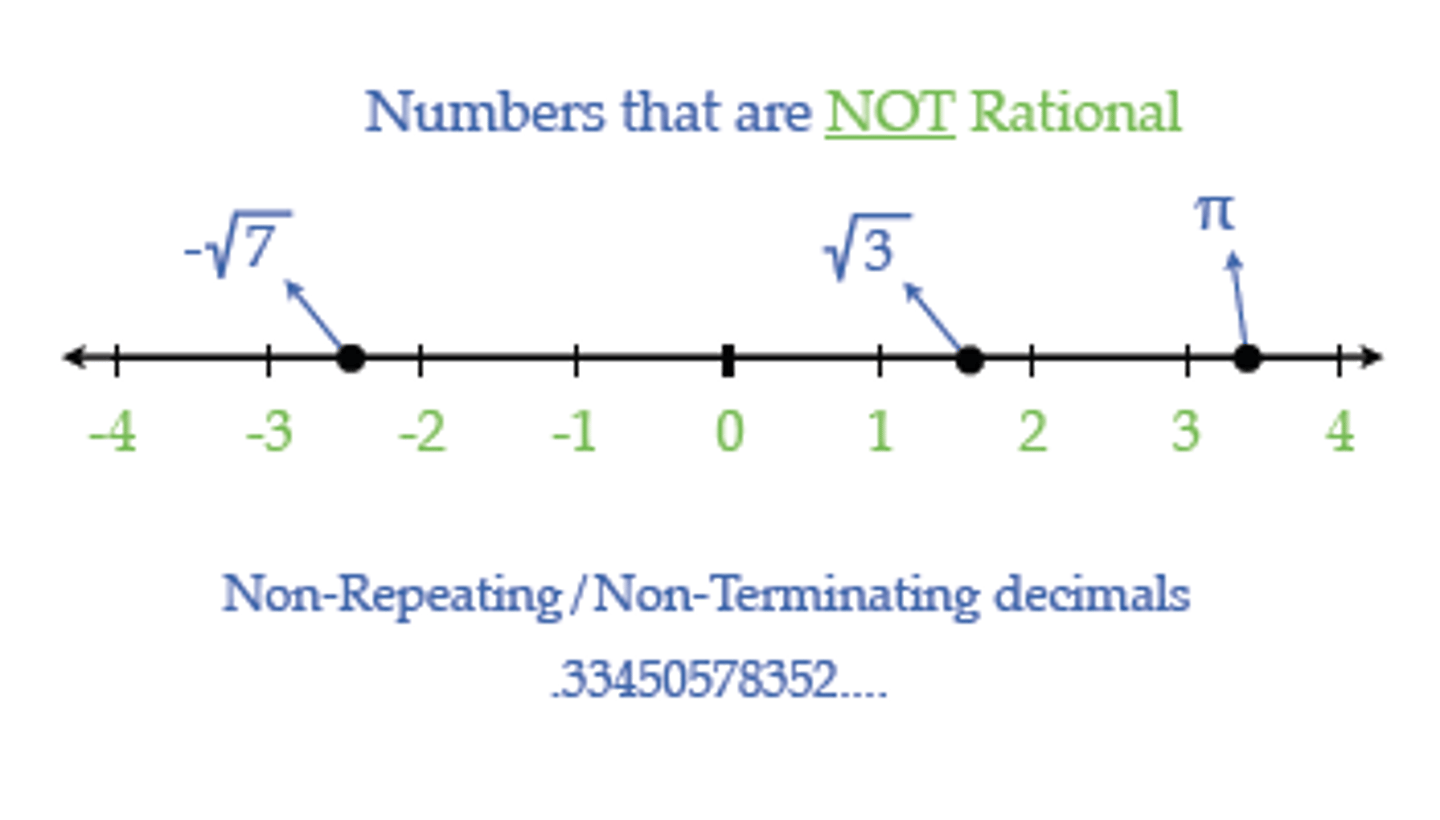
Irrational Numbers
A real number that is not rational. The decimal form neither terminates nor repeats.
Real Numbers
The set of rational numbers and irrational numbers
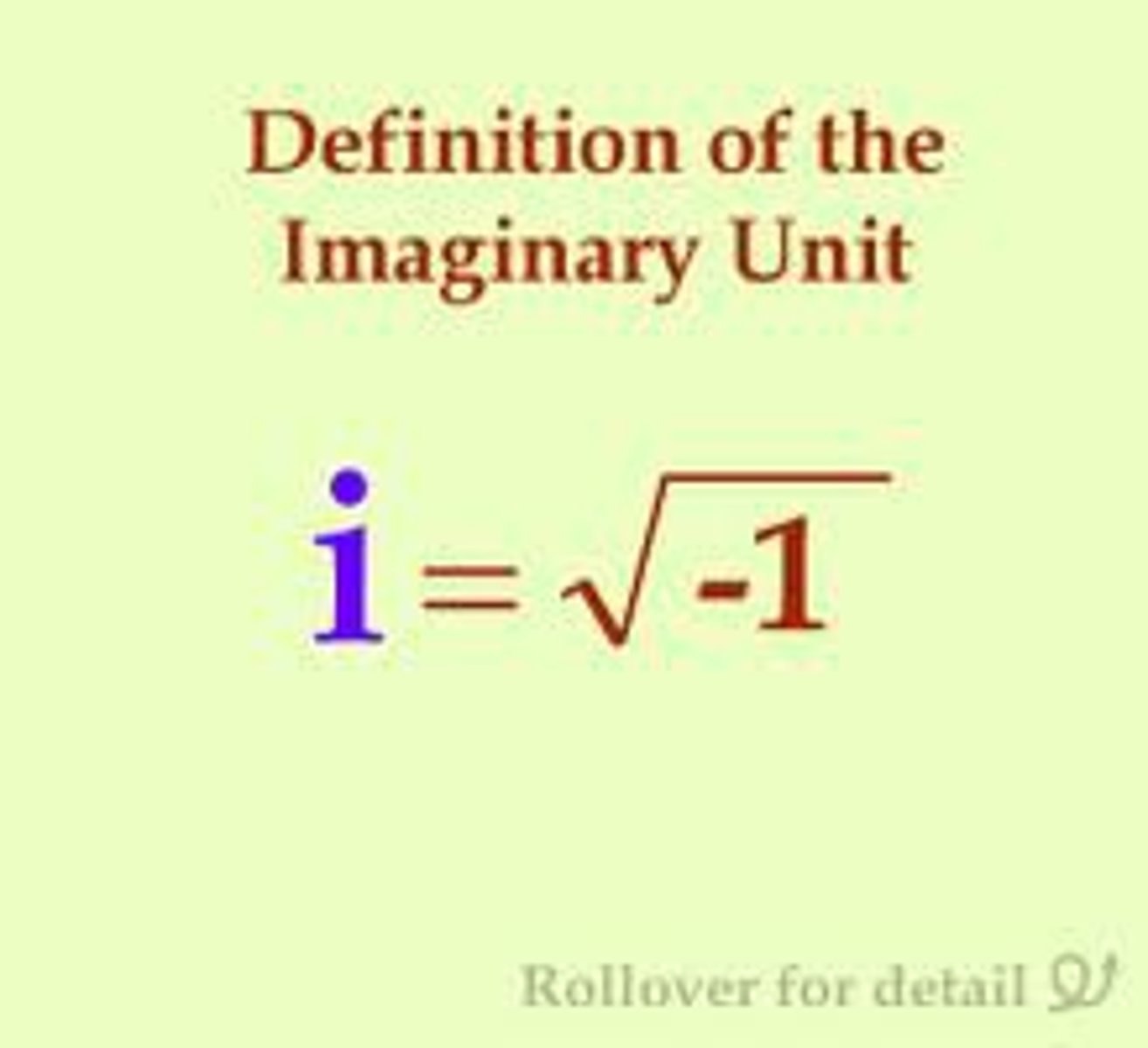
Imaginary Unit
i^2 is -1
Complex Conjugate
The complex conjugate of a + bi is a - bi.
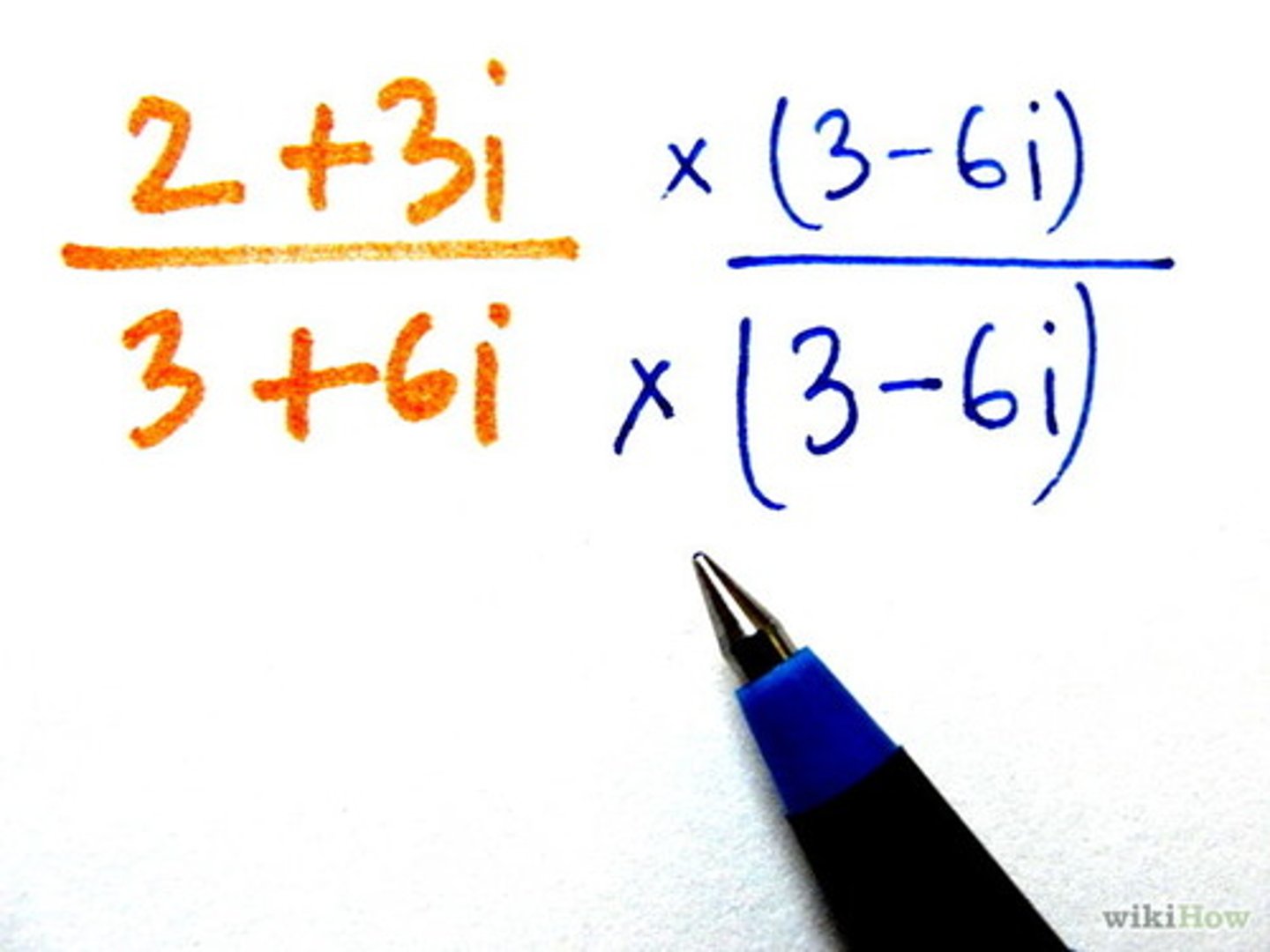
Varies Inversely
f(x)= k/x
Real Roots
any time there is a sign change from negative to positive or vice versa
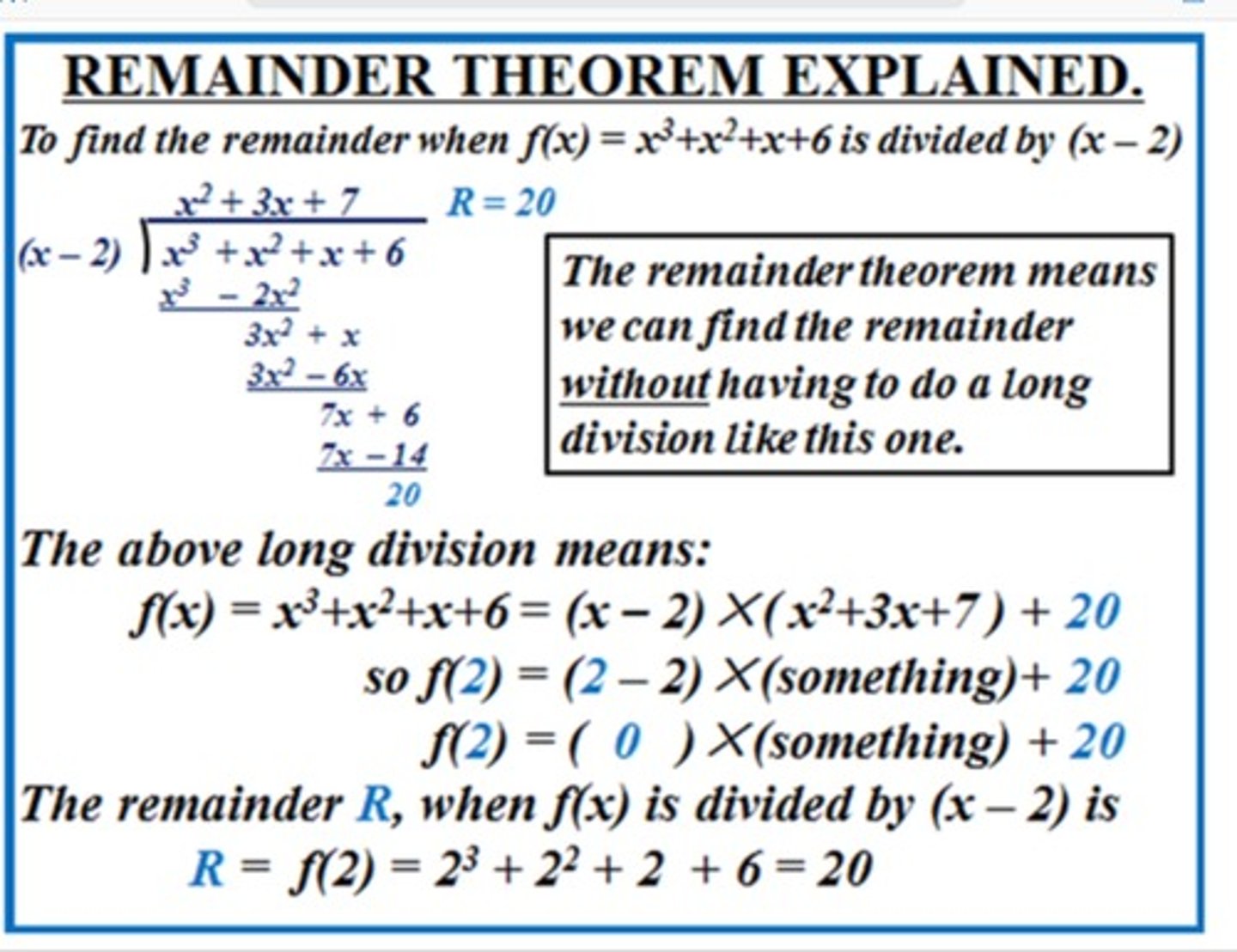
Remainder Theorem
When p(x) is divided by (x-a)
Remainder = p(a)
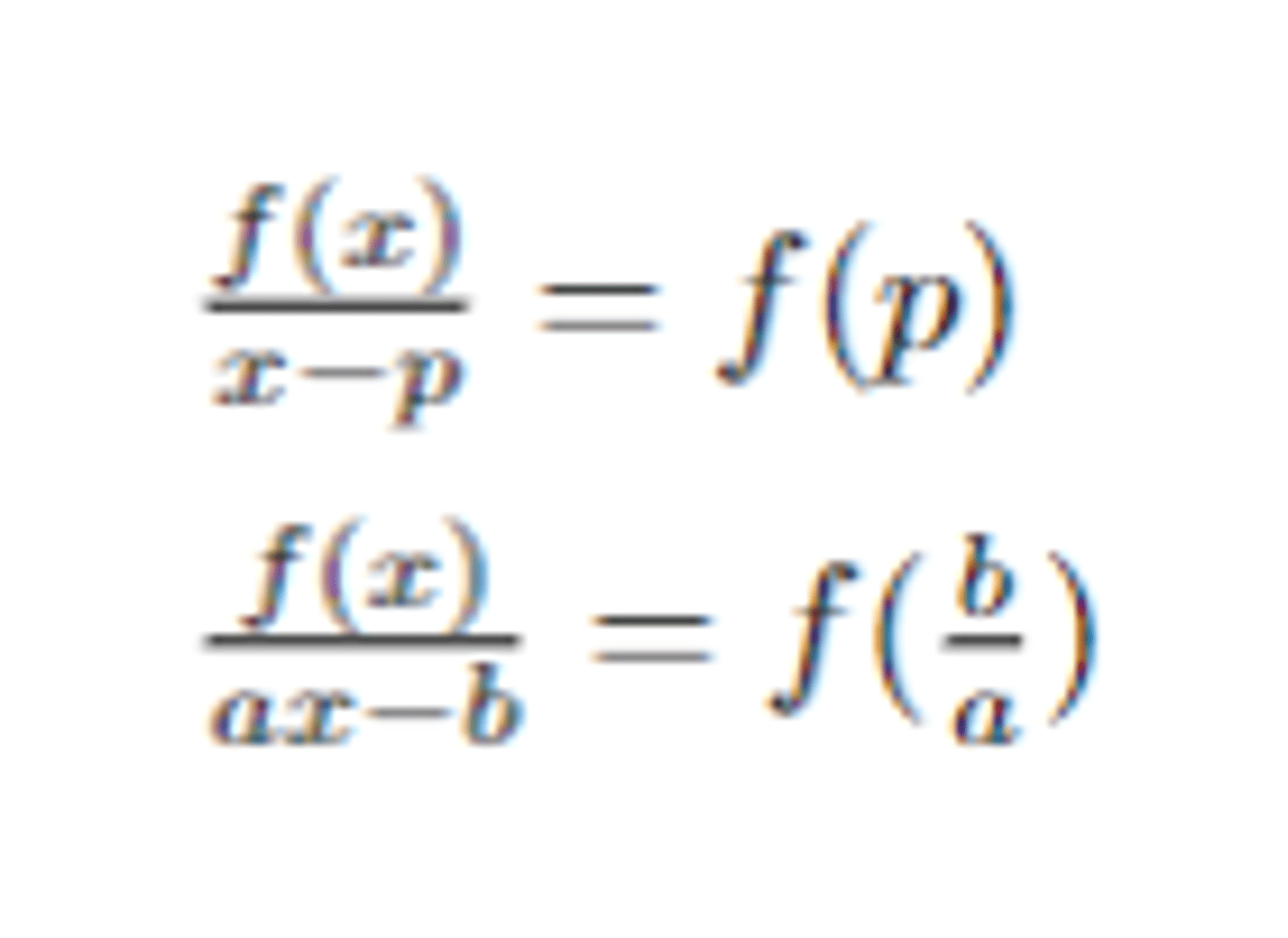
Remainder Theorem +
When p(x) is divided by (ax+b)
Remainder = p(-b/a)
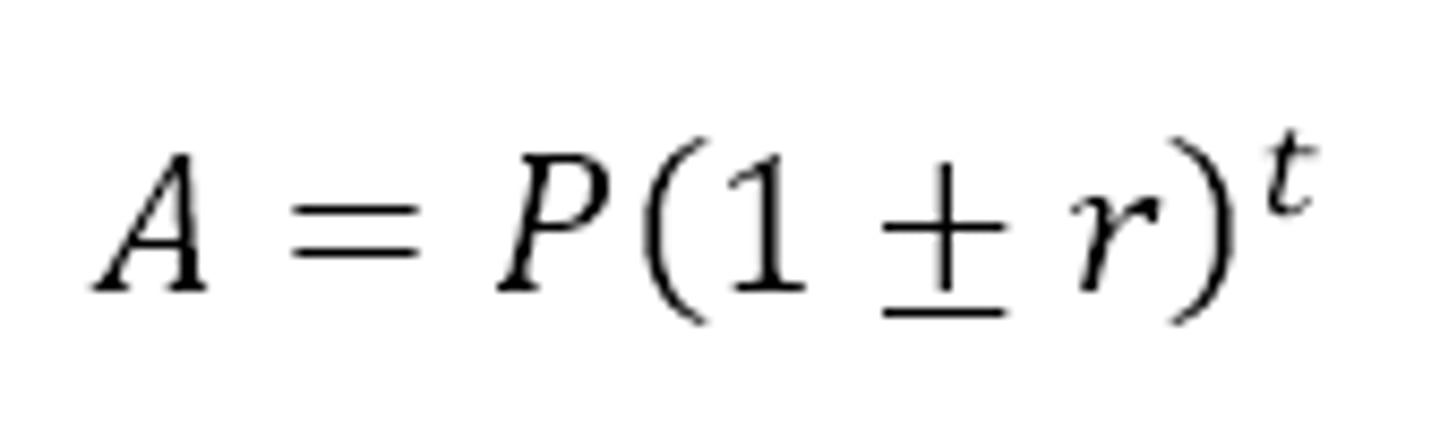
Exponential Growth
f(x) = a(1+r)^t
a = initial amount
r- rate of growth in decimal
t- time
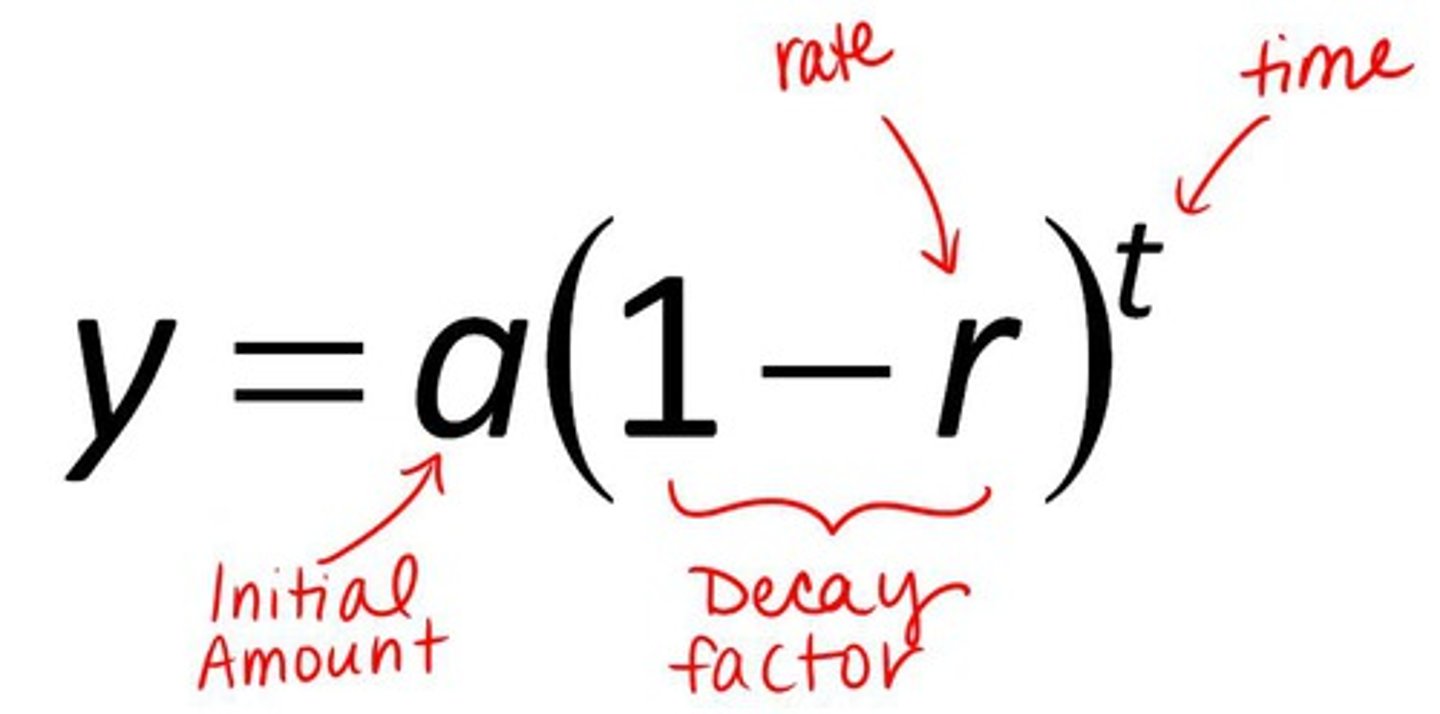
Exponential Decay
f(x) = a(1-r)^t
a = initial amount
r- rate of growth in decimal
t- time
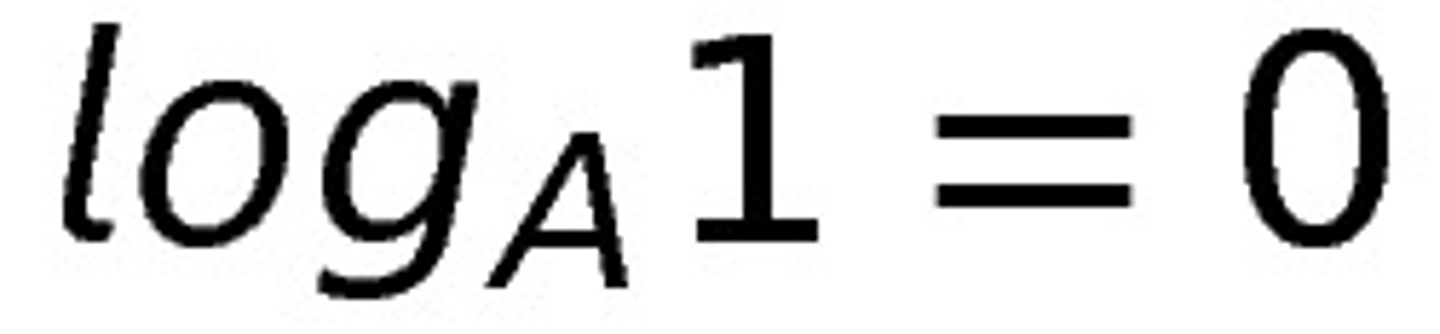
Log of 1
log of 1 = 0
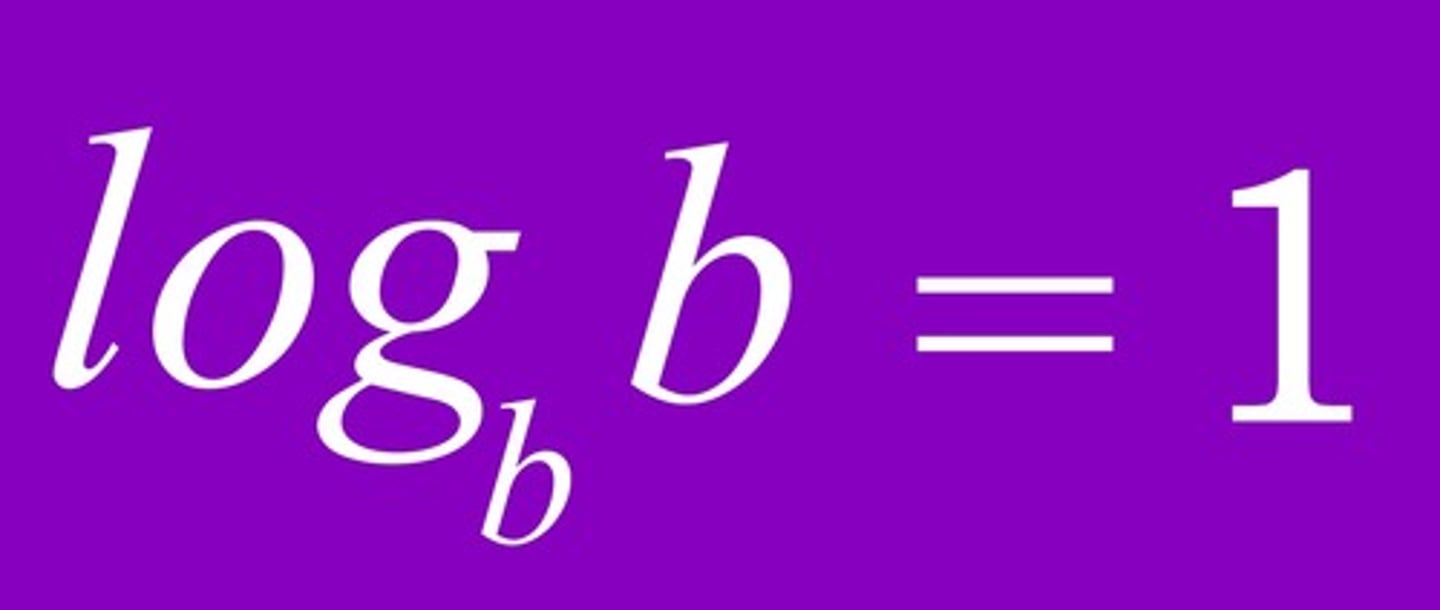
Log of the Same Number as Base
log with same base as number = 1
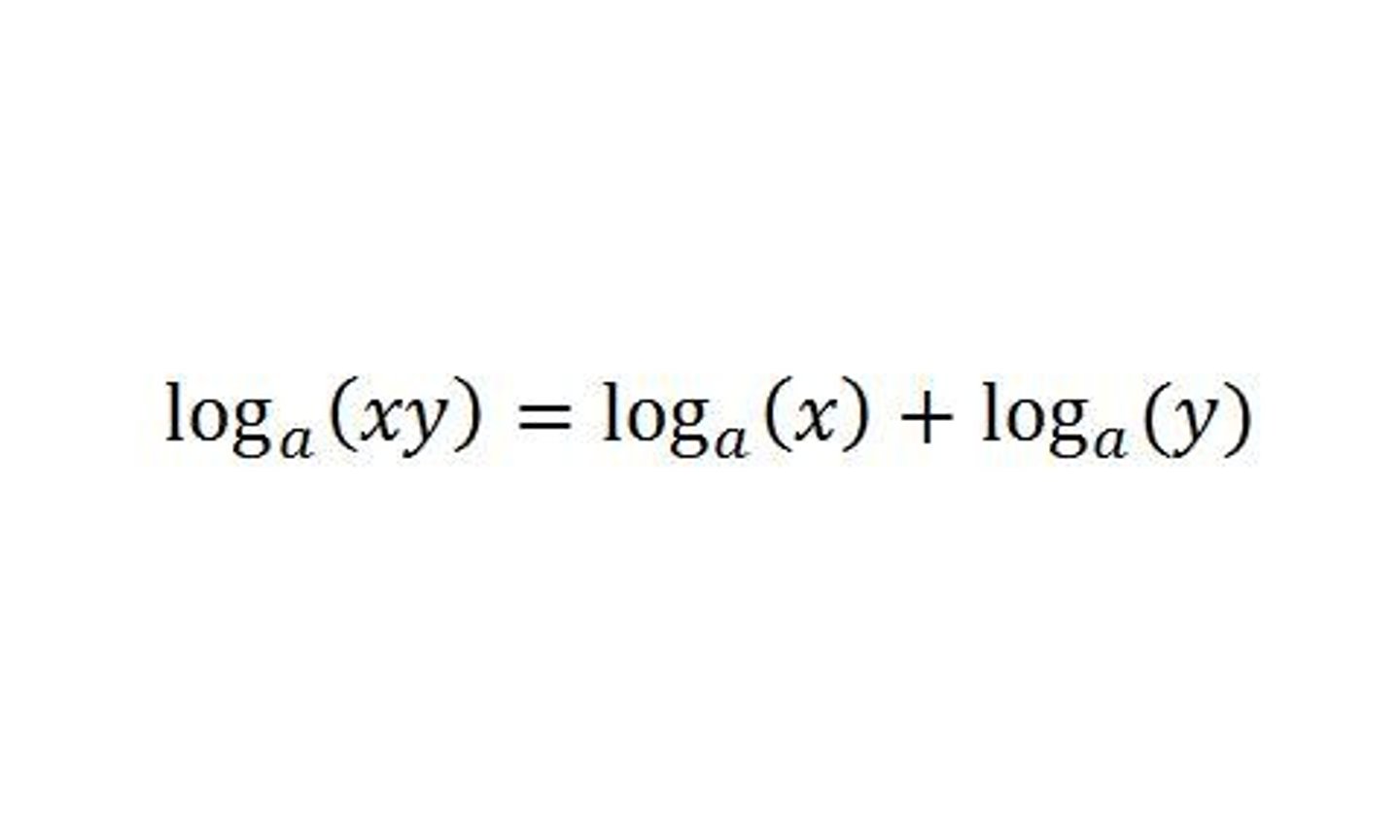
Log Product Rule
logb(x ∙ y) = logb(x) + logb(y)
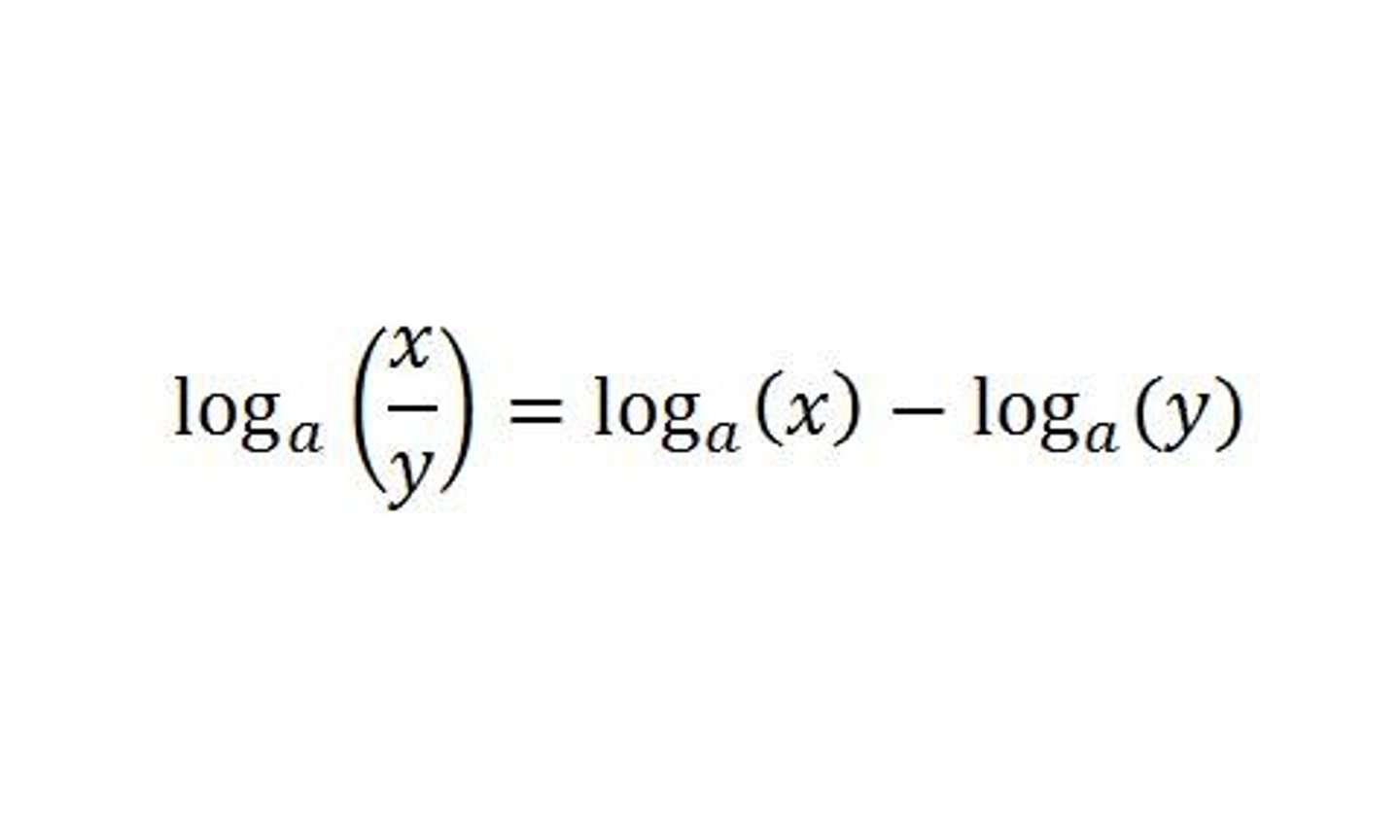
Log Quotient Rule
log (x/y) = log x - log y
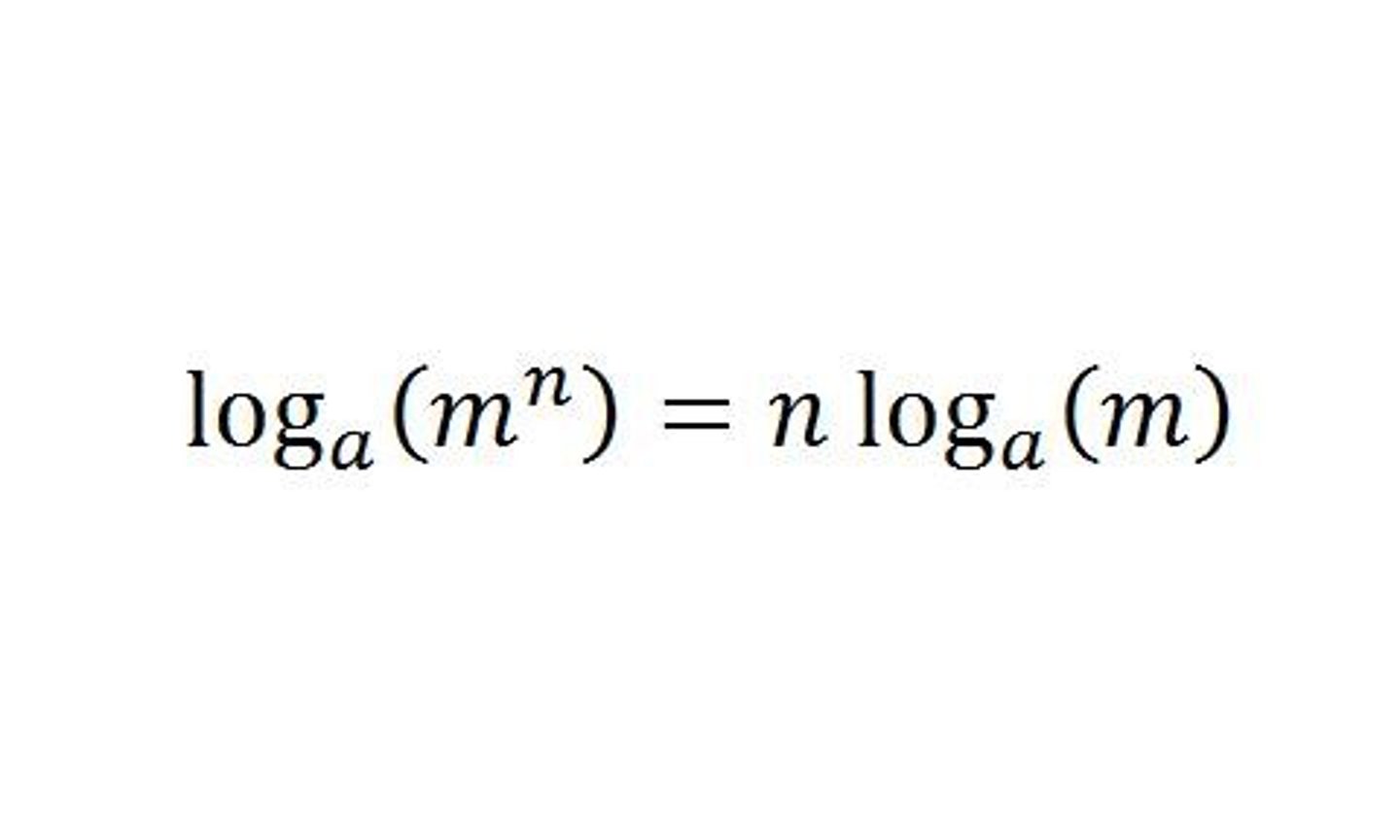
Log Power Rule
logb(x^y) = y ∙ logb(x)
Log Change of Base Rule
logb𝑏 a = [logc𝑐 a] / [logc𝑐 b]
![<p>logb𝑏 a = [logc𝑐 a] / [logc𝑐 b]</p>](https://knowt-user-attachments.s3.amazonaws.com/5baf151b-e1c5-45d9-aaaf-3993cb801675.png)
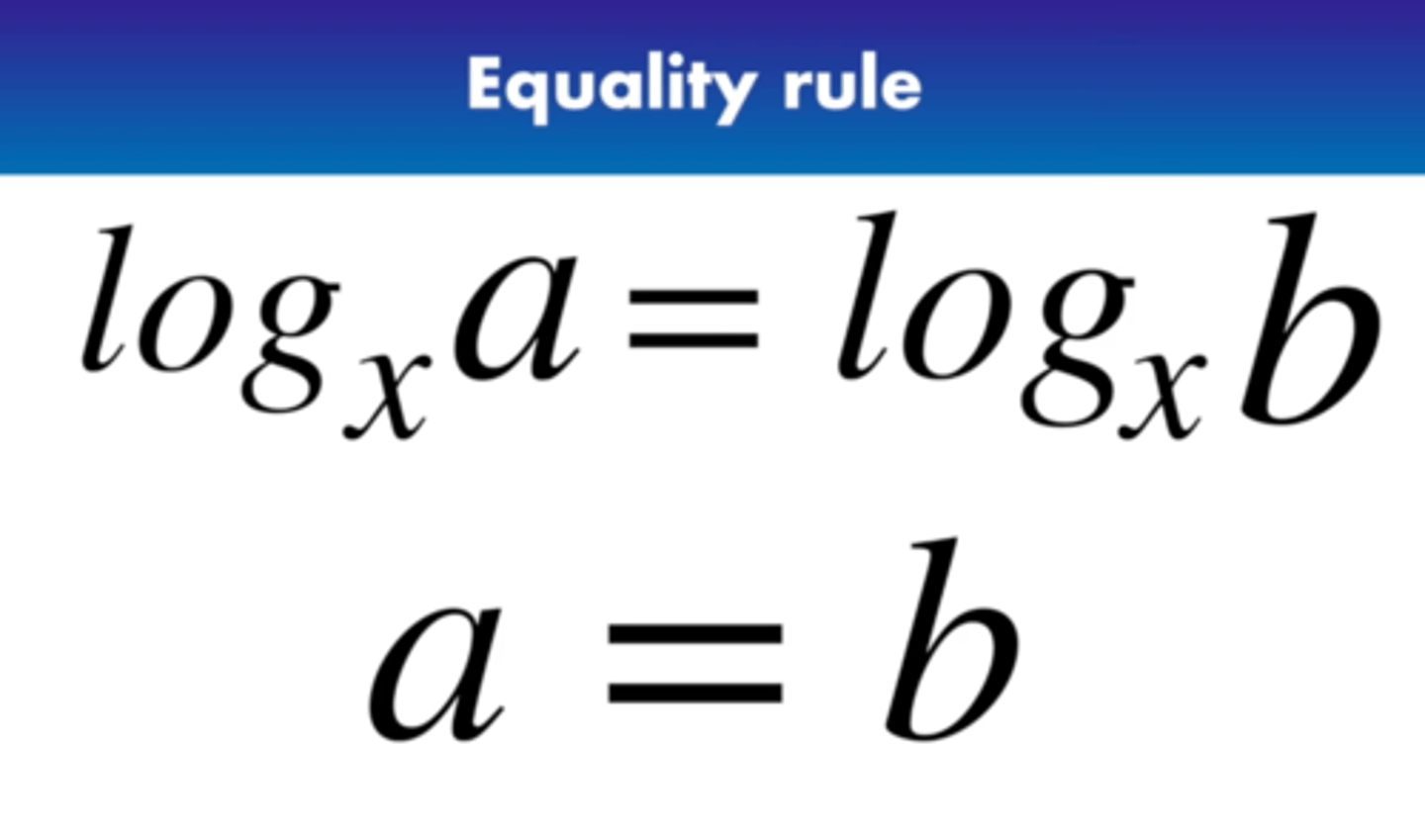
Log Equality Rule
if you have two logarithms with the same base that are equivalent, then what is inside the logarithms are equivalent to each other
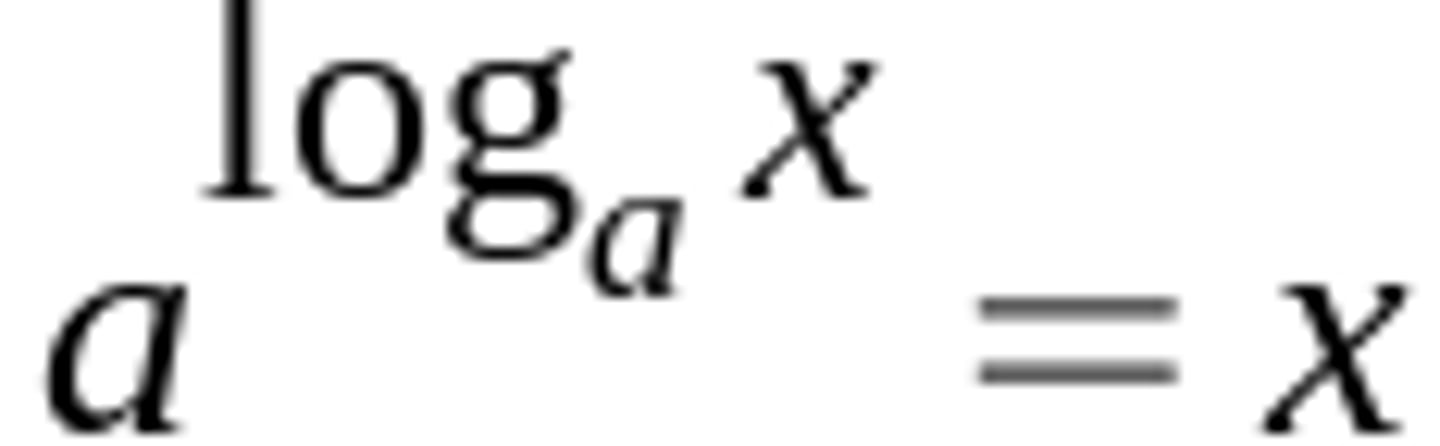
Number Raised to Log
If you raise a number to the power of a logarithm that has that number as its base, it is equal to the number that you used in the logarithm.
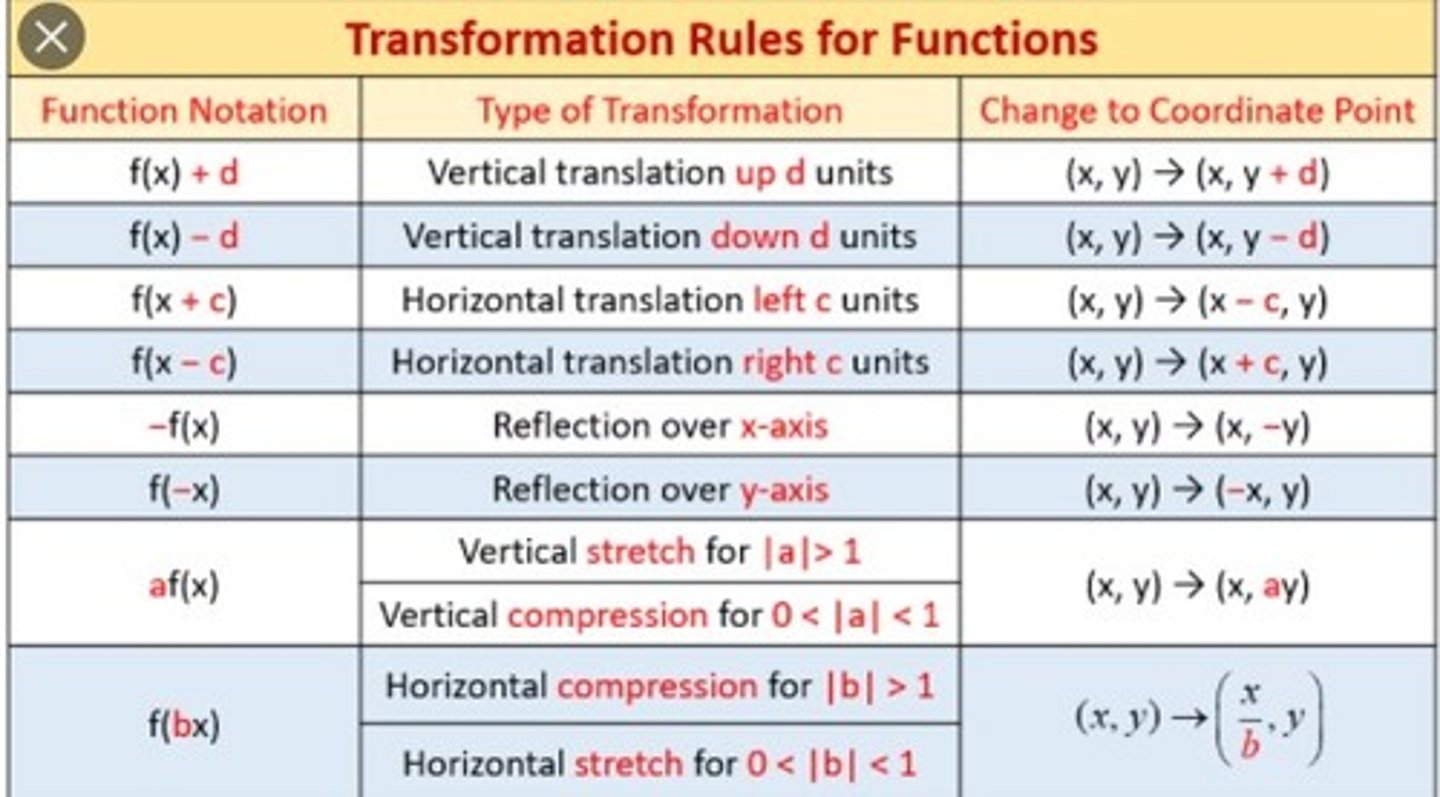
Transformation Rules
y = af(bx + c) + d
c: horizontal shift (subtract c from the x-value)
a: veridical dilation (multiply the y-value by a)
b: horizontal dilation (divide the x-value by b)
d: vertical shift (add d to the y-value)
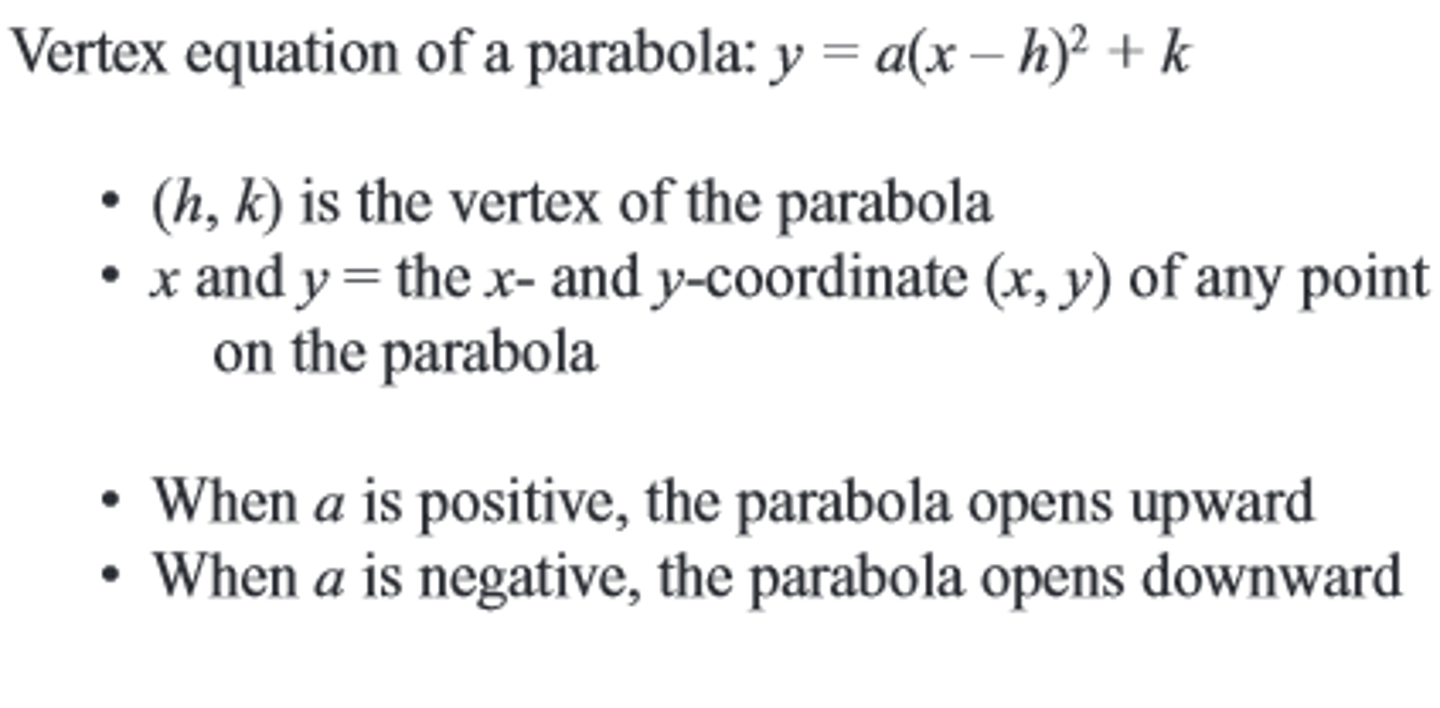
Quadratic Vertex Form
y=a(x-h)^2+k
To find the (x) of the vertex use -b/2a
from the standard form of y=ax^2+ bx + c
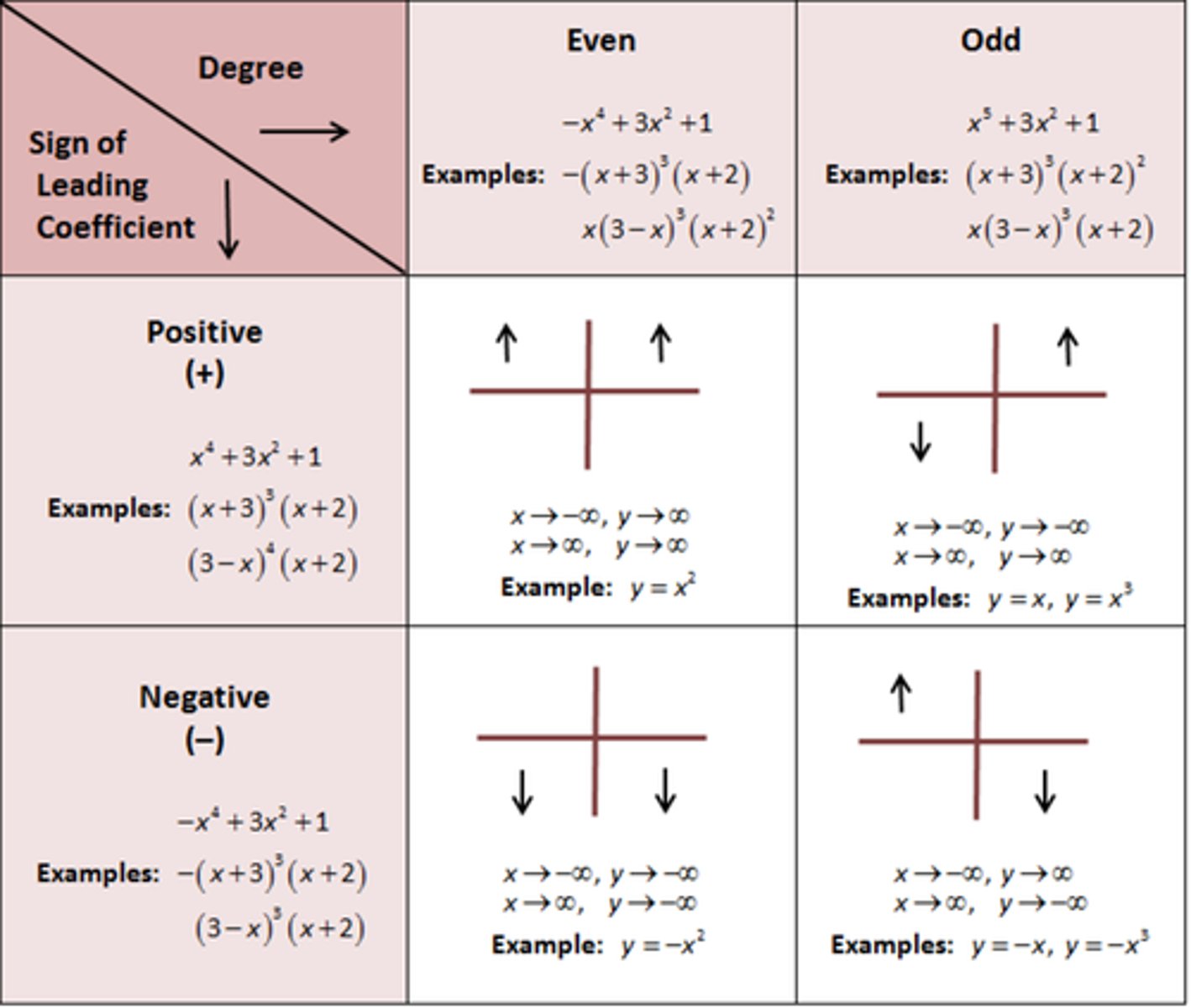
End Behavior Rules
Even + Positive = 2 up
Even + Negative = 2 Down
Odd + Positive = down + up
Odd + Negative = up + down
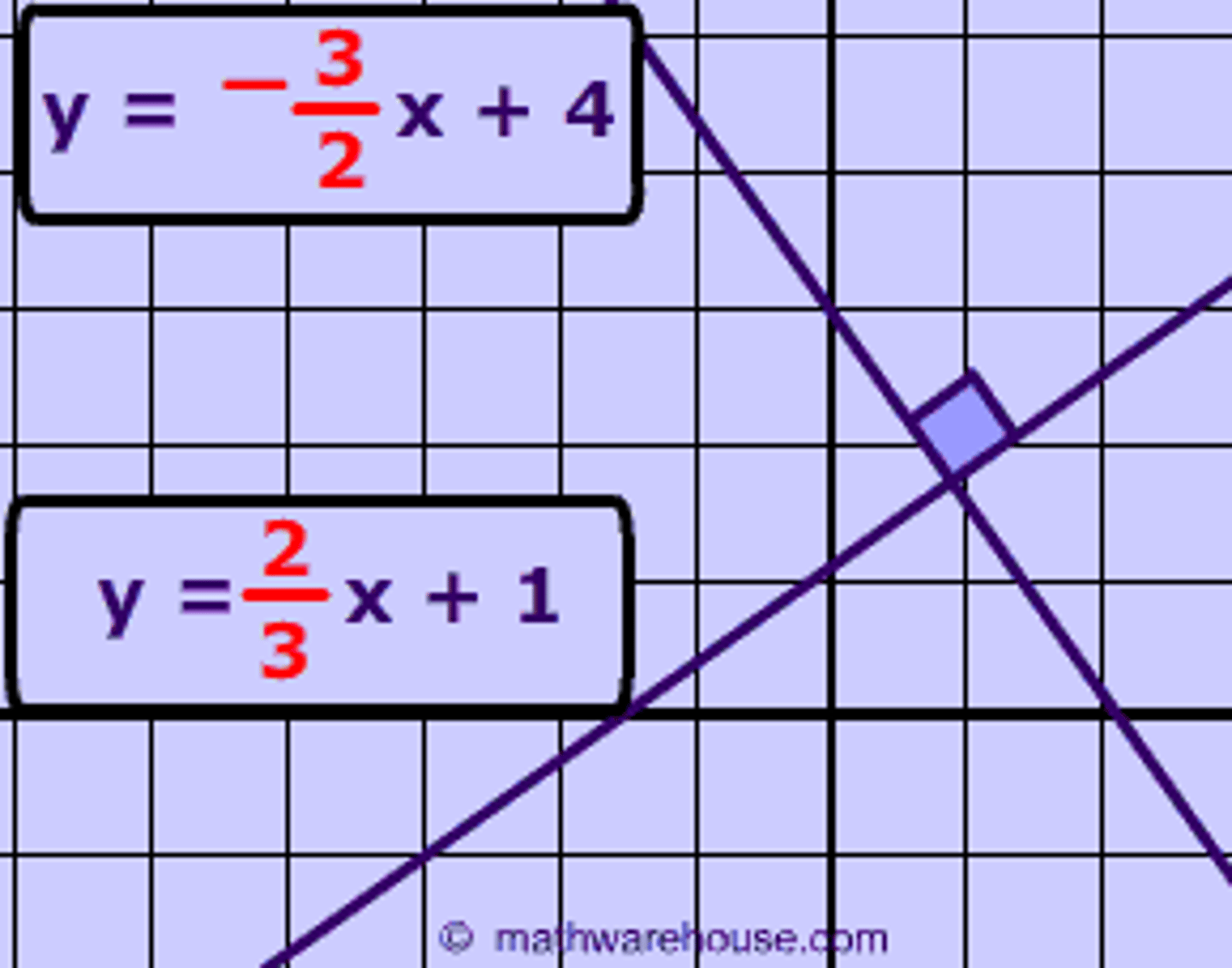
Perpendicular Slope
Perpendicular lines have slopes that are the opposite and the reciprocal of the original slope Normal: 1/2 Perpendicular: -2
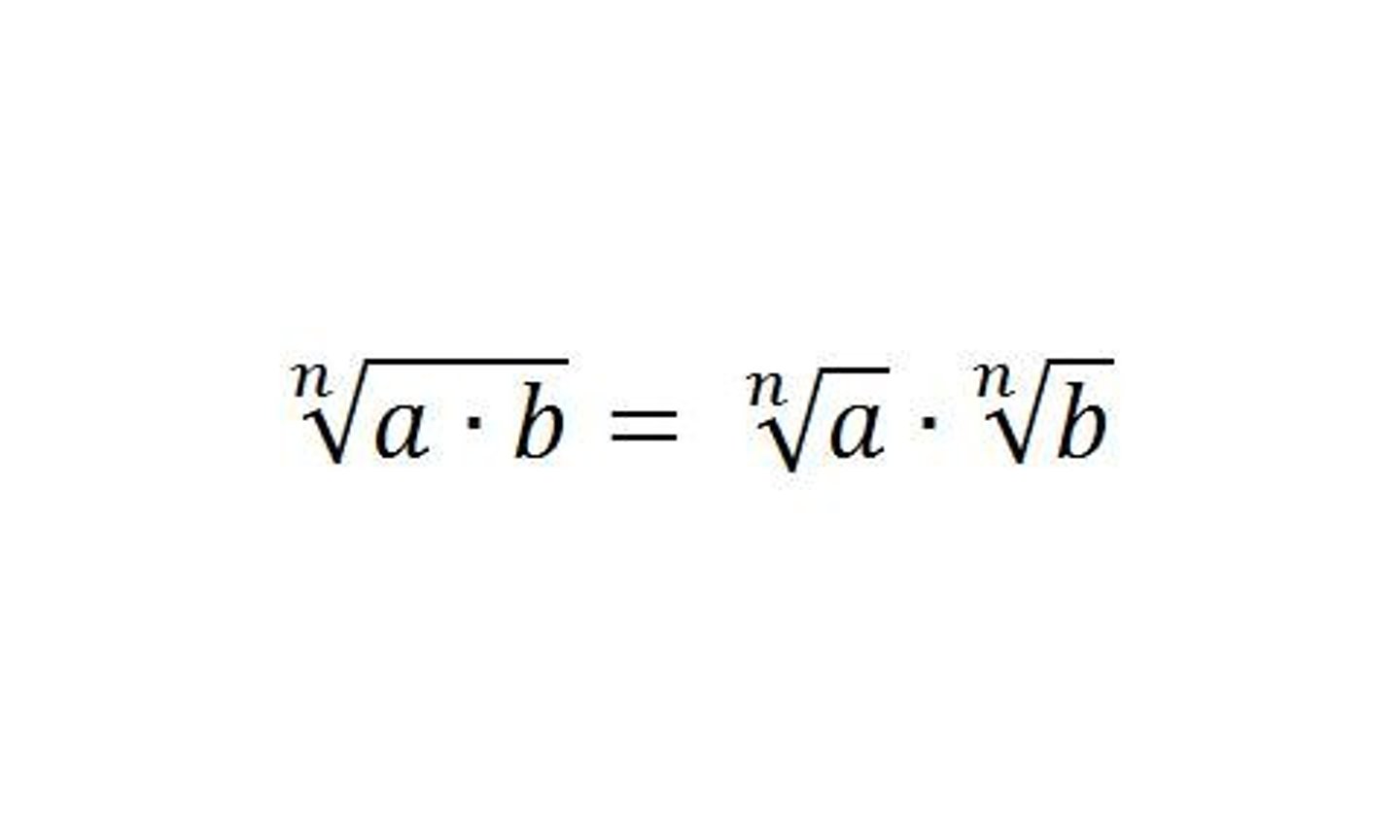
Product Rule for Radicals
the radical of the product of two numbers is equal to the product of the radicals of the same two numbers
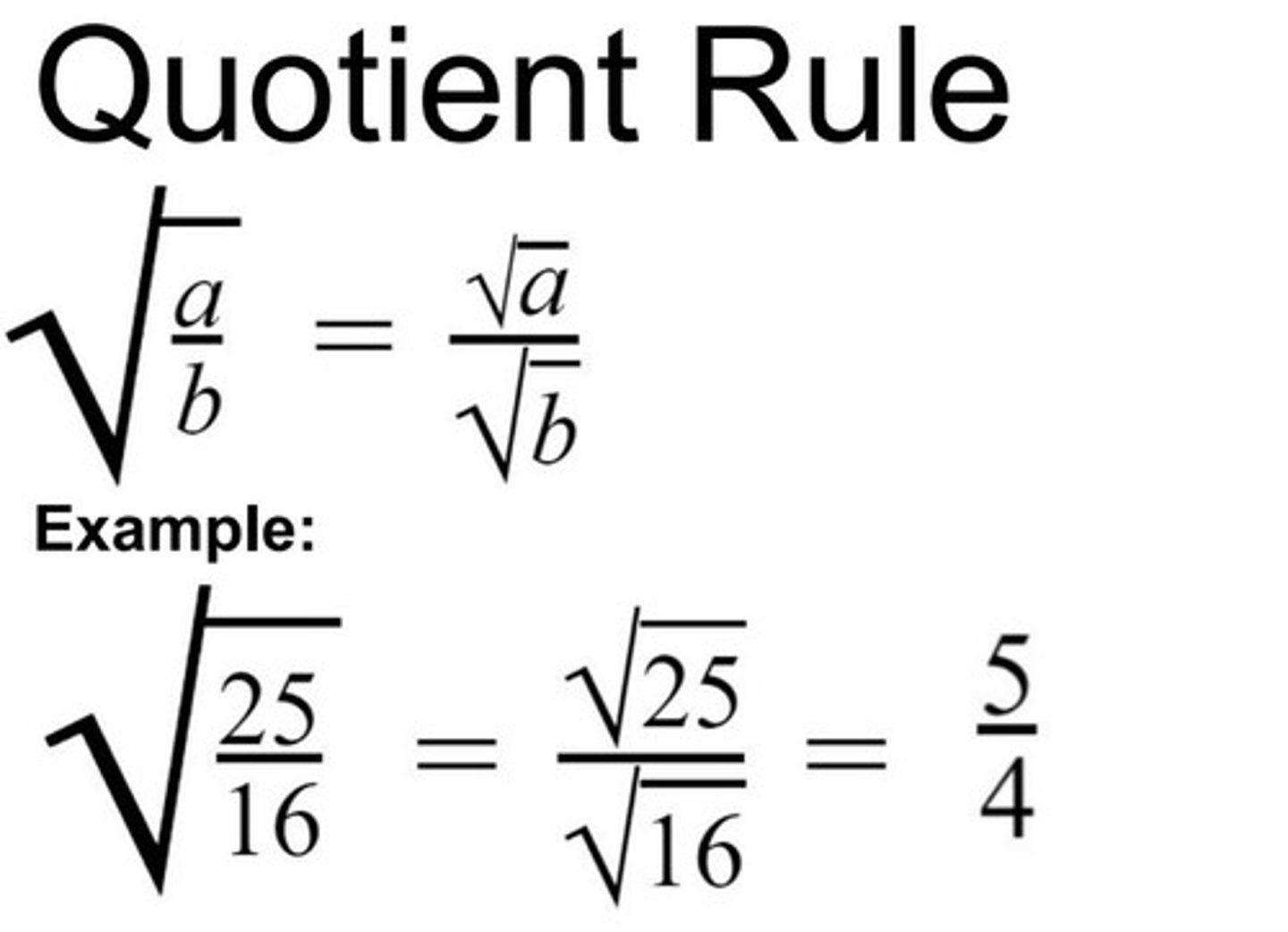
Quotient Rule for Radicals
When two radicals are divided that have the same index they may be combined as a single radical having that index and radicand equal to the quotient of the two radicands
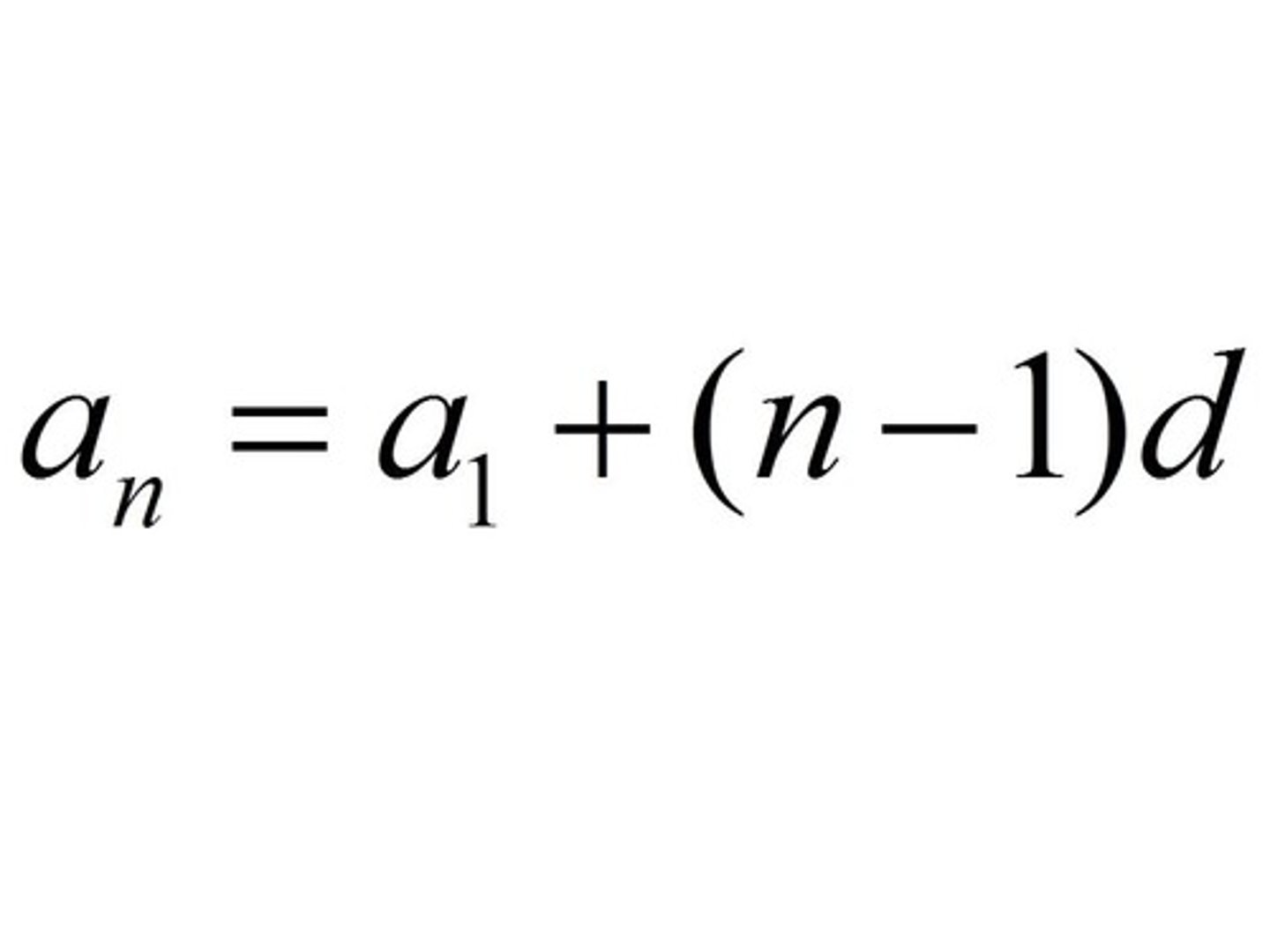
Arithmetic Sequence
an=a1+(n-1)d
a1= first term
d= common difference between 2 terms
n= number of terms
an= nth term
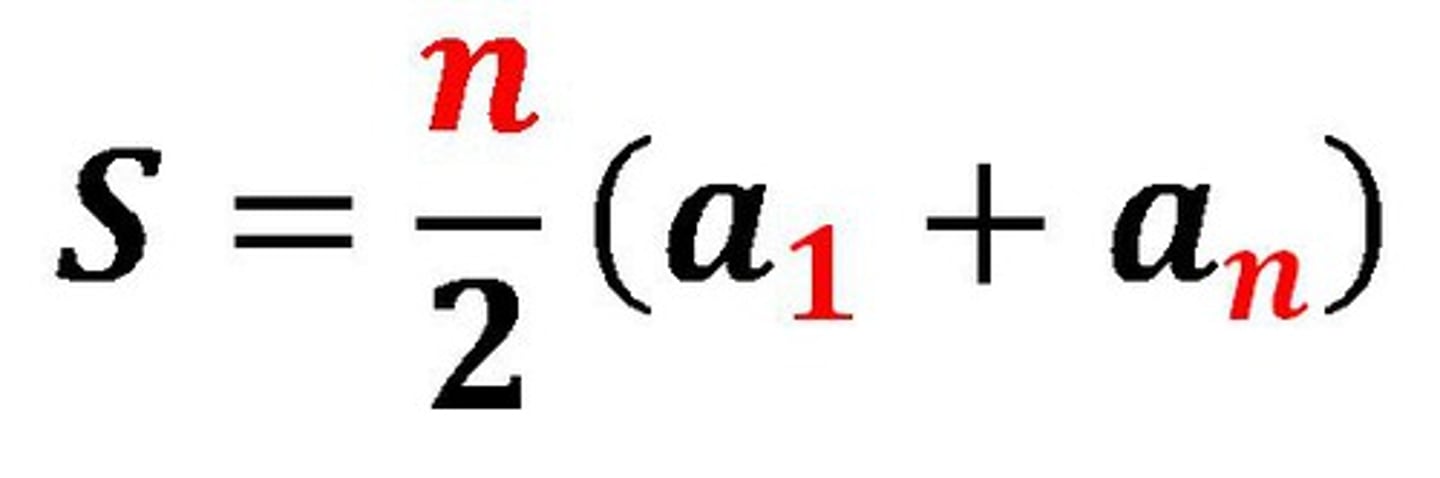
Sum of Arithmetic Sequence
S = (n/2) (a1 + an)
a1= first term
an= last term
n= total number of terms
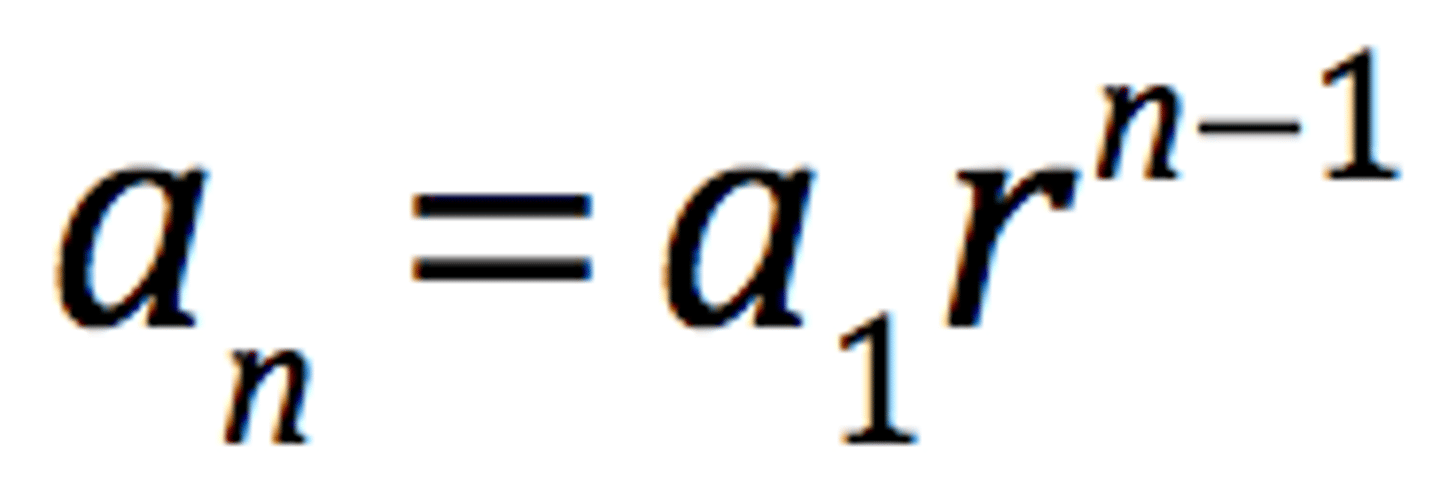
Geometric Sequence
an=a1(r)^n-1
a1= first term
r= difference between 2 terms
n= term you want to find out
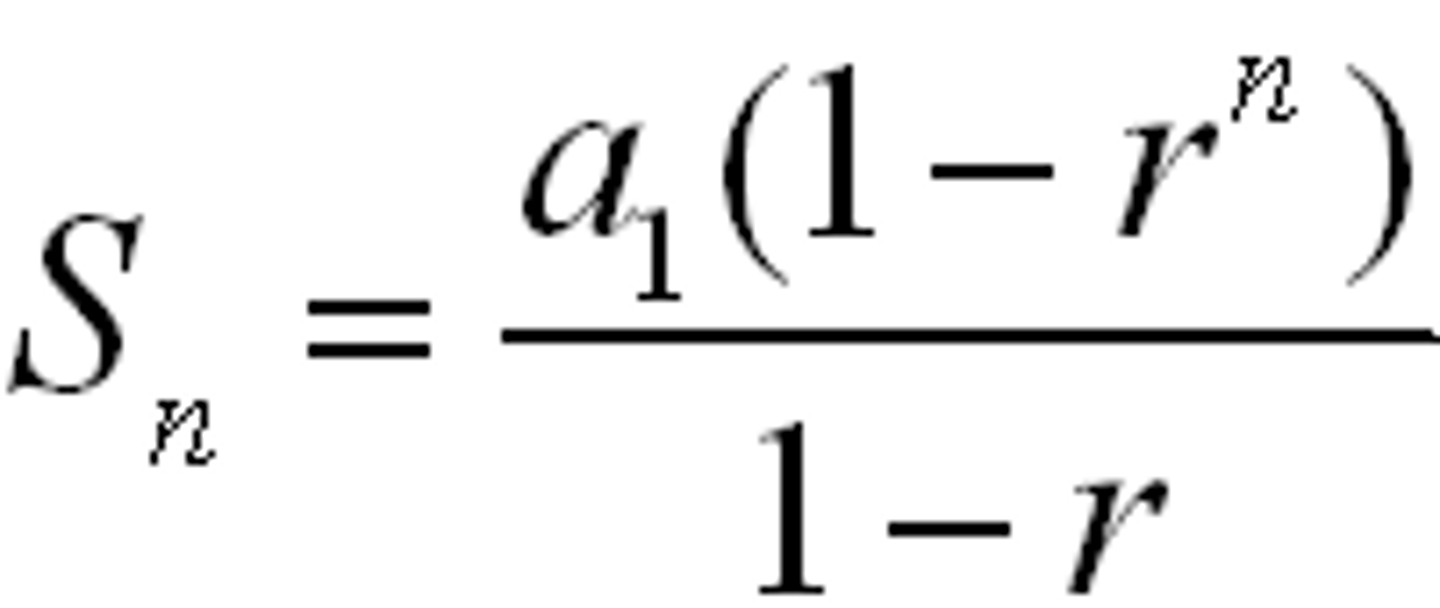
Sum of Geometric Sequence
Sn=a1(1-r^n)/1-r
a1= first term
r= difference between 2 terms
n= term you want to find out
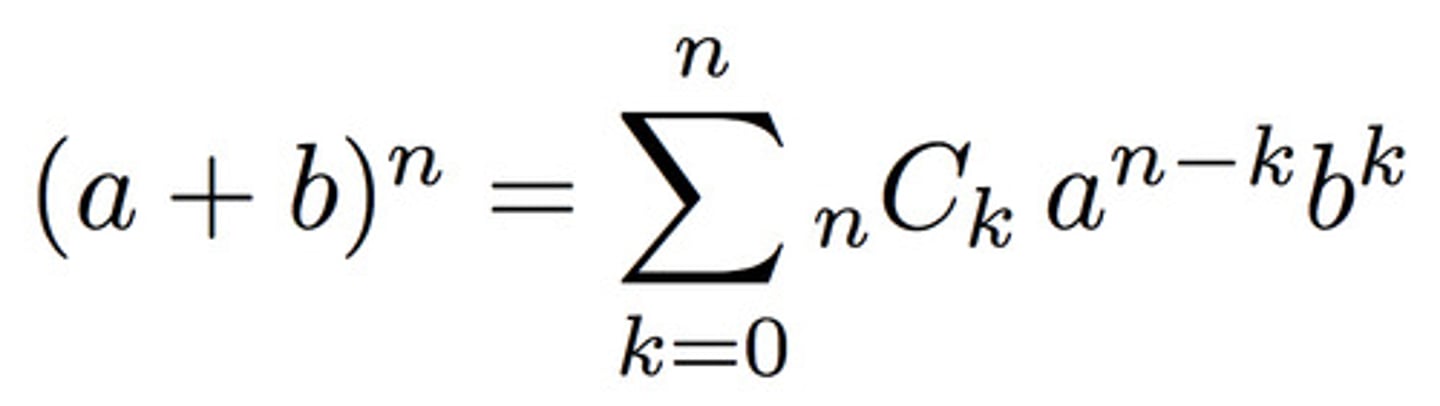
Binomial Theorem
Expand (x+3)^5
Step 1: x term in descending order
Step 2: 3 term in ascending order
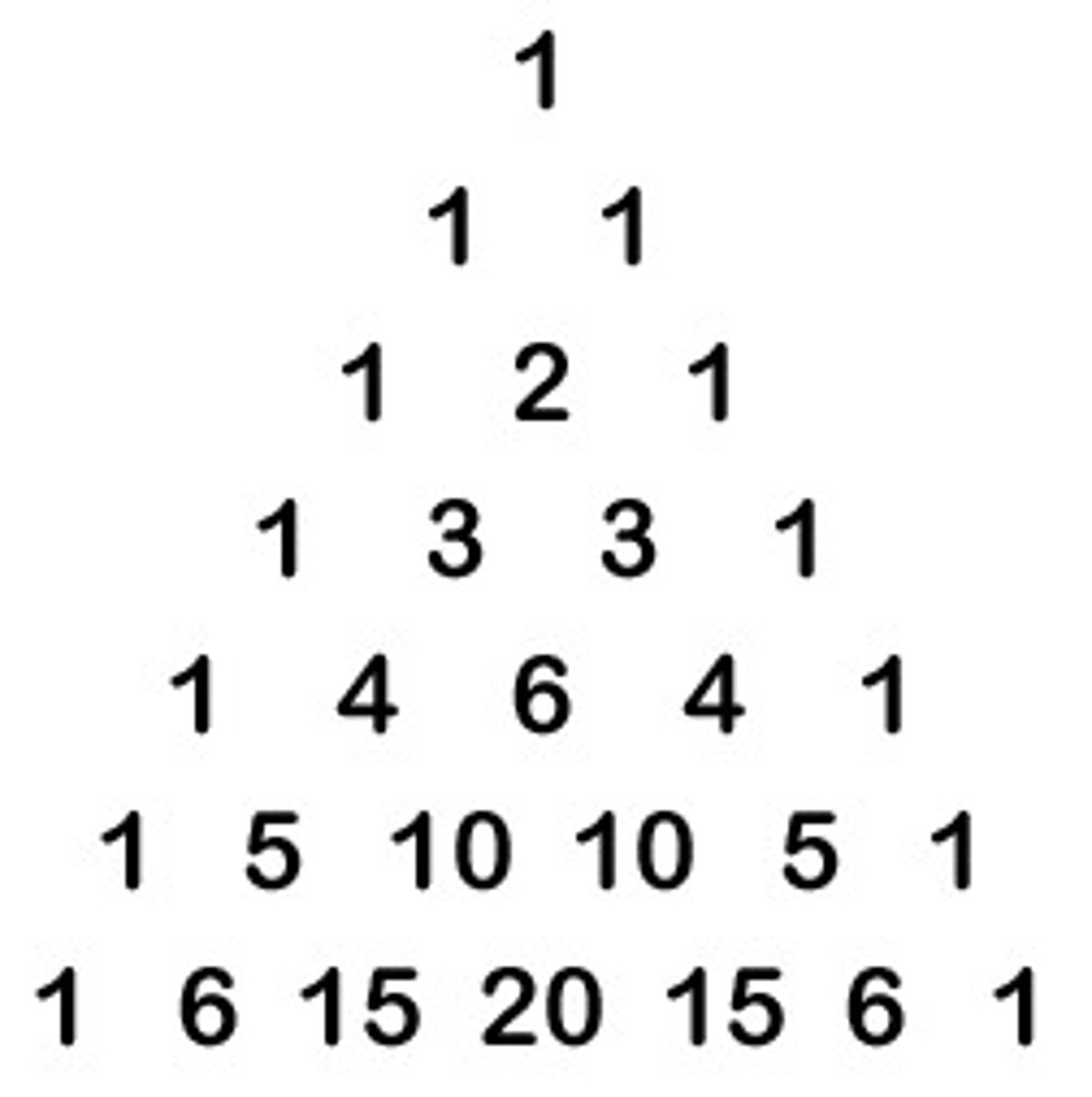
Step 3: Coefficient (nCk or pascals triangle)
First + last terms will always be 1
Second + second to last terms will always be you exponent (in this case 5)
Step 4: simplify terms
Pascal's Triangle
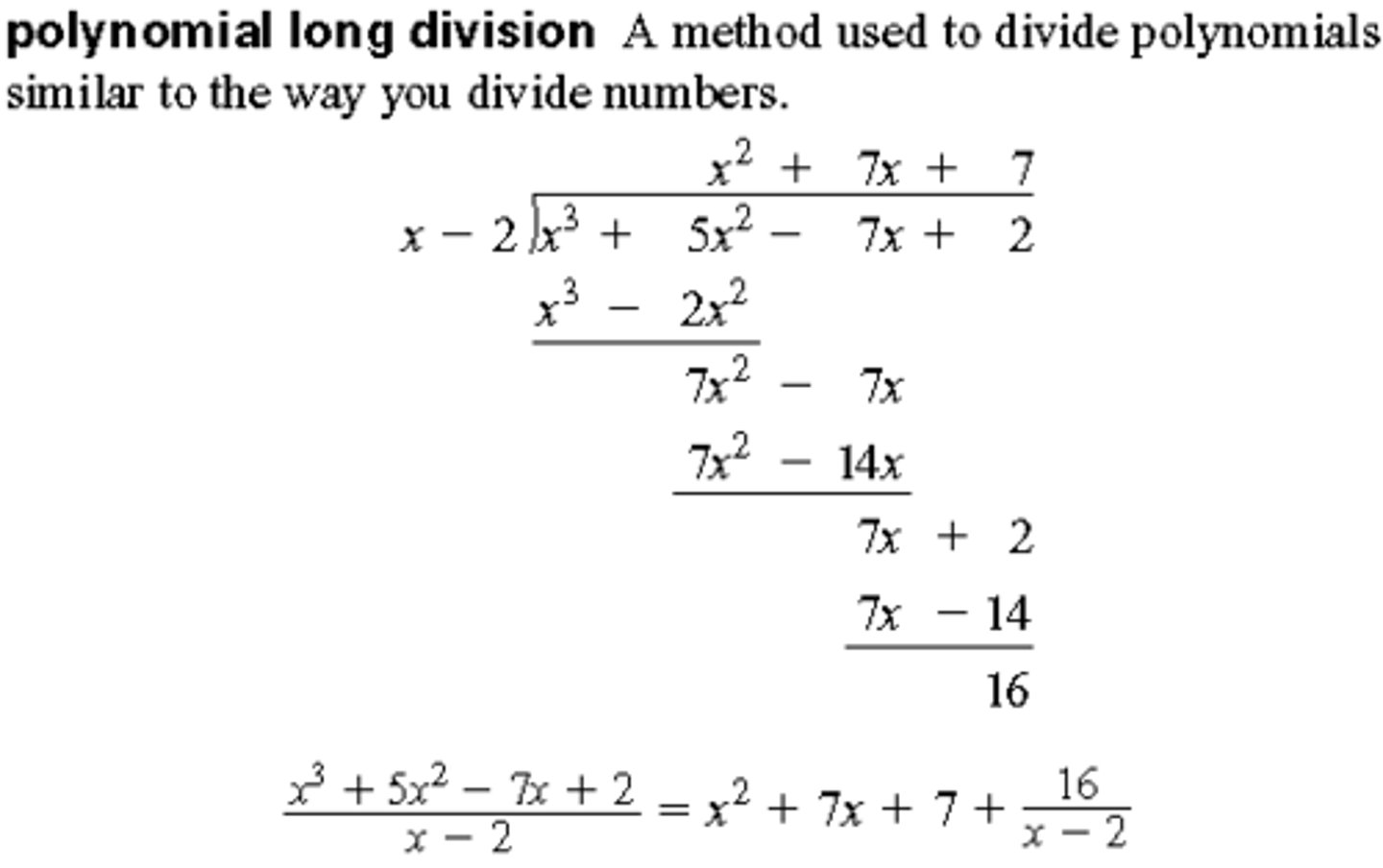
Polynomial Long Division
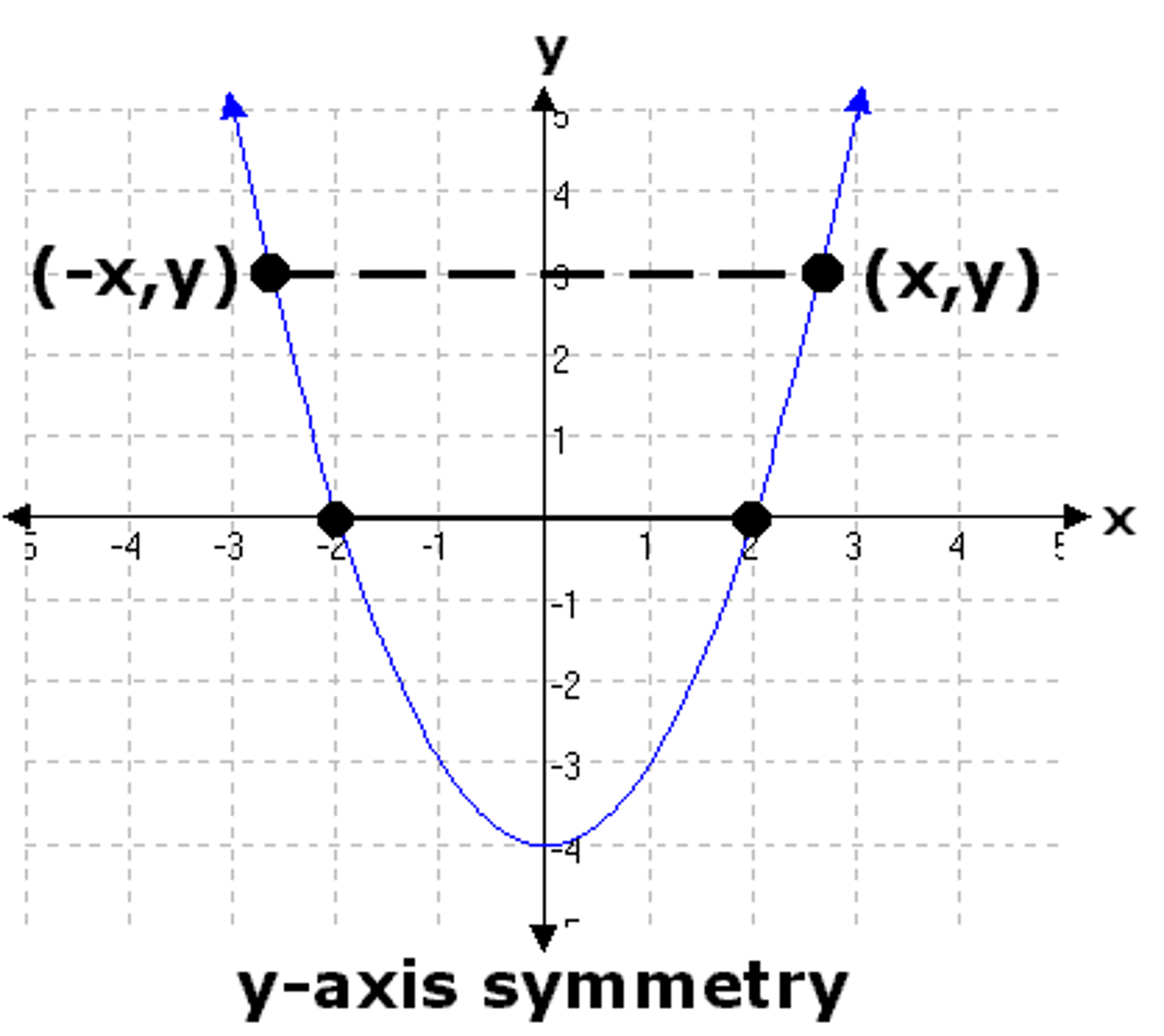
Even Function
Even Function: f(−x)= f(x)
Negate the x value, y value is the same for both
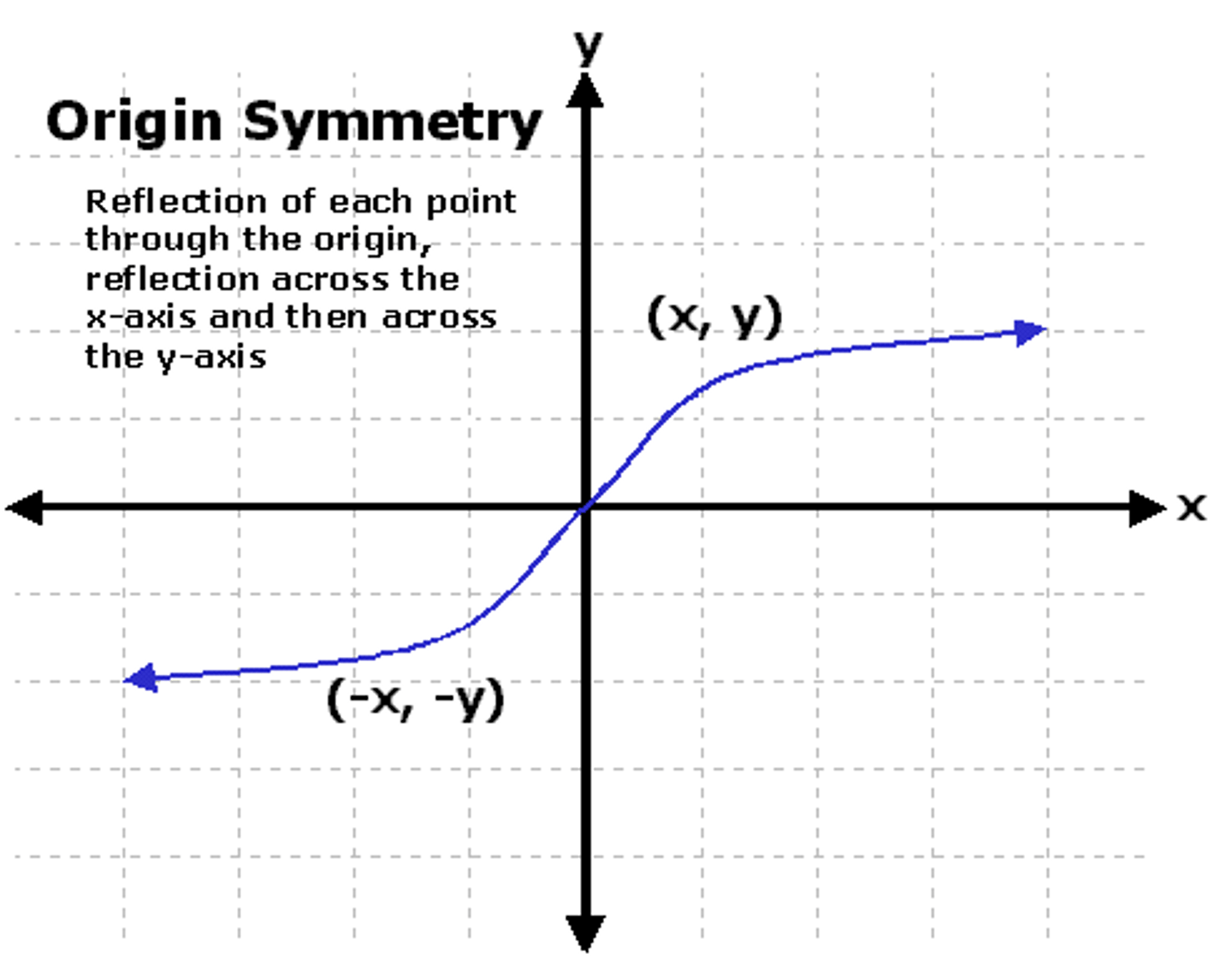
Odd Function
Odd Function: f(−x)=−f(x)
Negate the x value to get a negated y value.
Still learning (33)
You've started learning these terms. Keep it up!