Horse Evaluation - Exam 4
 Call Kai
 Learn
Learn Practice Test
 Spaced Repetition
 Match
Match Flashcards
 Knowt Play
1/36

There's no tags or description
Looks like no tags are added yet.
Name | Mastery | Learn | Test | Matching | Spaced | Call with Kai |
|---|
No analytics yet
Send a link to your students to track their progress
37 Terms
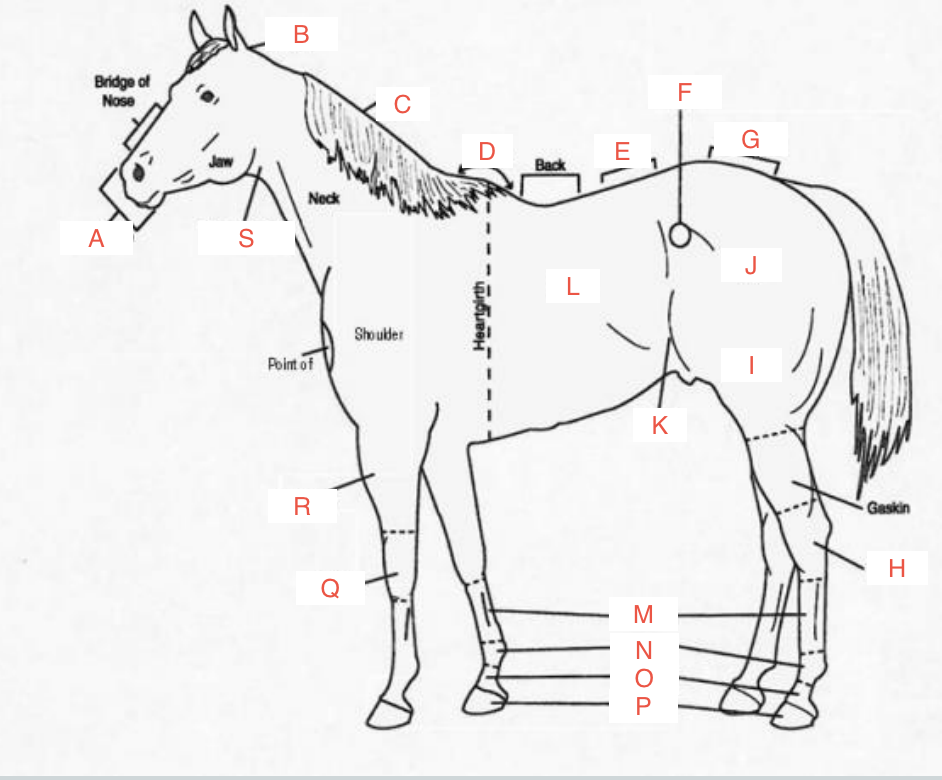
what are the names of the labels
A. muzzle
B. poll
C. crest
D. whither
E. loin
F. point of hip
G. croup
H. hock
I. stifle
J. hip
K. flank
L. barrel
M. cannon
N. fetlock
O. pastern
P. hoof
Q. knee
R. forearm
S. troatlatch
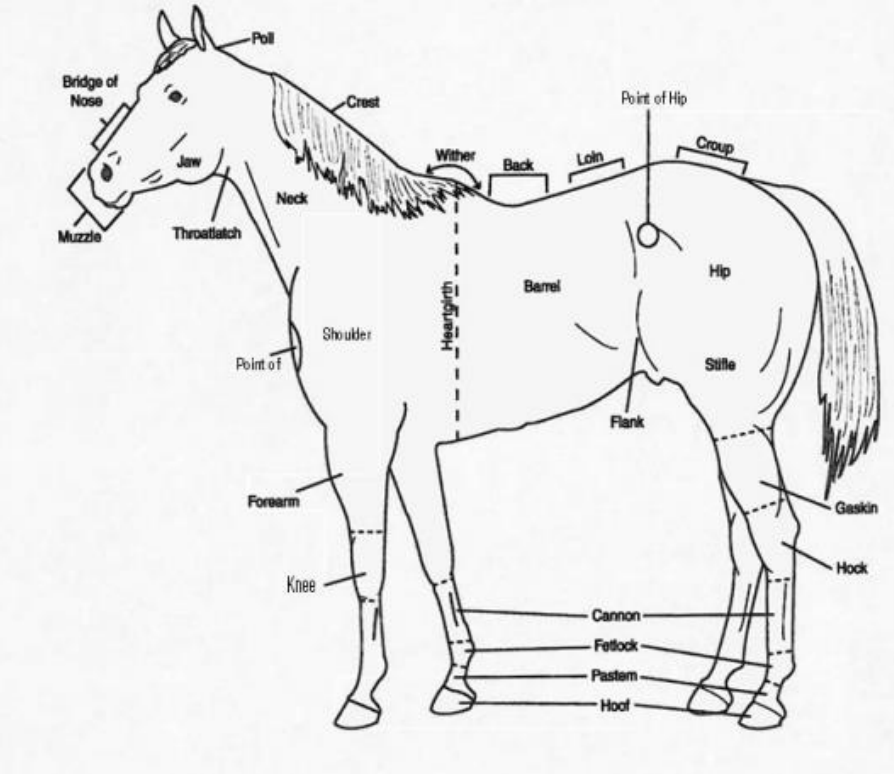
what are the 4 conformation evaluation criteria
balance
structure + soundness
muscle
quality
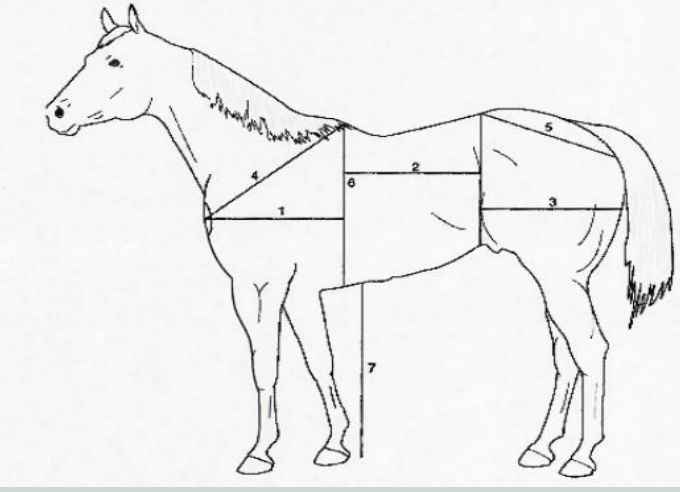
what are 3 characteristics that make a well balanced horse
can be divided into equal thirds
1st third: from point of shoulder to heart girth
2nd third: from withers to the flank
3rd third: from the flank to the point of the hip
height at withers is ≥ height at croup
withers to heartgirl = withers to ground
what are 6 common structure defects
play footed
pigeon toed
bench kneed
sickle hocked
cow hocked
post legged
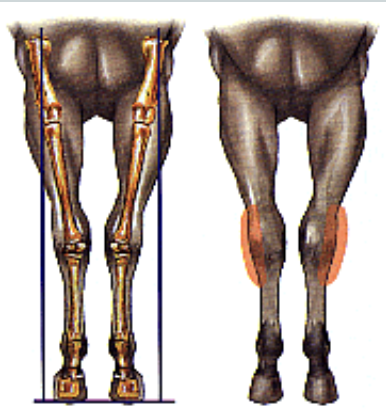
what is this an image of
knock kneed structure
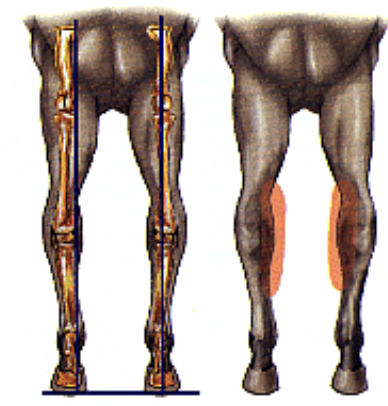
what is this an image of
bow-legged
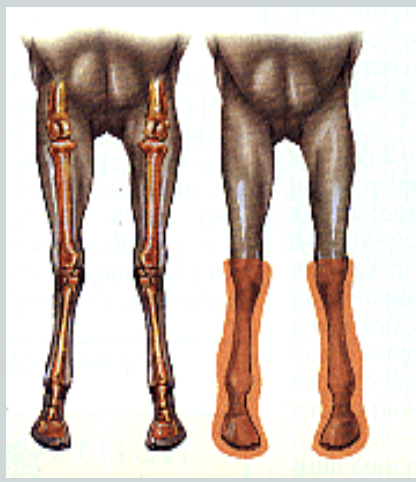
what is this an image of
toe-in
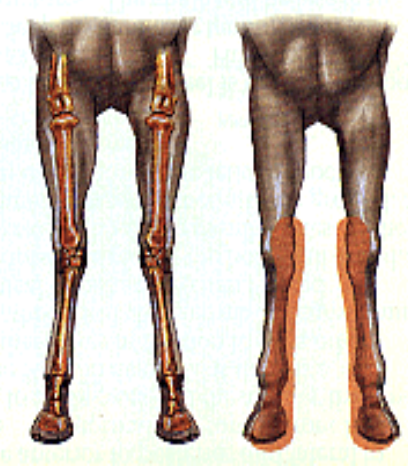
what is this an image of
toe-out
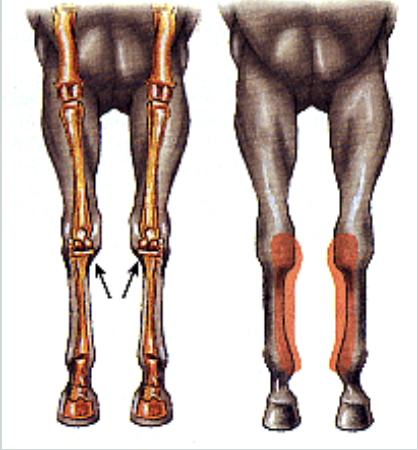
what is this an image of
bench knee
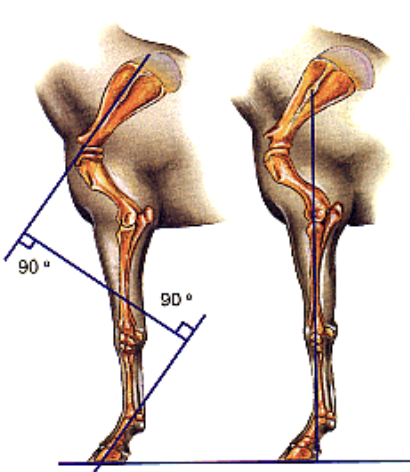
what is this an image of
ideal structure
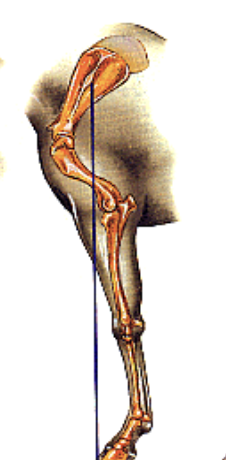
what is this an image of
standing under
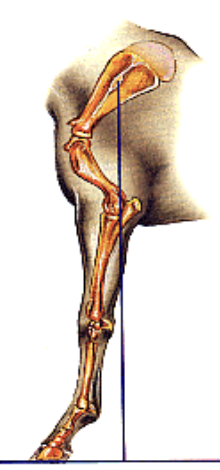
what is this an image of
camped out
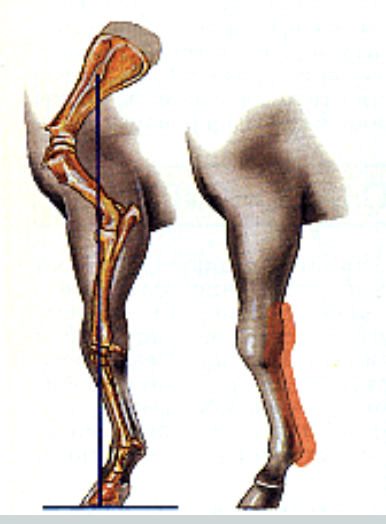
what is this an image of
over at knee
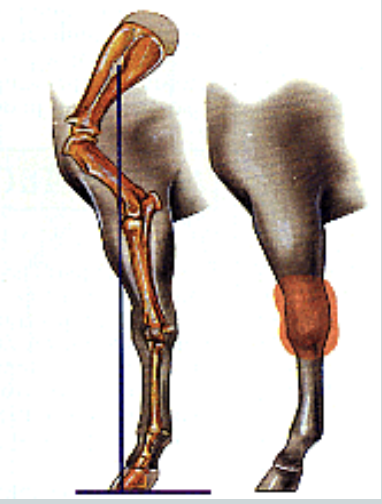
what is this an image of
calf knee
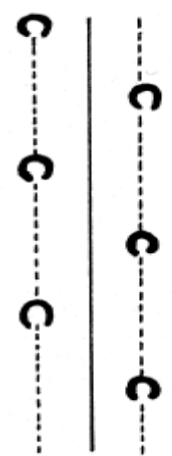
what is this foot movement called
normal (foot moves in a straight line)
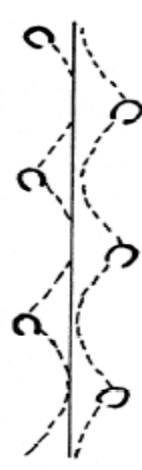
what is this foot movement called
“base-wide” or “toed-out” (feet move in inward arcs)
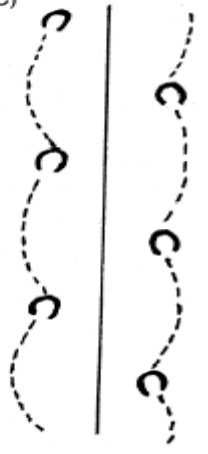
what is this foot movement called
“base-narrow” or “pigeon-toed” (feet move in outward arcs)
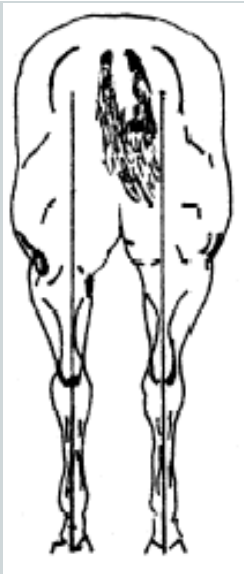
what is this an image of
ideal
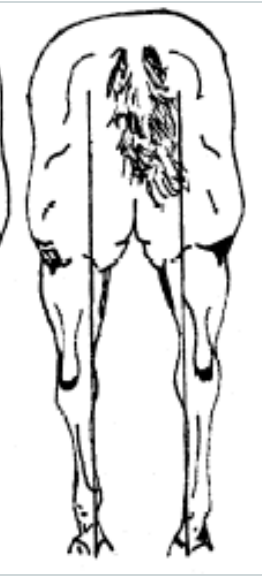
what is this an image of
bow-legged
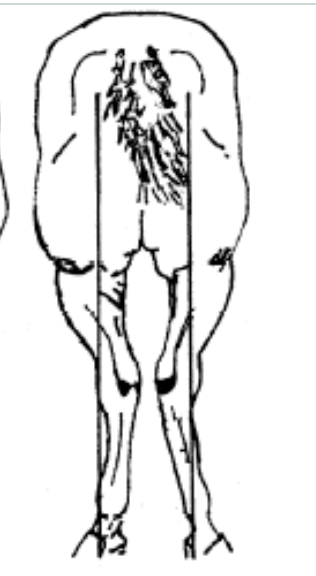
what is this an image of
cow-hocked
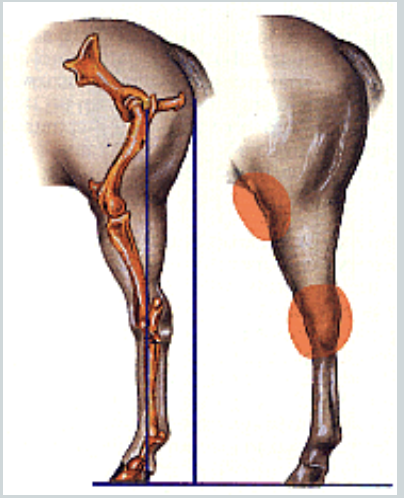
what is this an image of
post-legged
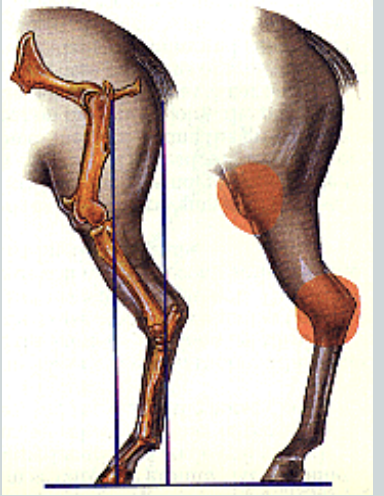
what is this an image of
sickle-hocked
what happens if there is too much slope in a horse pastern
it increases the strain on flexor tendons
what happens if there is too little slope in a horse pastern
decreases the strain
no “springiness”
what ar 7 parts of the horse that show quality
muzzle
head
eyes
ears
throatlatch
crest
neck
what are 4 parts to the ideal quality of the head
short from muzzle to poll
wide eye to eye
short ears
large eyes
what are 3 parts to the ideal quality of the neck length
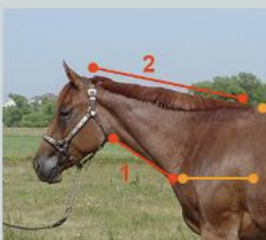
topline of neck (2) should be 1.5x the length of the neck’s underline (1)
long and thin neck
tie high into the shoulder
what are 2 ways to assess mucle on a horse
quantity
quality
how do you assess the quantity of muscle
seen in the circumference and bulge of muscle pattern
a horse’s bulk
how do you assess the quality of muscle
seen in striation
“muscle pattern”
shred
what are the 4 horse gaits
walk
trot
canter/lope
gallop
what is the walk gait
4 beats
2-3 hooves are always on the ground
LF → RH → RF → LH
what is the trot gait
2 beats
diagonal pairs travel together
has a suspension phase
LF + RH → RF + LH
what is the canter/lope gait
3 beats
one diagonal pair and one split pait
has a suspension phase
left vs. right lead:
left lead: RH → LH + RF → LF
right lead: LH → RH + LF → RF
what is the gallop gait
4 beats
has a suspension phase
rotary gallop:
LH → RH → RF → LF
transverse gallop:
LH → RH → LF → RF
what is the back gait
the same footfall as a trot but with no suspension phase
**make sure to do practice problems on the “Equine Selection and Evaluation“ slides"**