Biochemistry - The Citric Acid Cycle
 Call Kai
 Learn
Learn Practice Test
 Spaced Repetition
 Match
Match Flashcards
 Knowt Play
1/36

There's no tags or description
Looks like no tags are added yet.
Name | Mastery | Learn | Test | Matching | Spaced | Call with Kai |
|---|
No analytics yet
Send a link to your students to track their progress
37 Terms
What is the main purpose of aerobic catabolism
to capture energy and use it to make ATP
How many reduced co factors are regenerated using the CAC
3 NADH
1 FADH2/OH2
1 A(G)TP
How many carbons are lost? What Happend to them?
2 carbons are oxidized to carbon dioxide
Is the CAC aerobic? why?
yes, O2 reduction to re-oxidize NADH and FADH2
Is the CAC catabolic or anabolic?
neither it is amphibolic - intermediates are used for both
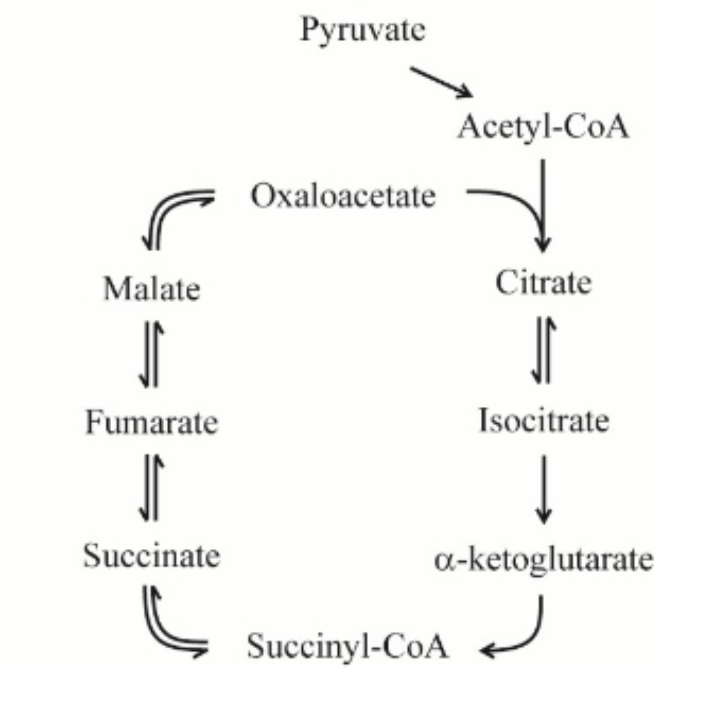
What is being oxidized in step 6
the c-c bond to make a double bond
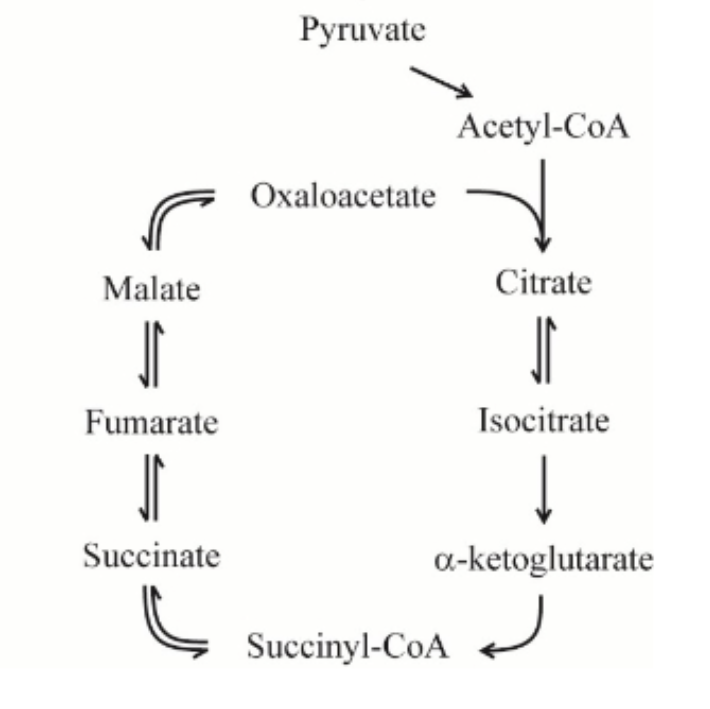
Why is step 6 a energy capture step
because FAD+ is oxidized to FADH2. FADH2 is used in the ETC to re-oxidize QH2.
What is an acyl phospahate
a carboxyl where the OH is replaced by a phosphate
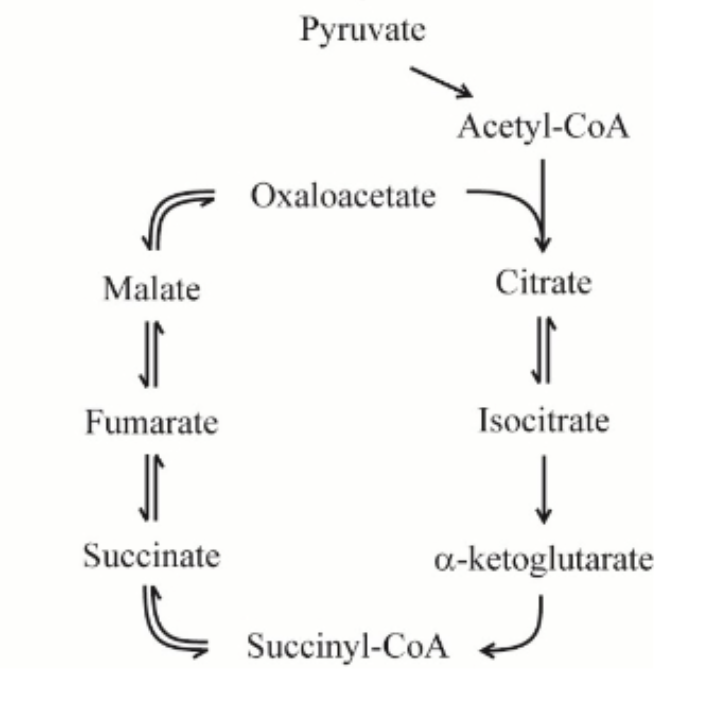
What are all the energy capture steps
3.4.5.6.8
technically 0
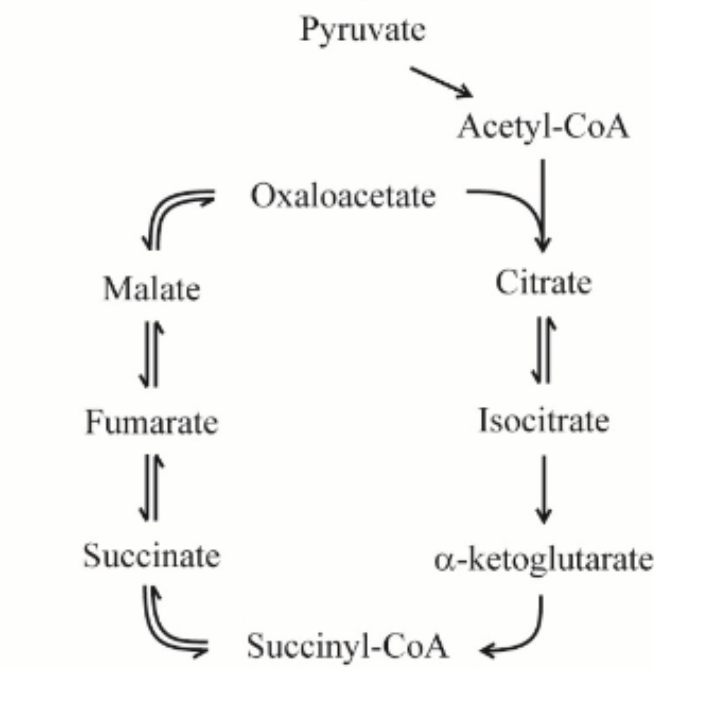
where do we get ATP and how
Step 5, SLP
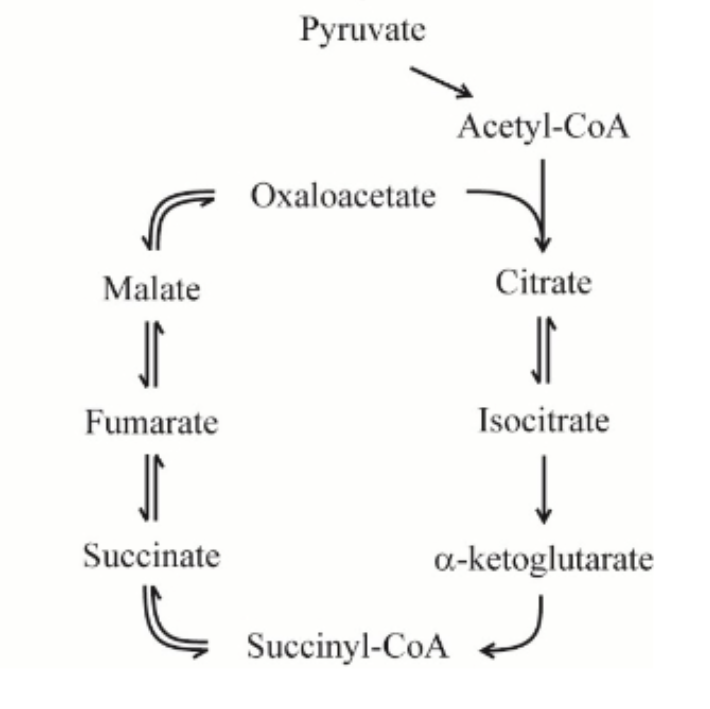
What are all the oxidation steps
0,3,4,6,8
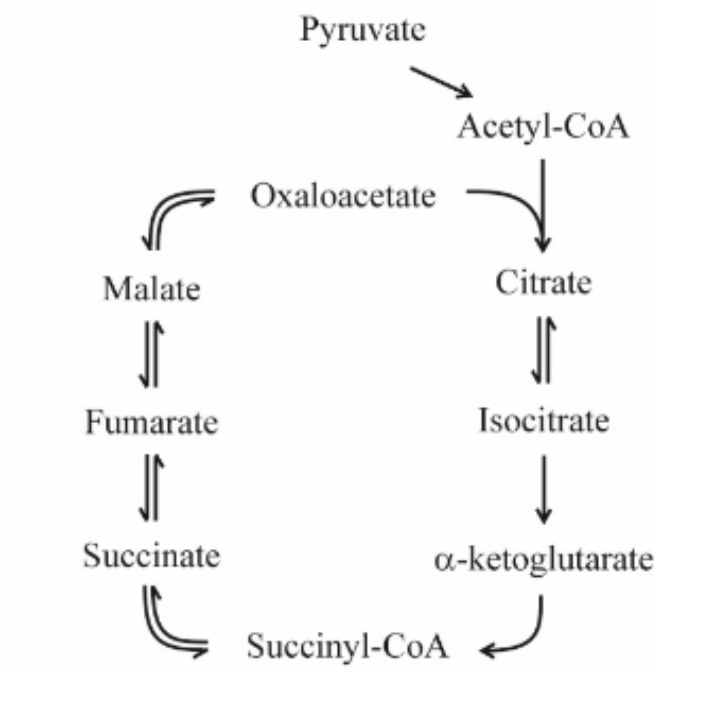
What are all the SLP
5
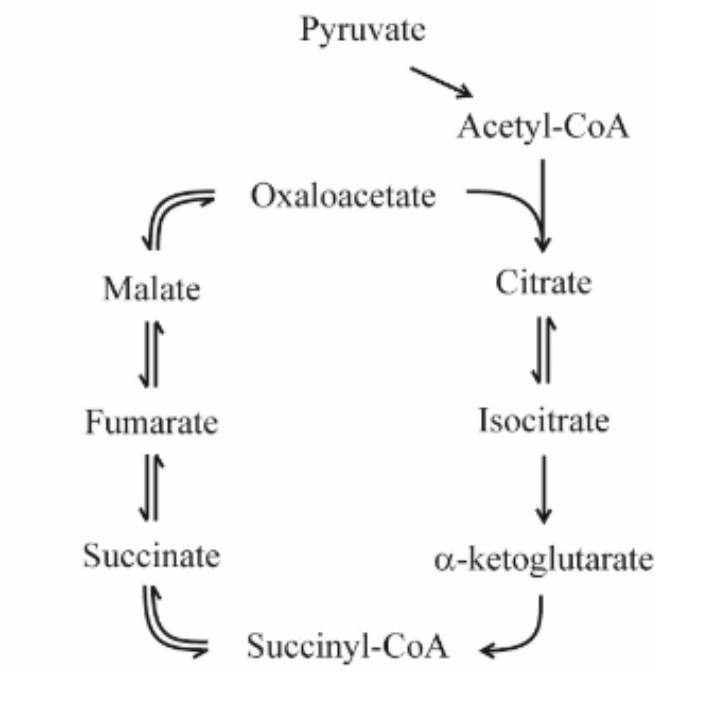
Where do we get CO2
0,3,4
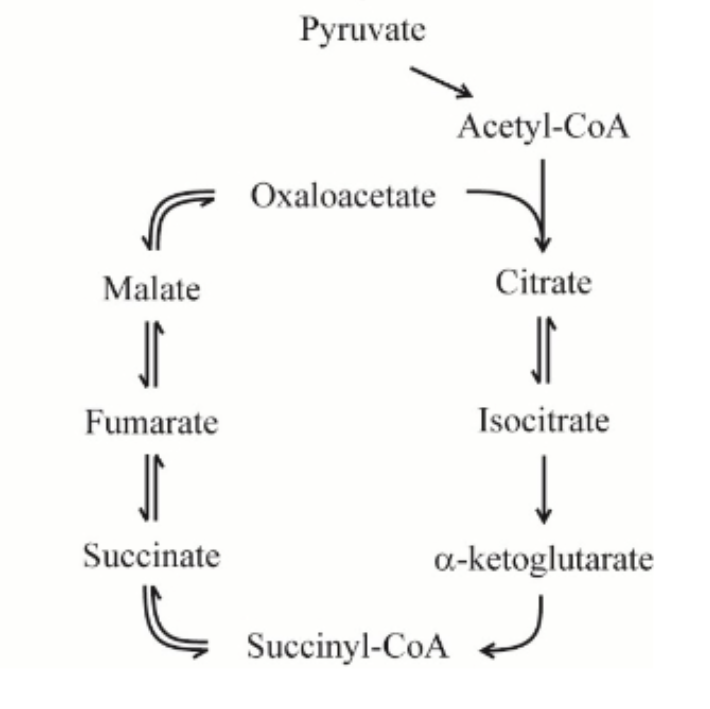
Where do we get a phosphate transfer
5
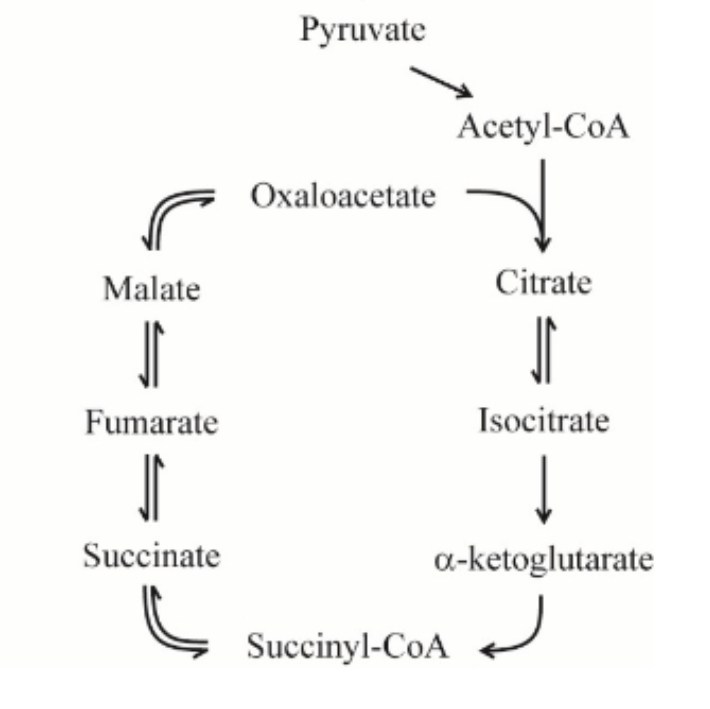
How do you remember the name of the enzymes for step 3,4,6
it is just reactant name plus dehydrogenase.
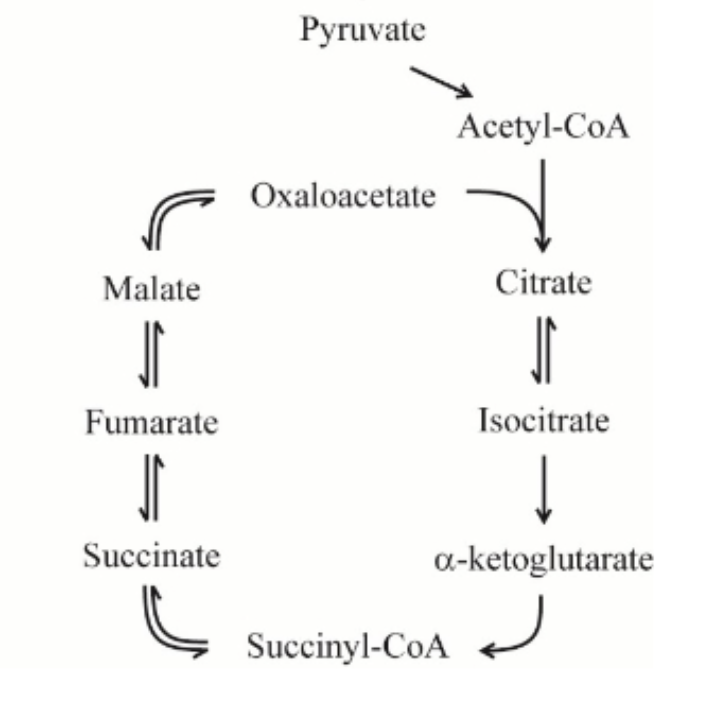
What is the name of the enzyme in step 1
citrate synthase
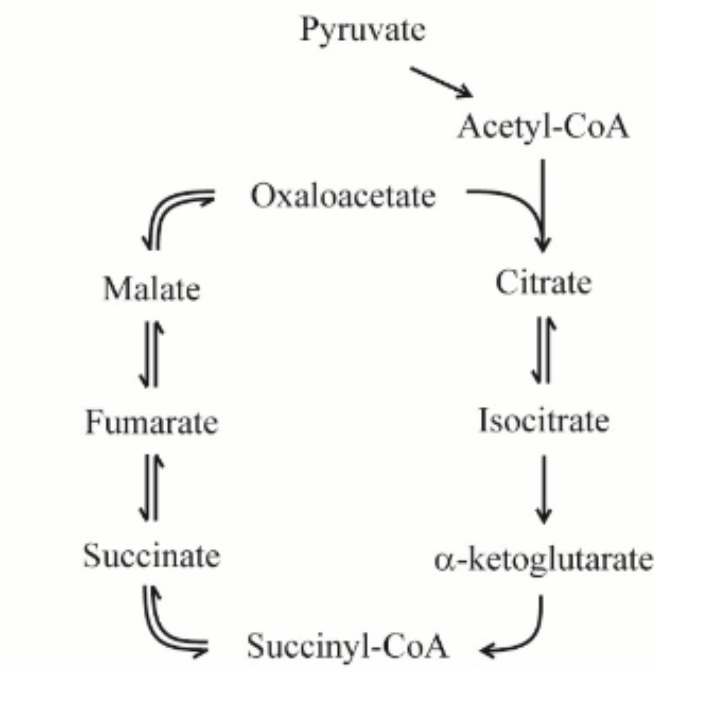
What are the regulated steps
0,1,3,4
Is there a rate limiting step in the CAC?
NO, its cyclic
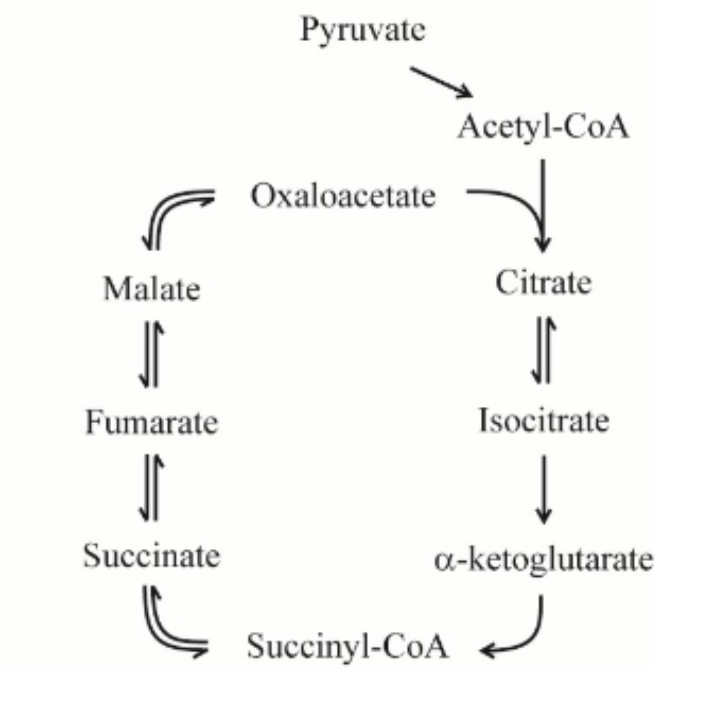
What regulates step 3
NADH/NAD+
ATP/ADP
inhibit/activates
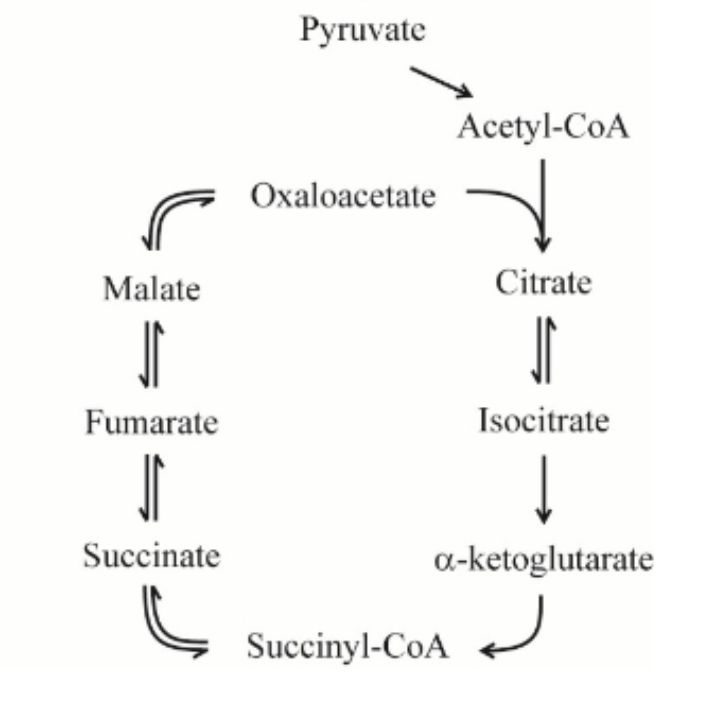
What regulates step 4
NADH - inhibits
Succinyl CoA - inhibits
Ca++ - Activates
What is the major difference between PDH and Alpha-KGDH regulation
PDH is regulated by phosphating, Alpha - KGDH is not
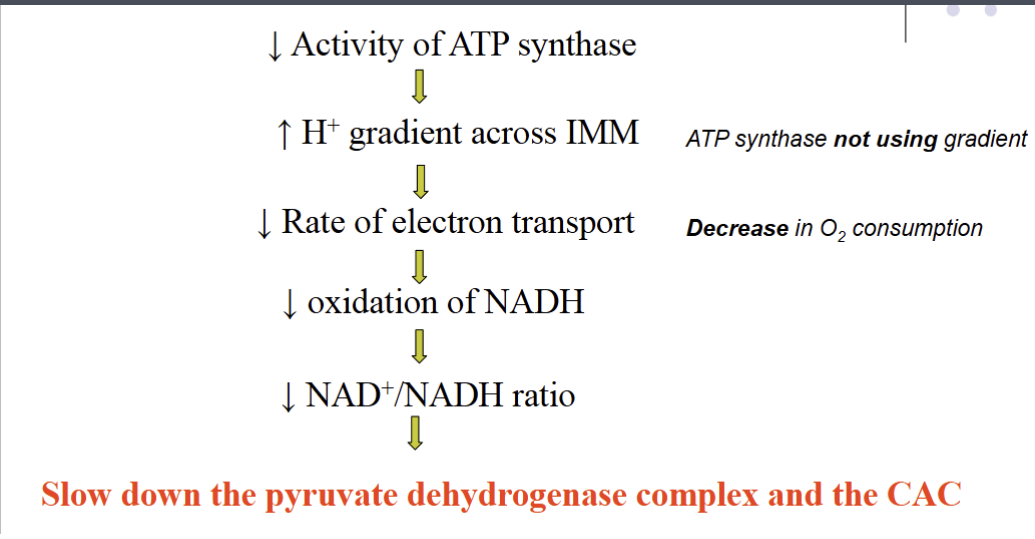
What happens when there is an decrease of ADP in the matrix
It means that ATP is not being used - Cause it is not being broken down into ADP
It causes the ATP synthase to slow down
The slowed down ATP synthase causes an increase concentration of protons outside the matrix
That increase in concentration of protons slows the electron chain and the consumption of O2
The slowed down ETC cause an increase of NADH because it is not being re oxidized
The increase in NADH cause a decrease in the NAD+/NADH ratio
The decrease in the ratio cause a decrease of the activity of PDH
The decrease of the activity of PDH means that pyruvate is not being converted to Acetyl CoA
Less Acetyl CoA means less usage of the CAC
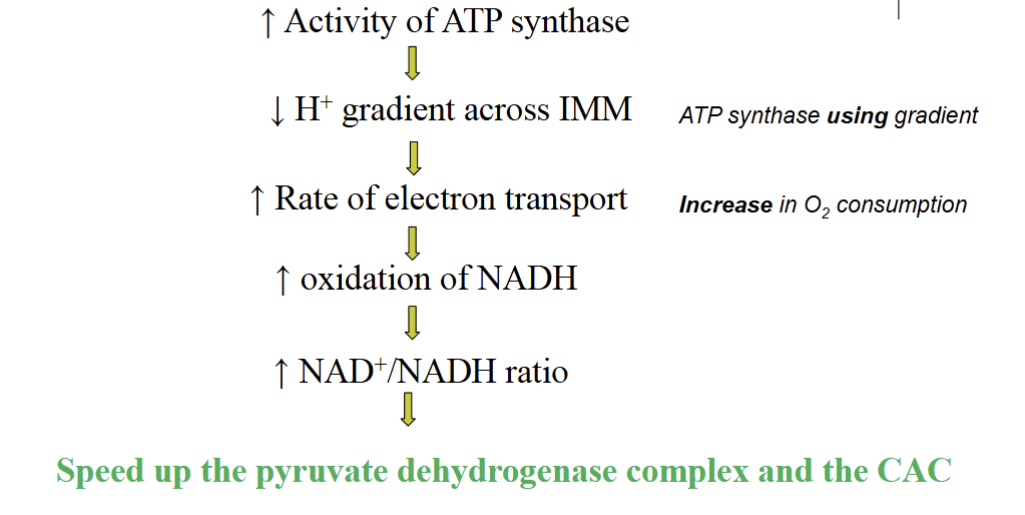
What happens when there is an increase of ADP in the matrix
It means that ATP is being consumed - being broken down into ATP
This increases the activity of the ATP synthase activity
With the ATP synthase being active the proton concentration outside the cell decrease
The decrease in the proton gradient speeds up the ETC and O2 consumption
The increase in the ETC cause an increase of the NADH being re oxidized: more NAD+ less NADH
The increase ratio of NAD+/NADH causes an activation of PDH (and other enzymes
PDH cause pyruvate to be converted to Acetyl CoA
Acetyl CoA enters the CAC
Why is the CAC also considered Anabolic?
Because the intermediates are used for the biosynthesis of macromolecules
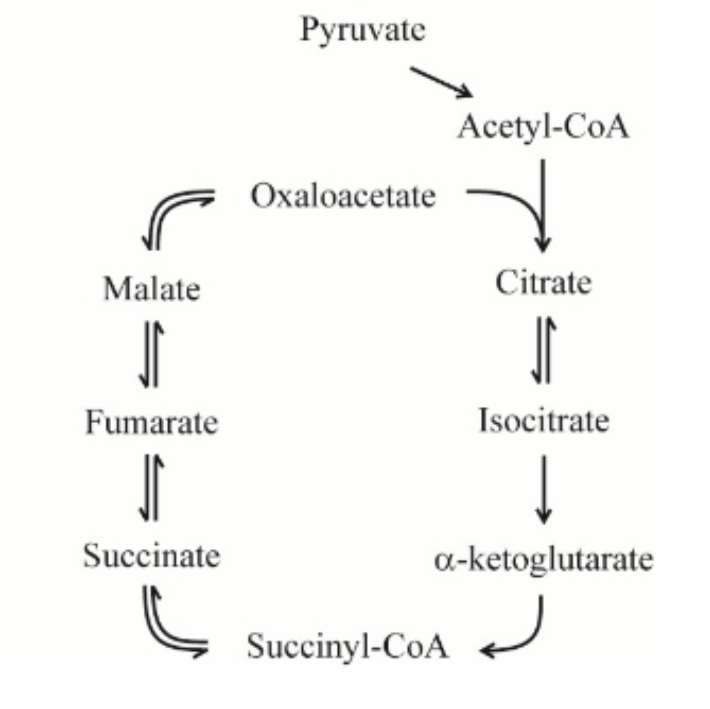
How many carbons are in Oxaloacetate
4
How many carbons are in Alpha-KG
5
How many carbons are in Succinyl CoA
4
How many carbons are in Citrate
6
How many carbons are in Lactate
3
What are anaplerotic reactions? What type are they
Reactions that replenish the CAC intermediate
Amino acid breck down
Pyruvate carboxylation (Pyruvate → Oxaloacetate)
What is the function of the CAC
generate biosynthetic percussor
How many ATP is generated for each Acetyl CoA
10
Complete aerobic respiration of glucose yields how much ATP
32
Complete anaerobic respiration of glucose yields how much ATP
2
How much ATP per NADH
2.5
How much ATP per FADH2
1.5
Can Lactate be used aerobically? If so how?
Yes, converted to pyruvate generating NADH