ch 7 - digestive system [STOMACH, SI, LI, accessory organs]
 Call Kai
 Learn
Learn Practice Test
 Spaced Repetition
 Match
Match Flashcards
 Knowt Play
1/33

There's no tags or description
Looks like no tags are added yet.
Name | Mastery | Learn | Test | Matching | Spaced | Call with Kai |
|---|
No analytics yet
Send a link to your students to track their progress
34 Terms
main functional features of stomach
highly muscular, extremely active holding organ passing bolus to SI
functions
holds food (up to 75x its empty volume)
parses out food to SI
churns
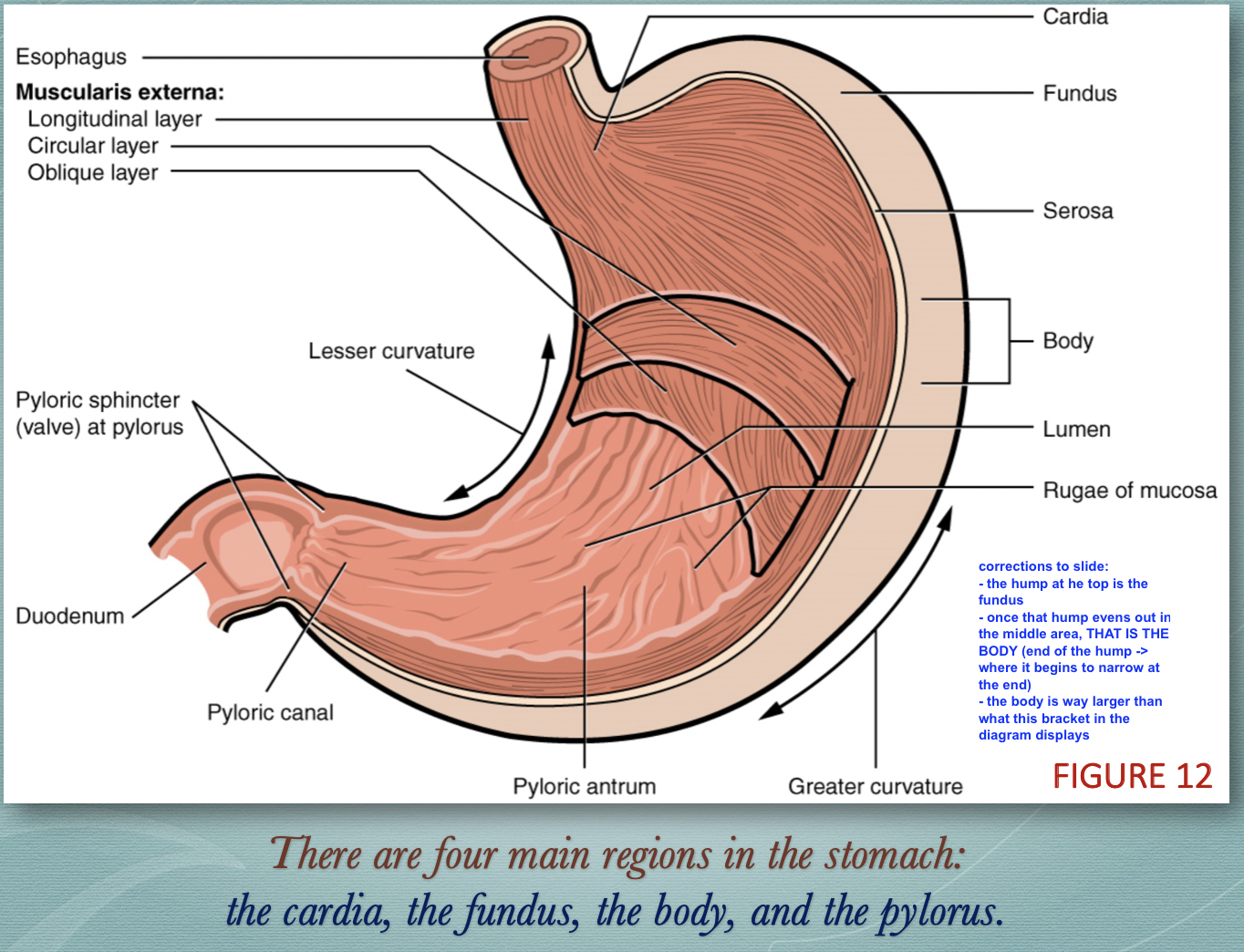
4 main regions of stomach
cardia
fundus
body
pylorus
label stomach’s sphincter layers and regions
gastric secretion is controlled by _____ and ____ based on stimuli from the _____, _____, and _______
[nerves] [hormones]
[brain] [stomach] [small intestine]
gastric secretion phases
cephalic phase: smell/taste/thought/sight of food stimulates stomach secretory activity
gastric phase: stomach distension, food chemicals, and rising pH stimulate secretory activity
intestinal phase: low pH and partially digested food stimulate secretory activity
mucosal barrier
protects stomach from corrosive gastric juice
bicarbonate-rich mucus
epithelial cells of mucosa block gastric juice from penetrating
stem cells replace damaged mucosal cells
peristaltic vs mixing waves
peristalsis waves: propel content forward
mixing waves: mechanical digestion
[LEFT OFF ON SLIDE 52/53]
[NEED TO MAKE CARDS]
3 features of SI submucosa
circular folds
vili
microvili
describe the process of how chyme is combined with digestive juices in the SI
contents are pushed back and forth as smooth muscle contracts and relaxes
segmentation, peristalsis
name the nutrient digestions that occur in the SI
carbohydrate, protein, lipid
water absorption in the SI
via osmosis
functions of LI
finish nutrient and water absorption
synthesize vitamins
form and expel feces
4 regions of LI
cecum
colon
rectum
anus
name the regions of LI
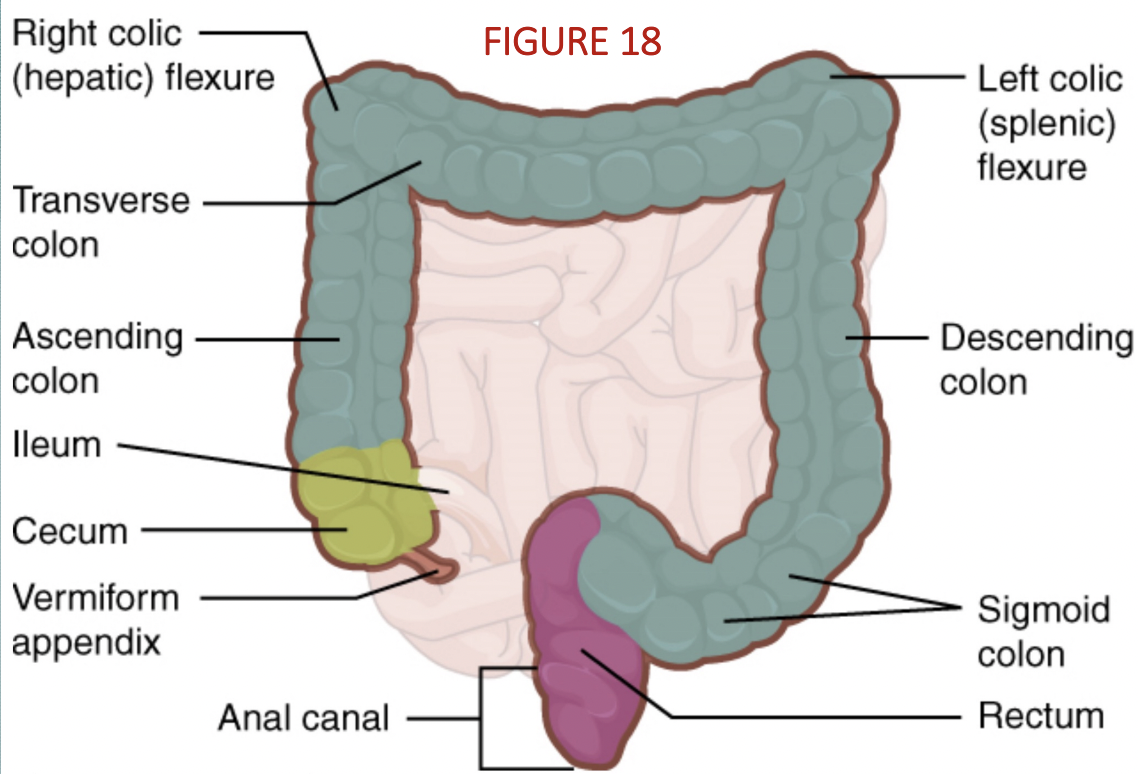
describe the order of structures in which food residue passes to reach the anus (use specific names)
Cecum, ascending colon, transverse colon, descending colon, sigmoid colon, rectum, anal canal, anus
features of the LI mucosa (cell types)
simple columnar epithelium w/ microvili
goblet cells secreting mucus to assist feces movement
enterocytes absorbing water, salts
3 types of mechanical digestion movement in LI
haustral contraction
sluggish segmentation in transverse and descending colons
peristalsis
slower contractions than in proximal portions of canal
mass movement
strong waves of smooth muscle contraction (pushes residue towards rectum)
3 accessory digestive organs in SI (and their functions)
liver: produces bile for duodenum
pancreas: produces pancreatic juice for duodenum
gallbladder: stores/concentrates/releases bile
liver
hepatic artery
hepatic portal vein
porta hepatis
(accessory organ, SI)
porta hepatis: where the artery and vein enter the liver
hepatic artery: delivers oxygenated blood to heart
hepatic portal vein: delivers partially deoxygenated blood w/ nutrients from SI
process occurring once nutrients are processed by the liver
nutrients pass back into blood at central vein → hepatic vein → back to the heart
bile (organ secreting it, structures within it)
secreted by liver (SI accessory organ) to emulsify (break down) lipids
mechanically separates large lipid globules into smaller ones
water
bilirubin - pigment produced by liver
bile salts
bile pigments
phospholipids
electrolytes
pancreas
cell clusters
pancreatic ducts
(accessory organ, connects directly to duodenum)
mix of exocrine and endocrine functions
acinar cells secrete pancreatic juice (bicarbonate + digestive enzymes)
pancreatic ducts: small ducts that pancreatic juice is secreted into
pancreatic juice (chemical makeup)
(accessory organ)
bicarbonate
digestive enzymes
(proteins) chymotrypsin
(proteins) trypsin
(lipids) pancreatic lipase
(starch) pancreatic amylase
(nucleic acids) nucleases
hormones regulating pancreatic juice
secretin (from SI)
CCK
gallbladder (function)
cystic duct
common ducts
stores, concentrates, and propels bile into duodenum
ejects bile through cystic duct
cystic duct + common hepatic duct = common bile duct emptying into duodenum
essential nutrients (def, list)
mlcs that cannot be produced fast enough/at all by body
2 essential fatty acids
8 essential amino acids
water
vitamins and minerals
name 4 fat-soluble vitamins
name 1 water-soluble vitamin
fat-soluble
D, E, A, K
water-soluble
C
minerals (def, most common, and important electrolytes)
inorganic ions/compounds that must come from the diet
most common: calcium and phosphorus
imp electrolytes: sodium ions, chloride ions
what mineral ion is needed to make hemoglobin?
iron ion
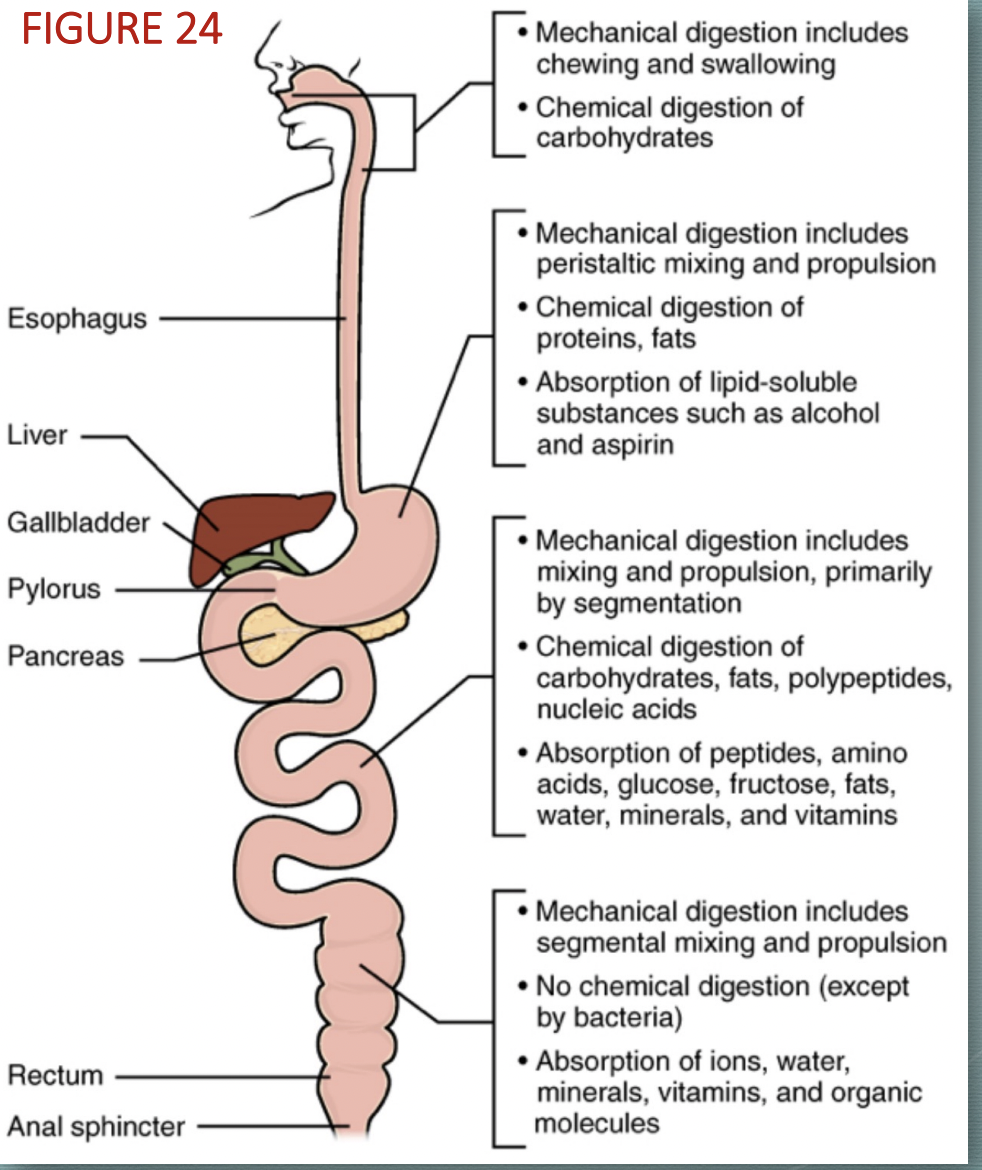
describe the steps of chemical digestion and absorption through the diagram
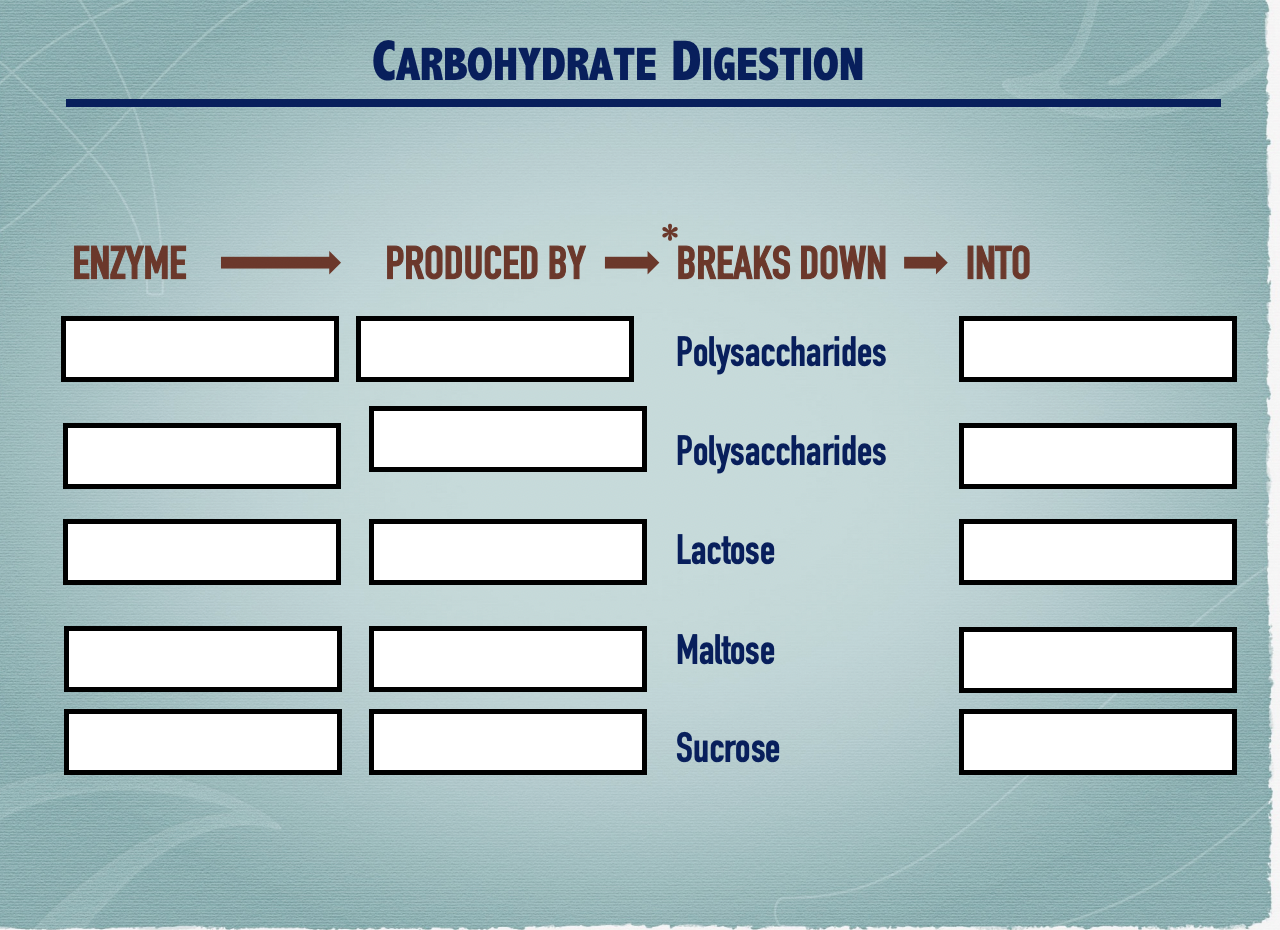
fill in the carbohydrate digestion chart
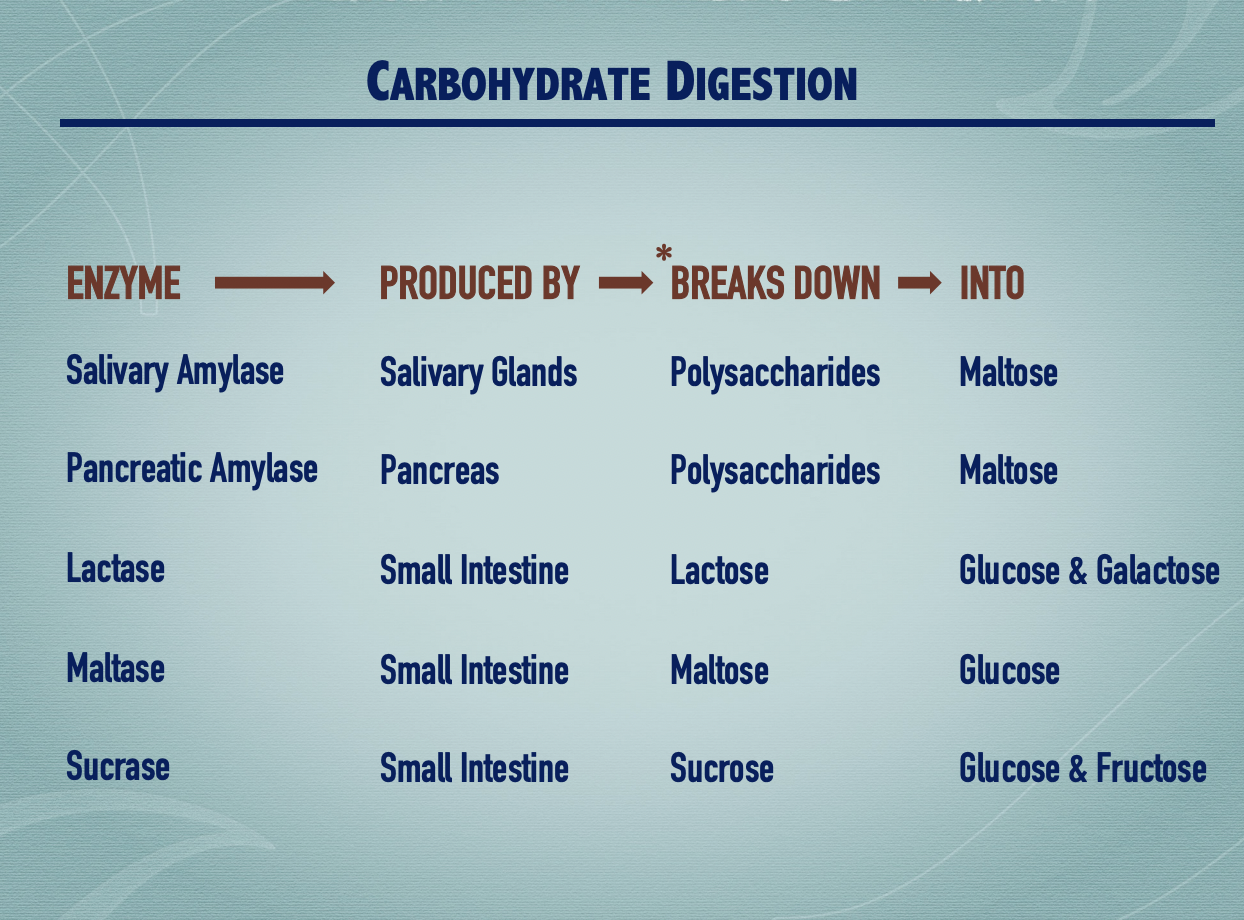
identify mechanisms employed to absorb nutrients (5)
active transport
simple diffusion
facilitated diffusion
secondary active transport
endocytosis
describe the chemical/cellular process of absorption
triglycerides broken into monoglycerides and fatty acids
micelles