ch 5-3 telescopes continued
 Call Kai
 Learn
Learn Practice Test
 Spaced Repetition
 Match
Match Flashcards
 Knowt Play
1/73

There's no tags or description
Looks like no tags are added yet.
Name | Mastery | Learn | Test | Matching | Spaced | Call with Kai |
|---|
No analytics yet
Send a link to your students to track their progress
74 Terms
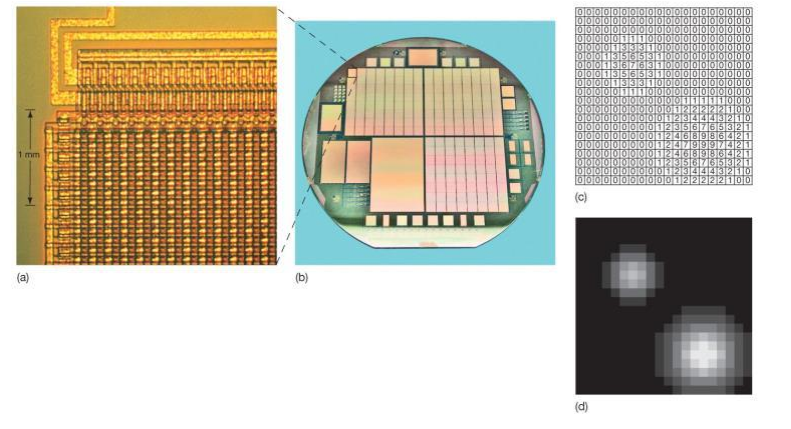
image acquisition
charge-coupled devices (CCDs) are electronic devices, which can be quickly read out reset (by detectors)
output directly to computer
when light strikes a single pixel, an electrical charge builds up on it
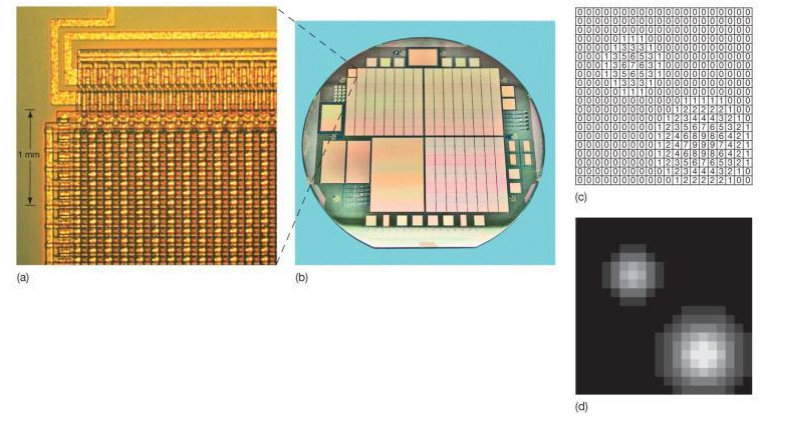
what do image acquisition record?
90% of photons striking them, compared with less than 5% for photographic methods
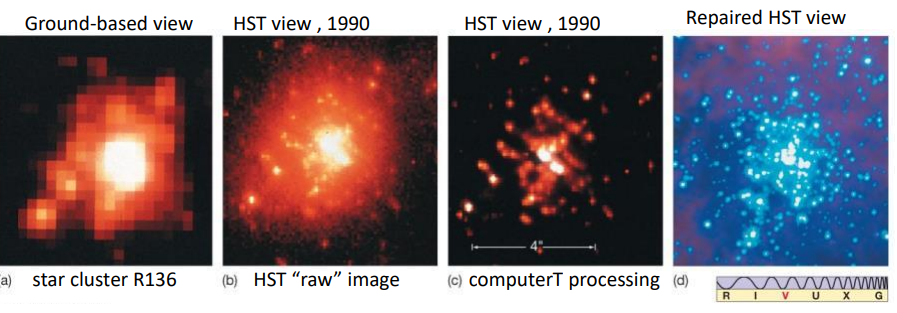
what can image processing by computers sharpen?
images
a. taken from ground
b. hubble
c. same image with computer processing
d. after repairs to hubble, short and blue wavelength
photometry
measurement of brightness
determining a stars brightness is just adding up values in all the CCO pixels corresponding to that star
what causes atmospheric blurring?
air movements
distributions or movement in atmosphere result in continual small changes in optimal properties of air between us and the star (this constant shifting is why stars twinkle)
what makes the stars seem to twinkle?
air movements
atompsheric turbulence
produces continual small changes in the optical properties of the air between the stars and our telescope (or eyes)
light from start is refracted slightly (stellar images dancing; twinkles)
atmospheric turbulence effect on light?
has less an affect on light of longer wavelength-ground-base “see” better infrared
to get better results, what are the solutions to air blurring?
put large telescope on mountaintops (close to space as possible), especially in deserts
put telescopes in space

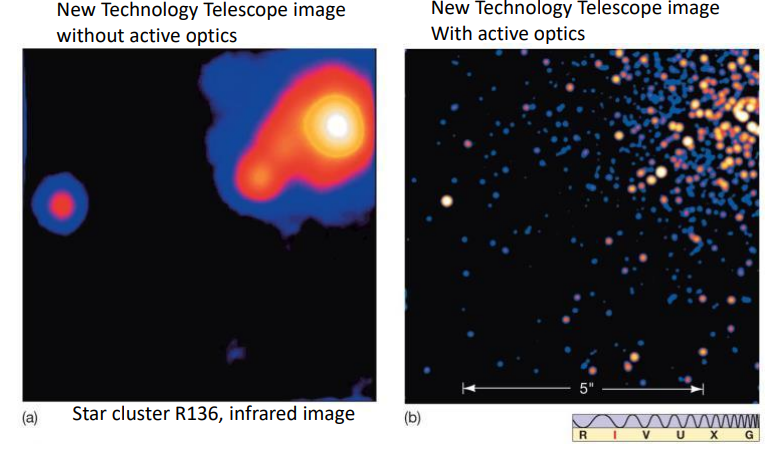
what is active optics?
control mirrors based on temperature and orientation
compensate for distortion, temperature changes, and atmospheric turbulence
small modifications made to maintain best possible focus at all times
minimize blurring
what does current technology allow us to do in regards to telescopes?
allow us to make adjustments to telescopes
how has new technology with active optics improve images?
by a few10th of a second
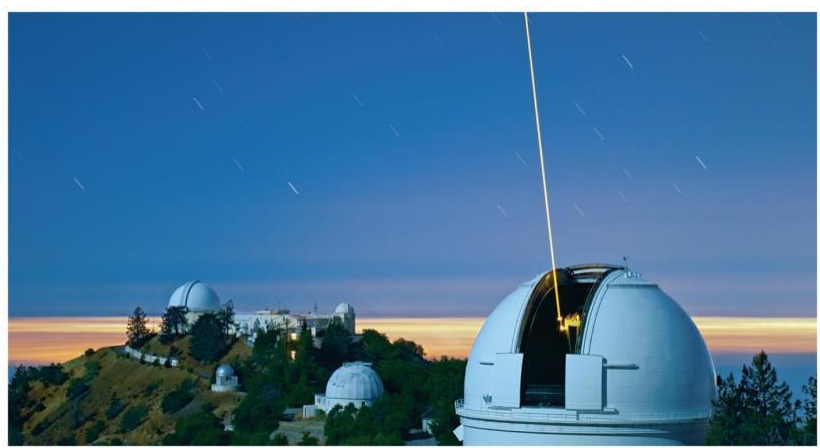
what is adaptive optics?
track atmospheric changes with laser; adjust mirrors in real time
then deform shape of surface and undo the effects of atmospheric turbulence
how is adaptive optics applied?
much smaller mirror is inserted into the light path and manipulated to achieve desired effect
which type of optic is easier to apply to infrared?
adaptive
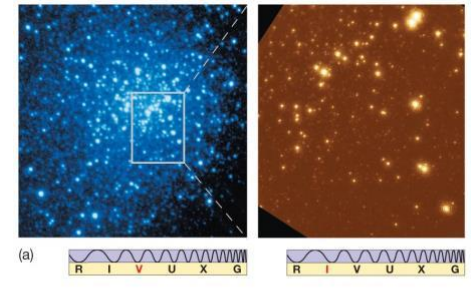
images with improvements from adaptive optics
a. uncorrected visible light
b. infrared and adaptive optics have been applied; improved by a factor of 10 allows more stars to be seen more clearly
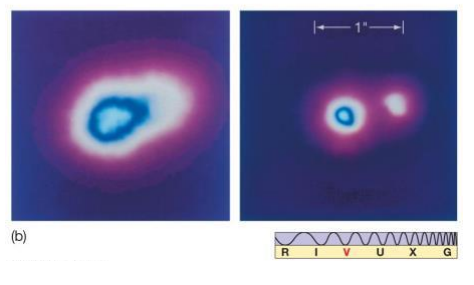
double star castor
2nd brightest object in Gemini
uncorrected image (left) is blurred
adaptive optics (right), the resolution is improved
allows the 2nd star to be distinguished
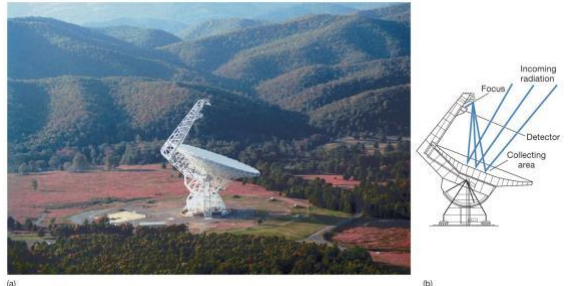
explain radio telescopes
similar to optical reflecting telescopes
prime focus
less sensitive to imperfections (due to longer wavelength); can be made very large
cover wider range on spectrum
what doesn’t atmosphere interfere with radio telescopes?
they have longer wavelengths than visible light
what do radio detectors normally register?
a narrow band of wavelengths at any one time
why must radio telescopes be built large?
due to cosmic radio signals are faint
what is the largest radio telescope?
300-m dish at Arecibo Puerto Rico
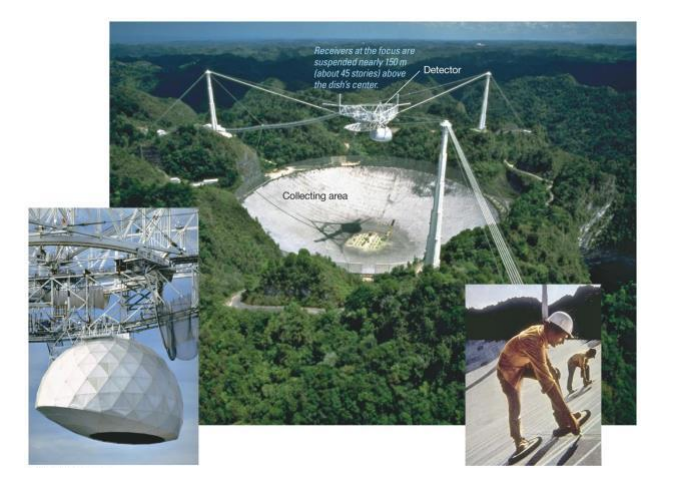
angular resolution of radio telescope
is generally poor compared with that of their optical counterparts because of the effects of diffraction
why can radio telescopes be built large?
Radio telescopes can be built very large because radio waves have long wavelengths, so the reflecting surface does not need to be perfectly smooth.
what does loner wavelength mean?
poor angular resolution
advantages of radio astronomy
can observe 24 hours a day (atm. doesn’t interfere)
darkness not needed
clouds, rain, and snow don’t interfere
poor weather causes a few problems because wavelength of radio waves is much larger than the typical size of atm. raindrops or snowflakes
observations at an entirely different frequency; get totally different information
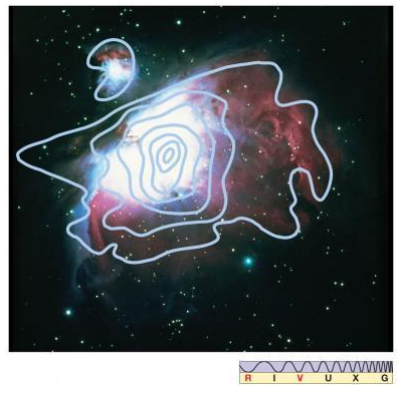
what is radio interferometry
A technique that combines signals from multiple widely separated radio telescopes to act like one large telescope.
collection of 2 or more telescopes
What is the main advantage of interferometry?
It greatly increases resolution, as if using a telescope the size of the distance between the dishes.
takes information from 2 or more telescopes observing object ay same wavelength at the same time
What determines the effective size of a telescope in interferometry?
The distance (baseline) between the individual telescopes.
what can interferometry help with?
angular resolution
what dies interferometry involve?
combining signals from 2 receivers (to have strong signals)
partly cancelling each other out
what does interference depend on?
the direction of the signal in which the wave is travelling relative to the line joining the detectors
what can interference provide?
information about objects position is sky
What is the ALMA Array?
A set of 66 radio antennas located in northern Chile used to observe millimeter and submillimeter wavelengths.
operate in sync and aim at same cosmic objects at the same time

What wavelength range does the ALMA Array detect?
Between 0.3 mm and 10 mm.
Why can the ALMA Array achieve excellent resolution?
Because its antennas are mobile, allowing them to be spread out over large distances (large baseline).
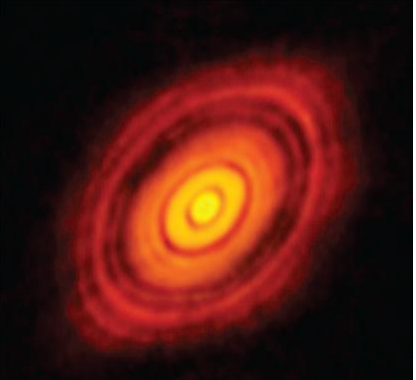
What does an image of the protoplanetary disk around HL Tauri show?
Rings and gaps in the disk, which suggest planets may be forming. (star in middle)
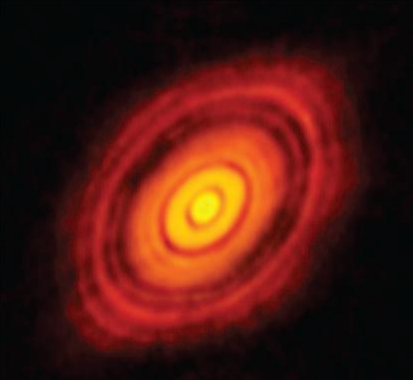
What is a protoplanetary disk?
A rotating disk of gas and dust around a young star where planets can form.
Why is HL Tauri important in astronomy?
It provides direct evidence of early planet formation in a protoplanetary disk.
What advantage does infrared radiation have in astronomy?
It can produce images where visible radiation is blocked (e.g., by dust).
Why is infrared radiation useful for observing space?
It can pass through dust clouds that block visible light, revealing hidden objects.
What type of telescope components can be used for infrared astronomy?
Optical telescope mirrors and lenses can generally be used.
detectors designed to be sensitive to radiation of longer wavelengths
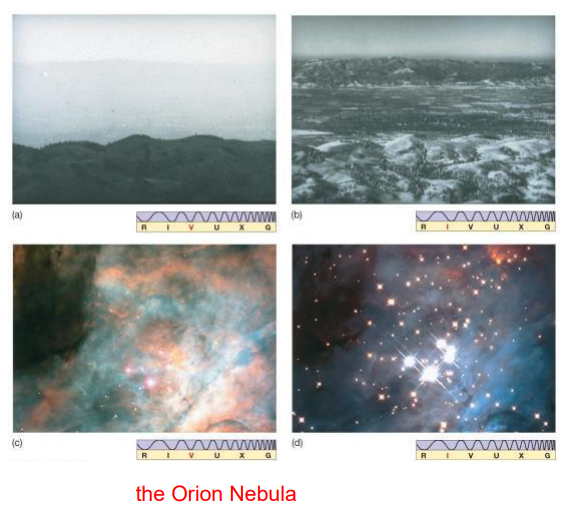
Why are infrared telescopes often placed in space?
To avoid atmospheric interference and detect infrared radiation more clearly.
What does an infrared image reveal compared to visible light in objects like the Eagle Nebula?
Infrared shows structures hidden by dust that visible light cannot penetrate.
taken by Herschel Space
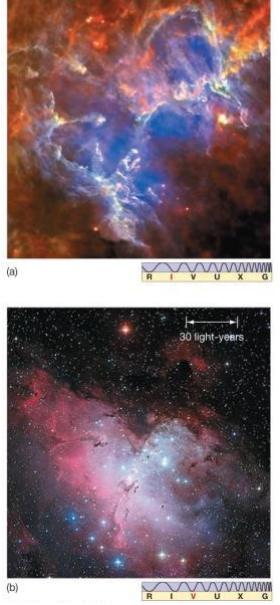
What does comparing infrared and visible images of the same region show?
That infrared can reveal hidden features and deeper regions not visible in optical light.
what do infrared telescopes operate in?
in the infrared part of the EM
70 um → blue
160 um → green
250 um → red
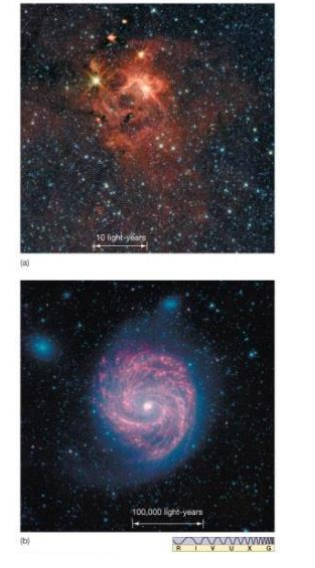
what is the Spitzer Space Telescope?
an infrared telescope
in orbit around the sun
does NOT orbit Earth, drifting from Earth
Why must ultraviolet (UV) observations be done in space?
Because Earth’s atmosphere absorbs almost all ultraviolet radiation.
short wavelength, high frequency
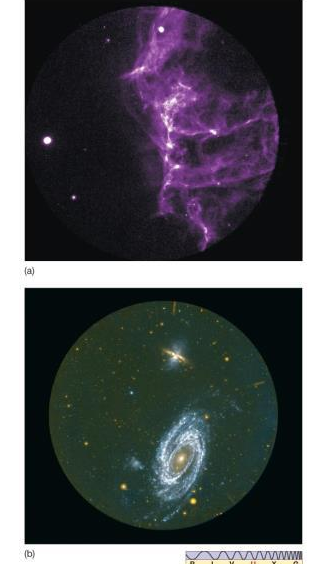
What does Earth’s atmosphere do to ultraviolet radiation?
It blocks (absorbs) most UV radiation before it reaches the ground.
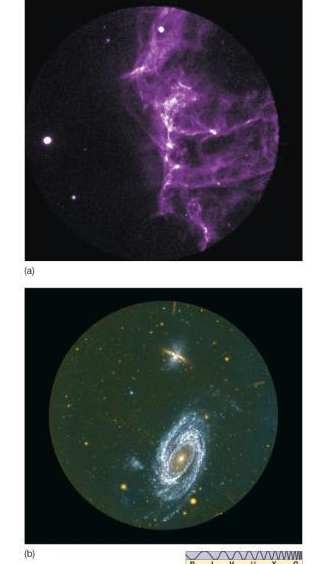
Where must telescopes be placed to observe ultraviolet radiation?
In space, above Earth’s atmosphere.
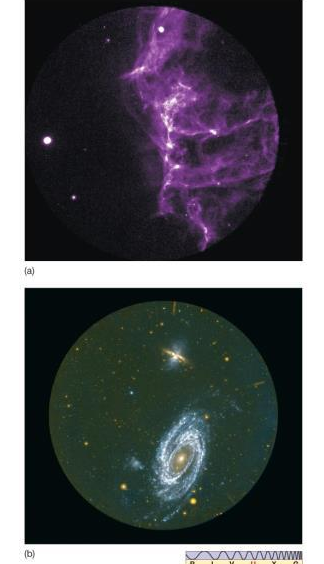
why is aiming observations in UV from Earth is not possible?
our atm. is practically opaque to radiation to radiation below 400 nm and totally opaque to below 300 nm
Why can’t X-rays and gamma rays be focused using normal telescope mirrors?
They do not reflect off mirrors in the same way as visible light and are usually absorbed or pass through.
need to observe from high above the ground
How are X-rays focused in telescopes?
By reflecting them at very shallow (grazing) angles.
Why do X-ray telescopes need special designs?
Because X-rays require grazing-angle reflection, not normal mirror reflection, to be focused.
they pass straight through or be absorbed by any material they strike
what part of the spectrum are x rays and gamma rays?
high frequency
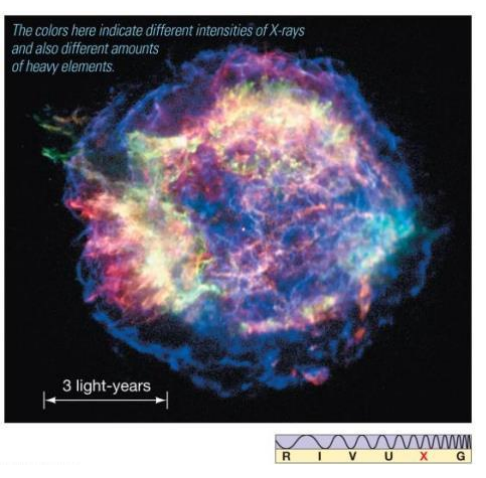
x-ray image of supernova remnant
debris field of scatter hot gasses from a star
Why can gamma rays not be focused using normal telescope methods?
Gamma rays do not reflect or refract in a way that allows focusing with mirrors or lenses.
gamma ray telescope doesn’t exist
What is the consequence of not being able to focus gamma rays?
Gamma-ray images are generally coarse and have low resolution.
How do gamma-ray observations differ from optical or X-ray observations?
they cannot be sharply focused, so the resulting images are less detailed.
Why do astronomers observe the same object at many wavelengths?
Because different wavelengths reveal different information about the object.
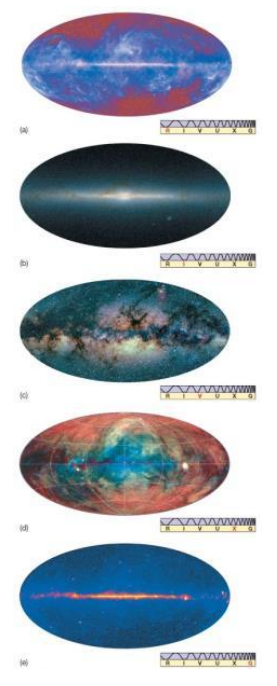
What is learned by observing the Milky Way at multiple wavelengths?
Different structures and processes become visible that are hidden in other parts of the electromagnetic spectrum.
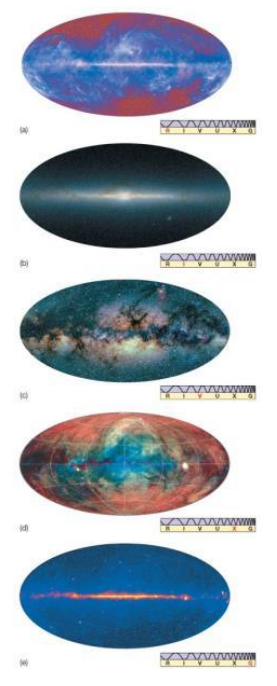
why is multi-wavelength astronomy important?
It provides a more complete understanding of astronomical objects than any single wavelength alone.
refracting telescopes make images with a ?
lens
reflecting telescope makes images with a ?
mirror
large telescopes gather much more light and result in?
study of very faint sources (have better resolution)
what is resolution of ground-based optical telescopes limited by?
atmospheric effects
what is resolution of radio or space-based telescopes is limited by?
diffraction
what can active and adaptive optics minimize?
atmospheric effects
why do radio telescopes need large collection area?
diffraction is limited
what can interferometry greatly improve?
resolution
infrared and ultraviolet telescopes are similar to?
optical
UV telescopes must be?
above atmosphere
x-rays can be focused but…?
very differently than visible light
gamma rays can be detected but not?
imaged