Social Psych - Exam 3 - Prosocial
 Call Kai
 Learn
Learn Practice Test
 Spaced Repetition
 Match
Match Flashcards
 Knowt Play
1/51

There's no tags or description
Looks like no tags are added yet.
Name | Mastery | Learn | Test | Matching | Spaced | Call with Kai |
|---|
No analytics yet
Send a link to your students to track their progress
52 Terms
Feeling Good
- helping others
- acts of kindness activate areas of the brain associated with reward (similar to personal gains)
- helping = reduction in one's own feelings of sadness
negative state relief model
people may help others to reduce their own feelings of sadness
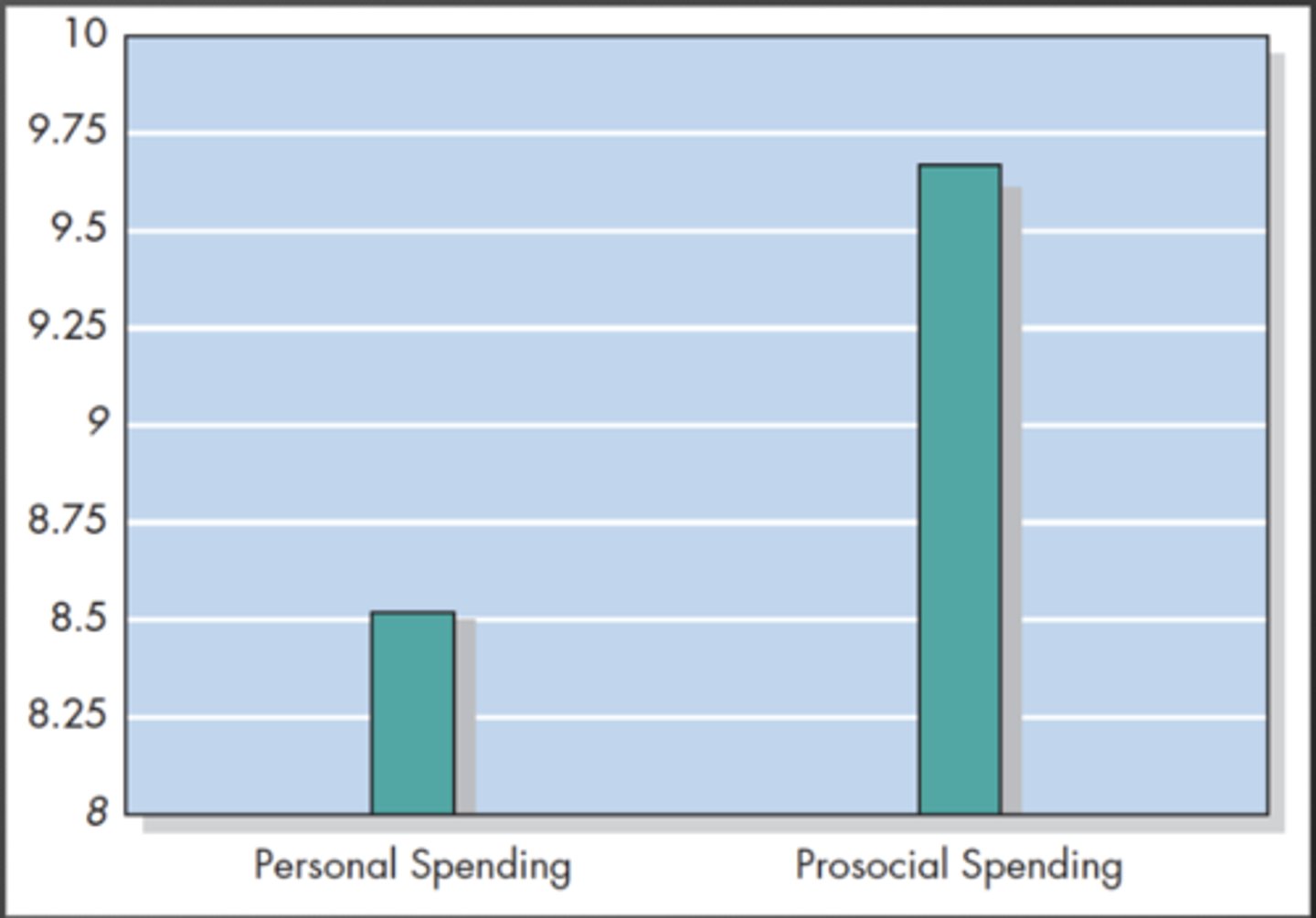
The Joy of Giving Aknin 2015
- spending money or resources on others leads to greater happiness than spending on oneself
- more generous = more emotionally rewarding
Costs of Helping or Not Helping:
- people weigh pros and cons of helping
- helping can have benefits (feeling good or helping someone) but may involve effort, time, and risk
Courageous resistance
- offering sustained and intentional help even when the potential costs are very high
- bravery and long term commitment (people who help others even in danger, personal sacrifice, or social pressure)
alturism
unselfish regard for the welfare of others
- you want to help without any other motives
Empathy-altruism hypothesis
The proposition that empathic concern for a person in need produces an altruistic motive for helping
- if person needs help -> empathetic concern -> alturistic
- if person doesn't need help -> personal distress -> egoistic
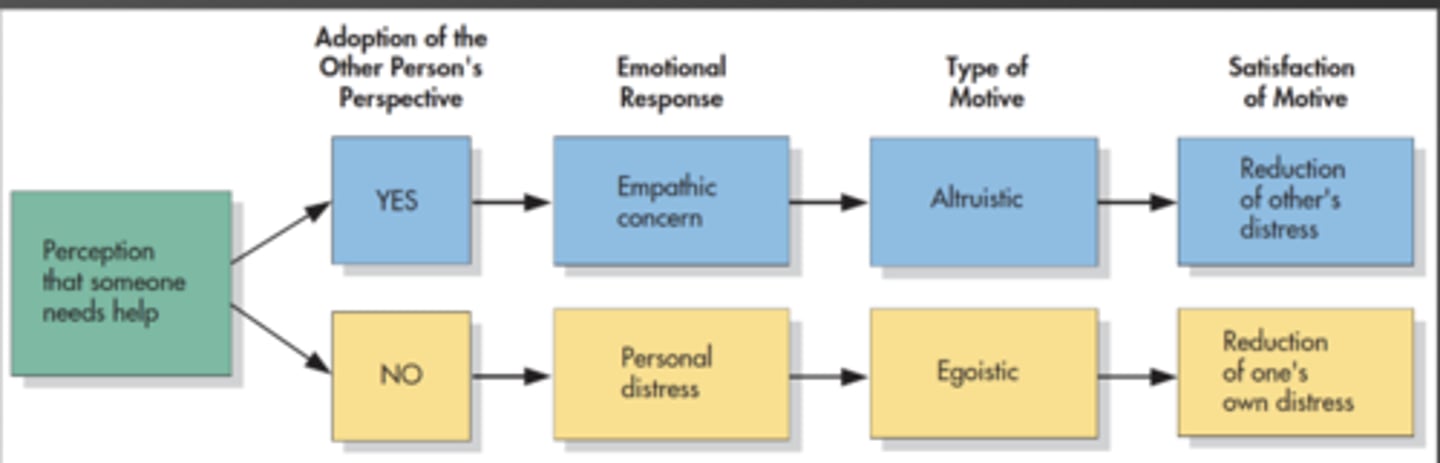
egoistic
motivated by the desire to increase one's own welfare
The Bystander Effect
The effect whereby the presence of others inhibits helping.
Tragic stories of assault, violence, and murder
Latané and Darleythe (founders)
What are the 5 steps of going to help someone (NITHP)
N: Noticing (stimulus overload)
I: Interpreting (pluralistic ignorance)
T: Taking Responsibility (Diffusion of responsibility)
H: How to help (audience inhibition)
P: Provide help
pluralistic ignorance
assuming your thoughts are different than others, meaning you think oh someone thought like me and helped
diffusion of responsibility
the tendency for individuals to feel diminished responsibility for their actions when they are surrounded by others who are acting the same way
- less likely to take action bc someone else will
audience inhibition
reluctance to help for fear of making a bad impression on observers
Time Pressure and Helping Others
Time pressure can conflict with one's good intentions of helping
Samaritan study
participants were asked to give a talk and were placed in different time conditions:
Ahead of schedule → More likely to stop and help someone in need
On time → Moderate likelihood of helping
Behind schedule → Least likely to help
The Bystander Effect Online
The virtual presence of others reduced the likelihood that any one individual will intervene.
When would we jump in to help someone
Feel connected
Multiple helpers
Scorned for failing to help
Leadership role or helping occupation
Getting Help in a Crowd – What You Should Do:
reduce diffusion of responsibility
Making direct eye contact
Pointing to an individual
Giving a clear, direct request (e.g., “You in the blue jacket, call 911!”)
Why Feeling Good Leads to Doing Good
Desire to maintain one's good mood
When Feeling Good Might Not Lead to Doing Good
Costs of helping are high
Positive thoughts about other social activities that conflict with helping.
When Negative Moods Make Us More Likely to Help Others
If we take responsibility for what caused our bad mood
If we focus on other people
If we think about our personal values that promote helping
When Negative Moods Make Us Less Likely to Help Others
If we blame others for our bad mood
If we become very self-focused
If we think about our personal values that do not promote helping
Role Models and Social Influence
Observing helpful models increases helping in a variety of situations
Social influence
the ability to control another person's behavior
Reluctant altruism
Altruistic kinds of behavior that result from pressure from peers or other sources of direct social influence.
Are some people more likely to receive help than others?
Attractive
Not responsible
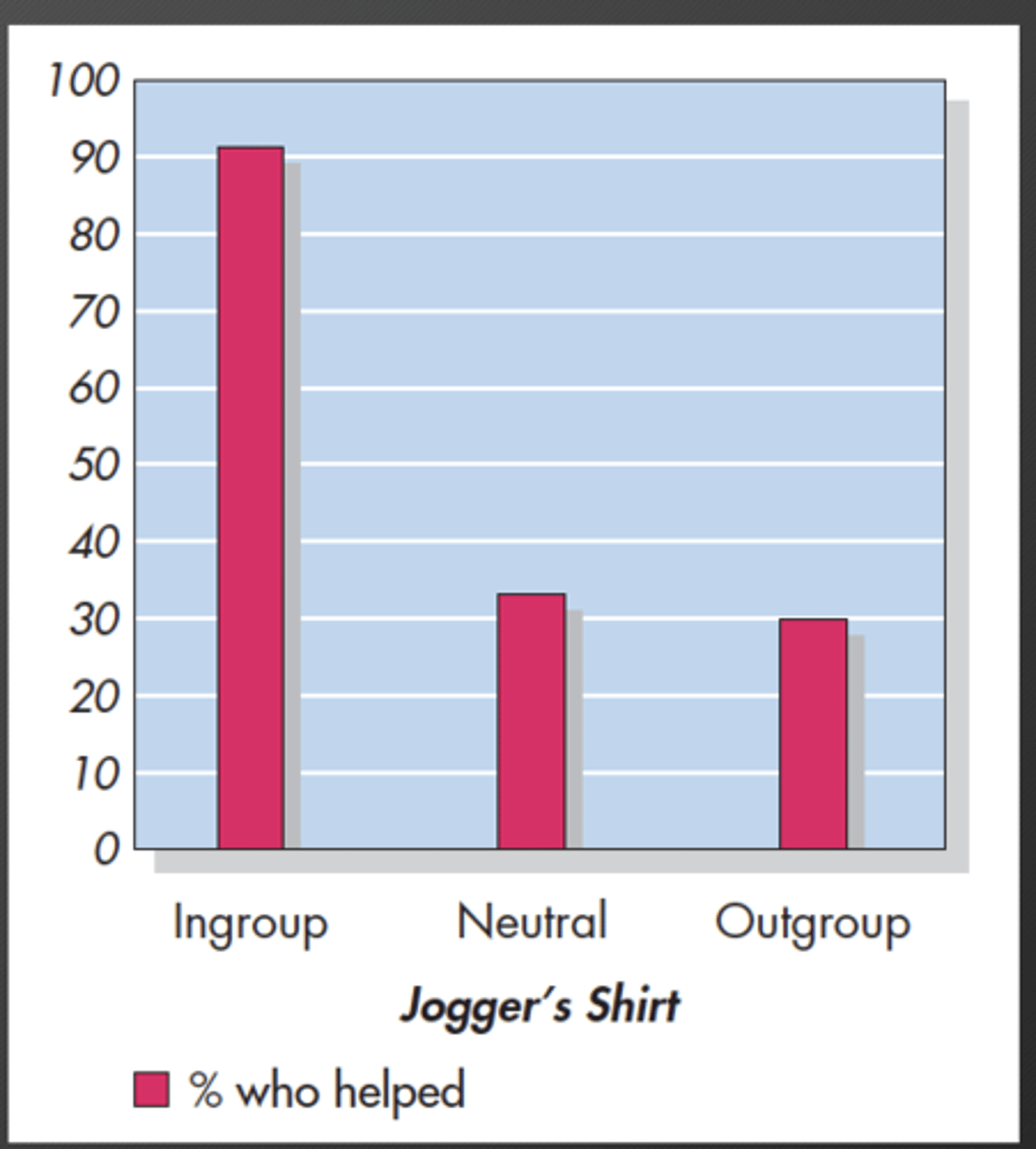
Ingroup members (someone perceived as part of the same group or community)
Helping Ingroup Members
more likely to help ingroup members than neutral or outgroup
Gender and Helping
Men:
- More likely to help in situations that are emergent, risky, or require physical intervention (e.g., heroic acts)
- short term helping
- viewed as courageous
Women:
- More likely to help through nurturing, emotional, and long-term support (e.g., caregiving)
- helping people they have relationships with
- empathetic and interpersonal care
Prosocial behaviors
actions that tend to benefit others, such as doing favors or helping
The "Selfish Gene"
The idea suggests that behavior is driven by the goal of ensuring the survival and reproduction of one’s genes, not necessarily the individual.
Kin Selection:
People are more likely to help relatives because they share genes. Helping family members increases the chances that shared genetics will be passed on to future generations.
Helping Kin When Risks Are High
At low risk, help is given relatively equally to friends, half-siblings, and siblings.
At medium risk, helping declines for friends, remains moderate for half-siblings, and stays higher for full siblings.
At high risk, people are most likely to help siblings, followed by half-siblings, and least likely to help friends.
Reciprocal Altruism
behavior that benefits another with the expectation that those benefits will be returned in the future
Empathy
The ability to understand and share another person's emotional experience.
Perspective taking
Cognitively putting yourself in someone else's position to see things from their point of view.
Empathic concern:
Feeling compassion or care for someone experiencing distress, which often motivates helping behavior
Consolation in Chimps
Chimps show consolation behaviors (hugging, grooming, comforting).
Typically occurs after conflict or distress.
Often done by close friends or relatives.
Indicates empathy and emotional awareness.
Suggests empathy has evolutionary roots beyond humans.
Convergence of Motivations: Volunteering
Long-term helping behavior - multiple motives.
Motivations: Values
We have humanitarian obligation to help others
Motivations: Understanding
I want to learn more about people who are suffering with a particular issue or problem
Motivations: Personal Development
I want to meet new people and make new friends
Motivations: Extrinsic
I want to improve my reputation or career
Motivations: Community Concerns
I want to advocate for this community
Motivations: Esteem Enhancement/Atonement
I want to feel better about myself; I want to make up for my mistakes
Motivations: Requirements and Norms
I need to do a service project for school or because of my religion
Moods and Helping – Sensory Conditions
Good mood = more helping people
Pleasant sensory conditions (nice weather, pleasant smells, good music) = boost mood -> helping people
Altruistic Personality
The type of person that is more helpful
Culture and Helping
- Religions that promote kindness and helping actual behaviors aren't always consistent
- Collectivist Cultures: prioritize group welfare and may help ingroup members more
- Individualist Culture: may help strangers or in public contexts but less consistently
Exchange Relationships
involve helping with the expectation of something in return.
Communal Relationships
helping out of care, without expecting repayment.
Identity Fusion:
A strong sense of oneness with a group—people who are highly fused with their group are more likely to help others who share their identity, even at personal cost.
Sign of Superiority:
Sometimes helping others can be used to signal status or power, implying that the helper is in a position of strength or authority.