Chem 1lc Safety 2021
 Call Kai
 Learn
Learn Practice Test
 Spaced Repetition
 Match
Match Flashcards
 Knowt Play
1/41

There's no tags or description
Looks like no tags are added yet.
Name | Mastery | Learn | Test | Matching | Spaced | Call with Kai |
|---|
No analytics yet
Send a link to your students to track their progress
42 Terms
1. Safety
2. Hazard
3. Risk
4. Exposure
1. freedom from danger, injury, or damage
2. potential source of danger or harm
3. probability of suffering harm because of exposure
4. coming in contact with a hazard
Which type of eye protection provides the best protection against a chemical splash?
Chemical splash safety goggles
R
A
M
P
1. Recognize the hazard of acid to the eyes
2. Assess procedure, their knowledge, & exposure probability
3. Minimize risk of exposure by wearing goggles
4. Prepare for emergencies by locating eye wash
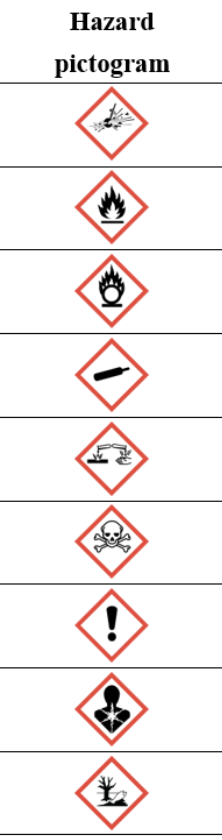
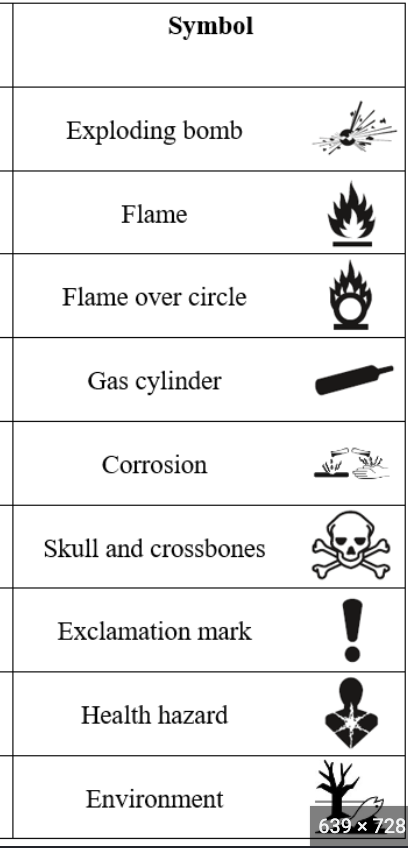
Corrosive
destroys living tissue on contact
symbol: beaker pouring in hand causing destruction
flammable
easily ignites and burns rapidly
symbol: fire sign
irritant
irritates living tissue on contact
symbol: exclamation mark
oxidizer
rapidly oxidizes, can result in combustion
symbol: circle with flame on top
poison
may be fatal to humans and animals
fatal symbol; skull
sensitizer
causes severe immune reaction after repeated exposure
toxic
causes adverse health effects
other symbols:
1. fish and tree
2. shadowed human with star in their heart
3. things shooting out of a ball
4. rolling pin
1. aquatic toxicity
2. carcinogen or toxic
3. explosive
4. gas under pressure
NFPA diamond
Blue = health
red = Flammability
yellow= instability
white = special
What percentage of known chemicals have safety data sheets (SDS)?
0.1%
Who creates SDS?
chemical suppliers
What GHS components are incorporated in SDS?
hazard ratings. precautionary statements, pictograms, signal words and hazard statements
are sds legally required to be accurate?
No, you should read sds from many different manufacturers to be safe.
sds are written for what kind of setting?
Industrial, because of this, chemical hazards and personal protective equipment requirements may be overstated. However, the SDS is like wikipedia, it's a good place to start.
Order the steps for using a SDS to fully understand the hazards associated with the chemical.
1. compare label info to ensure you have the right sds
2. determine the hazard class (corrosive, flammable, etc.)
3. look at procedures for safe handling
In the event of a liquid spill....
large Volatile spills require evacuation
Contaminated clothing must be removed & treated as hazardous waste
Use a spill pillow to absorb liquids with nontoxic vapors
Eyewashes should be used for at least 15 minutes.
If splashed with a large quantity of a chemical, use the shower immediately
If you spill a solid....
Spilled solid should NOT be returned to its original bottle
If solid is spilled on skin wash scrape off, then wash with water
Use a small brush & dustpan when cleaning up a solid.
Key steps to responding to a spill
1. Evacuate
2. Communicate
3. isolate
4. Mitigate
1. if the spill is large and/or hazardous, leave the building or room
2. notify instructor or stockroom staff of the spill location and contents
3. if possible, contain the spill with a spill pillow, sand, etc.
4. spill clean up. your instructor will determine if you are able to assist.
When handling a corrosive...
carry bottles in secondary containers
wear goggles, lab coat & gloves
if exposed wash off skin immediately
use in the fume hood if the corrosive is an inhalant hazard
know the location of eyewash stations & safety showers
wear long sleeved shirts, long pants, & liquid shedding close toed shoes
100mL graduated cylinder
1 Sf after decimal
50mL buret
2SF after decimal
Beakers and Erlenmeyer Flasks
don’t use to measure.
crystal violet solution
warning,
corrosion
!
serious eye irritation
Suspected of causing cancer.
Harmful to aquatic life with long lasting effect
citric acid
warning
!
serious eye irritation
may cause respritory issuues
Sodium hypochlorite solution (bleach…)
corrosive
environmenmt
danger
May be corrosive to metals.
Causes severe skin burns and eye damage.
Very toxic to aquatic life.
Toxic to aquatic life with long lasting effects.
Sodium hydroxide solution
warning
corrosive
May be corrosive to metals
Sodium bicarbonate
not hzardous
Sodium acetate
not hzardous
Hydrochloric acid solution
warning
corrosive
May be corrosive to metals.
Ammonium Hydroxide GR ACS
danger
!
environment
corrosiive
Causes severe skin burns and eye damage.
May cause respiratory irritation.
Very toxic to aquatic life.
Toxic to aquatic life with long lasting effects.
Ammonium chloride
!
warning
Causes serious eye irritation.
harmful if swallowed
call poisin center
Acetic acid 1 mol/L
not hazardous
what in spil kit?
Vermiculite
tartrazine
yellow 5
sunset yellow
yellow 6
allura red
red 40
brillient blue
blue 1
beers law
A=elc
\(A\) = Absorbance (unitless)
\(\epsilon \) = Molar absorptivity or molar extinction coefficient
\(l\) = Path length of the sample, usually in cm
\(c\) = Concentration of the solution, usually in mol/L