Forensic Hair and Fiber Analysis: Techniques and Characteristics
 Call Kai
 Learn
Learn Practice Test
 Spaced Repetition
 Match
Match Flashcards
 Knowt Play
1/24

There's no tags or description
Looks like no tags are added yet.
Name | Mastery | Learn | Test | Matching | Spaced | Call with Kai |
|---|
No analytics yet
Send a link to your students to track their progress
25 Terms
What are fibers?
- Units of matter, natural or man-made, that form the basic element of fabrics and textiles.
- length of 100x its diameter
- made up of polymer
- staple fibers shorter than filament fibers
What does 'denier' measure?
The weight in grams of 9000 meters of fiber.
What is the significance of the term 'Tex' in fiber measurement?
It measures the weight in milligrams per meter of fiber.
what are the main types of natural fibers
- mineral (asbestos)
- animal (wool and silk)
- plant
- stem (linen)
- leaf
- seed (cotton)
What are the four main types of natural fibers made of?
Mineral (Silica), Animal (Protein amino acids), Plant (Cellulose/carbohydrates), and Manufactured fibers (organic molecules)
what are synthetic fibers made up of
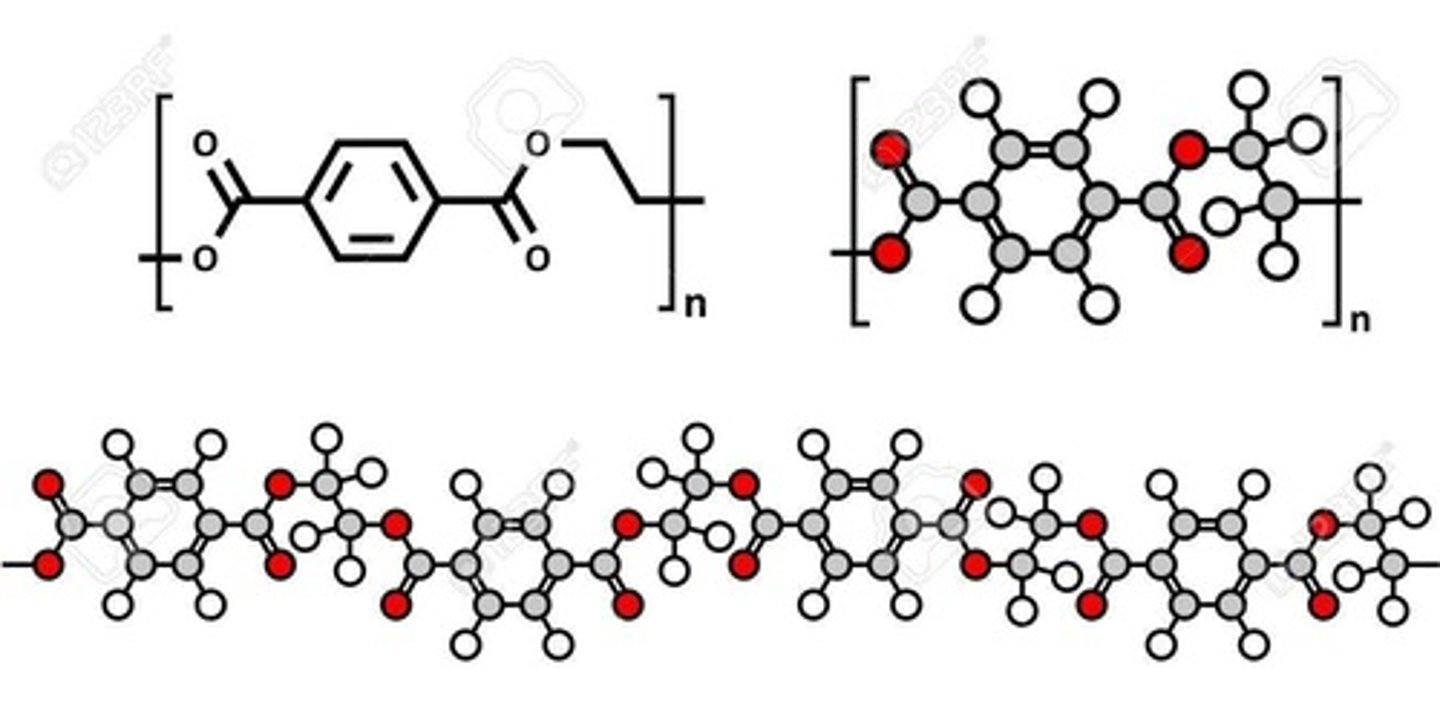
polyester and nylon
What are the main types of manufactured fibers?
Cellulose-based (e.g., Rayon) and Non-Cellulose Based (e.g., Acrylic).
fiber terminology
- yarn: continous strands of fibers used for contruction of fabrics, can be twisted or not twisted
- pile: smaller single yarns twisted together
- thread: used to join pieces of fabric together
- fabric: textile structure produced by interlacing yarns
fiber characteristics
- crimp: waviness
- color: dyes/pigments
- delustrant: TiO2 particles, reduce shine in synthetic fibers
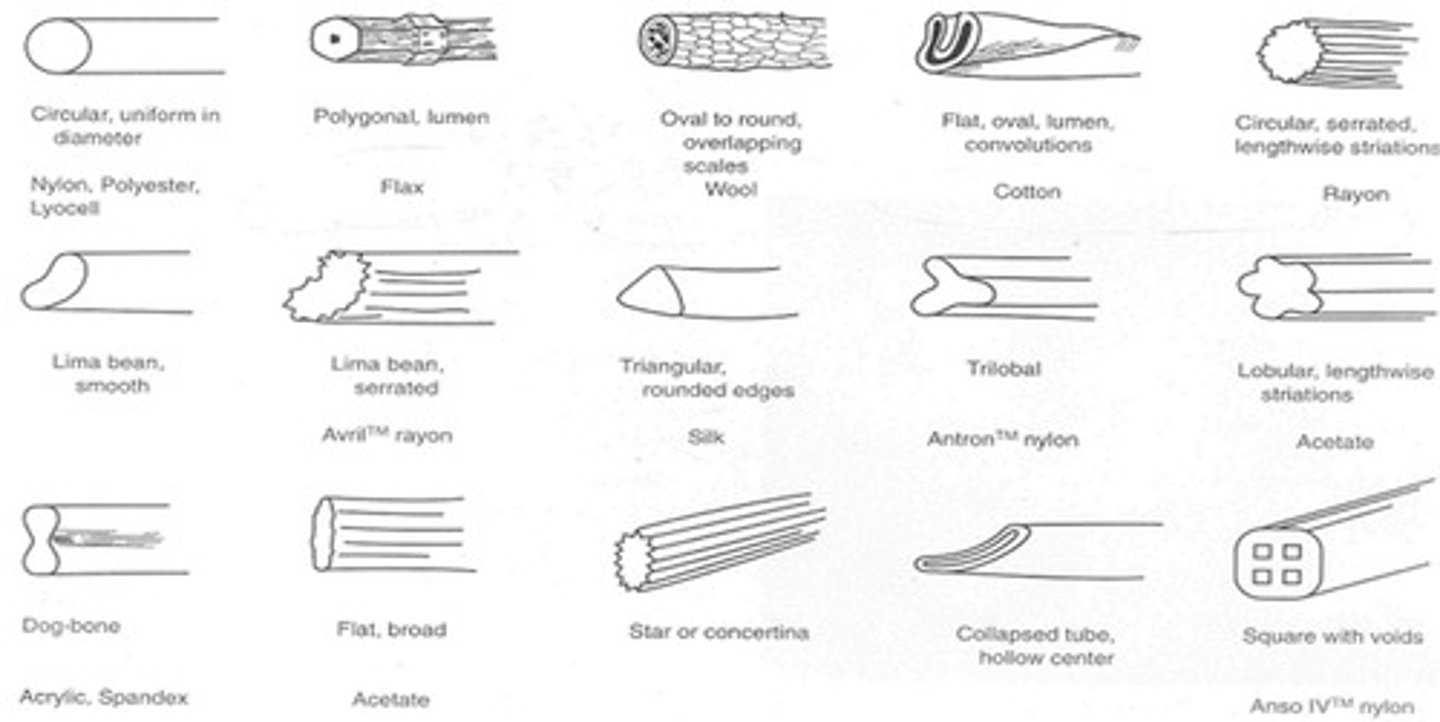
- cross section: shape and use
- diameter: thickness
What are the optical properties of fibers that can be analyzed?
Refractive Index, Anisotropic vs. Isotropic properties, interference colors, and Birefringence (RI difference)
Instrumental methods in fiber analysis
- solubility and flame test -> physical properties
- structure (IF/Raman) and absorbance of color (microspec) -> chemical properties
how to asses color
- dyes: TLC
- pigments: x-ray diffraction
- pleochroism: PLM
- metamerism: MSP - colors match under one light source but not another
what is the spinning dope
a substance formed by extruding fiber forming a substance through holes in spinnert
significance of hair examination
- Locard's Principle
- durable, 100 hairs loss a day
- biological evidence on root
- cost effective
- investigative and circumstantial evidence
growth of hair
- originates from epidermis, grows from follicle, then hardens
- made of keration
What are the three main stages of hair growth?
Anagen (80%), Catagen (2%), and Telogen (12%).
hair macro anatomy
- root: forms in follicle
- shaft: main portion of hair
- tip: distal end
- characteristics: length, curl/straight, curve, color
hair micro anatomy
- cuticle: overlapping outer layer of scales, protective coating and patterns
- cortex: bulk of hair, where pigment is, air bubbles
- medulla: filled with air in center of hair, 4 types
What are the characteristics used to determine the ancestry of hair?
Morphology and color of hair can indicate a person's ancestry
- african, european, asian
- head and pubic hair most accurate
What are the common treatments that can affect hair appearance?
Cutting, dyeing, braiding, and shaving, disease, and insects
- tips of hair provide most info
What are the characteristics of animal hair compared to human hair?
Animal hair often has distinct color banding, larger medullary index, and patterned medulla
types of animal hairs
- guard hairs
- fur hairs
- vibrissa
What are the three basic conclusions that can be drawn from hair comparisons?
Association, Exclusion, and No Conclusion.
What is the role of a comparison microscope in hair analysis?
It is used to examine hair samples side by side for detailed comparison
- known sample consists of 50-100 hairs from all portions of area of interest
- examined from root to tip
What is the significance of the growth stages of hair in forensic science?
Different stages can provide insight into the age and condition of the hair.