Transport - B3.2
 Call Kai
 Learn
Learn Practice Test
 Spaced Repetition
 Match
Match Flashcards
 Knowt Play
1/35

There's no tags or description
Looks like no tags are added yet.
Name | Mastery | Learn | Test | Matching | Spaced | Call with Kai |
|---|
No analytics yet
Send a link to your students to track their progress
36 Terms
adaptations of capillaries for exchange of materials
large surface area
thin walls
fenestrations
how does a large surface area make capillaries adapted for exchange of materials
narrowest blood vessels
capillaries branch and re-join to form a capillary network. → ensures sufficient blood supply to all tissues
→ large total surface area
how do thin walls with pores make capillaries adapted for exchange of materials
one layer of endothelium cells (thin + permeable) → short distance for diffusion (fast + efficient exchange)
basement membrane : supports endothelium cells + allows small/medium sized particles to pass through. Fluid leaks out because blood pressure is higher than surrounding pressure → allows cells to absorb useful substances + excrete waste products.
how do Fenestrations make capillaries adapted for exchange of materials
= large pores in capillary walls
allow larger volumes of tissue fluid to be produced → speeds up exchange between tissue cells and blood
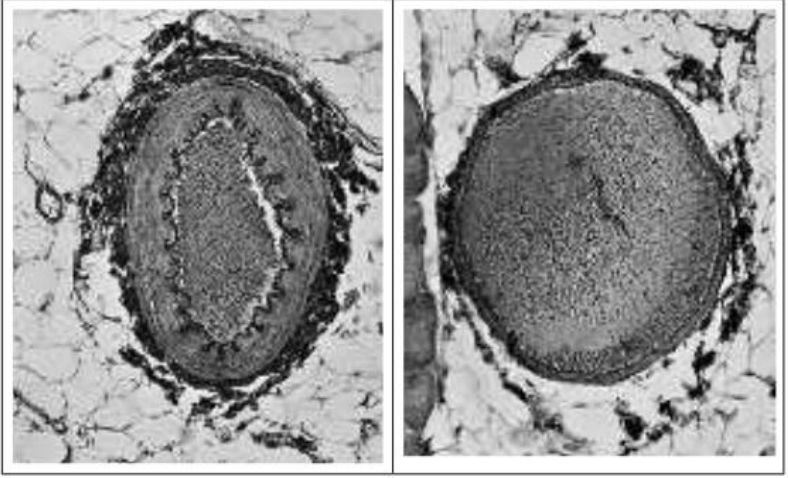
Arteries structure
carry blood away from the heart to organs
high pressure
thick walls + narrow lumen
corrugated inner surface - due to more muscle fibers + collagen + elastin → allow arteries to stretch
Veins structure
carry blood from the organs to the heart
low-pressure
thin walls + wide lumen
valves
smooth inner surface
Adaptations of arteries
tunica externa - tough outer coat of connective tissues with collagen fibers → prevent swelling/bursting of artery
tunica media - thick layer containing smooth muscle (elastin) to help pump blood by transmitting the pulse
tunica intima - smooth endothelium to line artery + reduce resistance to flow (+layer of elastic fibre in some arteries)
thick wall for strength
lumen - narrow space → helps maintain high blood pressure + velocity
Collagen fibers role in arteries
tough rope-like proteins with high tensile strength
→ prevent bursting of artery + aneurysm
present in tunica externa
what happens in the artery after every systole (ventricles of the heart pump)
wall of the artery expands due to high blood pressure → elastic fibers (in tunica media) stretch + store potential energy.
what happens when the ventricles in the heart stop pumping (diastole)
blood pressure declines
elastic fibers (in tunica media) recoil → apply pressure on the lumen → helps pump blood along the artery + makes flow even.
role of smooth muscle cells in arteries
circular → make the lumen narrower when they contract (vasoconstriction) and wider when they relax (vasodilation)
high density of smooth muscle cells is found in arterioles (branches of arteries) → flow rate of blood to tissues in each organ can be adjusted depending on availability + need.
adaptations of veins
tunica externa - tough outer coat of connective tissue to prevent leaks
tunica media - thin layer + few elastic/collagen fibres (due to low blood pressure + no pulse)
tunica intima - smooth endothelium → reduce resistance to flow
thin wall → vein is flexible + can flatten when surrounding tissues apply pressure
wide lumen which accommodates the slow flow of blood
valves in veins
pressure in veins can drop so low that blood flow stops and there is a risk of backflow towards capillaries
valves in main veins prevent this
role of skeletal muscles in venous blood flow
skeletal muscles become wider when they contract pressing the vein flatter raising blood pressure.
traditional way of measuring heart rate
pulse can be felt with the middle + index finger being placed on the carotid artery or radial artery
when you can reliably feel a pulse you can use a timer to count the beats per minute
digital methods of finding heart rates
e.g pulse oximeter
clipped to a finger tip
has LEDs that shine into the finger + detectors to measure how much light is absorbed by the finger (depends on amount of blood in the tissues)
epidemiology definition
research into the nature and spread of diseases in the human population.
can identify risk factors
how does coronary heart disease occur
Lipids (e.g fats + cholesterol) are deposited in the walls of arteries → atheroma (plaque)
atheroma make the lumen of the artery narrower restricting blood flow
if atheroma continues to build up it can cause occlusion (total blockage of artery)
risk factors for coronary heart disease
high blood pressure (hypertension)
smoking
obesity (BMI≥30)
inactive lifestyle
family history of heart disease
old age
high blood cholesterol concentration
diabetes
alcohol
diet with many saturated fats
→ all lead to atheroma
consequences of coronary heart disease
Angina (chest pain)
heart attack - heart muscle is deprived of oxygen + nutrients → damage/death of heart tissue.
heart failure - heart attack damages a significant portion of the heart muscle → heart failure (heart is unable to pump blood to meet the body's needs.)
Arrhythmias (irregular heart rhythms)
stroke
transpiration
water evaporates from the walls of spongy mesophyll cells and diffuses out through stomata
how is water replenished after water loss due to transpiration in plants
cell walls contain a mesh of cellulose molecules which form hydrogen bonds with water
water is drawn from the pores between cellulose molecules due to adhesion between the cellulose + water and cohesion between water molecules (capillary action)
creation of tension in the xylem
when water evaporates out of the leaf through the stomata it creates negative pressure (tension) in the plant due to the cohesion of water molecules
negative pressure/transpiration pull pulls water from xylem vessels up to the leaves
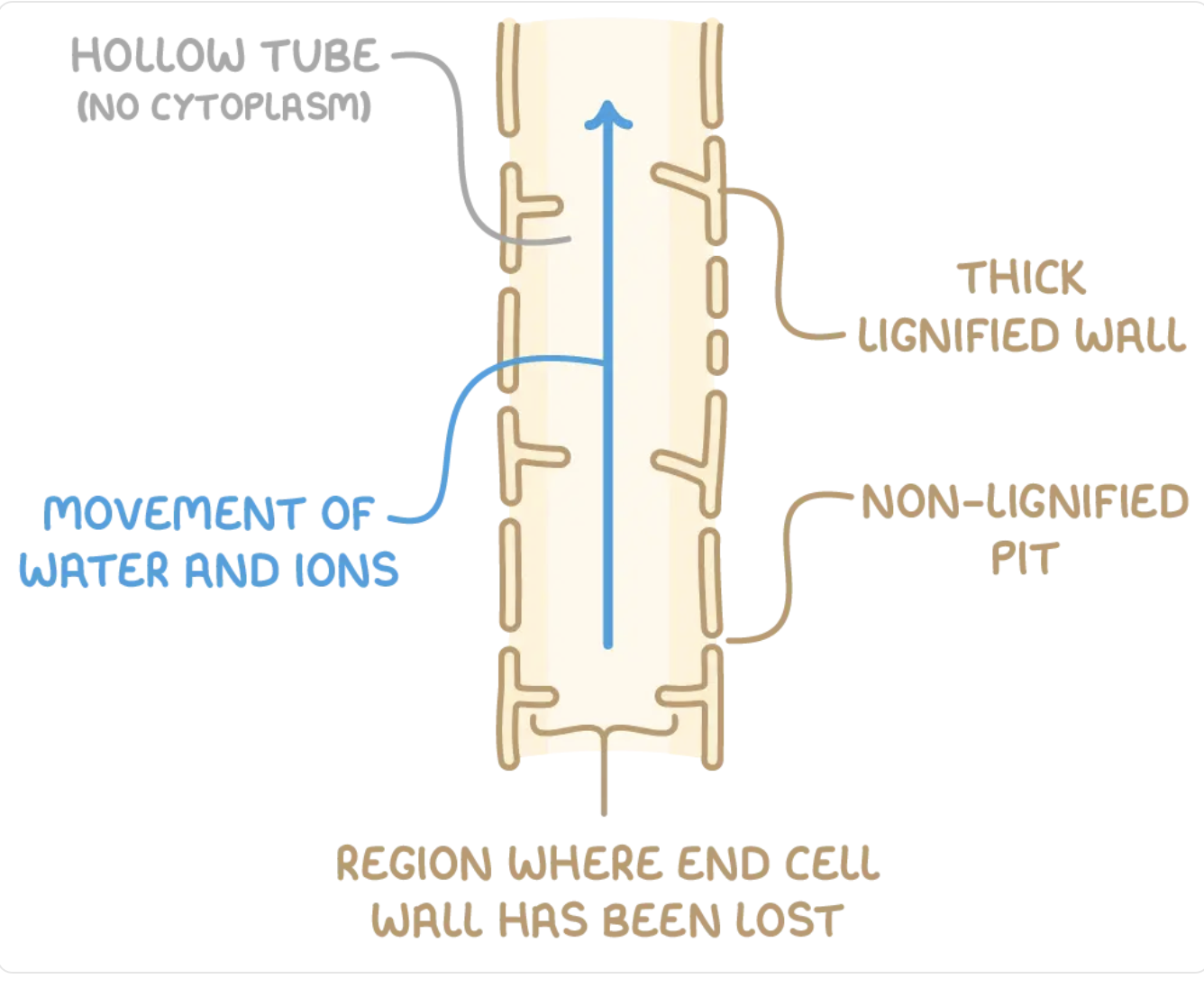
adaptations of xylem vessels for transport of water
lack of cell contents
incomplete/absent end walls
lignified walls
pits
how does a lack of cell contents + incomplete cell walls make xylem vessels adapted for transport of water
during development xylem cells die → end walls are removed + plasma membrane + contents of the cells breakdown
→ long continuous tubes → flow of xylem sap is uninterrupted
how does a lignification + thick walls make xylem vessels adapted for transport of water
the polymer lignin in the side walls of xylem vessels prevent the vessels from collapsing when pressure inside is low due to the plant transpiring
how do pits make xylem vessels adapted for transport of water
lignified walls are impermeable to water
gaps in wall = pits → water can enter + exit → allows horizontal transport of water
provide flexibility in the water transport system → ensure efficient flow even when some vessels are compromised.
dicot plants definition
plants with 2 embryo leaves in their seeds
dicot stem - epidermis
single layer of cells with waxy cuticle on the outside
helps reduce water loss, prevents plant from physical damage, barrier to pathogens
dicot stem - pith
large thin-walled cells
fill the center of the stem
stores nutrients + water
dicot stem - cortex
medium-sized thin-walled cells
strengthen the stem when turgid
stores of starch + nutrients
dicot stem + root - xylem
wide tubular structures with thick walls
transport water + minerals
dicot stem + root - phloem
small thin-walled cells
transport sugars + other foods (e.g amino acids)
dicot cell - cambium
small cells with thin walls that divide by mitosis
responsible for plants secondary growth
dicot root - epidermis
single-layered thin-walled cells with no cuticle (allows water absorption)
absorbs water + mineral ions from the soil using root hair cells
dicot root - cortex
makes up most of root → strengthens + increases surface area
stores starch for energy