L8 Energy Balance P1
 Call Kai
 Learn
Learn Practice Test
 Spaced Repetition
 Match
Match Flashcards
 Knowt Play
1/14

There's no tags or description
Looks like no tags are added yet.
Name | Mastery | Learn | Test | Matching | Spaced | Call with Kai |
|---|
No analytics yet
Send a link to your students to track their progress
15 Terms
what is basal metabolic activity
the enrgy used to maintain normal body function
how is obesity caused
when more energy ingested than expended/ used
what is basal metabolic rate
rate of energy use required to maintain vital body function in thermo-neutral environment (20 degrees)
meaured after an overnight fats
humans 1400-1800 kcal a day
when food is metabolised it splits into
heat → by product lost in exercise
work energy → kinetic energy to move things
stored as chemical energy → e.g in phosphate bonds in ATP, nucleic acids ..
in cell whar is main carrier of trasferable energy
ATP
breaking Pi bonds releases Gibbs free energy
break bonds usuing water
produced in glycolysis and oxidative phosphorylation
what is energy measured in
Joules (J)
what is basal metabilic rate proportional to
lean body mass ( everything ecept fat)
variations in basal metabolic rate
children higher BMR than adults
age decreases BMR - as muslce loss
males higehr BMR thans femaile sas have more muscle
ways of measuring metabolic rate
Direct calorimetry
sit in calonetry chanber which detects the amout of heat released by body
Kilocalorie
indirect colorimetry
measures o2 and co2 levles to estimate enrgy exepnditure and fuel usage
Respirtaory exchange ratio
V of CO2 produced per min/ vol of o2 consumed per min
what happens with the food you consume
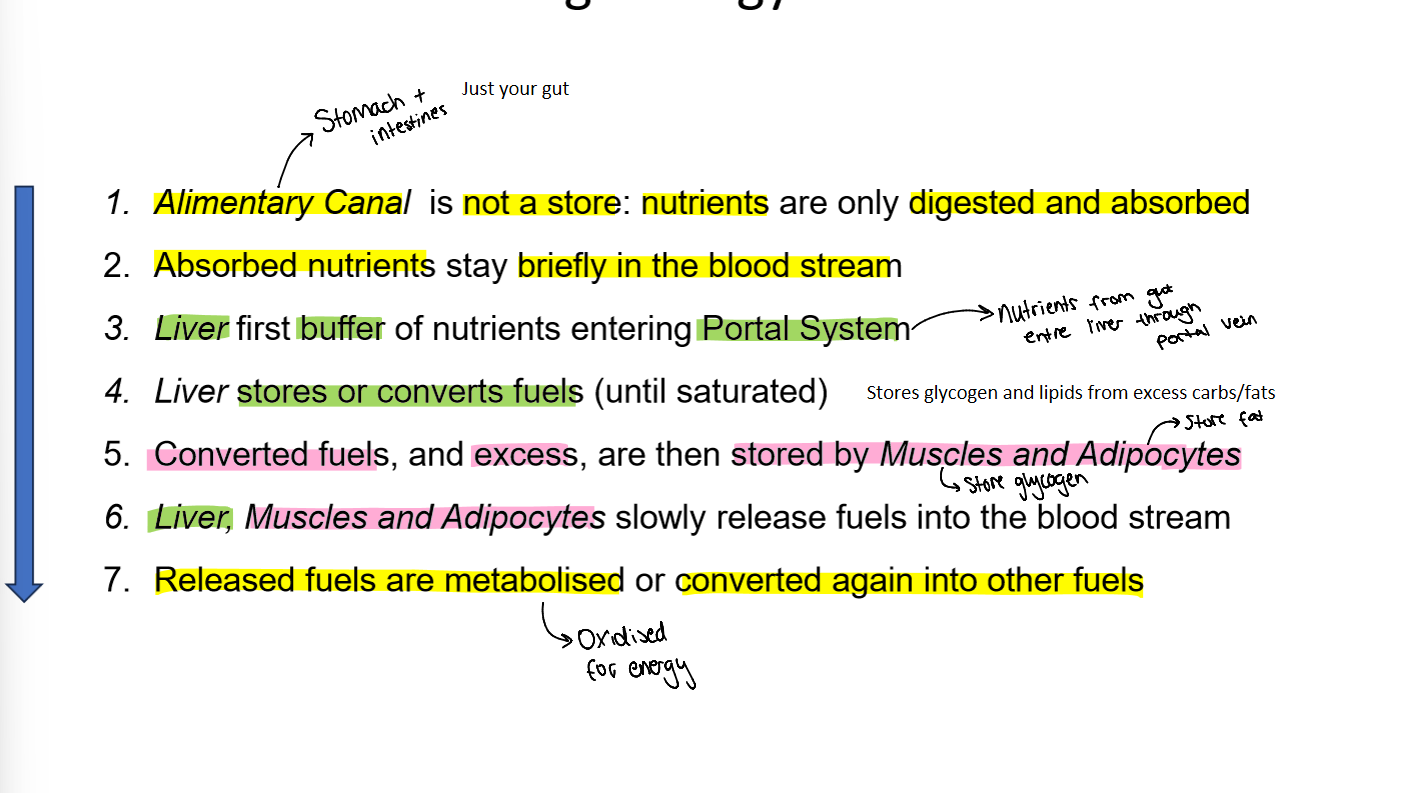
where is most nutrients stored
Adipose tissue → muscle → liver
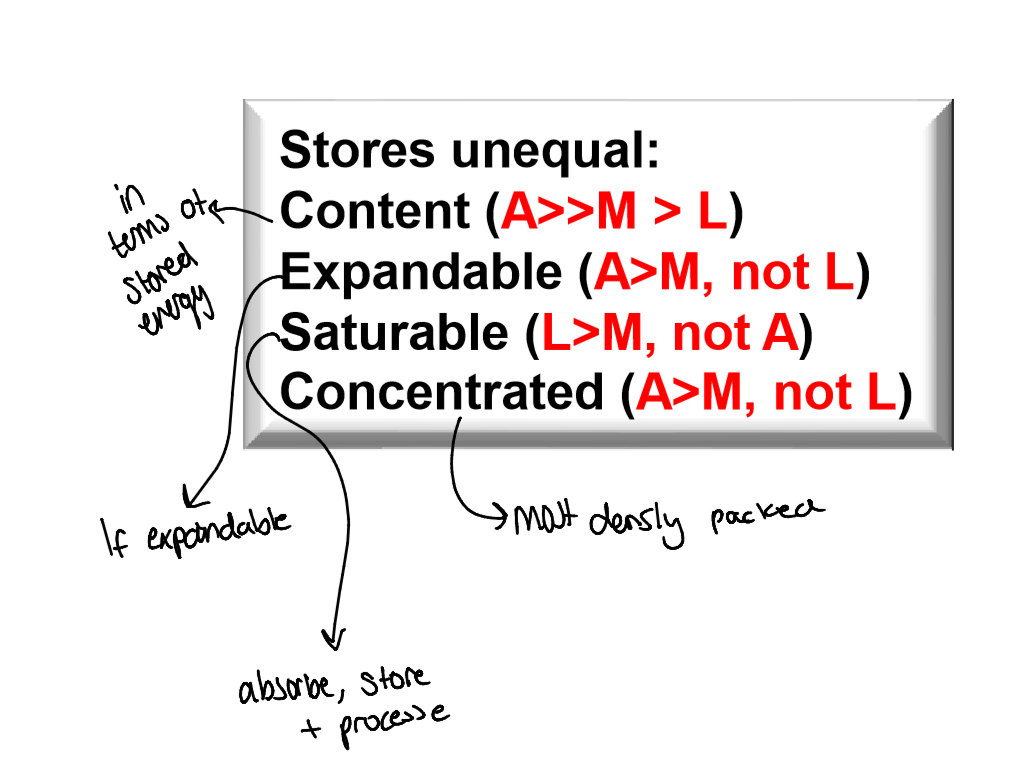
carb uptake
differnet tissues uptaek glucose in difefrent ways
carbs broken donw inot sugars
excess glucose stored as glycogen in liver and msucles
or can be converted into fat and stored in adipose tissue
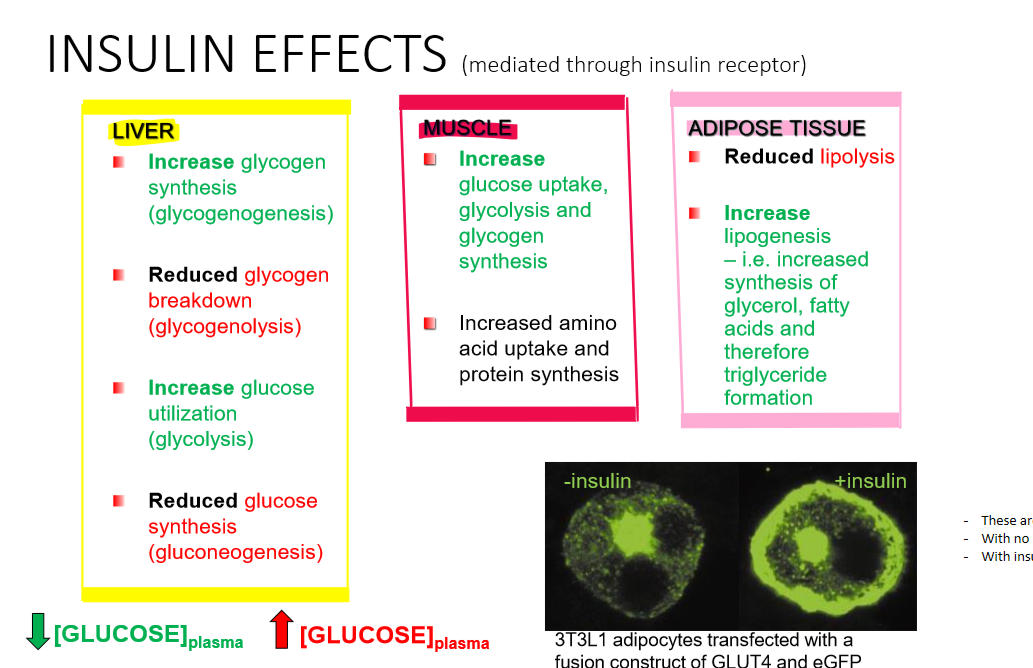
why is insulin improtant
without it cannot store glucose and so cannot use it to increase sugar levles break donw fat and muscle
insulin effects