ConBio Final - short answer question potentials
 Call Kai
 Learn
Learn Practice Test
 Spaced Repetition
 Match
Match Flashcards
 Knowt Play
1/38

There's no tags or description
Looks like no tags are added yet.
Name | Mastery | Learn | Test | Matching | Spaced | Call with Kai |
|---|
No analytics yet
Send a link to your students to track their progress
39 Terms
What are some reasons for ex-situ conservation?
rescue threatened genetic stock
produce organisms for reintroduction & restoration
maintain/store genetic diversity in various forms
What are examples of in-situ conservation (places)?
National parks
wildlife sanctuaries
biosphere reserves
sacred groves
What are examples of ex-situ conservation (places)?
zoological parks
botanical gardens
gene banks
cryopreservation
What are some reasons for assurance colonies?
native habitat unsuitable
no protection in native ecosystem
introduced diseases
massive poaching
genetic material “banking”
What are assurance colonies?
Non-governmental, sometimes researchers who take care of a population of species so they don’t go extinct in wild
What is the main goal of captive breeding in conbio?
Re-establish wild populations in original locations and prevent extinction
What are some issues with ex-situ cultivation?
genetic erosion- less variability
adaptation to “garden” conditions - less adapted to wild
genetic load, hybridization, introgression
conservation procedure
What are some limitations to captive breeding?
cost!!
population size constraints - not 50/500 levels
dysfunctional crosses
changes in adaptation
What is the 50/500 level concept?
Used to determine Minimum Viable Population (MVP)
50 indivs = short-term minimum to prevent inbreeding depression
500 indivs = long-term minimum to prevent risks of genetic drift
How does ex-situ contribute to in-situ?
Captive breeding programs lead to reintroduction and reinforcemnt
What are some methods of captive breeding?
Cross-fostering
Artificial insemination
In vitro fertilization/embryo transfer
Cloning
Captive breeding only has worked when…..?
Animals can go home!
What is the species survival commission (SSC)?
translocation specialist group with guidelines for specific species
What are the 3 types of translocation?
Relocation
Reinforcement
Reintroduction
What are the 4 goals of habitat connectivity?
Dispersal - mates
Daily movement - daily resources
Seasonal Movement - migration
Long-Term location adjustment - species adaptation
What are demes?
isolated subpopulation subjected to selection as unit rather than individuals
How long do ecological corridors have to be monitored for when it comes to results?
foreverrr
What are the 6 types of habitat patches? Which ones are best versus should be avoided?
Habitat
Conduit - good
Barrier - avoid
Filter - avoid
Source
Sink
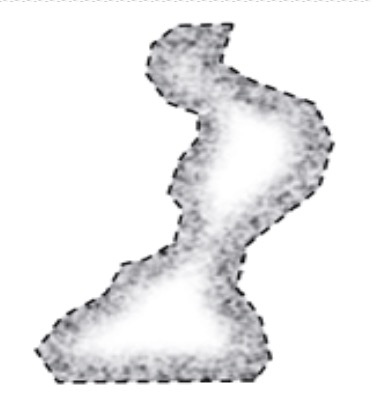
What type of habitat patch is this?
Habitat
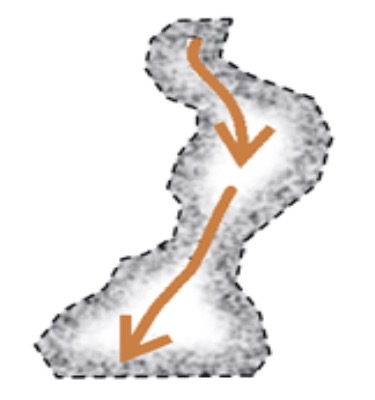
What type of habitat patch is this?
Conduit
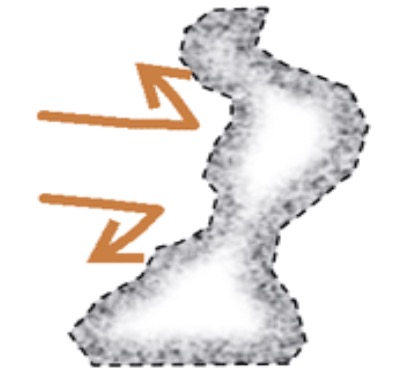
What type of habitat patch is this?
Barrier
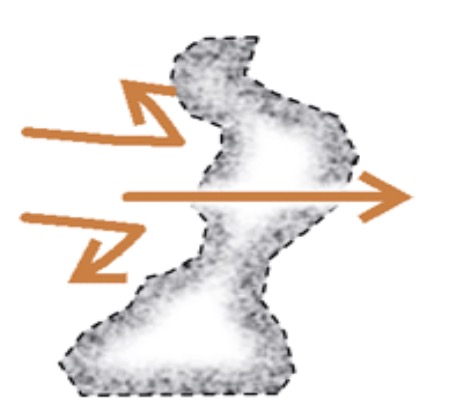
What type of habitat patch is this?
Filter
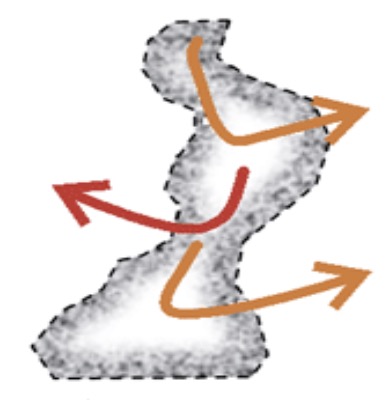
What type of habitat patch is this?
Source
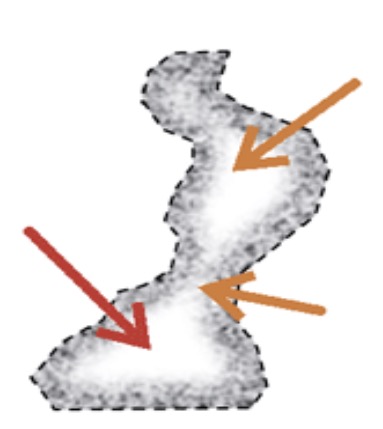
What type of habitat patch is this?
Sink
What are the 4 types of ecological corridors?
Linear
Corridor w/ nodes
Stepping stones
Landscape mosaics
What are some aspects that go into corridor design?
Cost/benefit to species
Community feedback
Site characteristics
Sizing
Why might a corridor fail?
dominated by edge effects
invasive species
conflicting objectives between species groups
exposure to humans
disease
How are species chosen for in-situ area design? (4 reasons)
Rarity
Intrinsic value
Highest risk of extinction
Surrogate species- broader conservation goals (flagship or umbrella species)
What is the Species-Area Relationship equation? What does each letter represent?
S= cA^z
S- species richness
A- area
C- constant
z- slope (rate of accumulation)
What is SLOSS? What are some considerations within it?
Single large or several small
core area vs. edge effects, stochasticity, meta-population dynamics
Do you only need core area for corridor movement and island biogeography conservation?
NO
Core area- nondestructive research and protected ecosystem
Buffer- used for environmental education, ecotourism, recreation, research
Transition- local stakeholders collaborate to develop resources
What are the 4 R’s to designation of protected areas?
Representation
Resiliency
Redundancy
Reality
What is stochasticity? Why are we protecting against it?
Unpredictable events that influence population dynamics
impact gene flow
What are some alternatives to agriculture- agroecology? (4)
Sustainably intensified farming
Organic farming
Diversified farming
Agroecological farming
What is the difference between restoration ecology and ecological restoration?
Restoration ecology- science of restoration
Ecological restoration- practice of restoration
What are the 4 categories of restoration?
Reduced impacts
Remediation
Rehabilitation
Restoration
What shows that a restoration is complete?
absence of threats
physical conditions
ecosystem function
structural diversity
species composition
external changes
What type of process is restoration (typically)?
Bottom-up
What is rewilding? How is it different from bottom-up?
introduce top predators and restore from top down