PS 370:Affective Disorders after Exam 2
 Call Kai
 Learn
Learn Practice Test
 Spaced Repetition
 Match
Match Flashcards
 Knowt Play
1/28

There's no tags or description
Looks like no tags are added yet.
Name | Mastery | Learn | Test | Matching | Spaced | Call with Kai |
|---|
No analytics yet
Send a link to your students to track their progress
29 Terms
Social Neuroscience
Interdisciplinary field that seeks to identify the neural, hormonal, and genetic correlates of social behavior
What is loneliness , effects?
perceived” social isolation— subjective, not number of friends
Evolved as an early warning that connectivity at risk
Compromises health
Cyclical: attentional networks
Define Neuropsychiatric illness. How long?
A syndrome characterized by clinically significant disturbance in an
individual’s cognition, emotional regulation, or behavior that reflects a
dysfunction in the psychological, biological, or development processes
underlying mental functioning.”
• Prevents normal functioning
• Persists > 2 weeks
• Context matters
3 ways of explaining disorders
Biological approach
Psychological approach
Sociocultural approach
Biological approach
Genetics
Brain structural abnormalities
NTs
Psychological approach
Experiences
emotions
personality characteristics
Sociocultural approach
social pressures
cultural norms
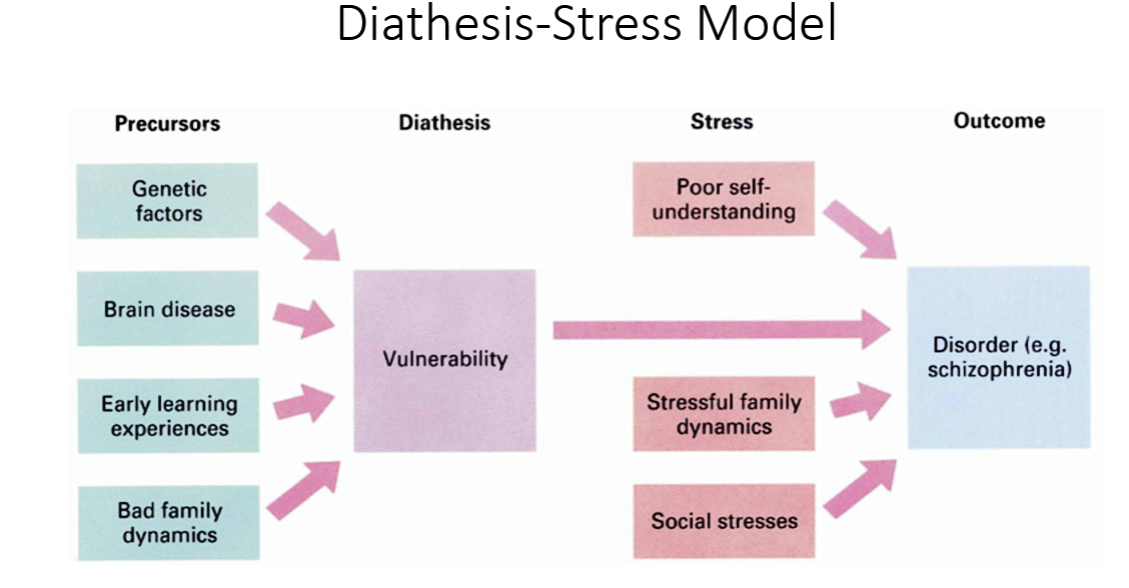
diathesis stress model
a psychological theory that explains how psychological disorders develop through the interaction of a person's predisposition (diathesis) and external stressors. It suggests that individuals with a genetic or psychological vulnerability may develop disorders like depression or anxiety when faced with significant life stress.
Precursors/risk factors of DSM
Genetic factors
brain disease
early learning experiences
bad family dynamics
What do the risk factors lead to
vulnerability
What kind of things/ stress leads to psychological disorder in DSM?
Vulnerability
Poor self-understanding
Stressful family dynamics
social stresses
Draw the dsm model
yipee
Define mood disorders, and what are the types
Elevating or lowering of a mood, outside of the normal range of emotion
DSM-5 categorizes into depressive disorders and bipolar disorders
Major depressive disorders
Withdrawal from pleasurable activities
• Disturbances in appetite, energy levels, sleep, and cognition
• Feelings of hopelessness, guilt, worthlessness
Causes of MDD
Biological
Psychological
Sociocultural
Sociocultural causes of MDD
Women more than
men
• Low socioeconomic
status
• Unemployment
• Global crises
Psychological causes of MDD
Learned helplessness
• Rumination - continuous dwelling on negative thoughts.
• Attributional style - putting blame on one self
Biological causes of MDD
Gene expression
Low numbers of receptors for serotonin and norepinephrine
Disrupted neural activity in the PFC could be due to rumination
Gene + MDD
Gene (5-HTTLPR) leads to a higher likelihood of depression is high
Monoamine hypothesis and what are the evidence in suport of it.
Theory that depression is caused by insufficient activity of MAergic
neurons
• Evidence in support of this hypothesis: serotonin, norepinephrine, dopamine
• Drugs that ↑ MA activity ↓ symptoms of depression;
• Drugs that ↓ MA activity → depression
Brain structure and function in MDD
People with MDD show increased
• activity in medial PFC
• activity in amygdala
People with MDD show reduced
• activity in ventral striatum
• hippocampal volume
Effect on sleep
do not reach stage 3 / deep sleep
waking up more frequently in sleep
Sleep stages are inconsistent
Earlier REM.
therapies for MDD
lifestyle changes
drug therapies
brain stimulation
Pharmacological treatments for MDD/ drug therapies
Monoamine oxidase inhibitors (MAOIs)
• Tricyclic antidepressants
• Serotonin reuptake inhibitors (SSRIs) and norepinephrine reuptake inhibitors (NRIs)
antidepressants and placebo
Antidepressants are only 20% more effective than placebos • In an fMRI study, placebos and antidepressants caused the same neural changes (Peciña et al., 2015)
Brain stimulation techniques
Electroconvulsive Shock Therapy
• Controlled seizure
• Treatment-resistant depression
• Effective, can lead to memory loss
Deep Brain Stimulation
• Electrodes implanted in brain
• Treatment-resistant depression
• Effective
Bipolar disorder
mental disorder characterized by periods of depression and abnormally elevated mood, lasting days to weeks, and in some cases months.
changes in NT and brain structure during bipolar disorder
decrease in grey matter
hippocampus shrinkage
Dopamine: Elevated levels can lead to manic episodes, while decreased levels may contribute to depressive states.
Serotonin and Norepinephrine: Fluctuations in these neurotransmitters are linked to mood instability, affecting both manic and depressive phases.
increased activity in the amygdala and decreased activity in the prefrontal cortex, leading to challenges in emotional regulation and cognitive functioning
What are the negative brain and life consequences of bipolar disorder?
Bipolar disorder can lead to structural changes in the brain, such as reduced gray matter in areas responsible for emotion and decision-making, which may affect memory and cognitive functioning. Additionally, it can result in significant life challenges, including strained relationships, difficulties at work or school, and an increased risk of suicide and substance abuse.
Pharmacological treatments for bipolar disorder
Lithium - mood stabilizer
elimates manic episodes
rapid therapeutic effetcs