Classification Part 1 test
 Call Kai
 Learn
Learn Practice Test
 Spaced Repetition
 Match
Match Flashcards
 Knowt Play
1/31

There's no tags or description
Looks like no tags are added yet.
Name | Mastery | Learn | Test | Matching | Spaced | Call with Kai |
|---|
No analytics yet
Send a link to your students to track their progress
32 Terms
Taxon
A group of organisms in a classification system. The basic taxon in the Linnaean System is the species, a group of organisms that can breed and make babies.
Classification
Organization according to shared characteristics.
Taxonomy
The science of naming and classifying organisms, gives scientists a way to refer to species and organize the diversity of living things. System called Linnaean System.
Binomial Nomenclature
Used in the Linnaen system that gives each species a two part scientific name in latin. (Genus, Species)
Genus
Includes one or more physically similar species that are thought to be closely related. Ex: Quercus includes 500 oak tree types
Species
Follows genus name, most specific taxon, always lower case.
Eight Levels of Classification
Domain, Kingdom, Phylum, Class, Order, Family, Genus, Species
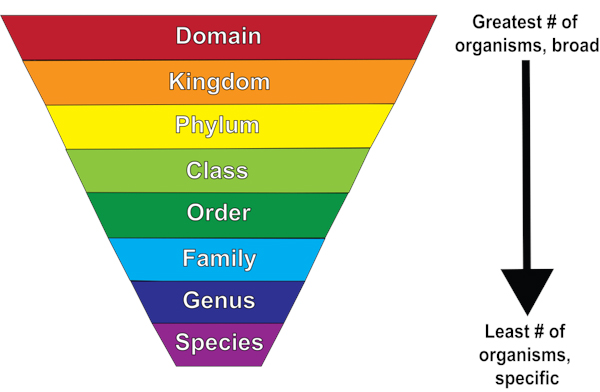
Modern Classification
Relies heavily on genetic similarities. Shown through Phylogeny and Cladistics. Ex: In 1866 only 2 classes, plantae and animalia, then single celled organisms came and became kingdom Monera.
Phylogeny
The evolutionary history for a group of species is called a phylogeny. Proposed evolution history of a species.
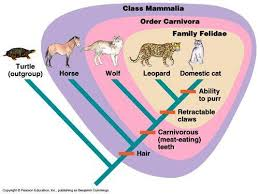
Cladistics
Classification based on common ancestry and evolutionary relationship. Goal is to place species in the order which they descended from a common ancestors
3 Domains
Domain Bacteria: Includes Prokaryotes, Kingdom Bacteria
Domain Archaea: Similar to eukaryotes chemically and genetically (but is prokaryote), kingdom archaea.
Domain Eukarya: Includes all eukaryotes, Kingdom Protista, Plantae, Fungi, Animaliasss
Virus
Obligate intracellular parasites, goes from cell to cell, not all species are susceptible to the viruses, not all tissues are susceptible to the same virus, depending on if it has the right receptors for a virus to attach the host cell.
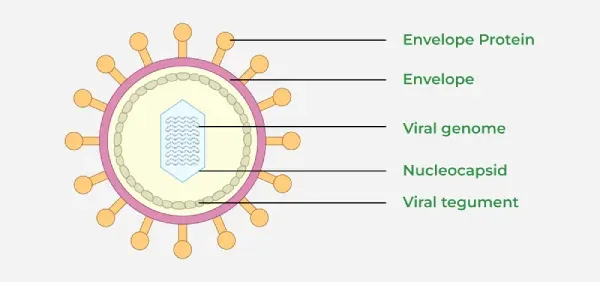
Virus Structure
1) Genetic Material (DNA or RNA)
2) A Protein Shell = Capsid
3) Many have a lipid envelope.
Classification of Viruses
DNA Viruses Ex: Adenovirus, RNA Viruses Ex: Influenza, Bacteriophage.
Bacteriophage
Only infects bacteria and used in to treat bacterial diseases in humans when antibiotics dont work.
Viral Infection Cycle
1) Attaches to host cell.
2) Enters and the capsid falls apart.
3) Replication & gene expressions, releases copies of genome and sends info of what to copy, then gets uses ribosomes to create a capsid.
4) Assemble and leaves the cell to go infect another.
Steps: Attachment, Entry, Replication and Gene Expressions, Assembly, Release
Cytopathic Effects
Virus enters cell and makes all components to make more viruses, leads to cell dying and to creating more viruses
Vaccines
a new pathogen (thing that makes diseases) infects a person, introduces a new antigen (thing on viruses), for each new antigen, the immune system builds a specific antibody (senses antigen to fight viruses) .
It introduces the immune system to a pathogen before one occurs and preps the immune system for a future encounter.
Prokaryotes (Archaea and Bacteria)
Classified by their need of oxygen ( Obligate Aerobes ), are poisoned by oxygen (Obligated Anaerobes), can grow in areas with oxygen or no oxygen. Prokaryotes have similar structure and share similar processes Ex: Bacteria and Archaea. They reproduce asexually through binary fission and exchange genes in conjugation.
Prokaryote Structure that are similar.
Plasmid: a small piece of genetic material that can replicate separately form the prokaryote’s main chromosome.
Circular DNA and Ribosomes
Prokaryote Shapes
Classified by Shape:
Bacillus = Rod shaped, Coccus = Sphere, Spirilla = Spiral,
Classified by Arrangement:
Staph = Bunch of grapes, Strep = Chain
Archaea
Recently discovered, many of them live in extreme conditions and areas (Extremophiles), no obvious pathogens, found in almost every habitat.
Bacteria
It can make us sick by invading tissues and attacking cells or by making poisons that can be carried by blood to sites throughout the body. A toxin is a poison released by organism.
CAN BE DEALT WITH ANTIBIOTICS
Antibiotics
Chemicals that kill or slow the growth of bacteria, it stops bacteria from making cell walls.
Antibiotic Resistance in Bacteria
Resistance occurs after natural selection, where individuals who are more resistant survive and reproduce to make bacteria that can survive these antibiotics called Superbugs. Can cause overuse to favor the bacteria, underuse can cause them to become drug resistant, Misuse can cause them to become resistant to multiple antibiotics.
Protist
Single celled, most diverse kingdom, all a re eukaryotic, can be animal and fungus-like.
Fungi
No chlorophyll, heterotrophs, cell walls made of chitin (polysaccharide), decomposers, all are eukaryotic, most are multicellular, has no true roots.
Fungi Structure
1) Hyphae: Singular root of a fungi, cytoplasm can flow freely throughout it, surrounded by a plasma membrane and cell wall of chitin.
2) Mycelium: Is an underground network of hyphae.
3) Fruiting Body: Reproductive strucutre of a fungus that grows above ground. Ex: Mushrooms.
4) Spores: Things that is released from the fruiting body to spread.
Sac Fungi
Multicellular sac fungi, the sacs are called ascus that releases spores, morels, truffles, yeasts are single-celled sac fungi.
Bread Molds
Often found on spoiled food, spore producing structures are called Sporangia, at the tip of their hyphae.
Club Fungi
Their fruiting bodies look like clubs, releases their spores when someone strikes the mature fruiting body. Includes mushrooms, puffballs.
Mycorrhizal Relationship
Symbiosis/ mutualistic partnerships between fungi and the roots of certain plants. Fungus helps aids in nutrient and water absorption in exchange for carbohydrates (sugars) produced by the plant.