equine internal skin | Quizlet
 Call Kai
 Learn
Learn Practice Test
 Spaced Repetition
 Match
Match Flashcards
 Knowt Play
1/45

There's no tags or description
Looks like no tags are added yet.
Name | Mastery | Learn | Test | Matching | Spaced | Call with Kai |
|---|
No analytics yet
Send a link to your students to track their progress
46 Terms
what are urticaria
raised circular cutaneous wheals on the skin
causes of urticaria
insect bites
plants
drug reaction
allergy
diet
transfusion reaction
signs of urticaria
realised circular lumps that range from 0.5-5cm
could have slight fever and diarrhoea
only itchy with stings from plants
urticaria could be pale in unpigmented skin
looks like colic symptoms when scratching but lumps on skin
what to watch for when be around with animal with urticaria
animal could suddenly jump or kick or take off and gallop due to the sensation of the lumps on their skin
treatment of urticaria
corticosteroids
anti-histamines
epi: with allergy
cooling agent
cause of summer recurrent dermatitis
hypersensitivity reaction to allergens in the saliva of culicoides
symptoms of summer recurrent dermatitis
fly bites and causes an itchy where the fly bites was
can cause self trauma of broken hairs and bleeding skin when they over scratch
places where the culicoid fly targets on the horse
most common: mane, tails and dorsal midline
less common: head, ears and ventral midline
treatment of summer recurrent dermatitis
repellents and insecticides
anti-histamines: hydroxylazine
anti-inflams: predniolsone
cause of louse infection
werneckiella spp: biting
heamatopenius spp: sucking
signs of louse infection
pruritis
alopecia
skin excoriations
anaemia
drop in condition
pathology of louse infection
finding moving lice with microscopy
treatment of louse infection
ivermectin orally
treat equipment with: pyrethrin, permethrin, crymethrin
causes of mange infection
sarcoptes scabei: head, neck and body
psorcoptes equi: head, mane and tail
chorioptes bovis: distal parts of the limbs
signs of mange infection
prutritis
alopecia
biting and icing of parts of the skin
crusting
pathology for mange
deep skin scrape
typical sign for chorioptes bovis
greasy heel develops
treatment of mange infection
ivermectin orally
topical fipronil
flumethrin
causes of free living mite infection
neotrobicula: autumn and summer
ascus in the summer pasture
signs of free living mite infection
prutiritis
alopecia on the legs
stamping of legs
where does the mite affect on the body
affects the head
ventral abdomen
distal parts of the legs
pathology of the free living mite infection
skin scraping
treatment of free living mite infection
insecticide: crymethrin, pyrethrin, fibpronil
cause of helminths or oxyuris infection
oxyuris equi
signs of oxyuris infection
rubbing the tail off surfaces
causes alopecia at the base of the tail
pathology of oxyuris infection
tape test
adults lay the eggs on the surface of the perineum stuck on with glue
treatment of oxyuris infection
ivermectin orally
causes of dermatophytosis
trichophyton
microsporum
signs of dermatophytosis
prutritis
crust
standing up hairs
erythema on unpigmented skin
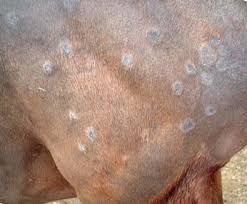
pathology of dermatophytosis
culture of the hair and crust
wood lamps test
what is a positive result of the wood lamps test
microsporum gives a positive free yellow fluorescent colour
treatment of dermatophytosis
systemic: griseofulvin
topical: enconzal, myconazal and nystatin
clean environment and equipment
causes of dermatophilosis
dermatophilus app bacteria
2 forms of dermatophilosis signs
rain scaled on the dorsal trunk
mud fever or rain rot on the distal part of the limbs
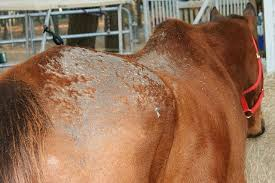
signs of dermatophilosis
painted struck type lesion with thick concave crust with puss surrounding
pathology of dermatophilosis
culture
treatment of dermatophilosis
bring horse into clean dry environment
wash with keratinolytic shampoo
remove crusts
wash with chlorhexidine
give systemic antibiotics
keep in clean dry environment with good bedding
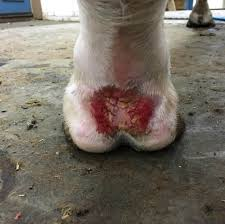
what is gressy heel syndrome
inflammation of the distal part of the limb at the pastern joint at player and planter
signs of gressy heel syndrome
hairless
erythema
exudate
ulcerations
erosions
thickening of skin
fissures
Scaulding
crusting
pathology of gressy heel syndrome
microbiology and parasitology
treatment of gressy heel syndrome
bring into dry clean environment
shave and wash
remove the crusts
apply anti-parasitic, fungal and bacterial
causes of folliculitis
secondary to bacterial infection of staph and strep
bacteria causing folliculitis
staph: hyicus intermedius, aureus
strep: zooepidemicus and equi
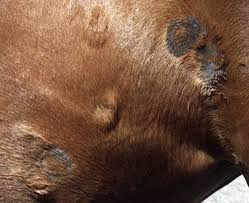
signs of folliculitis
papule -> pustule-> exudation and crust
painful and pruitritic edema with access =cellulitis
pathology of folliculitis
deep smear
biopsy
culture
treatment of folliculitis
wash with i2 and chlorohexidine
treat with systemic ab sulphonamides and trimethoprim