SAM.D4: Flea and Flea Control
 Call Kai
 Learn
Learn Practice Test
 Spaced Repetition
 Match
Match Flashcards
 Knowt Play
1/49

There's no tags or description
Looks like no tags are added yet.
Name | Mastery | Learn | Test | Matching | Spaced | Call with Kai |
|---|
No analytics yet
Send a link to your students to track their progress
50 Terms
Fleas are
positively geotactic - burrow down.
negatively phototactic - go away from light.
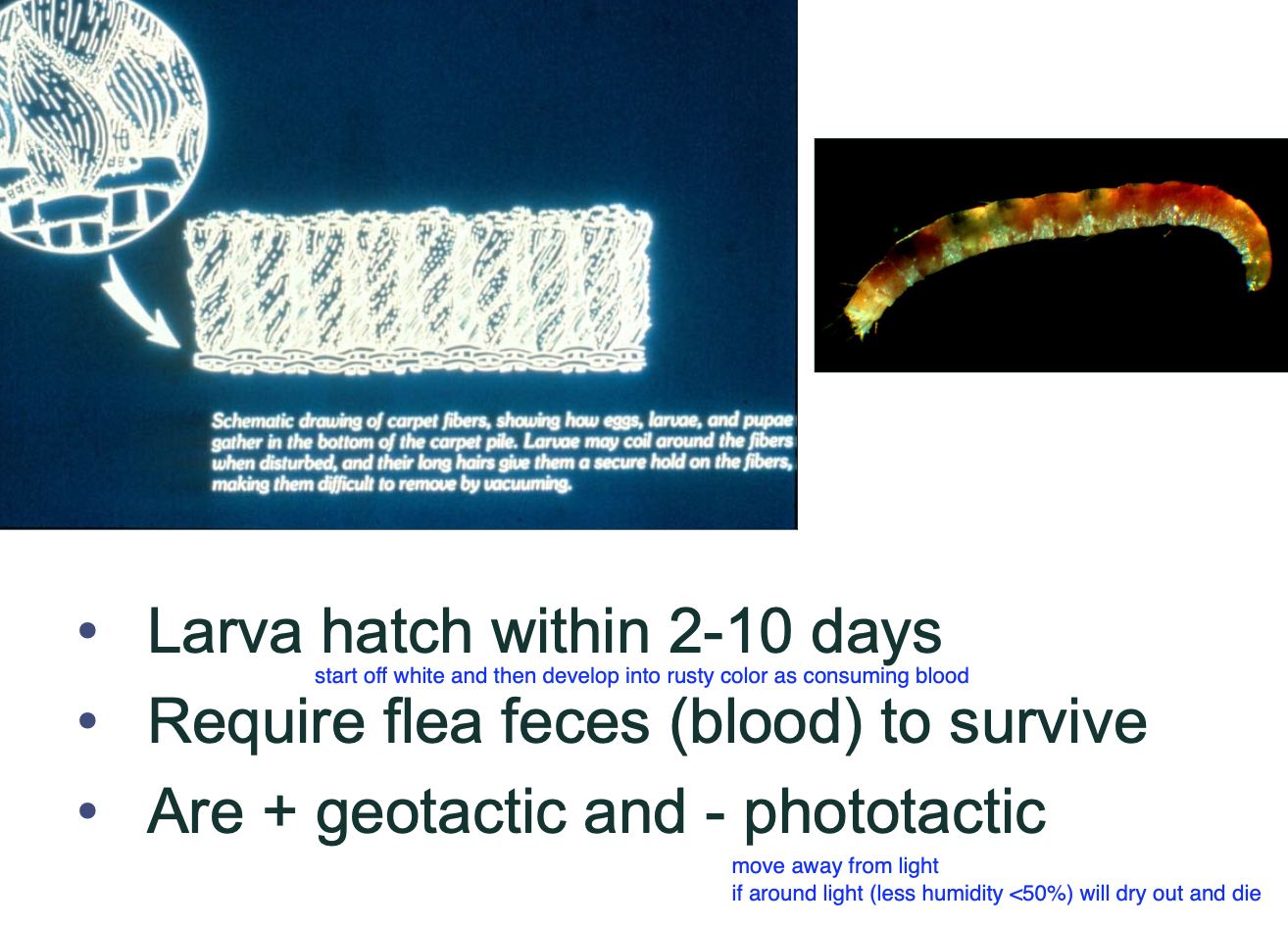
Fleas require
blood to survive.
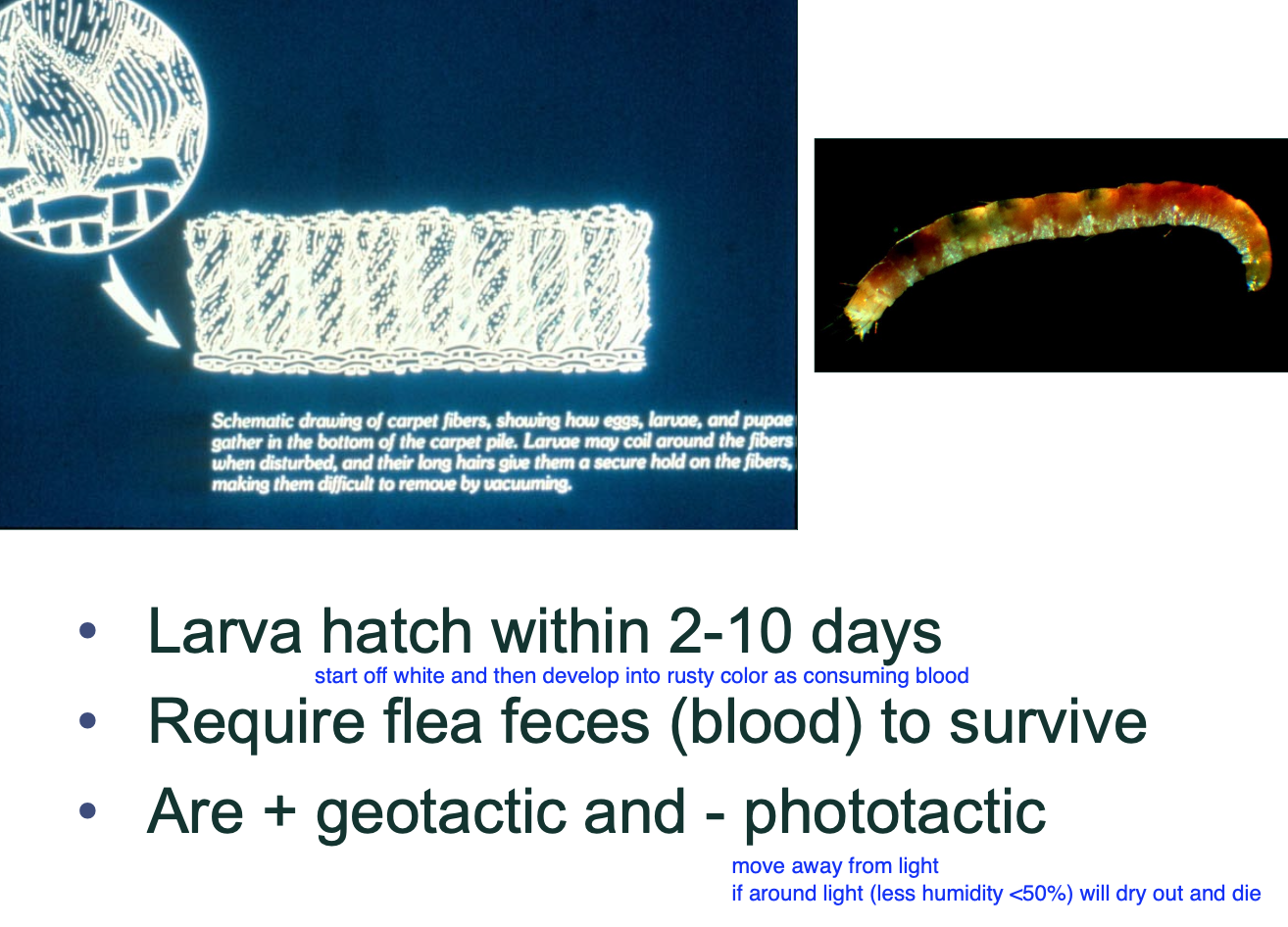
Fleas will die if (2)
they do not consume blood.
relative humidity <50%.
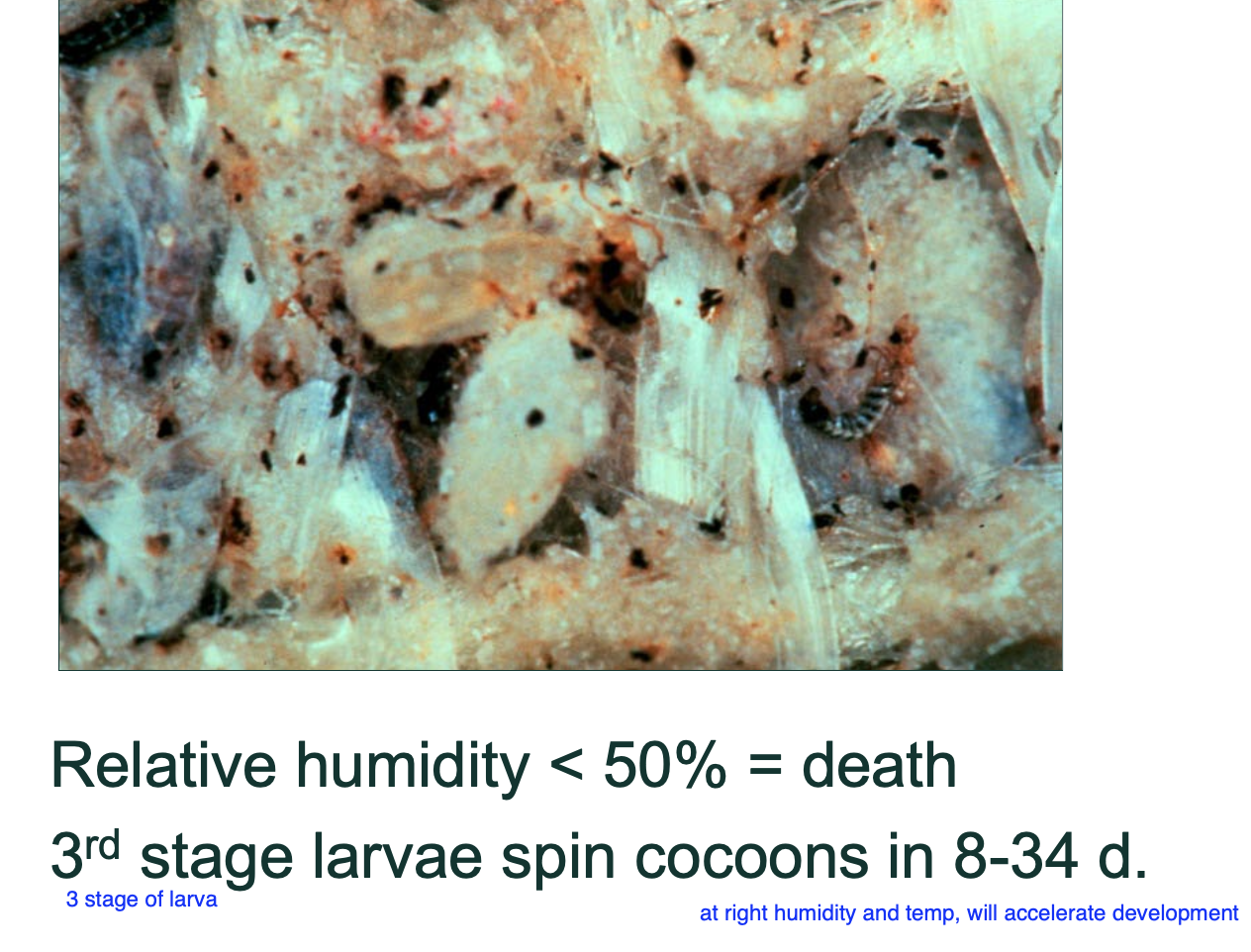
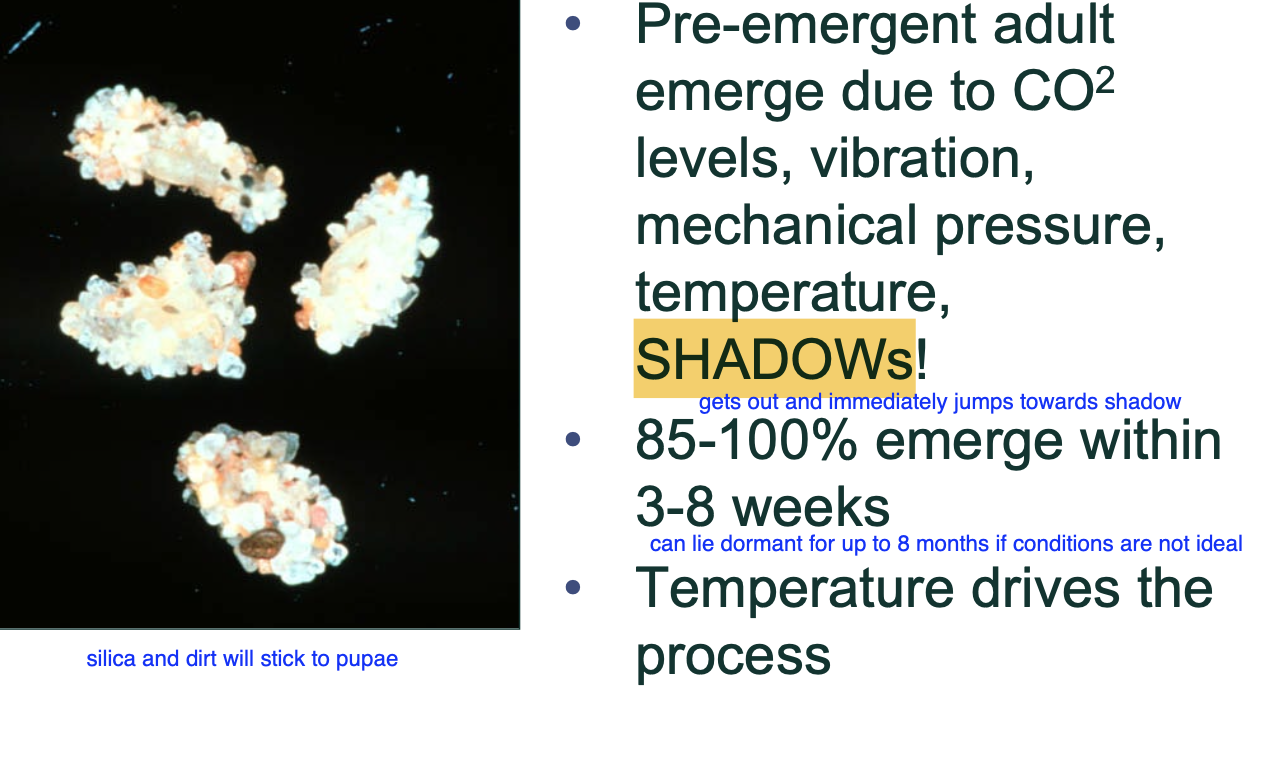
Pre-emergent flea adults emerge due to
CO2 levels.
vibrations.
mechanical pressure.
temp.
Most significant = shadows.
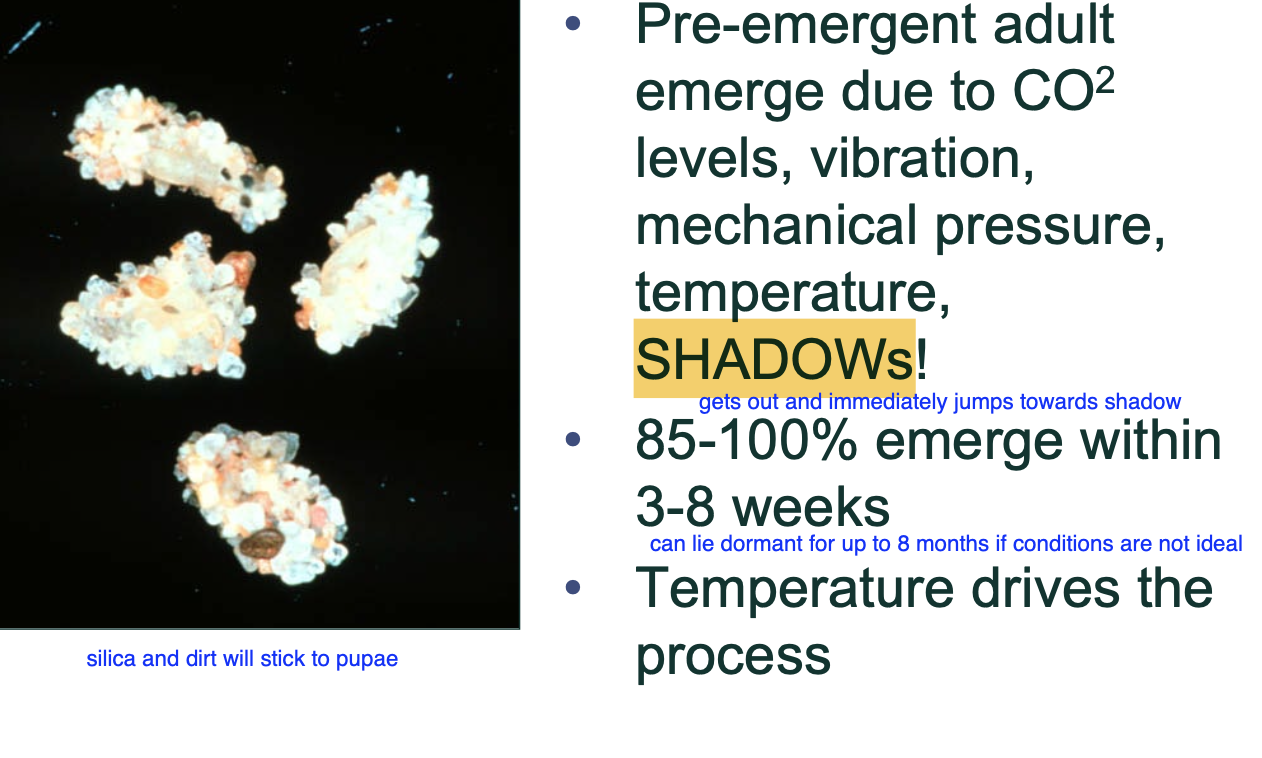
Most fleas emerge from pupa w/in
3-8wks but can be up to 8m.
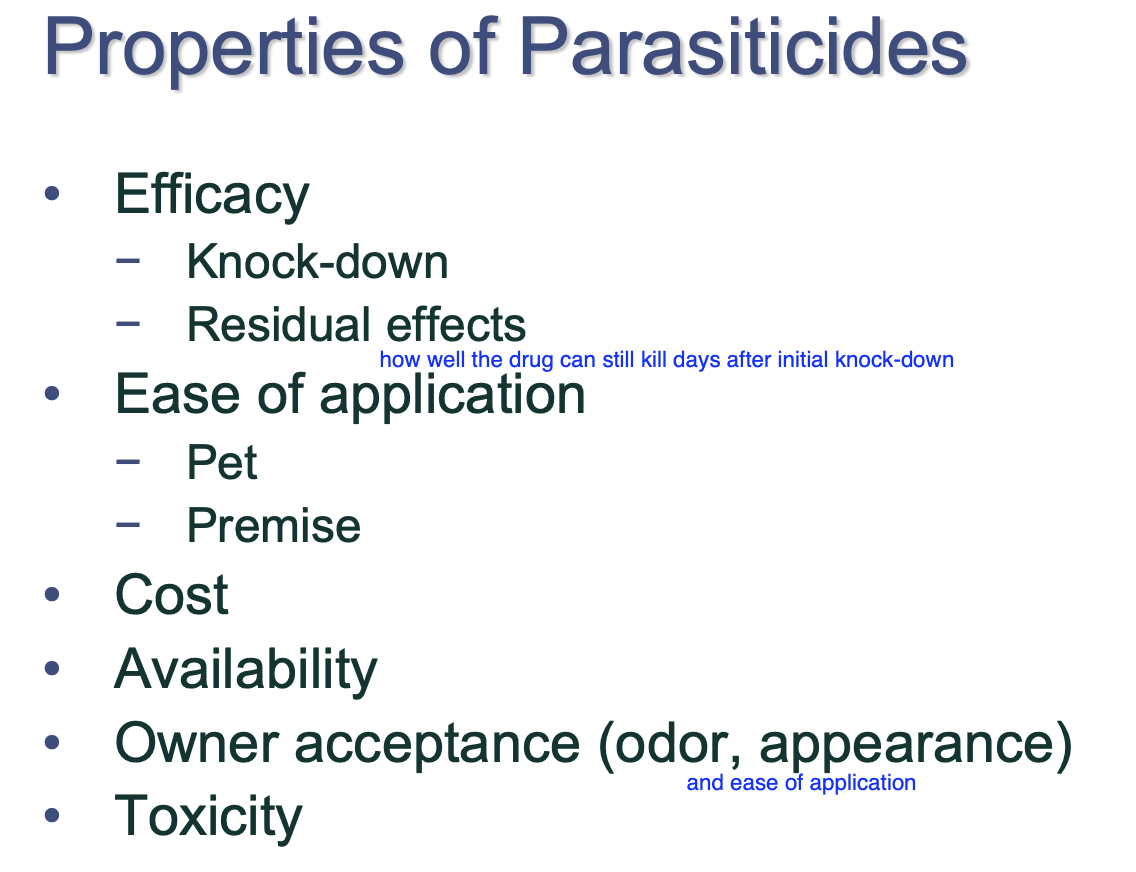
Properties of parasiticides (6)
Efficacy - knock down effect (how fast they kill them) and residual effect (will it still be killing fleas a week after application).
Ease of application.
Cost.
Availability.
O' acceptance.
Toxicity.
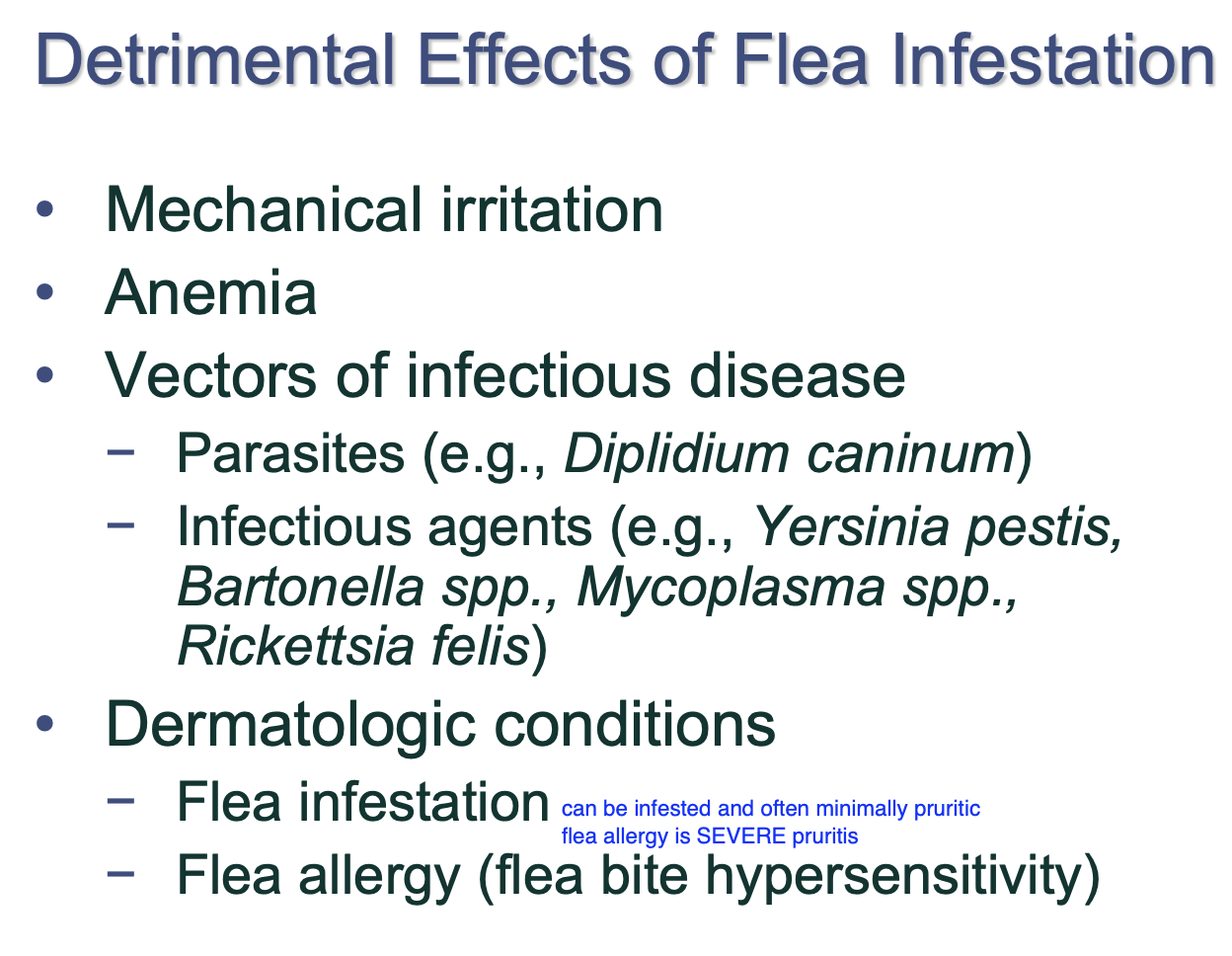
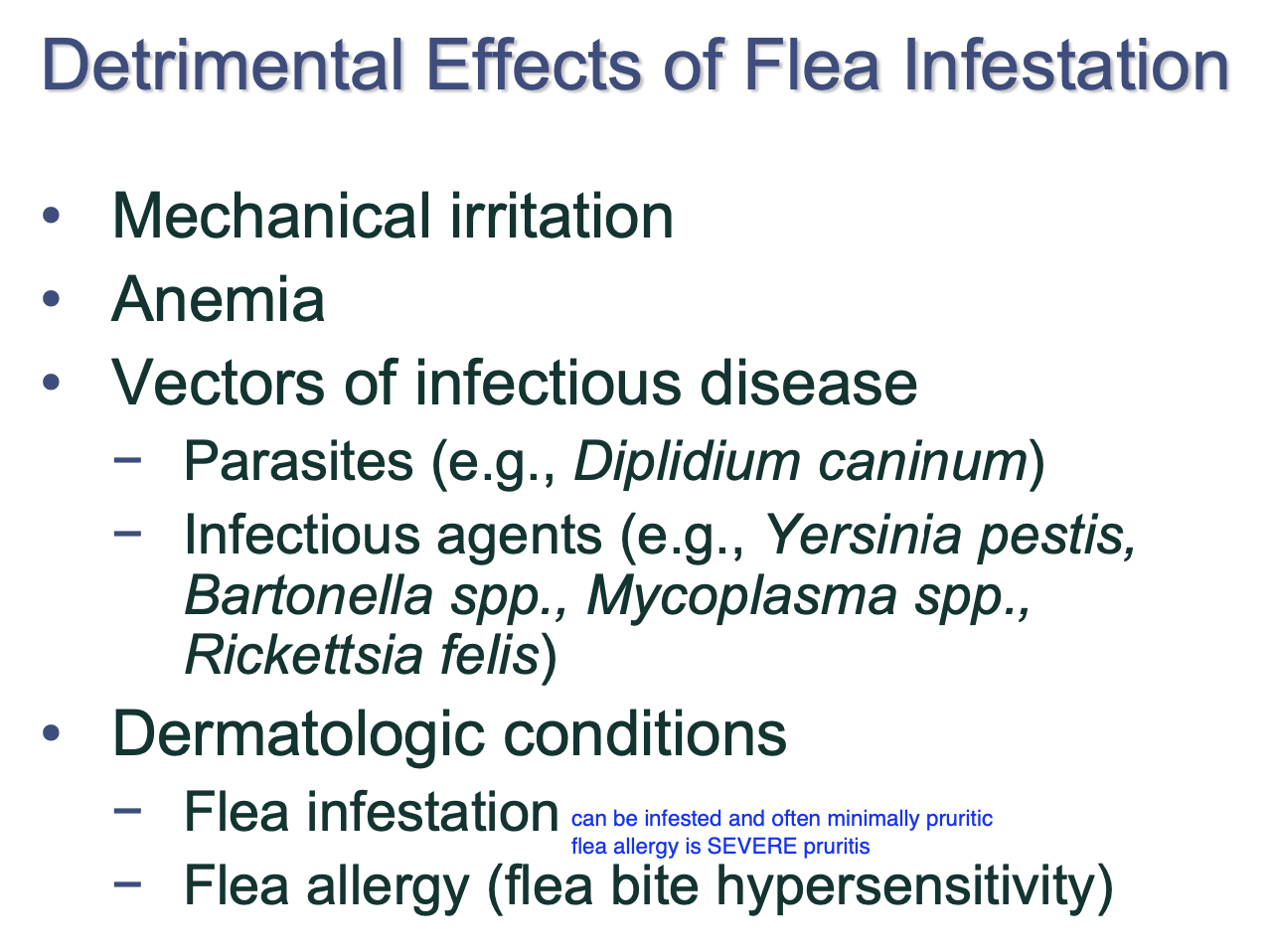
Detrimental Effects of Flea Infestations (4)
Mechanical irritation.
Anemia.
Vector for infectious dz.
Derm conditions - flea infestation and flea allergy.
Fleas are vectors for what infectious dz (5)
Dipilidium caninum.
Yersinia pestis.
Bartonella spp.
Mycoplasma spp.
Rickettsia felis.
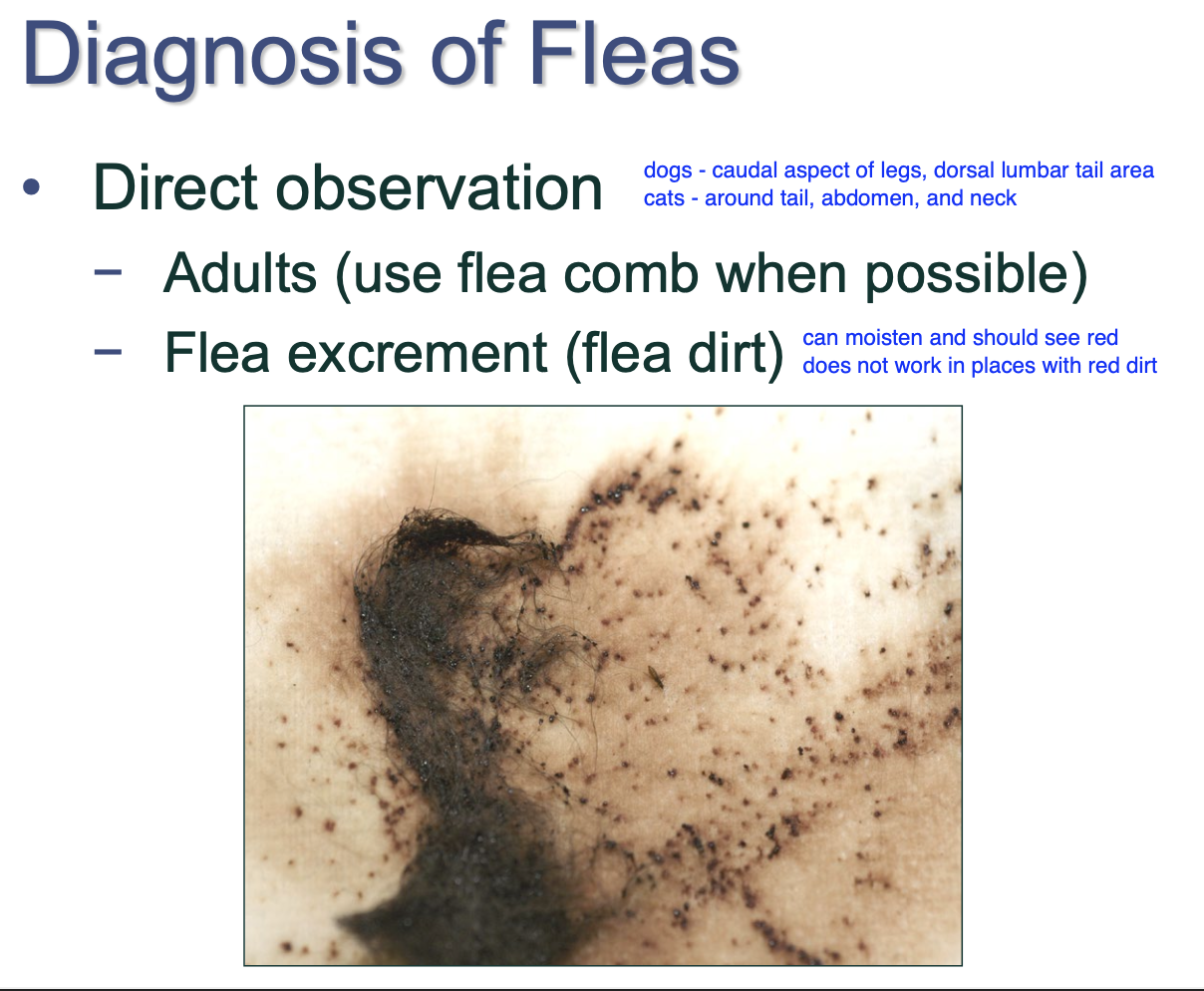
Dx of fleas
Direct observation - adults w/ flea comb or flea dirt (their excretions)
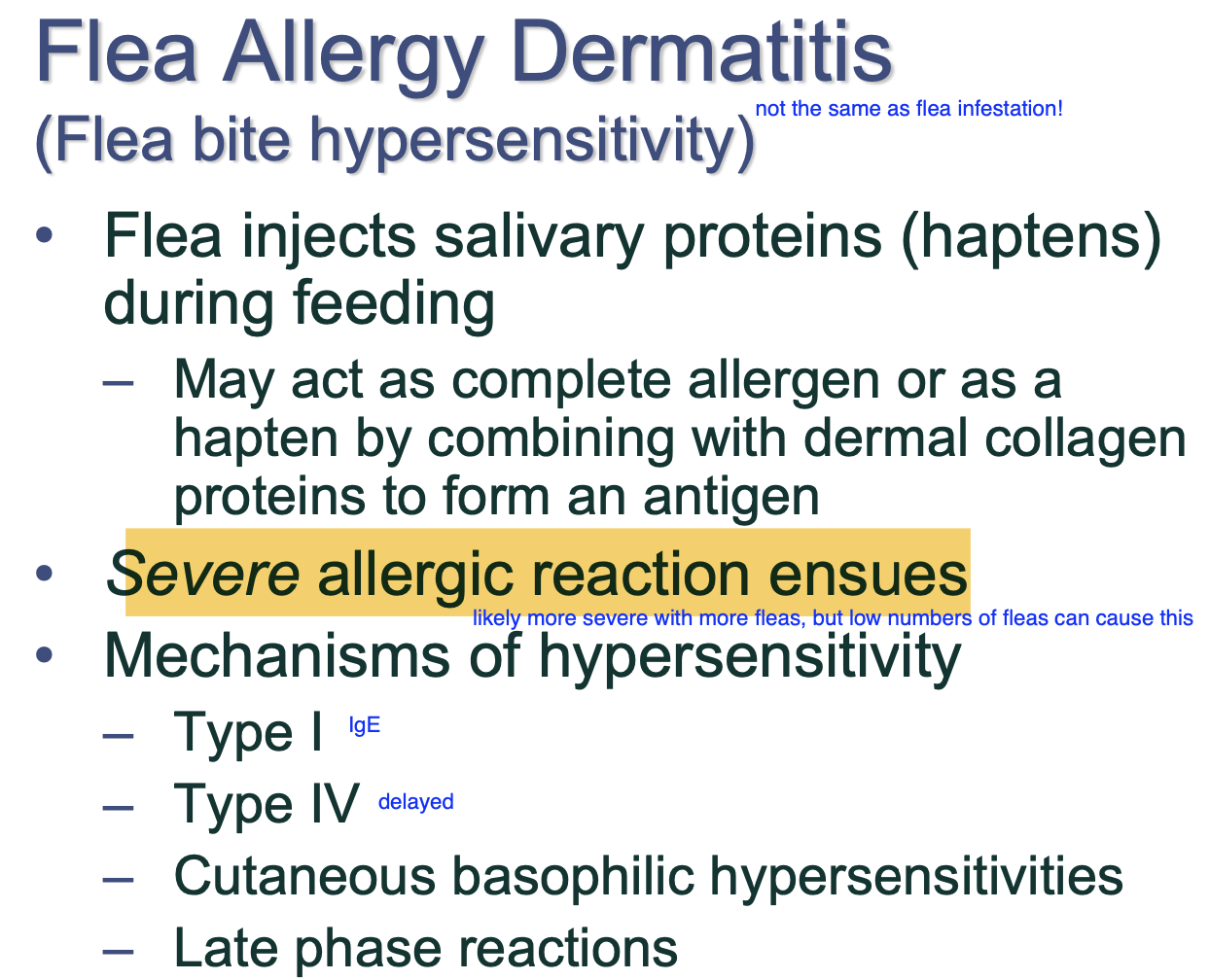
Pathogenesis of Flea Allergy dermatitis (FAD) (3)
Flea injects salivary proteins aka haptens during feeding.
This acts as a complete allergen or as hapten by combining with dermal collagen proteins to form Ag.
Severe allergic rxn ensues.
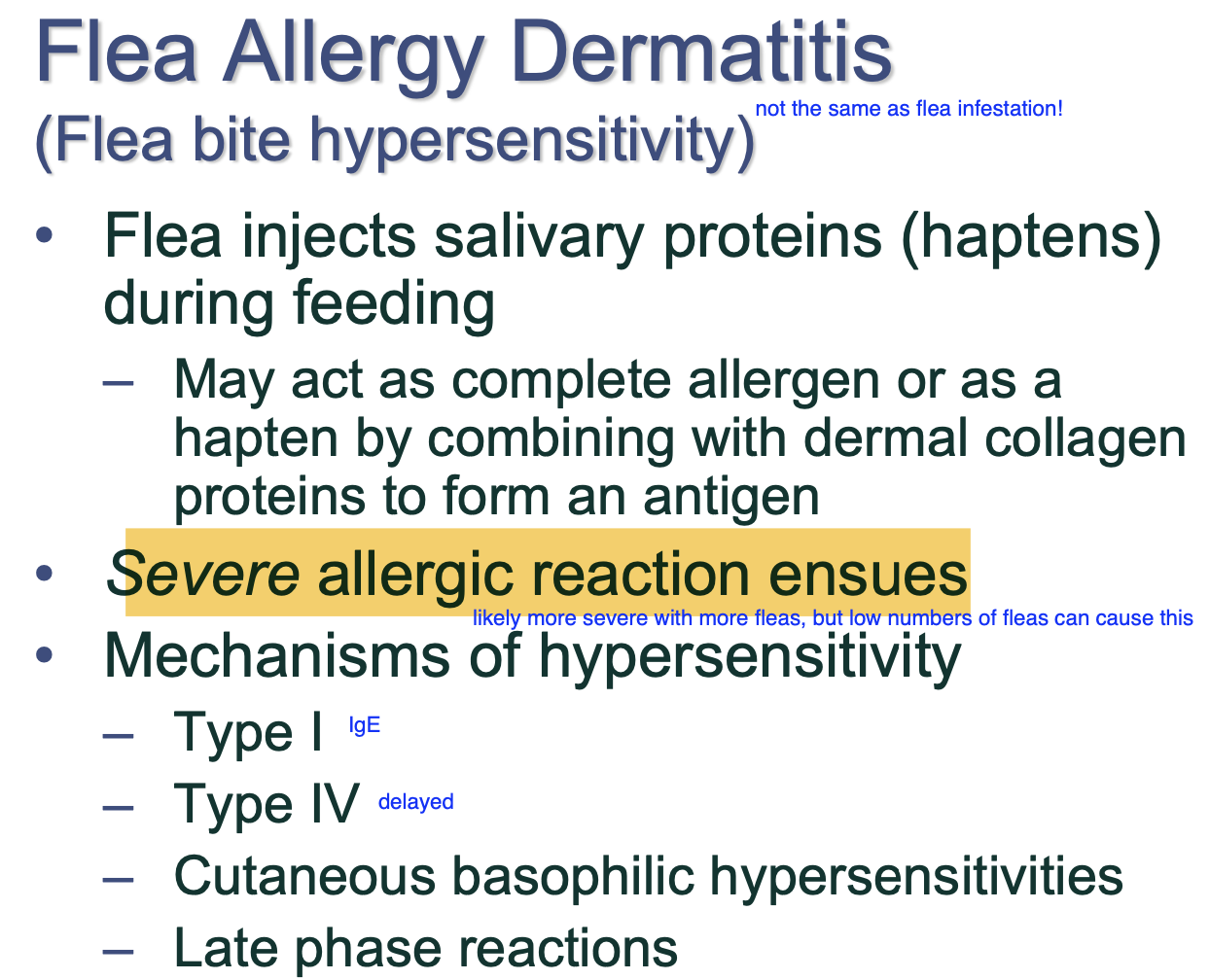
Mechanisms of HS w/ FAD (4)
Type 1.
Type 4.
Cutaneous basophilic HS rxn.
Late Phase rxn.
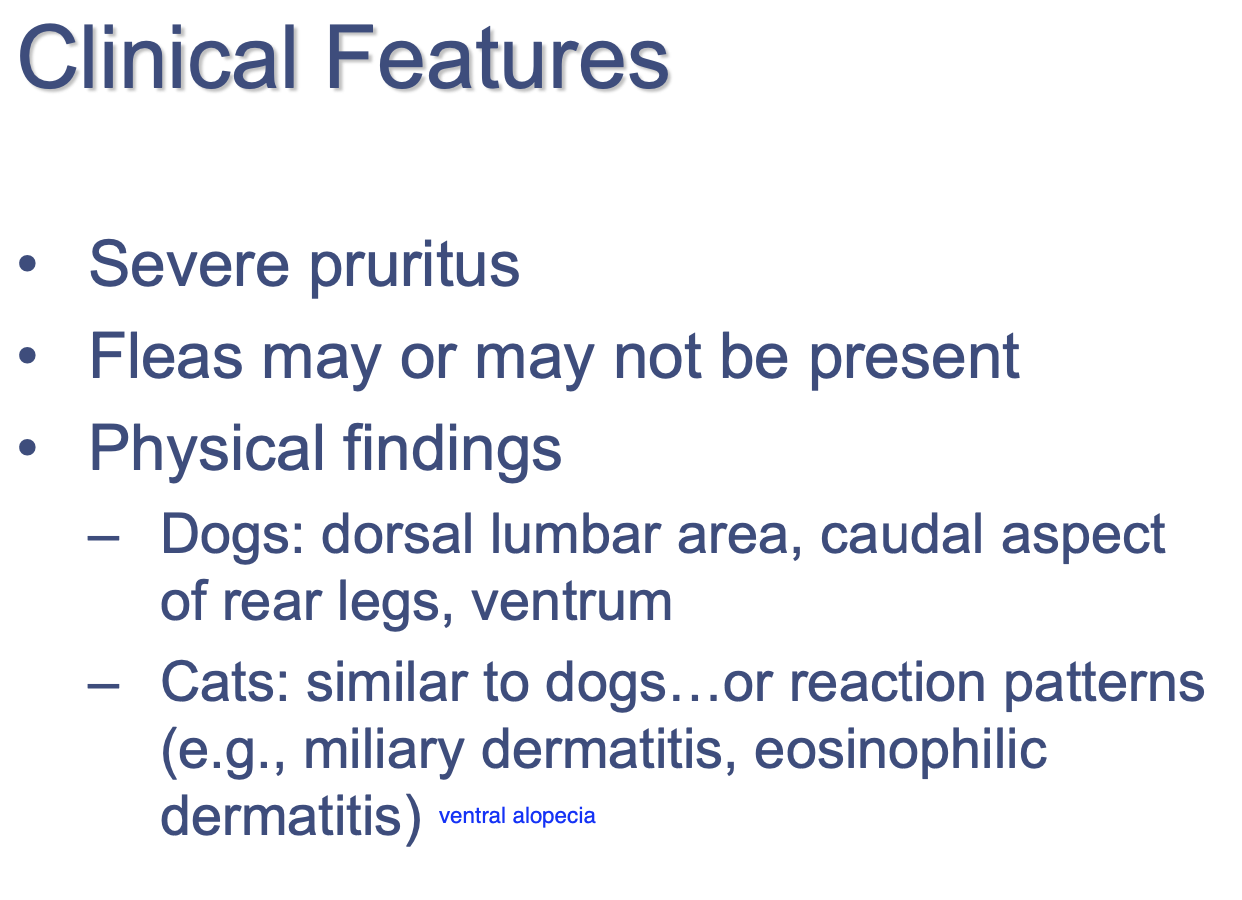
Clinical features of FAD (2)
Severe pruritus.
+/- fleas present.
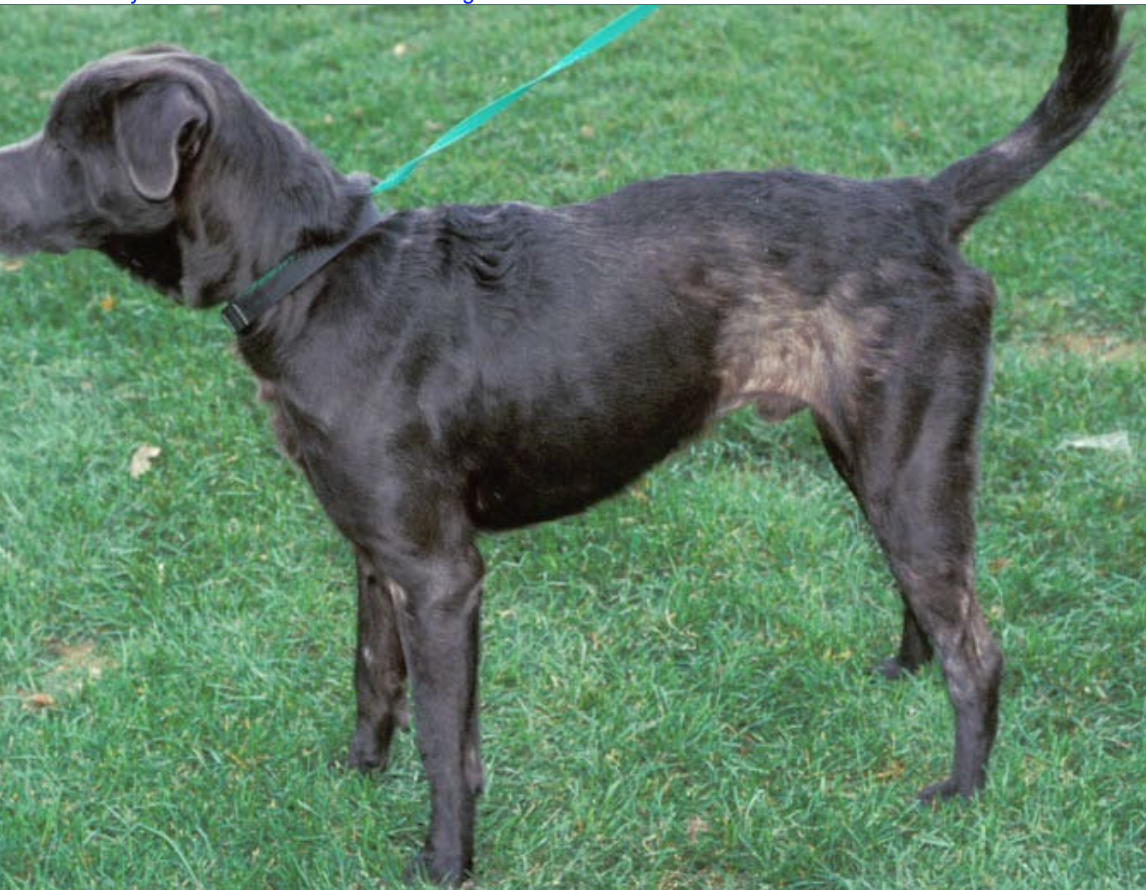
Location of FAD in dogs (4)
dorsal/lumbar area.
Ca. aspect of rear legs.
Ventrum.
Tail base.
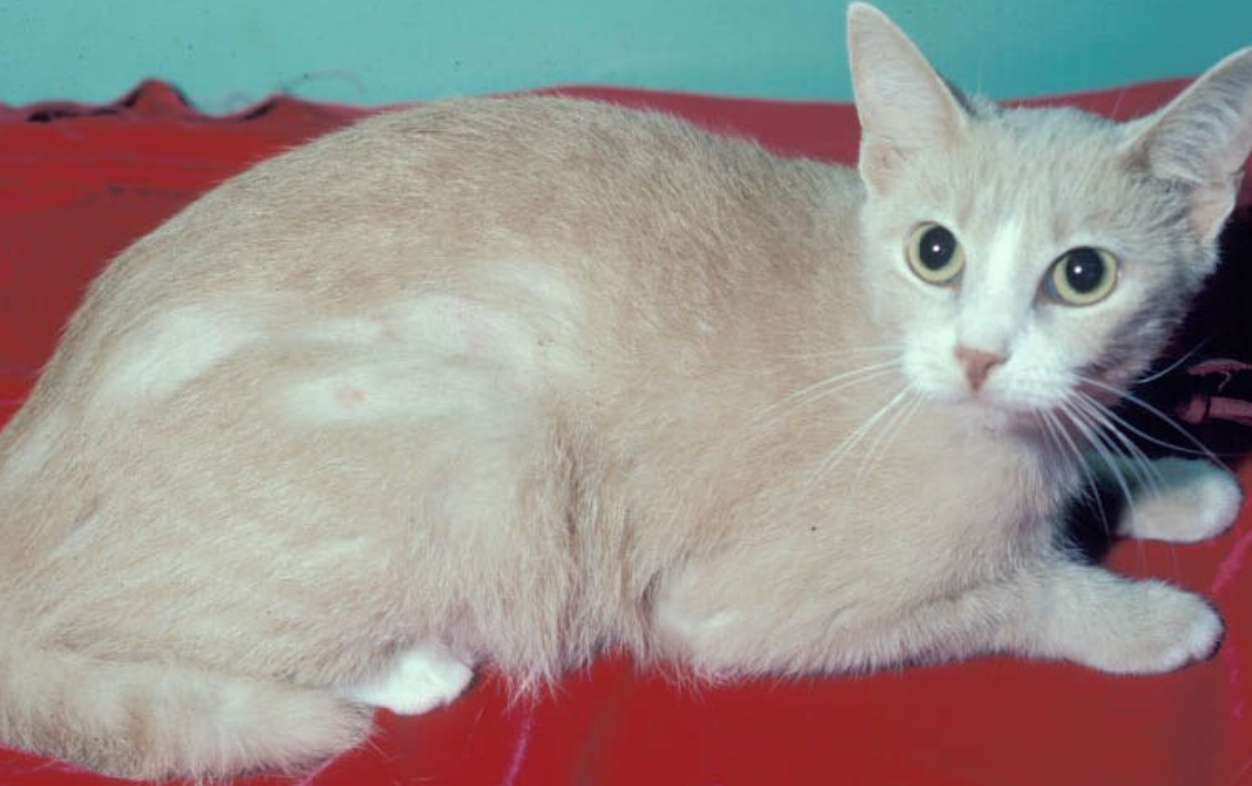
Location of FAD in cats (3)
Similar to dogs or have rxn patterns.
Miliary dermatitis (can see w/ atopy or demodex).
Eosinophilic derm.
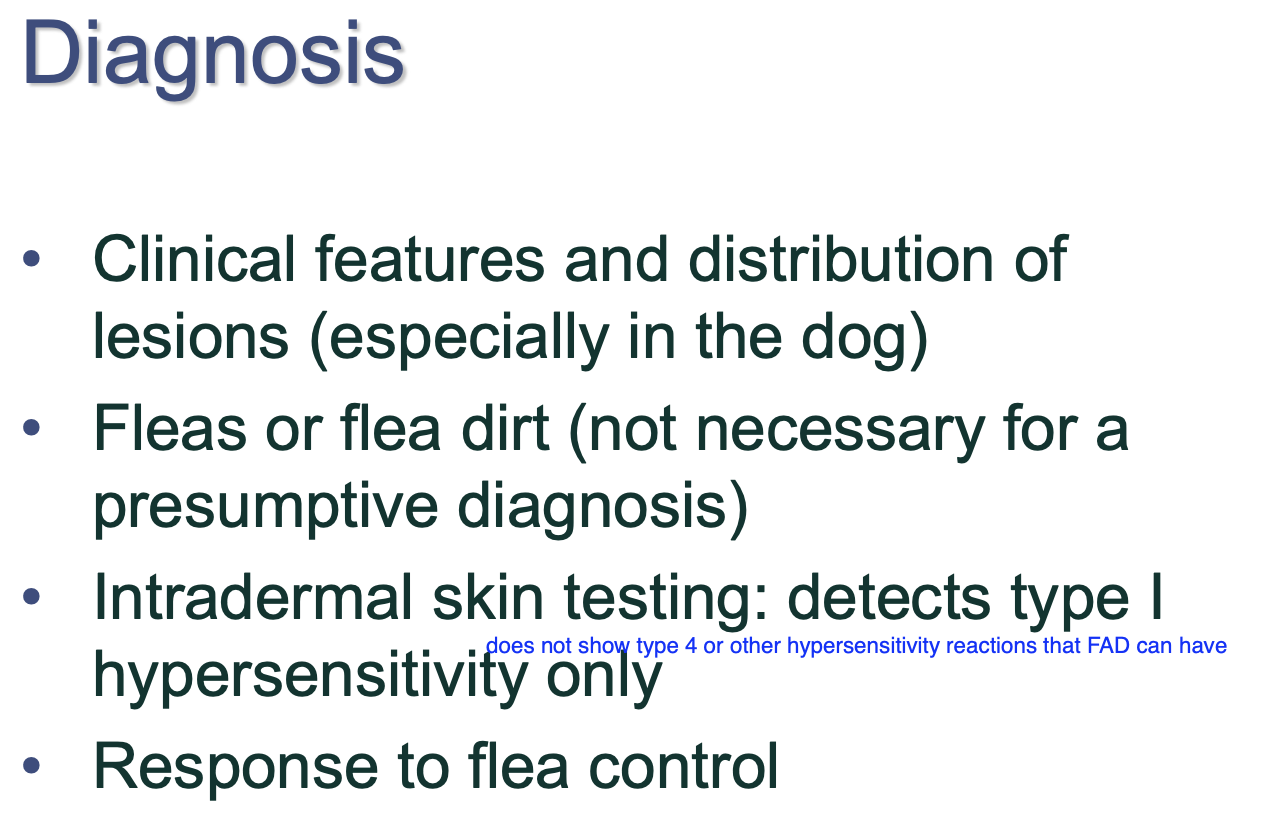
Dx of FAD (4)
Clinical features and distribution.
Fleas +/- flea dirt.
Response to flea control.
Intradermal skin testing: only for type 1 HS
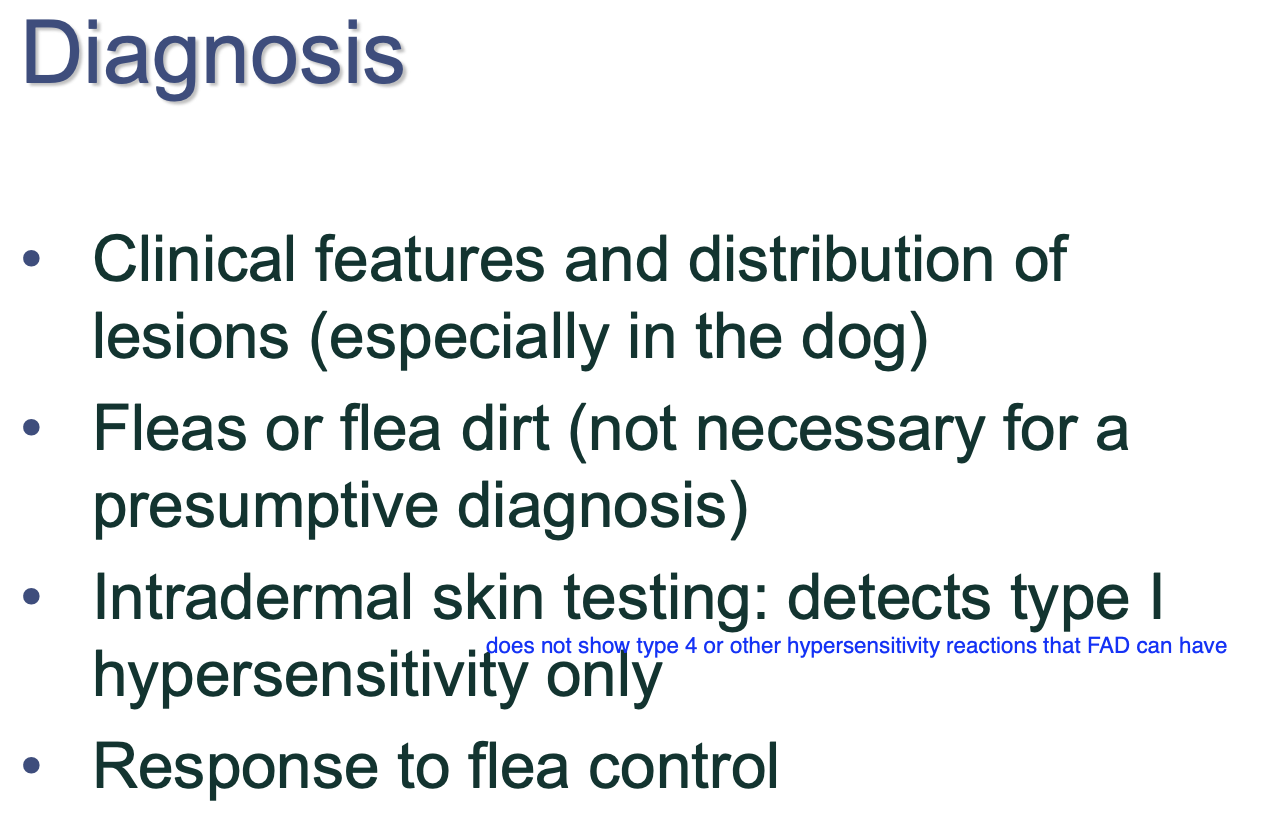
Dx of FAD - Not sensitive
Intradermal skin testing - only detects type 1 HS rxn and this complex has more components (can get a negative even though there is flea allergy).
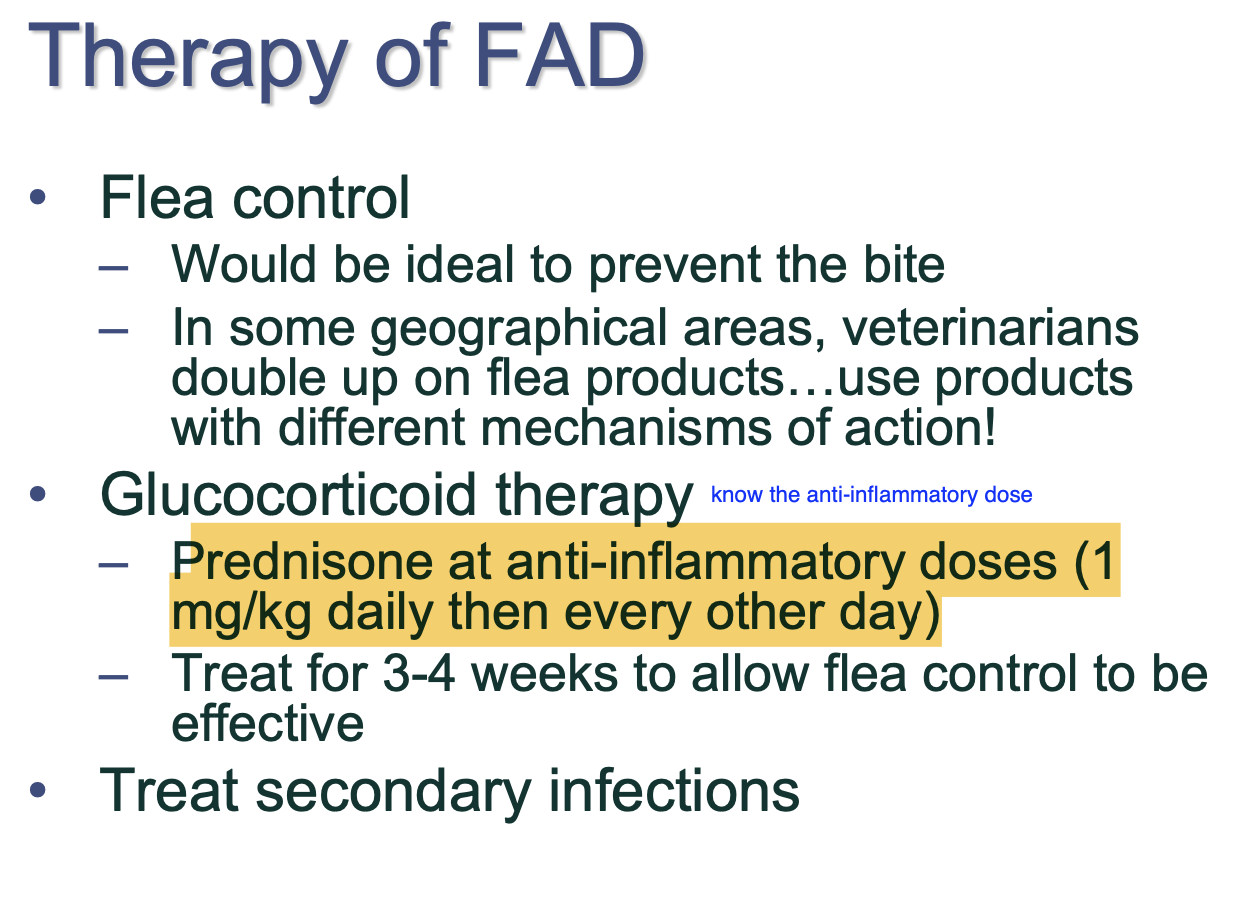
Tx for FAD (3)
Flea control.
Glucocorticoid therapy.
Tx secondary infections and environment.
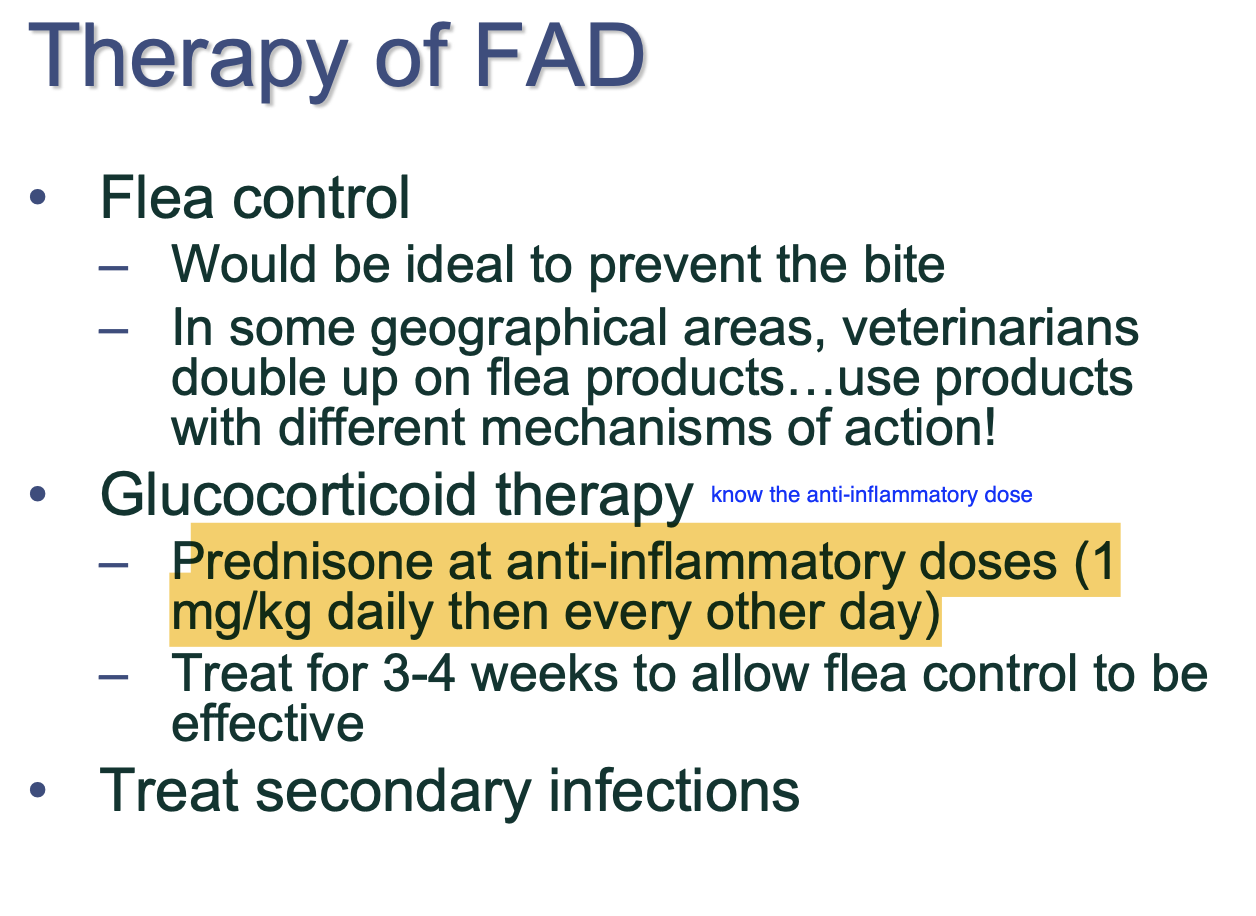
Glucocorticoid Tx in FAD (2)
Pred at anti-inflammatory dose - 1mg/kg SID then taper to EoD.
Tx for 2-4wks to allow flea control to be effective.
Integrated flea control
Treating the problem from multiple angles so that you address all stages and the environment.
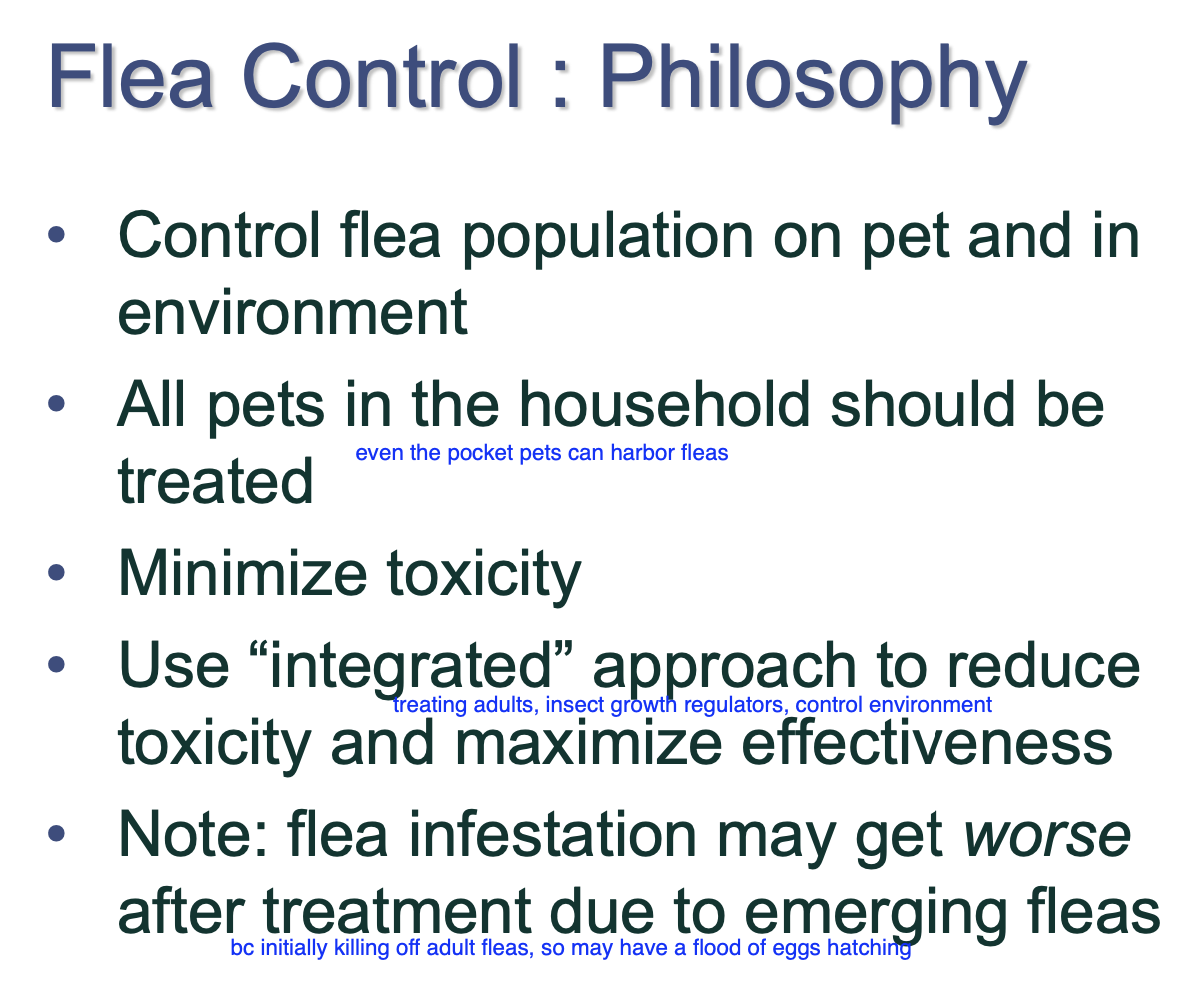
Flea infestations can get
worse after initiation of tx due to emerging fleas (most of the tx for the dog do not hit larvae)
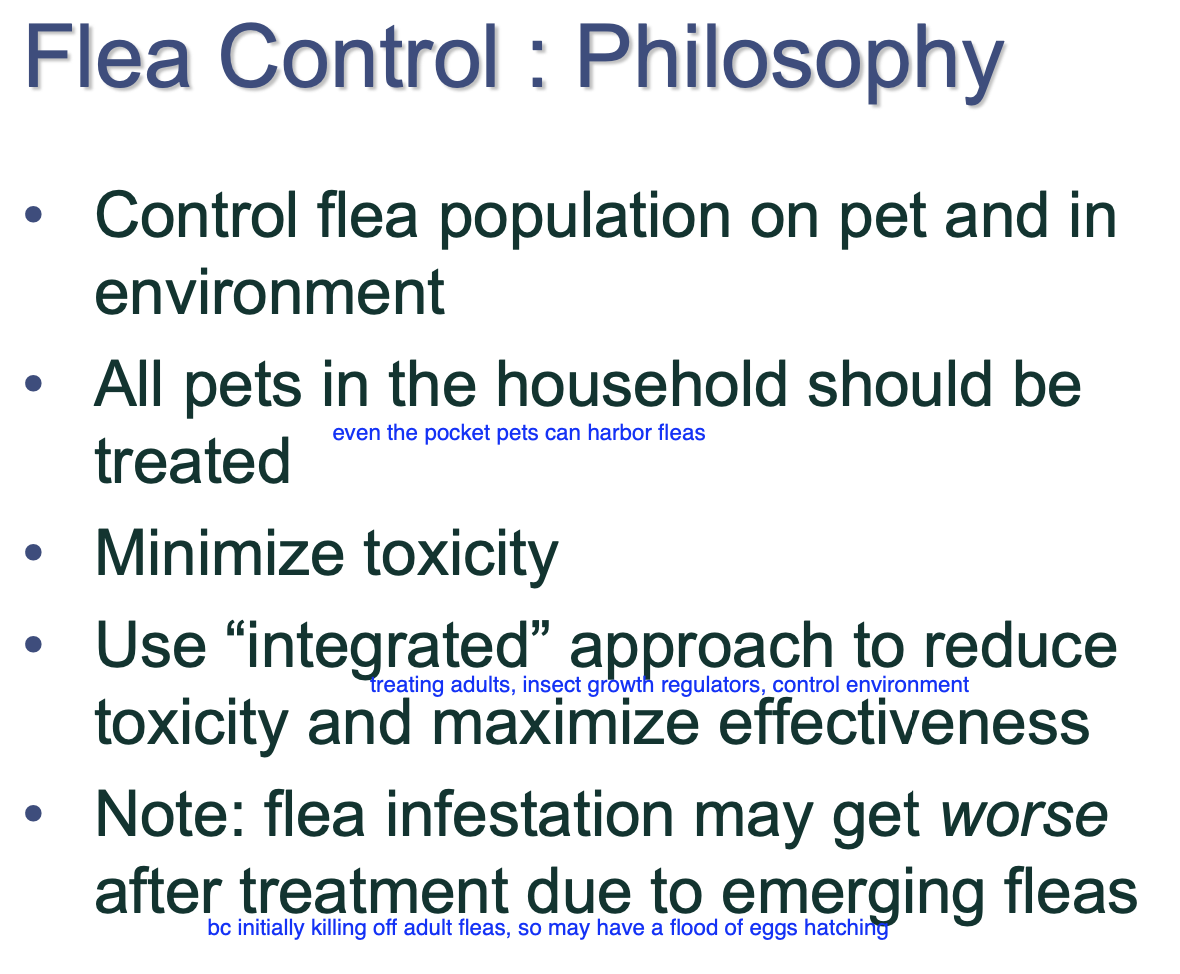
Inert Insecticides (3)
Silica aerogel.
Diatomaceous earth.
Borates.
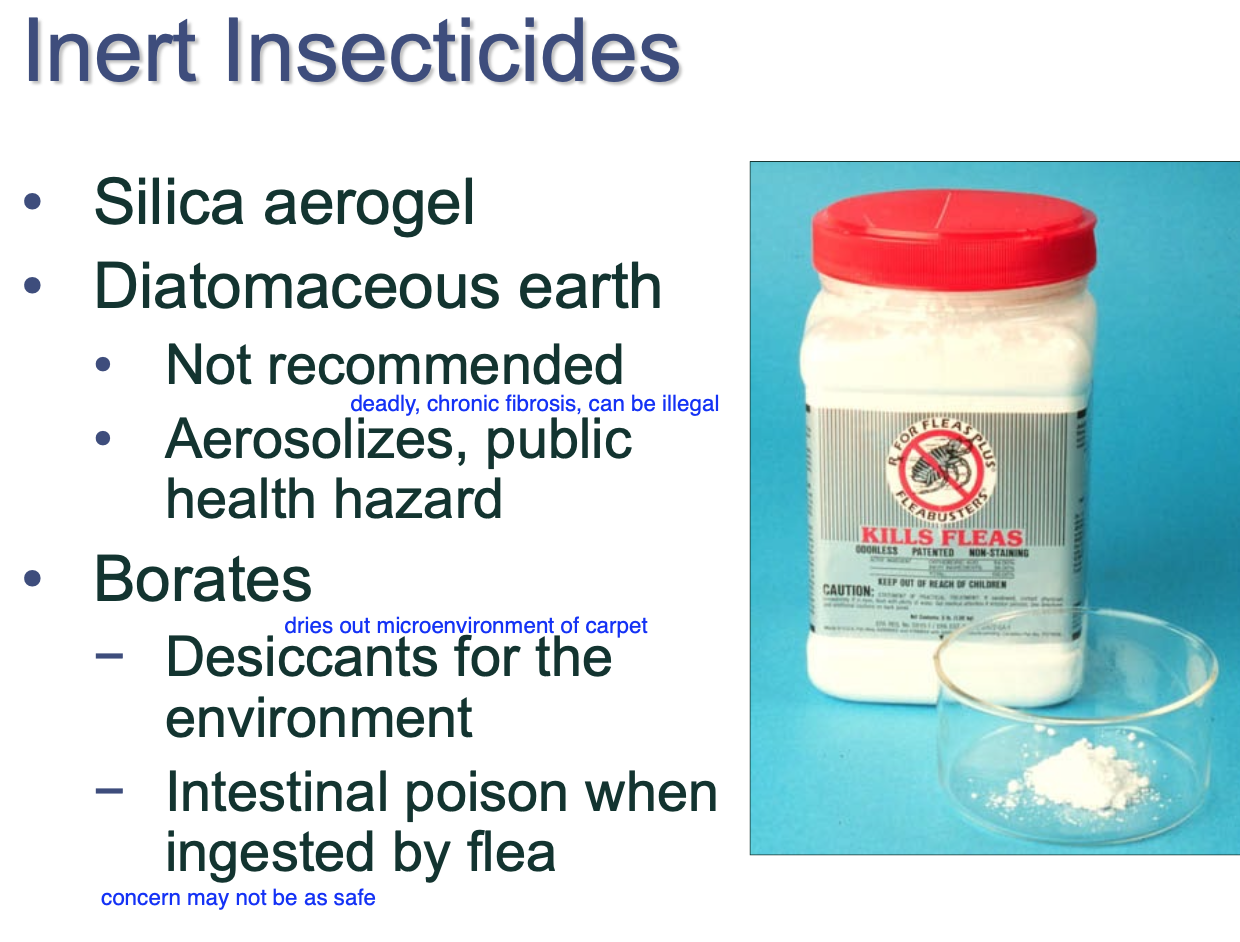
Diatomaceous earth in tx of fleas
Not reco - public health hazard
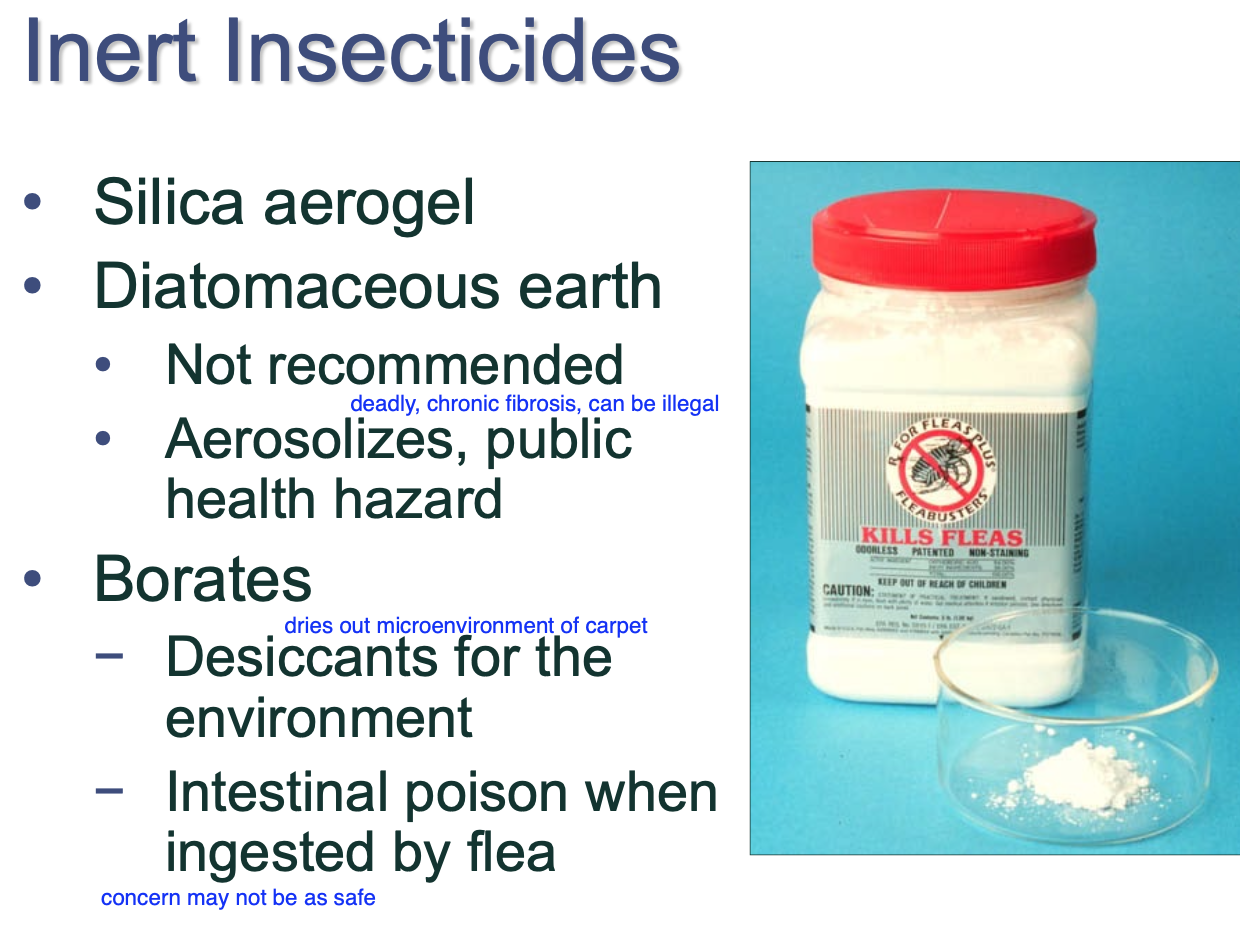
Borates in tx of fleas
Desiccant for the environment - pulls out the humidity from the environment.
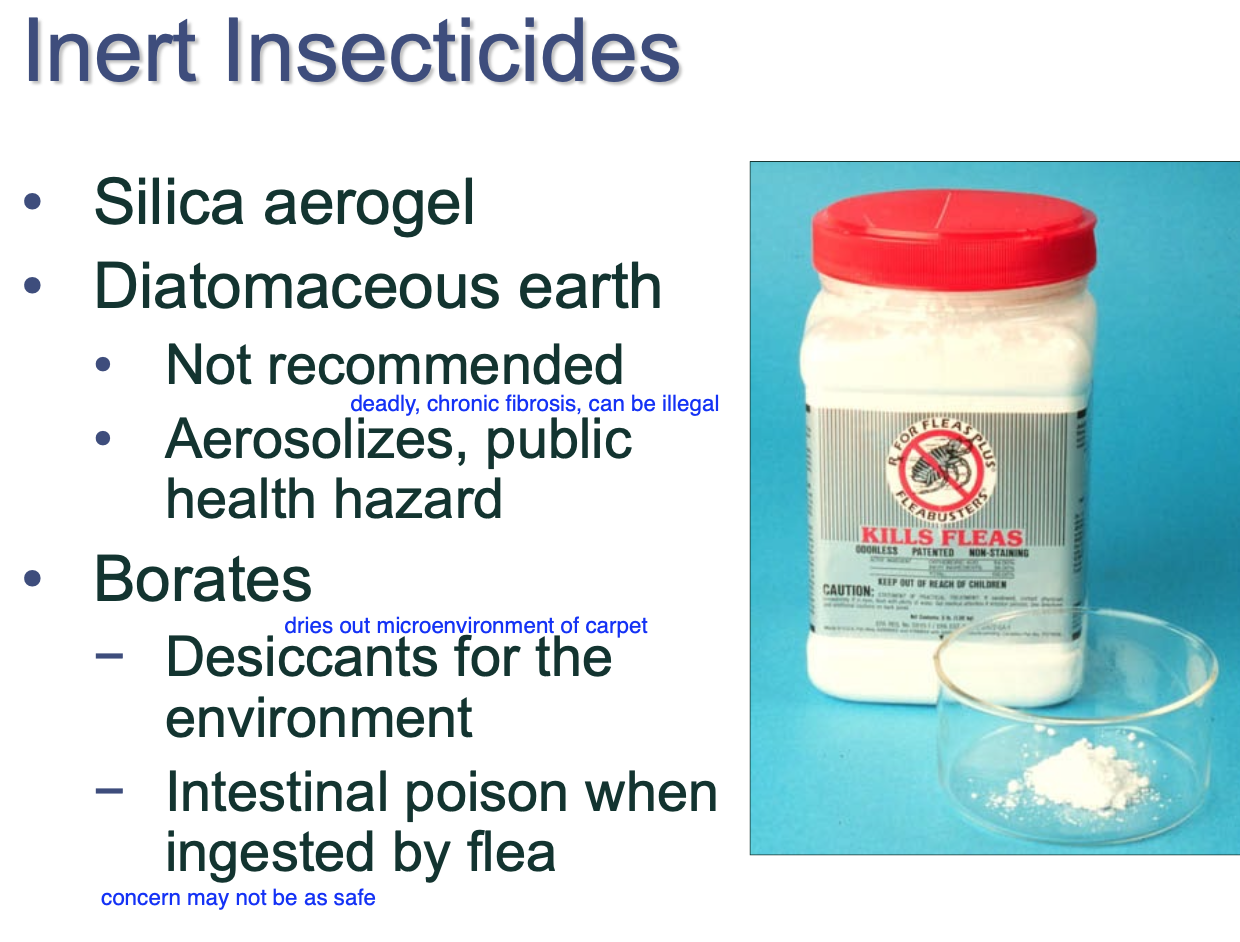
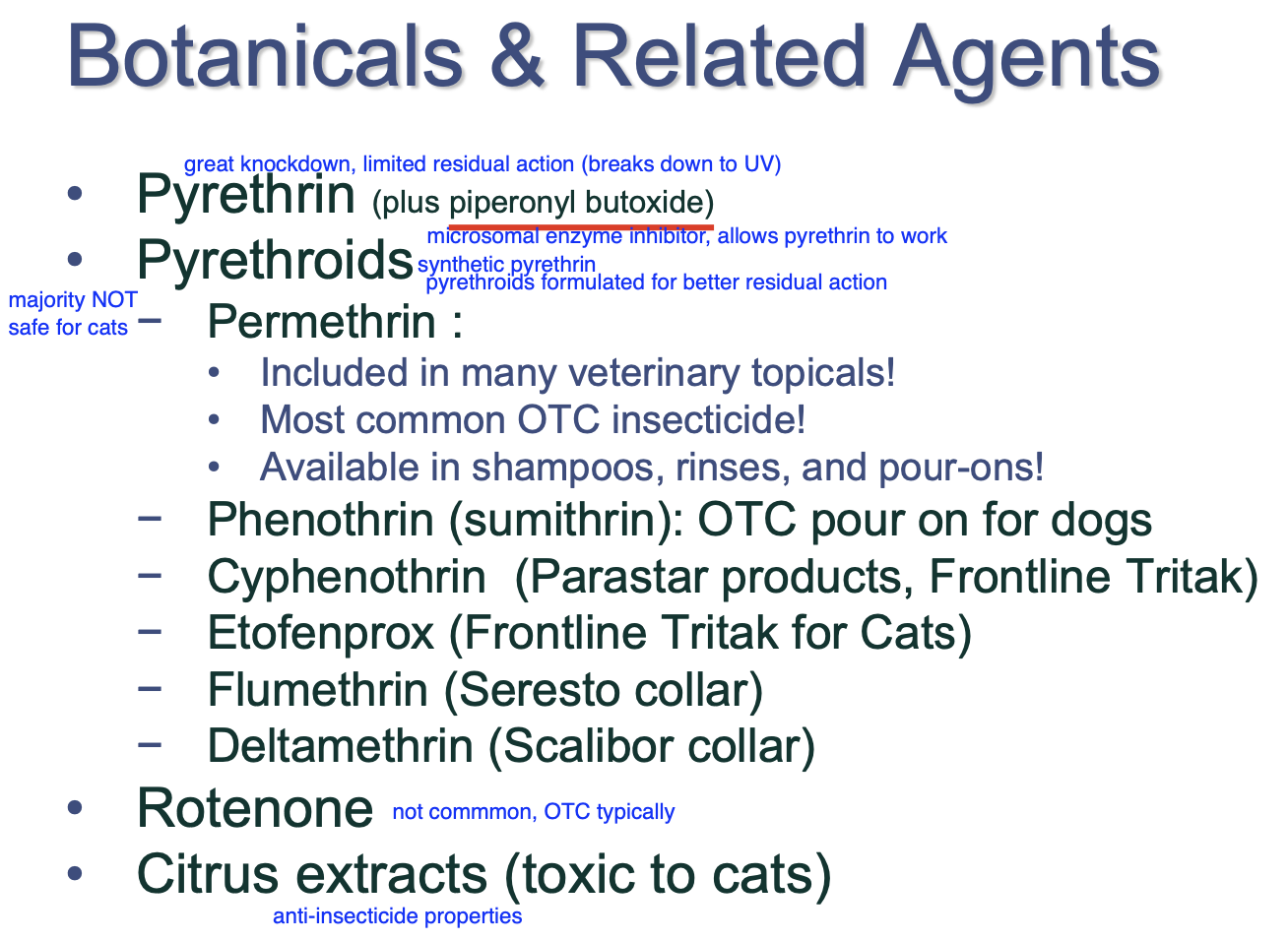
Botanical Flea Txs (4)
Pyrethrin plus piperonyl butoxide.
Pyrethroid.
Rotenone.
Citrus extracts - toxic to cats.
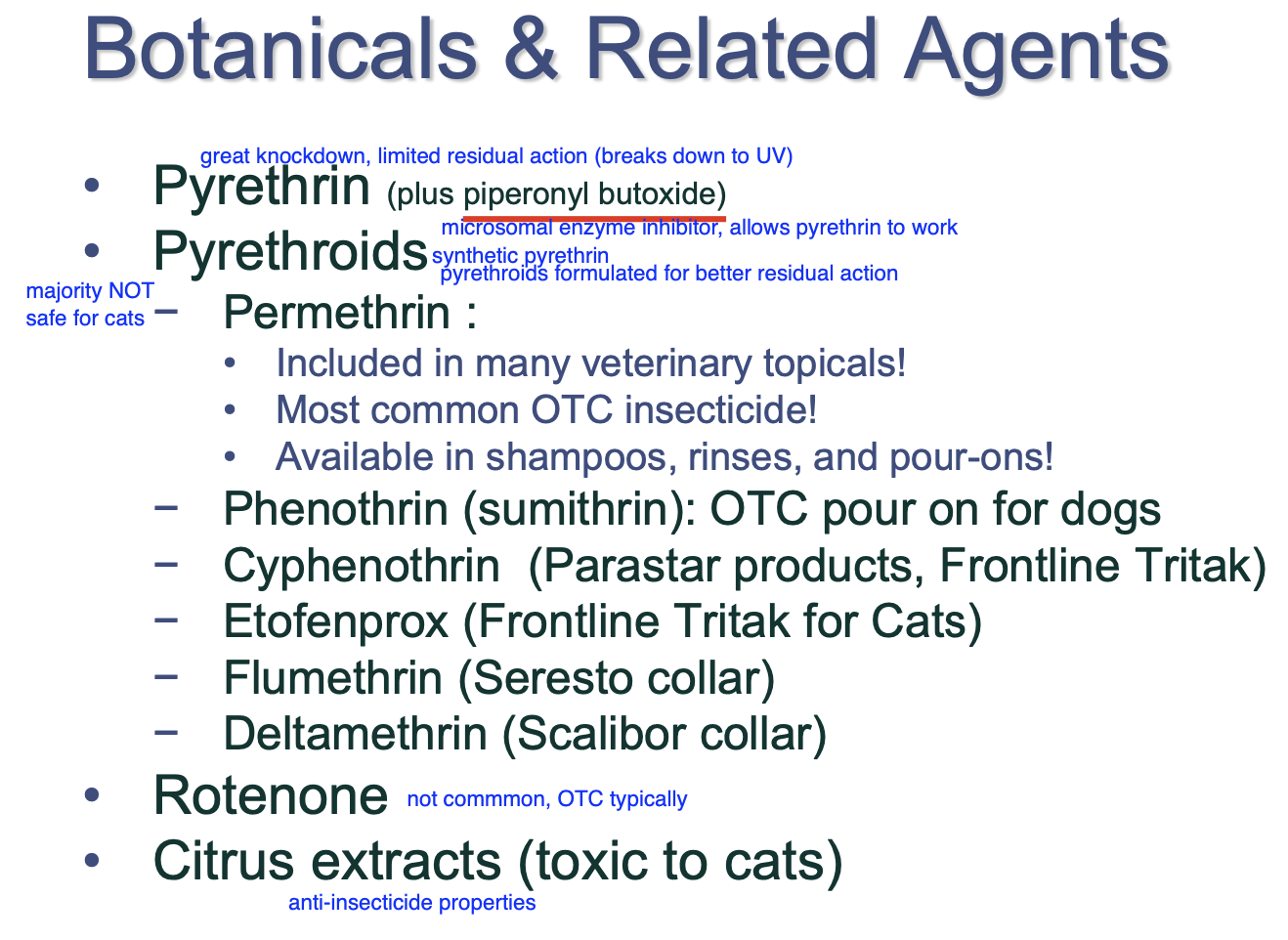
Piperonyl butoxide is a
Microsomal enzyme inhibitor - allows the pyrethrin to not be metabolized before it kills the flea.
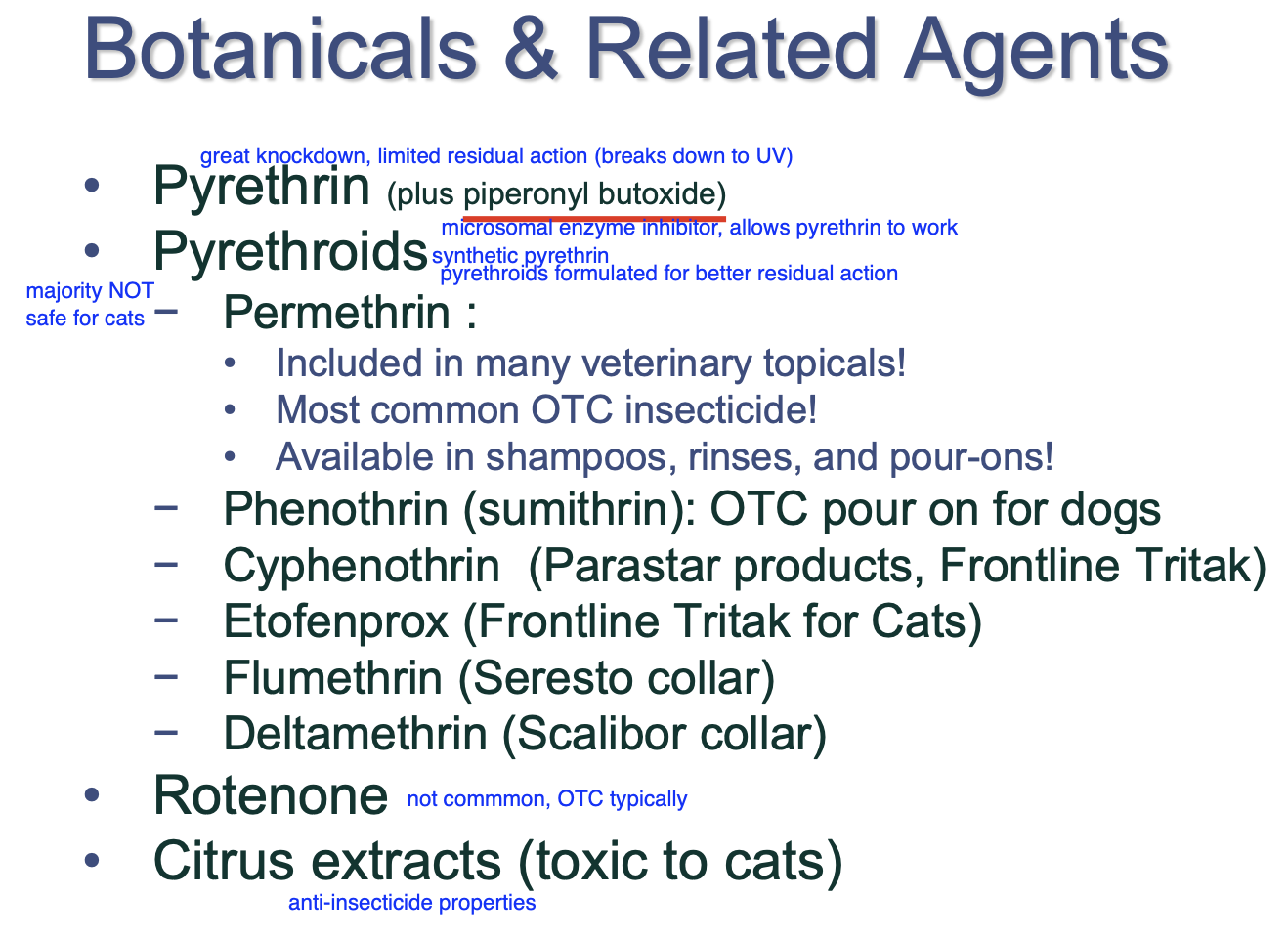
Pyrethroids are NOT
reco to use in cats, very dangerous (pyrethrins can be, just at a lower dose)
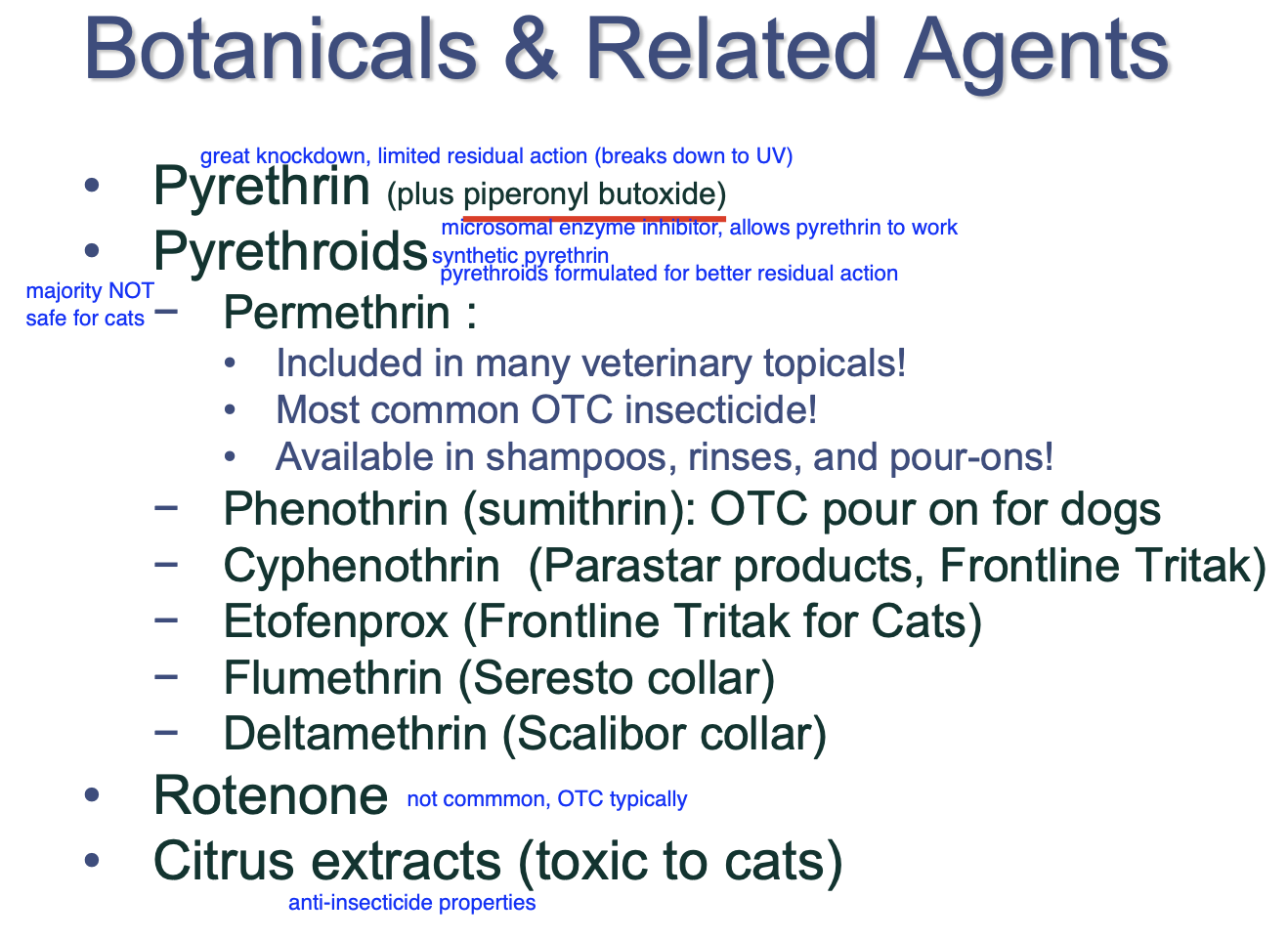
Pyrethroid examples (3)
Permethrin - in many veterinary topicals.
Frontline Tritak.
Seresto collar.
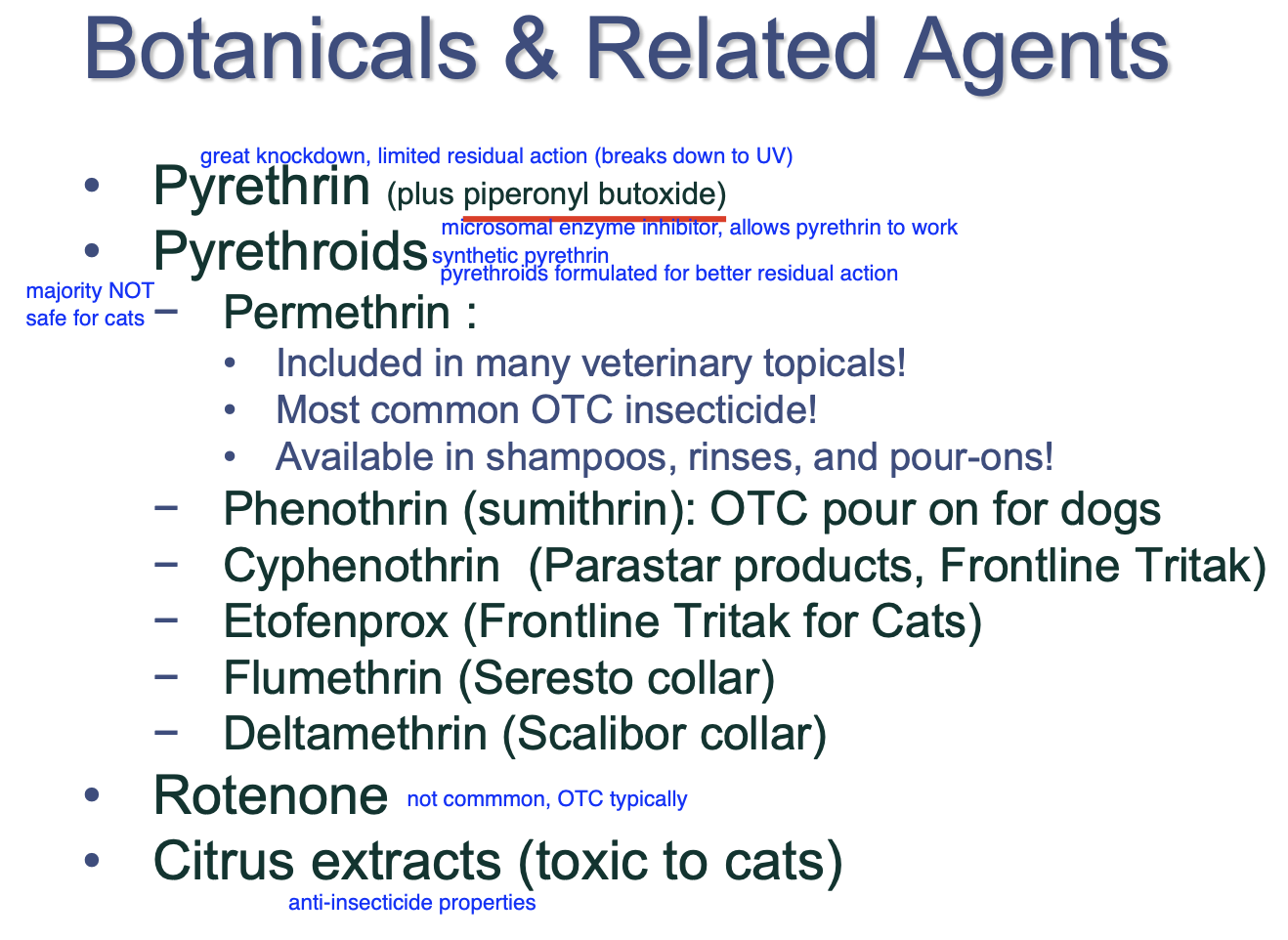
Permethrin is the (2)
most common OTC insecticide.
Available in shampoos, rinses, and pour-on.
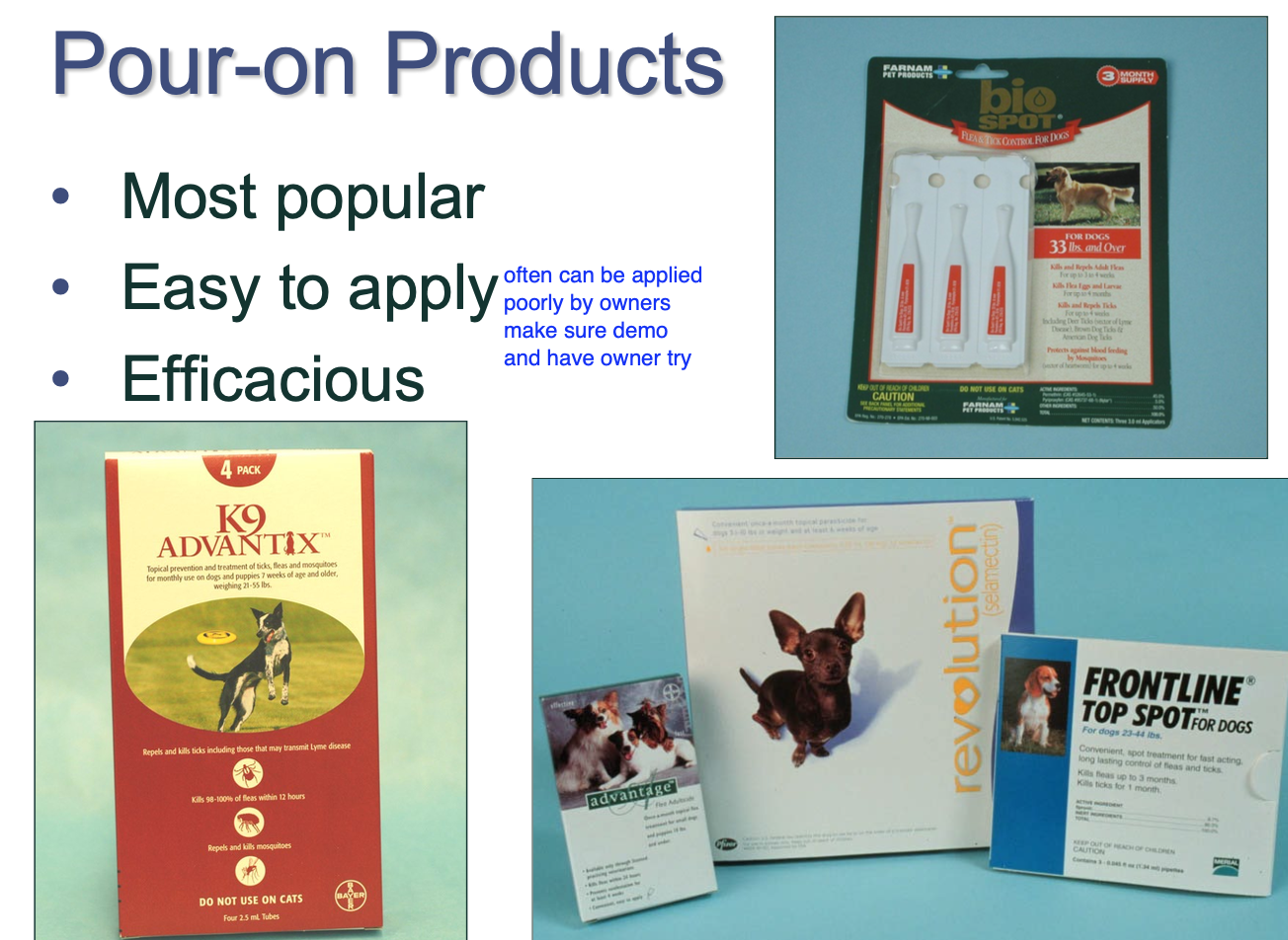
Pour on Products are (3)
most popular.
easy to apply.
Efficacious.
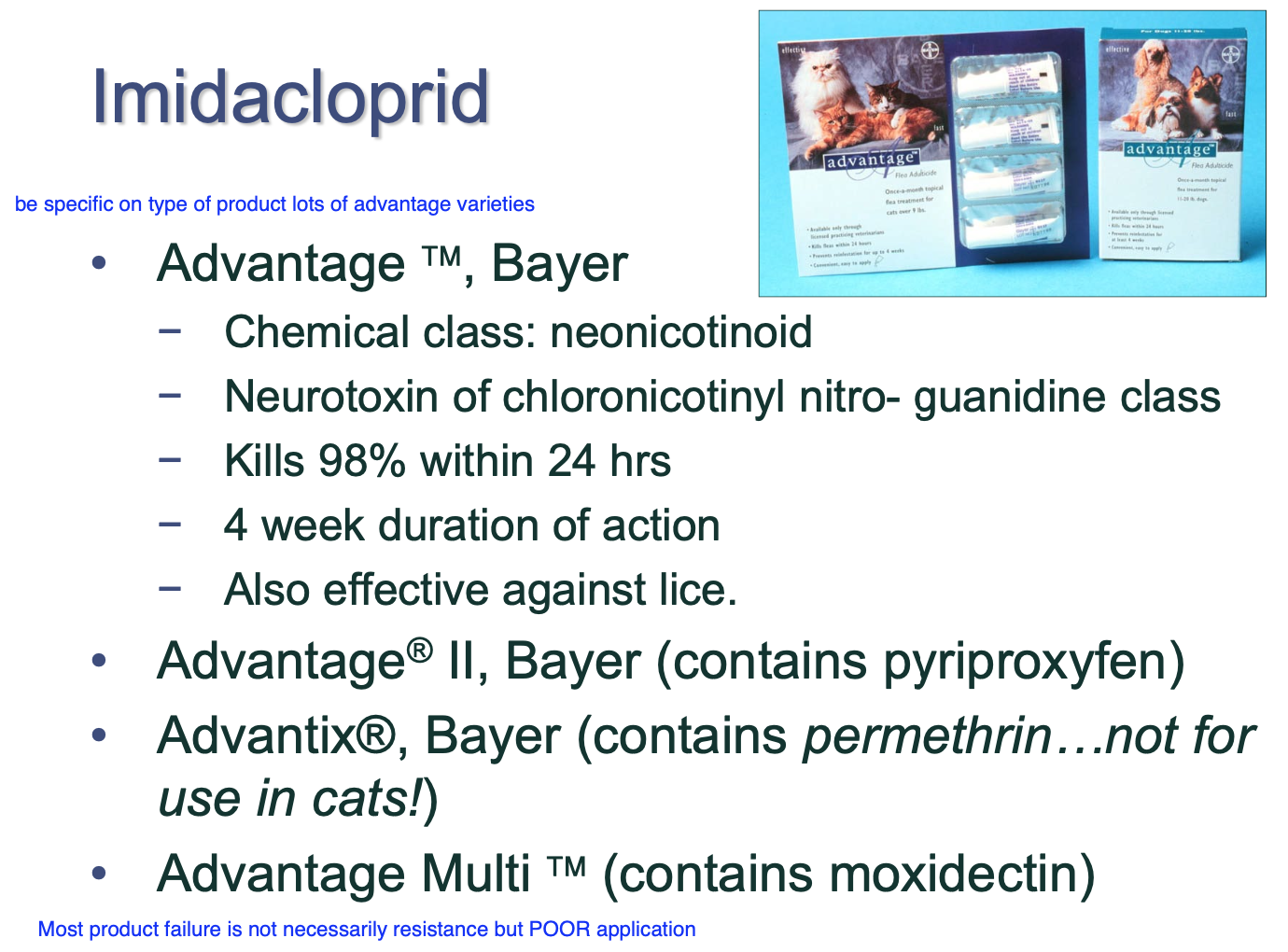
Imidacloprid includes what medications (4)
Advantage.
Advantage 2.
Advantix - contain permethrin and thus not used in cats.
Advantage multi - contains moxidectin.
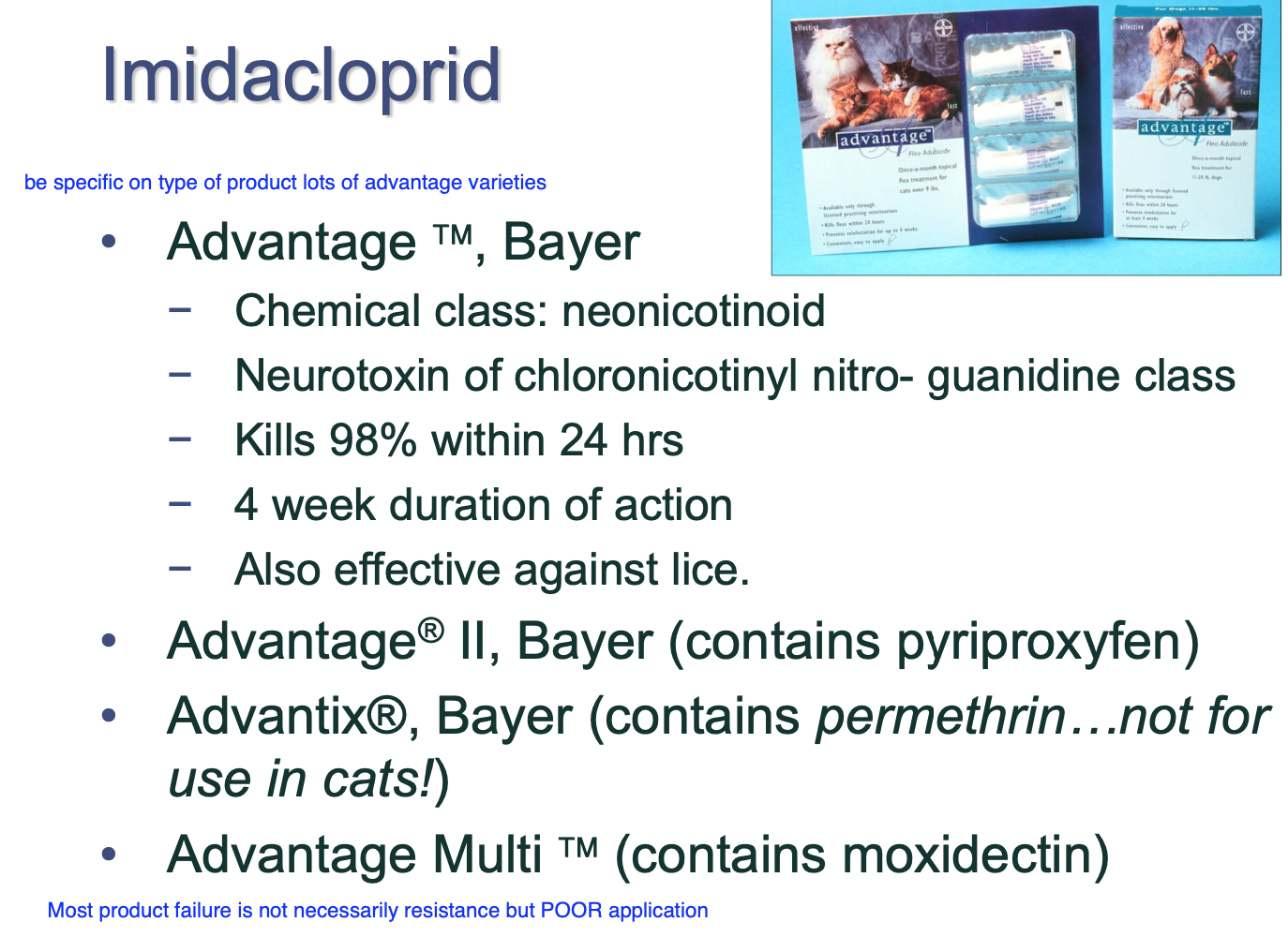
Advantage effectiveness (3)
kills 98% w/in 24h.
4wk duration of action.
Also effective against lice.
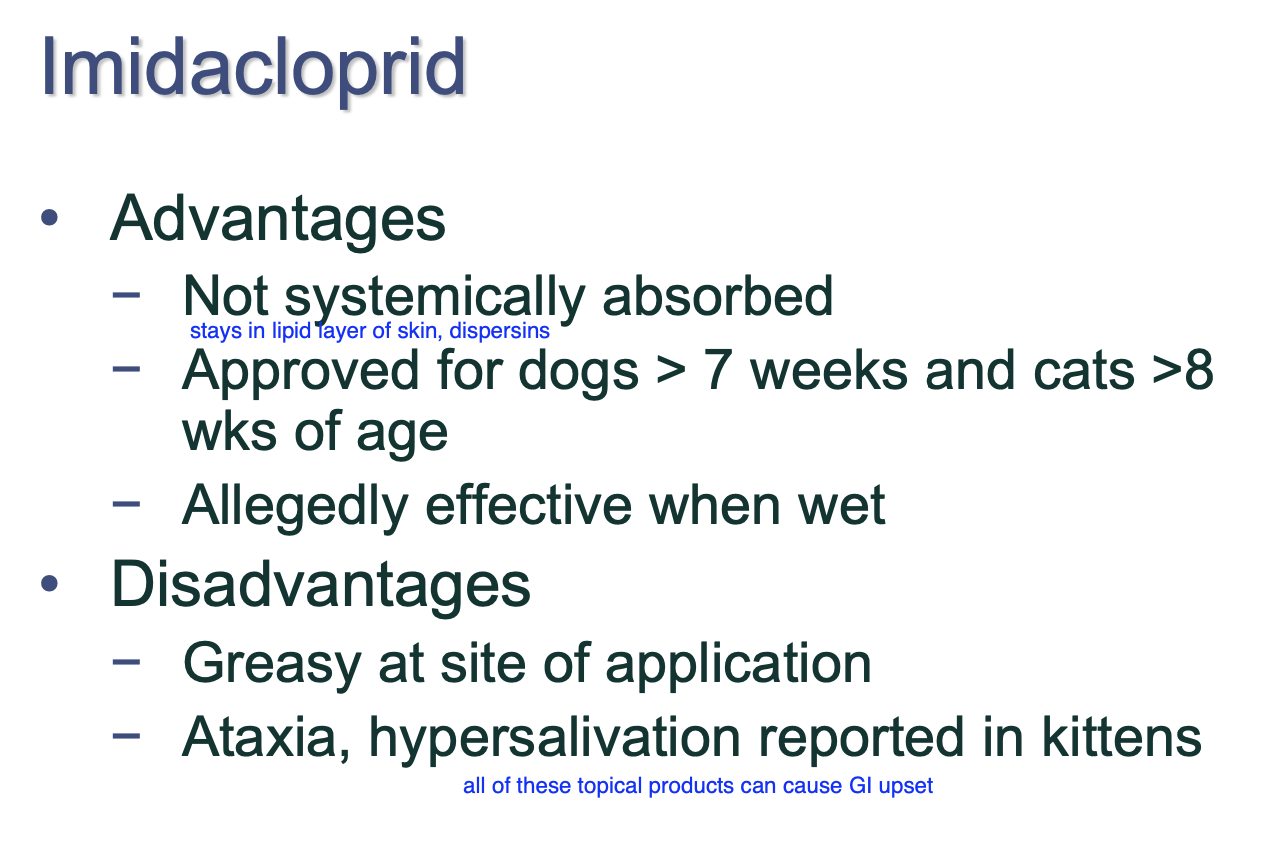
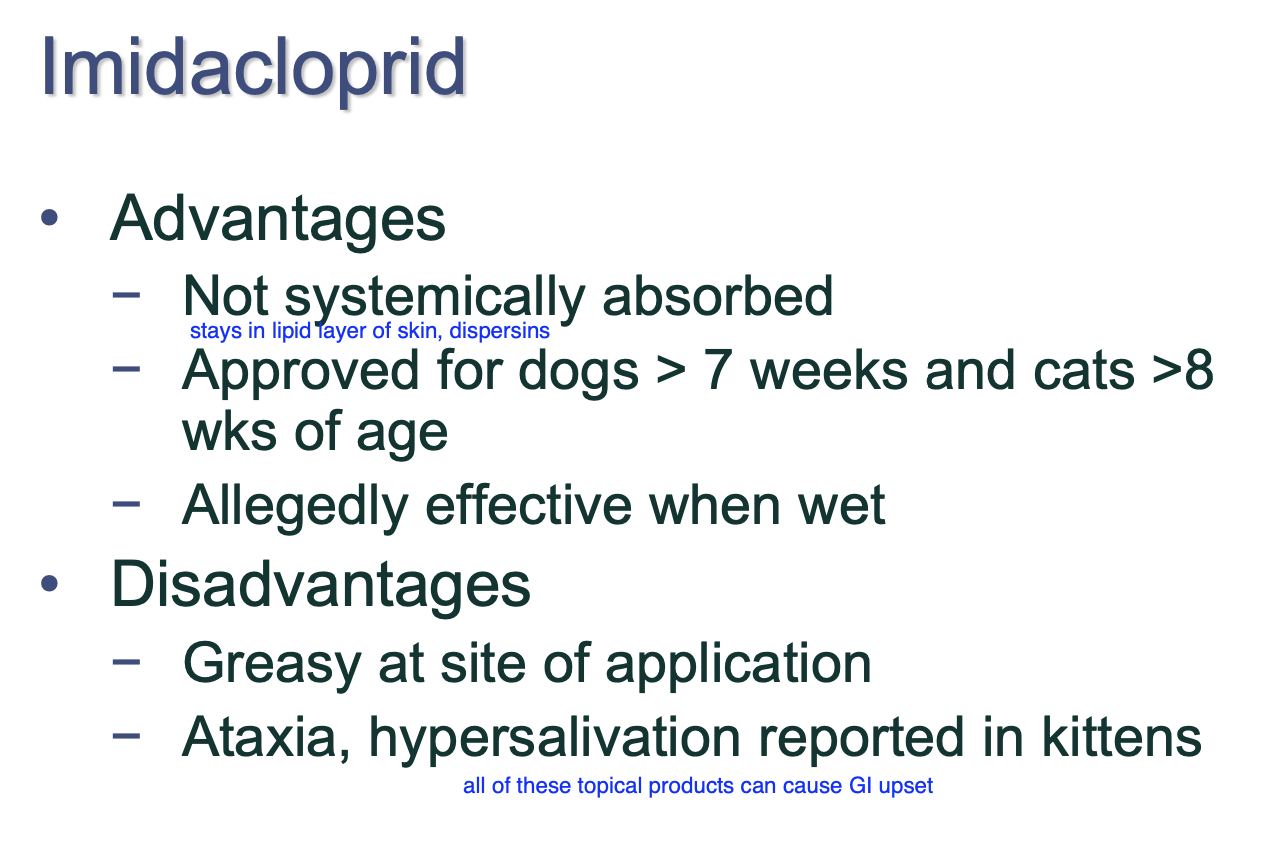
Advantages for Imidacloprid
Not systemically absorbed.
dogs >7wks, cats >8wks.
allegedly effective when wet.
Disadvantages for Imidacloprid (2)
Greasy.
Ataxia and hypersalivation in kittens.
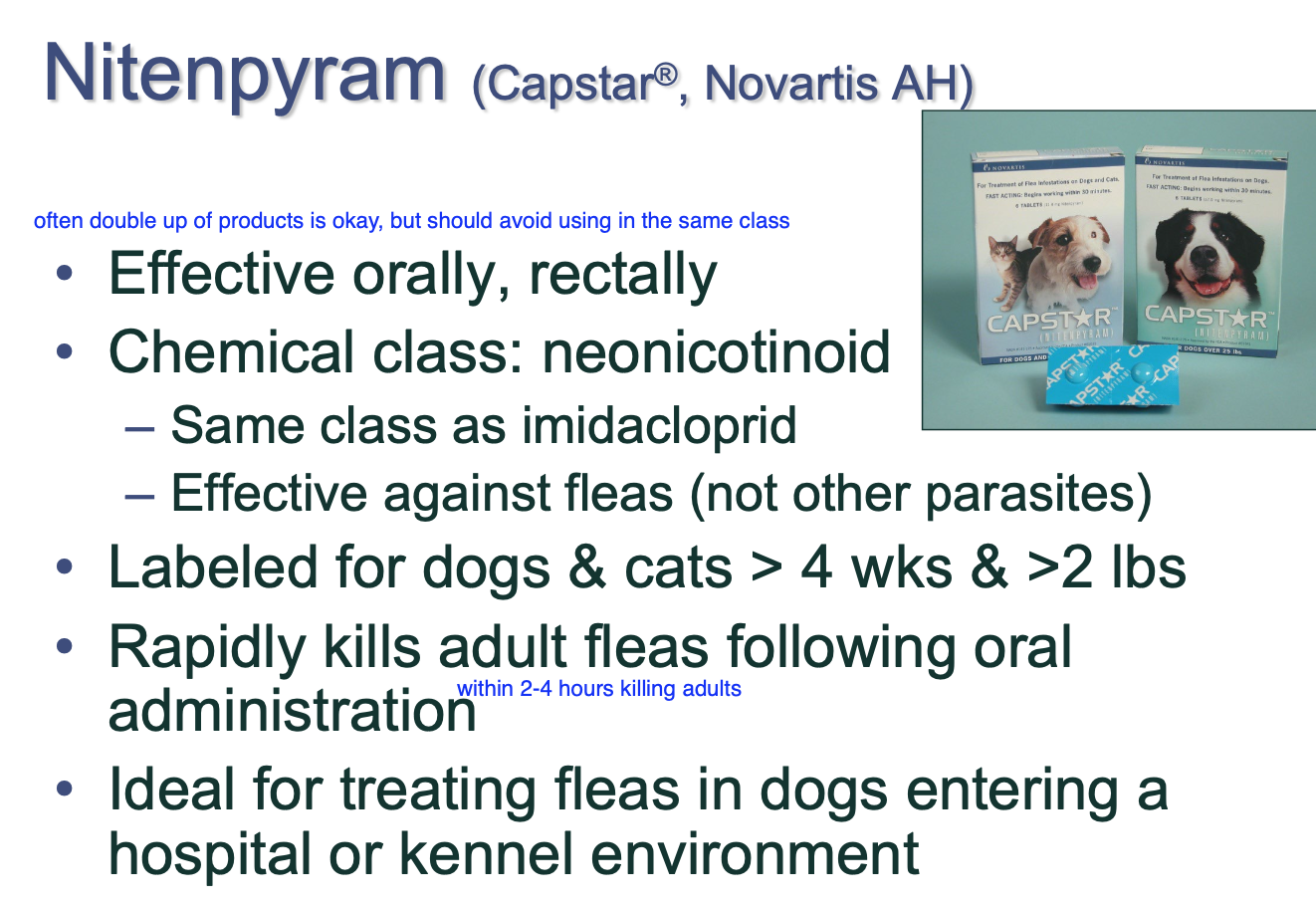
Nitenpyram aka Capstar are effective against
fleas - rapidly kills adults
Concept for admin of flea tx
Do not use two drugs with the same class/mechanism, but can use multiple products if they target different mechanisms.
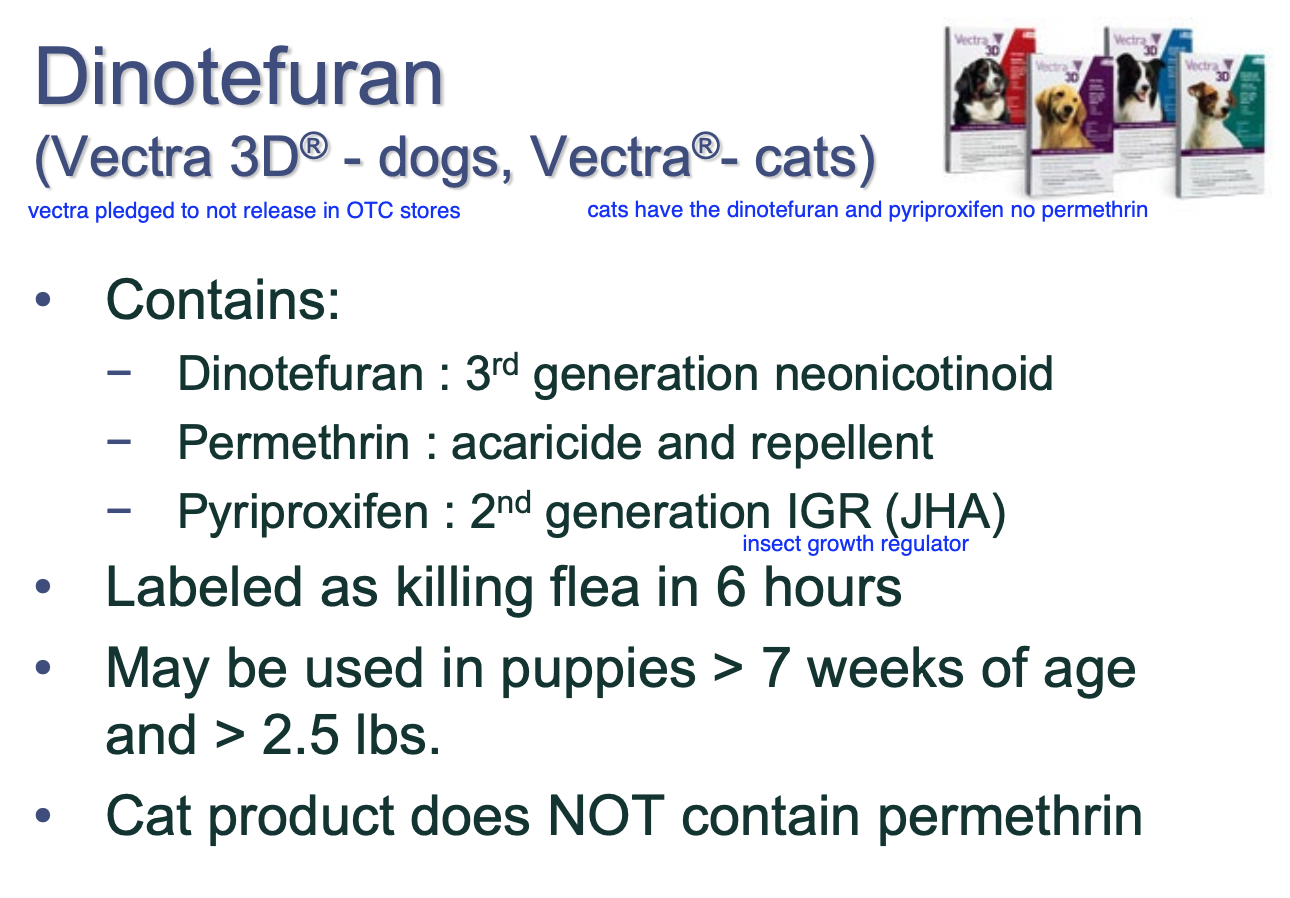
Dinotefuran (Vectra) is used for (2)
killing fleas in 6h.
Can contains permethrin, but cat variant does not contain this.
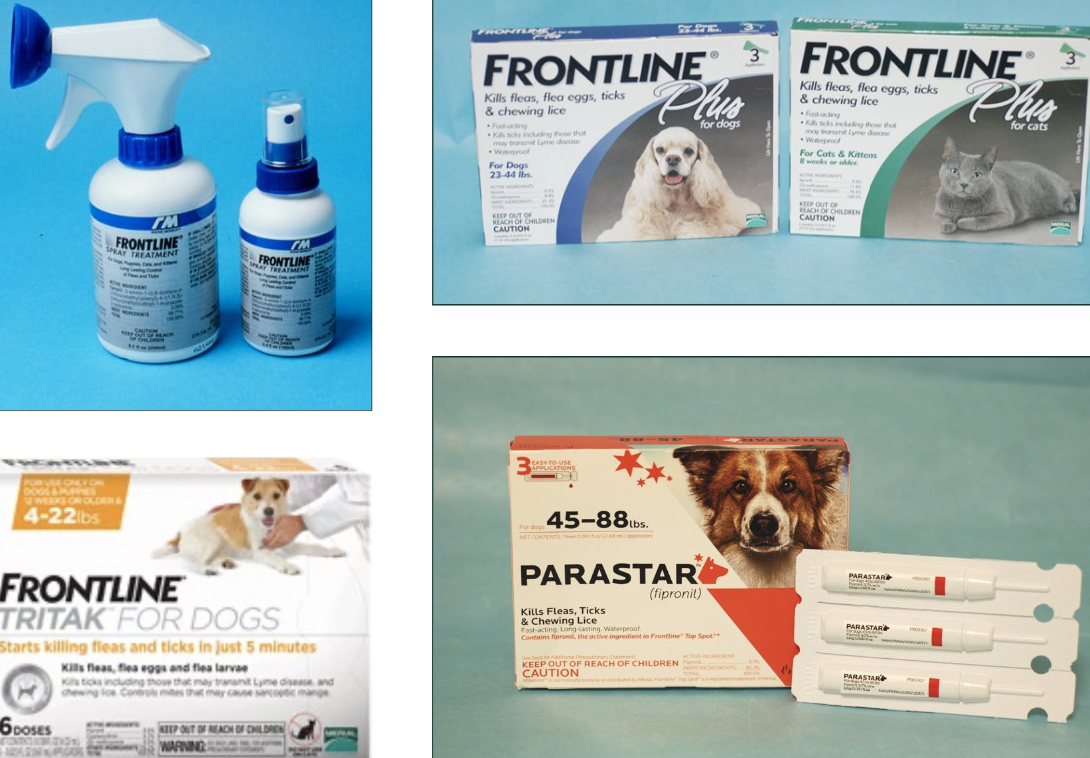
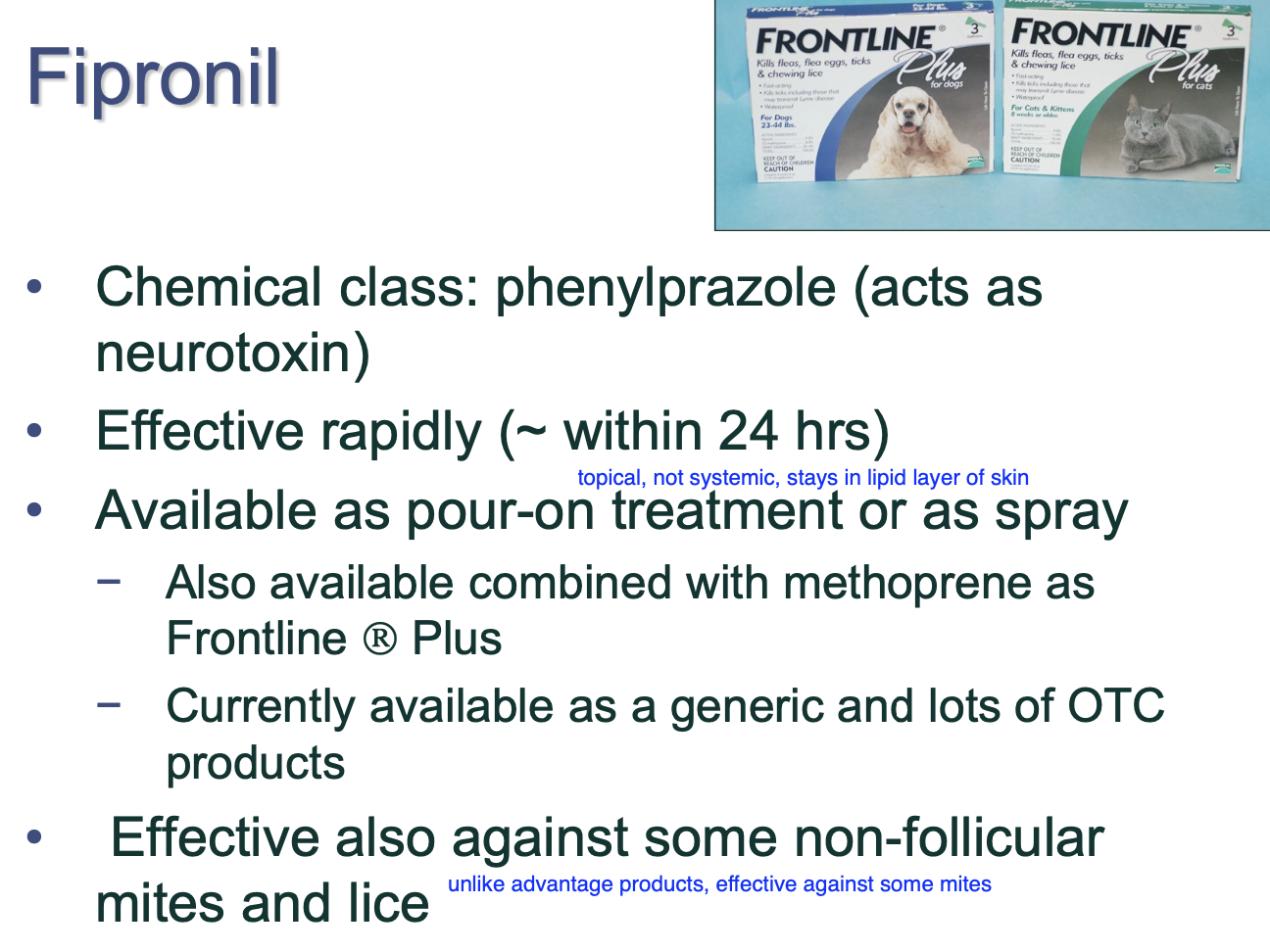
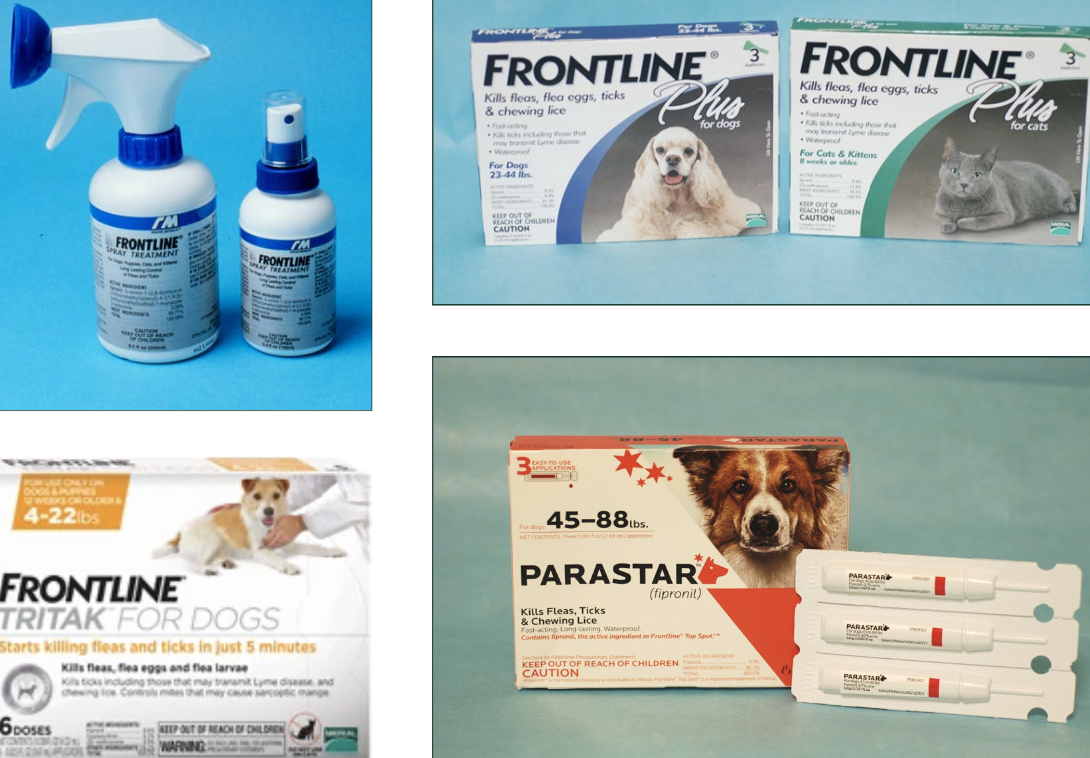
Fipronil (frontline) is used for (2)
tx of fleas, non-follicular mites, lice, and ticks.
Effective w/in 24h.
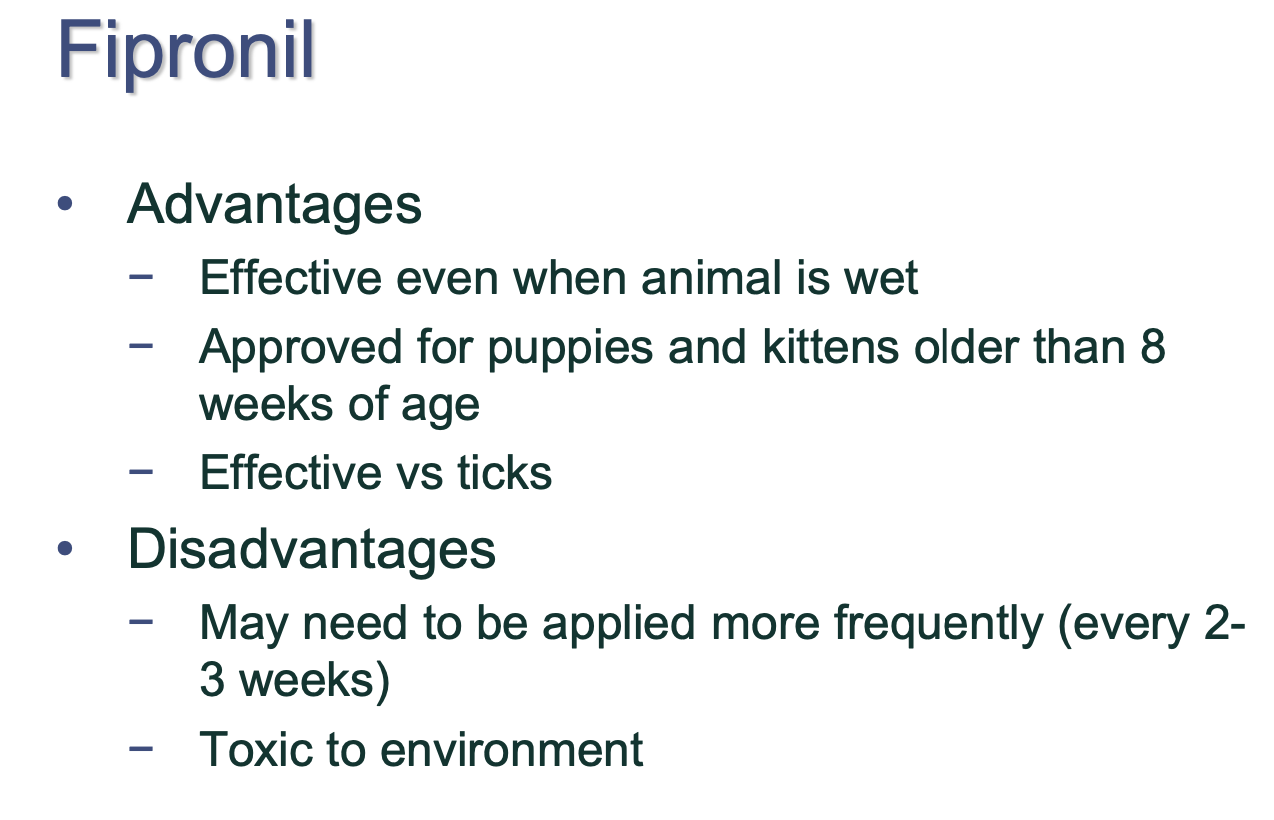
Disadvantage of Fipronil
May need to apply more frequently (q2-3wks).
Toxic to environment.
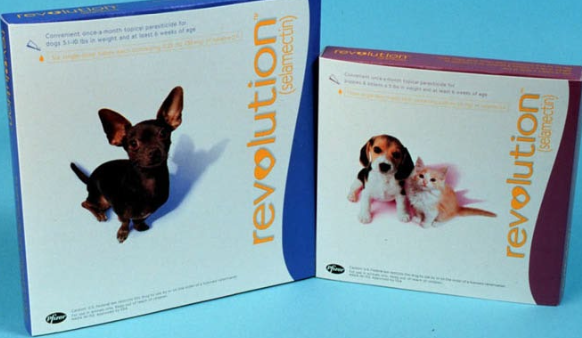
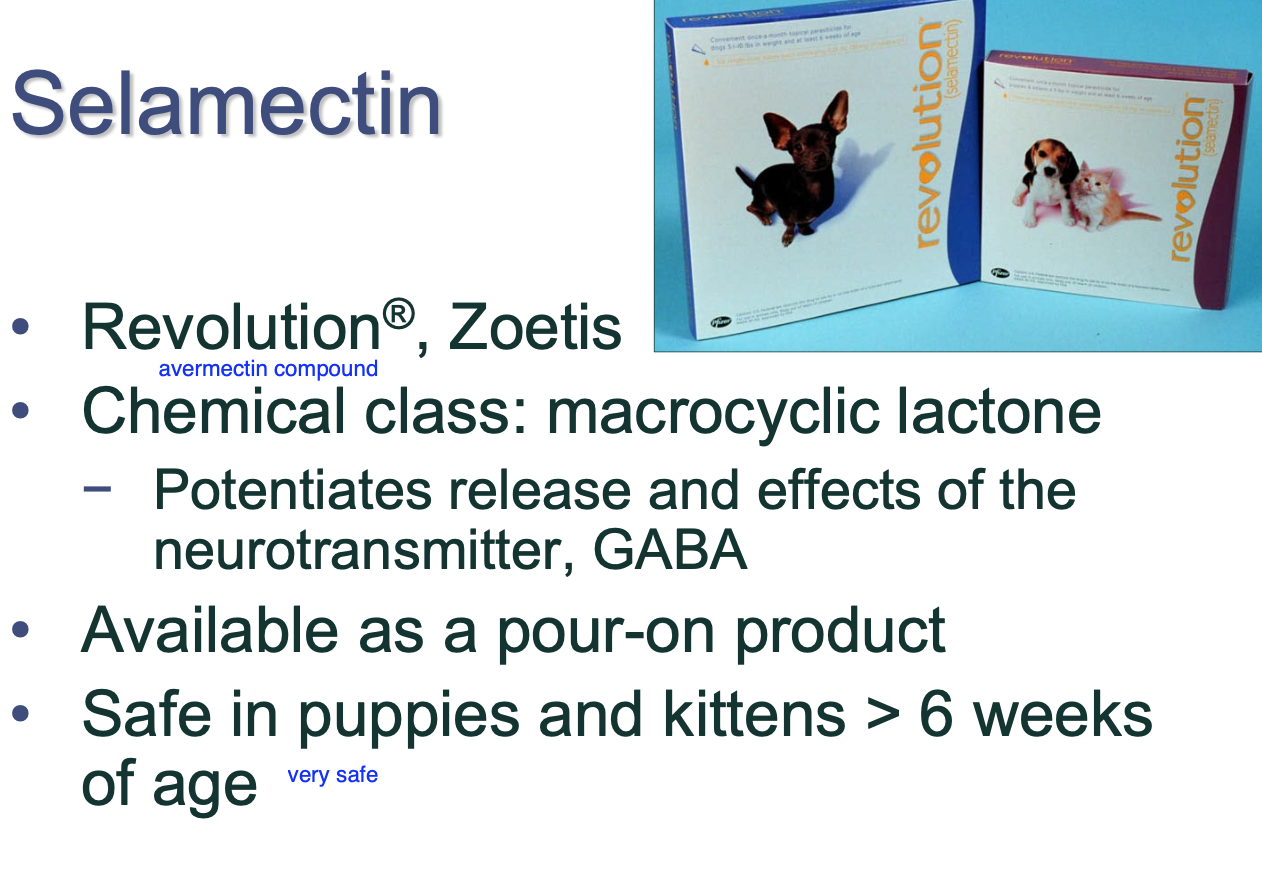
Selamectin (Revolution) is a
macrocyclic lactone (don't need to know specifics)
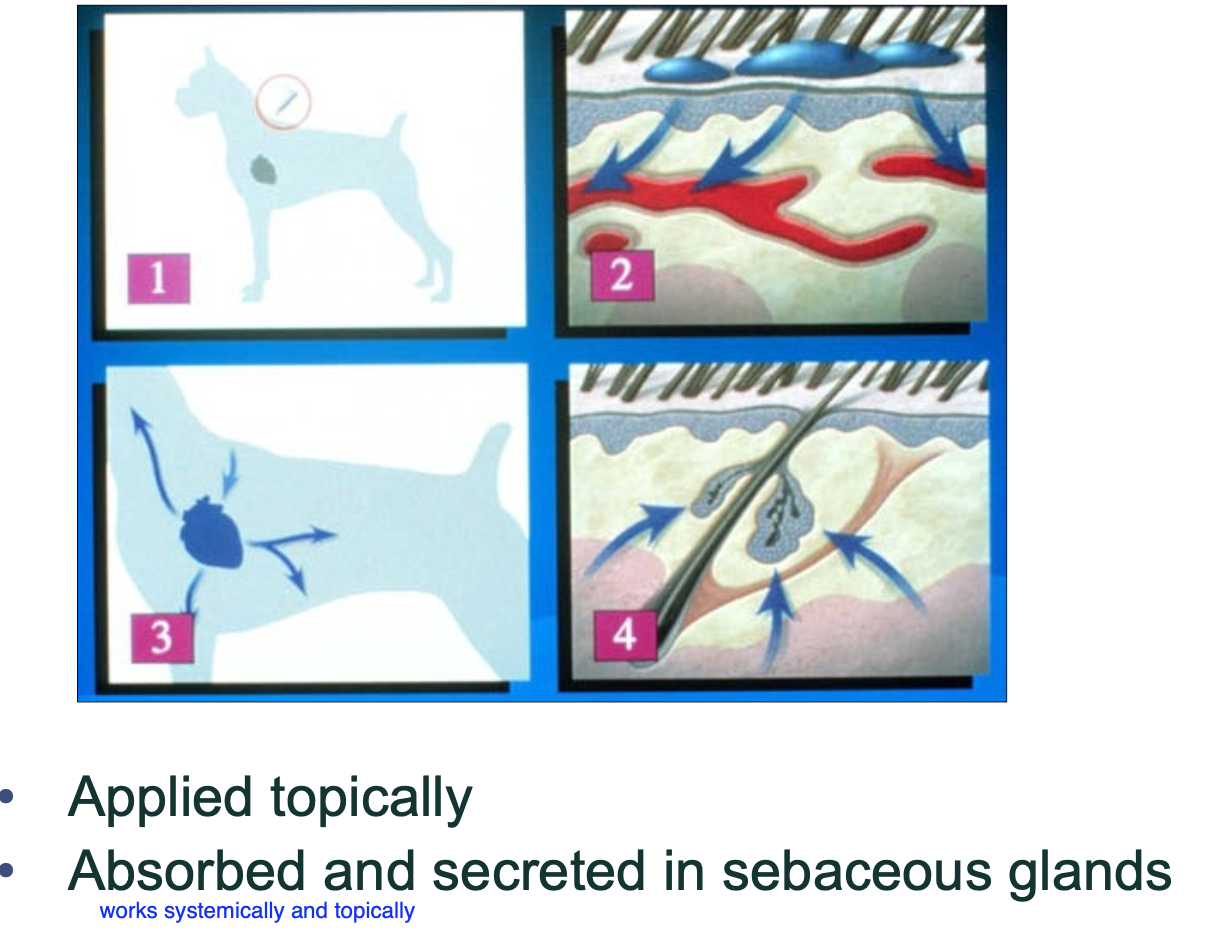
Selamectin is applied
topically - absorbed and secreted in sebaceous glands
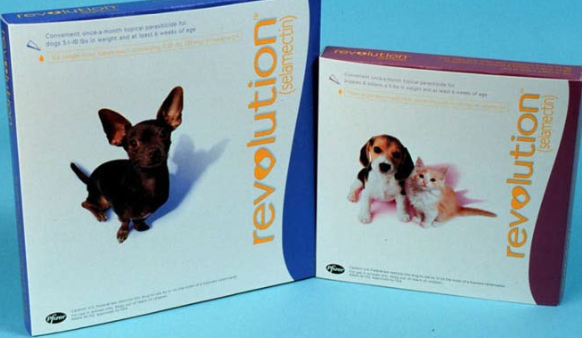
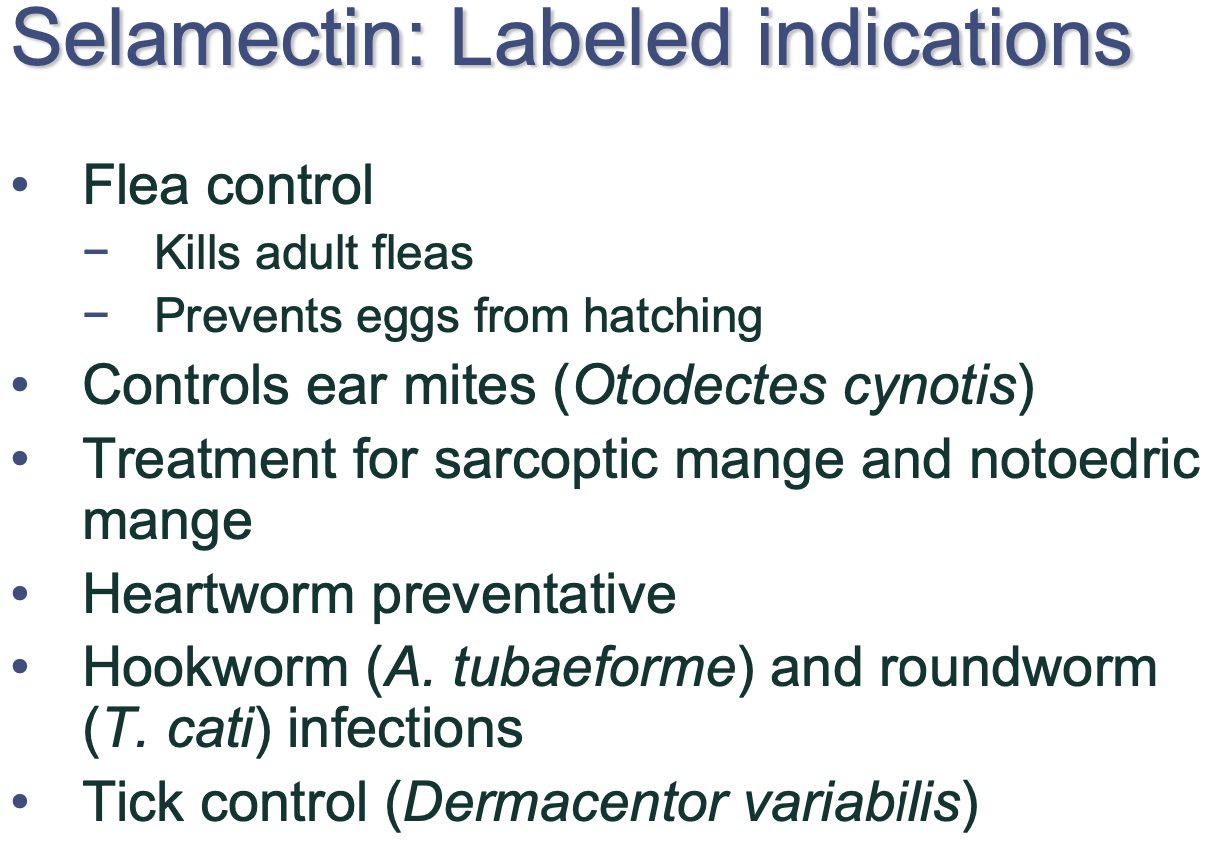
Selamectin is used to tx (5)
fleas - kills adults and prevents eggs from hatching.
control ear mites.
Sarcoptic mange and notoedric mange.
HW prevention.
Hookworm and roundworms.
Tick control.
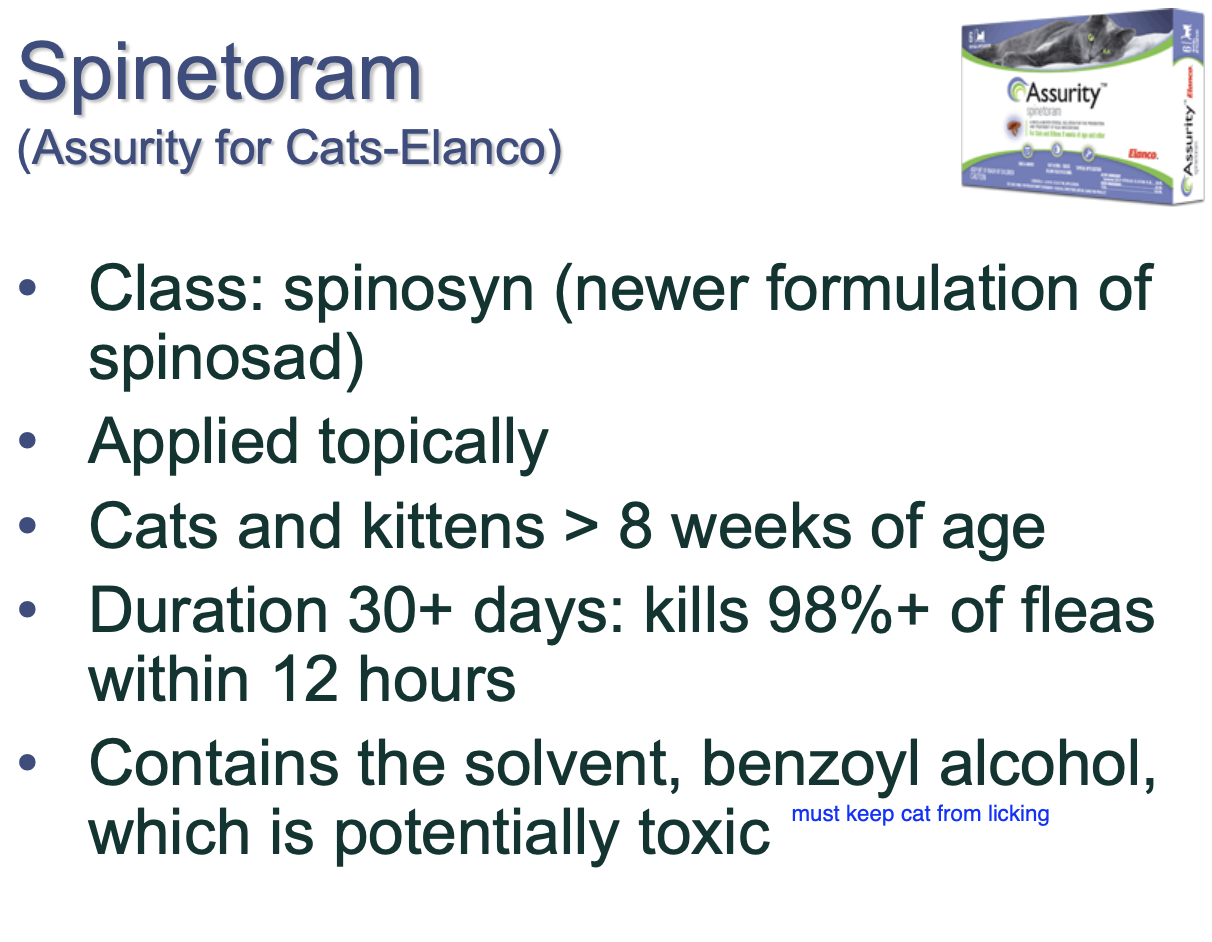
Spinetoram (Assurity) is used to
kill 98%+ of fleas w/in 12hrs but contains solvent, benzoyl alcohol (toxic potentially)
Isoxazoline is effective in tx of
fleas.
most/all ticks for 1-2m.
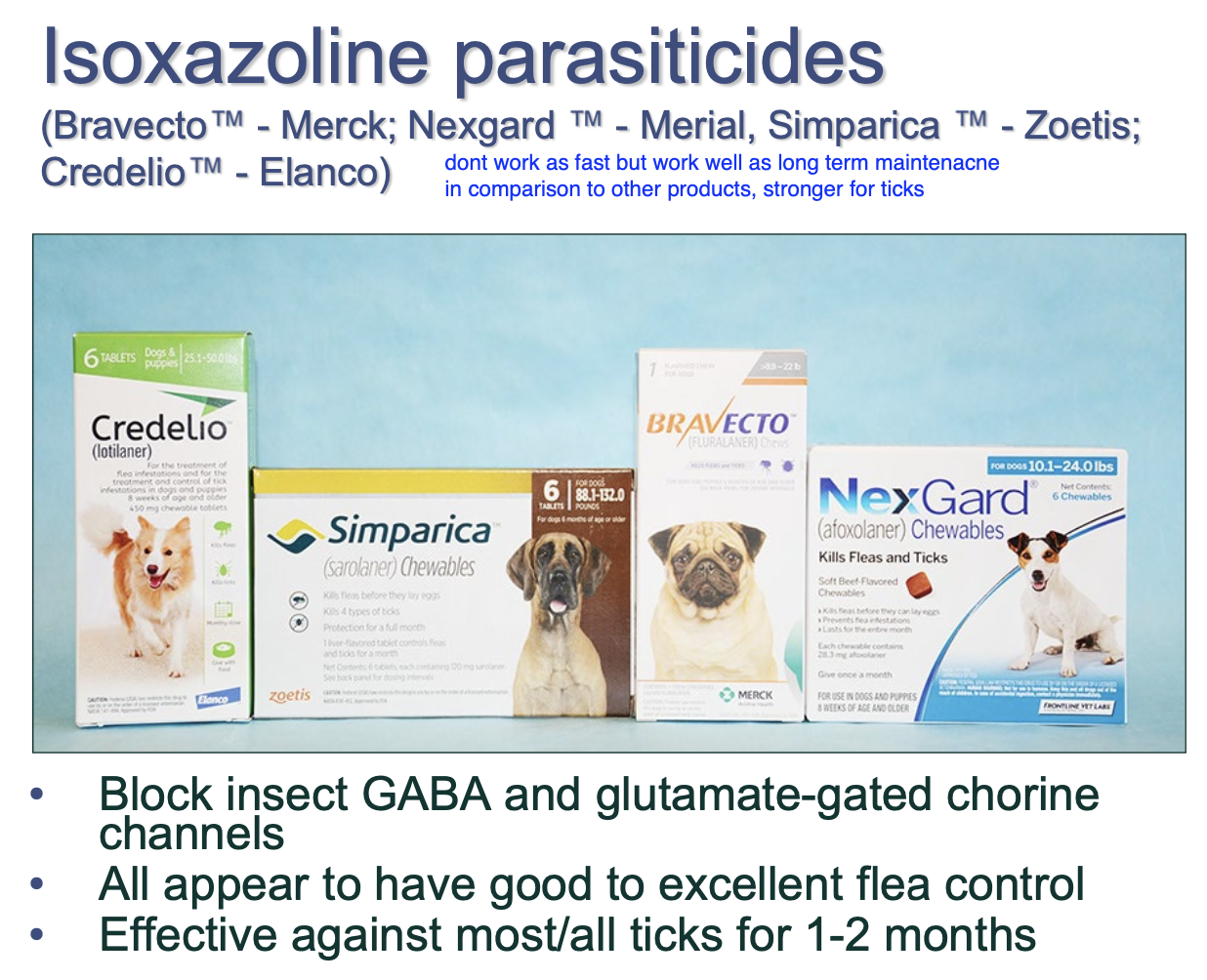
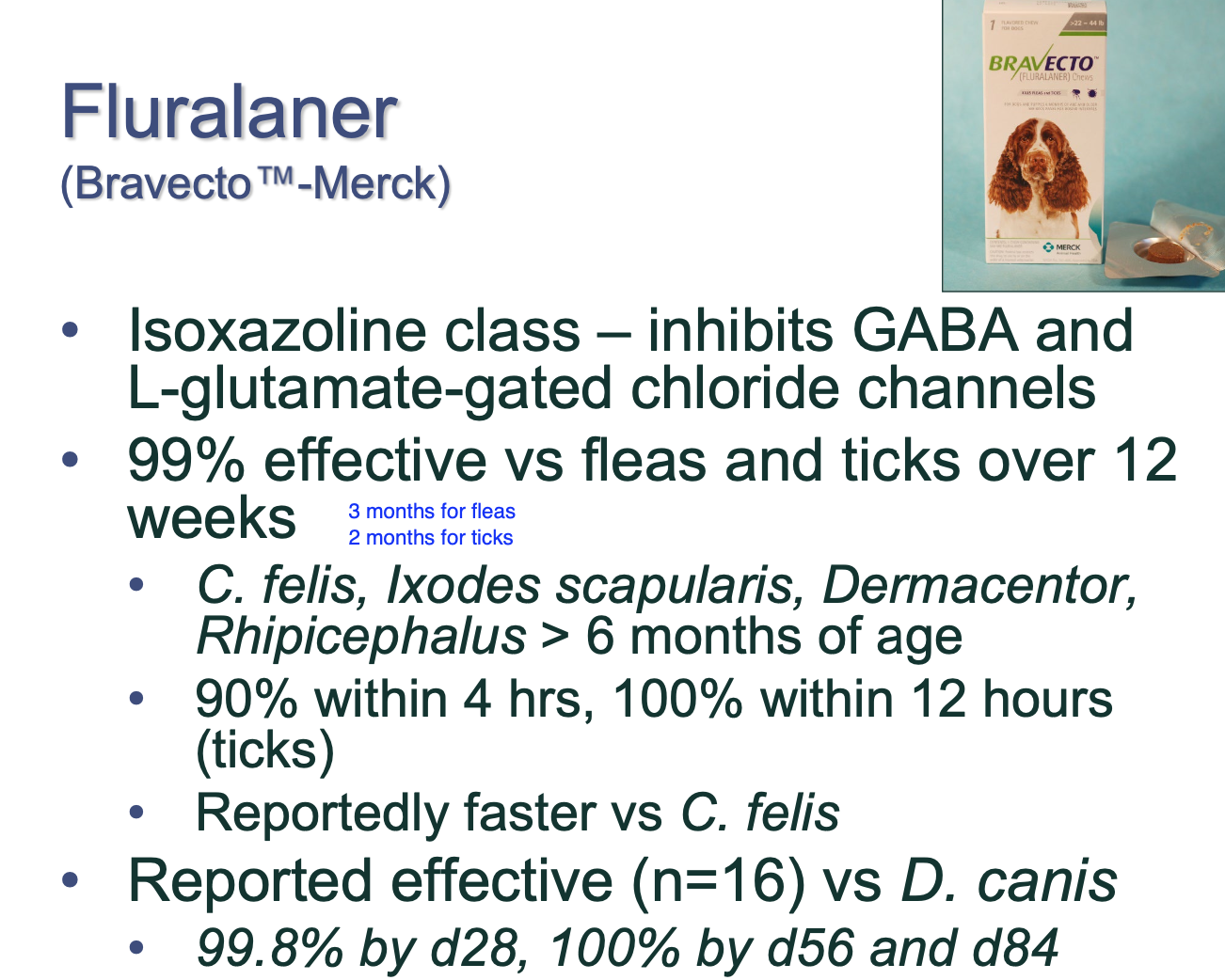
Which isoxazoline is longer acting
Fluralaner (Bravecto)
Insect growth regulator (2)
Juvenile hormone analogs: Methoprene, Pyriproxifen.
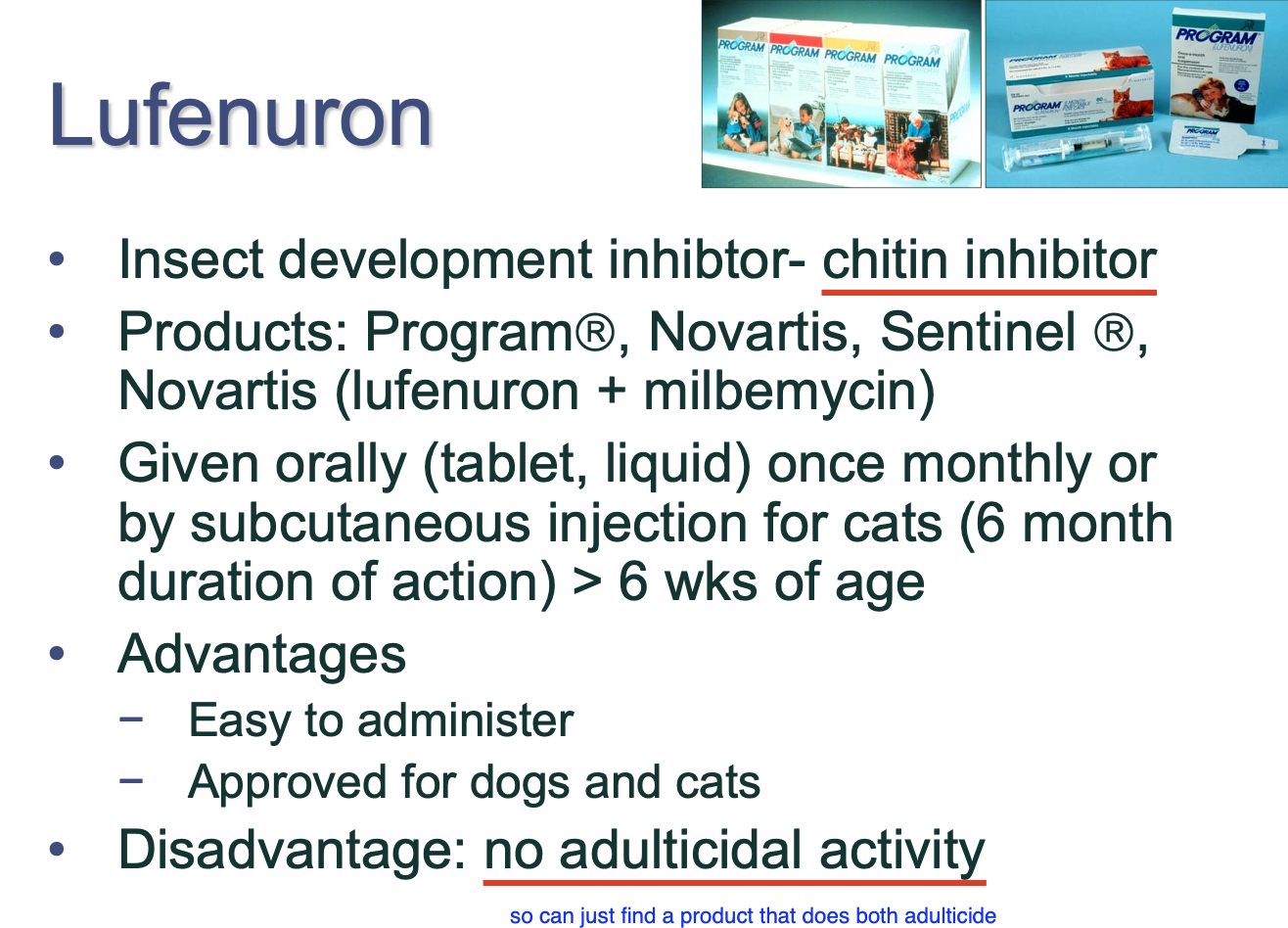
Insect development inhibitor: Lufenuron.
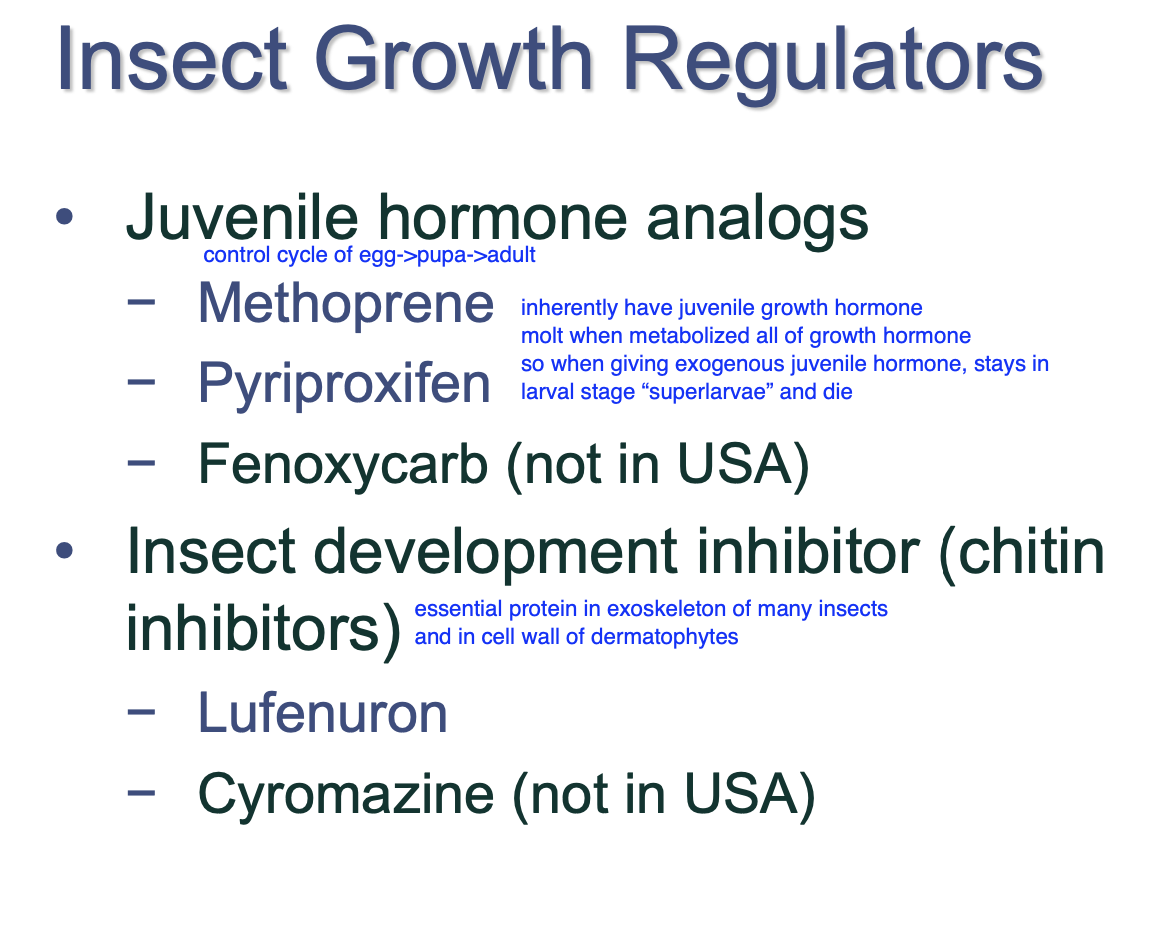
Insect growth regulator results in
prevention of molting in the larvae - they get bigger and die off
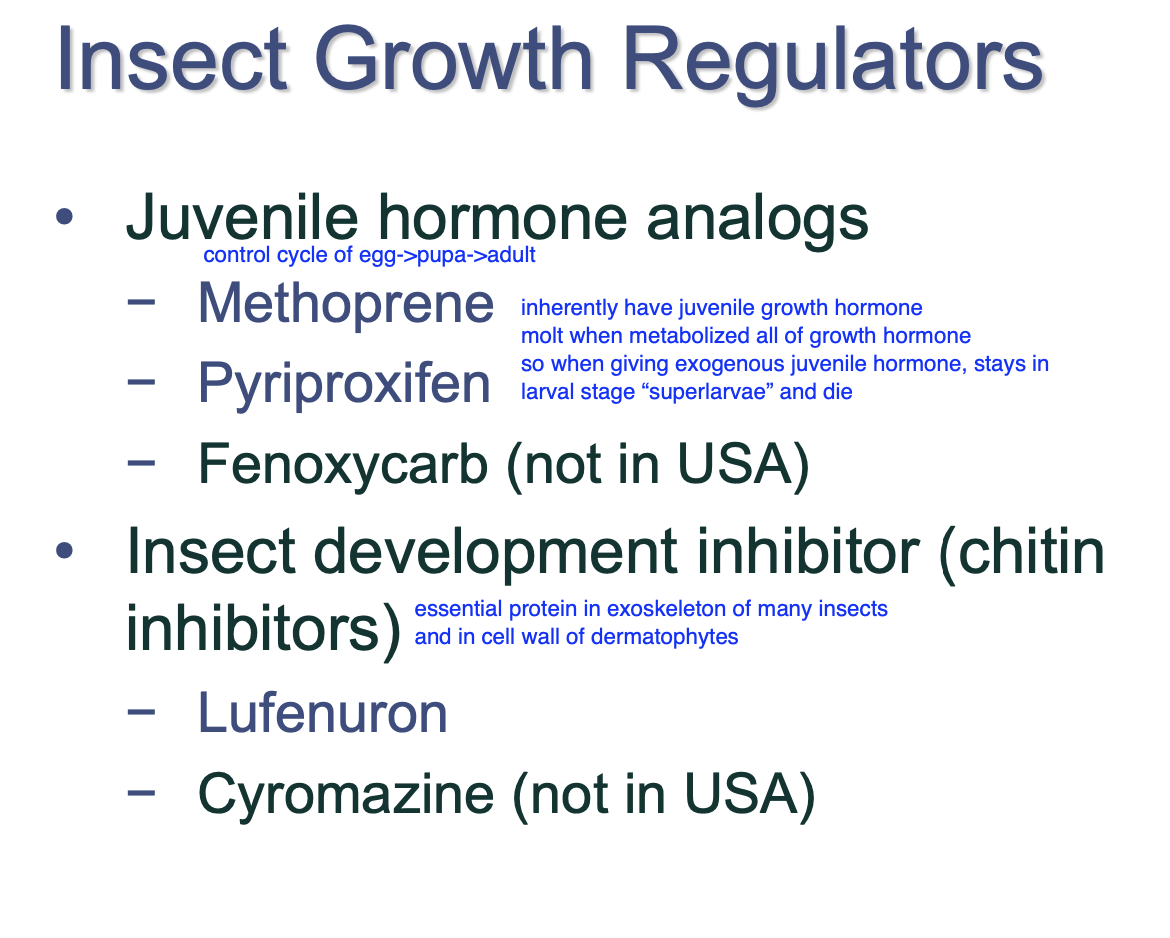
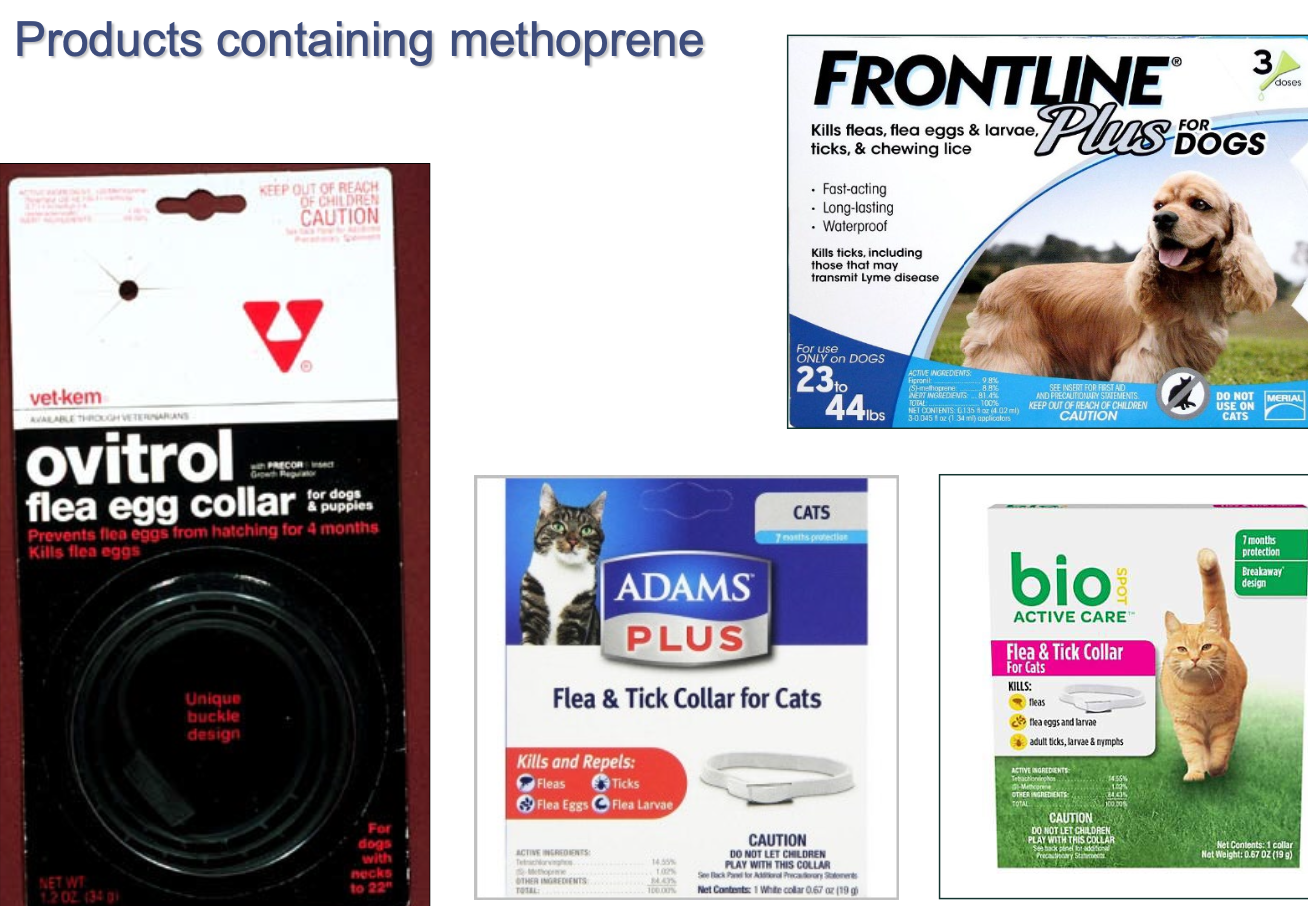
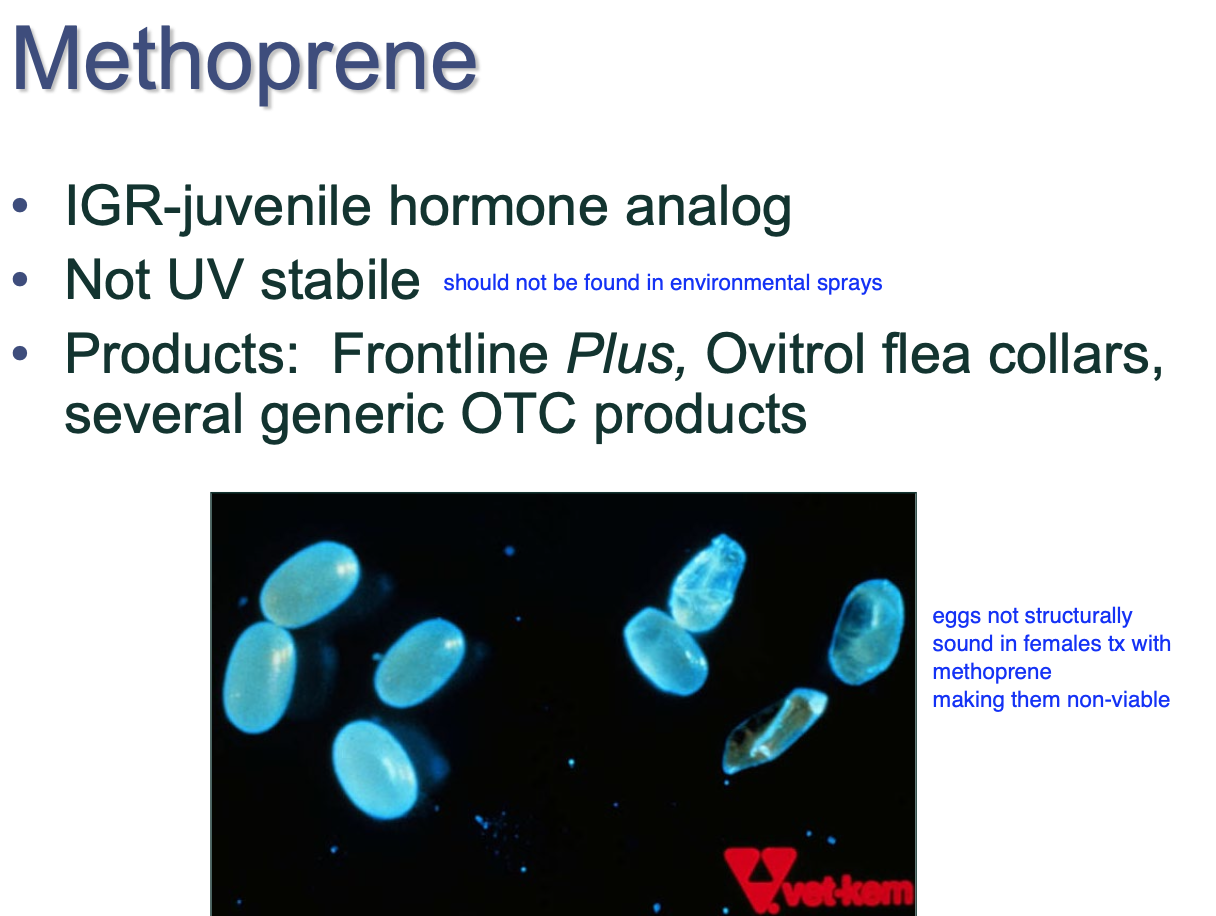
Methoprene works by
making the eggs non-viable.
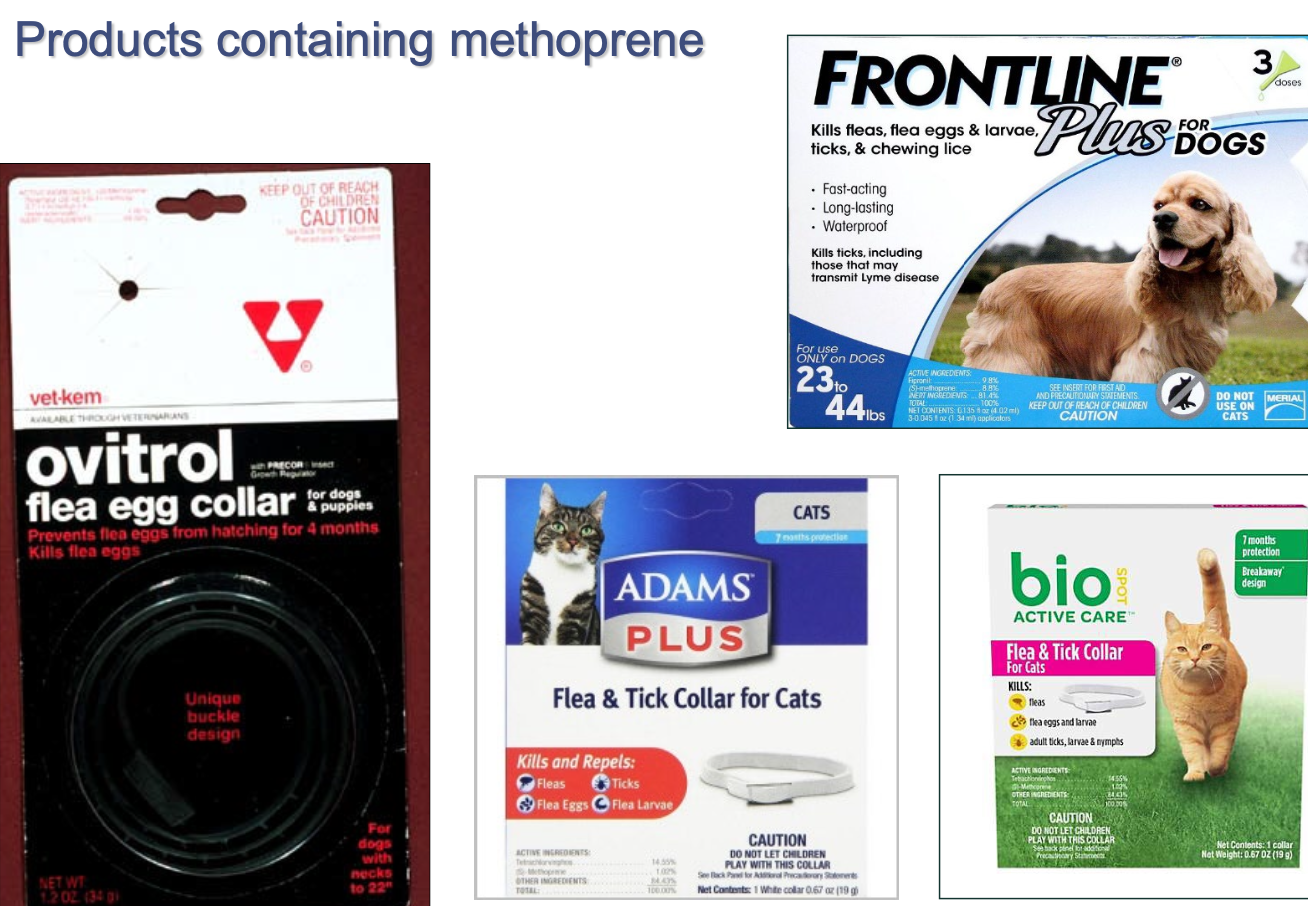
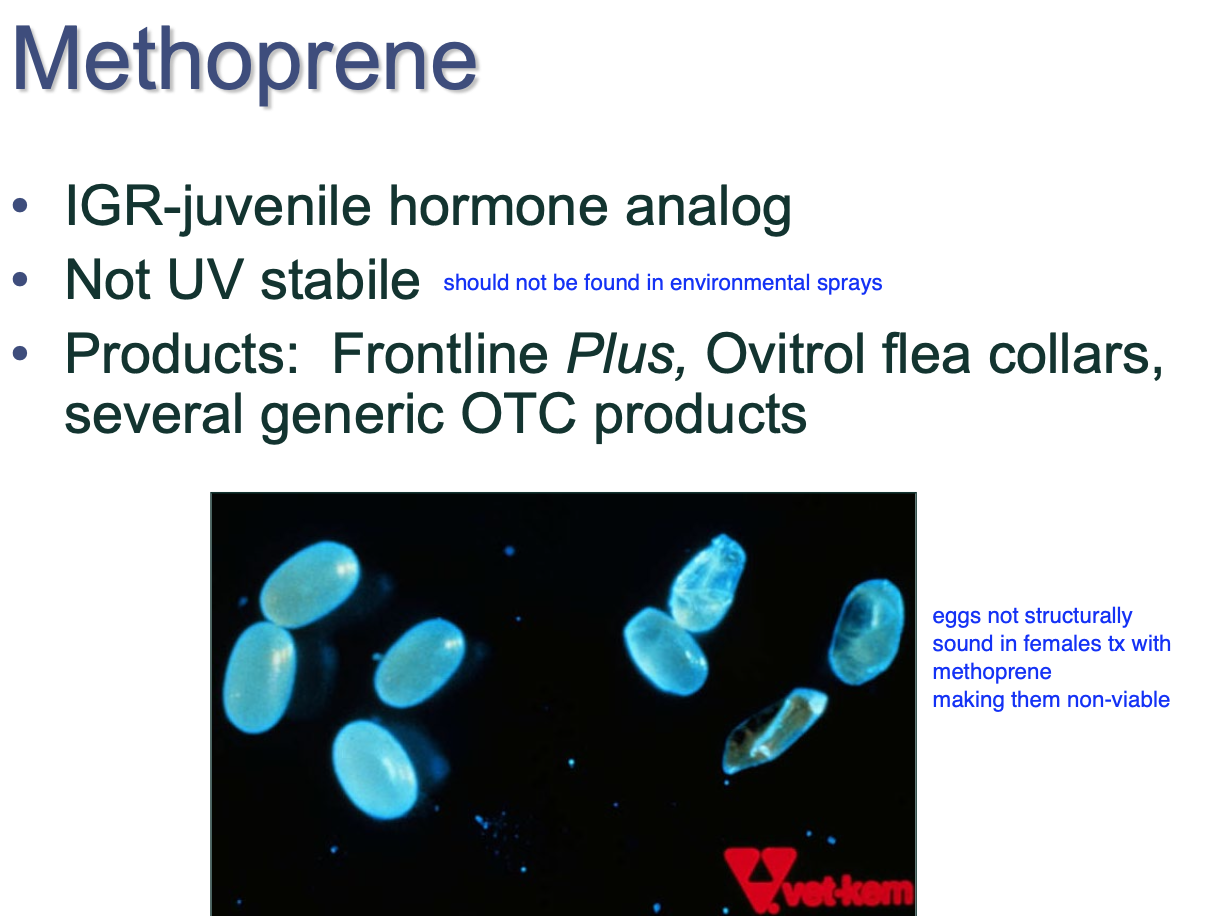
Methroprene is NOT
stable in UV light
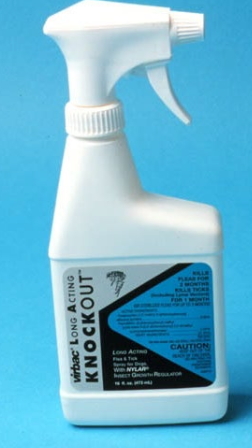
Pyriproxyfen (Nylar) advantage
stable in UV light - available as a premise spray.
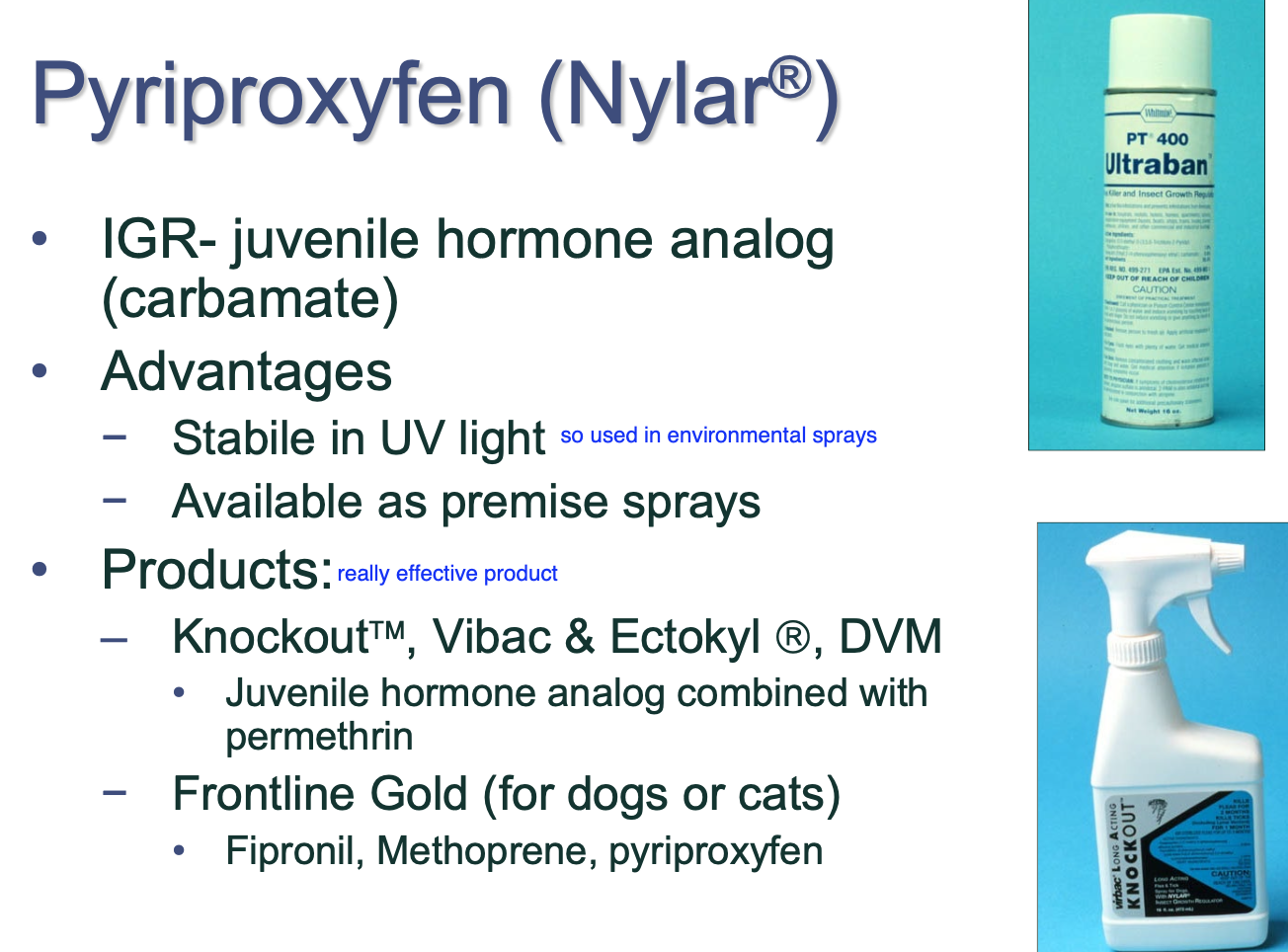
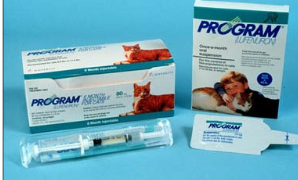
Lufenuron is a
insect development inhibitor than inhibits chitin.