ecology
 Call Kai
 Learn
Learn Practice Test
 Spaced Repetition
 Match
Match Flashcards
 Knowt Play
1/23

There's no tags or description
Looks like no tags are added yet.
Name | Mastery | Learn | Test | Matching | Spaced | Call with Kai |
|---|
No analytics yet
Send a link to your students to track their progress
24 Terms
why is less than 5% sunlight converted into chemical energy by plants?
light doesn’t reach the plant
light is reflected by the atmosphere
light hits a non-photosynthesising part of the plant
light is reflected off the leaves
why are there losses in energy between each trophic level
Losses of energy due to:
energy lost as heat
respiration
not all of the organism is eaten e.g bones
not all the organism can be digested e.g cellulose
heat loss in digestion
maintaining body temp of animals
uses of ATP
cell growth
active transport
thermoregulation
muscle contraction
how to calculate the efficiency of biomass transfers
efficiency = biomass transferred / biomass consumed x 100
what are ruminants and give examples
animals which have specialised stomachs to help with digesting plant material. They regurgitate their food to chew it twice.
e.g cows, sheep, goats
what are the 4 chambers in a ruminant’s stomach
rumen
reticulum
omasum
abomasum
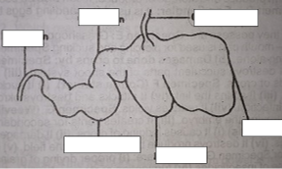
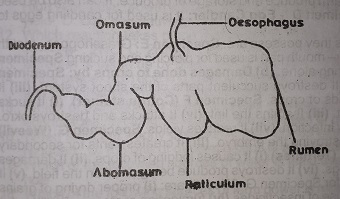
what are the roles of each structure in a ruminants stomach
mouth - grass is ground by molars + mixed with saliva then swallowed
RUMEN - anaerobic conditions due to anaerobic bacteria —> produce cellulase that hydrolyses cellulose to beta-glucose
sugars are converted into fatty acids
production of waste products e.g CO2, methane
bacteria makes proteins from NH4 salts in plant matter + saliva
RETICULUM: fermented grass is formed into balls —> CUD
regurgitated + swallowed again
OMASUM - very muscular walls which contract to squeeze water out of reswallowed food —> reabsorption of water here
ABOMASUM - normal digestion —> secretion of proteases to hydrolyse proteins + HCl to kill bacteria
DUODENUM - neutralise the acidic stomach contents + absorb nutrients
role of microorganisms in ruminant digestion
ruminants can’t digest cellulose as they don’t naturally make cellulase
bacteria make cellulase which hydrolyses cellulose into beta-glucose
glucose needed for anaerobic respiration of bacteria in the rumen
how to calculate Net primary productivity (NPP)
NPP = Gross primary productivity (GPP) - R (heat loss from respiration)
what is GPP
rate producers convert light energy to chemical potential enery
what is NPP
rate that plants accumulate dry mass per unit area per year
define productivity
rate of energy flow —> kJm^-2 yr^-1
how do abiotic factors impact productivity
ABIOTIC:
inc light levels —> max light for photosynthesis e.g plant under UV light
inc water availability —> ensure sufficient water for PHS + inc survival rate in drought e.g irrigation system/drought resistant species
maintain optimum temp —> emits CO2 to increase rate of PHS e.g paraffin heater
inc nutrients e.g plant nitrogen fixing crops to increase nitrate levels in soil
how do biotic factors impact productivity
dec pests - reduces disease + damage e.g pesticides
dec fungal disease - prevent damage + disease e.g fungicides
dec weeds - reduce competition for light, space, nutrients e.g herbicides
how to increase energy transfer between producers + primary consumers
harvest animals at younger age —> more energy for growth so they’re bigger
keep animals indoors —> less energy needed 4 thermoregulation
antibiotics —> reduce energy loss to pathogens
restrict movement —> less energy loss from muscle contraction
treat animals with steroids —> inc growth rate so more energy used for growing so bigger
intensive vs extensive farming
PROS + CONS of hedgerow removal