Pelvic health Lab info weeks 6-7
 Call Kai
 Learn
Learn Practice Test
 Spaced Repetition
 Match
Match Flashcards
 Knowt Play
1/37

There's no tags or description
Looks like no tags are added yet.
Name | Mastery | Learn | Test | Matching | Spaced | Call with Kai |
|---|
No analytics yet
Send a link to your students to track their progress
38 Terms
What is the purpose of isolated pelvic floor (PF) strengthening for hypotonic PF?
To improve muscle tone and control of the pelvic floor.
What is the recommended position for isolated PF strengthening?
Seated with a neutral spine posture.
How should one perform the contraction during PF strengthening?
Lift and squeeze in the back then front as if trying to hold in gas or urine.
What is the suggested dosage for isolated PF strengthening?
1 set of 8-10 reps with a 2-3 second hold, building up to 10 seconds, 3 times daily.
What is a key intervention for hypertonic pelvic floor dysfunction?
Guided progressive relaxation.
What is the goal of positional release of the diaphragm?
To slacken the diaphragm and release tension.
How long should the diaphragm positional release be held?
60-90 seconds.
Positional release of the diaphragm
Slide bottom hand underneath T10
Top hand goes over contralateral Rib angle and adds ipsilateral pressure with forearm
Top hand adds pressure down and bottom hand adds pressure up
Pt takes relaxing breaths while PT Holds for 60-90s
What is the technique for external pelvic floor positional release?
Pt bridges to place bottom hand at the bottom of the sacrum
Top hand adds pressure from pubic symphysis horizontally
Bottom hand adds pressure from the sacrum
Both hands compress while pt takes diaphragmatic breaths
"Almost like your trying to pass gas or start the flow of urine"
Pt should feel a letting go
Hold for 60-90s
What is the relaxation position for pelvic floor stretches?
Lying down with pillows under the knees and legs rotated outwards.
What is the purpose of diaphragmatic breathing in pelvic floor exercises?
To promote relaxation and awareness of pelvic floor movement.
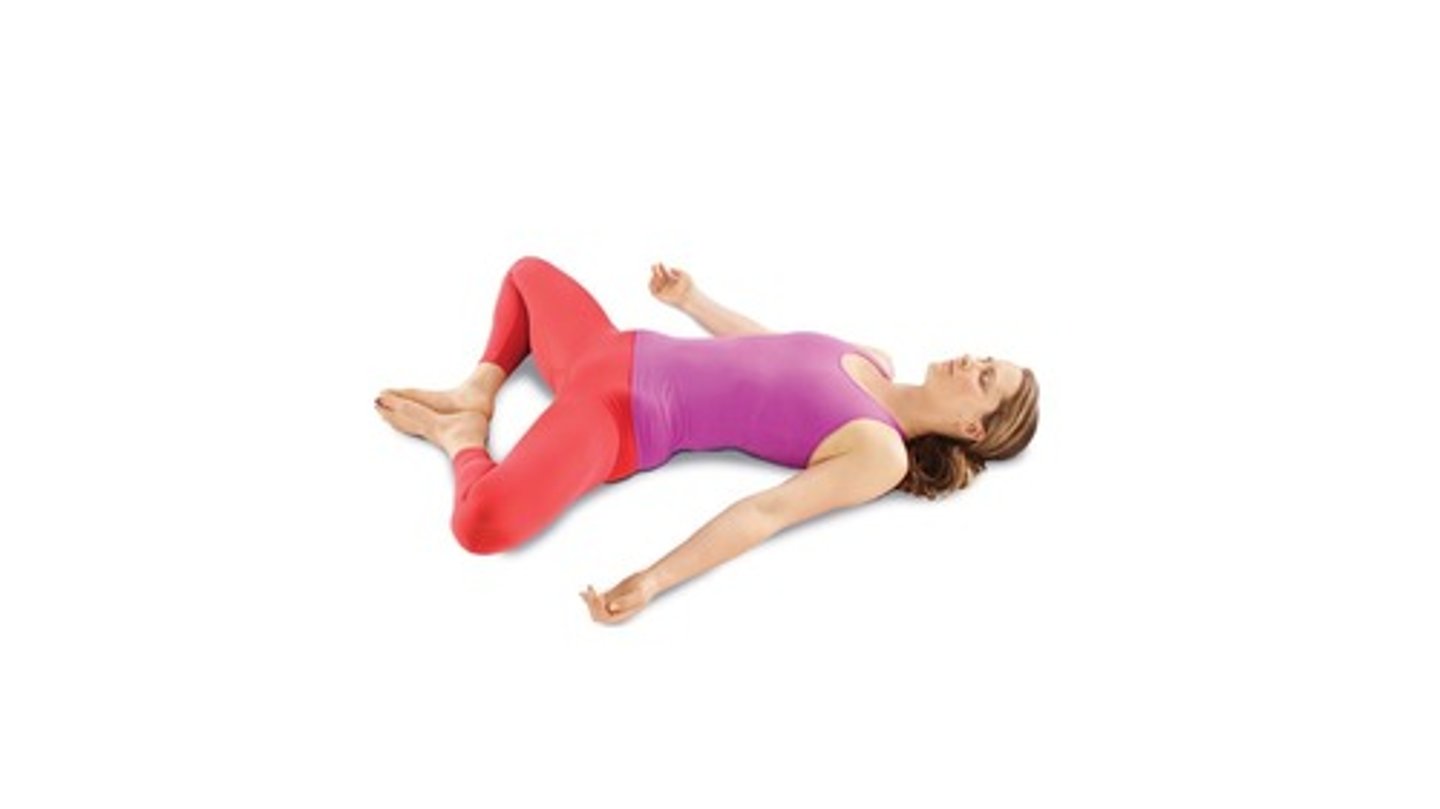
Butterfly stretch pelvic floor
Start in relaxation position→slide legs into hook lying 1 leg at a time→breathe out and lower legs→diaphragmatic breathing
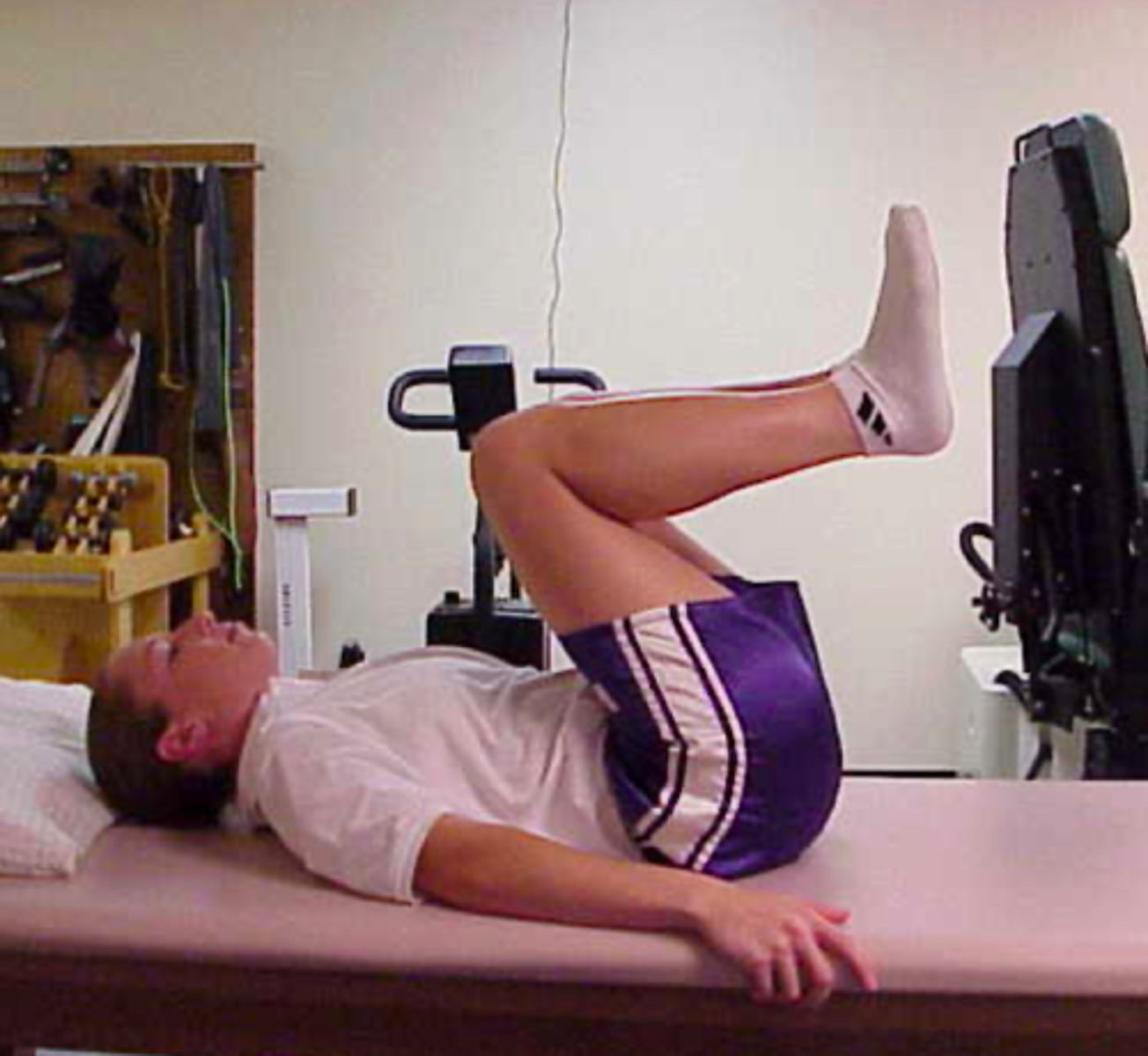
Knees to chest stretch
leg at a time to pull into the chest→diaphragmatic breathing→move one leg at a time down
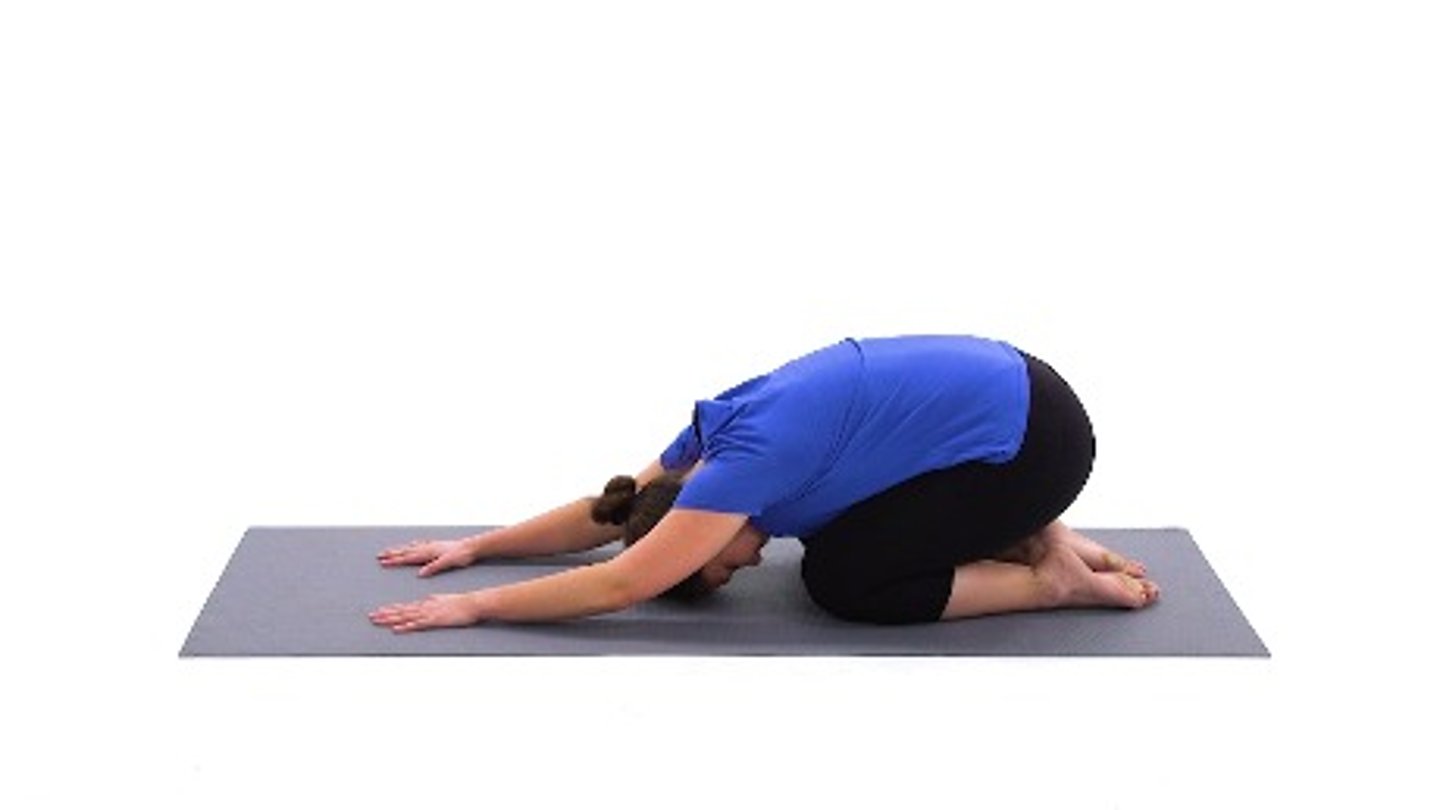
Childs pose stretch
Breathing in→breathe out and shift backwards into child's pose→diaphragmatic breathing
Quick flicks
• Quick contract followed by release with full relaxation of pelvic floor while the gluteals, abdominals, adductors, and obturator remain relaxed.
Quick flicks dosage
-Dosage (Clinic): 10-15 repetitions per set, 3-7 sets.
-Dosage (Home): Work toward 10-15 repetitions, 3 times per day.
Endurance holds pelvic floor
Improve sustained contraction and support during functional and endurance tasks.
Endurance holds dosage
-Dosage (Clinic): 10-15 repetitions per set, 3-7 sets; hold for 5-15 seconds; adjust if compensations occur.
-Dosage (Home): Work toward 10-15 repetitions, hold for 5-15 seconds; 3 times per day
What is the recommended progression for pelvic floor strengthening exercises?
Start in supine or prone, progress to quadruped, seated, tall kneeling, then standing.
What should be monitored during pelvic floor exercises?
Compensations such as breath holding or activation of gluteal/adductor muscles.
return to running Load and Impact Management
Walk 30 mins
SLS x10s each leg
SL squats 10 reps each leg
Jog in place 1 min
Forward bounds 10 reps
Hopi in place 10 reps each leg
SL running man x10 each side
Return to running strength testing
SL calf raises
SL bridge
SL STS
Side lying abductions
Return to running pelvic floor testing
Supine Exam (3/5 or >)
Standing Exam (3/5 or >)
10 reps of quick flicks (standing)
8-12 reps of 6-8s max contraction (standing)
60 seconds submaximal 30-50% contraction (standing)
What is the ideal posture for pregnant women while lying down?
On the side, with pillows for support.
What are some common bladder irritants to avoid?
Alcohol, citrus fruits, coffee, and carbonated beverages.
What is the Bristol stool chart used for?
To classify stool types and assess bowel health.
What is the significance of type 4 on the Bristol stool chart?
It indicates a healthy stool consistency, like a smooth and soft sausage.
What are common strategies to manage painful swelling and breast engorgement postpartum?
Frequent feeding, manual expression, gentle massage, and positioning changes.
What feeding position is recommended for mothers recovering from cesarean birth?
Side-lying feeding.
What is mastitis?
Inflammation of the breast that can be caused by infection, characterized by redness, pain, and warmth.
What are signs of clogged ducts?
Localized tenderness or firmness in the breast.
What is the recommended position for sitting during pregnancy?
Use chairs with good support for the low back and get up every 35-40 minutes.
Bristol stool type 1
Separate hard lumps, like nuts (hard to pass)
Bristol stool type 2
Sausage shaped but lumpy
Bristol stool type 3
Like a sausage but with cracks on surface
Bristol stool type 5
Soft blobs with clear-cut edges (passed easily)
Bristol stool type 6
fluffy pieces with ragged edges, a mushy stool
Bristol stool type 7
Watery, no solid pieces, entirely liquid