chem 51lc ch 21
 Call Kai
 Learn
Learn Practice Test
 Spaced Repetition
 Match
Match Flashcards
 Knowt Play
1/21

There's no tags or description
Looks like no tags are added yet.
Name | Mastery | Learn | Test | Matching | Spaced | Call with Kai |
|---|
No analytics yet
Send a link to your students to track their progress
22 Terms
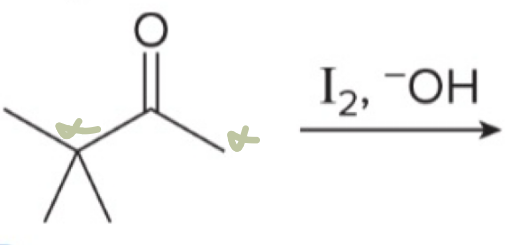
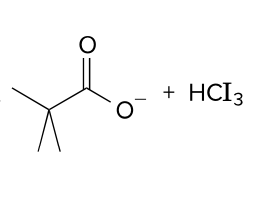
haloform reaction because the ketone has a COCH₃ group.
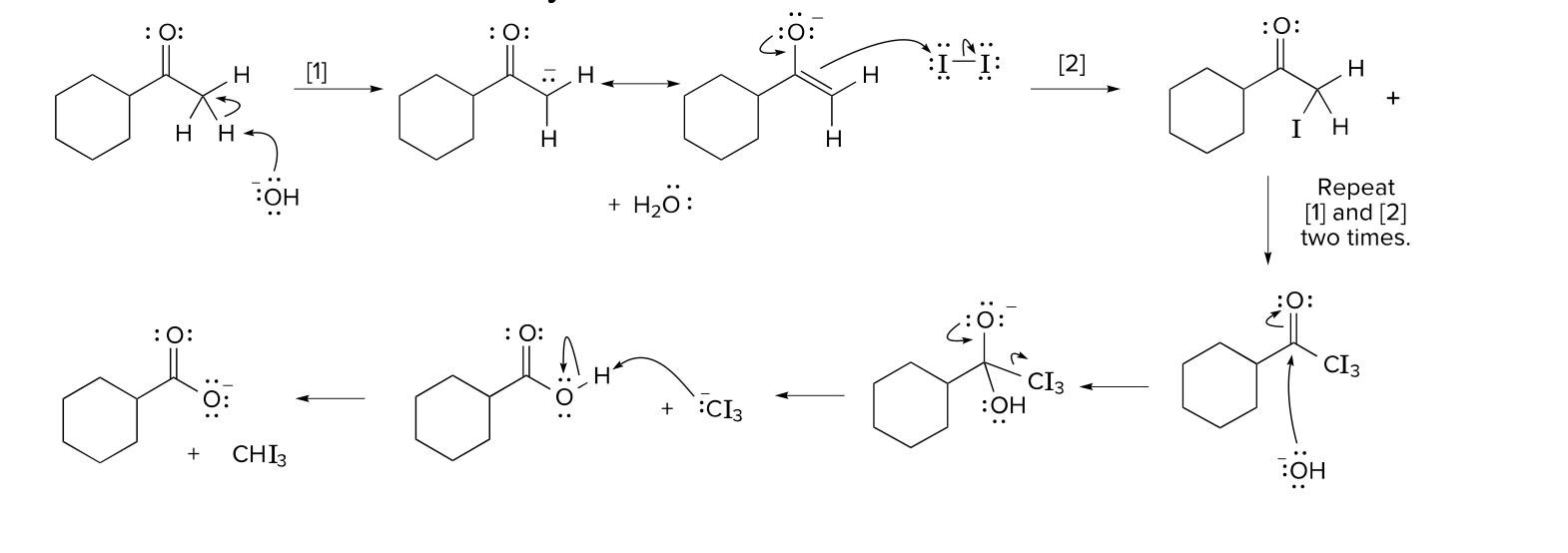
The CH₃ next to the carbonyl gets iodinated 3 times, then the CI₃ group leaves as HCI₃, and the carbonyl becomes a carboxylate.
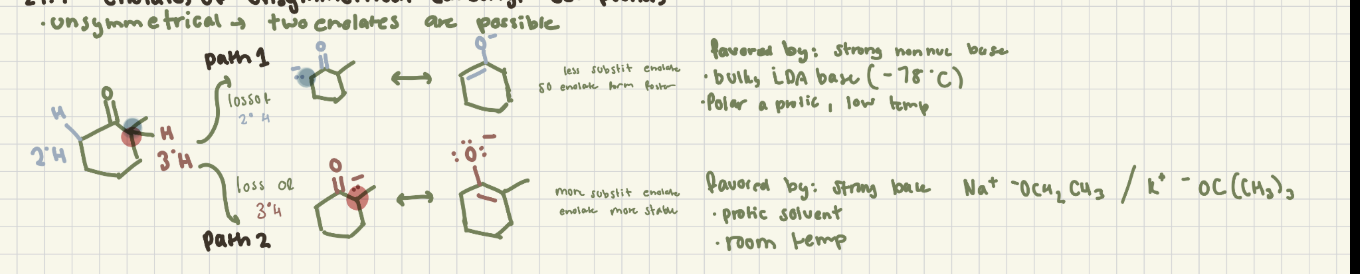
For an unsymmetrical ketone, how do I choose kinetic vs thermodynamic enolate?
Unsymmetrical ketones have two different alpha sides, so two enolates can form.
Kinetic enolate:
Remove H from the less hindered alpha carbon.
Forms faster.
Reagents: LDA, -78°C, bulky strong base
Thermodynamic enolate:
Remove H to give the more substituted alkene/enolate.
More stable.
Reagents: small base/protic solvent/heat, like NaOEt/EtOH or acid/base reversible conditions.
Memory:
LDA, -78 cold = less substituted enolate.
Heat/reversible = more substituted enolate.
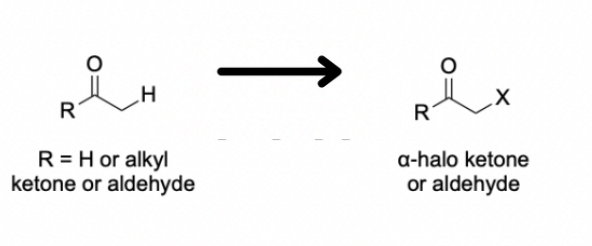
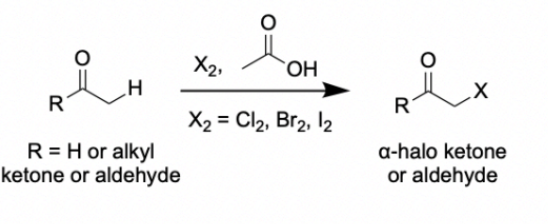
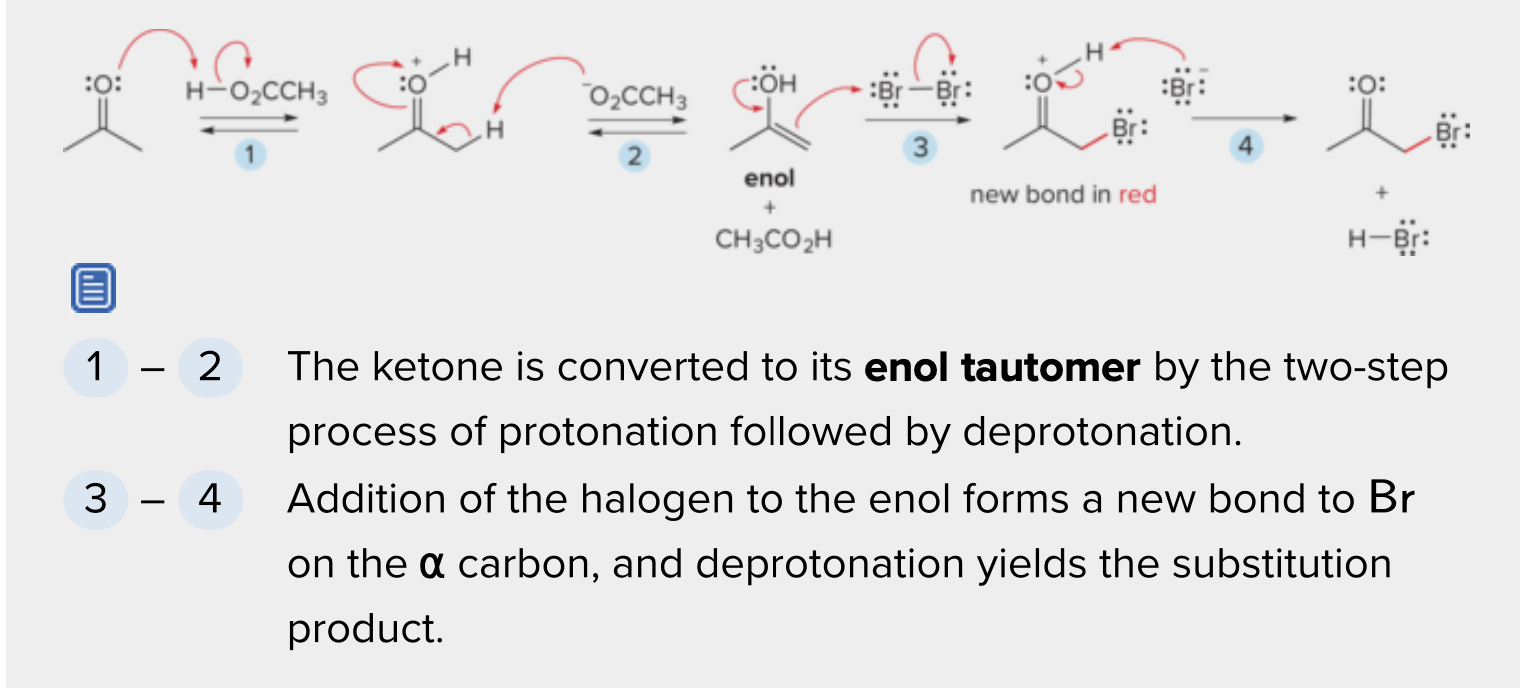
acid halogenation at the alpha carbon
NOT NAOH (base) because Acid stops at one X. Base can keep going.
carbonyl forms enol, then enol attacks X2
product has one halogen on the alpha carbon
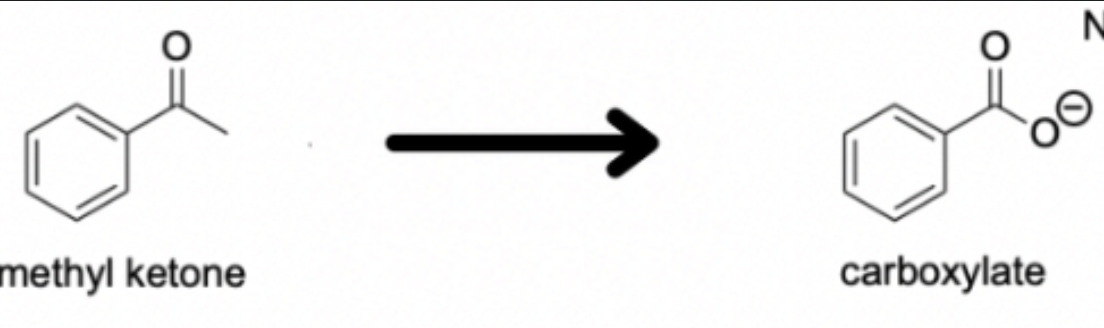
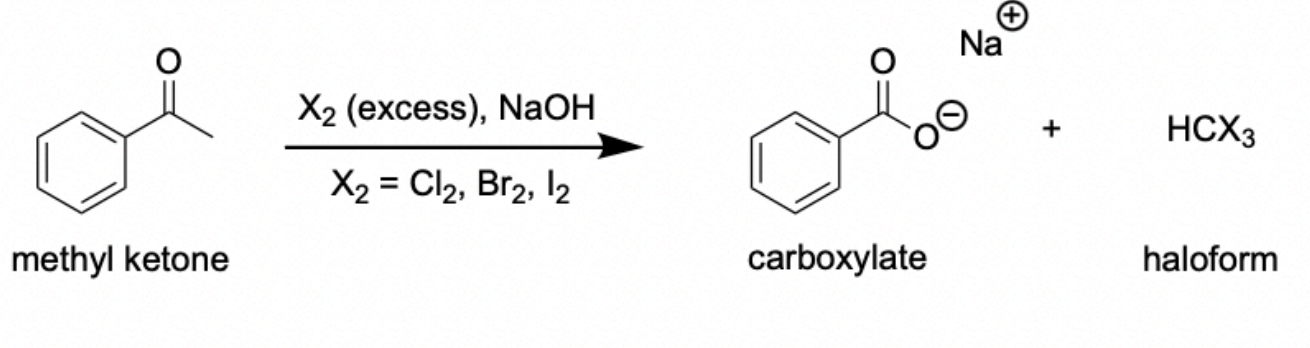
excess X2 and NaOH
X2 can be Cl2 Br2 or I2
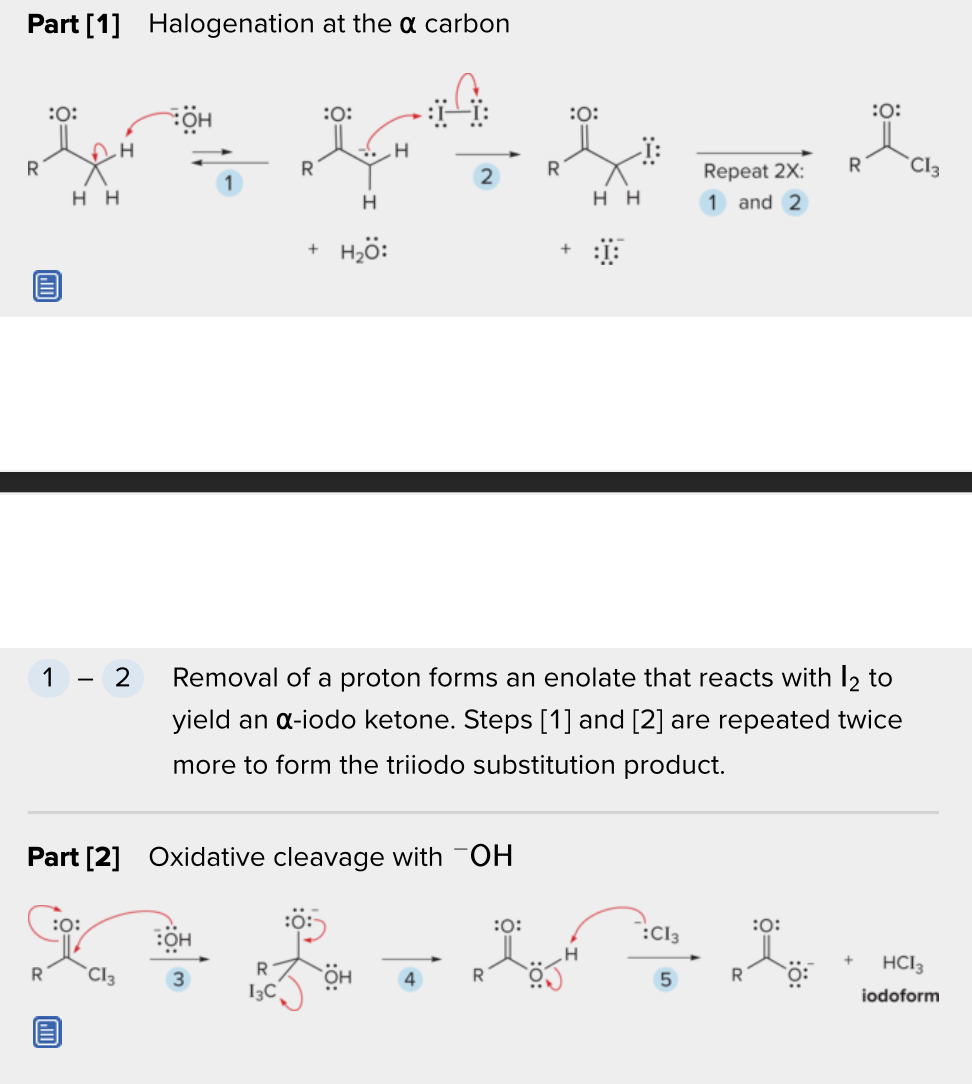
haloform reaction
works when the starting material is a methyl ketone
base removes H, enolate forms, enolate attacks X2, repeat until all 3 alpha H are replaced
final products are carboxylate and HCX3
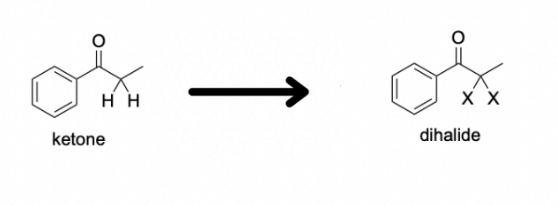
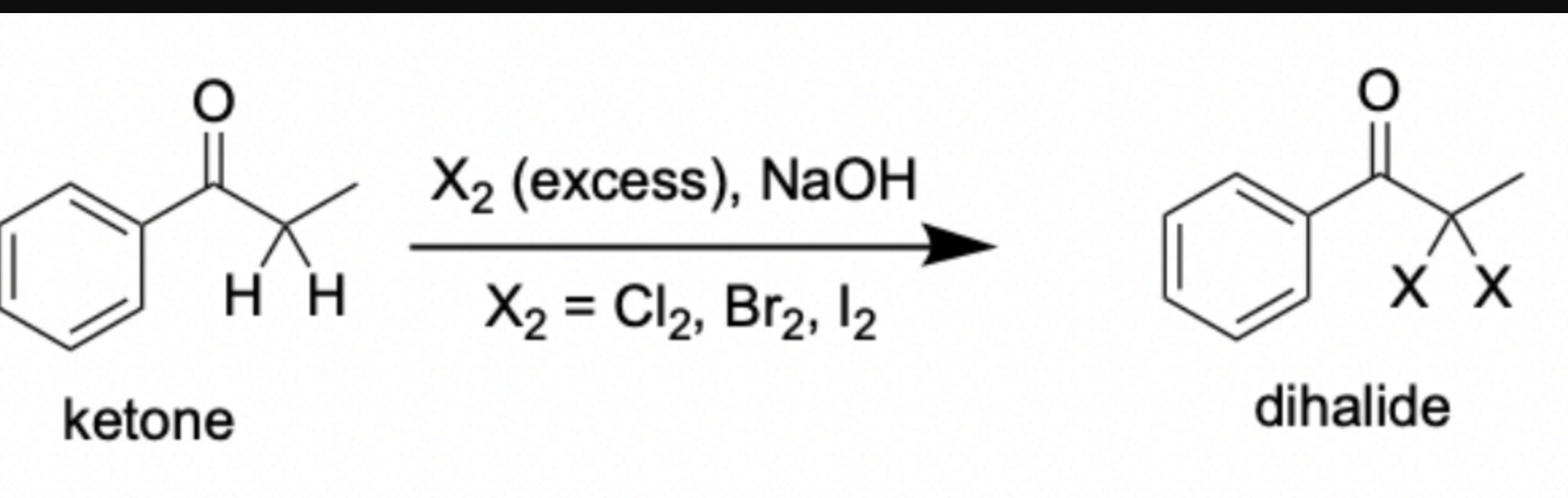
excess X2 and NaOH
X2 can be Cl2 Br2 or I2
halogenation in base
deprotnation with base forms enolate
then enolate attacks X2
repeats
replaces alpha hydrogens with halogens
product is a dihalide
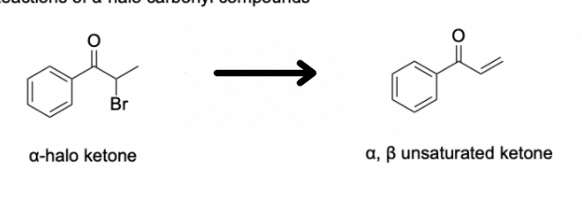
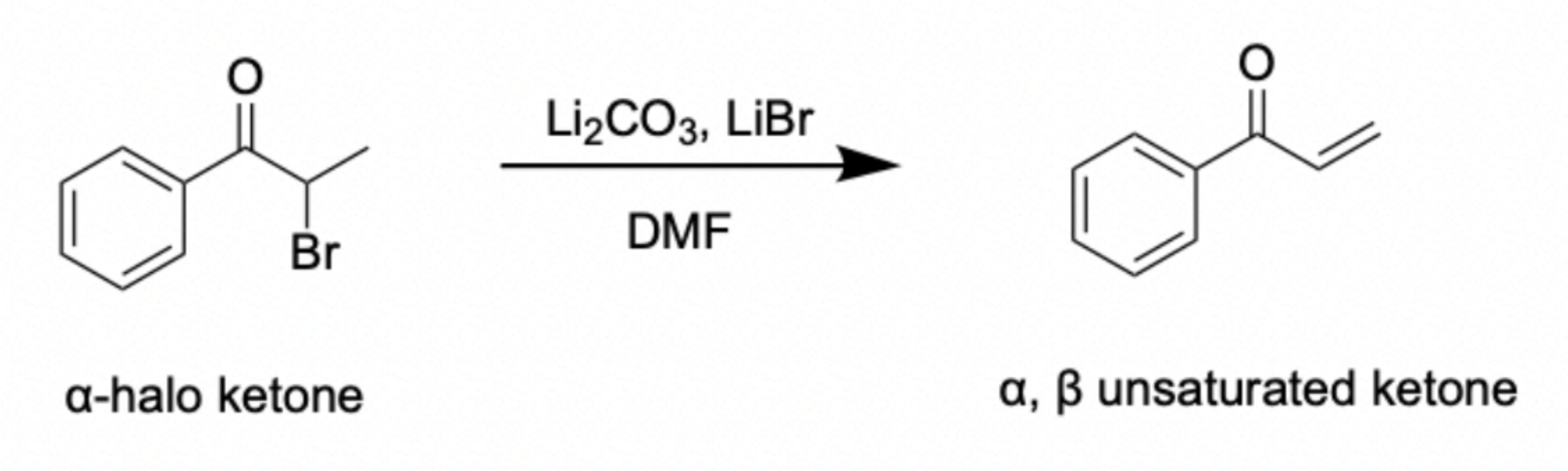

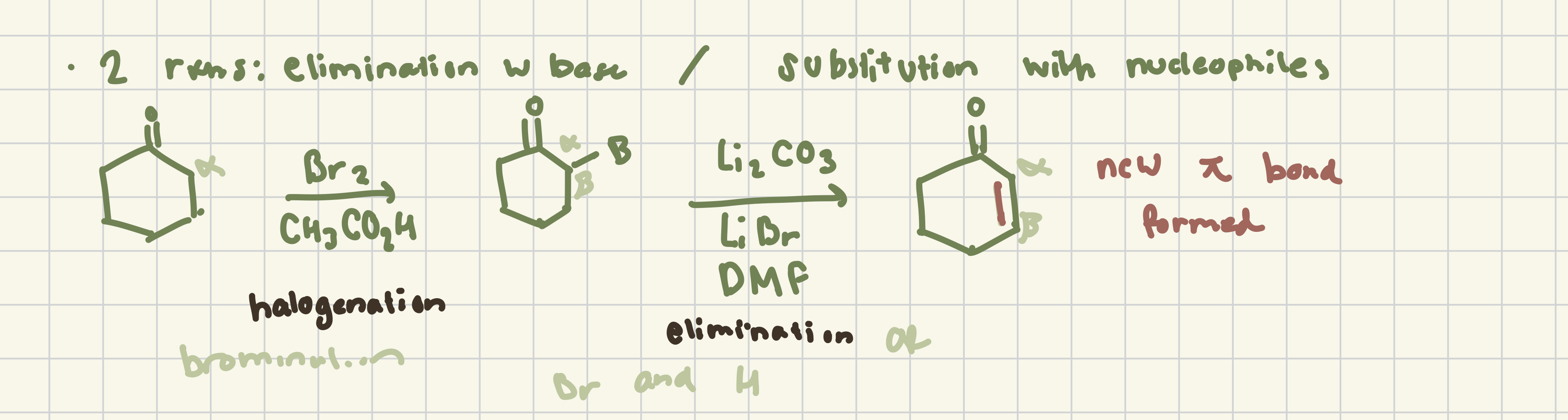
Li2CO3 LiBr DMF
Find where Br was added → put the double bond between that α-carbon and the next β-carbon that has H.reaction type: elimination from an alpha halo ketone
The reagents remove H and Br from the α and β carbons, respectively, to form a new π bond
uses Li2CO3 as a base in the presence of LiBr and the polar aprotic solvent DMF to facilitate the formation of the enone
forms a double bond next to the carbonyl
product is an alpha beta unsaturated ketone
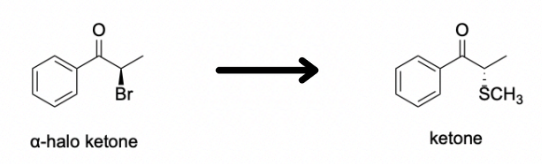
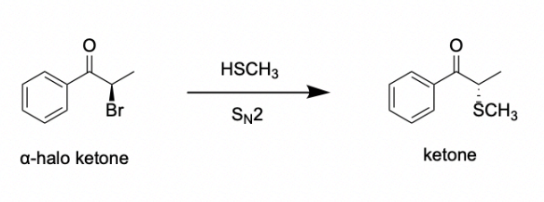
α-substitution of an α-halo ketone using a neutral thiol (HSCH3) as the nucleophile
Br is the leaving group
SCH3 replaces Br on the alpha carbon
SN2: inversion of configuration. the Bromine starts on a wedge, and the resulting Sulfur group is on a dash.
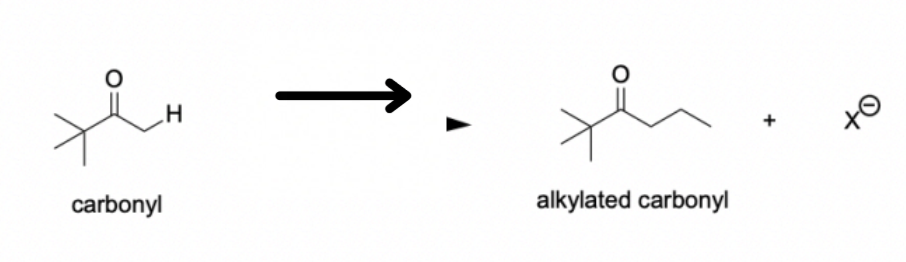

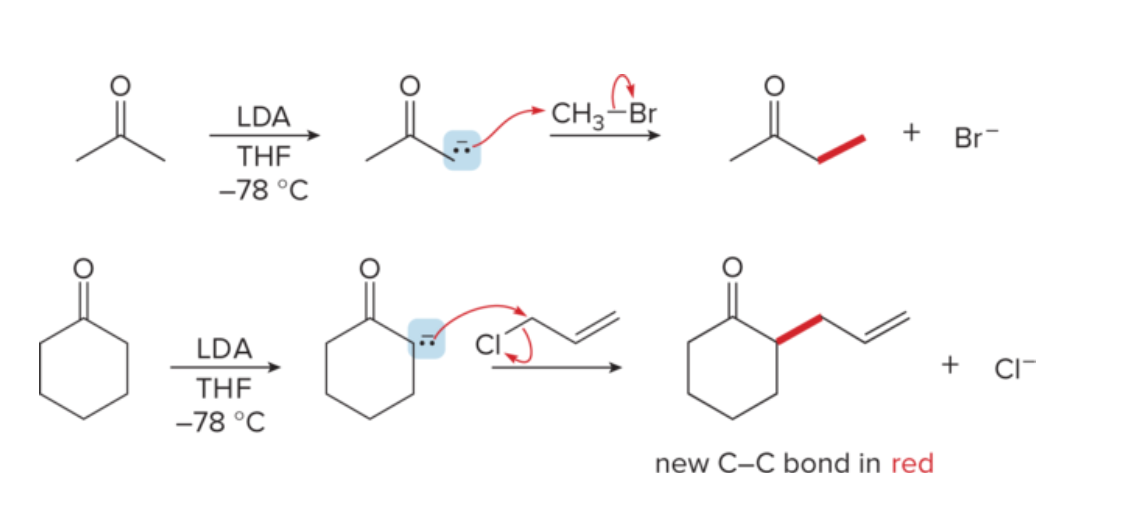
carbonyl alpha alkylation
starting carbonyl must have alpha H
base removes alpha H to make enolate
enolate attacks alkyl halide by SN2
product has new carbon carbon bond at alpha carbon
best with methyl or primary alkyl halides
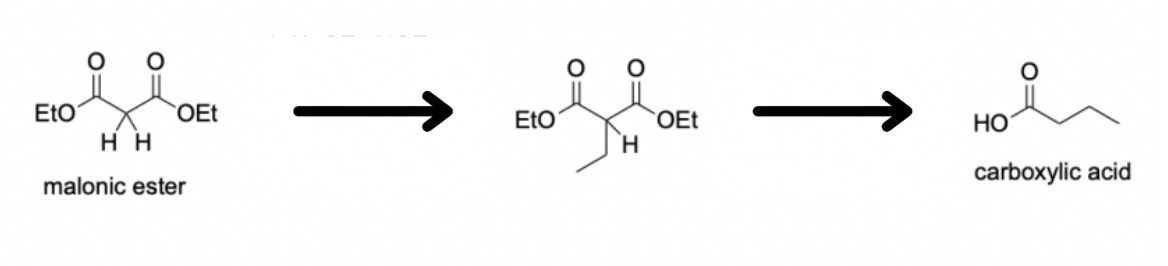

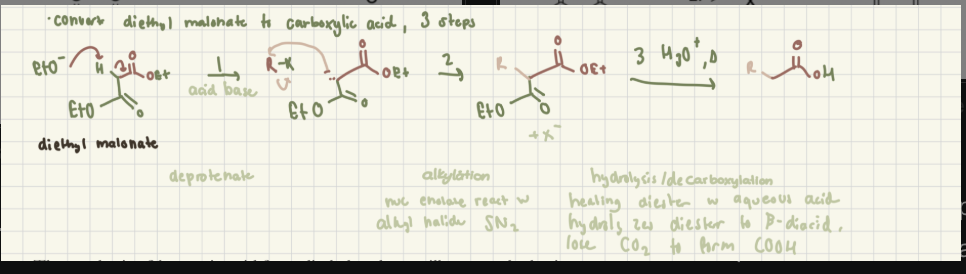
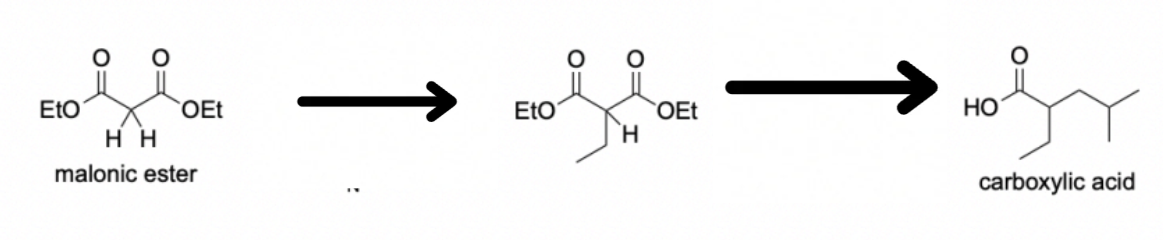
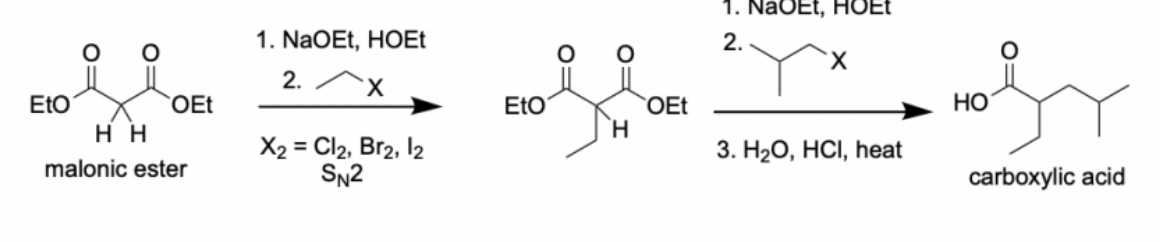
malonic ester synthesis
malonic ester reacts at the middle alpha carbon
base removes alpha H to make enolate
enolate attacks alkyl halide by SN2
acid heat removes one carbonyl as CO2
final product is substituted carboxylic acid
double malonic ester alkylation
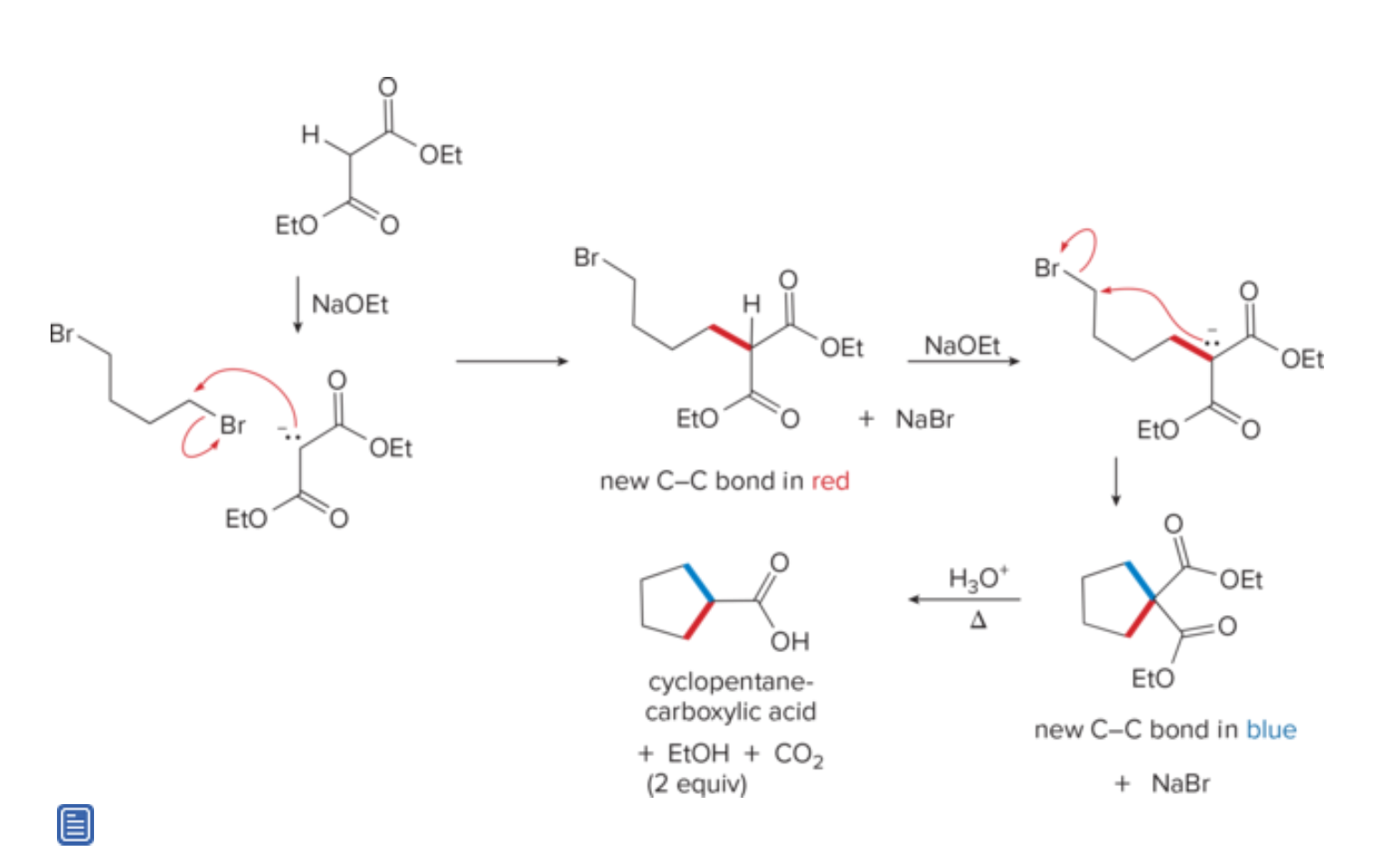
same middle alpha carbon gets alkylated twice
repeat enolate formation then SN2 alkylation
acid heat hydrolyzes and decarboxylates
final product is carboxylic acid with two added carbon groups
use when final product is a substituted carboxylic acid
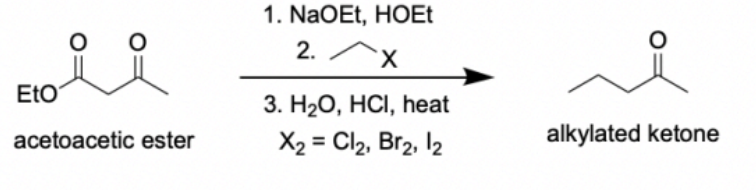
acetoacetic ester synthesis
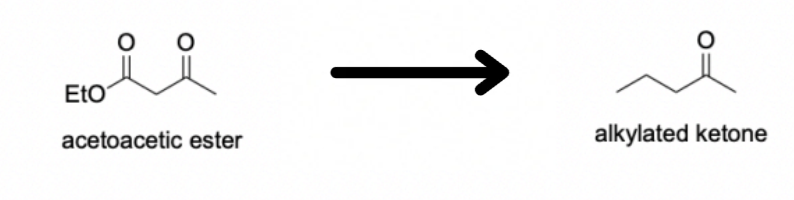
acetoacetic ester reacts at the carbon between two carbonyls
base removes alpha H to make enolate
enolate attacks alkyl halide by SN2
acid heat removes ester side as CO2
final product is alkylated methyl ketone

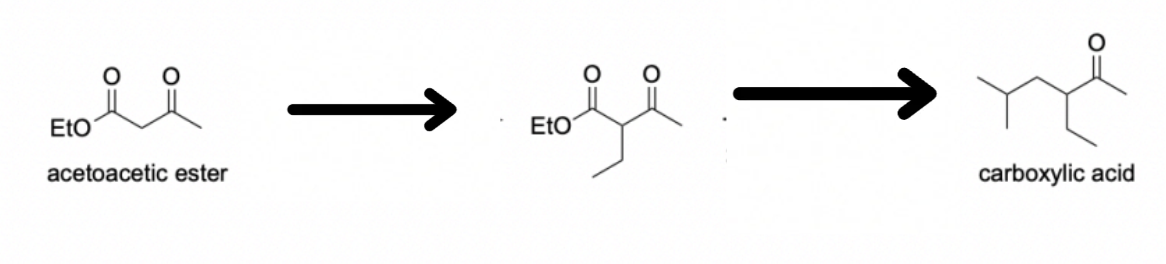

double acetoacetic ester alkylation
same alpha carbon gets alkylated twice
repeat enolate formation then SN2 alkylation
acid heat hydrolyzes and decarboxylates
final product is methyl ketone with two added carbon groups
use when final product is a substituted ketone, not carboxylic acid
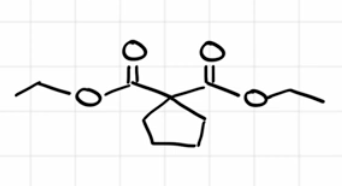
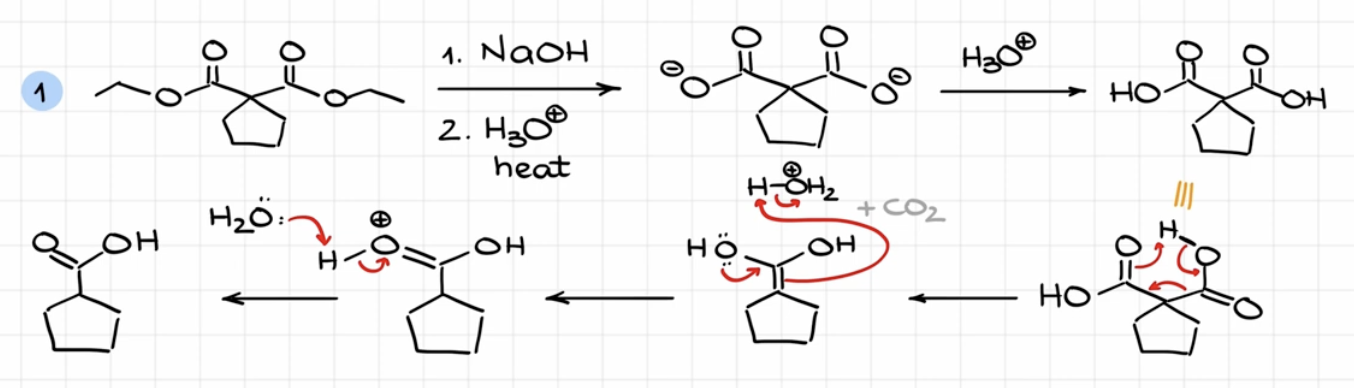
show Decarboxylation mechanism
excess X₂ / OH⁻ with ketones, how do I know product?
Look at the α-carbon next to the C=O.
If it is a methyl ketone: R–CO–CH₃
→ it gets halogenated 3 times to R–CO–CX₃
→ then cleaves into RCOO⁻ + CHX₃
→ haloform reactionNo cleavage unless it can become CX3If it is not a methyl ketone: R–CO–CH₂R
→ it only replaces the available α-H’s with halogens
→ gives α,α-dihalo ketone if there are 2 α-H’s
→ no cleavage because it cannot form CX₃
what does t-BuOK / t-BuOH do in enolate
t-BuOK / t-BuOH = thermodynamic enolate conditions
more substituted C=C/enolate = more stable
usually removes the α-H that leads to the more substituted enolate
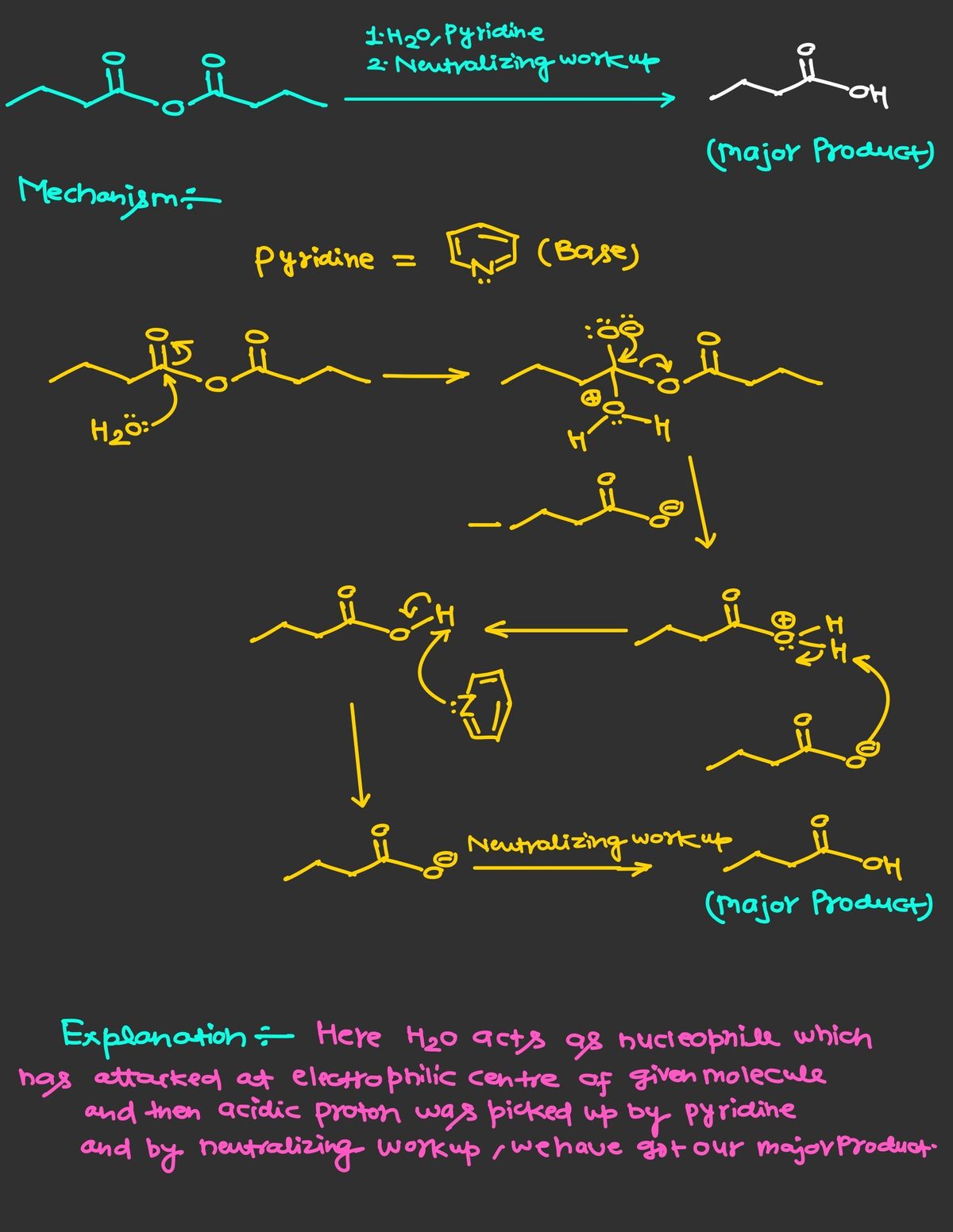
what does H2O and pyridine do
Pyridine is a weak base.
When placed in water, it extracts a proton H+ from the h2o molecule
pyridine helps remove extra H⁺ (by N lone pair) so the reaction does not become too acidic
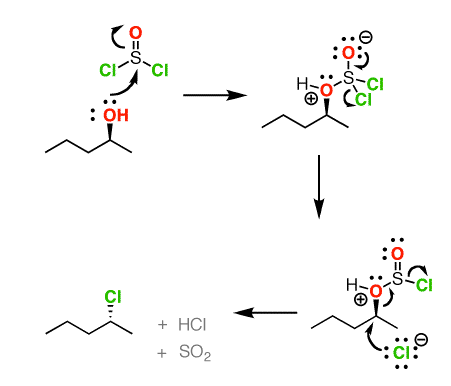
reagent socl2:
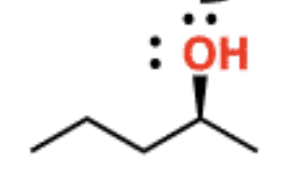
convert carboxylic acids, acids into acid chlorides and alcohols into alkyl chlorides
use SOCl₂ when they want to turn a bad leaving group OH into a better leaving group Cl.
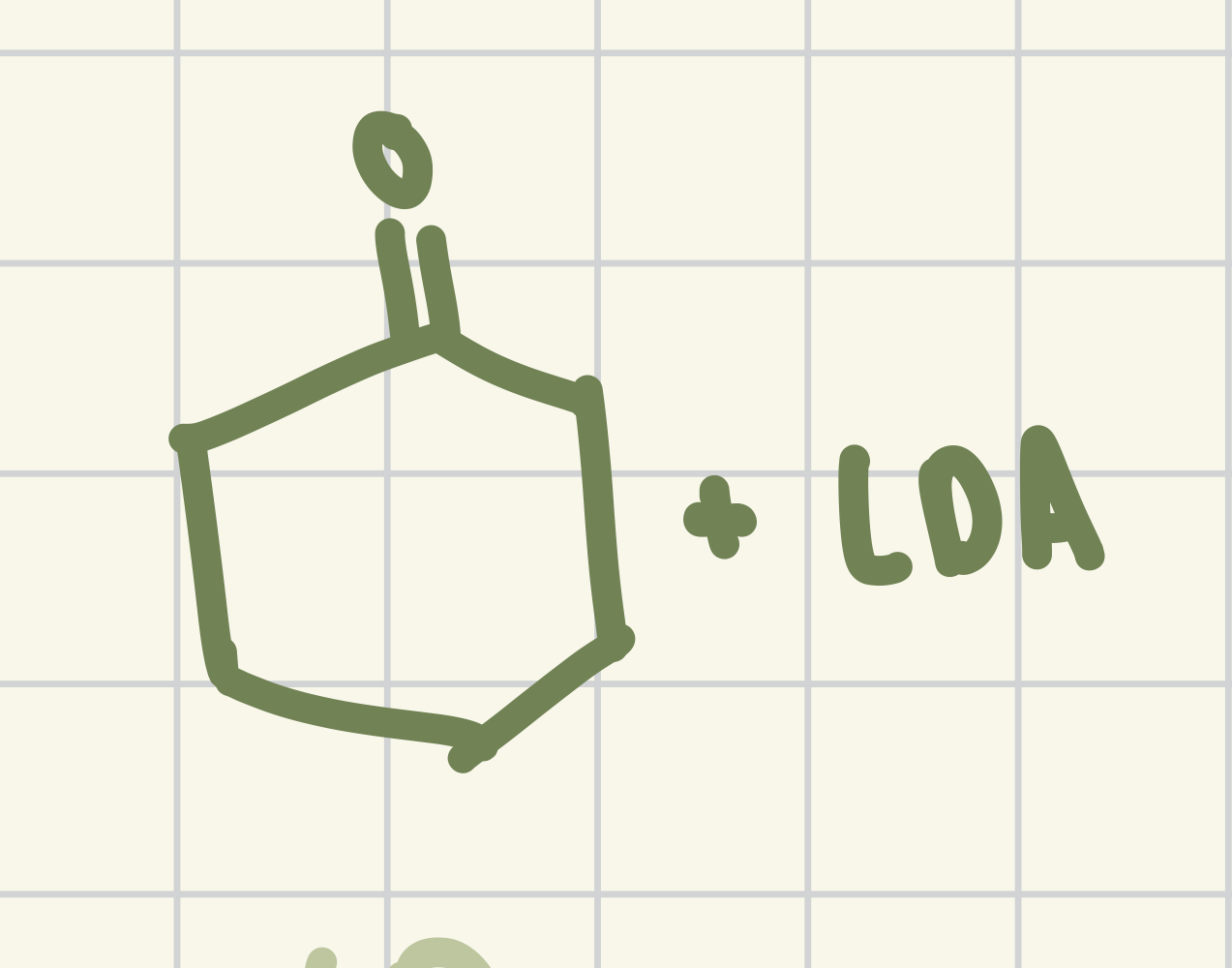
LDA
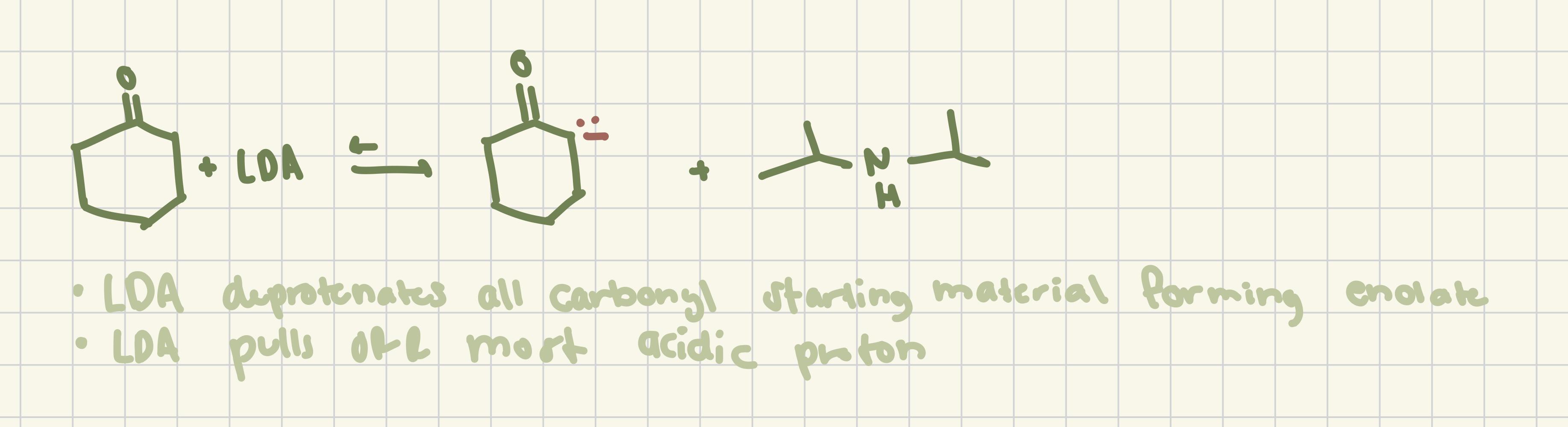

elimination with base , substit with nucleophile
br2, ch3coh
li2co3: removes a beta H next to the carbonyl.
libr: helps promote the elimination; it is not adding Br.
dmf: dissolves the reagents and helps the elimination happen
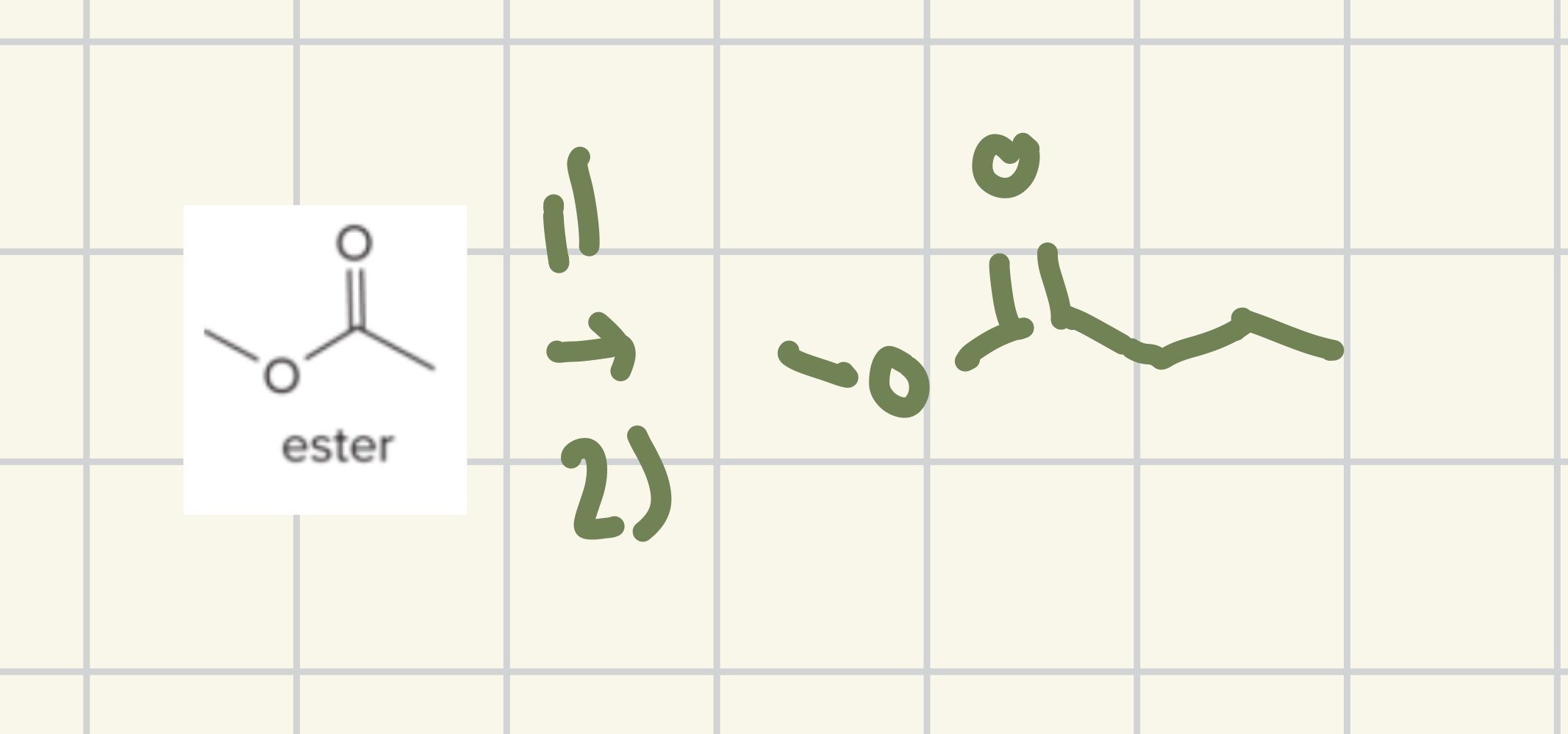
ester enolate alkylation

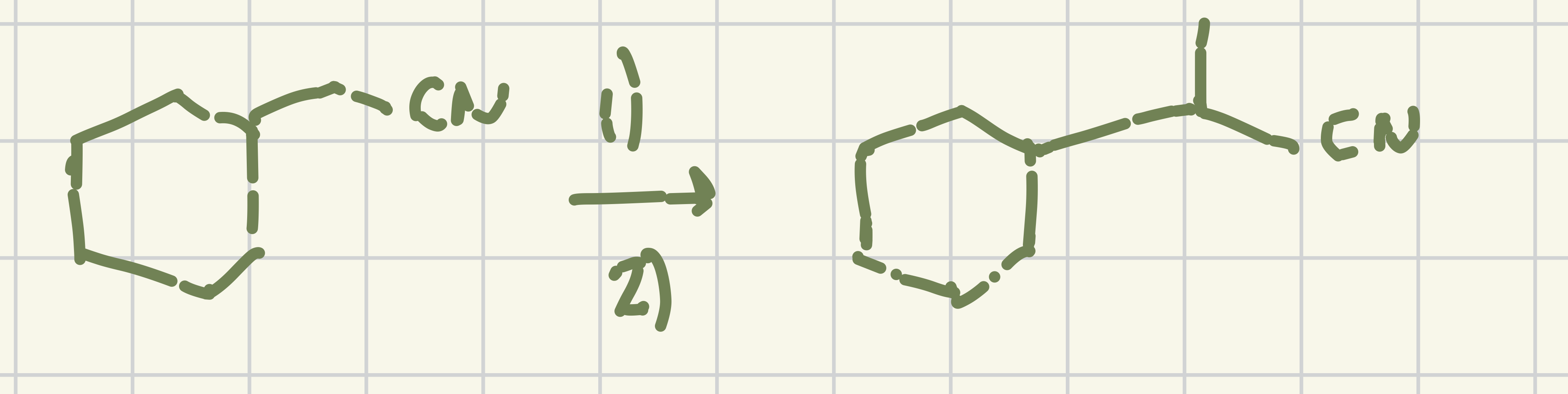
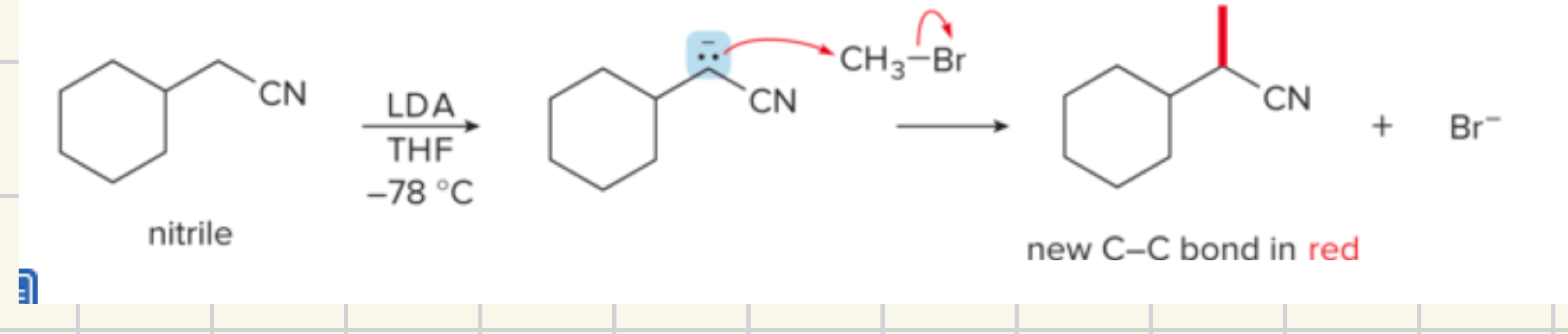
nitrile alkylation
How do I choose the alkyl halide for acetoacetic ester synthesis?
Acetoacetic ester synthesis makes a methyl ketone:
CH3COCH2R
Break the bond between the alpha carbon and the R group.
The R group comes from the alkyl halide.
Reagents:
NaOEt/EtOH
R-X
H3O+, heat
Memory:
Acetoacetic ester gives CH3COCH2R. R comes from the alkyl halide.