[JMU]BIO250 FINAL EXAM
 Call Kai
 Learn
Learn Practice Test
 Spaced Repetition
 Match
Match Flashcards
 Knowt Play
 Podcast
1/263

There's no tags or description
Looks like no tags are added yet.
Name | Mastery | Learn | Test | Matching | Spaced | Call with Kai |
|---|
No analytics yet
Send a link to your students to track their progress
264 Terms
What does community ecology examine?
How species interactions influence community structure and function.
What is a disturbance?
Any relatively discrete event in time that disrupts ecosystem, community, or population structure and changes resources, substrate availability, or the physical environment.
Where do disturbances come from?
They result from forces originating outside of the community.
What is succession?
The repeatable change in community composition through time following a disturbance.
What is primary succession?
The initial establishment of a community
Bare ground
No seed bank.
What is secondary succession?
Re-establishment of existing community
Some individuals survive the disturbance
Seed bank or roots may be present
What are the conceptual models of succession?
Facilitation
Inhibition
Tolerance
What is facilitation?
Stress-tolerant colonists inhabit barren, uninhabitable land, making the environment more suitable for successive species.
How do stress-tolerant species make the uninhabitable environment more habitable?
They increase nutrient availability: develop soils
change pH
Altering the environment:
provide shade from the sun
shelter from the wind
In facilitation, after a disturbance opens space...
Only early-successional species can establish
In facilitation other early-successional species are...
reduced
In facilitation later-successional species are...
enhanced
What is inhibition?
The species that first arrives on an unoccupied site can survive.
Once the colonist species are established, they monopolize the land and resources, INHIBITING the growth of subsequent arrivals.
When would inhibition stop?
When space and/or resources are released through the death or decay of dominant residents.
How does succession proceed between short-lived and long-lived species?
Short-lived early species die more frequently, and succession slowly progresses from short-lived to long-lived species.
In inhibition after a disturbance opens up space...
Any species arriving on-site can establish
In inhibition, other successional species are...
reduced
In inhibition, later-successional species are...
Prevented until the existing individual dies, opening space.
What is tolerance?
All species colonizing an unoccupied site can survive. Thus, the initial community composition functions based on who gets there first.
How does tolerance affect late-arriving species?
Late-arriving species tolerate the presence of early species and grow despite the presence of early-succession species.
How does tolerance affect late and early arrival species over time?
Late-succession species exclude early species because they out-compete them for light and nutrients.
In tolerance, after disturbance opens space...
Any species arriving on site can be established.
In tolerance, other early-successional species are...
reduced
In tolerance, later successional species are...
unaffected
What is a disturbance regime?
Timing
Magnitude (severity and spatial extent)
Frequency
Predictability
What is a climax community?
In a community without disturbances, succession progresses toward a stable point.
What is the autogenic process?
Closed communities with internal dynamics that drive succession toward a stable, unchanging equilibrium.
Communities are not closed systems due to...
External Factors like...
- Human Interventions
- Immigration by new species
- Seasonal changes
- In weather and sunlight
- Abiotic disturbances
What affects the community dynamics more, external or internal factors?
External factors
What is the allogenic process?
External and outside factors ensure that communities are rarely in equilibrium.
How does disturbance affect community diversity?
Species diversity will be the greatest when:
-Disturbances (wildfires, hurricanes, or tornados) are of intermediate frequency
-When an intermediate amount of time has passed after a disturbance
-When a disturbance is of intermediate magnitude
What is the intermediate disturbance hypothesis?
A hypothesis that predicts that species diversity will be greatest with disturbances.
What do food chains and indirect effects depict?
Trophic interactions between plants, herbivores, and predators can have a large impact on the community structure.
What is a food chain?
Species grouped and linked by where they obtain food and each link compromises a different trophic level.
What are the different trophic levels?
First
Secondary
Third
Fourth
What types of species occupy the first trophic level?
Primary producers rely on captured energy to fuel their growth and reproduction. They are primarily autotrophs like plants.
This is where energy flow begins.
What types of species occupy the secondary trophic level?
Herbivores which feed directly on plants.
What types of species occupy the third trophic level?
Predators, which directly feed on herbivores.
What types of species occupy the fourth trophic species?
Occupied by animals that feed on predators
Species that are the top of the food chain are called?
top predators
What amount of energy do primary consumers get from producers?
10%
What percent of primary consumer biomass do they have from the producers?
10%
There is only __% as many consumers as there are producers in the ecosystem.
10%
What is top-down control?
A higher trophic level limits the size of the trophic level they consume.
What is a trophic cascade?
A specific type of top-down effect that impacts the addition or removal of a top carnivore cascades down and affects primary procedures at the bottom of the food chain.
What is the top-down hypothesis?
Plant abundance is dependent on the number of trophic levels.
Predation limits herbivores and releases pressure on vegetation.
When a predator is removed, herbivores increase and vegetation decreases.
What is a behavioral cascade?
Predators alter the foraging behavior of their prey and indirectly stimulate primary production.
What are two types of ecosystem engineers?
autogenic and allogenic
What structures do Autogenic engineers make?
They make the internal architecture of the engineer itself. (ex: Trees and coral reefs)
What structures do Allogenic engineers make?
They make structures that are the results of the redistribution of living or non-living materials that exist in their environment. (beaver dams)
What is the bottom-up hypothesis?
Organisms at each tropic level are resource-limited. Food chain length increases as resource availability increases.
When primary production is high, bottom-up control may?
Limit higher trophic levels because plants are low-quality food.
What do plants have to defend against herbivores?
Physical and chemical defense.
What is the productivity hypothesis?
More productive food chains should have long food chains.
What is the Ecosystem-size hypothesis
Food-chain length should increase with ecosystem size.
What is the productive-space hypothesis?
Food chain length would increase with both phosphorus concentration and lake size.
What is Top Down Control?
Energy flow is governed by the rates of consumption at the higher trophic levels, which influence abundance at lower tropic levels.
What is Bottom Up Control?
Organism at each trophic level are resource-limited.
What are alternative stable states?
A community with low resilience might transition to a very different equilibrium state after a disturbance.
How do alternative stable states occur?
When more than one type of community can exist in a particular environment.
Does diversity lead to community stability?
More diverse communities whose niche includes the new conditions reduce the overall effect of change caused by a disturbance.
What relationship between species in the food web predicts stability?
Predators vs. Prey
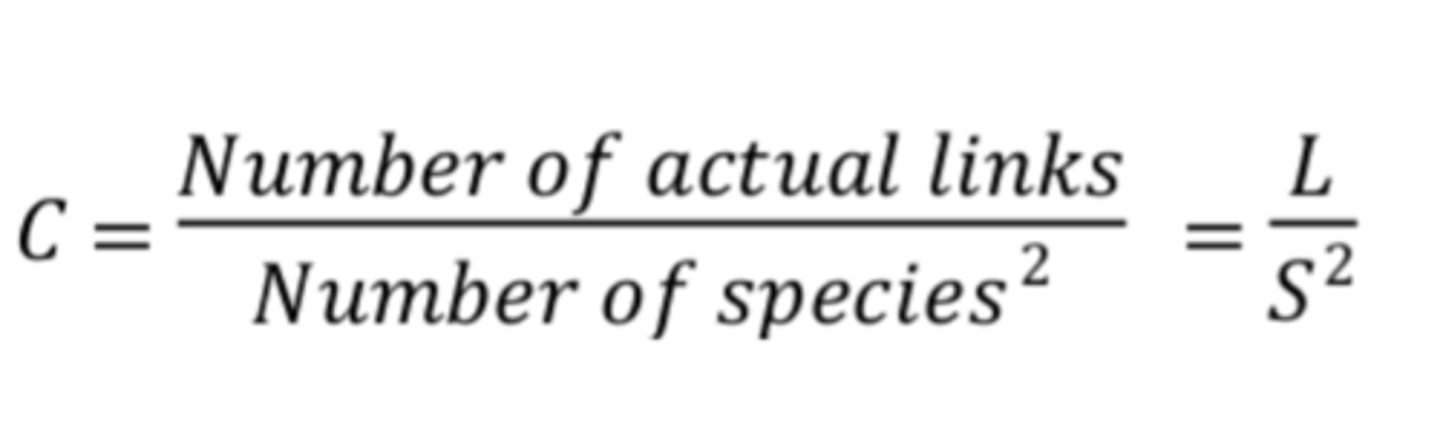
How do you calculate the connectance of a community based on their food web?
Connectance= (Number of Links)/(Number of species^2)
C= L/S^2
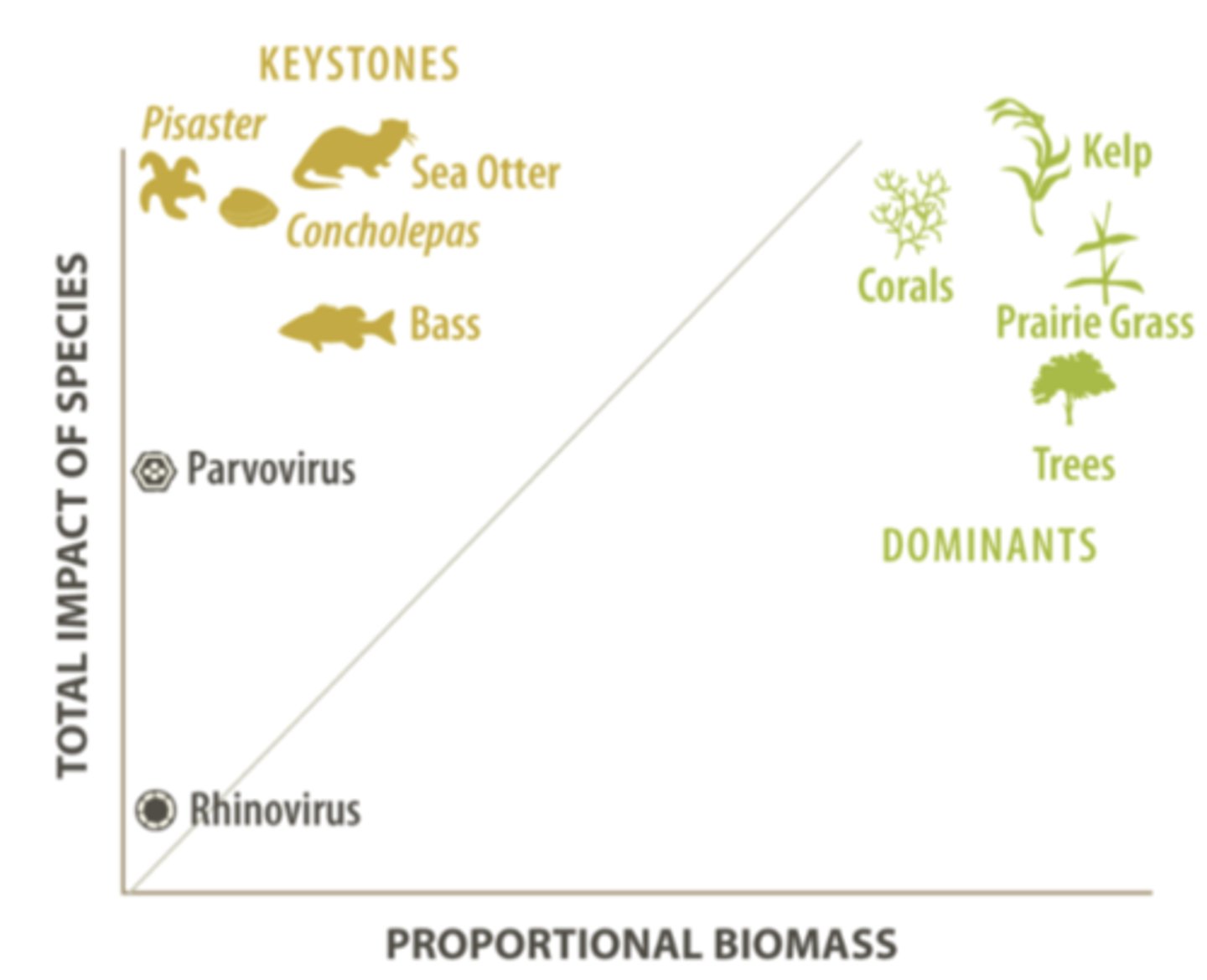
What is a dominant species?
A species that plays an important role in communities simply because they are the most abundant or have the highest biomass.
What is a keystone species?
A species that has a disproportionately large effect on it's environment relative to its abundance.
Why are dominant and keystone species important?
They play a critical role in maintaining the structure of the ecological community and they affect other organisms.
Without a keystone species, what will happen to a community?
The ecosystem be completely different or will fail to exist altogether.
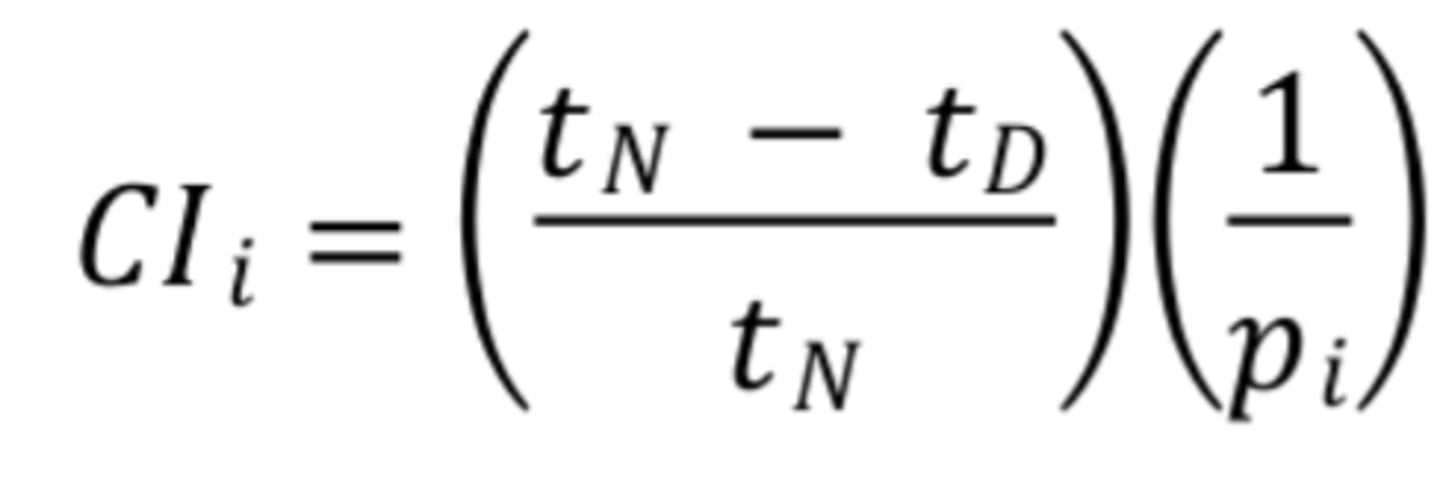
What is Community Importance?
The change in a quantitative community or ecosystem trait that results from a change in that species' abundance.
How do you calculate the community's importance?
Cli= community importance
tN= trait in intact community
tD= trait when species is removed
pi=proportional biomass
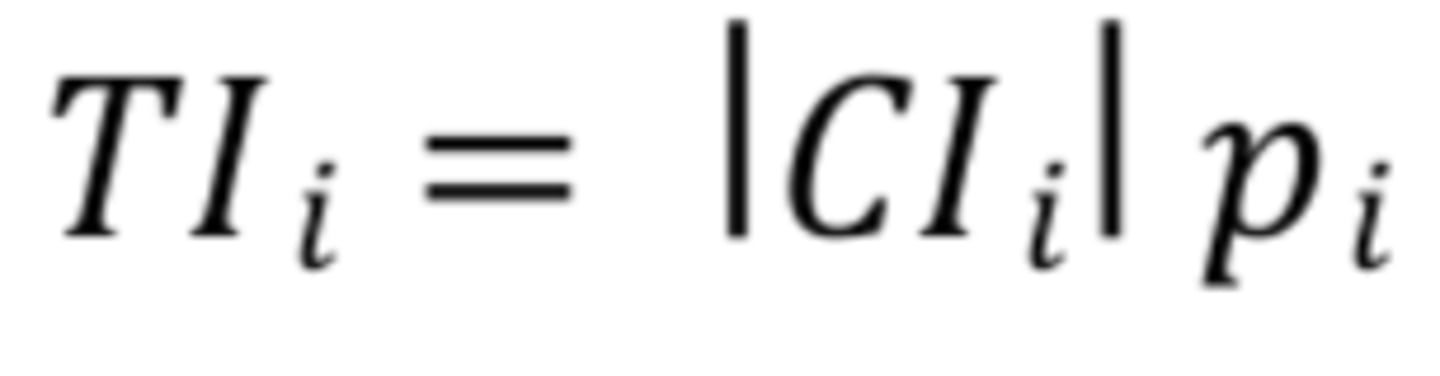
What is Total Impact?
The magnitude of change that results when a species has been removed, regardless of the direction of change.
How is Total Impact calculated?
Cli= community importance
pi= proportional biomass
How do you determine a keystone species?
They have:
High Total Impact (TI)
Low Proportional Biomass (Pi)
ICliI >> 1
How do you determine a dominant species?
They have:
High Total Impact (TI)
High Proportional Biomass (Pi)
ICliI << 1
Where would a keystone species be located on a graph?
Above the line closest to the high on the y axis and low on the x axis.
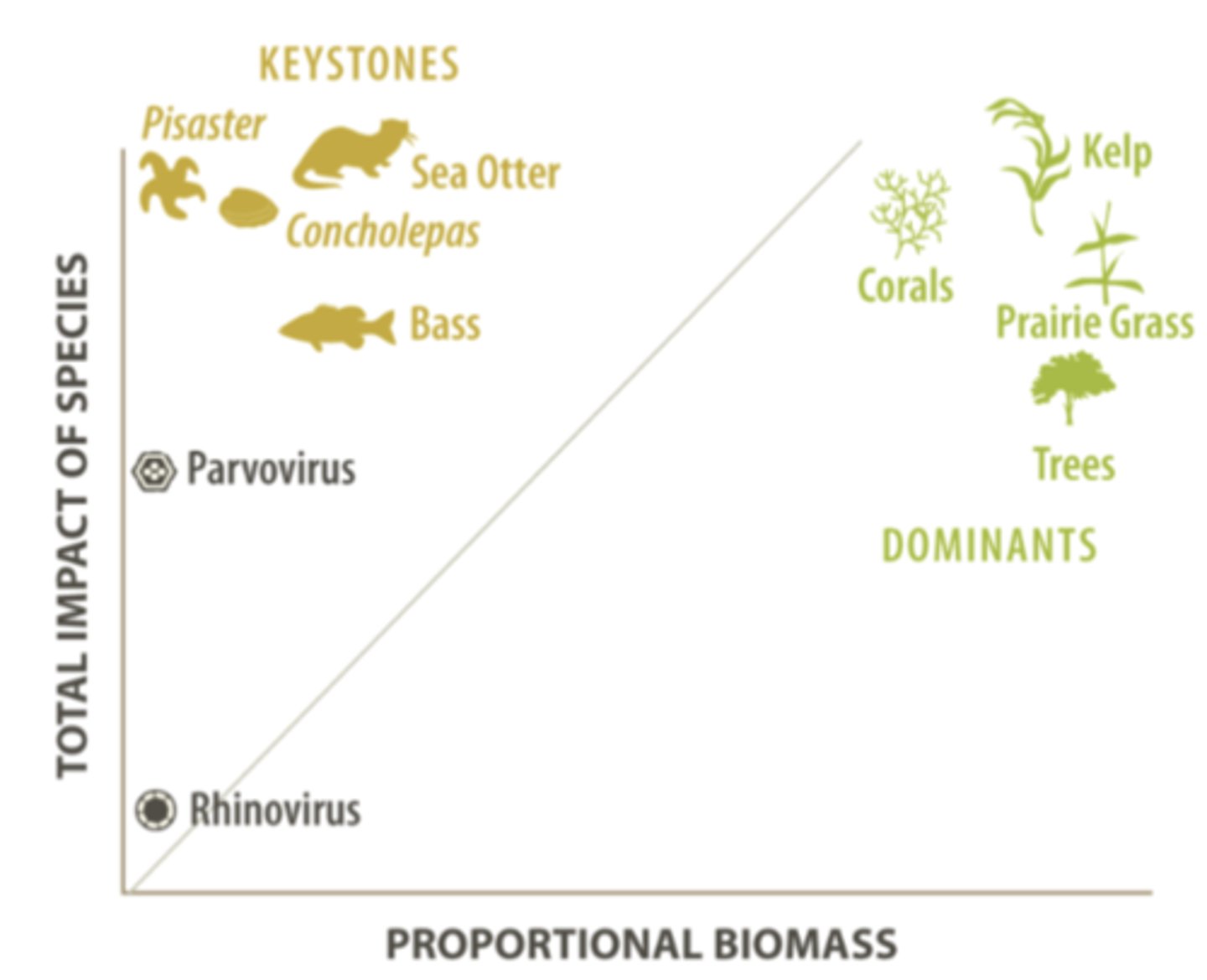
Where would a dominant species be located on a graph?
Below the line high low on the y axis and high on the x axis.
What is another way that communities change over time?
When new species (exotics) are introduced into the community.
What is a invasive species?
An a exotic species whose introduction and spread pose serious risk of harm to the environment, economy, or human health.
What is ecosystem ecology?
The study of the flow of energy and cycling of chemical elements within an ecosystem.
What is a ecosystem?
A dynamic, interacting, interrelated set of biotic and abiotic components in a particular location.
In a ecosystem how do living components evolve?
The evolve alongside each other
In a ecosystem do non-living components change?
No, they do not change as they are relatively stable and self-sustaining unit.
Ecosystem are ____ that are maintained by ___.
Ecosystem are open systems that are maintained by the constant flow of energy.
What is a ecological footprint?
The equivalent productive surface area of Earth required to meet the demands of six critical human activities.
What are the six critical human activities?
Cropland
Forest
Pasture
Carbon Footprint
Built-Up Land
Fisheries
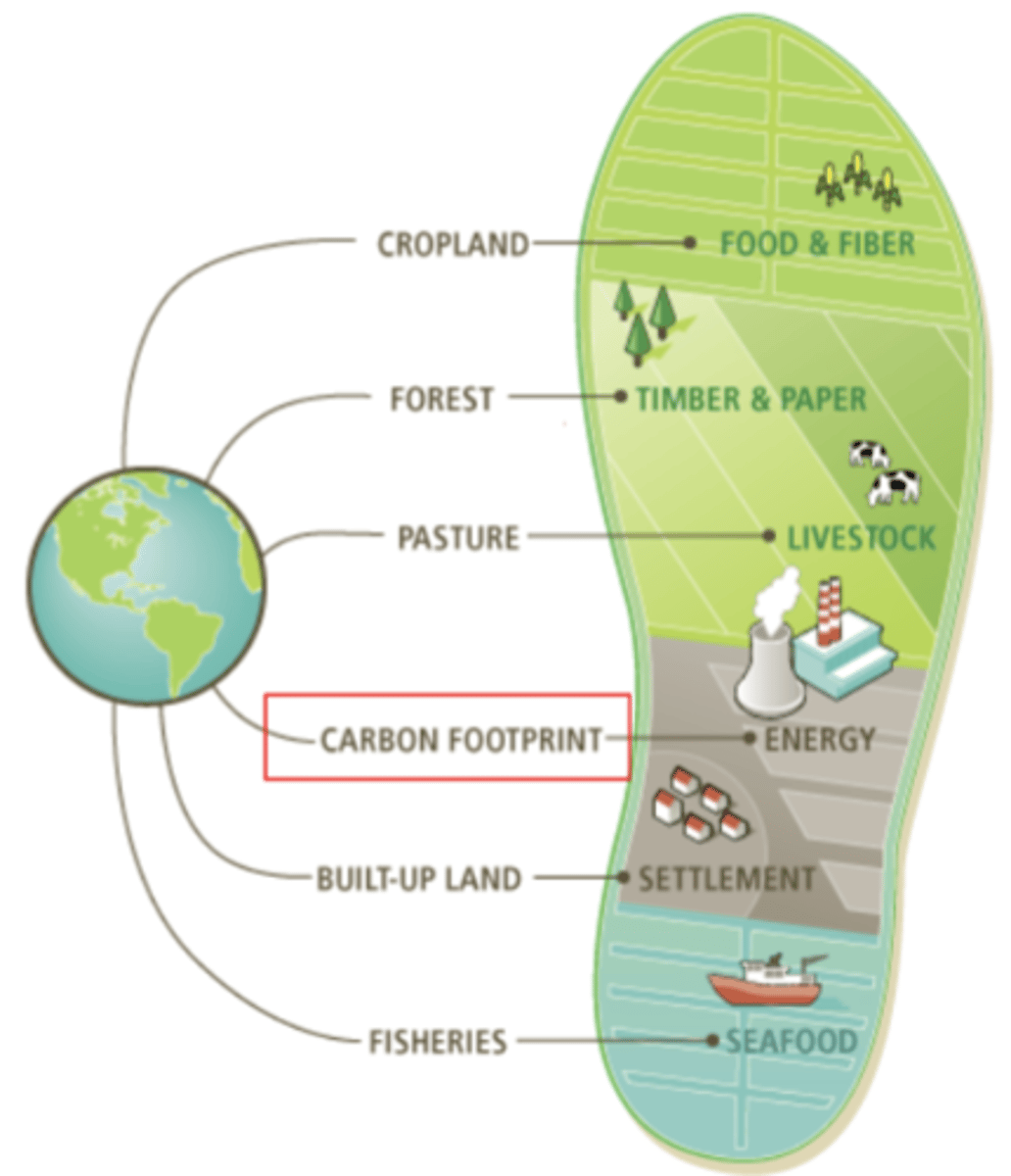
Ecological footprint is key to understanding...
the inter-related pressures of climate change on natural ecosystems.
What is biocapacity?
The productive area that can regenerate all the goods and services which people demand from nature.
Comparing biocapacity and ecological footprint allows us to assess how...
(un)sustainable our economy is
What is a carbon footprint?
A measure of the area of forestland that is required to absorb all the carbon emissions from human activity in excess of what the ocean absorbs.
Carbon footprint takes up ___ of the human ecological footprint?
60%
Carbon footprint is linked to?
Cropland
Grazing lands
Forest
Productive land build-up
What is the First Law of Thermodynamics?
Energy can neither be created nor destroyed; it can only change in form but quantity stays constant.
What is the Second Law of Thermodynamics?
Energy transformations and transfers are inefficient. Some energy is lost, usually as heat. Lost energy increases the entropy in the system.
All energy flowing through our ecosystem was initially captured by...
Autotrophs
What are autotrophs?
Organism that synthesize organic molecules from inorganic building blocks through primary production.
What is chemoautrophy?
Organisms harness energy stored in inorganic chemicals
What is photoautotrophy?
photosynthesis
What are autotrophs called
Primary Producers since they are responsible for primary production.
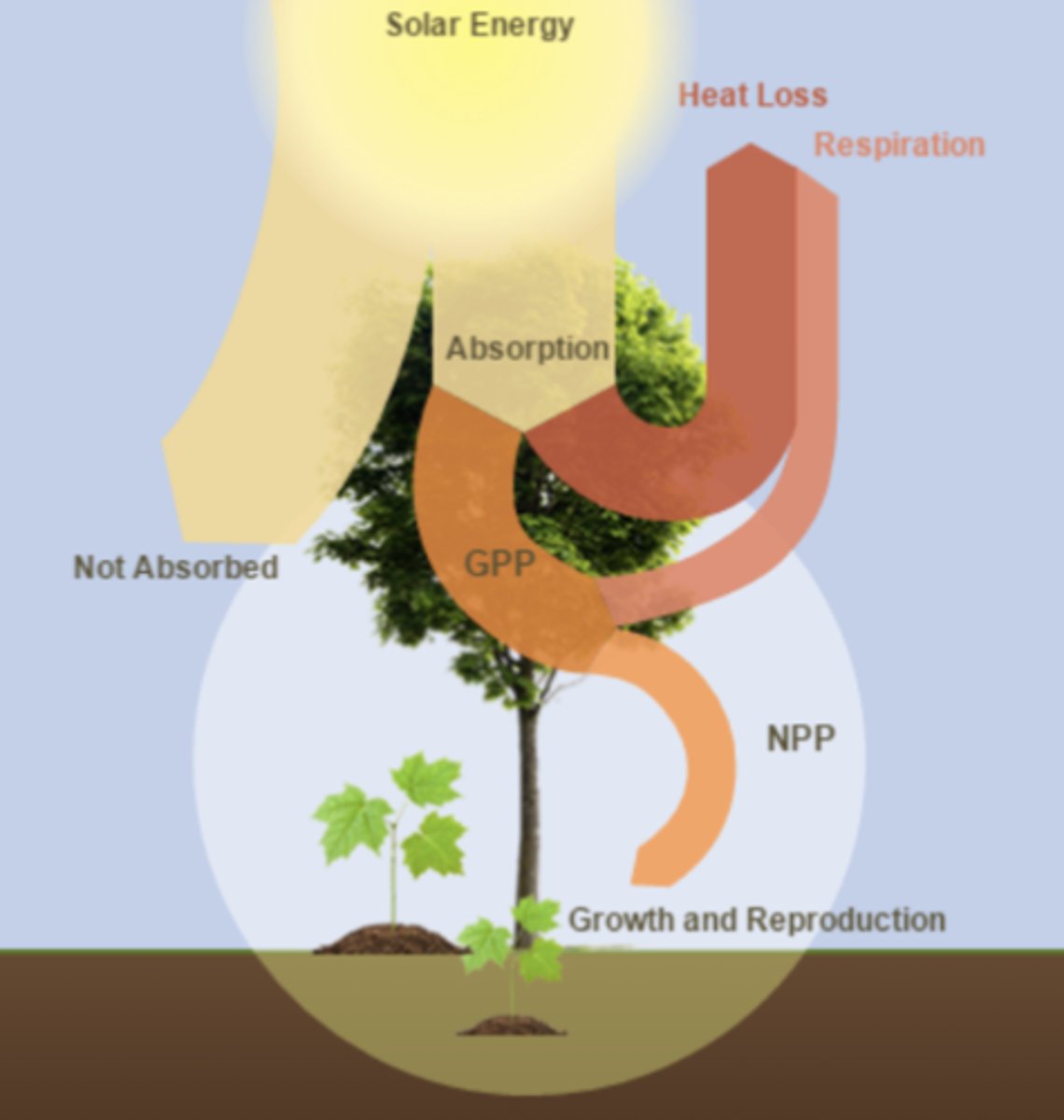
Explain Primary Production
1.) Absorption: Some solar energy is absorbed by the tree
--Heat Loss energy that isn't absorbed
2.) Gross Primary Primary Production (GPP): The energy retained from absorption after energy is reradiated
--Respiration is the energy lost after absorption.
3.) Net Primary Production (NPP): The difference between GPP and Respiration.
How do you calculate GPP?
GPP= NPP + Ra
GPP= Gross Primary Product
NPP= Net Primary Product
Ra= Radiation
How do you calculate NPP?
NPP= GPP - Ra
GPP= Gross Primary Product
NPP= Net Primary Product
Ra= Radiation