Unit 3 Abnormal
 Call Kai
 Learn
Learn Practice Test
 Spaced Repetition
 Match
Match Flashcards
 Knowt Play
1/80

There's no tags or description
Looks like no tags are added yet.
Name | Mastery | Learn | Test | Matching | Spaced | Call with Kai |
|---|
No analytics yet
Send a link to your students to track their progress
81 Terms
what is the chief characteristic / motivating factor of eating disorders?
all-encompassing desire to be thin
Eating disorders tend to occur in a small segment of the population. More than 90% of severe cases are…
young females who live in a socially competitive environment
Unlike most disorders, the strongest contributions to etiology seem to be ___ rather than psychological or biological factors?
sociocultural
Prevalence of Body Dissatisfaction in men and women
women: 83%
men: 74% (hald bc overweight, half underweight)
obessity
excessive body fat resulting in a BMI of 30+
not an official disorder
is obesity an official disorder?
no
close to __% of US adults are overweight. __% are obese
70%; 35%
obesity increases one’s risk for…
cardiovascular disease
respiratory disease
muscular skeletal probs
hormone-related cancers
Bulimia Nervosa
eating disorder characterized by recurrent episodes of uncontrolled excessive (binge) eating followed by compensatory actions (vomiting, laxative abuse, excessive exercise)
Bulimia Nervosa Criteria
recurrent episodes of bing eating (abnormally large, uncontrollable intake of food within a 2hr period) — at least 1/week for 3 months
recurrent inappropriate compensatory behavior to prevent weight gain (vomiting, misuse of laxatives/diuretics, fasting, exercise)
both occur at least 1/week for 3 months
self-evaluation is unduly influenced by body shape and weight
T or F: The sense of being out of control is just as important as the amount of food eaten when considering a bulimia diagnosis
true
T or F: Those with bulimia nervosa tend to develop more body fat compared to age and weight matched controls (most are still within 10% of normal body weight)
true
how do those with bulimia compare to age- and weight-matched controls regarding body fat?
tend to develop more body fat (most still within 10% of normal weight)
Compensatory Behaviors
behaviors designed to make up for binge eating (vomiting, laxatives, diuretics, exercise, fasting between binges)
Compensatory Behaviors: Purging Type
vomiting
laxatives (relieve constipation)
diuretics (urination)
Compensatory Behaviors: Non-Purging Type
excessive exercise
fasting for long periods between binges
Is purging an efficient method of reducing caloric intake?
vomiting reduces 50% of calories and less if delayed
laxative and related procedures have little effect
Medical Consequences of Bulimia Nervosa
salivary gland enlargement, resulting in a chubby face
erodes dental enamel on the inner surface of the front teeth
tears the esophagus
electrolyte imbalance
intestinal problems, resulting in severe constipation or permanent colon damage
what causes salivary gland enlargement in those with bulimia nervosa?
repeated vomiting
what causes intestinal problems in those with bulimia nervosa?
laxative use
describe electrolyte imbalances seen in those with bulimia nervosa?
imbalance of chemical balance of bodily fluids, including sodium and potassium levels that may lead to serious/fatal medical complications
cardiac arrhythmia
seizures
kidney failure
Bulimia is strongly related to anxiety disorders and womewhat less to __ and __ disorders
mood and substance abuse
bulimia & anxiety/mood disorder comorbidities
80.6% have anxiety disorder
20-70% have mood disorders
Are eating disorders a way of expressing depression?
depression follows bulimia and may be a reaction to it
bulimia and anorexia rates of comorbidity with substance abuse disorders
bulimia 36.8%
anorexia 27%
what might account for patterns of comorbidity between eating disorders and substance abuse disorders?
underlying traits of emotional instability and novelty-seeking
anorexia nervosa
eating disorder characterized by recurrent food refusal and/or vigorous exercise to offset food intake
Anorexia Nervosa Criteria
restriction of energy intake relative to requirements, leading to a significantly low body weight in the context of age, sex, development trajectory, and physical health
intense fear of gaining weight or persistent behavior that interferes with wight gain
disturbance in the way which one’s body weight or shape is experienced
is anorexia or bulimia more common?
bulimia
what is the most notable feature of anorexia nervosa? what is considers the core of the disorder?
notable feature: decreased body weight
core: intense fear of obesity and relentlessly pursuing thinness
how does anorexia begin?
often in adolescence when one believes they are overweight, begin to diet and then develops an obsessive preoccupation with being thin
T or F: Those with anorexia are satisfied once they lose a certain amount of weight
false; never satisfied—staying the same weight or gaining weight causes intense panic, anxiety, and depression
Two Subtypes of Anorexia Nervosa
Restricting Type (diet and limit caloric intake)
Binge-Eating-Purging Type: those who binge on small amounts of food and purge more consistently
__% of anorexias engage in binge eating and purging
50%
Medical Consequences of Anorexia Nervosa
ammenorrhea
dry skin, brittle hair/nails, sensitivity/intolerance of cold
lanugo (fine hair on limbs and cheeks)
cardiovascular problems (low BP and HR)
electrolyte imbalance
lanugo
medical consequence of anorexia; fine hair on limbs and cheeks
psychological consequences of anorexia
high rates of anxiety and mood disorders
depression (71%)
OCD
substance abuse
suicide risk
Psychological Disorders Associated with Anorexia
anxiety and mood disorders, OCD, substance abuse
Anorexia and Anxiety/Mood Disorder Comorbidities
71% of those with anorexia have depression at some point
anorexia and substance abuse comorbidities
substance abuse is a strong predictor of mortility, particularly by suicide
Those with anorexia are proud of their extraordinary control and diets. Those with bulimia are ___ of their eating issues and lack of control.
ashamed
Binge Eating Disorder
eating disorder characterized by distress-inducing binges not followed by purging behaviors; occurring at least 1x/wk for 3 months
Binge Eating is associated with…
eating more rapidly then normal
eating until uncontrollably full
eating large amound of food when not physically hungry
eating alone because embarrassed about amount of food
feeling disguisted with oneself, depressed, or guilty after the binge
Which has the highest remission and best treatment response: anorexia, bulimia, or binge-eating disorder?
binge-eating disorder
Binge-Eating Disorder is common among individuals in weight loss programs. → __% of individuals in weight loss programs have BED
20%
Binge-Eating Disorder is common among individuals in weight loss programs. → up to __% of bariatric surgery candidates have BED
50%
Two Pathways to BED
50% try dieting before binging
50% start binging and then try to diet
One pathway to BED involves the person trying to diet before their first binge episode. Describe this pathway.
individual tries to control weight but eventually starts to deprive themselves into a binge episode
One pathway to BED involves the person binging first and then attempting to diet. Describe the outcomes of these individuals.
more severely affected by BED
more likely to have additional disorders
more likely to experience depression
more depression/anxiety comorbidities
What distinguished BED from obesity?
BED involves concerns about shape and weight
Median Eating Disorder Age of Onset
18-21
Anorexia Age of Onset
early adolescence; as young as 15
Bulimia Age of Onset
as early as 10
BED Age of Onset
25
13% of girls will experience an eating disorder by age __
20
what is the strongest predictor that bulimia will follow a chronic course?
childhood obesity and overemphasis on thinness
What are some predictors that anorexia will follow a chronic course?
persistently low BMI, distorted perceptions of shape and weight
Which type of eating disorder is most resistant to treatment?
anorexia
Which eating disorder(s) are chronic and resistant to treatment?
anorexia and bulimia
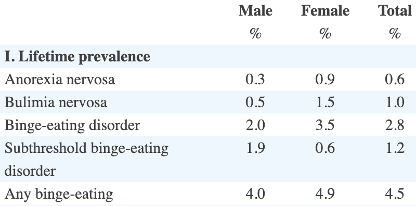
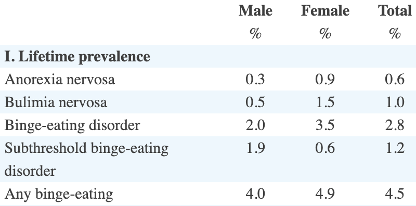
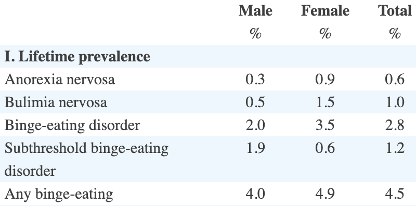
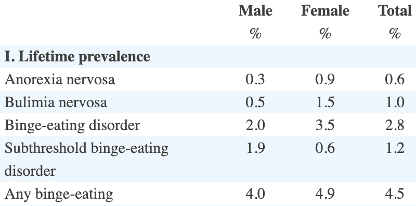
Describe the gender differences in lifetime prevalence rates of eating disorders.
adolescent girls are at most risk; 2-3x greater risk of anorexia/bulimia in females
Anorexia: Gender Prevalence
majority females in middle- to upper-class families
Bulimia: Gender Prevalence
90-95% women
BED: Gender Prevalence
more likely in males
What group of males is at most risk for bulimia?
gay/bisexual males and athletes that require weight regulation
Anorexia and Bulimia are overwhelmingly associated with Western Cultures. What about women who move to western countries?
non-western women will develop anorexia/bulimia after moving to western countries
Anorexia/Bulimia in African American Women
rarer—tend to have less body dissatisfaction, fewer weight concerns, more positive self-image, and perceive themselves to be thinner than they are
Recent research shows rising rates of eating disorders among people of color. However, they often face ___
cultural medical symptoms
what are some cultural factors for developing eating disorders?
cultural food norms and stigma
family and community influences
healthcare disparities
Are black or white teens more likely to exhibit bulimic behavior?
blacks are 50% more likely
Are hispanics or non-hispanic adolescents more likely to develop bulimia?
hispanics
Gordon, Brattole, Wingate, & Joiner Study: How did clinicians respond when presented with identical cases of eating disorders with the only difference being race?
44% identified white women’s behavior as problematic
41% identified hispanic women’s behavior as problematic
17% identified black women’s behavior as problematic
Anorexia in boys
Patterns of ___ in girls and boys interact with cultural linfluences to create eating disorders
physical development
How does physical development impact the development of eating disorders?
girls gain weight in fat tissue after puberty (farther from ideal) while boys develop muscle and lean tissue (closer to ideal)
By 9 years old, __% of girls reported trying to lose weight. __% by age 14
20%; 40%
Body image concerns tend to ___ with age
decrease
The size and weight of the average women have increased over the years with improved nutrition. The collision between culture and physiology have caused women to…
become dissatisfied with their bodies
Describe the findings on men’s reality vs ideal body size (Fallon & Rozin; Pope et. al.)
rated ideal body size as heavier than what women considered attractive
believed women prefer men 30lb more muscular than their current size
Describe the findings on women’s reality vs ideal body size (Fallon & Rozin; Pope et. al.)
rated their body size as heavier than actual
rated the most attractive body size as thinner and rated their ideal body size as even thinner
Men use anabolic steroids to increase muscle mass. What problems might this lead to?
binge-drinking, drug addiction, etc
Social Cliques