E138 Digestion II
 Call Kai
 Learn
Learn Practice Test
 Spaced Repetition
 Match
Match Flashcards
 Knowt Play
1/29

There's no tags or description
Looks like no tags are added yet.
Name | Mastery | Learn | Test | Matching | Spaced | Call with Kai |
|---|
No analytics yet
Send a link to your students to track their progress
30 Terms
ruminants
group of animals that have achieved the highest degree of specialization in fermenting plant material
benefits of rumen
can use carbs in the plant cell wall as nutrients
ruminant stomachs
sufficient size and motility for microbes to brak down cellulose into fermentation products
compartments of the rumen
4 compartments
forestomach: rumen (largest), reticulum, and omasum (smallest)
reticulum
requirements of fementation
requires certin temp, pH, motility, and secretion for microbes
abomasum
similar function to the stomachs in nonruminants
figests proteins and lysis of rumen microbes
has large spiral folds
rumination
regurgitation, remastication, and reswallowing of ingesta
regurgitation
extra contraction of the reticulum is associated with a transient negative pressure created by closure of the glottis prior to an inspiratory cycle
rumination cycles
prolonged chewing phase following by a short redglutition phase
rumen environment for microbes
buffered by saliva, short-chain organics aids, and buffering capacity of the diet
ammonia decreases pH
epimural bacteria convert urea into ammonia
most important products for microbial fermentation
acetate, propionate, and butyrate
propionate is the only VFA that can be used to synthsize glucose
vitamin byproduct of fermentation
synthesis of all B vitamins
because of this, ruminants do not require a dietary source of VB
dynamics of digestive system
rat in a python stomach: over 6 days, the rat fully digests inside the pythons stomach
python small intestine expanded in size after eating, then shrinks back down
small intestine changes at the cellular level
python microvilli elongate to increase SA and absorption
enzyme activities and nutrient uptake increase rapidly after eating
high levels of APN, maltase, L-proline, and D-glucose; upregulation
how is understanding of small intestine beneficial
useful for human starvation, surgeries, and digestion
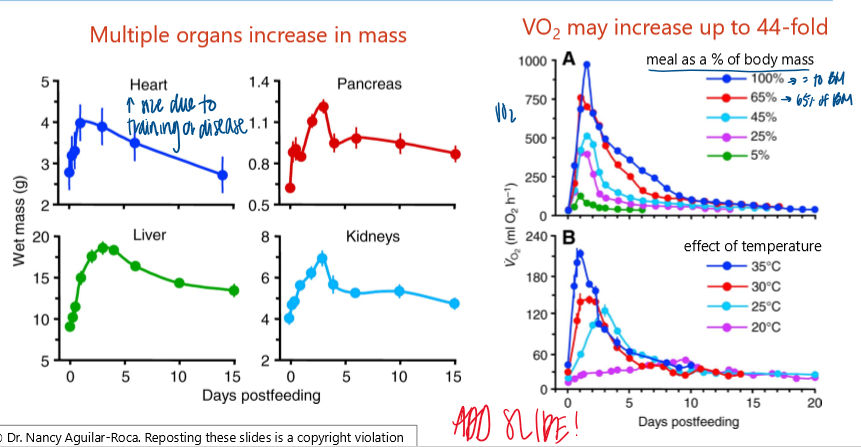
large meal digestion
whole-body process
multiple organs increase in mass
VO2 may incrase up to 44-fold
amylase
digests starch
how digestive enzyme activity changes via evolution
variation in starch consumption across populations shapes the evolution of amylase gene copy number
high starch: agricultural and tubers
low starch: hunter-gatherer and pastoralist
amylase copy number and high starch diet
direct relationship
higher amylase copy number with high starch diet: hadza (tanzania), european-americans, and japanese
lower amylase copy number in lower starch diet
fluorescent validoation of AMY1 copies in diploids
in a japanese subject, there is a lot of variation in the number of copies
varies within ethnicities
ruminants
have a rumen to digest starches
properties of the rumen
large fermentation chamber (one of the four chambers int he stomach)
anaerobic
breakdown plants and cellulose
bacteria, fungi, protists (bacteria produce H+ and CH4)
what do animals get from the rumen
herbivores need bacteria and extra structures
they get:
nitrogen processing
AAs
vitamins
SCFAs
where are fermentation chambers located
different places based on species
hindgut ferm in the colon of ponies
koala has a large caecum to digest eucalyptus
double processing
herbivores have cecal pellets
feces that are reingested for maximal digestion and nutrient uptake
culture-independent methods for microbiome mapping
16S amplicon sequencing
metagenomics
metagenomics
sequecning microbes’ genes
what influences the microbiome
host physiology
lifestyle
immune system
environment: skin vs. gut microbiome
ruminants have an obligate relationship with microbes
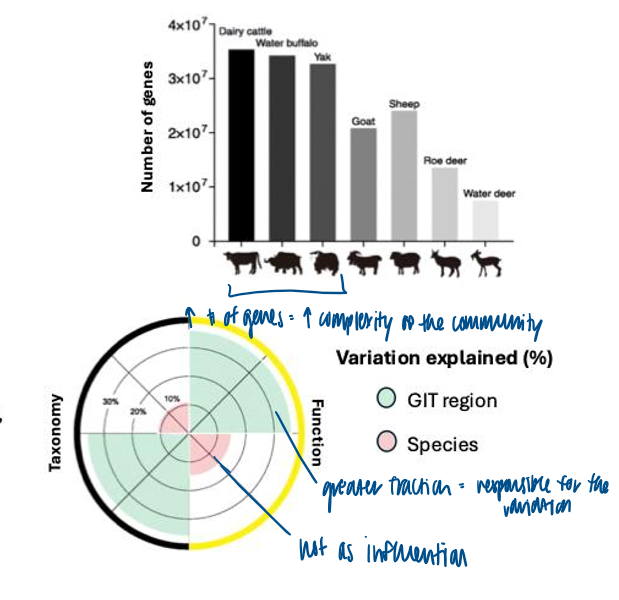
ruminant microbiome
complex environment and more genes
GIT region is more responsible for the variation thn the species type
how do fish solve the challenge of herbivory
rare in fish; herbivory is largely concentrated in coral reef systems
gizzard-type stomach trituration (mechanical grinding)
pharyngeal jaws (second set of teeth)
gut length and hindgut fermentation (longer transit times, fiber-degrading microbes)