Invertebrate Paleontology Lab Practical 2

0.0(0)
Studied by 3 people
call kaiCall Kai
learnLearn
examPractice Test
spaced repetitionSpaced Repetition
heart puzzleMatch
flashcardsFlashcards
GameKnowt Play
Card Sorting

1/52

encourage image

There's no tags or description

Looks like no tags are added yet.

Last updated 10:21 PM on 4/28/26
Name
Mastery
Learn
Test
Matching
Spaced
Call with Kai

No analytics yet

Send a link to your students to track their progress

53 Terms

1
New cards

Body Fossil

Actual remains of body parts (pollen, bones, shell)

2
New cards

Trace Fossil

Indication of activity (tracks, burrows, borings)

3
New cards

Pseudofossil

Features of rocks that look organic but are not (concretions, geodes, mineral crystals, chemical precipitates)

4
New cards

Mollusca

Cambrian - Recent (541-0 Ma)

Bilaterally symmetrical, non-segmented metazoans

Mantle (thin sheet of tissue) covers the visceral mass; secretes shell

Shell calcite, aragonite, both, none

Mantle: thin issue layer covering visceral mass and secreting shell

Visceral Mass: organ systems

Foot: muscular structure for movement

Radula: tongue-like structure with ‘teeth’ of chiton (snails go crazy with this)
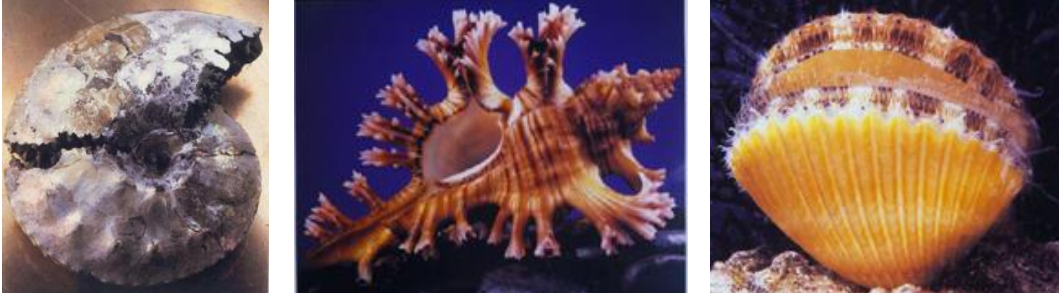
<p>Cambrian - Recent (541-0 Ma)</p><p>Bilaterally symmetrical, non-segmented metazoans</p><p>Mantle (thin sheet of tissue) covers the visceral mass; secretes shell</p><p>Shell calcite, aragonite, both, none</p><p>Mantle: thin issue layer covering visceral mass and secreting shell</p><p>Visceral Mass: organ systems</p><p>Foot: muscular structure for movement</p><p>Radula: tongue-like structure with ‘teeth’ of chiton (snails go crazy with this)</p>
5
New cards

Gastropoda

Cambrian - Recent (541- 0 Ma)

Snails, slugs, pteropods (pelagic marine/floats around marine gastropods)

Aperture = opening of the shell

Apex = tip of the shell, oldest part

Body chamber = the largest and final part of the shell

Columella = central pillar

Dextral = right-handed shell coil, when the apex is up and aperture is on the right

Operculum = plate attached to the foot, used to seal the aperture

Rostrum = snout-like extension of the head

Shell = most with coiled, unchambered shell (most aragonite

Sinistral = left-handed shell coil, when apex is up, the aperture is on the left

Siphonal neck = tubular extension of aperture

Suture = the spiral line of contact where successive whorls meet

Whorl = 360 degree rotation of shell

Possess a true head, confluent with body, with eyes and tentacles

Soft anatomy is bilaterally symmetrical

Future = line of contract between whorls

May have operculum: chitinous or aragonite ‘trap door’ for aperture
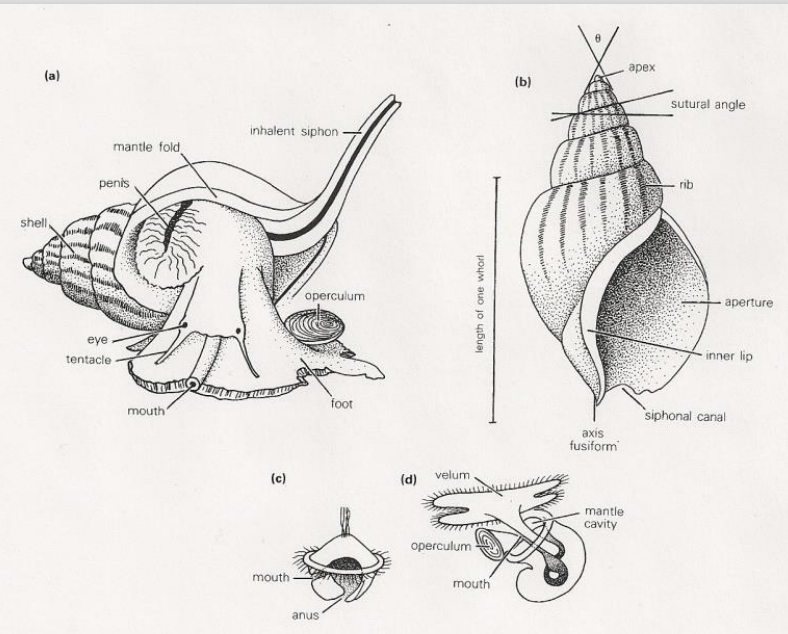
<p>Cambrian - Recent (541- 0 Ma)</p><p>Snails, slugs, pteropods (pelagic marine/floats around marine gastropods)</p><p>Aperture = opening of the shell</p><p>Apex = tip of the shell, oldest part</p><p>Body chamber = the largest and final part of the shell</p><p>Columella = central pillar</p><p>Dextral = right-handed shell coil, when the apex is up and aperture is on the right</p><p>Operculum = plate attached to the foot, used to seal the aperture</p><p>Rostrum = snout-like extension of the head</p><p>Shell = most with coiled, unchambered shell (most aragonite</p><p>Sinistral = left-handed shell coil, when apex is up, the aperture is on the left</p><p>Siphonal neck = tubular extension of aperture</p><p>Suture = the spiral line of contact where successive whorls meet</p><p>Whorl = 360 degree rotation of shell</p><p>Possess a true head, confluent with body, with eyes and tentacles</p><p>Soft anatomy is bilaterally symmetrical</p><p>Future = line of contract between whorls</p><p>May have operculum: chitinous or aragonite ‘trap door’ for aperture</p>
6
New cards

Cephalopoda

Cambrian - Recent (541-0 Ma)

Exclusively marine, nektonic (swimming)

Nautilus, argonaunts, squid, octopus, ammonites (baculites - the straight shell to move quickly through the water), and belemnites (bullet shape)

Well-developed head and brain

Elaborate sensory organs, especially eyes (holochamber eye)

Complex buoyancy mechanism in chambered shells (when present)

Typically carnivores

Cephalopoda live in outermost chamber

Lensed eyes

Foot modified into tentacles and hyponome (jet propulsion)

No internal, or external shell

Shell divided into chambers by septa that form sutures where they meet shell

Phragmacone (gas filled) = remainder of shell

Aperture = opening of the shell

Apex = tip of the shell, oldest part

Body chamber = the largest and final part of the shell

Columella = central pillar

Dextral = right-handed shell coil, when the apex is up and aperture is on the right

Operculum = plate attached to the foot, used to seal the aperture

Rostrum = snout-like extension of the head

Septa = walls that divide the shell into chambers

Shell = chambered shell

Sinistral = left-handed shell coil, when apex is up, the aperture is on the left

Siphonal neck = tubular extension of aperture

Siphuncle = pumps water in and out of chambers to aid in buoyancy

Suture = the spiral line of contact where successive whorls meet

Whorl = 360 degree rotation of shell

Ceratitic sutures = crenulated lobes and smooth saddles

Goniatitic sutures = simple, undulating type of pattern
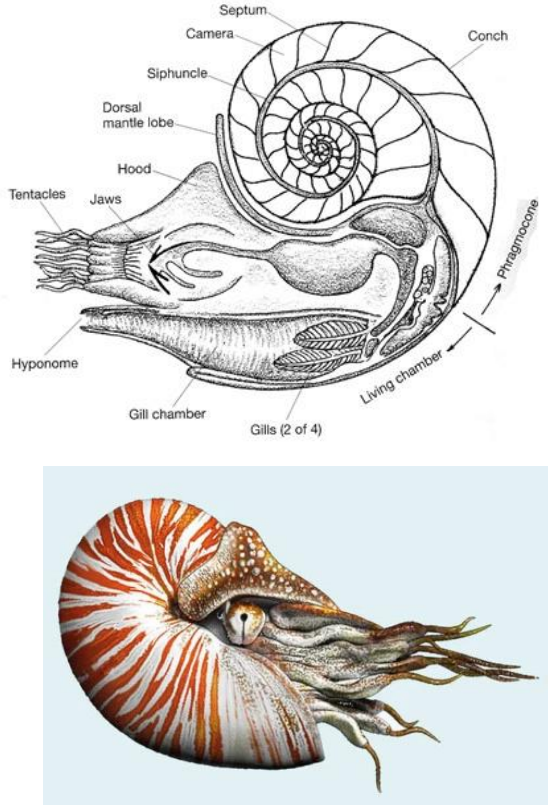
<p>Cambrian - Recent (541-0 Ma)</p><p>Exclusively marine, nektonic (swimming)</p><p>Nautilus, argonaunts, squid, octopus, ammonites (baculites - the straight shell to move quickly through the water), and belemnites (bullet shape)</p><p>Well-developed head and brain</p><p>Elaborate sensory organs, especially eyes (holochamber eye)</p><p>Complex buoyancy mechanism in chambered shells (when present)</p><p>Typically carnivores</p><p>Cephalopoda live in outermost chamber</p><p>Lensed eyes</p><p>Foot modified into tentacles and hyponome (jet propulsion)</p><p>No internal, or external shell</p><p>Shell divided into chambers by septa that form sutures where they meet shell</p><p>Phragmacone (gas filled) = remainder of shell</p><p>Aperture = opening of the shell</p><p>Apex = tip of the shell, oldest part</p><p>Body chamber = the largest and final part of the shell</p><p>Columella = central pillar</p><p>Dextral = right-handed shell coil, when the apex is up and aperture is on the right</p><p>Operculum = plate attached to the foot, used to seal the aperture</p><p>Rostrum = snout-like extension of the head</p><p>Septa = walls that divide the shell into chambers</p><p>Shell = chambered shell</p><p>Sinistral = left-handed shell coil, when apex is up, the aperture is on the left</p><p>Siphonal neck = tubular extension of aperture</p><p>Siphuncle = pumps water in and out of chambers to aid in buoyancy</p><p>Suture = the spiral line of contact where successive whorls meet</p><p>Whorl = 360 degree rotation of shell</p><p>Ceratitic sutures = crenulated lobes and smooth saddles</p><p>Goniatitic sutures = simple, undulating type of pattern</p>
7
New cards

Bivalvia

Cambrian - Recent (541-0 Ma)

No ‘head’

Paired calcareous valves (aragonite, calcite or both) united by a dorsal hinge with connecting ligament of elastic protein and with or without teeth/sockets

Gills modified for filter feeding/respiration/housing symbiotic bacteria(nutrient processing)

Plane of symmetry: In equivalved species = parallel to plan of commissure, In inequivalved species = may not have a symmetry plane

Orientation = Left/right valves, Dorsal/ventral, Anteroir/posterior

Adductor muscle scar = close shells

Boring = drills or bores into hard substrates for protection

Commissure = the line or surface where the two valves meet when the shell is closed

Epifaunal = live on top of the substrate (attached to rocks or resting on sea floor)

Gape = permanent opening between the valves

Hinge = ligament + definition; often support on a hinge plate (shelf)

Infaunal = live within the substrate (burrowed into sand or mud)

Ligament = fibrous organic material connecting valves

Pallial Line = outer line demarcating edge of mantle attachment to valve

Pallial Sinus = inflation of pallial line where siphons develop

Shell = protective covering of bivalve

Teeth/Sockets (dentition) = interlocking structures

Valve = one of the two shells making up the bivalve
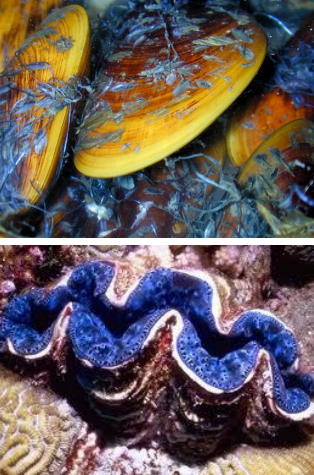
<p>Cambrian - Recent (541-0 Ma)</p><p>No ‘head’</p><p>Paired calcareous valves (aragonite, calcite or both) united by a dorsal hinge with connecting ligament of elastic protein and with or without teeth/sockets</p><p>Gills modified for filter feeding/respiration/housing symbiotic bacteria(nutrient processing)</p><p>Plane of symmetry: In equivalved species = parallel to plan of commissure, In inequivalved species = may not have a symmetry plane</p><p>Orientation = Left/right valves, Dorsal/ventral, Anteroir/posterior</p><p>Adductor muscle scar = close shells</p><p>Boring = drills or bores into hard substrates for protection</p><p>Commissure = the line or surface where the two valves meet when the shell is closed</p><p>Epifaunal = live on top of the substrate (attached to rocks or resting on sea floor)</p><p>Gape = permanent opening between the valves</p><p>Hinge = ligament + definition; often support on a hinge plate (shelf)</p><p>Infaunal = live within the substrate (burrowed into sand or mud)</p><p>Ligament = fibrous organic material connecting valves</p><p>Pallial Line = outer line demarcating edge of mantle attachment to valve</p><p>Pallial Sinus = inflation of pallial line where siphons develop</p><p>Shell = protective covering of bivalve</p><p>Teeth/Sockets (dentition) = interlocking structures</p><p>Valve = one of the two shells making up the bivalve</p>
8
New cards

Nautiloidea

Cambrian - Recent (541-0 Ma)

Sutures straight or gently undulating

Shell straight or coiled

Shell typically unornamented
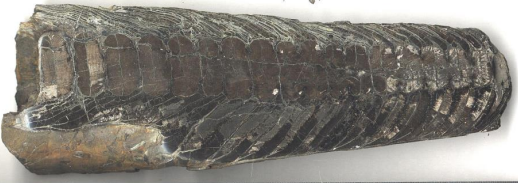
<p>Cambrian - Recent (541-0 Ma)</p><p>Sutures straight or gently undulating</p><p>Shell straight or coiled</p><p>Shell typically unornamented</p>
9
New cards

Ammonoidea

Devonian - Cretaceous (419-66 Ma)

Sutures of varying complexity = Lobes: deflections of suture away from aperture; Saddles: deflections toward aperture

Variety of shell shapes

External ornament common

Exceedingly important group for Western Interior Seaway stratigraphy

High species turnover allows for multiple biostratigraphic zones, sometimes less than 1 mya in duration

Very useful for biostratigraphy in Europe and Western Interior Seaway
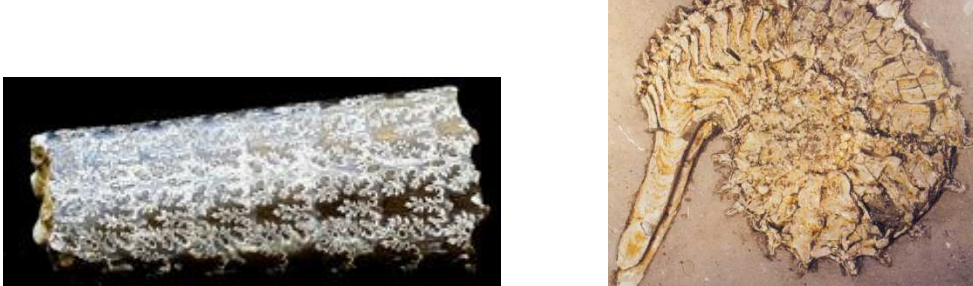
<p>Devonian - Cretaceous (419-66 Ma)</p><p>Sutures of varying complexity = Lobes: deflections of suture away from aperture; Saddles: deflections toward aperture</p><p>Variety of shell shapes</p><p>External ornament common</p><p>Exceedingly important group for Western Interior Seaway stratigraphy</p><p>High species turnover allows for multiple biostratigraphic zones, sometimes less than 1 mya in duration</p><p>Very useful for biostratigraphy in Europe and Western Interior Seaway</p>
10
New cards

Coleoidea

Devonian - Recent (419-0 Ma)

Generally no or internal shell

Limited fossil record, except for belemnites
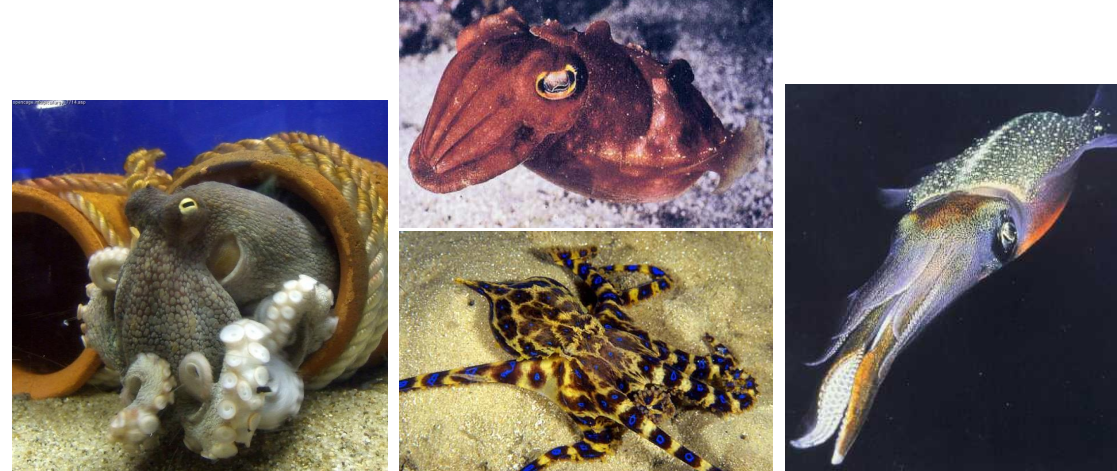
<p>Devonian - Recent (419-0 Ma)</p><p>Generally no or internal shell</p><p>Limited fossil record, except for belemnites</p>
11
New cards

Belemnitida

Mississippian - Cretaceous (359-66 Ma)

Internal skeleton (has to do with composition, calcium phosphate):

  • Bullet-shaped: rostrum - radially arranged calcite needles

  • Alveolus: conical depression hosing conical phragmocone

  • Pro-ostracum: ~dorsal wall of body chamber

Very abundant when alive, big pods/schools
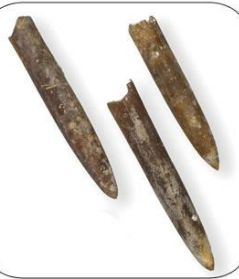
<p>Mississippian - Cretaceous (359-66 Ma)</p><p>Internal skeleton (has to do with composition, calcium phosphate):</p><ul><li><p>Bullet-shaped: rostrum - radially arranged calcite needles</p></li><li><p>Alveolus: conical depression hosing conical phragmocone</p></li><li><p>Pro-ostracum: ~dorsal wall of body chamber</p></li></ul><p>Very abundant when alive, big pods/schools</p>
12
New cards

Arthropoda

Cambrian - Recent (541-0 Ma)

Most successful multicellular group

Most diverse animal phylum (~75% of animal species)

Inhabit nearly all terrestrial and aquatic environments

Body plan = Segmented body, Jointed appendages (modified for a variety of functions), Exoskeleton

Typically, 3 body regions, variously named (may be fused) = Head (bears appendages), Thorax (bears appendages), Abdomen (without appendages)

Exoskeleton chitinous, sometimes hardened with CaCO3 or Ca-phosphate

Growth by molting
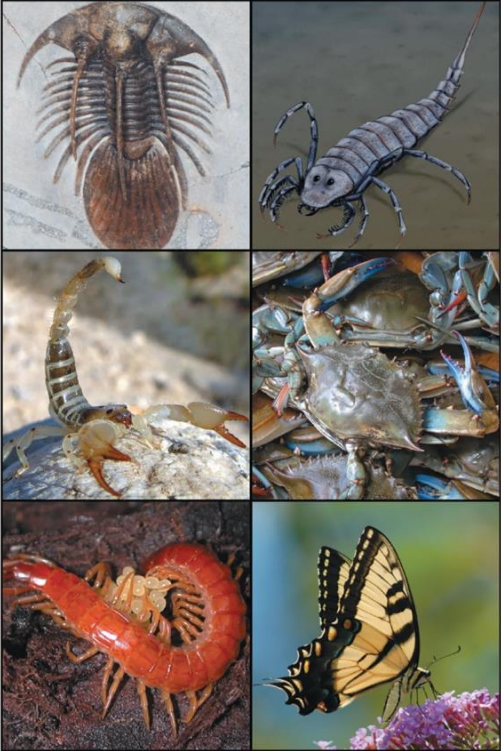
<p>Cambrian - Recent (541-0 Ma)</p><p>Most successful multicellular group</p><p>Most diverse animal phylum (~75% of animal species)</p><p>Inhabit nearly all terrestrial and aquatic environments</p><p>Body plan = Segmented body, Jointed appendages (modified for a variety of functions), Exoskeleton</p><p>Typically, 3 body regions, variously named (may be fused) = Head (bears appendages), Thorax (bears appendages), Abdomen (without appendages)</p><p>Exoskeleton chitinous, sometimes hardened with CaCO3 or Ca-phosphate</p><p>Growth by molting</p>
13
New cards

Trilobitomorpha

Most abundant fossil arthropods, >1500 genera

Cambrian - Permian (541-252 Ma)

Well-calcified (calcite) dorsal side of exoskeleton

Marine benthic, a few planktonic or nektonic

Deposit feeders, carnivores

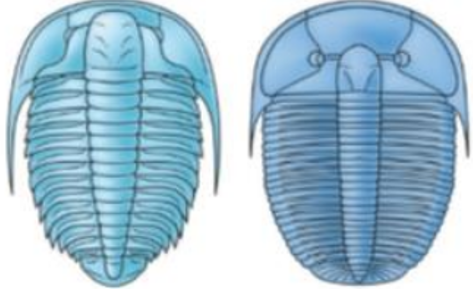
Body can be divided into 3 regions = Laterally, Central axial lobe, Two lateral pleural lobes

Anterior/Posterior = Cephalon (head), Thorax (middle body), Pygidium (posterior)

Branched (biramous) appendages = One pair per thoracic segment

Doublure: ventral extension of the dorsal exoskeleton

Hypostome: calcified mouthpart under glabella

Compound eyes

Some trilobites are blind

Eye: Holochroal = closely-packed lenses, all about the same size, Shizochroal = larger lenses arranged in rows

Glabella = Axial lobe of cephalon

Genal Angle = Angle formed by lateral and posterior margin cephalon, May have spine

Facial Suture = Line of weakness in cephalon

Free cheek = Cephalon outside of facial sutures

Fixed cheek = Cephalon surrounding glabella inside of facial sutures

Pygidium = Size relative to cephalon taxonically significant

Molting: Sutures = areas of weakness in cephalon cuticle, Suture types = where the facial suture meets the cephalon edge

Antennae = a single pair of many-jointed sensory appendages protruding from the front of the cephalon

Axial lobe = the central, longitudinal lobe running the length of the body

Carapace = the hard, mineralozed exoskeleton made of calcite and chitin

Paddles = paddle-like branches used for gill-breathing or swimming

Pleural lobe = The two lateral longitudinal lobes that flank the axial lobe

Preglabbelar field = area of the cephalon located between the front of the glabella and the anterior margin of the cephalon

Spine = various spines, evolved for defense, protection, or increased surface area

Telson = spike-like tail, sometimes a final spine on some trilobites
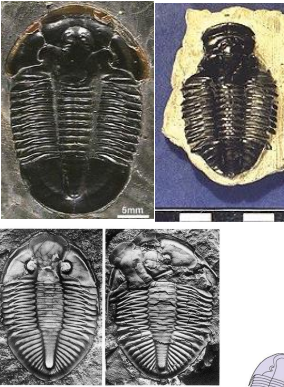
<p>Most abundant fossil arthropods, &gt;1500 genera</p><p>Cambrian - Permian (541-252 Ma)</p><p>Well-calcified (calcite) dorsal side of exoskeleton</p><p>Marine benthic, a few planktonic or nektonic</p><p>Deposit feeders, carnivores</p><p>Body can be divided into 3 regions = Laterally, Central axial lobe, Two lateral pleural lobes</p><p>Anterior/Posterior = Cephalon (head), Thorax (middle body), Pygidium (posterior)</p><p>Branched (biramous) appendages = One pair per thoracic segment</p><p>Doublure: ventral extension of the dorsal exoskeleton</p><p>Hypostome: calcified mouthpart under glabella</p><p>Compound eyes</p><p>Some trilobites are blind</p><p>Eye: Holochroal = closely-packed lenses, all about the same size, Shizochroal = larger lenses arranged in rows</p><p>Glabella = Axial lobe of cephalon</p><p>Genal Angle = Angle formed by lateral and posterior margin cephalon, May have spine</p><p>Facial Suture = Line of weakness in cephalon</p><p>Free cheek = Cephalon outside of facial sutures</p><p>Fixed cheek = Cephalon surrounding glabella inside of facial sutures</p><p>Pygidium = Size relative to cephalon taxonically significant</p><p>Molting: Sutures = areas of weakness in cephalon cuticle, Suture types = where the facial suture meets the cephalon edge</p><p>Antennae = a single pair of many-jointed sensory appendages protruding from the front of the cephalon</p><p>Axial lobe = the central, longitudinal lobe running the length of the body</p><p>Carapace = the hard, mineralozed exoskeleton made of calcite and chitin</p><p>Paddles = paddle-like branches used for gill-breathing or swimming</p><p>Pleural lobe = The two lateral longitudinal lobes that flank the axial lobe</p><p>Preglabbelar field = area of the cephalon located between the front of the glabella and the anterior margin of the cephalon</p><p>Spine = various spines, evolved for defense, protection, or increased surface area</p><p>Telson = spike-like tail, sometimes a final spine on some trilobites</p>
14
New cards

Chelicerata

Uniramous appendages

Cambrian - Recent (541-0 Ma)

Chelicerae = pinchers

Prosoma and Opisthosoma = fused head-thorax and abdomen

Telson = spike-like tail
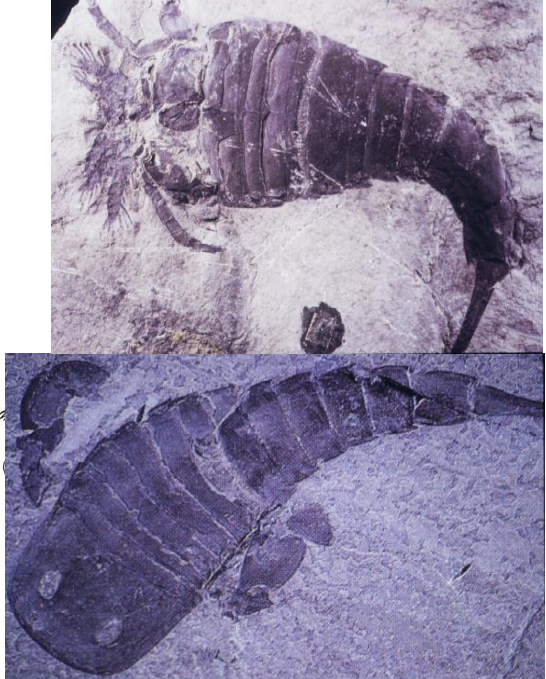
<p>Uniramous appendages</p><p>Cambrian - Recent (541-0 Ma)</p><p>Chelicerae = pinchers</p><p>Prosoma and Opisthosoma = fused head-thorax and abdomen</p><p>Telson = spike-like tail</p>
15
New cards

Hexapoda

Uniramous (unbranched) appendages

Head, thorax, abdomen

3 pairs of legs

Single pair of antennae

One pair of mandibles

Devonian - Recent (419-0 Ma)

Don’t have the best fossil record
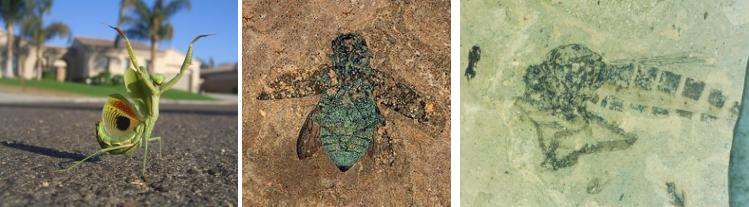
<p>Uniramous (unbranched) appendages</p><p>Head, thorax, abdomen</p><p>3 pairs of legs</p><p>Single pair of antennae</p><p>One pair of mandibles</p><p>Devonian - Recent (419-0 Ma)</p><p>Don’t have the best fossil record</p>
16
New cards

Ostracoda

Subphylum: Crustacea

All aquatic environments

Benthic and planktonic

Bivalved carapace of calcite

Weak segmentation

Cambrian - Recent (541-0 Ma)
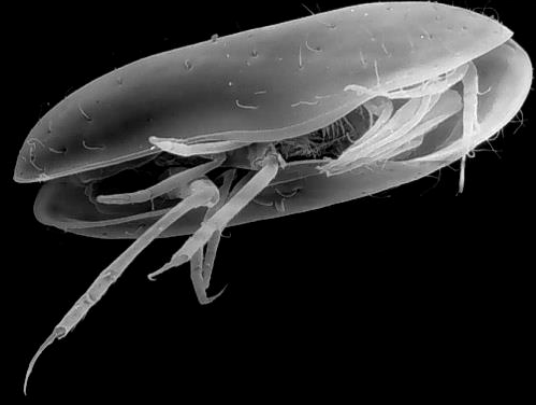
<p>Subphylum: Crustacea</p><p>All aquatic environments</p><p>Benthic and planktonic</p><p>Bivalved carapace of calcite</p><p>Weak segmentation</p><p>Cambrian - Recent (541-0 Ma)</p>
17
New cards

Echinodermata

Shallow marine to deep sea

Cambrian - Recent (541-0 Ma)

Pentameral (5-fold) symmetry

Water vascular system = Network of tubes, Acts like hydraulic pump, Sea water pumped in and out through single pore, Tube feet controlled by contracting muscles that force water into tube feet, causing them to extend; relaxing muscles allows feet to retract, Tube feet used for locomotion, respiration, feeding

Ambulacra = where tube feet of water vascular system intersect skeleton

Ambulacral pores = openings in the test through which tube feet extend

Aristotle’s lantern = jaw apparatus

Bilateral symmetry

Brachial = arms

Food groove = system of shallow grooves radiation from moth, transport of food particles

Interambularia = Spines/Tubercles

Lunule = large perforations along edge or within test; spines within sieve sediment

Periproct = anal opening (dorsal)

Peristome = opening for mouth (ventral)

Pinnule = branch off brachials

Spiracle = ring of holes around mouth, entrances to 5 respiratory organs, largest spiracle housed anal opening

Stalk (stem) = made of stacked columnals

Test = skeleton

Theca (calyx) = skeleton of multiple plates, internal organs housed within

Tubercle = a rounded knob or projection on the test that acts as a base for articulating spines
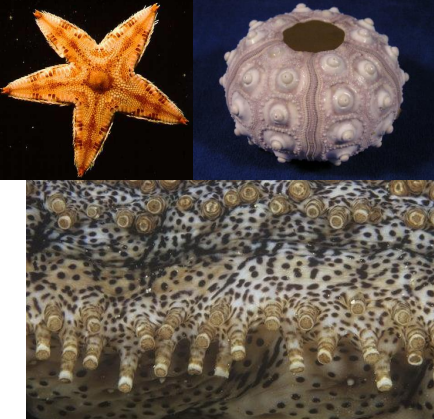
<p>Shallow marine to deep sea</p><p>Cambrian - Recent (541-0 Ma)</p><p>Pentameral (5-fold) symmetry</p><p>Water vascular system = Network of tubes, Acts like hydraulic pump, Sea water pumped in and out through single pore, Tube feet controlled by contracting muscles that force water into tube feet, causing them to extend; relaxing muscles allows feet to retract, Tube feet used for locomotion, respiration, feeding</p><p>Ambulacra = where tube feet of water vascular system intersect skeleton</p><p>Ambulacral pores = openings in the test through which tube feet extend</p><p>Aristotle’s lantern = jaw apparatus</p><p>Bilateral symmetry</p><p>Brachial = arms</p><p>Food groove = system of shallow grooves radiation from moth, transport of food particles</p><p>Interambularia = Spines/Tubercles</p><p>Lunule = large perforations along edge or within test; spines within sieve sediment</p><p>Periproct = anal opening (dorsal)</p><p>Peristome = opening for mouth (ventral)</p><p>Pinnule = branch off brachials</p><p>Spiracle = ring of holes around mouth, entrances to 5 respiratory organs, largest spiracle housed anal opening</p><p>Stalk (stem) = made of stacked columnals</p><p>Test = skeleton</p><p>Theca (calyx) = skeleton of multiple plates, internal organs housed within</p><p>Tubercle = a rounded knob or projection on the test that acts as a base for articulating spines</p>
18
New cards

Echinoidea

Skeleton: Test

Thecal plates strongly sutured

Spiny

Ordovician - Recent (485-0 Ma)

Regular or Irregular body plans
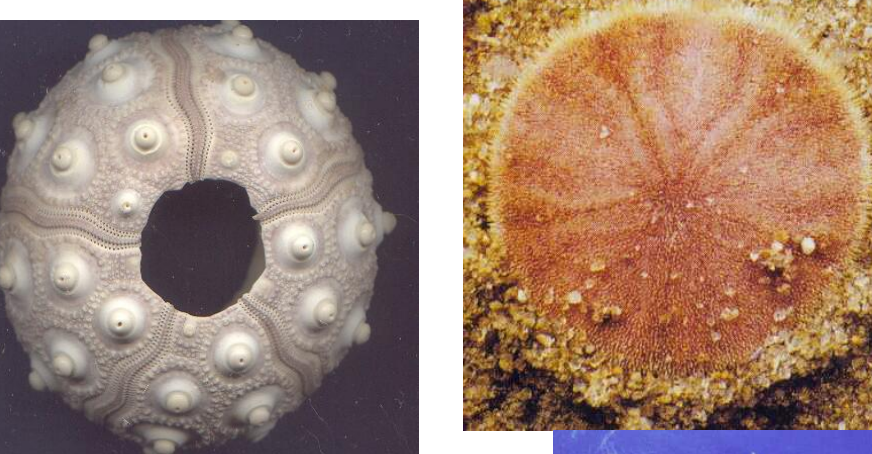
<p>Skeleton: Test</p><p>Thecal plates strongly sutured</p><p>Spiny</p><p>Ordovician - Recent (485-0 Ma)</p><p>Regular or Irregular body plans</p>
19
New cards

Regular Echinoids

Ordovician - Recent (485-0 Ma)

Radially/pentameral symmetry

Large spines

Less mobile, epifaunal
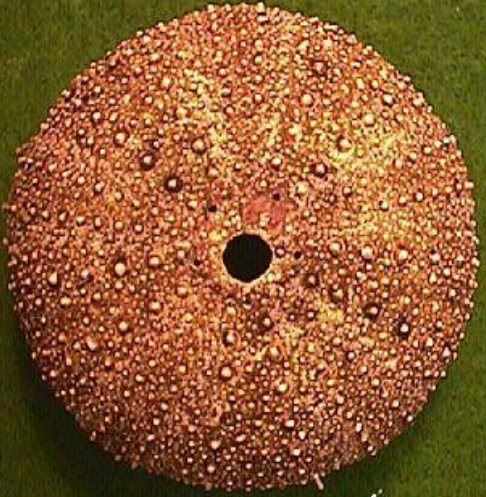
<p>Ordovician - Recent (485-0 Ma)</p><p>Radially/pentameral symmetry</p><p>Large spines</p><p>Less mobile, epifaunal</p>
20
New cards

Irregular Echinoids

Jurassic - Recent (201-0 Ma)

Bilateral symmetry superimposed on radial/pentameral symmetry

Periproct outside of apical area

Presence of petals

Mobile, burrowing
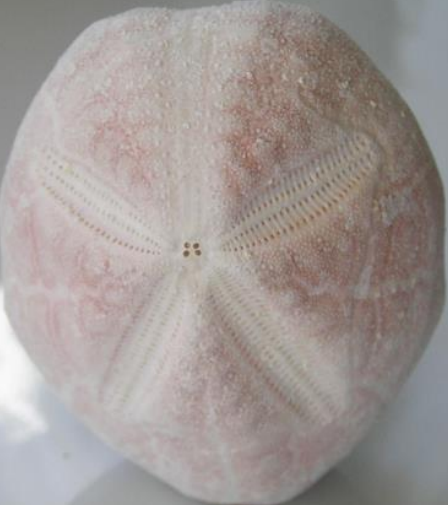
<p>Jurassic - Recent (201-0 Ma)</p><p>Bilateral symmetry superimposed on radial/pentameral symmetry</p><p>Periproct outside of apical area</p><p>Presence of petals</p><p>Mobile, burrowing</p>
21
New cards

Crinoidea

Ordovician - Recent (485-0 Ma)

Calyx/theca = skeleton of multiple plates, internal organs housed within

Anal tube = extension above calyx so wastes released away from brachials

Brachials = arms

Pinnules = branch off brachials

Stalk/Stem = made of stacked columnals

Holdfast = attachment structure for stem
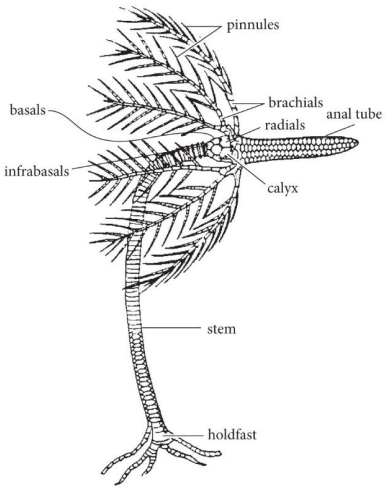
<p>Ordovician - Recent (485-0 Ma)</p><p>Calyx/theca = skeleton of multiple plates, internal organs housed within</p><p>Anal tube = extension above calyx so wastes released away from brachials</p><p>Brachials = arms</p><p>Pinnules = branch off brachials</p><p>Stalk/Stem = made of stacked columnals</p><p>Holdfast = attachment structure for stem</p>
22
New cards

Blastoidea

Ordovician - Permian (485-252 Ma)

Stalked, sessile

Theca of sutured plates

Ambulacra on theca = Brachioles attached in life

Lacked arms

Spiracles = Ring of holes around mouth, entrances to 5 respiratory organs, Largest spiracle housed anal opening
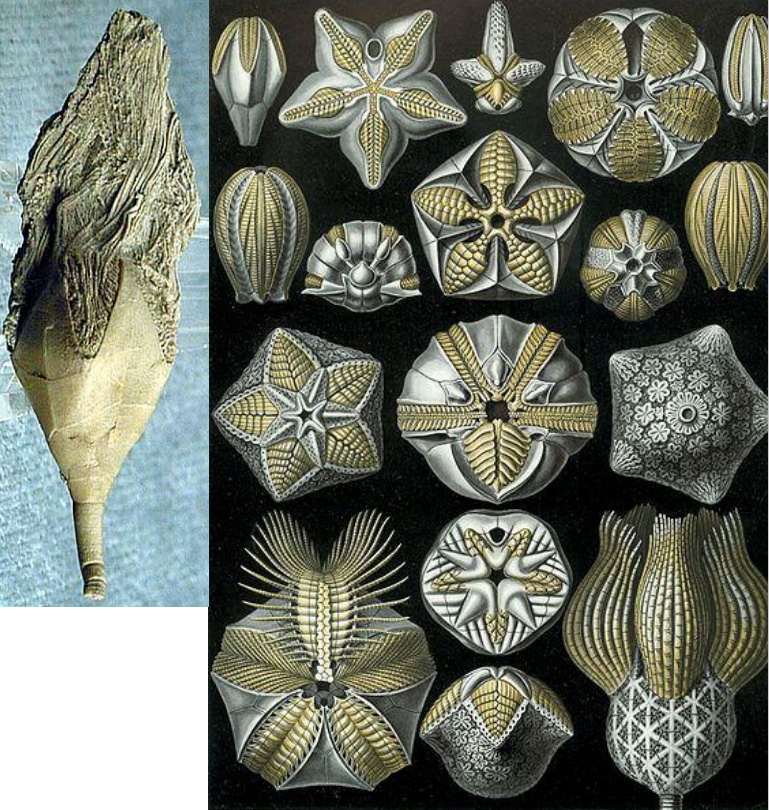
<p>Ordovician - Permian (485-252 Ma)</p><p>Stalked, sessile</p><p>Theca of sutured plates</p><p>Ambulacra on theca = Brachioles attached in life</p><p>Lacked arms</p><p>Spiracles = Ring of holes around mouth, entrances to 5 respiratory organs, Largest spiracle housed anal opening</p>
23
New cards

Eocrinoidea

Cambrian - Silurian (541-419 Ma)

Typically stalked and sessile
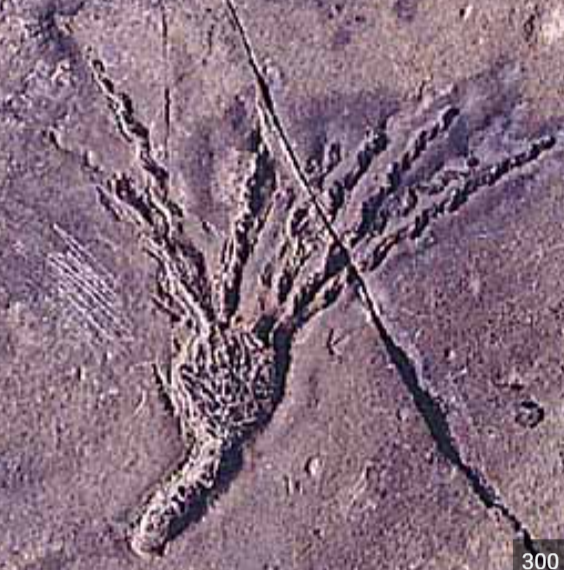
<p>Cambrian - Silurian (541-419 Ma)</p><p>Typically stalked and sessile</p>
24
New cards

Hemichordata

Solitary and Colonial

Possess pouch like extension of digestive system; originally mistaken for a notochord

Cambrian - Recent (541-0 Ma)
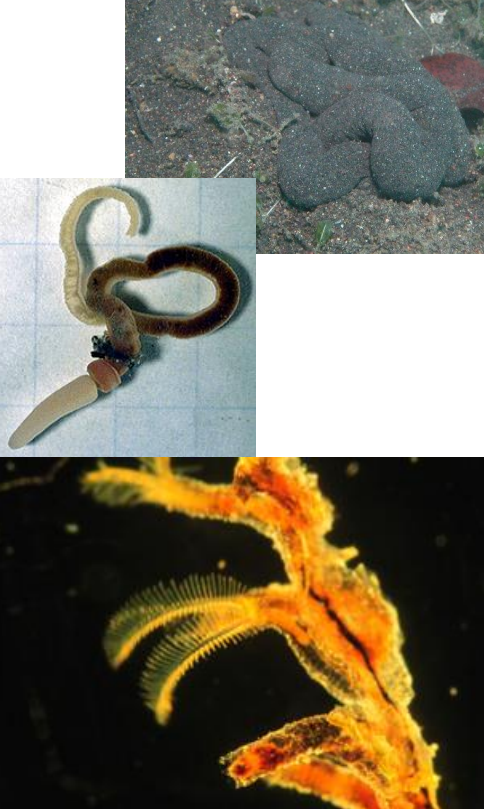
<p>Solitary and Colonial</p><p>Possess pouch like extension of digestive system; originally mistaken for a notochord</p><p>Cambrian - Recent (541-0 Ma)</p>
25
New cards

Graptolithina

Cambrian - Pennsylvanian (541-299) + 2 living genera (recent)

Colonial

Benthic and planktonic

No mineralized hardparts = Composition is debatable; Chitin, collagen, varying composition; Most commonly found carbonized (black carbonized film)

Rabdosome = graptolite colony

Sicula = basal individual from which colony develops

Stipe = “branch” emerging from sicula

Zooid = individual graptolite “animal” situated along stipe, Joined together by central canal, Feeding structure similar to lophophore

Theca = “cups” holding zooid with an aperture for zooid to emerge

Nema = thread like attachment structure

Aperture = the opening of the theca that the zooid emerges
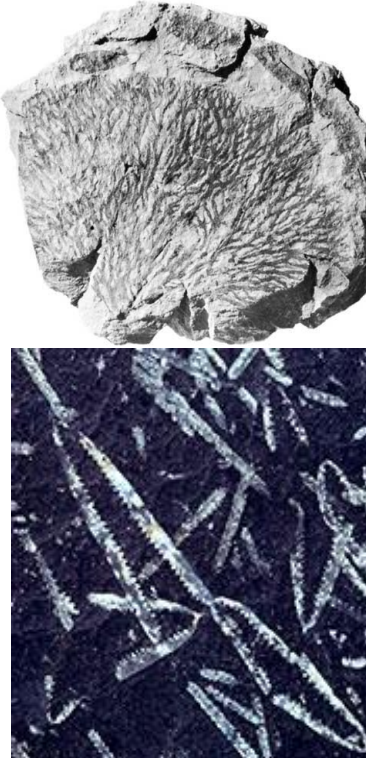
<p>Cambrian - Pennsylvanian (541-299) + 2 living genera (recent)</p><p>Colonial</p><p>Benthic and planktonic</p><p>No mineralized hardparts = Composition is debatable; Chitin, collagen, varying composition; Most commonly found carbonized (black carbonized film)</p><p>Rabdosome = graptolite colony</p><p>Sicula = basal individual from which colony develops</p><p>Stipe = “branch” emerging from sicula</p><p>Zooid = individual graptolite “animal” situated along stipe, Joined together by central canal, Feeding structure similar to lophophore</p><p>Theca = “cups” holding zooid with an aperture for zooid to emerge</p><p>Nema = thread like attachment structure</p><p>Aperture = the opening of the theca that the zooid emerges</p>
26
New cards

Dendroidea

Primitive graptolite order

Cambrian - Pennsylvanian (541-299 Ma)

More complex, dendritic morphology, numerous theca and stipes: Multiple stripes connected by horizontal dissepiments

Benthic lifestyle: Attached to benthos at base of sicula, Later representative planktonic
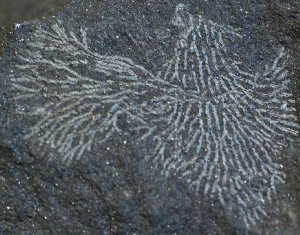
<p>Primitive graptolite order</p><p>Cambrian - Pennsylvanian (541-299 Ma)</p><p>More complex, dendritic morphology, numerous theca and stipes: Multiple stripes connected by horizontal dissepiments</p><p>Benthic lifestyle: Attached to benthos at base of sicula, Later representative planktonic</p>
27
New cards

Graptoloidea

Ordovician - Devonian (485-359 Ma)

Simple morphology, fewer stipes and thecae: Usually only two stipes

Bilaterally symmetrical

Planktonic: May have attached to seaweed, has an air sac attached to sicula, or used buoyant tissue to drift freely
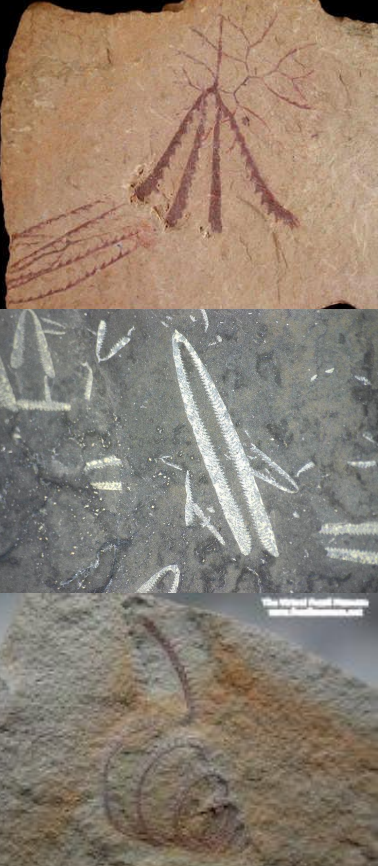
<p>Ordovician - Devonian (485-359 Ma)</p><p>Simple morphology, fewer stipes and thecae: Usually only two stipes</p><p>Bilaterally symmetrical</p><p>Planktonic: May have attached to seaweed, has an air sac attached to sicula, or used buoyant tissue to drift freely</p>
28
New cards

Carbonization

Organic materials preserved as carbonized film (plants especially)

29
New cards

Mold

All or a portion of a body fossil is preserved in the sediment originally encasing the skeletal feature

30
New cards

Permineralization

Minerals deposited in pores/spaces within skeletal material (bone, wood)

31
New cards

Recrystallization/Replacement

Mineral recrystallized to more stable form (aragonite to calcite) or replaced by a new mineral (aragonite to pyrite)

32
New cards

Unaltered

Original composition and crystal structure intact

33
New cards

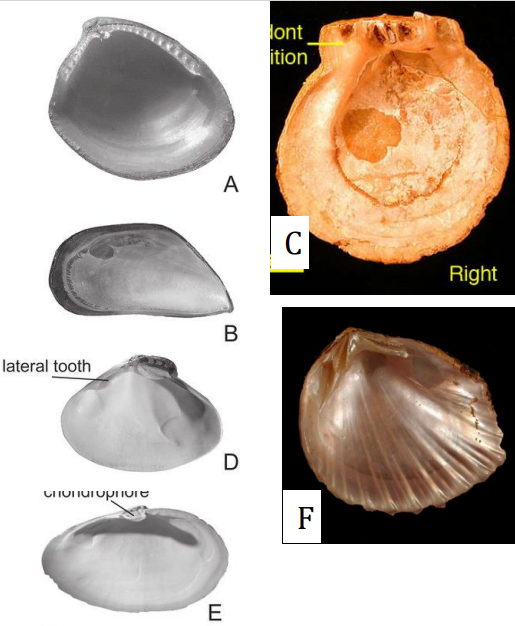
Taxodont = A

Numerous simple subequal teeth
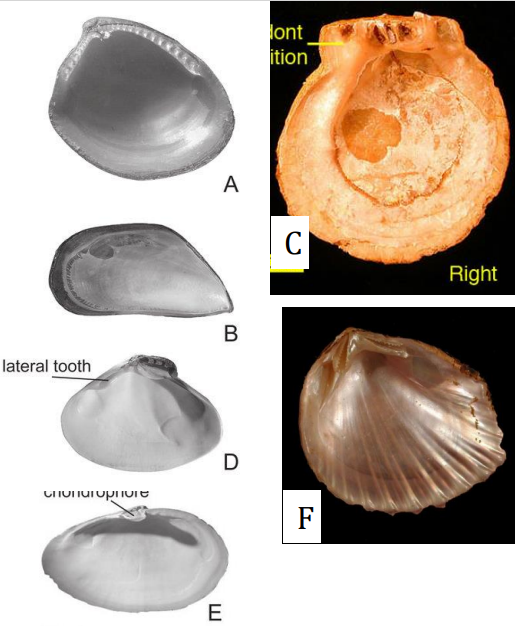
<p>Numerous simple subequal teeth</p>
34
New cards

Dysodont = B

Weak teeth close to umbo
<p>Weak teeth close to umbo</p>
35
New cards

Isodont = C

Lateral tubercles and sockets
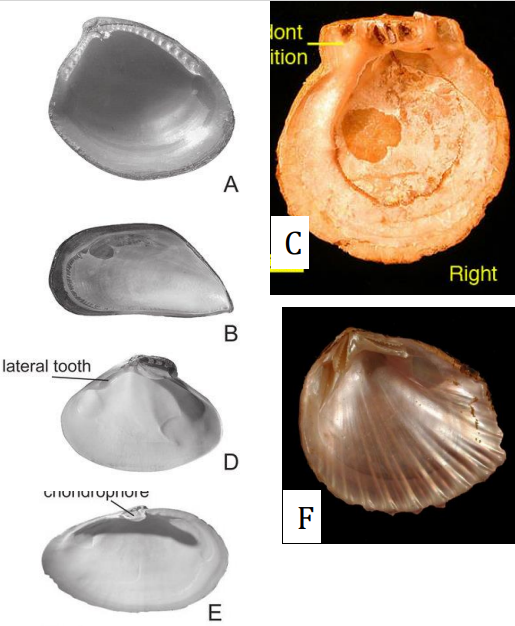
<p>Lateral tubercles and sockets</p>
36
New cards

Heterodont = D

Large teeth with cardinals (below umbo) and, in some, lateral teeth (A/P of cardinals)
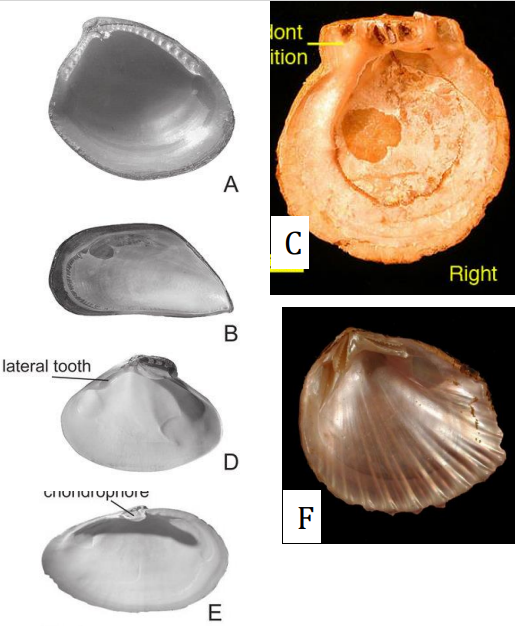
<p>Large teeth with cardinals (below umbo) and, in some, lateral teeth (A/P of cardinals)</p>
37
New cards

Desmodont = E

Cardinal teeth typically absent, replaced by chondrophore for ligament attachment
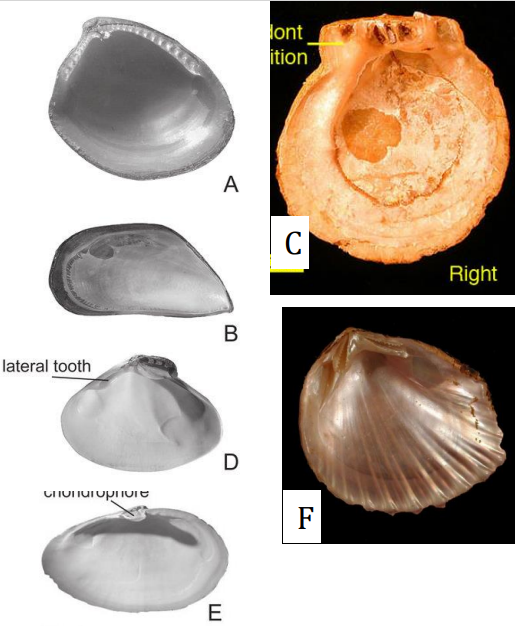
<p>Cardinal teeth typically absent, replaced by chondrophore for ligament attachment</p>
38
New cards

Schizodont = F

Reverse “V” shaped teeth, and often an elongated lateral tooth
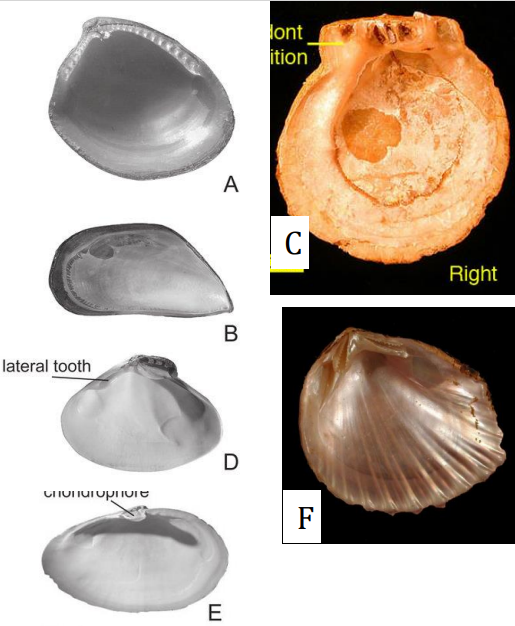
<p>Reverse “V” shaped teeth, and often an elongated lateral tooth</p>
39
New cards

Ammonitic

Suture

<p>Suture</p>
40
New cards

Ceratitic

Suture

<p>Suture</p>
41
New cards

Goniatitic

Suture

<p>Suture</p>
42
New cards

Agoniatitic

Suture

<p>Suture</p>
43
New cards

Orthoceratitic

Suture

<p>Suture</p>
44
New cards

Pelagic

Large eyes and elongate, streamline body
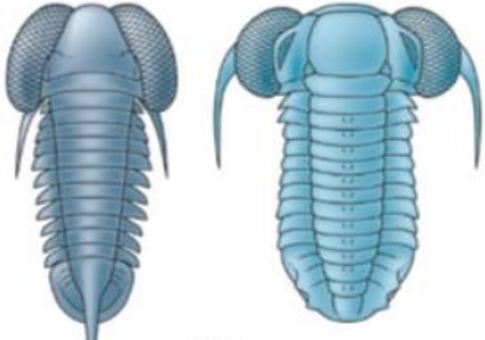
<p>Large eyes and elongate, streamline body</p>
45
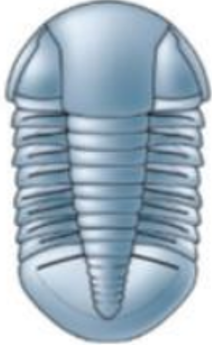
New cards

Illaenomorph

Streamline for burrowing or floating
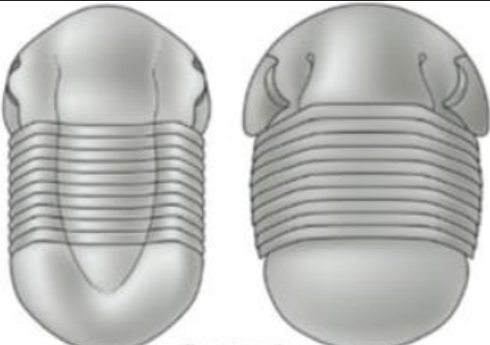
<p>Streamline for burrowing or floating</p>
46
New cards

Marginal Cephalic Spines

Defense or stabilization
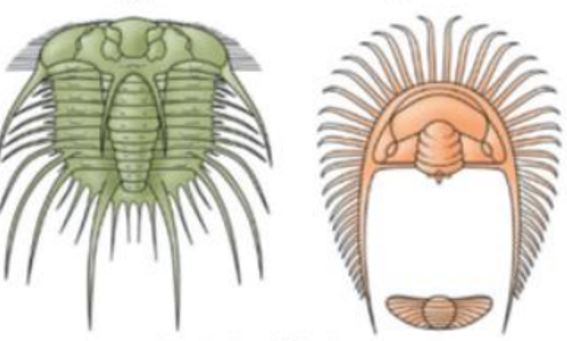
<p>Defense or stabilization</p>
47
New cards

Olenimorph

Low oxygen

<p>Low oxygen</p>
48
New cards

Pitted Fringe

Filter feeding

<p>Filter feeding</p>
49
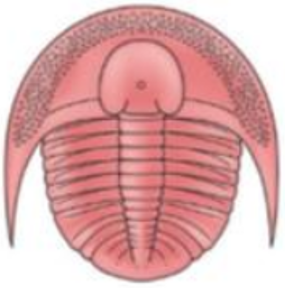
New cards

Miniaturization

Early maturity in unstable environments
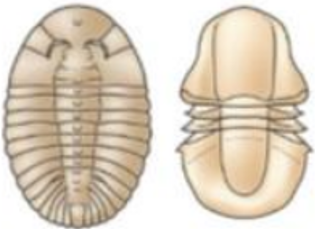
<p>Early maturity in unstable environments</p>
50
New cards

Atheloptic

Aphotic zone

<p>Aphotic zone</p>
51
New cards

Syzygy

Flat facets (stiff)

<p>Flat facets (stiff)</p>
52
New cards

Symplexy

Interlocking crenulation (moderately flexible)
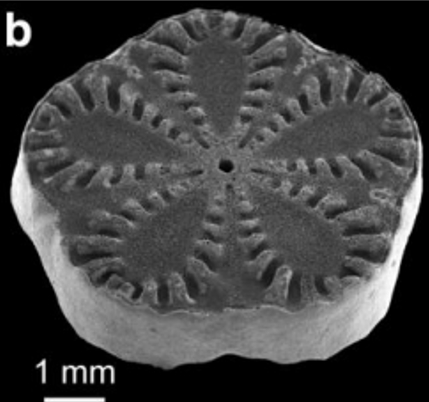
<p>Interlocking crenulation (moderately flexible)</p>
53
New cards

Synarthry

Fulcral ridges (flexible)

<p>Fulcral ridges (flexible)</p>