Quiz 4- Etruscan, Roman Republic, & Early Rome
 Call Kai
 Learn
Learn Practice Test
 Spaced Repetition
 Match
Match Flashcards
 Knowt Play
1/27

There's no tags or description
Looks like no tags are added yet.
Name | Mastery | Learn | Test | Matching | Spaced | Call with Kai |
|---|
No analytics yet
Send a link to your students to track their progress
28 Terms
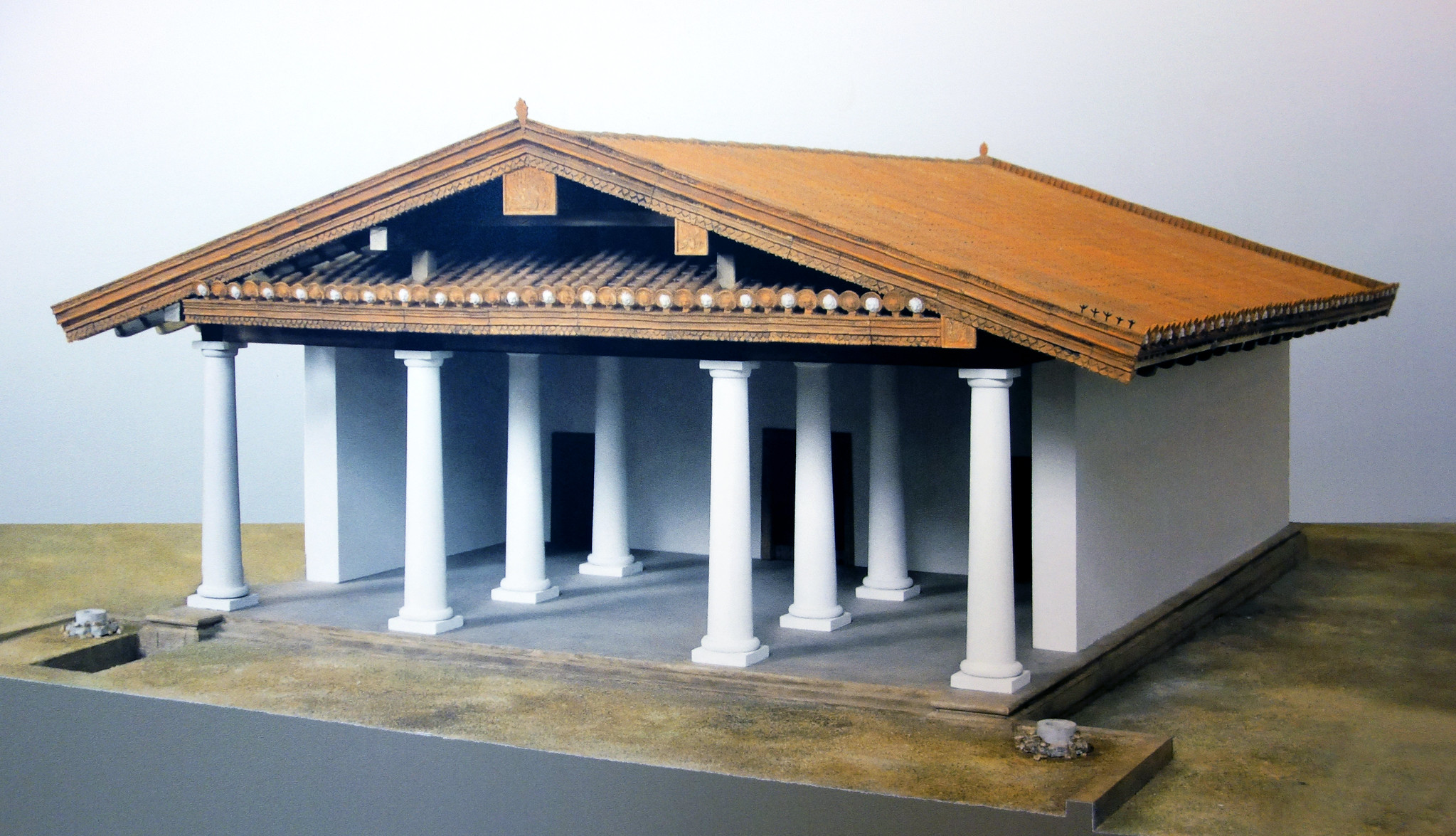
Temple of Minerva & Sculpture of Veii (Apollo)/Portonaccio Sanctuary
c. 510-500 BCE, Veii, Etruscan
terracotta, wood, stone
Most Etruscan temples were made of decomposing material, but the tuff block foundation lets us know that it did exist, also Roman architect Vitruvius who wrote about it. For Minerva (Roman form of Athena). Deep front porch, back area with three rooms for a divine triad (Minerva, Juno, and Jupiter). High podium with a front entrance and abundance of terracotta sculptures to reenact a battle of Apollo of Veii, central temple at the time
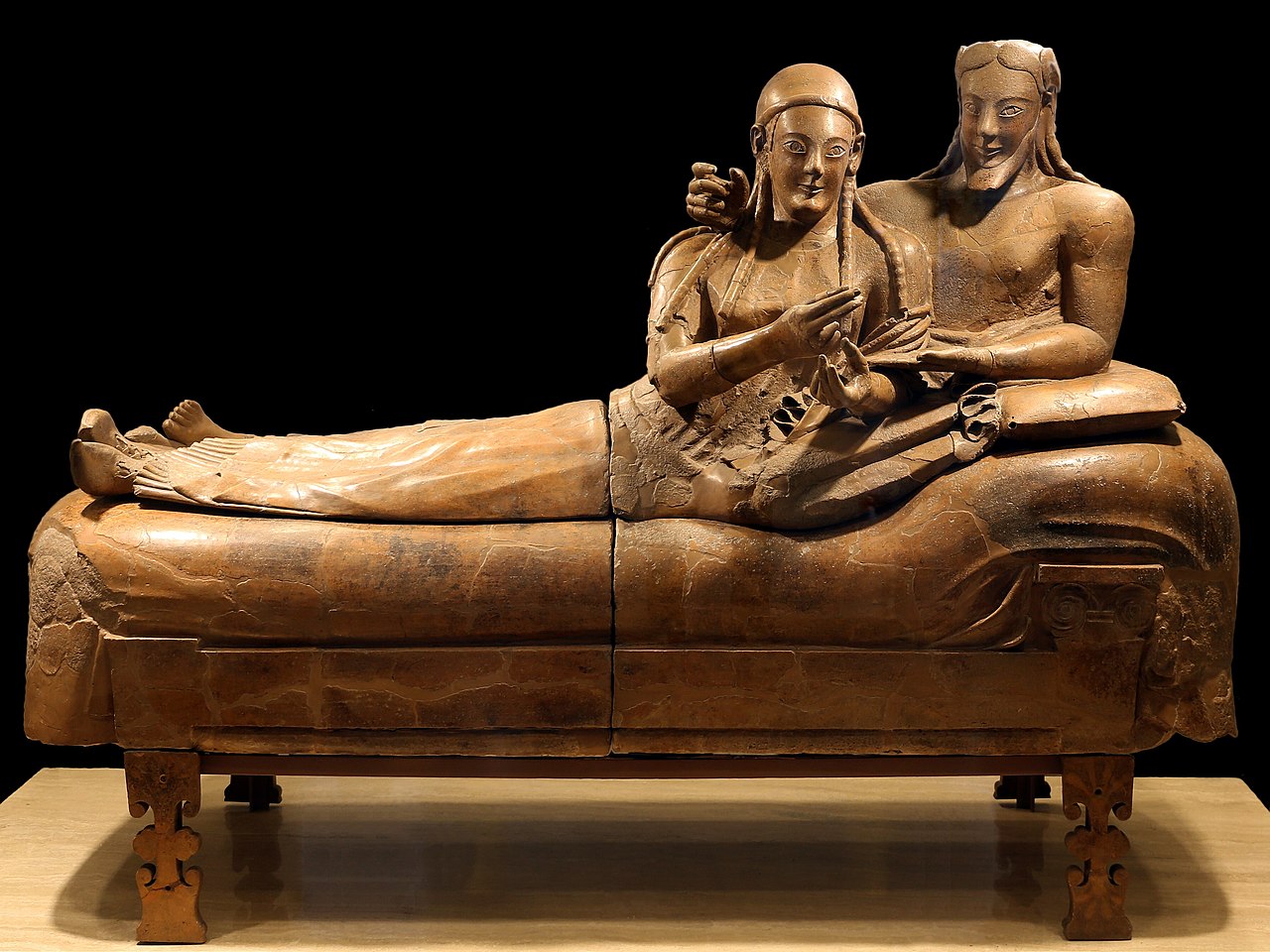
Sarcophagus of the Spouses
c. 520 BCE, Etruscan, Cerveteri (an Etruscan necropolis)
terracotta
Etruscan women had more freedom than others, found in a necropolis, marital intimacy woman as equal to husband, would have had lots of color like skin tones as gender, and also jewelry on the woman like earrings, archaic smiles. Unsure of what they were holding, but maybe something for feasting like a banquet for the afterlife. A casket, reclining couple on a couch with pillows and an unnatural bodily bend/proportions, female fully clothed, an interest in realistic drapery, death as a banquet
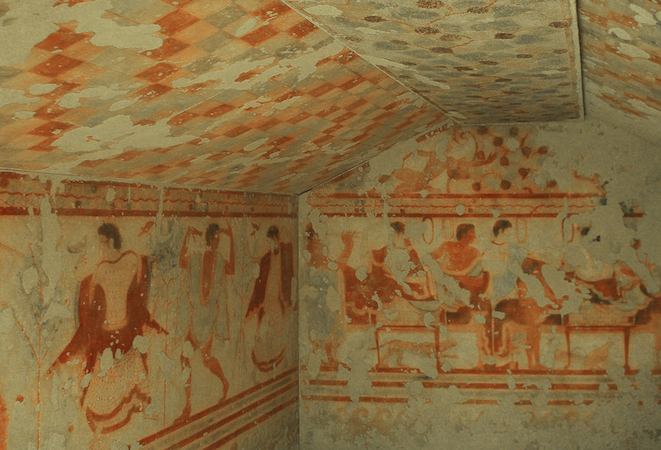
Tomb of Triclinium
c. 470 BCE, Tarquinia, Etruscan
fresco
Elite Etruscans had elaborate funerary practices, geographically Italy has a lot of resources and wealth to produce these extravagant tombs accessed through a dromos above ground. Housed dead and goods for afterlife, had funerary games commonly, laying on couches, feasting, a picnic blanket or tent ceiling pattern, playing instruments. Skin tone differentiates gender, reminded people of socio-economic status, very social event
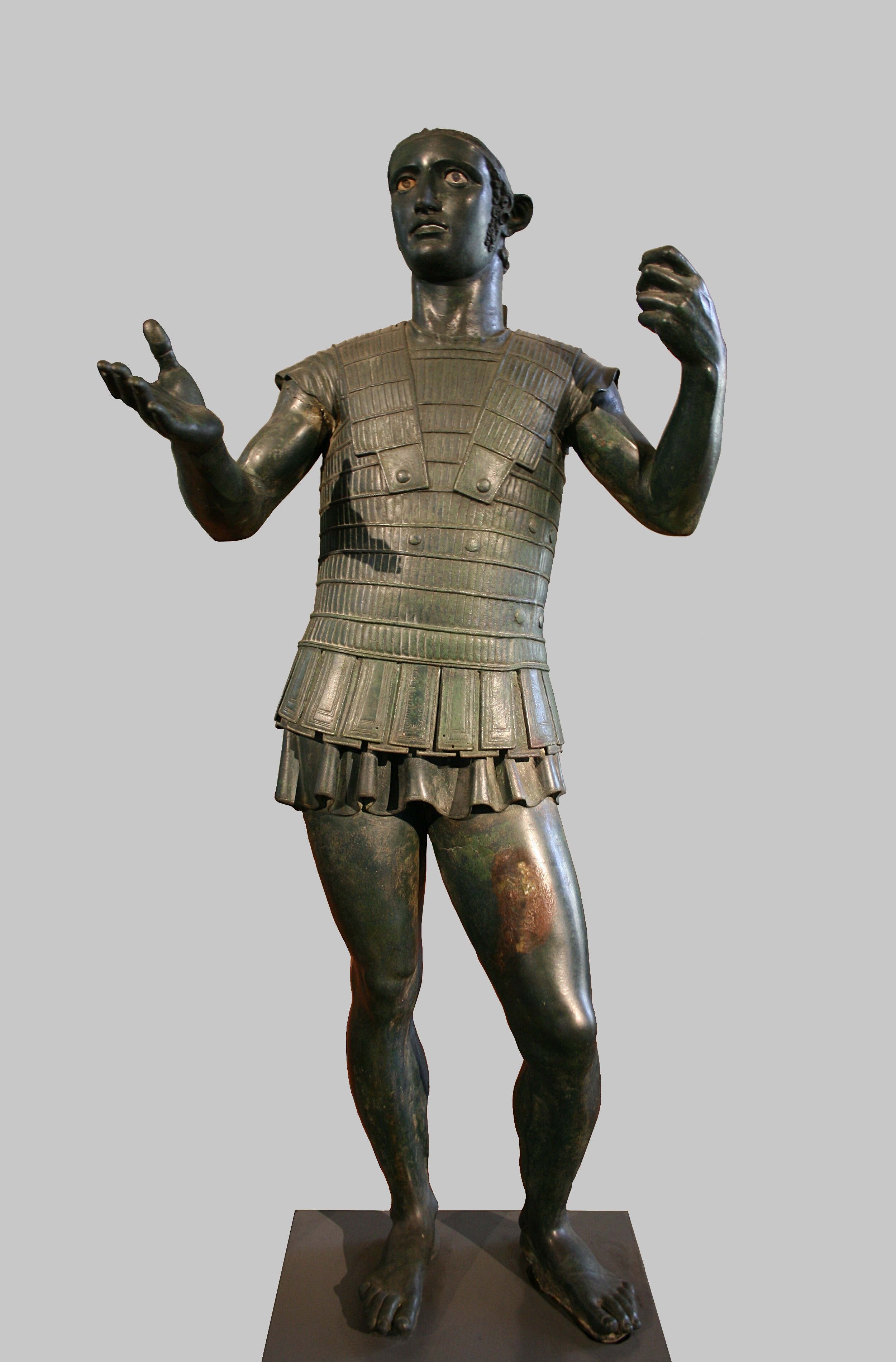
Bronze Mars of Todi
late 5th or early 4th century, Etruscan, Todi Italy
Bronze
Nearly life-sized, religious sanctuaries were areas of prayer but also community connection. He’s a votive offering with contrapposto showing cultural exchance, but adopted to fit local demands. Would’ve likely held a patera (votive offering) and a spear and helmet. Has an inscription of who gave the gift, Buried after likely being struck by lighting which was a good sign from the chief sky god and made a sacred area. Composition reps libations made by soldiers before battle for help from divine
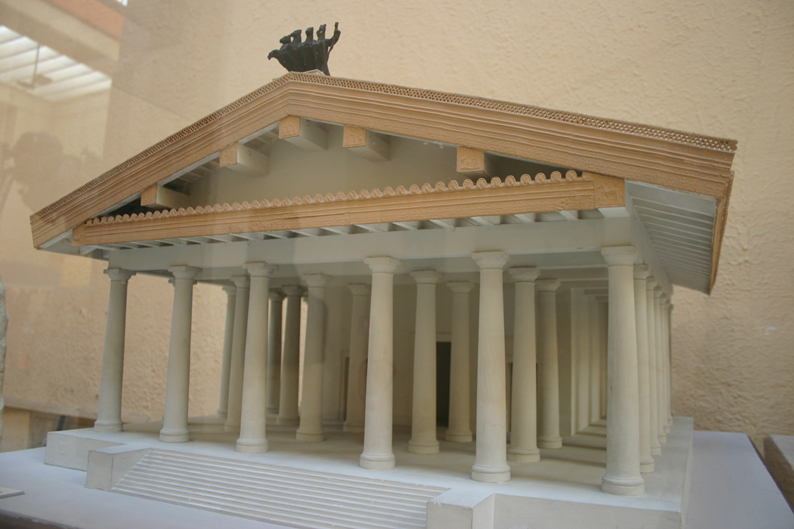
Temple of Jupiter
c. 509, Rome, Republic
og was timber and stone
monuments in highly visible locations, similar to minerva temple in size and looks but less remains. For Jupiter, Juno, and Minerva (Capitoline Triad), created most likely in 509 when Romans created a Republic and overthrew the Etruscan monarchy. Destroyed and rebuilt multiple times quickly, stressing cultural importance and was used for religion and cultural area like a political significance where generals would meet after triumph. Deep front porch, three rooms/chambers, rebuilt with marble, one of the largest Roman temples. Peripteral columns, minus the back. Potential four horse chariot on the top
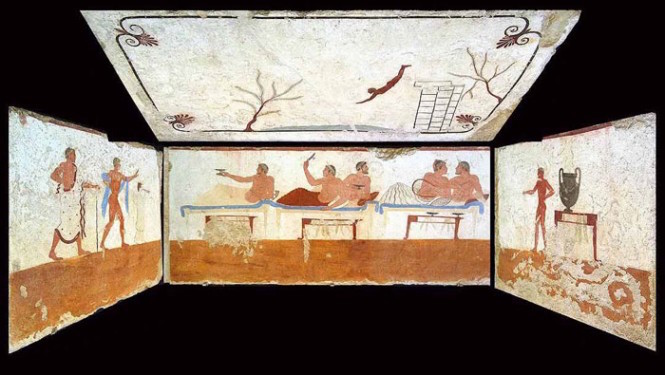
Tomb of the Diver
c. 480 BCE, Posidonia, Etruscan
fresco
Looks like silhouetted red-figure work, a man leaping/diving into afterlife very simplistic. Skinny dipping, he has an eye and subtle beard. Below are men drinking and feasting in a symposium, hydria and kiliks (drinking platter). Naked from waste up, lovers locked in an embrace, younger men with older men which was common at this time. Only men, no eating just drinking and reciting poetry, smaller scale children/servants like the lute player. Party hard like you die tomorrow, lyre on the side of the road and also an egg which was an Etruscan symbol of eternal life, eternal banquet in life. Men diving into eternal pool of afterlife
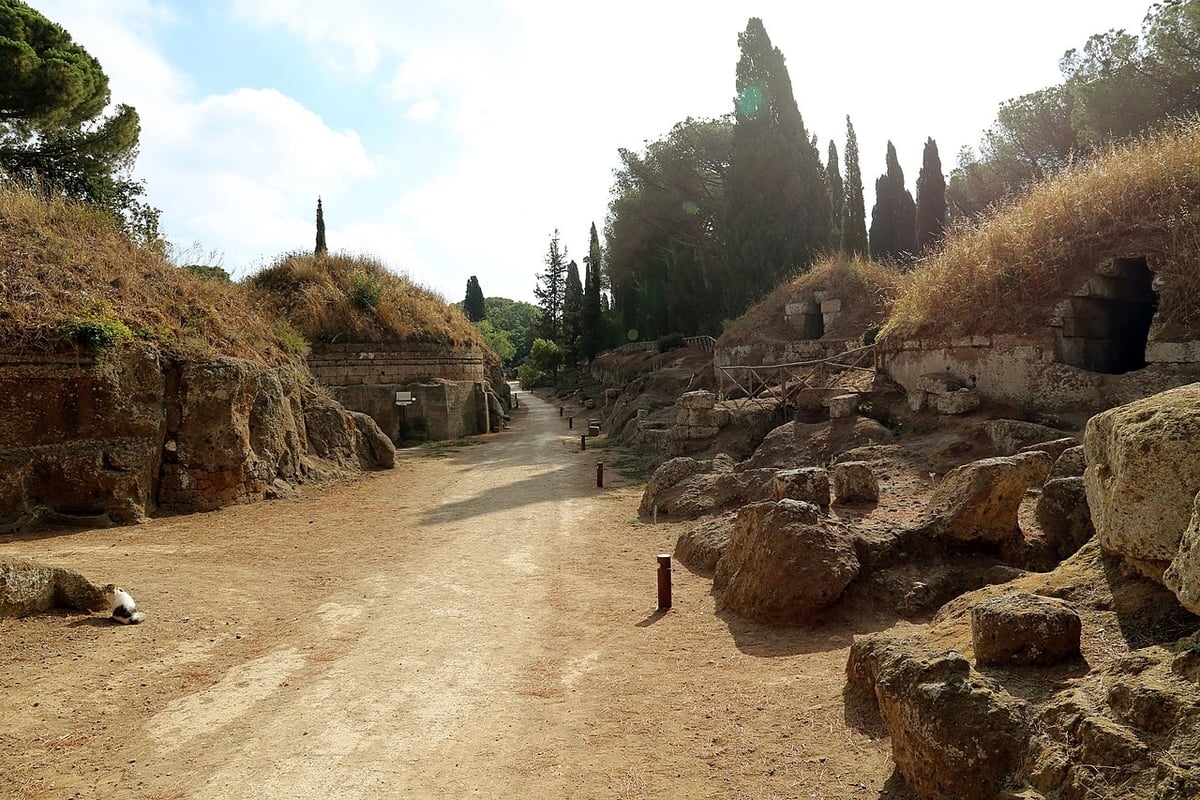
Cerveteri Necropolis
a necropolis in Caerae, Etruscan
Was in a very important Etruscan city because of trade, tomb of a single aristocratic family with a stucco relief of life with pets and mythological world. Tumuli: built to house an entire family or multiple families in death, earth covered mounds, by 6th century BCE, had better city planning with an orthogonal grid
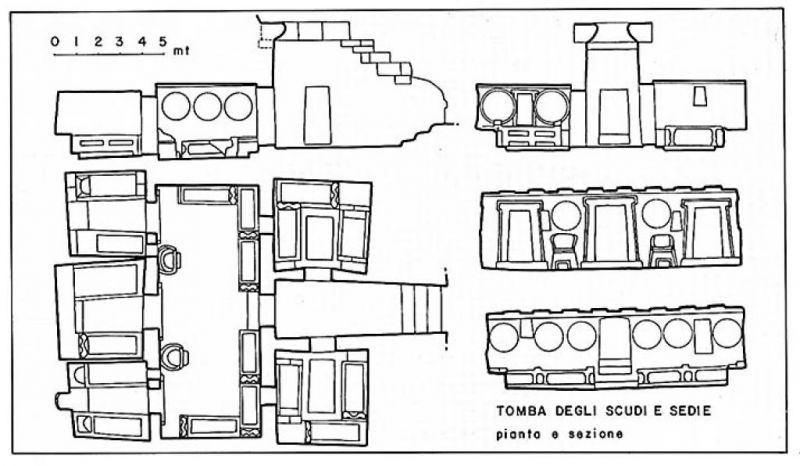
Tomb of Shields and Chairs
c, 550 BCE, Cerveteri, Etruscan
stone
Rectilinear rooms, very large and meant to resemble wood beams and furniture, chairs to step up in and people would sit in them. Axial layout, rooms not just for burial, 6 rooms and an entrance, circular engravings on wall to resemble shields, deceased lay on top of stone beds, about 19 beds total, scholars believe that pre treasure hunting the remains would be there with clothing. You’d pass by deceased remains when bringing down another, unsure if rooms relate to gender, age, or hierarchy, would’ve been painted in part, house with distinct front and back. Many things laid out in threes
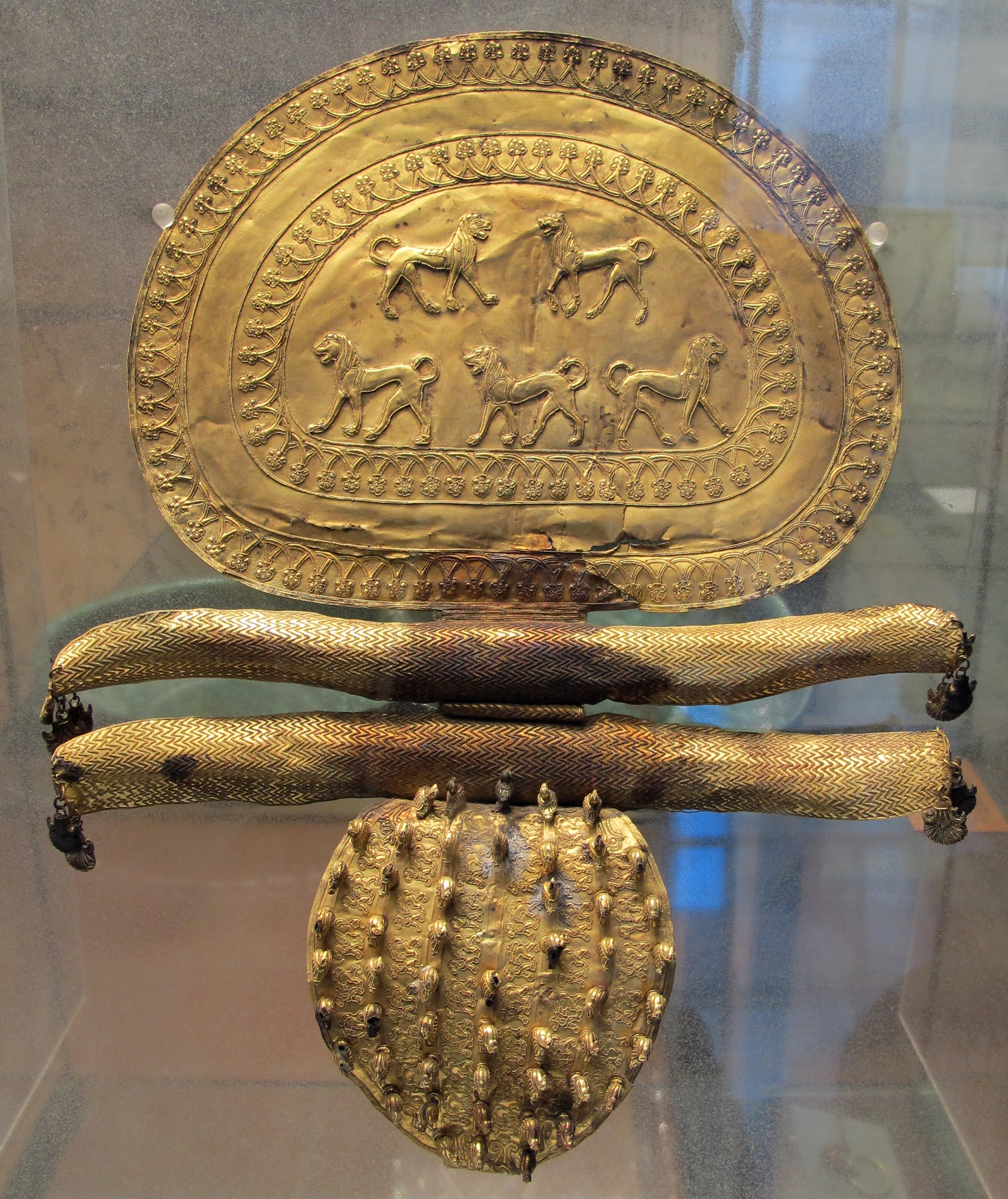
Regolini Gasslai Tomb, Fibula
c. 675-650 BCE, Cerveteri, Etruscan
gold
Another dromos tomb but unraided, young woman with jewelry on body. Fibula used on clothing on body, gold manipulated in many ways, an “orientalizing style” from Egypt. Lots of floral designs, griffins, swans, and Lions picked out to be made in Etruria by Etrsucans that had connection with golf workers from East. Very large fibula, mystified by use
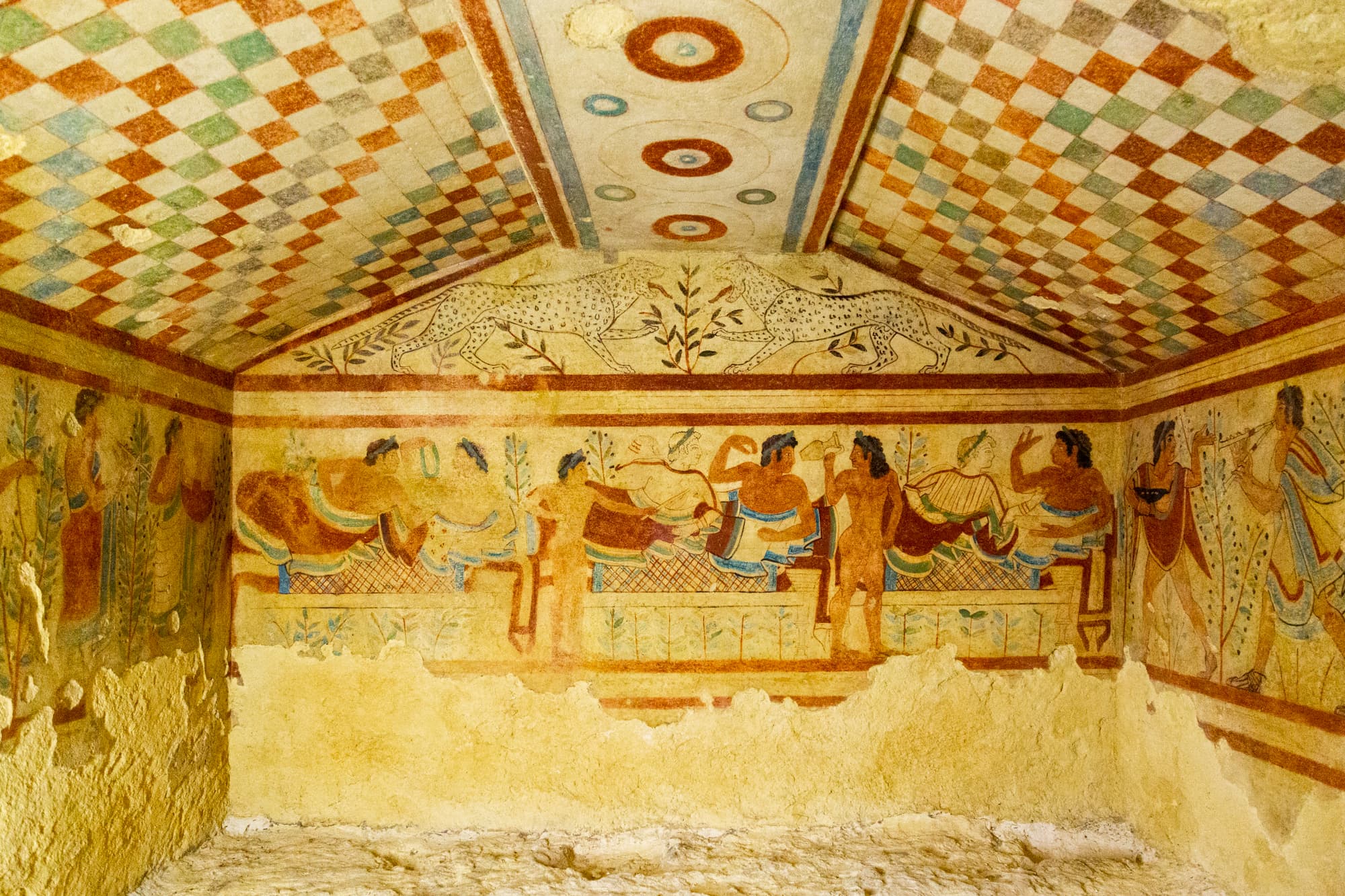
Tomb dei Leopardi
early fifth century, Etruscan, Tarquinia
fresco
Tomb of the leopards, a burial and funerary procession bringing deceased into the tomb and then having a feast and playing games, tent pattern again, lots of circles which might represent eternal life after death like the egg motif here, visited annually, leopards at the top with lots of colors. Similar to tomb of divers with figures and gendered skin tones, women are fully white with short hair bc they don’t go outside as often to work. Music and drinking, horror vacui (fear of empty spaces in the art), a fancy banquet where you are always reclining and never sitting or standing. Vegetation and more fabric patterns
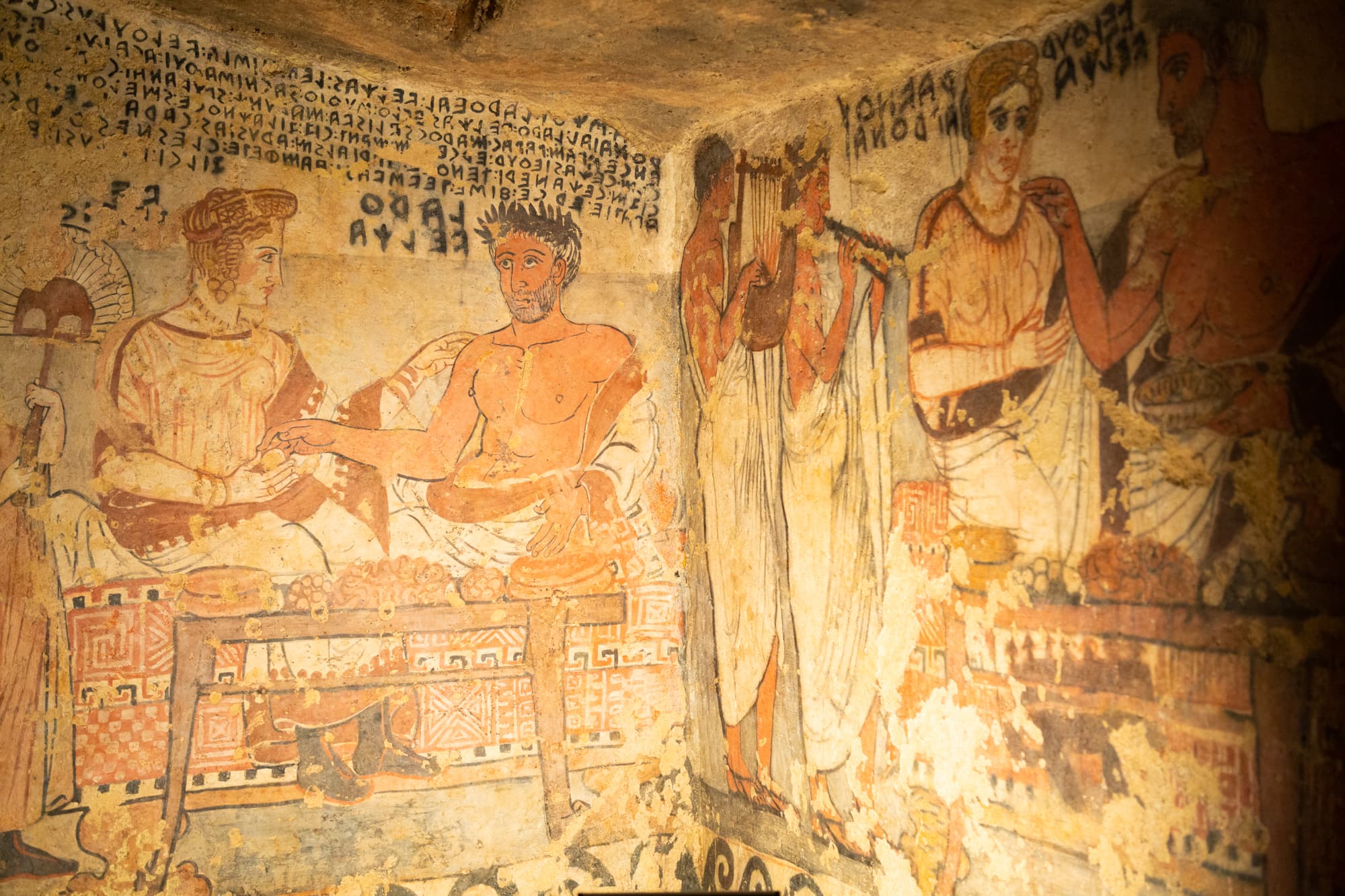
Tomb of the shields
4th century, Tarquinia, Etruscan
stone, fresco
central ceiling beam carved in stone, wall painting, no furniture but rock cut coffins. Very expressive figures, black outline makes them more cartoonish, writing like names of deceased figures, patterned fabric on bed, gendered skin tones, much sadder depiction of death
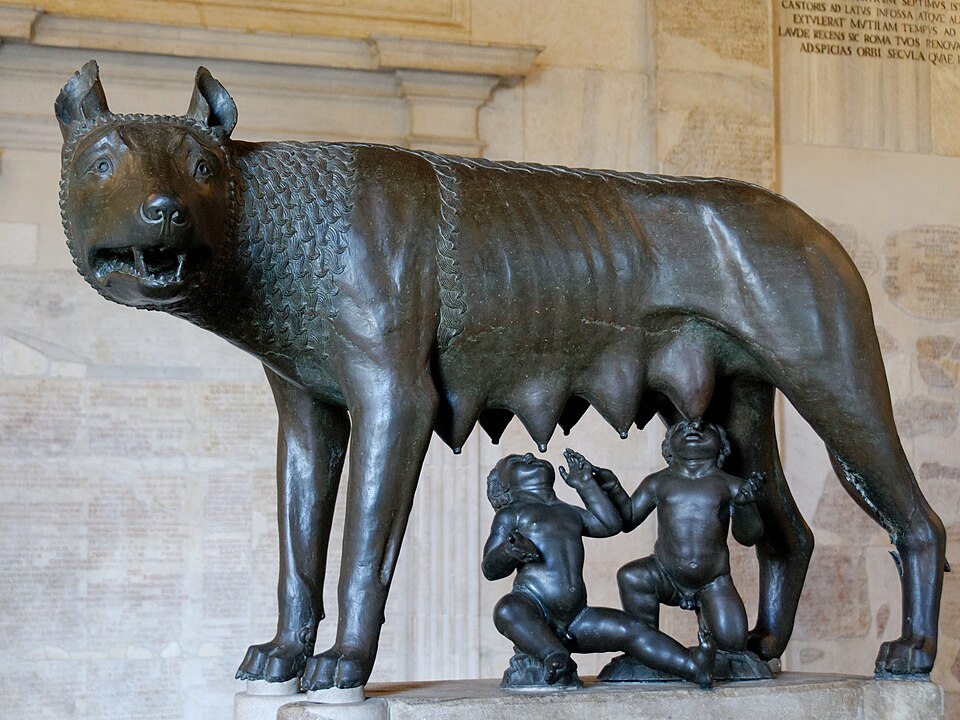
Capitoline She-Wolf
5th century BCE, Roman Republic, Rome
Bronze
Related to Remus and Romulus’ mythology that Romans date back to, such as being abandoned at a river bc mom had to become a princess after uncle tried to drown them after illegally taking the throne and the wolf coming to raise them to health before being taken in by a family that raised them officially. They founded Rome as two separate territories, fought with each other before Romulus kills Remus showing warrior culture
Stationary, disproportionate and everyone is very lean like the babies that were made later on like Renaissance cherubs
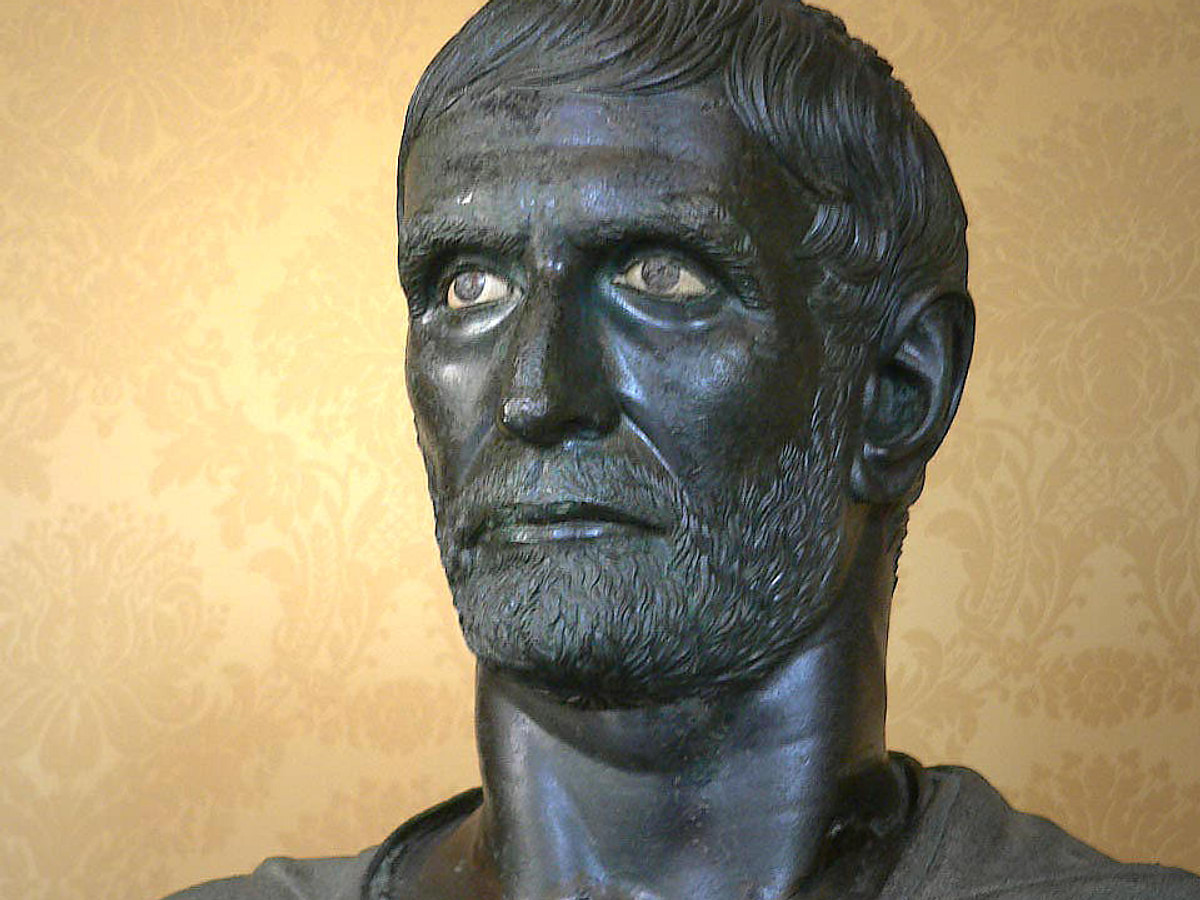
Bronze Brutus Bust
c. 300 BCE, Roman Republic, Rome
bronze
Brutus was the first leader of ancient Roman Republic who led the Etruscan revolt who was also his uncle. Just slightly facing downward, vedic, like he’s addressing people below. Emphasis on age and wisdom and nobility, eyebrows look like a laurel wrapped around his head. Source of democracy, citizens who were males only could vote magistrates into office and vote on laws. Only wealthy people can be voted in, Romans divided roles of a king into categories like war (consuls, generals), law (assemblies of voters), organization (other voted magistrates like hosting games), and diplomacy (unelected body of rich people-senate). Never had a written constitution
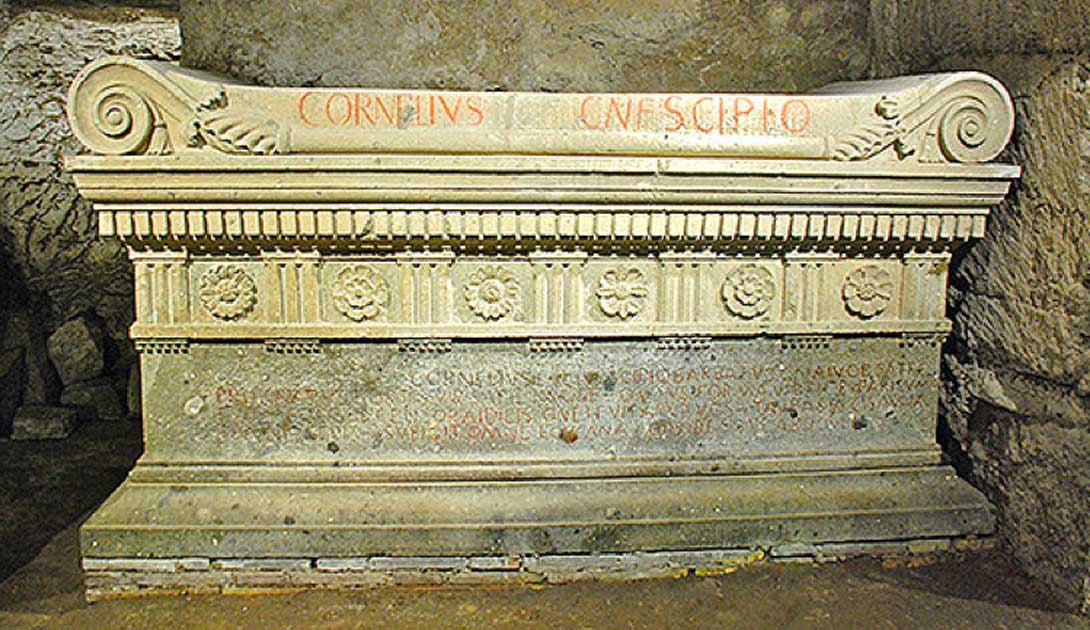
Scipiones Family Tomb & Sarcophagus of Scipio Barbatus
early 3rd century, Rome right under Via Appia, Early Rome
plaster cast, rock cut
During period of socio-economic upheaval as aristocrats relied on lineages to link to og Roman ancestors. Nearly everyone in the Scipios family was well known for war conquest and victory. late funerary culture, subterranean tomb meant for family’s patriarch who served as a consul. Family members occupy other parts of the tomb. elaborate frescos of family added later on. Axial style, large square hypogeum built into a tuff ledge. 4 main pillars divide the room, front faces the Via Appia, marble statues of people built into the tuff. Hellenistic style, sarcophagus itself is very Southern Greek with ionic scrolls, doric metopes and triglyphs, etc.
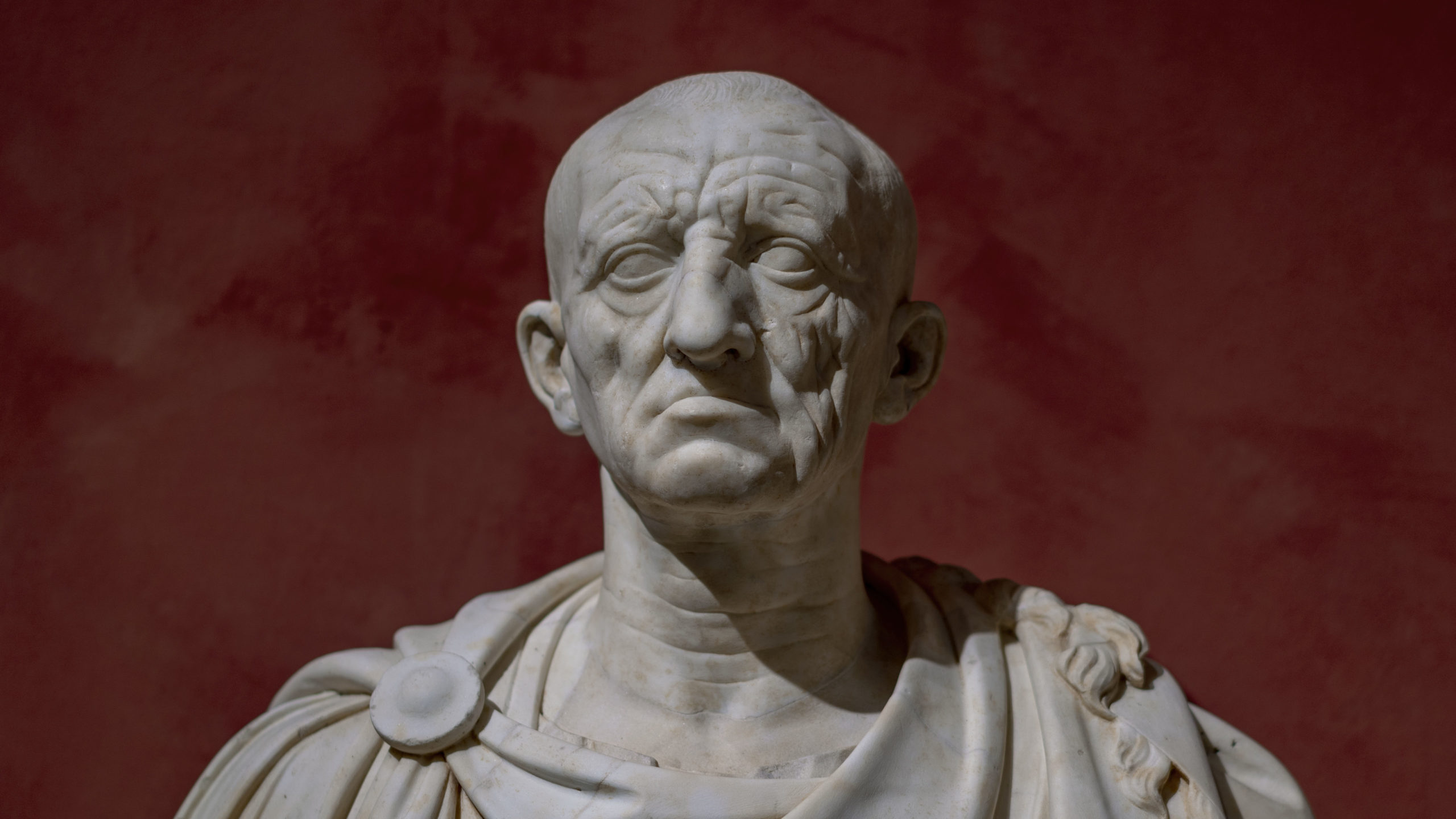
Head of a Roman Patriarch
c. 75-50 BCE, Rome, Roman Republic
marble
wrinkled and toothless and a little exaggerated but the Republic ideal to show age as wisdom and an understanding of the world. Verism- a hyperrealism that sometimes exaggerates. Basically a death mask of a notable ancestor which was important because death masks were plastered everywhere in the home and had annual parades and events celebrating the deceased or where families would wear their ancestors death mask and have to know about the person and their accomplishments from a young age. A veristic portrait, different ethos where they respected elders, exaggerated to look older for emotional purposes
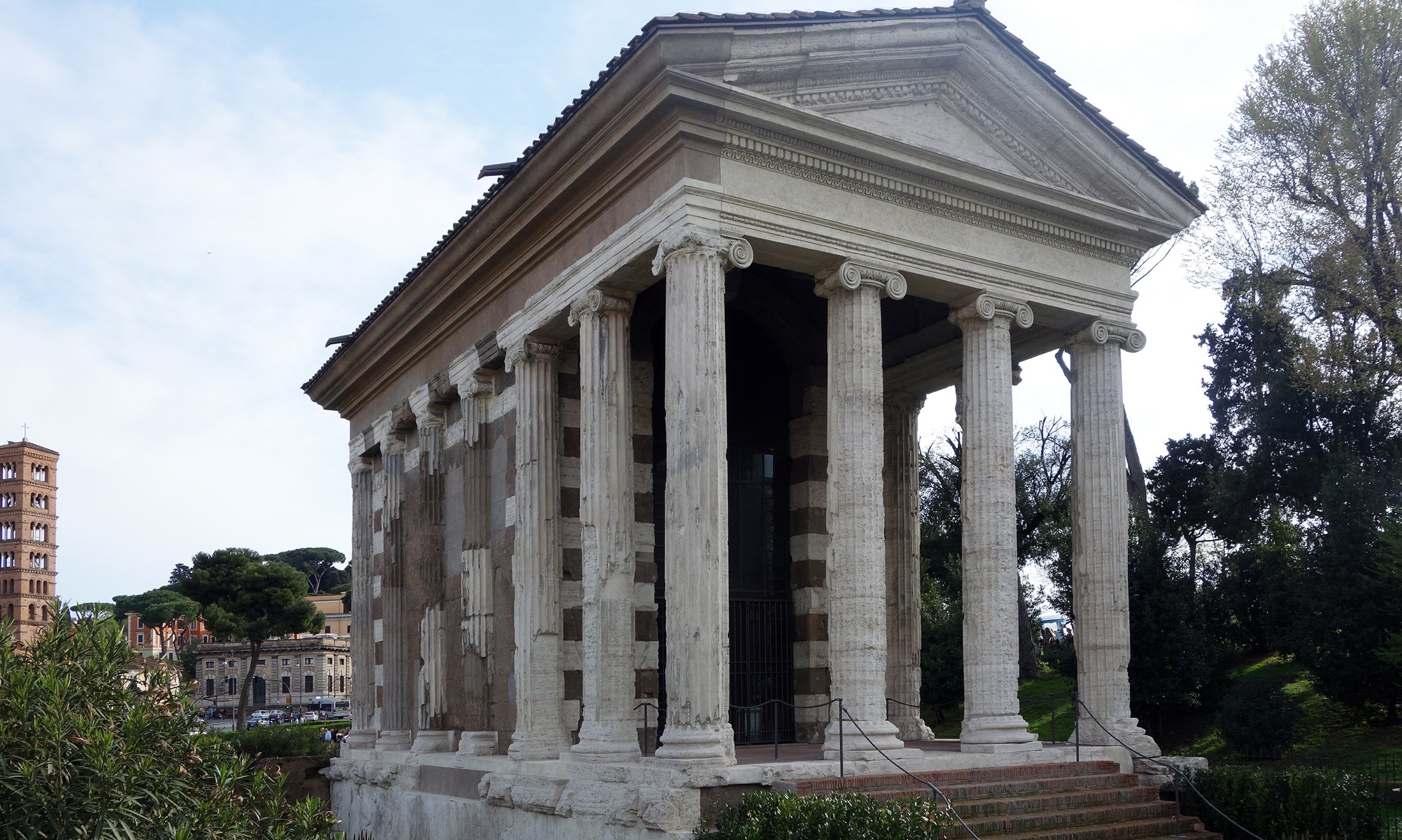
Temple of Portunus
2nd century BCE or early 1st century BCE, Rome, early Roman
engaged columns, long porch, one entryway, axial layout, mix of Greek and Etruscan. Ionic columns that are almost peripteral but actually engaged/embedded. In the forum surrounded by public buildings, outside of forum there were lots of shops on every street
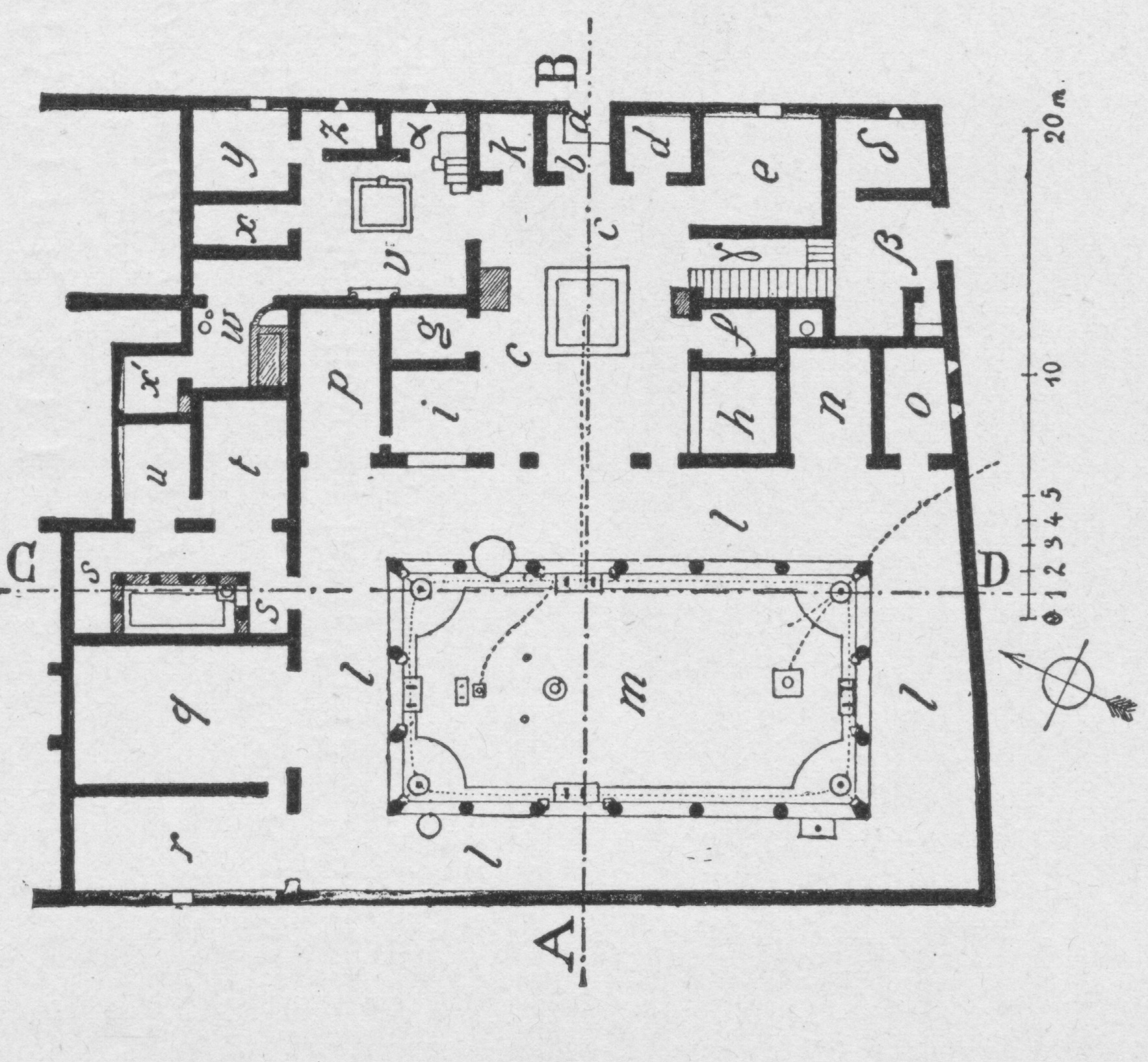
House of Vettii Floorplan
made around 2nd century BCE, buried in 79 CE, Pompeii, early Roman
owned by wealthy people originally and then most likely bought by their two slaves turned freedmen who became wealthy from the wine trade. Wealth, status, well decorated. Pompeii destroyed by Mt. Vesuvius, built on top of other building remains, garden as was common, and two atria/apiaries for water collection and to let light in, frescoes depicted stories from mythology about wealth. Frescoes survived because of the thick ash
In part, atria in wealthy houses were for business in a patron’s home for lesser people to gather around and discuss business or wealthy owner would have fed workers in exchange for their service.
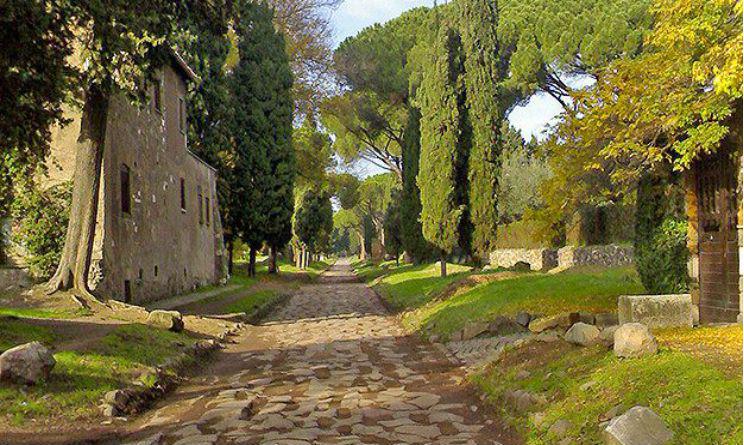
Via Appia/Appian Way
began in 312 BCE, early Roman, Rome
Began in Rome, a road that cut through mountains and went through wetlands. Mostly for military conquest but also economic by association for promoting a faster trade route, Many layers thick for stability, shock absorbance, levelling, load distribution, etc. Ditches on the side for water to run off of and through, tombs for wealthy people spread about 3-4 miles and especially at the entrance. Couldn’t bury people inside the city unless they were two and under for superstitious reasons after burying all the bodies in the marshes. Would read the tomb inscriptions aloud and bring people to life in a way
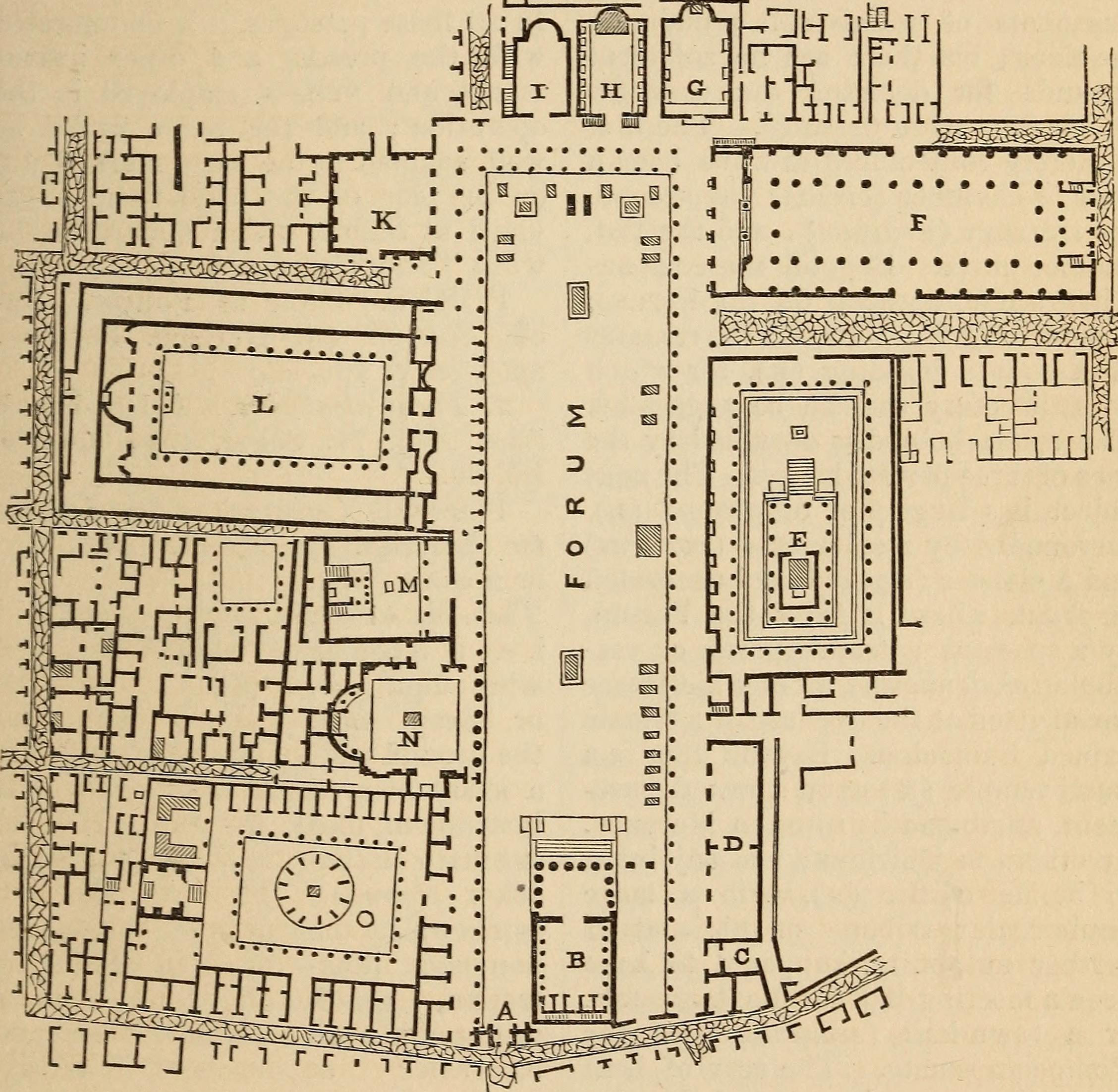
What was the urban planning of Pompeii/a Roman City like?
Pompeii Forum Plan
Pompeii, Early Roman, destroyed 79 CE, c. 500-250 BCE Rome conquering of Italy
Rome made allies and treatises stating that they owed manpower during war for an evergrowing army. Pompeii and Herculaneum were countryside. Allied to Rome in 340s BCE, firmly under Roman control as of 80 BCE. Vesuvian eruption killed around 16k people, uninhabitable
Elements of a Roman city: orthogonal/right angle street grid, large empty forum area for public meeting, houses and other urban communities, inter-connected paved roads with street crossings and water runways for sewage and to prevent flooding but also for chariots to roll through, public well water and benches, shops of all kinds everywhere especially for food because most people did not have a kitchen for fire hazards. Also had basilicas with aisles and apses to house indoor legal proceedings and banking, over time developed columns. Temples in many places too
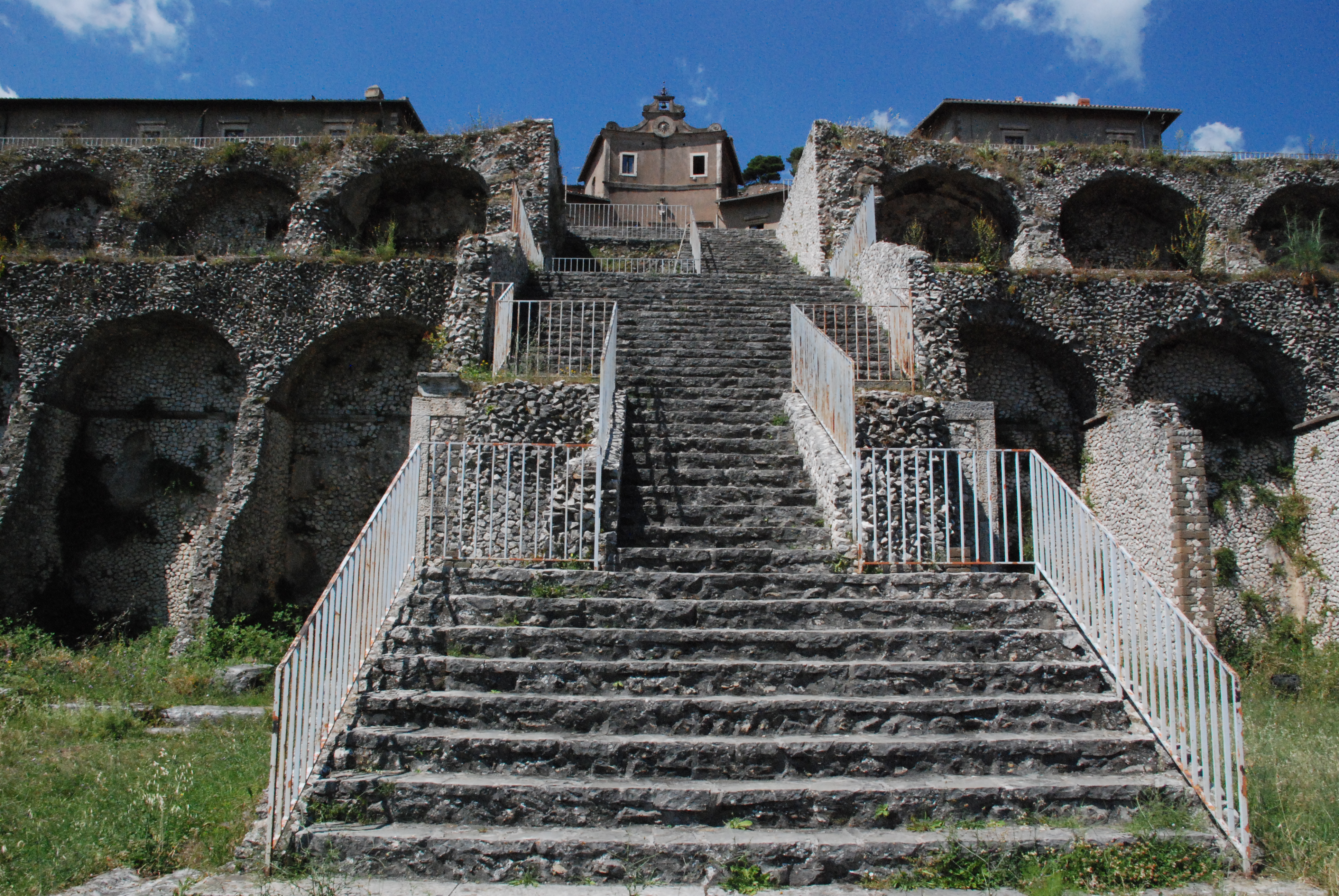
Temple of Fortuna Primigenia
2nd century, Palestrina, early Roman
stone, etc.
Axial layout, sanctuary at the very top in the center, six flights of stairs to get to it, statues of various kinds would have been in the niches, many columns, a theater at the top not for plays for but for addressing large crowds of people at religious ceremonies. Going through the effort of having to walk up there is an act of worship in itself, like a pilgrimage. Gods like Jupiter were very sky-oriented so this being on a mountain and being very large was a connection to the gods and also being able to overlook the city like a powerful symbol. Curving lines were mostly new architecturally, creating tension with the straight lines to make it look lively. At the very base is a basilica structure
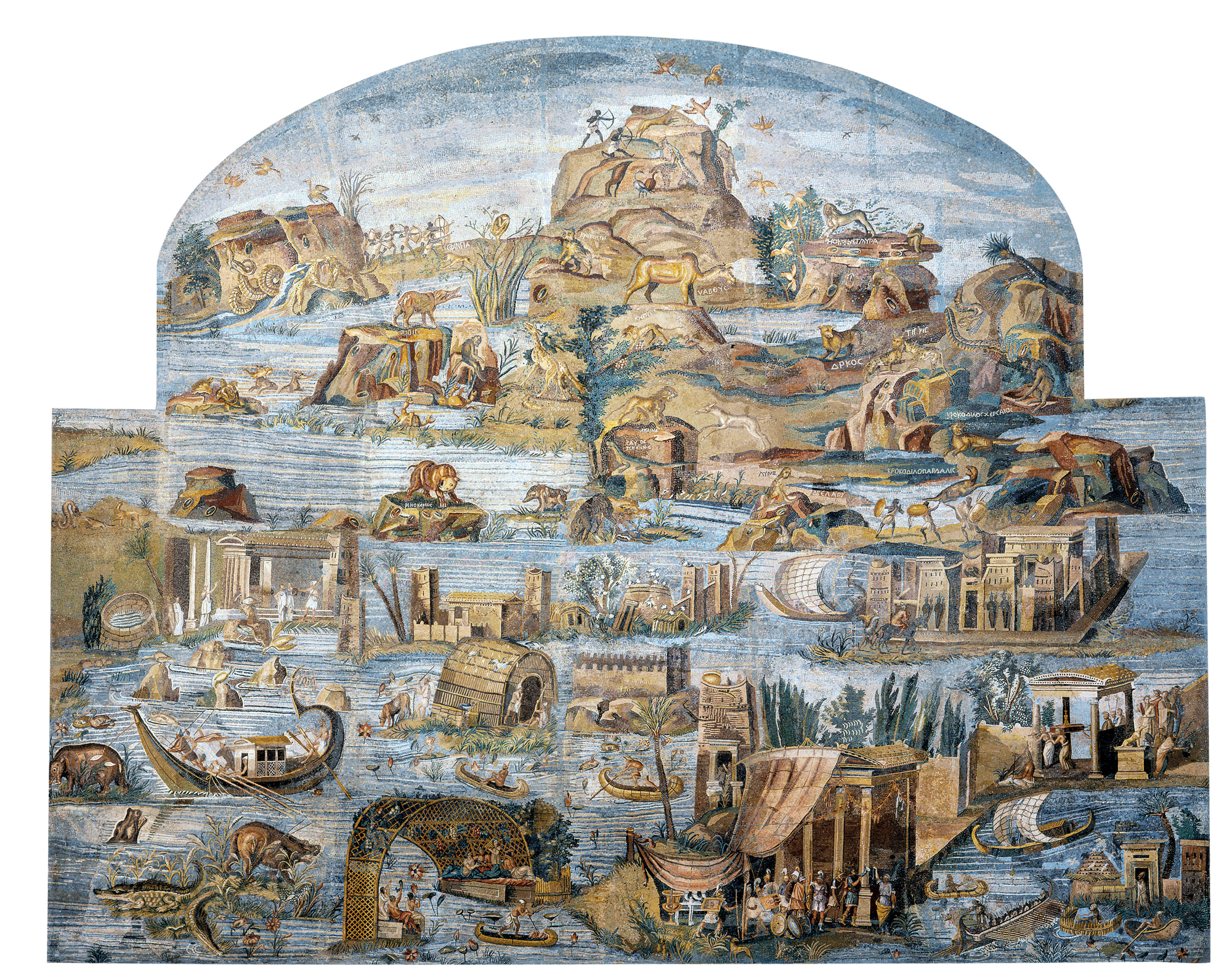
Nile Mosaic
c. 120-100 BCE, below Fortuna Temple in Palestrina, early Roman
mosaic
Egypt has not been conquered by Rome yet, but they are familiar with one another and this piece conveys that exploration and knowledge of foreign lands. Piece takes place in either a delta or marsh as evidenced by the marsh houses and reed boats, could potentially be during flood season. A chaotic composition where your eyes are drawn to the heavy bottom and kind of snake their way upwards looking over everything. There’s a scene of worship with the pharaohs and a temple, people feasting on couches, maybe a celebratory festival. Further back, you move away from civilization with more scenes of animals that have been labelled to show Roman knowledge and also scenes of hunting and invaders from South Egypt comin in uninvited. A Roman artwork showing the extent of Roman knowledge and power
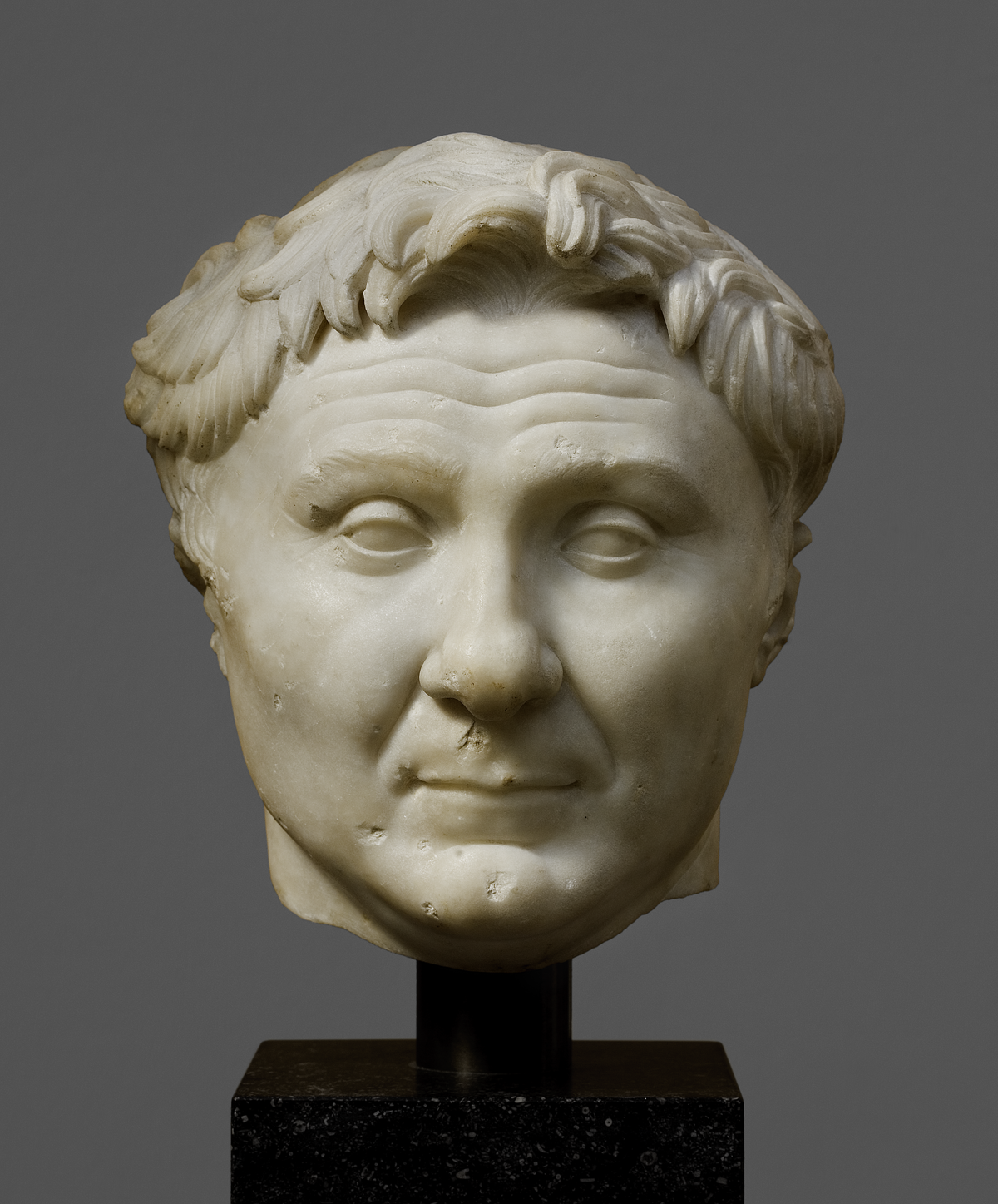
Portrait of Pompey the Great
c. 30-50 CE, Rome, Roman
Marble
Made after his death. Pompey was a consul who eradicated piracy from the Mediterranean and conquered areas in the East, incredibly wealthy and he has his own coin showing the name of either a god or minter on the obverse (heads) and on the reverse (tales) it shows the beak of a ship. Slightly younger portrait, less veristic and he looks kind like he’s smiling at viewers and far less stressed, very smooth skin and very modern looking. Styles his hair sort of like Alexander the Great with the effortless messiness. Romans melded ideas of art from Greeks and East. This was like a political campaign to show hey I’m a nice guy with good ideas.
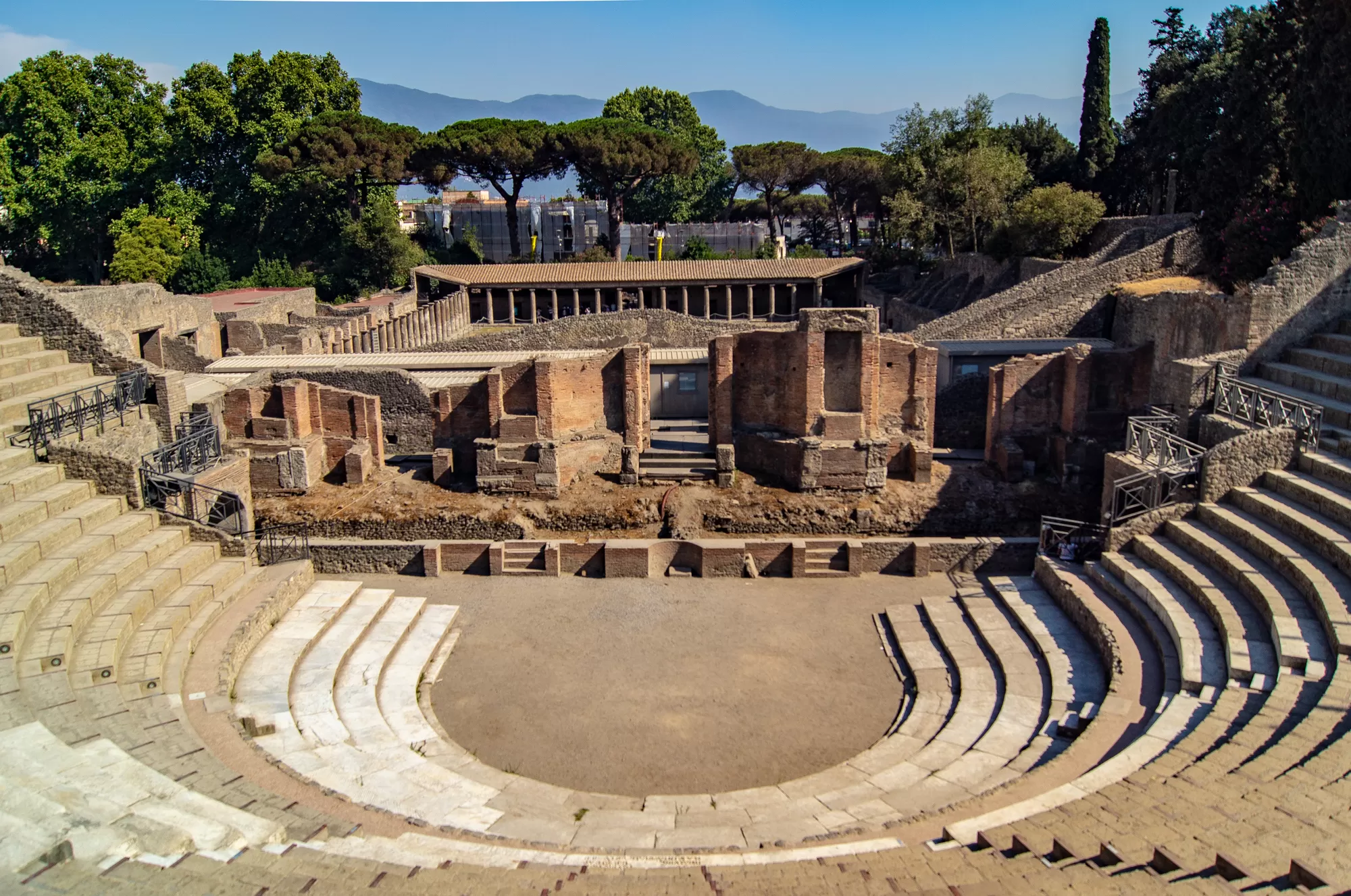
Theater of Pompey (Victory of Venus)
c. 55 BCE, Rome, Roman
cement
built for Venus as a thank you to the goddess for all of his victories and a “look at what I made for you.” It was illegal at the time to build a permanent theater area as it promoted the idea of Roman men as weak and fragile like Greek men who enjoyed theaters, instead had to be hardened for war. A temple to Venus but a Greek theater design, attached was a beautiful park.
Pompey defeated by Caesar in battle, fled to Egypt where he was then murdered
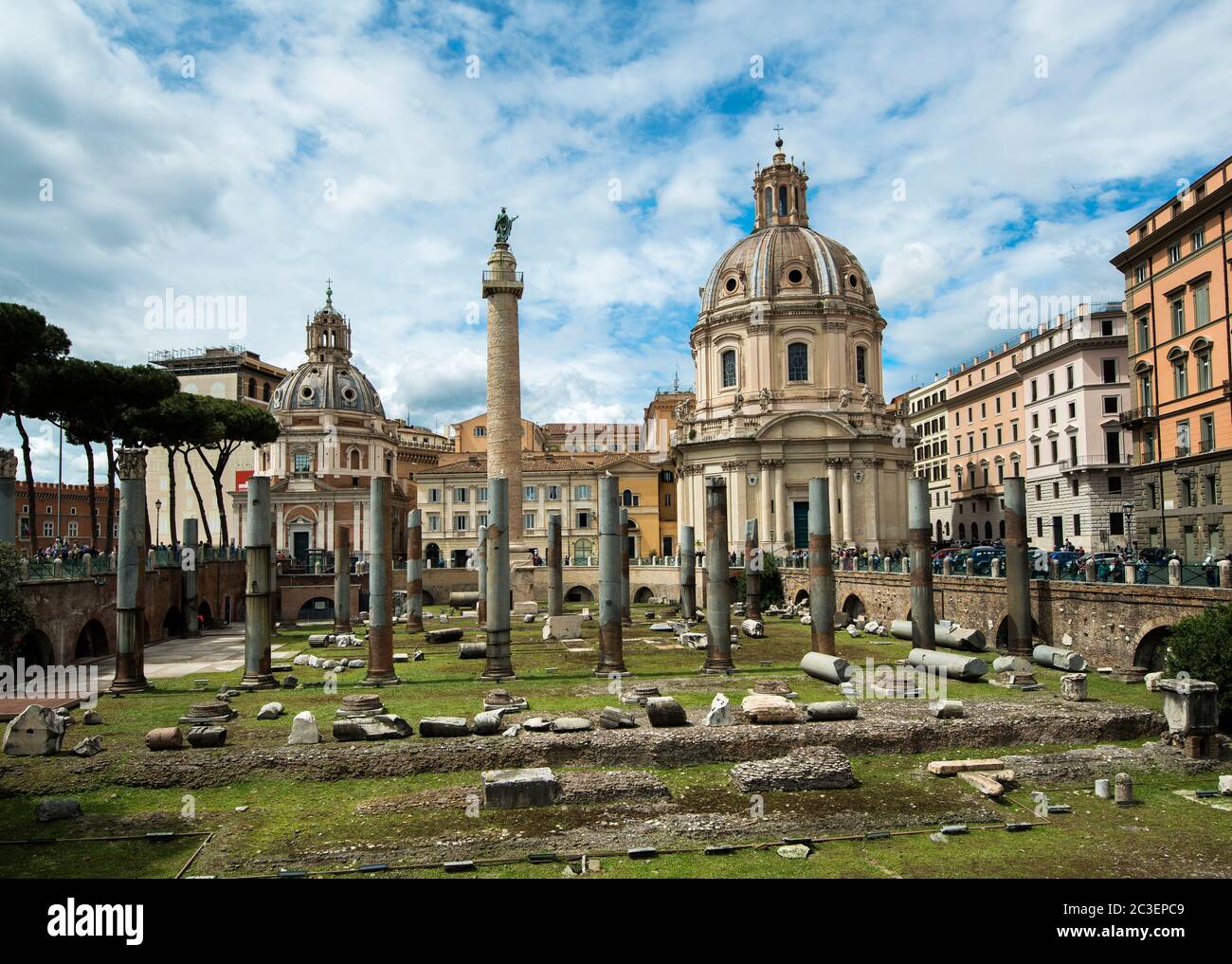
Forum Julium
46 BCE, Rome, Roman
many materials
Names it “Venus my ancestor” after immediately beating Pompey. Traced his lineage back to Romulus and Regulus who trace theirs back to Venus, a political statement made after Pompey’s theater. 44BCE Julius declared himself the ruler for life, his portraiture is more veristic and hardened unlike Pompey. Both were consuls together. The Senate killed him at the portico of Pompey at the base of Pompey’s statue on the Ides of March when his wife had a vision that he should not go, ultimate revenge as people did not want another king
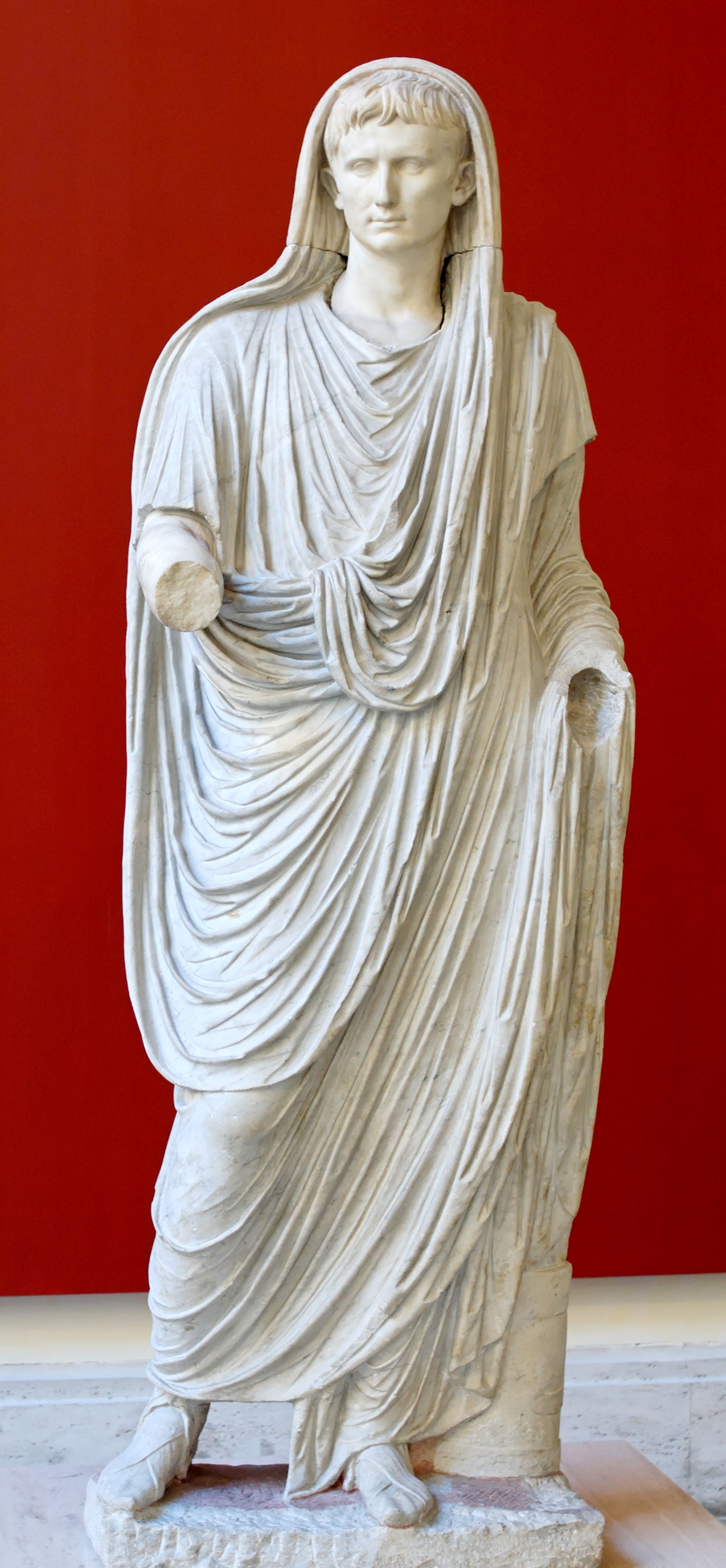
Pontifex Maximus (Augustus as High Priest)
c. 12 BCE, Rome, Roman
marble
Softer features and less hardened appearance with a more smooth brow and skin. Now has the neck of a warrior and is far less scrawny in comparison to earlier portraiture of him once he rose to power due to his time in battle and victories. Wearing the toga a priest would have, showing his connection as a religious and secular leader of Rome.
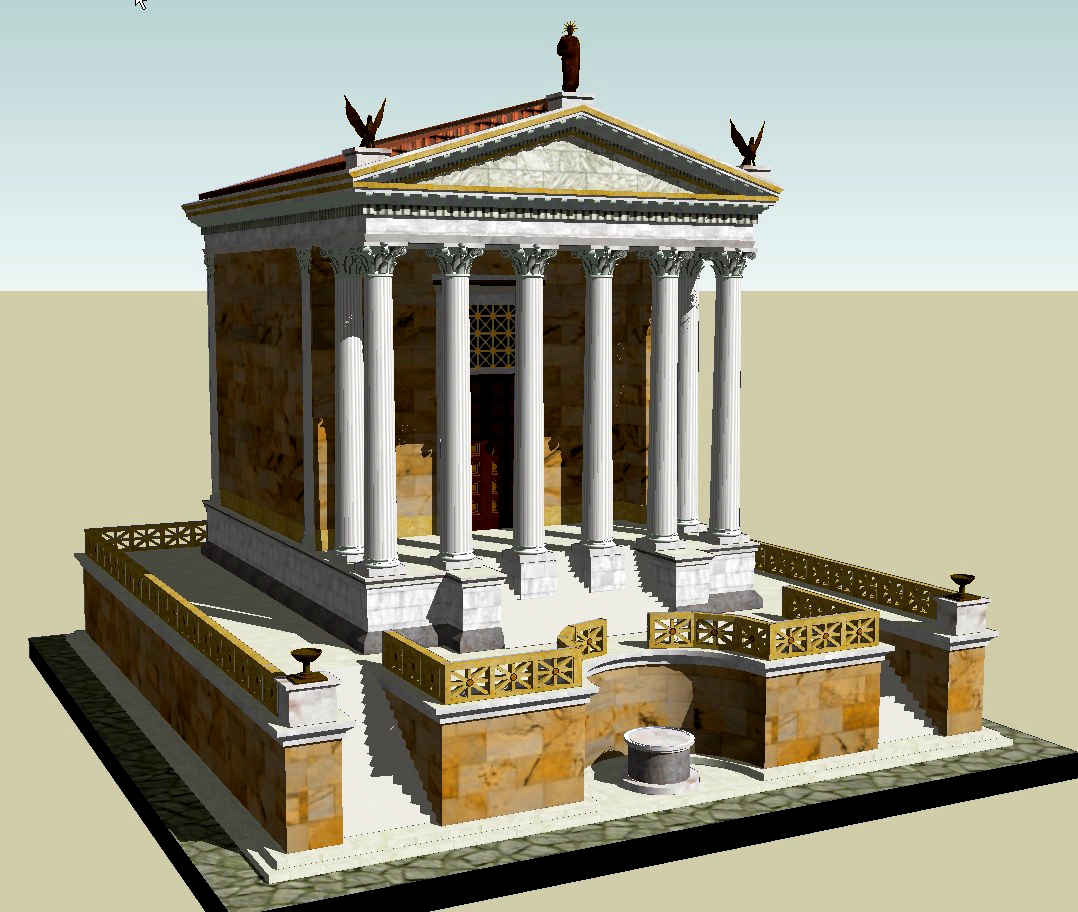
Temple to Divius Julius (Divine Caesar)
29 BCE, Rome, Roman, dedicated by Augustus/Octavian, Antony, and Lepidus
built the temple to Julius who was godlike and poses the builders as very pious. Roman style temples in the muddle of a forum, conservative architecture, going to war against the senate to bring justice to the killers of Caesar
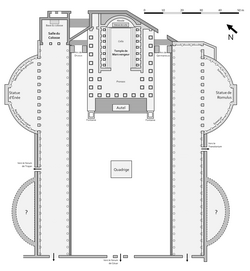
Forum of Augustus Floorplan
vowed in 42 BCE dedicated in 2 BCE, Rome, Roman
most excavations were very fragmentary, dedicated to Mars the Avenger. Columns on three sides (nod to the Greeks), corinthian columns with hellenistic style after Romans conquered Greece. Avenging Julius Caesar, Augustus has gone to war and brought back justice to murderers, won a war against Mark Antony. 4 porticos, statue of Romulus and other important leaders with Augustus and a chariot with four horses in the center harkening back to when going through a triumphal procession, would have the leader ride and be told to remember that you are not a god. Message is that he avenged Caesar and that he has refounded Rome or renewed it, known as Pater Patriae (father of the country) and Pontifex Maximus (bridge between humans and gods)
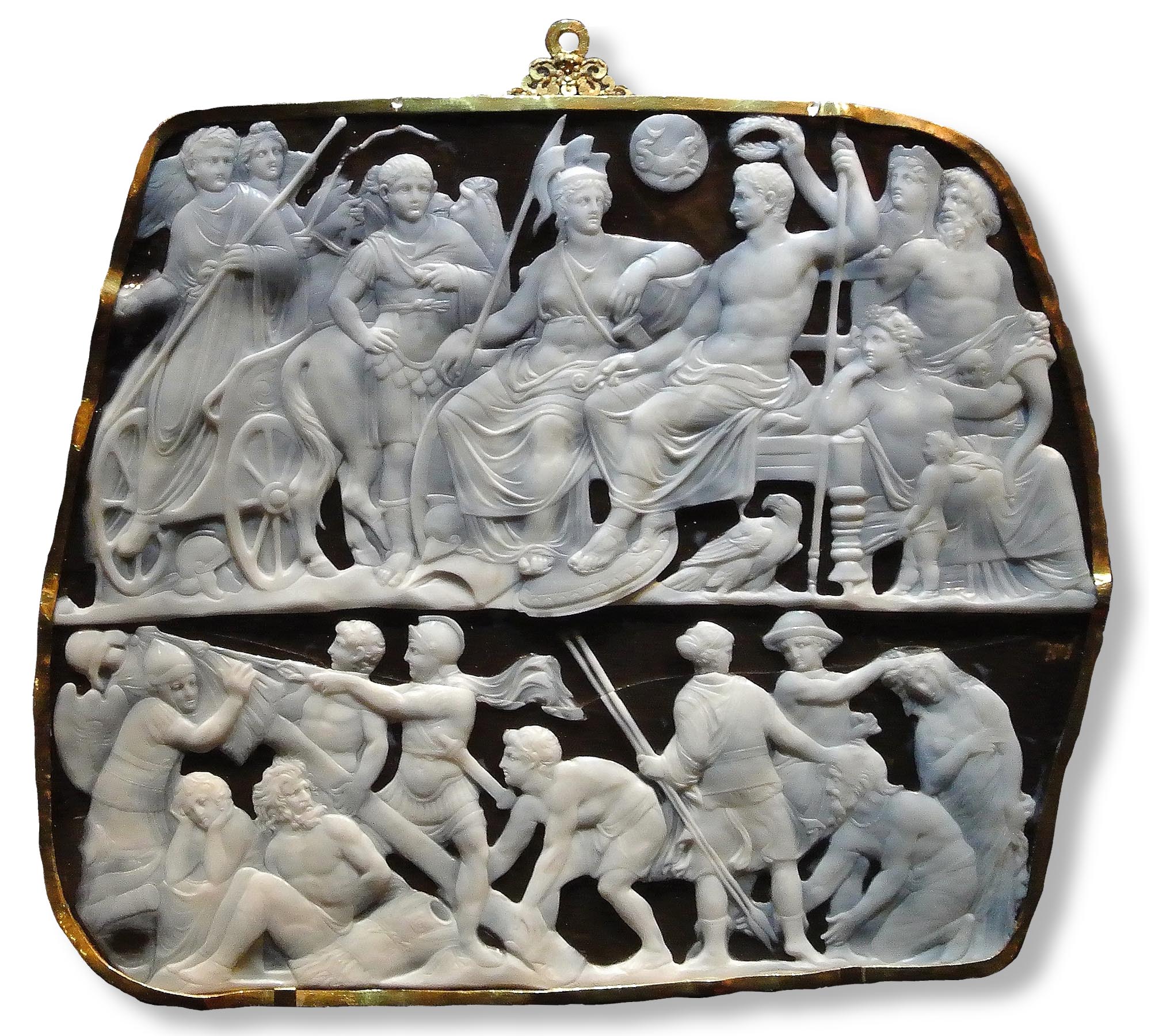
Gemma Augustea
0-25 CE, Rome, Roman
sardonix cameo in low relief (take a rock and cut into the layers to produce the background)
small, made for his family to view. 2 scenes: one holding a staff with a crown about to be placed onto Augustus by the goddess of the civil world for doing good to the state. Depicted as a ruler on earth and had divine right to rule. Has 2 of his heirs displayed too; goddess bringing victory. By showing heirs with the monarch, it preps people for their rule. Goddess of Rome and god of ocean, goddess of earth and Italy with babies showing fertility of Rome. Scene two is raising a military tropium in honor of the battle, a victory monument standard with armor of the dead non-Romans as a monument to Roman victory. Man with a tork and long hair, a barbarian displayed with other captives