Chapter 6: learning (2)
0.0(0)
Studied by 0 people Call Kai
 Learn
Learn Practice Test
 Spaced Repetition
 Match
Match Flashcards
 Knowt Play
Card Sorting
1/18

Earn XP
Description and Tags
Last updated 4:45 AM on 5/31/26
Name | Mastery | Learn | Test | Matching | Spaced | Call with Kai |
|---|
No analytics yet
Send a link to your students to track their progress
19 Terms
1
New cards
Operant Conditioning
shapes behaviour through the consequences of voluntary responses (e.g. studying to get a good grade).
2
New cards
Differences between OC & CC
CC- controlled by stimuli that PRECEDE responses. Regulates reflexive, INVOLUNTARY responses
OC- CONSEQUENCES of VOLUNTARY responses
OC- CONSEQUENCES of VOLUNTARY responses
3
New cards
Skinner
◦“Law of effect”
◦Rewarded behavior is more likely to re-occur
◦Rewarded behavior is more likely to re-occur
4
New cards
Reinforcement
◦Follows a response and makes it more likely to occur again
◦Primary vs. secondary
◦Primary vs. secondary
5
New cards
Primary Reinforcers
◦Directly influence biological needs
◦Food, warmth, removal of pain, etc.
◦Food, warmth, removal of pain, etc.
6
New cards
Secondary Reinforcers
◦Indirectly influence biological needs
◦These associations are learned and vary by species
◦These associations are learned and vary by species
7
New cards
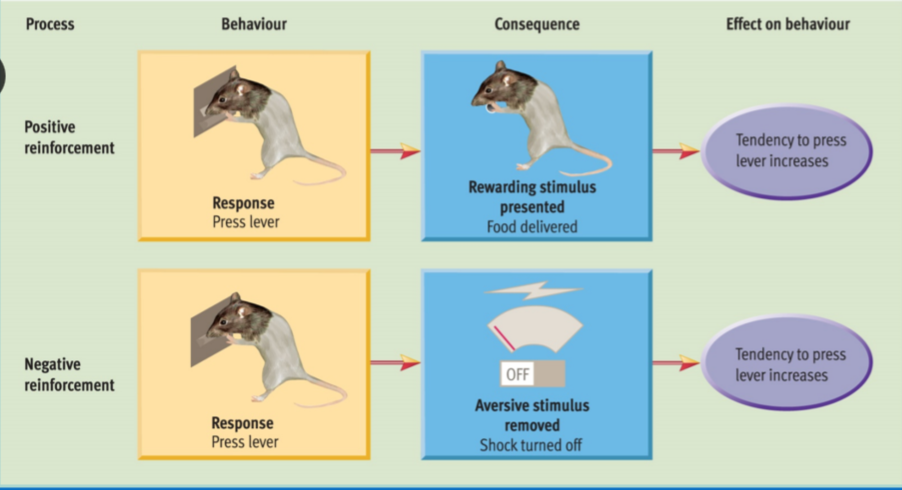
To Increase a response
◦Positive reinforcement = the response is followed by rewarding stimulus
◦Negative reinforcement = the response is followed by removal of an aversive stimulus
◦Negative reinforcement = the response is followed by removal of an aversive stimulus
8
New cards
To Decrease a response
◦Punishment
◦E.g. Inflicting pain; being laughed at
◦E.g. Inflicting pain; being laughed at
9
New cards
Postive vs Negative Reinforcement
10
New cards
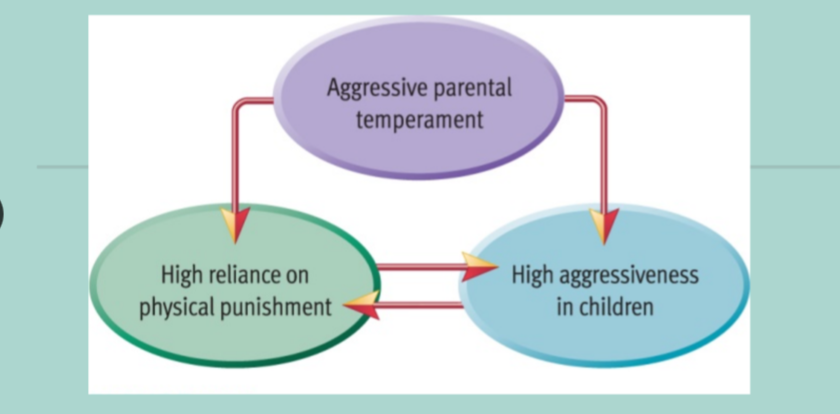
Punishment
◦Negative consequences following undesired behavior
◦Has drawbacks when used in isolation
◦Has drawbacks when used in isolation
11
New cards
Instead of Punishment
◦Remove privileges with an explanation
◦Use alongside positive reinforcement
◦Use alongside positive reinforcement
12
New cards
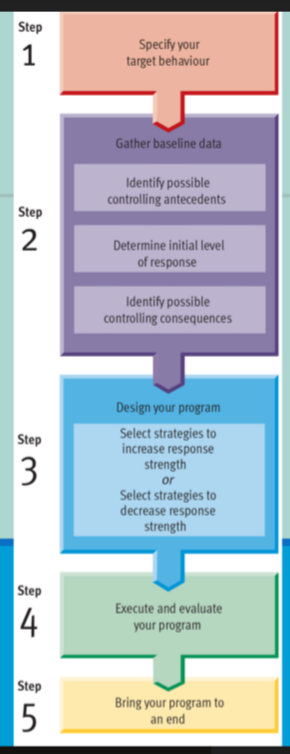
Gaining Self control
13
New cards
Self-Guided Behavioural Modification
1) Identify which behaviour(s) to change
◦Be concrete
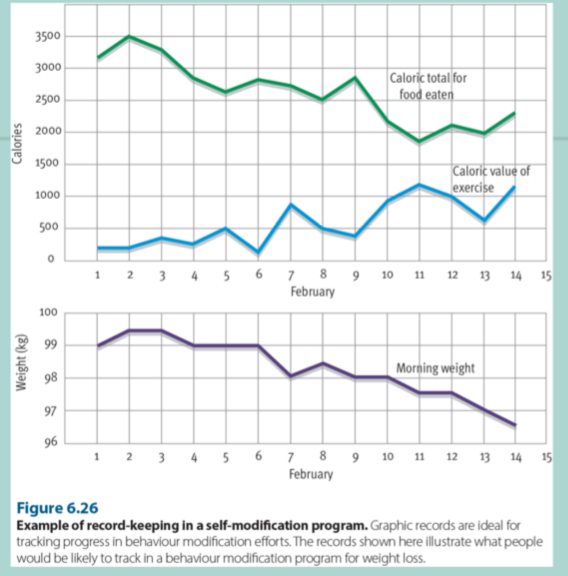
2) Monitor your current habits
◦Count/ monitor on a daily basis
3) Take a hard look at your triggers and consequences
◦Determine personally meaningful reinforcements/punishments
◦Be concrete
2) Monitor your current habits
◦Count/ monitor on a daily basis
3) Take a hard look at your triggers and consequences
◦Determine personally meaningful reinforcements/punishments
14
New cards
Self-Guided Behavioural Modification (2)
4) Begin your program!
◦The goal is to increase or decrease a specific behaviour by
manipulating situations and reward/punishment contingencies
5) Continue to track on a daily basis
◦Keep records of changes
◦Modify your plan if you aren’t getting results
◦The goal is to increase or decrease a specific behaviour by
manipulating situations and reward/punishment contingencies
5) Continue to track on a daily basis
◦Keep records of changes
◦Modify your plan if you aren’t getting results
15
New cards
Bandura’s Bobo-Doll Experiments (1961-1963)
3-5 yr. old children in 4 experimental conditions:
1) Live, aggressive model
2) Filmed, aggressive model
3) Cartoons with aggressive acts
4) No exposure to aggression (control condition)
1) Live, aggressive model
2) Filmed, aggressive model
3) Cartoons with aggressive acts
4) No exposure to aggression (control condition)
16
New cards
Bobo-Doll Result
◦Groups 1, 2 & 3 showed significantly greater no. of aggressive
acts (i.e. hits against bobo doll) than the control condition
acts (i.e. hits against bobo doll) than the control condition
17
New cards
Bandura
◦Bobo-Doll Experiments
◦ 3-5 yr. old children exposed to aggressive models
◦Learning can occur through observation and imitation (i.e. without conditioning or direct reinforcement)
◦ 3-5 yr. old children exposed to aggressive models
◦Learning can occur through observation and imitation (i.e. without conditioning or direct reinforcement)
18
New cards
Mirror Neurons
•An accidental discovery during a reaching/grasping study.
•Neural basis of imitation: these neurons fire when you see someone else do something you can (or could potentially) do.
•Why some people are die-hard sports fans.
•Basis for Empathy*
•Neural basis of imitation: these neurons fire when you see someone else do something you can (or could potentially) do.
•Why some people are die-hard sports fans.
•Basis for Empathy*
19
New cards
Observational Learning in Apes