ANP CHAP 2 LAB- Organ System Overview
 Call Kai
 Learn
Learn Practice Test
 Spaced Repetition
 Match
Match Flashcards
 Knowt Play
1/29

There's no tags or description
Looks like no tags are added yet.
Name | Mastery | Learn | Test | Matching | Spaced | Call with Kai |
|---|
No analytics yet
Send a link to your students to track their progress
30 Terms
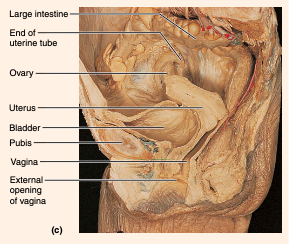
label
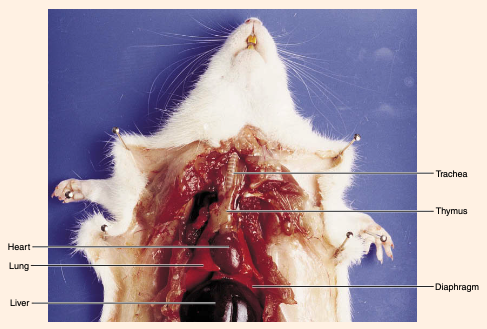
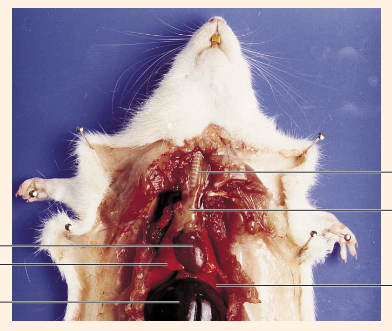
label
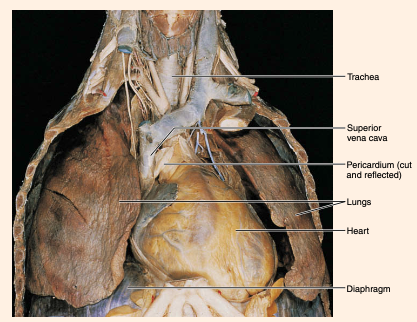
label
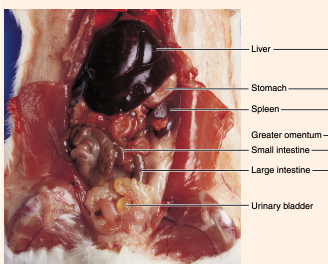
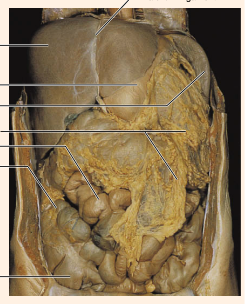
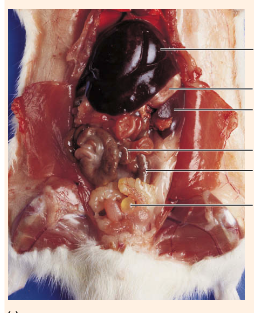
label
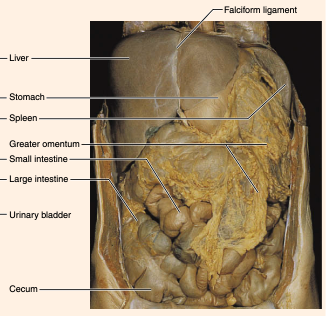
Thymus
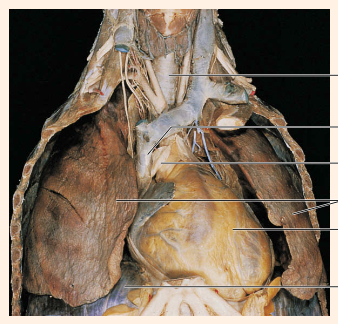
An irregular mass of glandular tissue overlying the heart (not illustrated in the human cadaver photograph).
Heart:
Medial oval structure enclosed within the pericardium
(serous membrane).
Lungs
Lateral to the heart on either side.
Trachea
Tubelike “windpipe” running medially down the
throat; part of the respiratory system.
Bronchi
Two passageways that plunge laterally into the tissue
of the two lungs.
Esophagus
A food chute; the part of the digestive system
that transports food from the pharynx (throat) to the stomach.
Diaphragm
A thin muscle attached to the inferior boundary
of the rib cage.
Stomach
A curved organ important in food digestion and
temporary food storage.
Small intestine:
Connected to the stomach and ending just
before the saclike cecum.
Large intestine
A large muscular tube connected to the small
intestine and ending at the anus.
Cecum
The initial portion of the large intestine.
Rectum:
Terminal part of the large intestine; continuous with
the anal canal.
anus
The opening of the digestive tract (through the anal
canal) to the exterior.
Mesentery
An apronlike serous membrane; suspends many
of the digestive organs in the abdominal cavity. Notice that it
is heavily invested with blood vessels and, more likely than not,
riddled with large fat deposits.
Pancreas
a diffuse gland; rests dorsal to and in the mesentery
between the first portion of the small intestine and the stom-
ach. You will need to lift the stomach to view the pancreas
Spleen
A dark red organ curving around the left lateral side
of the stomach; an organ of the lymphatic system, it is often
called the red blood cell “graveyard.”
liver
Large and brownish red; the most superior organ in the
abdominal cavity, directly beneath the diaphragm.
Kidneys
Bean-shaped organs; retroperitoneal (behind the
peritoneum).
Adrenal glands
Large endocrine glands that sit on top of
each kidney; considered part of the endocrine system.
Ureter
Tube running from the indented region of a kidney to
the urinary bladder.
Urinary bladder
The sac that serves as a reservoir for urine.
Inferior vena cava
The large vein that returns blood to the
heart from the lower body regions.
Descending aorta
Deep to the inferior vena cava; the largest
artery of the body; carries blood away from the heart.
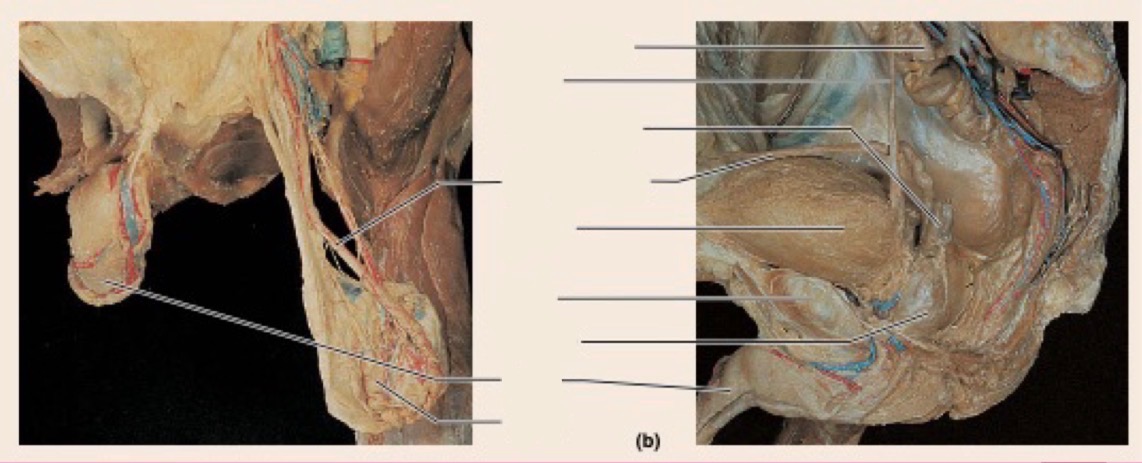
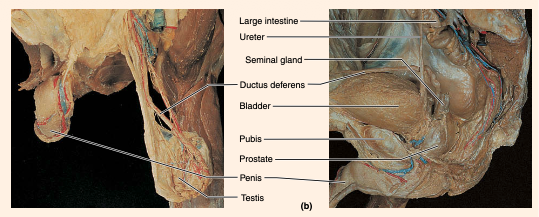
label (male)
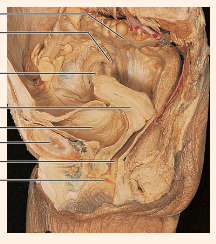
label (female)