Unit 2- Rad Bio
 Call Kai
 Learn
Learn Practice Test
 Spaced Repetition
 Match
Match Flashcards
 Knowt Play
1/118

There's no tags or description
Looks like no tags are added yet.
Name | Mastery | Learn | Test | Matching | Spaced | Call with Kai |
|---|
No analytics yet
Send a link to your students to track their progress
119 Terms
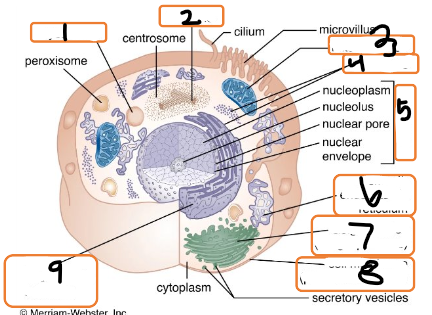
what is number1?
lysosome
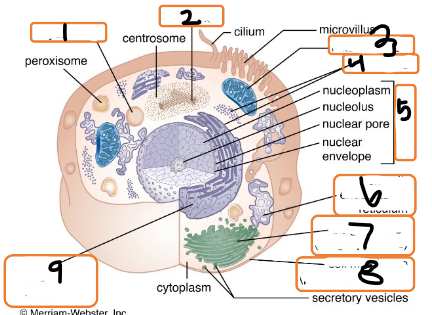
what is number 2?
centriole
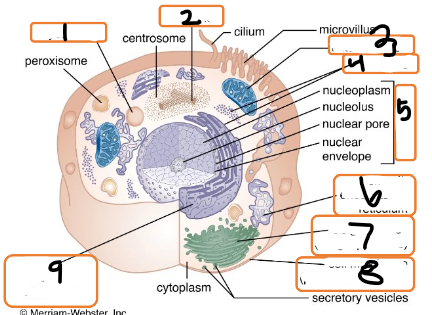
what is 3?
mitochondrion
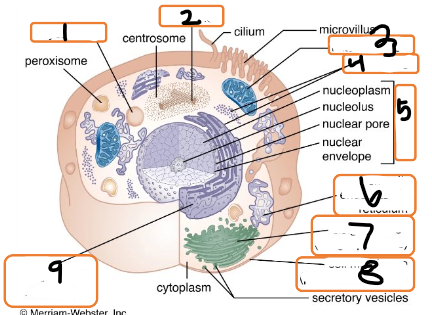
what is 4?
ribosomes
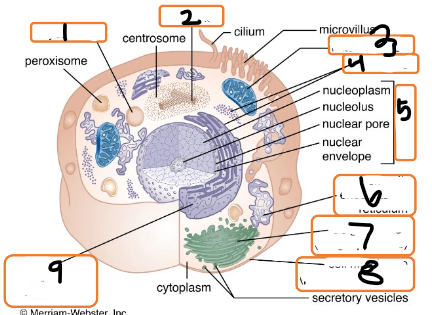
what is 5?
nucleus
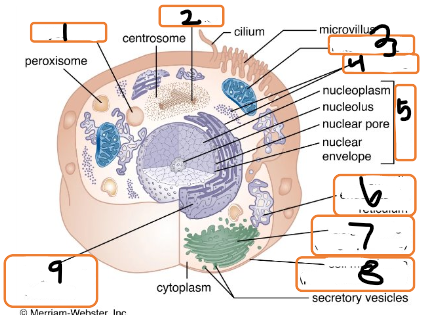
what is 6?
smooth endoplasmic reticulum
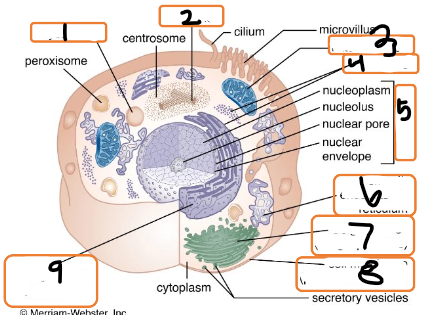
what is 7?
golgi complex or golgi apparatus
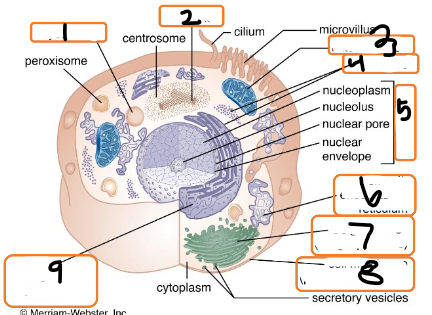
what is 8?
cell membrane or plasma membrane
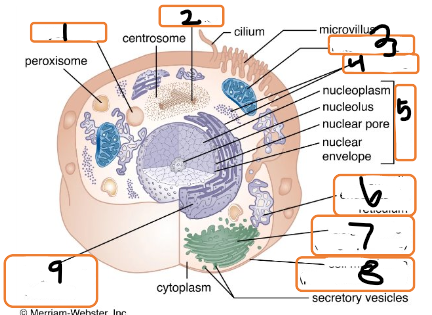
what is 9?
rough endoplasmic reticulum
function of smooth and rough endoplasmic reticulum
“highways”
communicates with outside of cell and helps with transportation
funciton of ribosomes
responsible for protein synthesis
function of mitochondria
“power generator”/”power house” of the cell
supply energy for cellular function
function of golgi apparatus (complex)
transport hormones through the cell and into the blood stream
function of lysosome
“garbage bags”
breakdown large or unwanted molecules
function of centriole
main organizing and regulator controls cell phases
function of cell membrane
allows small molecules and water in and out of the cell
what will determine the degree and nature of the response
the atoms & molecules that radiation interacts with
radiation interacts at the ___ level
atomic
chain of development
atom→molecule→macromolecule→organelle→cell→tissue→organ→organ system→organism
__ interaction gives highest dose to techs, while __ gives highest dose to patients
compton; photoelectric
60% of the body is (most abundant)
hydrogen
25.7% of the body is
oxygen
the body is made primarily of
water (hydrogen & oxygen)
when radiation interacts with the body, it reacts with what element?
water
what are the 5 principal types of molecules in the body?
water
proteins
lipids-fats
carbs
nucleic acids
what is the simplest & most ABUDANT INORGANIC compound in the body?
water (does not contain carbon)
Roles of water in the human body (6)
Provides form and shape
Dissolves acids, bases, salts and chemical substances
Functions as a transport vehicle
Maintains body temp
Cushions vital organs
Lubricates digestive systems and joints
what are the building blocks of cells?
proteins
When are proteins formed?
when a sequence of amino acids connected by peptide bonds combine into long, chainlike molecular complexes (macromolecules)
Arrangement of amino acids determines what?
specific function & type
protein structure is
CHONT
what are proteins essential for?
growth
construction of new body tissues
repair of injured or weakened tissues
what is the structural part of the cell membrane
lipids
lipids structure
CHO
Lipids are composed of
2 types of molecules:
glycerol
fatty acids
functions of lipids
long-term stroage of energy
insulate & protect
support organs
assist w/ growth & development
lubricate joints
assist in digestion
lipids make up what percent of cell
2%
carbs are also called
saccharides
carbs structure
CHO
carbs are
starches & sugars
function of carbs
short-term energy storage
cell shape & stability
simple carbs
monosaccharide
complex sugar
disaccharide
examples of monosaccharide
glucose
fructose
galactose
examples of Disaccharides
sucrose
maltose
lactose
2 types of nucleic acids
DNA & RNA
DNA (deoxyribonucleic acid)
nucleus of the cell
double stranded macromolecule
command/control for function
what contains all the hereditary information of a cell?
DNA
what is the MOST radiosensitive target molecule
DNA (has all info that a cell needs in order to function)
RNA (ribonucleic acid)
cytoplasm of cell
long, single-stranded chain of cells
what helps DNA translate information?
RNA
2 types of RNA
messenger RNA (mRNA)
transfer RNA (tRNA)
chromosomes
Tiny rod-shaped bodies; only visible during Mitosis (cell division)
number of human somatic cells
46
number of human reproductive cells
23 pairs
__ composes chromosomes
DNA
__ compose DNA
genes
__ compose genes
bases
what have unique sequence of bases – info responsible for cell activity and development and all hereditary information
genes
mature cells are ___
highly specialized
cells need what 3 things?
source of energy
oxygen to break down food
water to transport substances
living contents of a cell surrounding by plasma membrane
Protoplasm
bulk of cell; structure, mass, & support
cytoplasm
center of cell; contains DNA
nucleus
__ is much more sensitive than cytoplasm
nucleus
what are the 2 most abundant atoms in the body?
hydrogen is #1, oxygen is #2
cell proliferation (division)
act of a single cell or group of cells reproducing & muliplying in number (cell division)
somatic cells go through what cell division
mitosis (46 chromosomes)
genetic (sperm & ova) go through what cell division
meiosis (2 pairs of 23 chromosomes)
somatic cells overview
all cells except sperm & ova
damage affects ONLY exposed individual
genetic cells overview
sperm & ova ONLY
damage can affect offspring
what are the 4 steps of cellular life? (interphase)
G1 phase
S phase
G2 phase
M phase
*period of growth between cell division
G1 phase
pre DNA; cell growth
S phase
DNA replication/synthesis (2 identical daughter molecules are formed)
G2 phase
post DNA synthesis/prepare for mitosis- production of RNA & proteins
M phase
mitosis & cytokinesis
what is the longest phase & period of growth?
interphase
least radiosensitive time (phase)
S
most radiosensitive time (division) & more susceptible to damage
mitosis (M phase)
Prophase (mitosis)
Nucleus enlarges
DNA more prominent/noticeable & takes structural form
Centrioles migrate to opposite side of cell & form mitotic spindle
Nuclear membrane disappears
metaphase (mitosis)
Mitotic spindle forms between centrioles
Chromosomes appear & line along the equator of the nucleus
Critical time for damage
Mitosis can be stopped ONLY during what phase?
METAPHASE (chromosomes can be studied for radiation induced damage)
map of chromosomes
karotype
Anaphase (mitosis)
Each chromosome splits at center
The halves of the chromosomes migrate towards spindles
Telophase (mitosis)
Chromosomes disappear into a mass of DNA
cytokinesis occurs
cytokinesis
nuclear membrane and cytoplasm both divide into two
Cell division is now complete
two daughter cells appear as parent and contain exact genetic material
Meiosis
cell division that reduces the chromosome number by half, creating four genetically unique haploid gametes (sperm and egg cells)
reproduction!!!
instant death
massive influx of energy into cells (disrupting form & structure of DNA)
DNA then breaks up & cell proteins coagulate, killing the cell
apoptosis (interphase death)
cells die during interphase w/o attempting division
mitotic (genetic) death
Reproductive Death
Permanent loss of ability to reproduce
Cell continues to synthesize proteins, death then occurs
Damage not able to be transmitted to future generations
mitotic delay (division delay)
Cell doesn’t divide on time
Disrupts ratio of those normally dividing and those not
Cells recover from delay and proceed (more will be in mitosis at one time)
Cause unknown
interference of function 2 types:
improper function= serious impairment
cease of function= cell death
reproductive death
Doses of x-rays about 1 – 10Gy
Permanent loss of ability to reproduce
Cell continues to synthesize proteins
Damage not able to be transmitted to future generations
interference of funcion
affects the ability to divide, normal cell function and be impaired
Repair enzymes can fix damage, cell continues to function
5 outcomes after irradiation
instant death
apoptosis (interphase death)
mitotic (genetic) death
mitotic delay (division delay)
interference function
molecular damage IS reversable!!
can be mended through repair enzymes & regeneration of cells & tissues
5 Factors that molecular repair depends on:
dose
dose rate
cell sensitivity
cell age
mitosis
sensitivity of a cell to radiation is determined by__
maturity
function role
immature cells are called
undifferentiated, precursor, or stem cells
law of bergonie & tribondeau
cells are most sensitive when they are immature, undifferentiated, & rapidly dividing