Psychology of Aggression
 Call Kai
 Learn
Learn Practice Test
 Spaced Repetition
 Match
Match Flashcards
 Knowt Play
1/19

There's no tags or description
Looks like no tags are added yet.
Name | Mastery | Learn | Test | Matching | Spaced | Call with Kai |
|---|
No analytics yet
Send a link to your students to track their progress
20 Terms
Lorenz
instinctive drive, hydraulic model, internal accumulation
Instinctive Drive
aggression is a biological need that accumulates over time
- hunger or sex
The Hydraulic Model
aggressive energy acts like pressure in a steam engine
- if it goes unreleased; it will explode
Internal Accumulation
if an appropriate stimulus to release aggression is not prsent, the desire to fight will increase
- ex. fighting a rival or enemy
Freud
repression model, safety valve, displacement, sublimation
Repression Model
aggression is a human drive
- energy can accumulate towards a particulr goal or drive
Safety Valve
emotions build up and need to be expressed or released
- if emotions are continually suppressed, leads to emotional explosion
Sublimation
mature defense mechanism
- socially unacceptable impulses are redirected into socially constructive and mature healthy behaviors
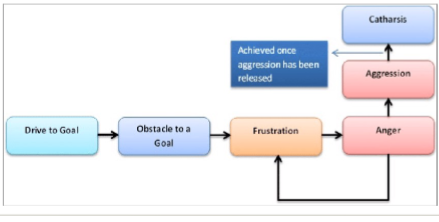
Catharis: Verona and Sullivan
heart rate declines following aggressive responding
- decline in heart rate predicted subsequent and escalated aggression
Catharsis: Twadarski
participants instructed to visualize aggressive retaliation for injustices
- aggressive fantasizing amplifies subsequent aggressive inclinations
Catharsis: Kristen and Greitemeyer
violent video game players strongly believe in catharsis
- mood improved after playing violent video games
- mood improvement didnt alter violent attitudes
- violent video games increased hostility
Personality and Social Psychology Theories
aggression can be normal responses to threats
- violence is not socially acceptable
- aggressive prone personalities exist
Clinical Psychology Theories
some aggression is normative (ex. play fighting)
- aggressive disorders are pathological
- disrespect for others rights and safety
- disregard for social norms
Neuroscience and Biological Understandings
threat responses and HPA axis
- escalated aggressive behaviors are maladroit
- species typical and normative aggression has normative repertoire
Berkowitz
impulsive aggression is caused by aversive events which produce negative effect
- ex. pain, frustration,uncomfortable heat
Bandura
rewards and vicarious observation of other’s rewards determines the decisions to aggress
Tedeschi and Felson
instrumental tool to achieve goals
- ex. obtaining rewards, securing justice, establishing social identity
Rowell Huesman
aggression is one of many behavioral choices in a social repertoire of behavior
- rooted in cognitive schema, mapping, and script/ scenario assesmment
Zilman
arousal is the origin; interacts with environmental stimuli
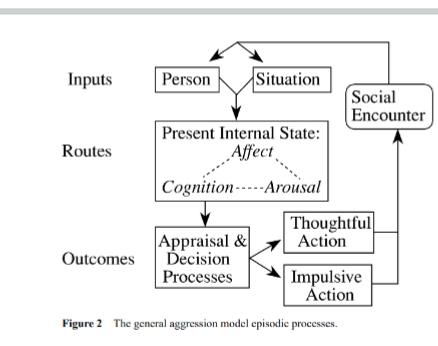
General Aggression Model (GAM)
personal factors interact with environment
- personal and environmental factors lead to internal events