Molecular Genetics Techniques: DNA, Cloning, PCR, and Blotting Methods
 Call Kai
 Learn
Learn Practice Test
 Spaced Repetition
 Match
Match Flashcards
 Knowt Play
1/27

There's no tags or description
Looks like no tags are added yet.
Name | Mastery | Learn | Test | Matching | Spaced | Call with Kai |
|---|
No analytics yet
Send a link to your students to track their progress
28 Terms
What is gene cloning?
The process of making multiple copies of a gene using vectors.
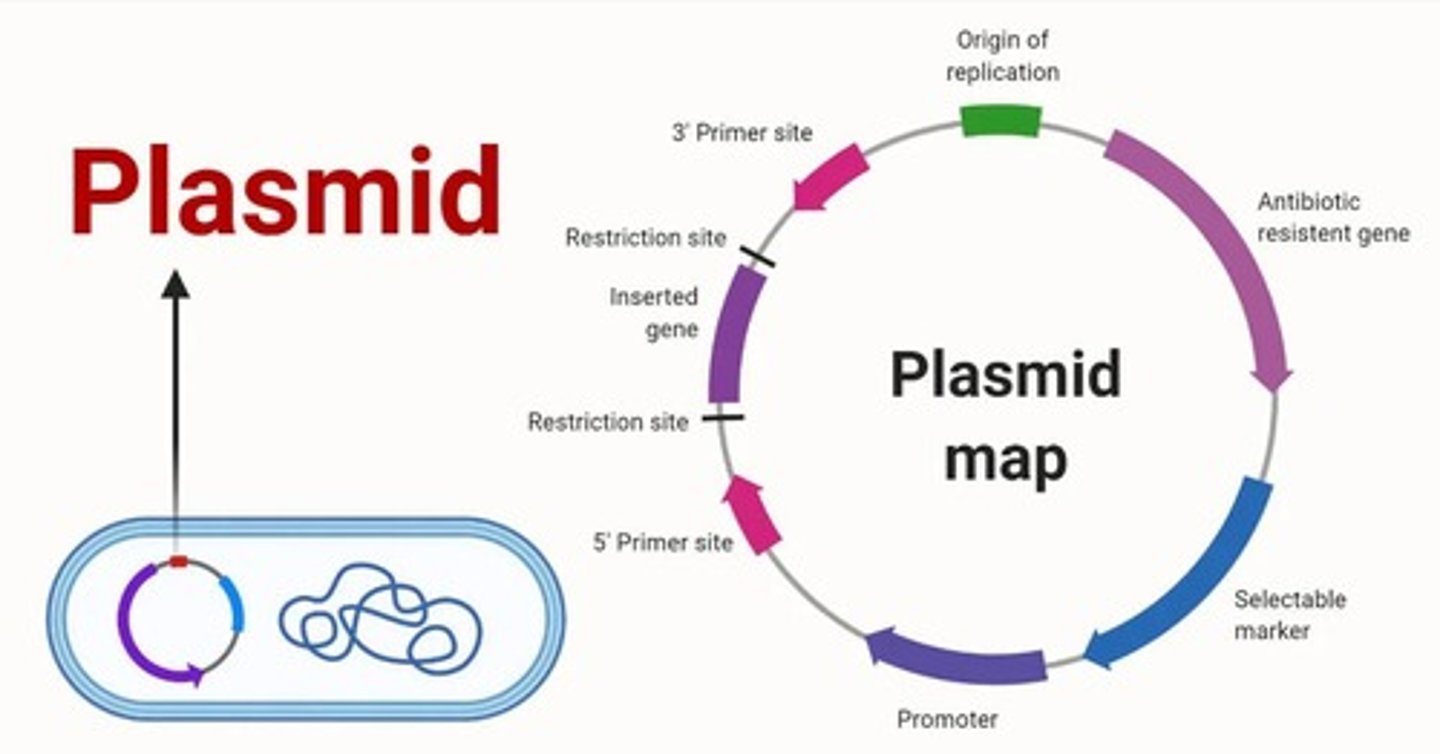
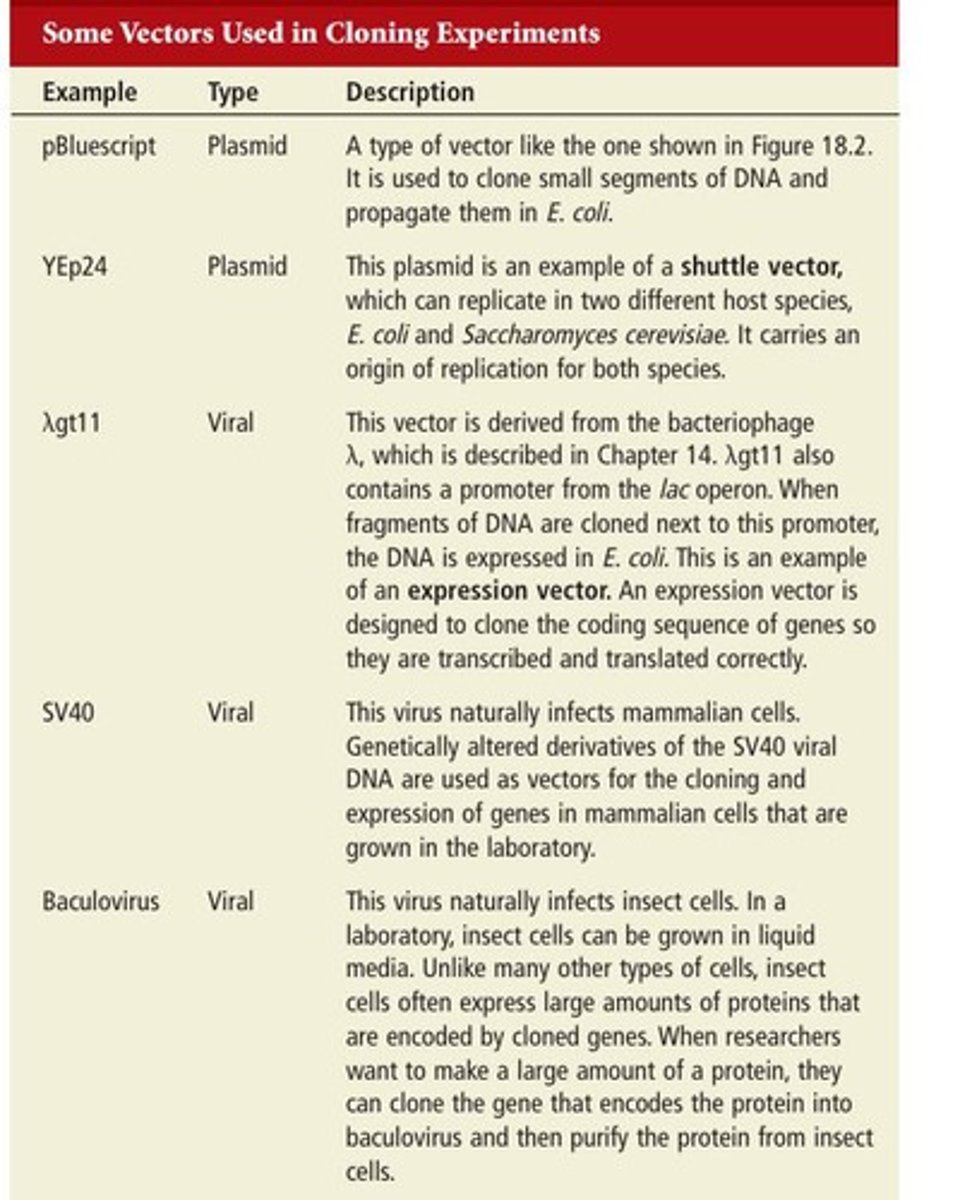
What are vectors in gene cloning?
Small DNA molecules that replicate independently of chromosomal DNA, such as plasmids and viruses.
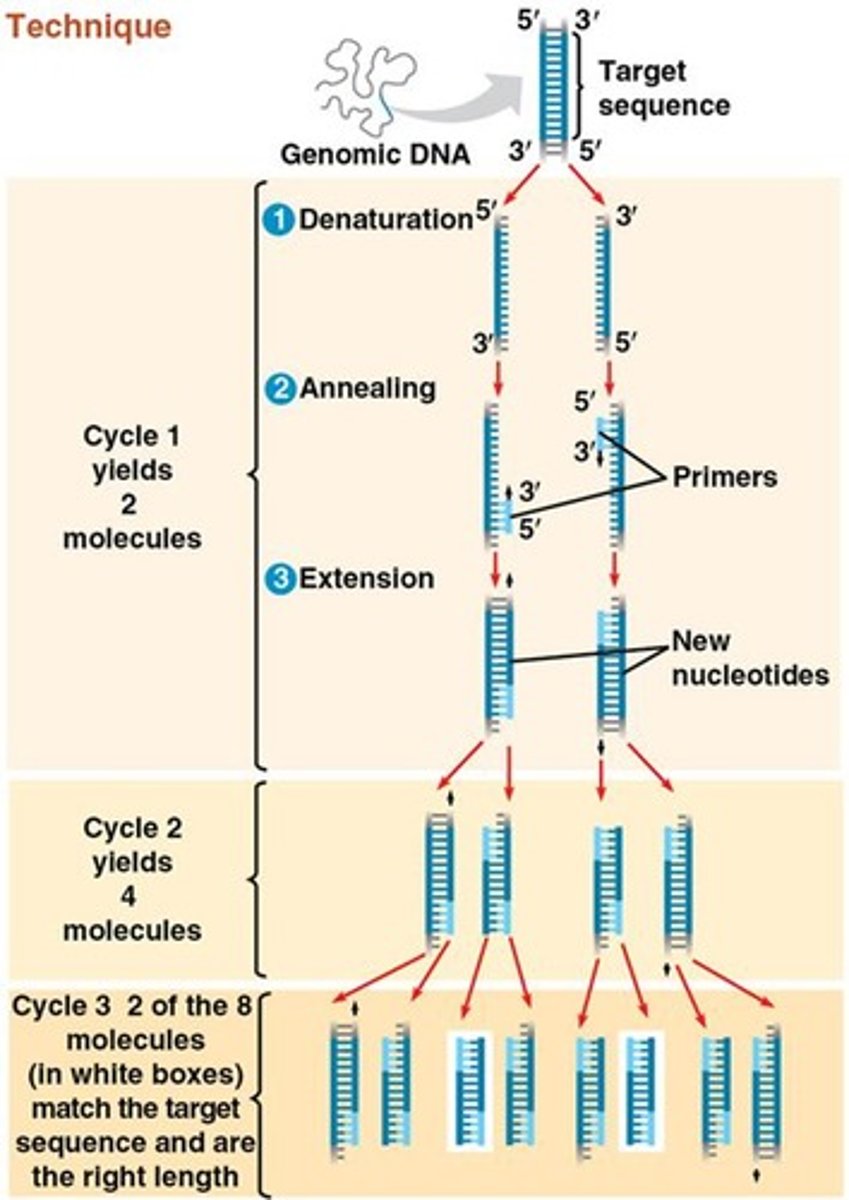
What is the purpose of PCR?
To produce many copies of a specific segment of DNA through a three-step cycle.
What are the three steps of PCR?
Heating (denaturing), cooling (annealing), and extension (growing DNA strand).
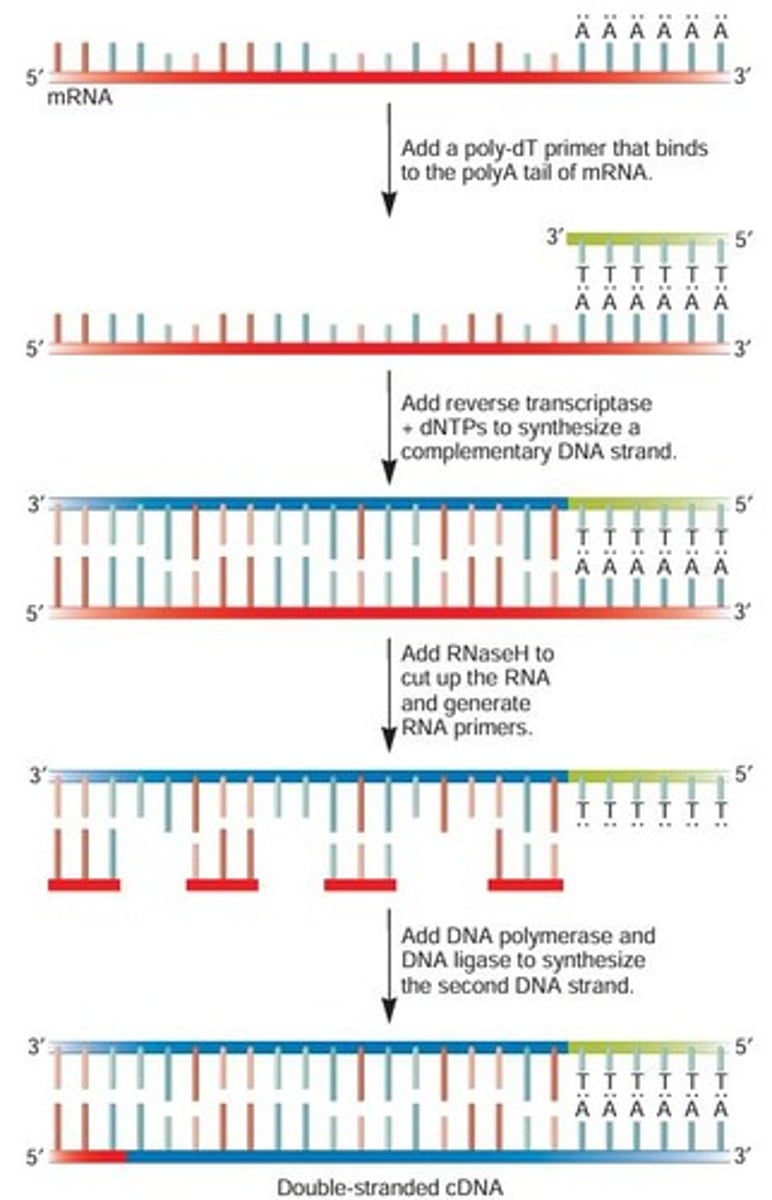
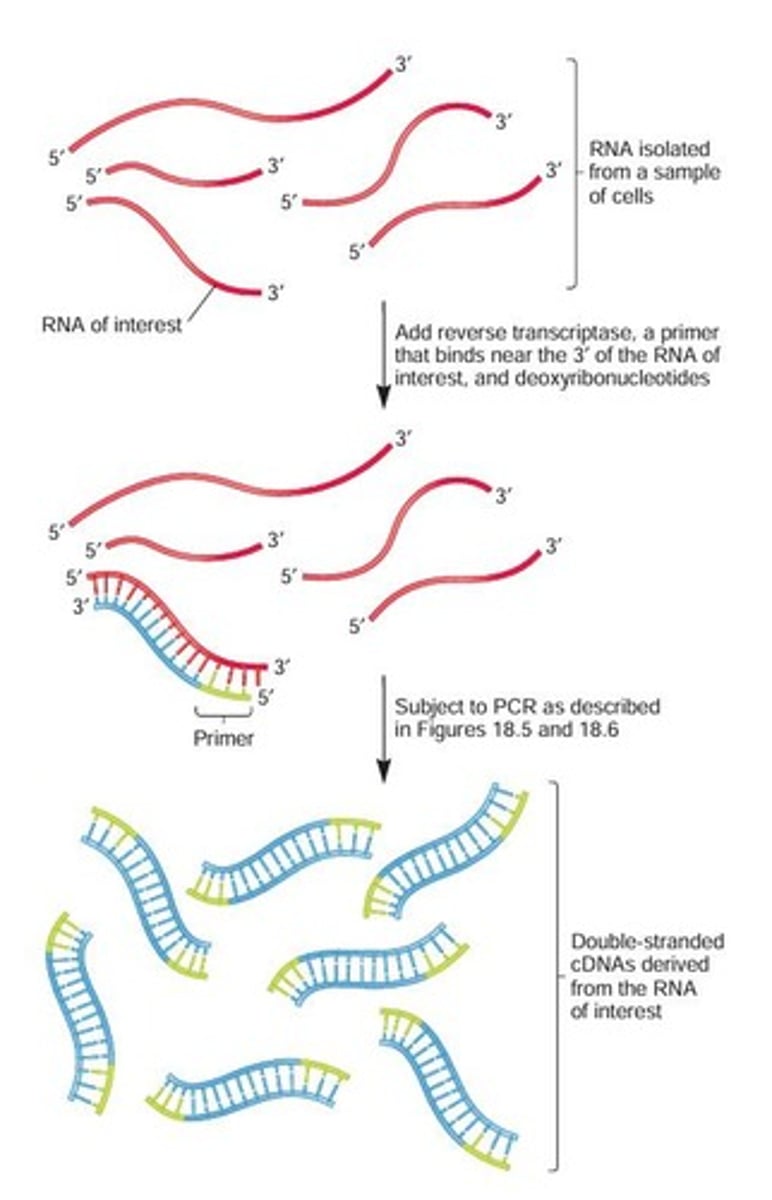
What is cDNA?
Complementary DNA synthesized from mRNA using reverse transcriptase.
Why is cDNA used instead of chromosomal DNA in cloning?
It is easier to determine the coding sequence of a protein-encoding gene.
What is a DNA library?
A collection of recombinant vectors containing fragments of DNA.
What is the difference between a genomic library and a cDNA library?
A genomic library uses chromosomal DNA, while a cDNA library uses cDNA inserts.
What are restriction enzymes?
Enzymes that cut DNA at specific locations, creating staggered cuts.
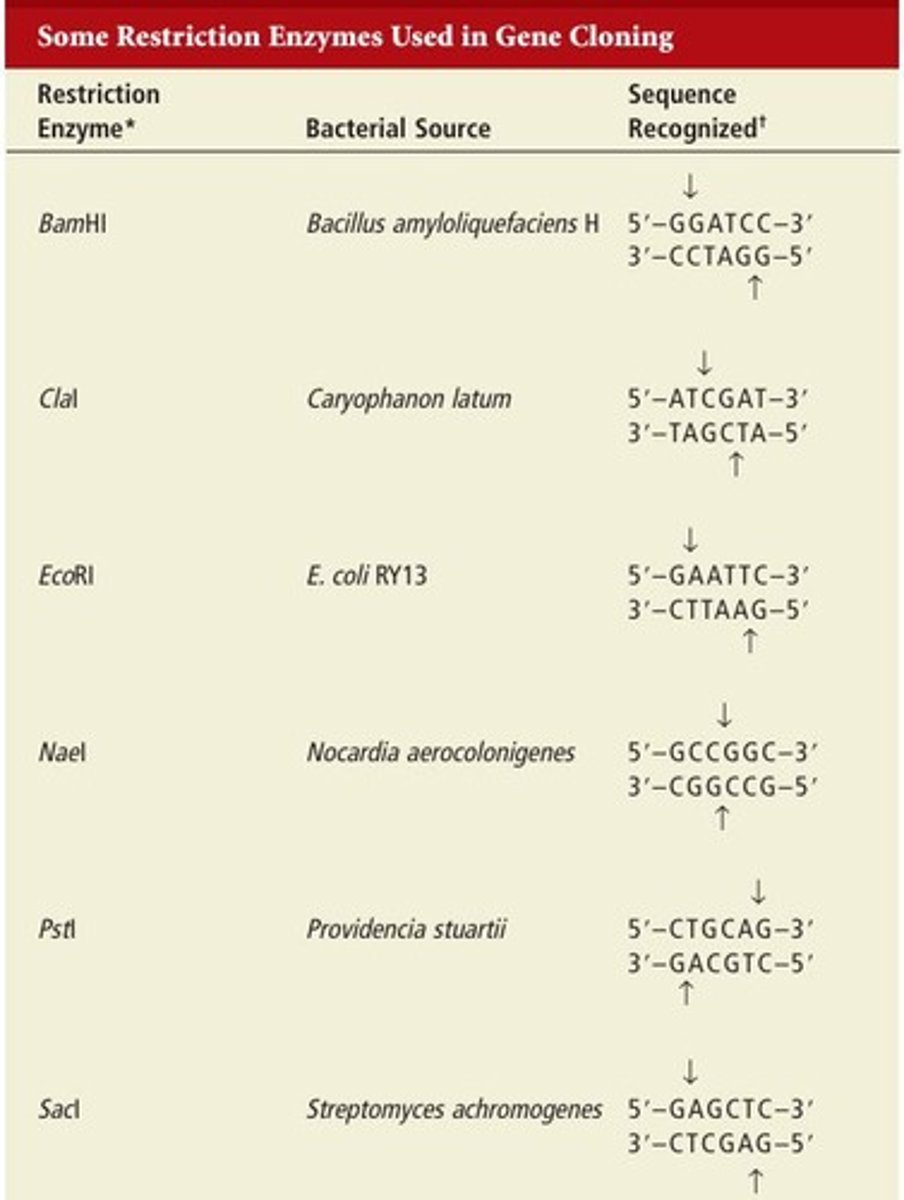
What is a 'sticky end' in DNA cloning?
A single-stranded tail created by staggered cuts made by restriction enzymes.
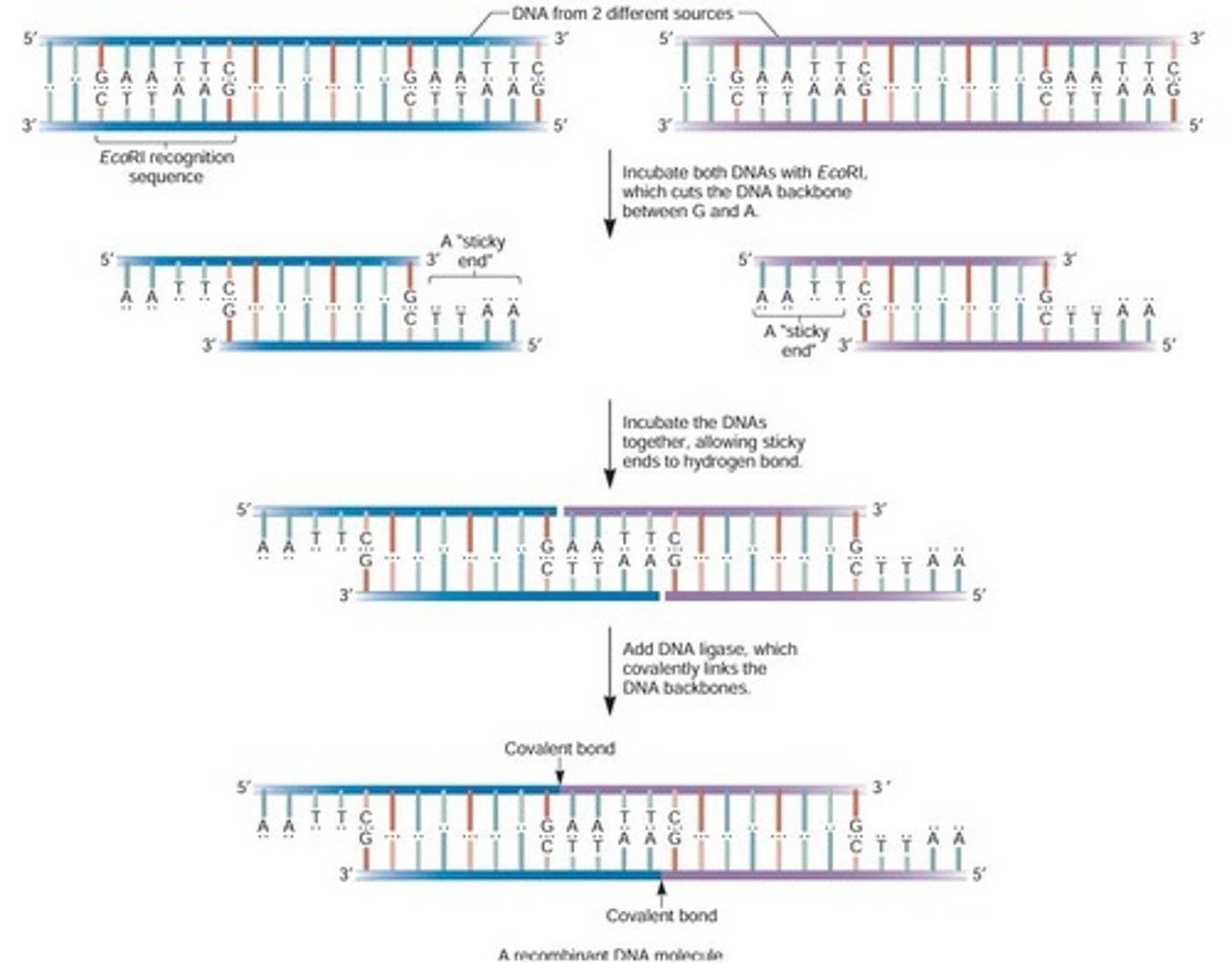
What is the role of DNA ligase in recombinant DNA?
It seals nicks between DNA fragments, resulting in recombinant DNA.
What is site-directed mutagenesis?
A method to make a mutation at a specific site in the DNA.
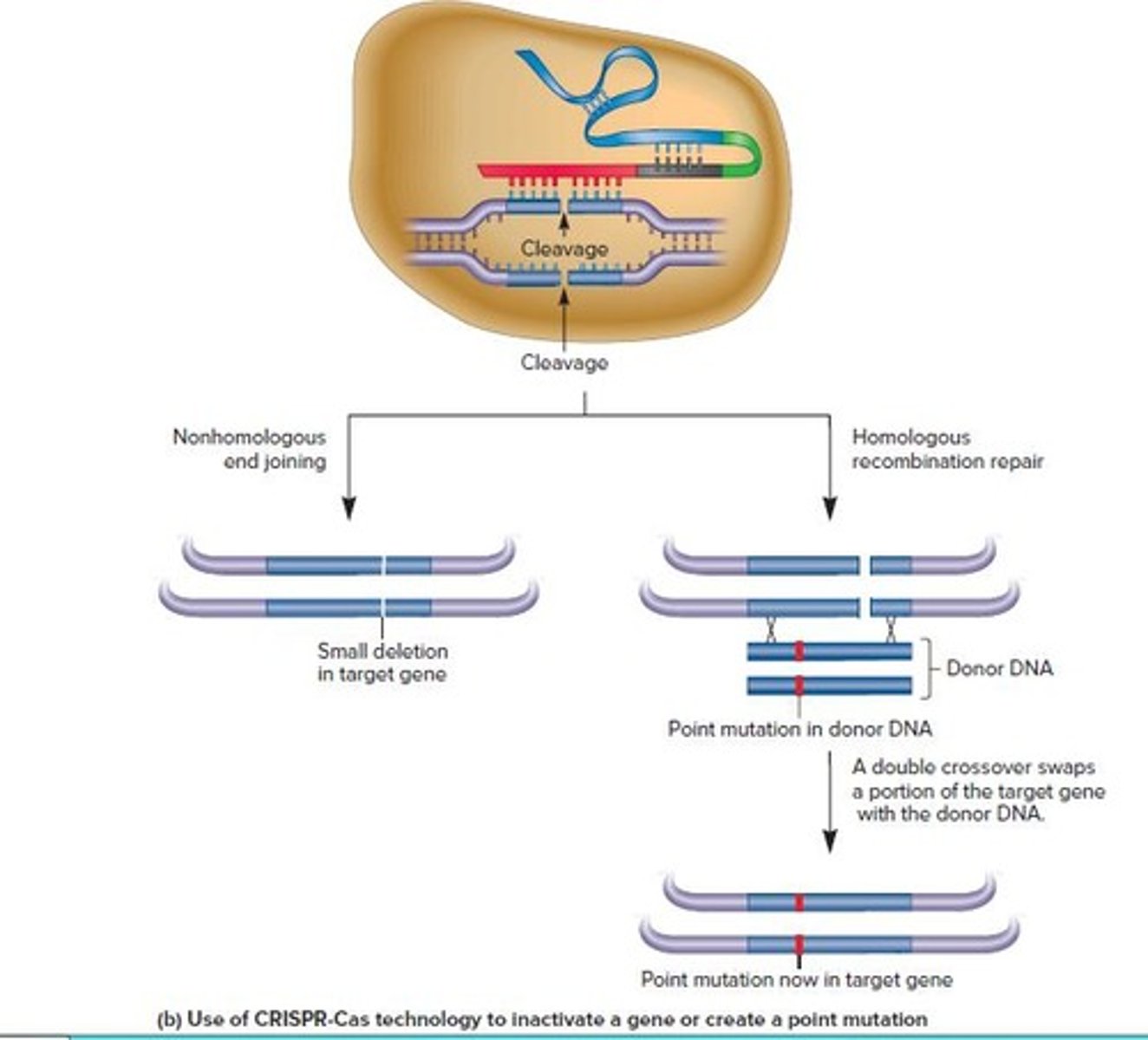
What is CRISPR-Cas technology?
A natural immunity mechanism in bacteria that can be used for gene editing.
What is Northern blotting used for?
To detect and quantify specific RNA in a mixture.
What is Western blotting used for?
To identify specific proteins in a mixture.
What does EMSA stand for?
Electrophoretic Mobility Shift Assay.
What is the purpose of EMSA?
To identify if a protein binds to RNA or DNA.
What is DNase I footprinting?
A method to identify the region of DNA that a DNA-binding protein binds.
What happens during DNase I footprinting?
If a protein is bound to DNA, DNase I cannot cleave that area of DNA.
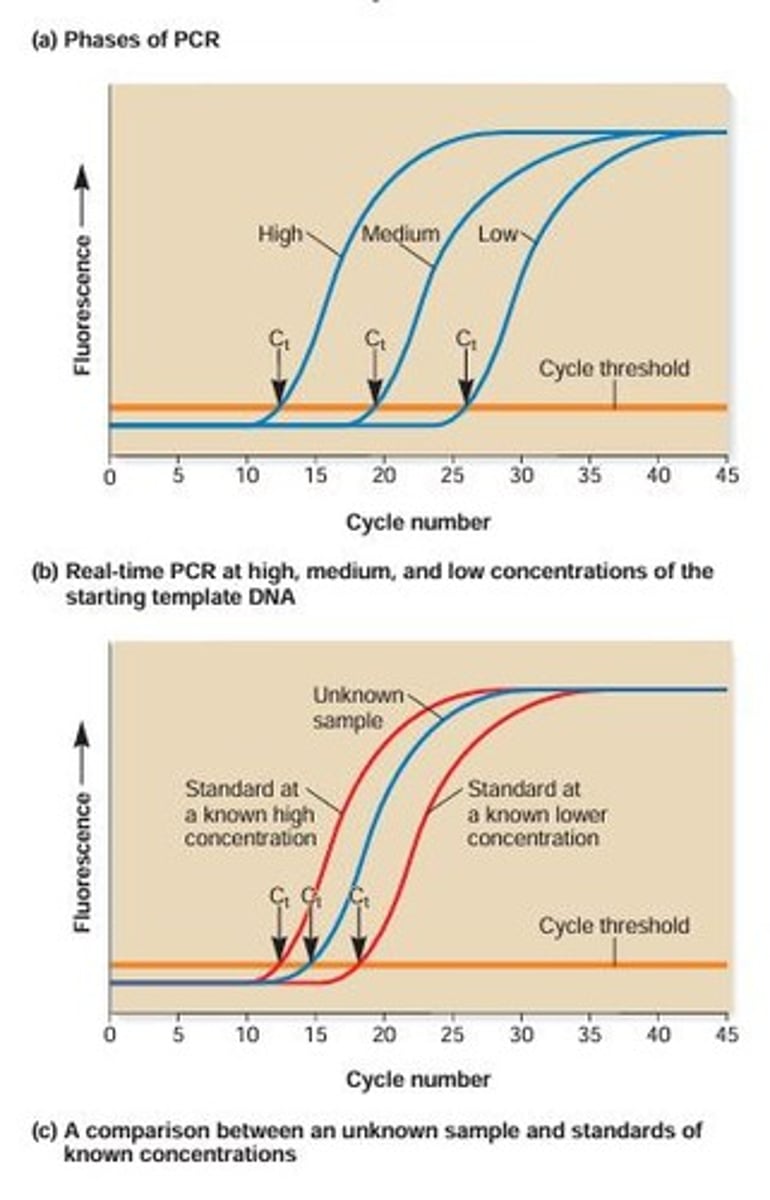
What is the Cycle Threshold Method (Ct) in Real Time PCR?
A method to quantify gene or mRNA concentration based on fluorescence measurement.
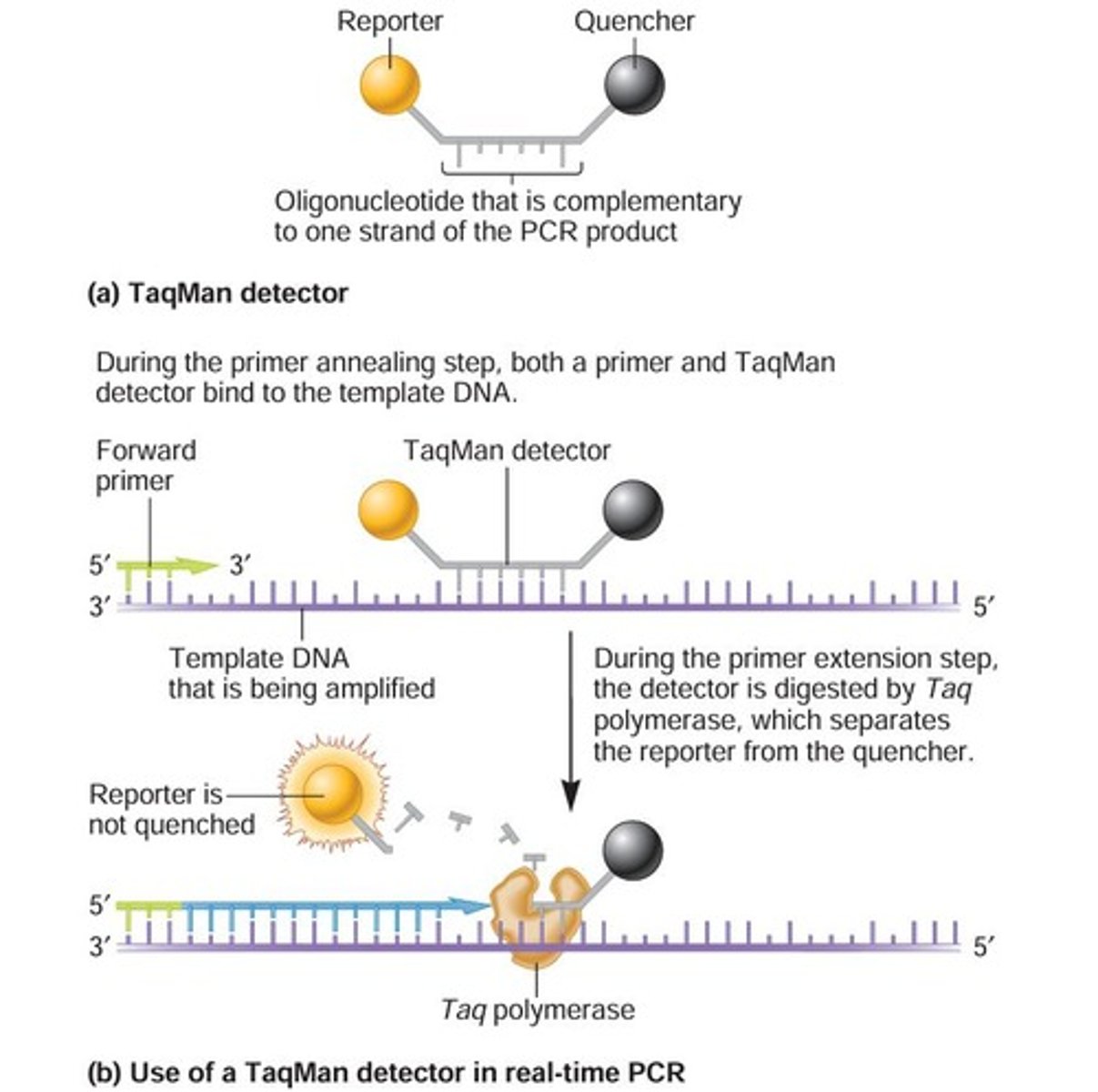
What is Taq polymerase?
A stable DNA polymerase used in PCR that functions at high temperatures.
What is the significance of palindromic sites for restriction enzymes?
They are sequences that read the same in both strands, allowing for specific cuts.
What is the function of selection markers in gene cloning?
Resistance genes that allow host cells to grow in the presence of toxins or without certain nutrients.
What is the role of primers in PCR?
Short sequences that flank the region of interest and initiate DNA synthesis.
What is the purpose of reverse transcriptase in Reverse Transcriptase PCR?
To synthesize cDNA from isolated RNA.
What is the function of the TaqMan probe in Real Time PCR?
To measure fluorescence and quantify the amount of DNA during PCR.
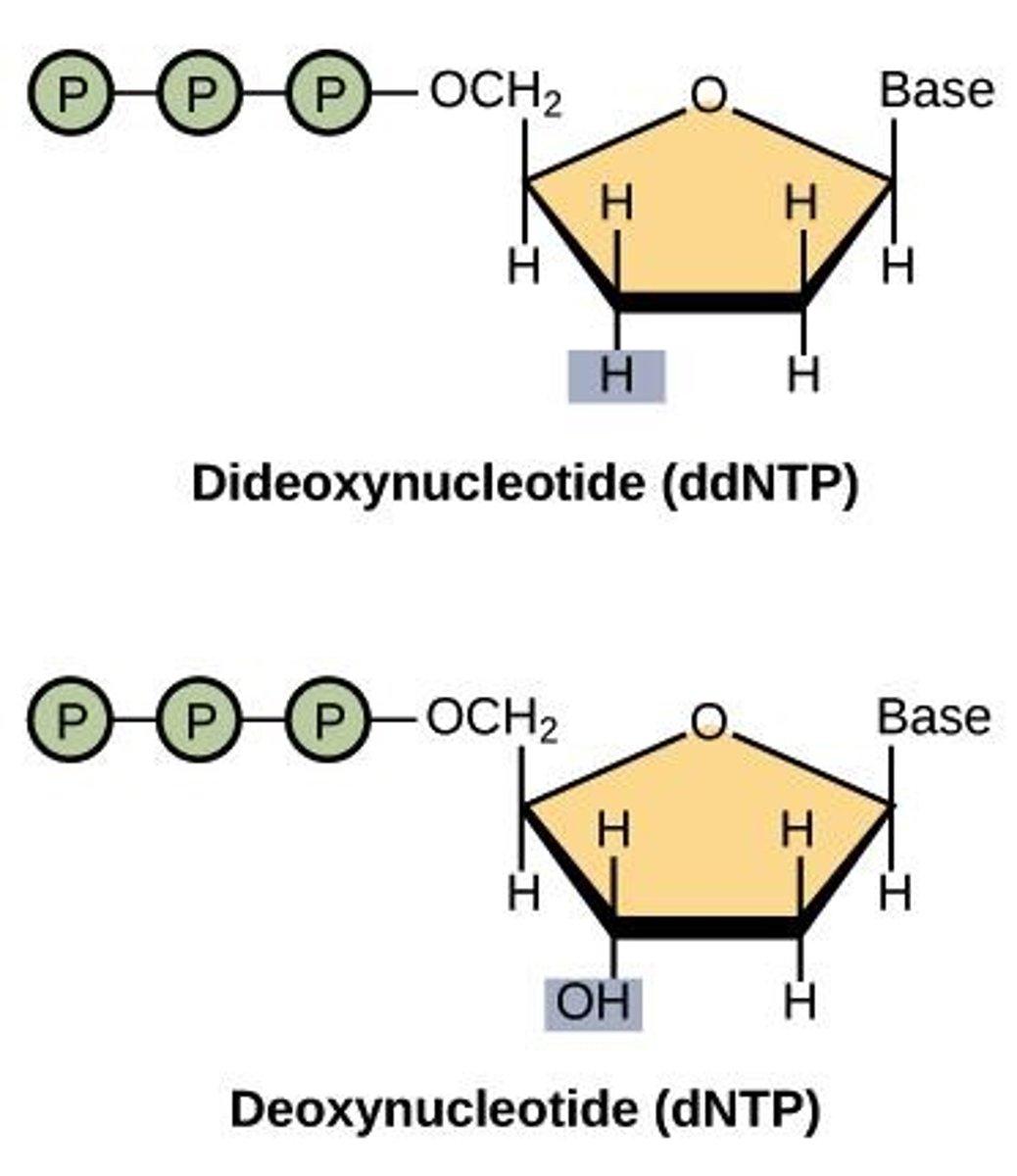
What is the outcome when dideoxyribonucleotide is incorporated into a growing DNA strand?
The strand cannot elongate further.
What is the significance of the 'strong' and 'weak' origins of replication in plasmids?
Strong origins result in high copy numbers, while weak origins lead to low copy numbers.