Lecture 3 - Spectral Sensitivity
 Call Kai
 Learn
Learn Practice Test
 Spaced Repetition
 Match
Match Flashcards
 Knowt Play
1/30

There's no tags or description
Looks like no tags are added yet.
Name | Mastery | Learn | Test | Matching | Spaced | Call with Kai |
|---|
No analytics yet
Send a link to your students to track their progress
31 Terms
How can two different lights exhibit the same response of photoreceptors?
principle of univariance
retina cannot distinguish that two stimuli are comprised of light of different wavelengths
it's more about probability of absorption of photons
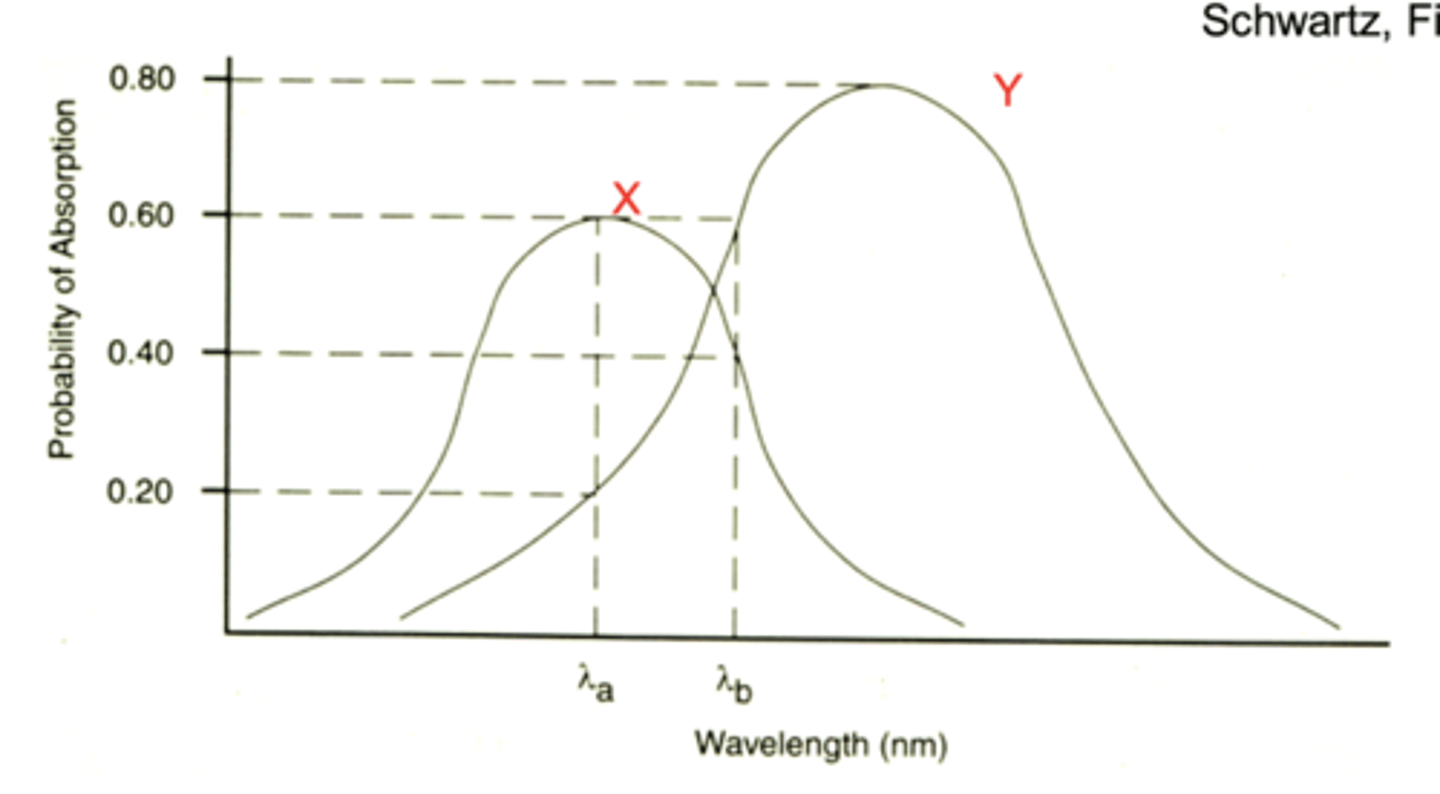
What is the mechanism for how two different light wavelengths look different?
different wavelength photons have different probabilities of being absorbed, which is where differences can be created
you need two photopigments in order for there to be differences
What can monochromats still match between different wavelengths?
brightness
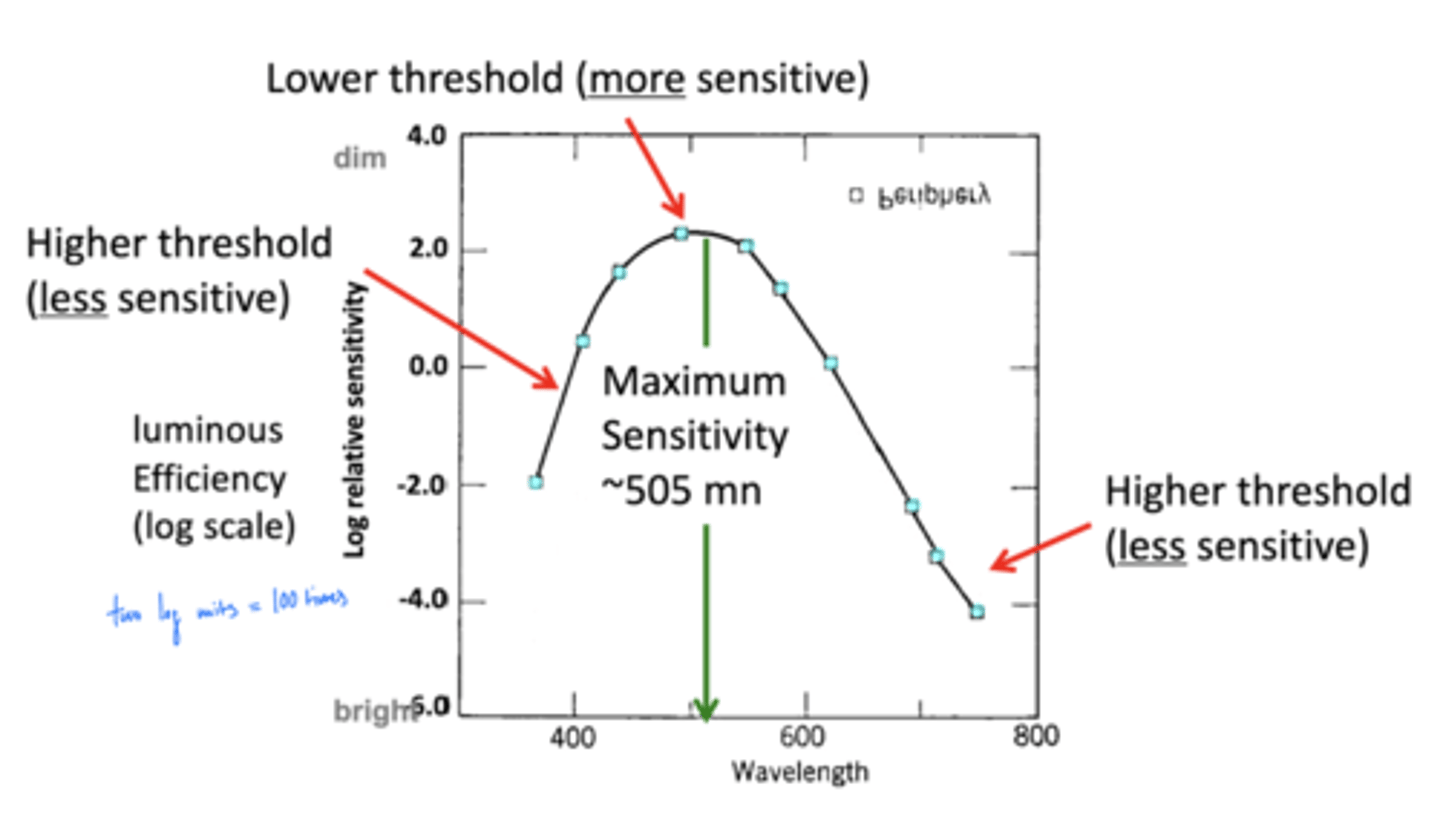
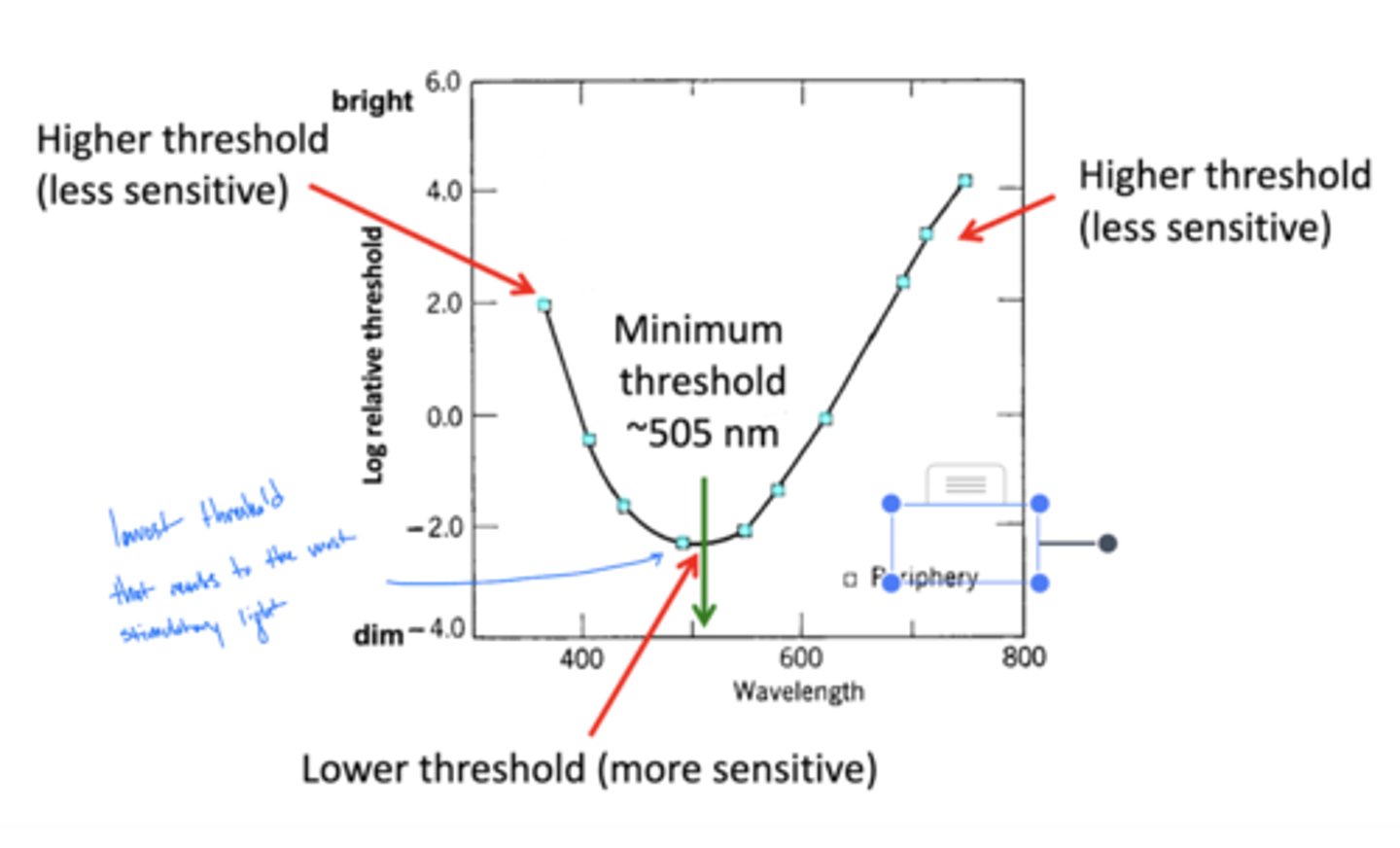
Where is peak scotopic spectral sensitivity?
505 - 507 nm
What shape do sensitivity curves make?
upside down u-shaped
What shape do threshold curves make?
u-shaped
Why is the scotopic spectral sensitivity different when measure in a human (psychophysics) than in a lab?
brunences of crystalline lens - affects shorter wavelengths
depends on age
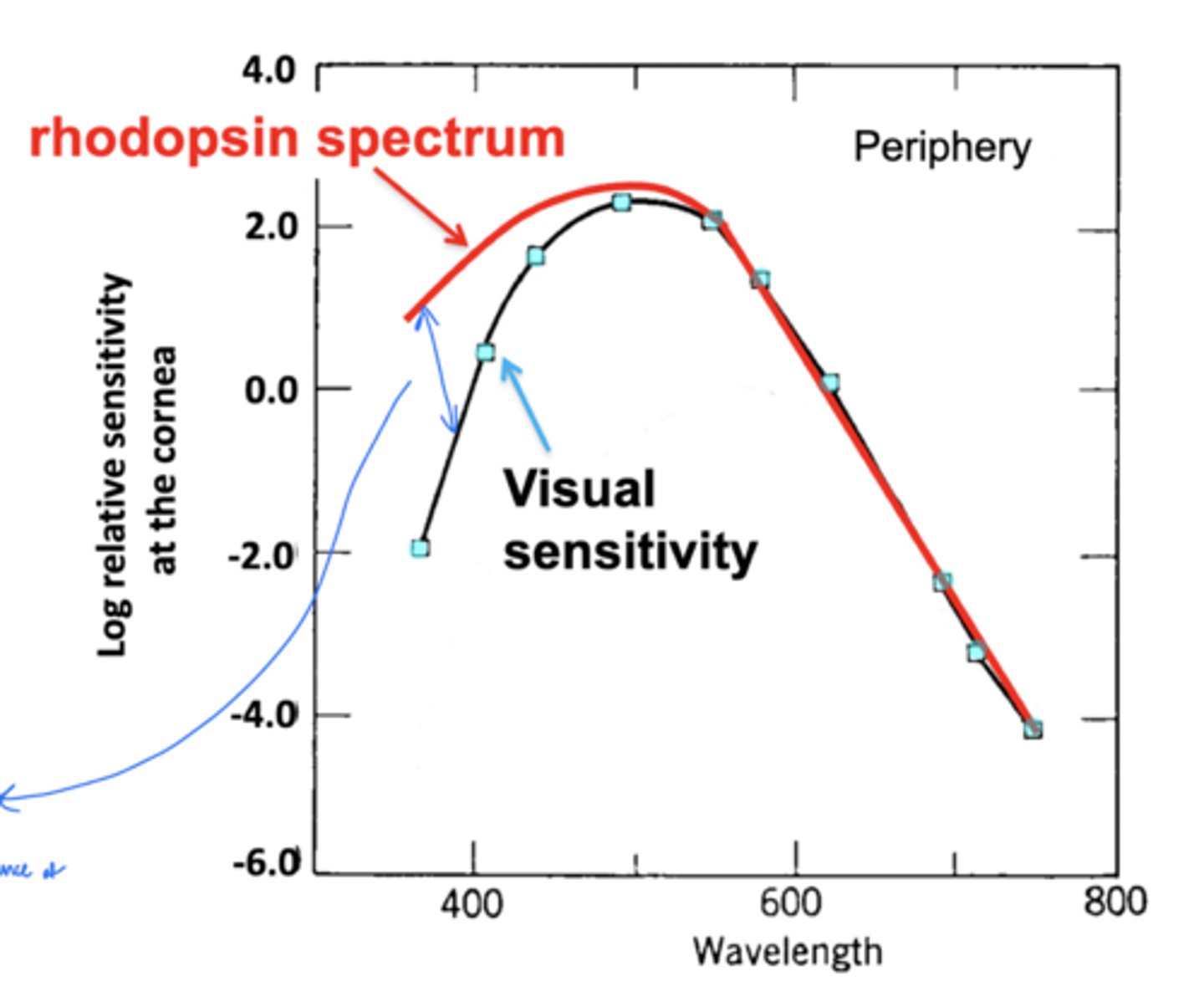
What is the clinical significance of the crystalline lens absorbing shorter wavelengths?
major reason for cataract formation
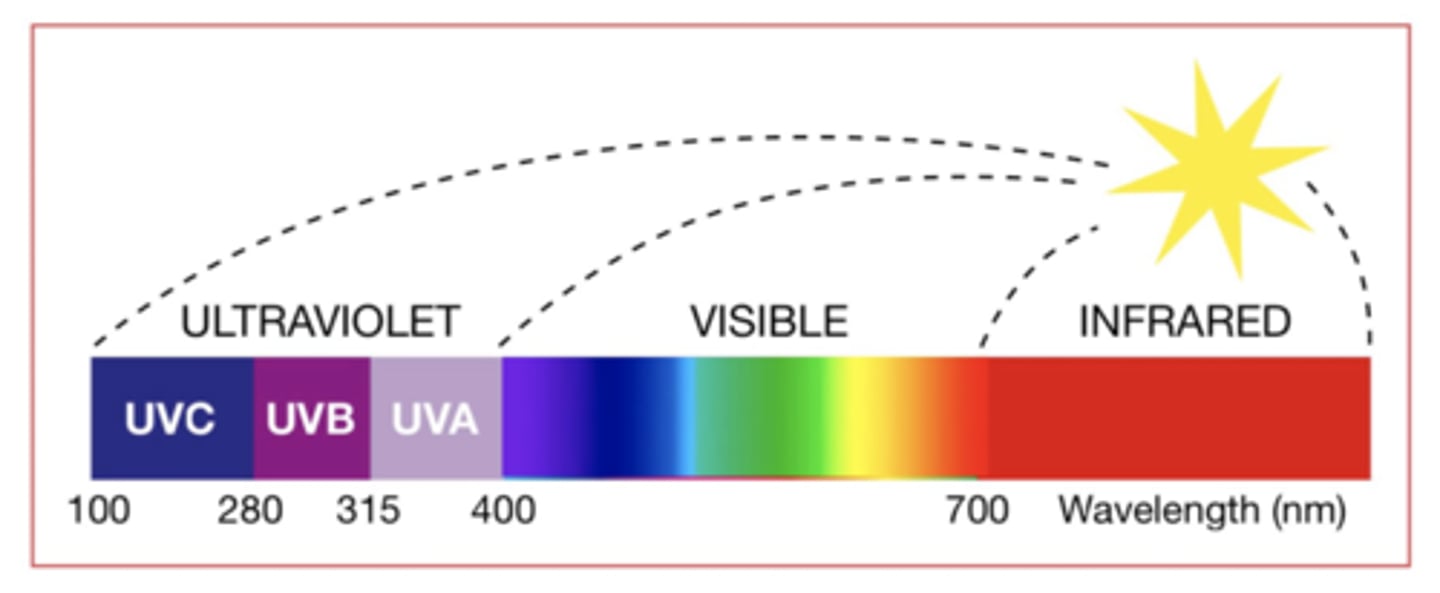
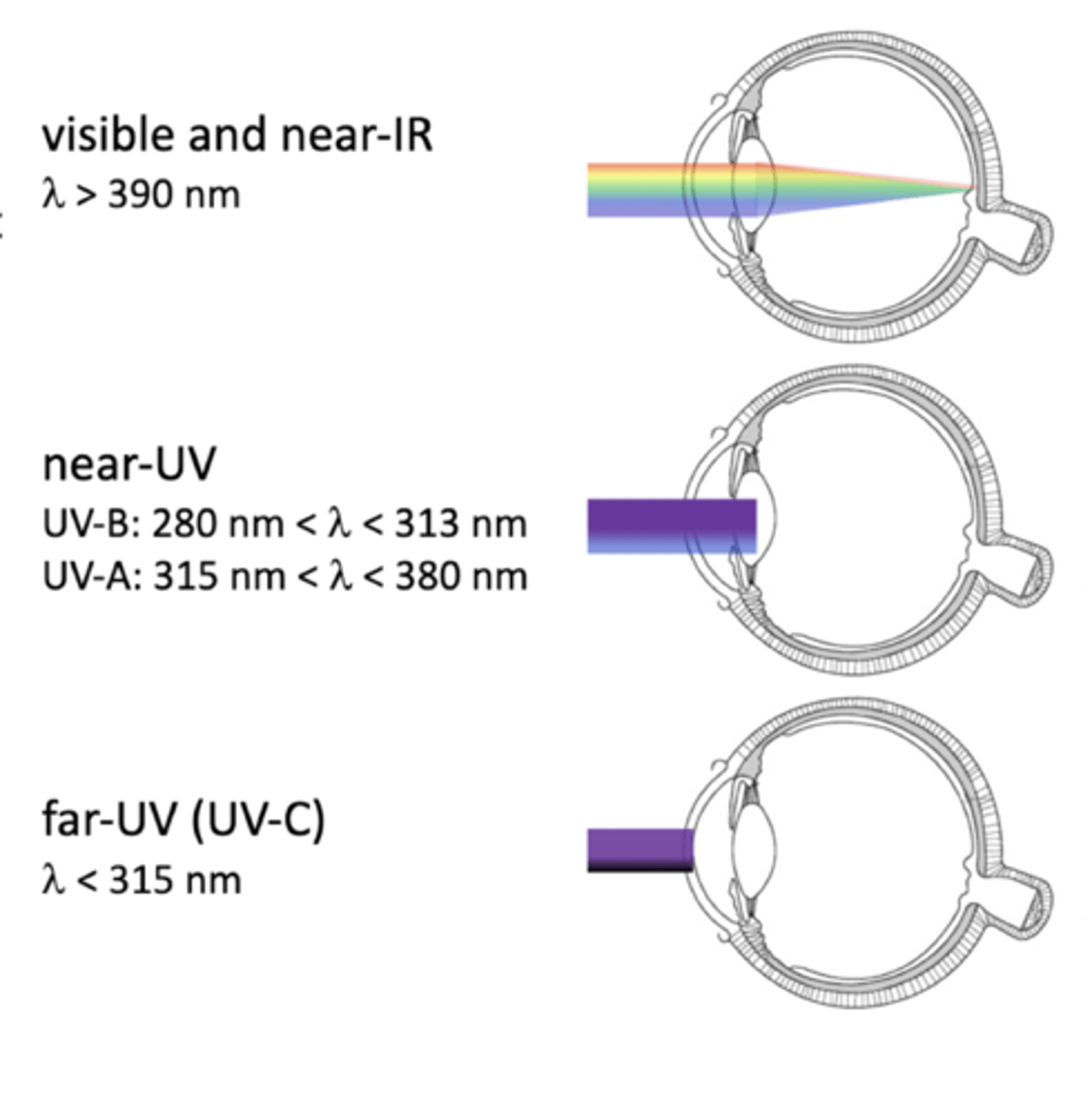
What is the wavelength of the visible light that reaches the retina?
>390 nm
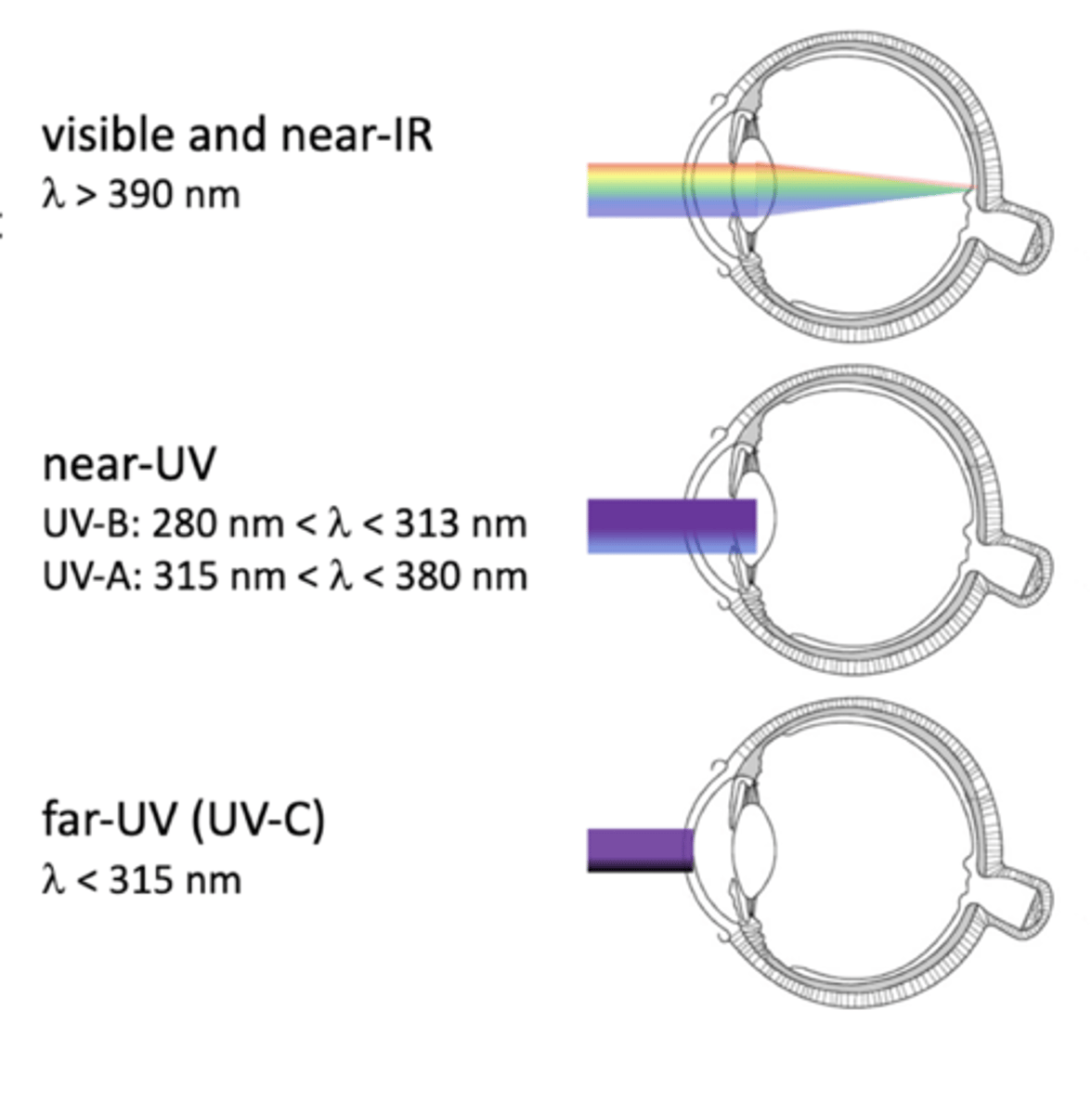
What is the wavelength of the near-UV light that is mostly absorbed by the lens?
280 nm to 380 nm (UV-A/B)
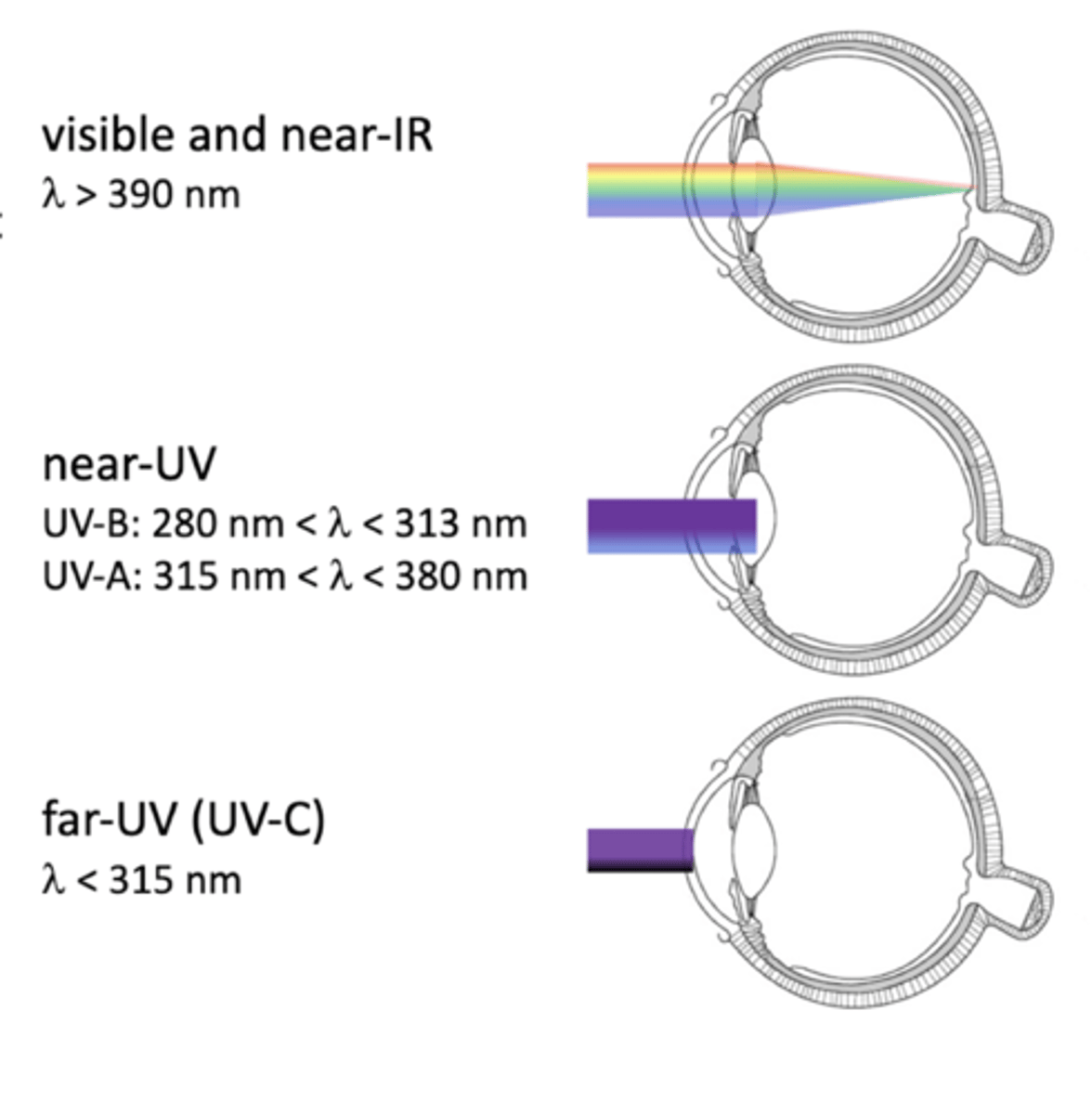
What is the wavelength of the far-UV light that is mostly absorbed by the cornea?
<315 nm (UV-C)
What is the peak sensitivity under photopic conditions?
555 nm (seafoam green)
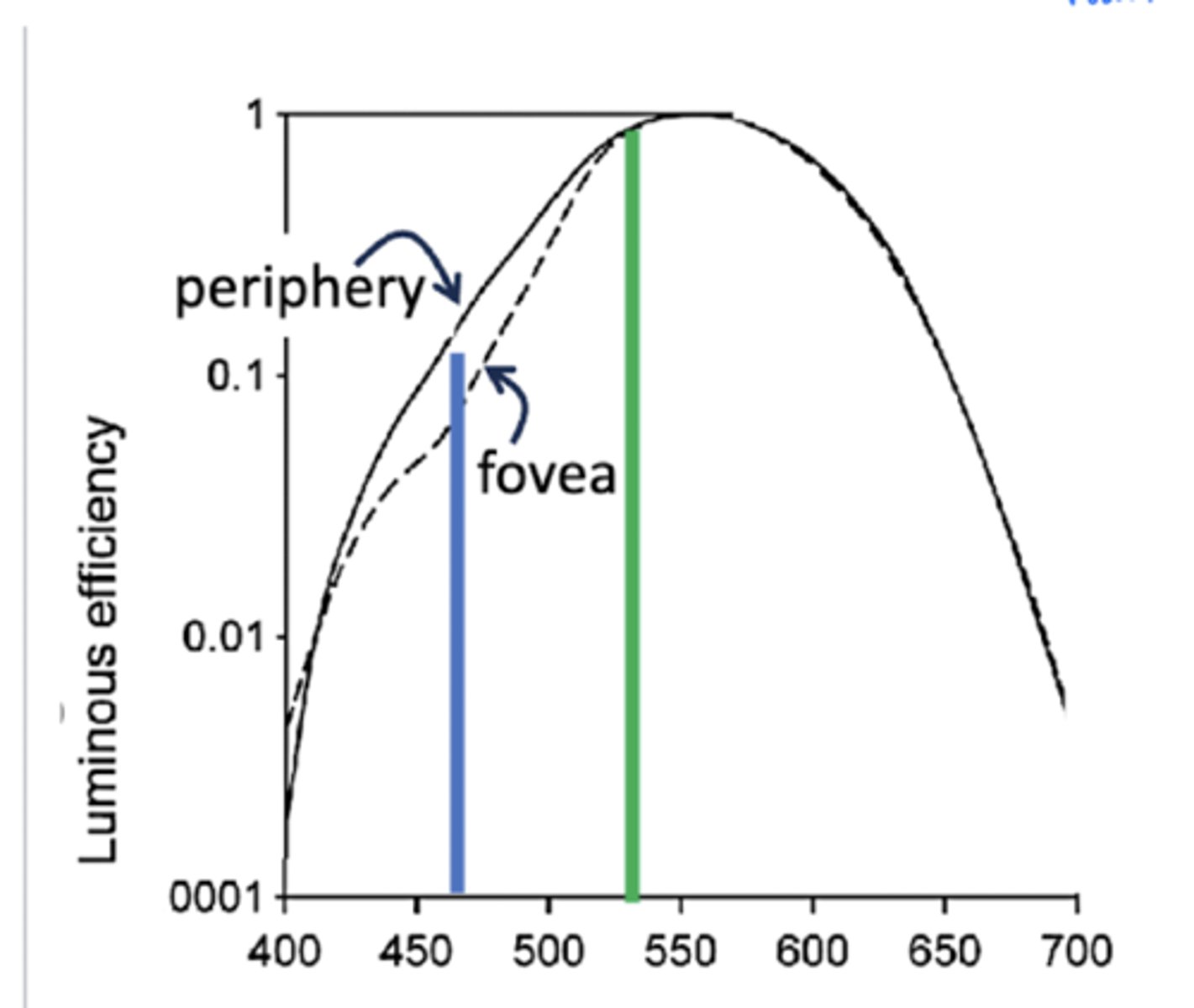
Which type of cone is absent at the fovea?
s-cone - very few at fovea
What is the purkinje shift?
longer wavelengths seem brighter in photopic conditions, relative to scotopic
Above what wavelength are trichromats essentially dichromats?
>550 nm - s-cones have no sensitivity i.e. the Rayleigh region
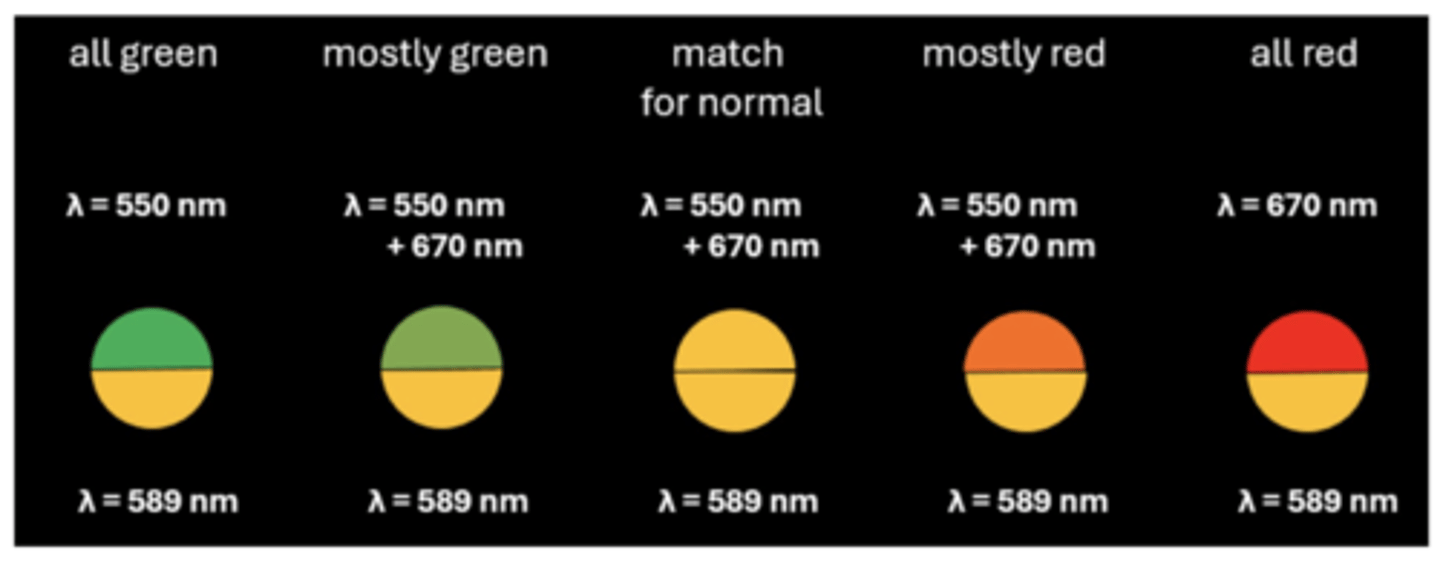
What is the Nagel anomaloscope used for?
diagnose red-green color vision deficiency and to screen for monochromacy
What are metameric matches?
two lights that have different spectral composition, but appear identical to each other
image - middle
What is color vision?
ability to make distinctions between visual stimuli, based only on the wavelength spectra of light (not brightness)
What is hue?
difference between red, orange, yellow, purple

What is saturation?
difference (for example) red and pink or between purple and lavender
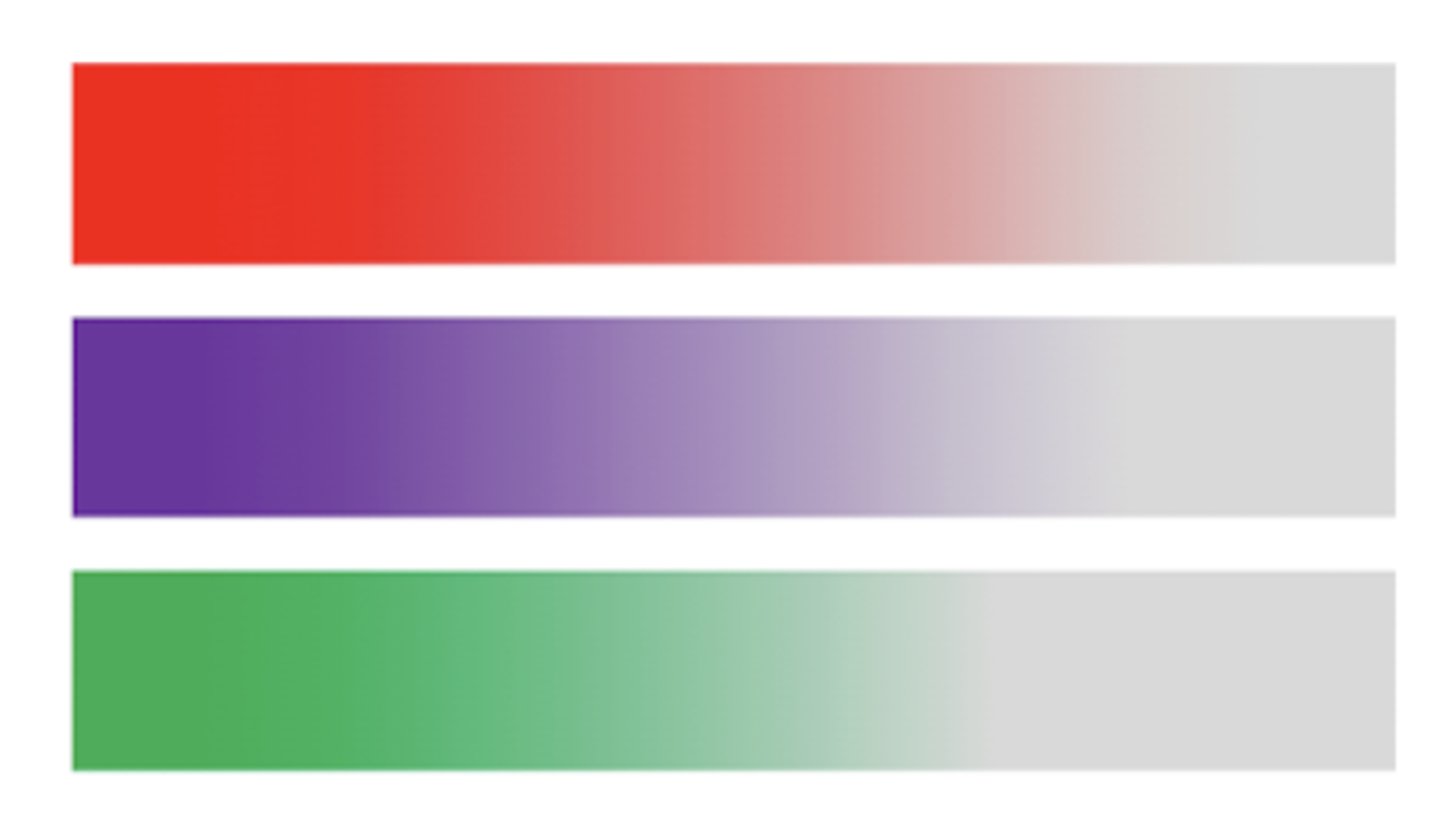
What is brightness?
brighter the light is, more photons that are hitting the retina

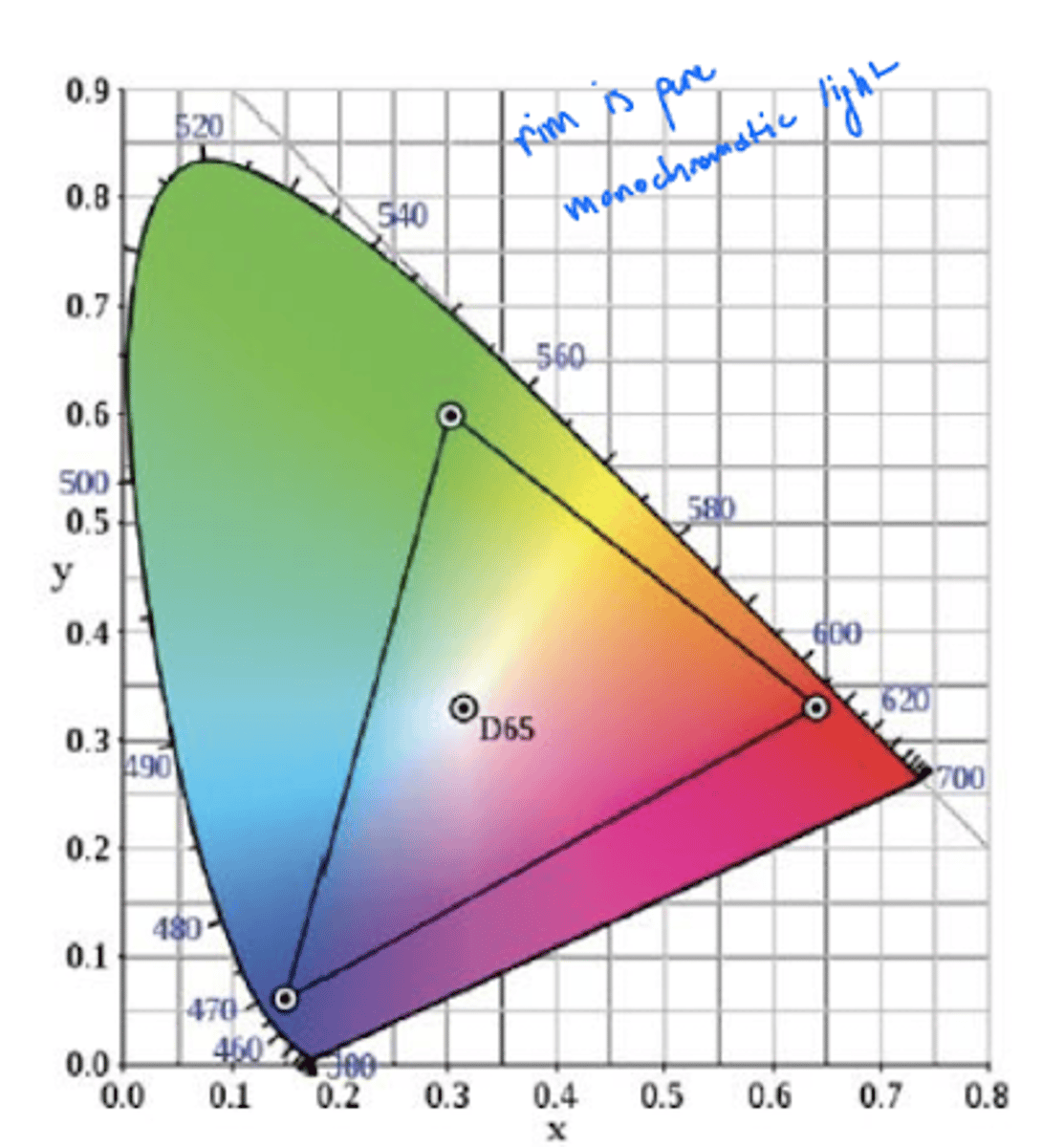
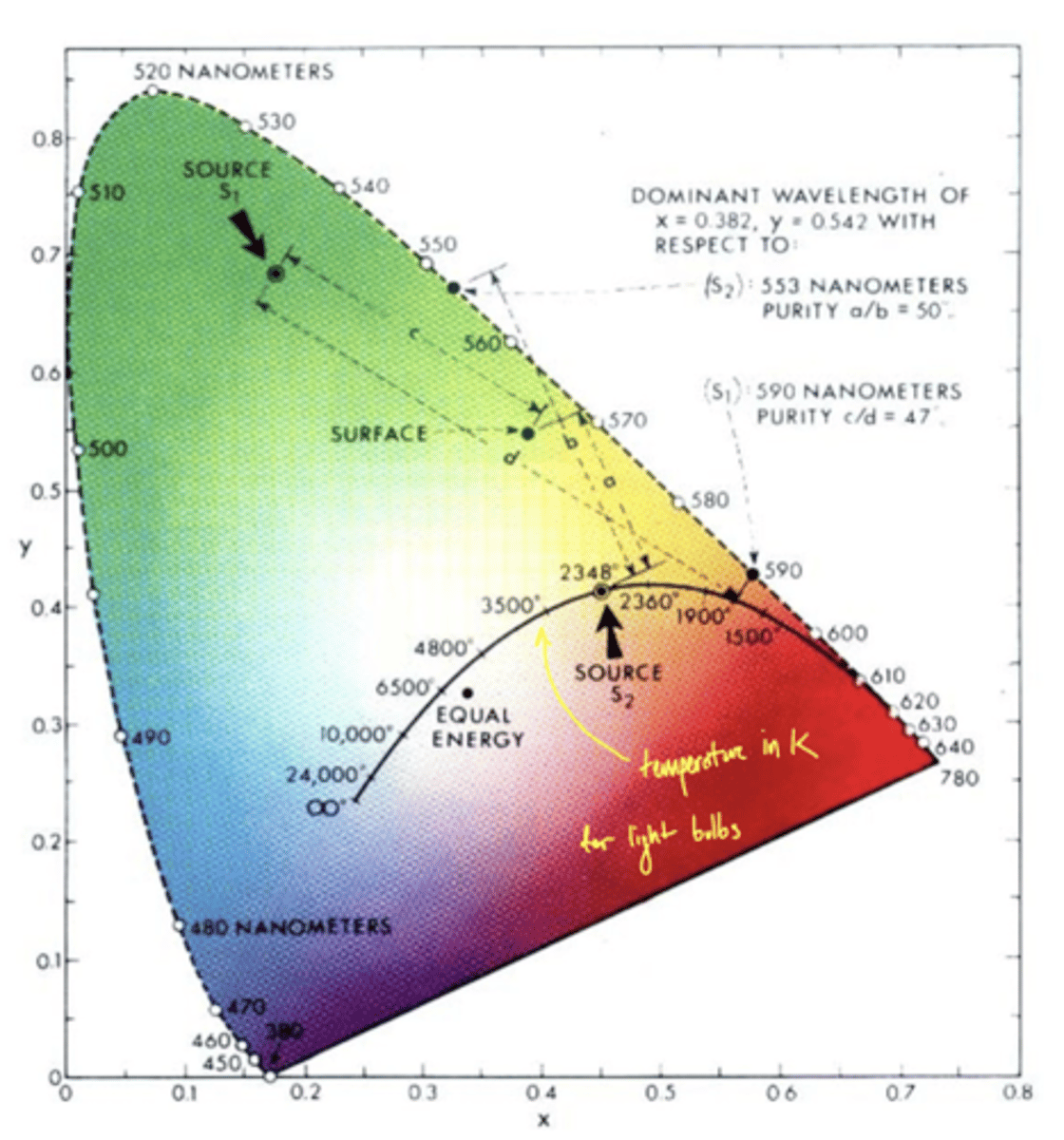
What is the CIE color space?
mathematical modeling of 3 cone action spectra, useful to understand color matching and color vision defects
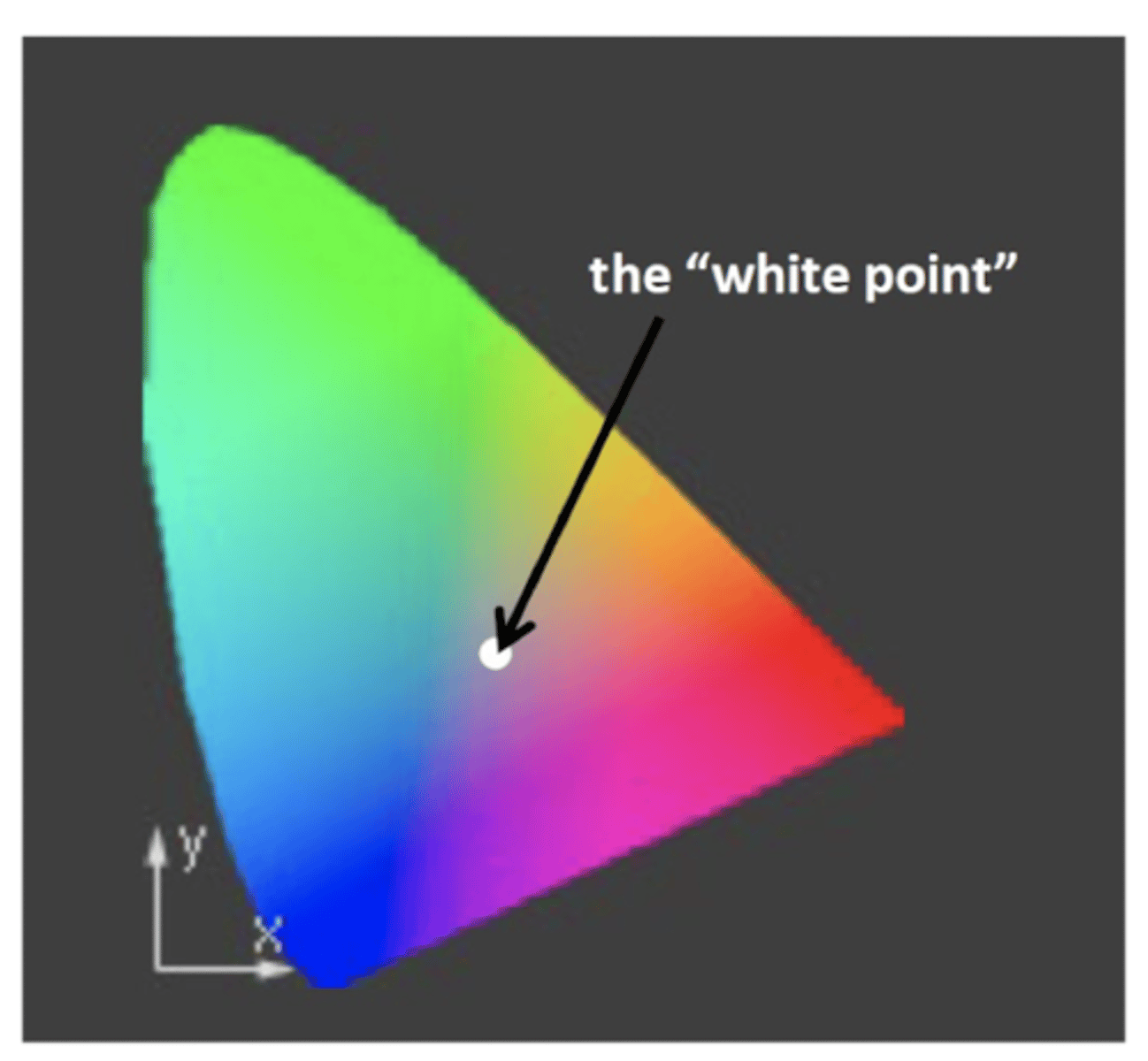
What is the spectrum locus of the CIE color space?
outside border - monochromatic visible light wavelengths
except the bottom border
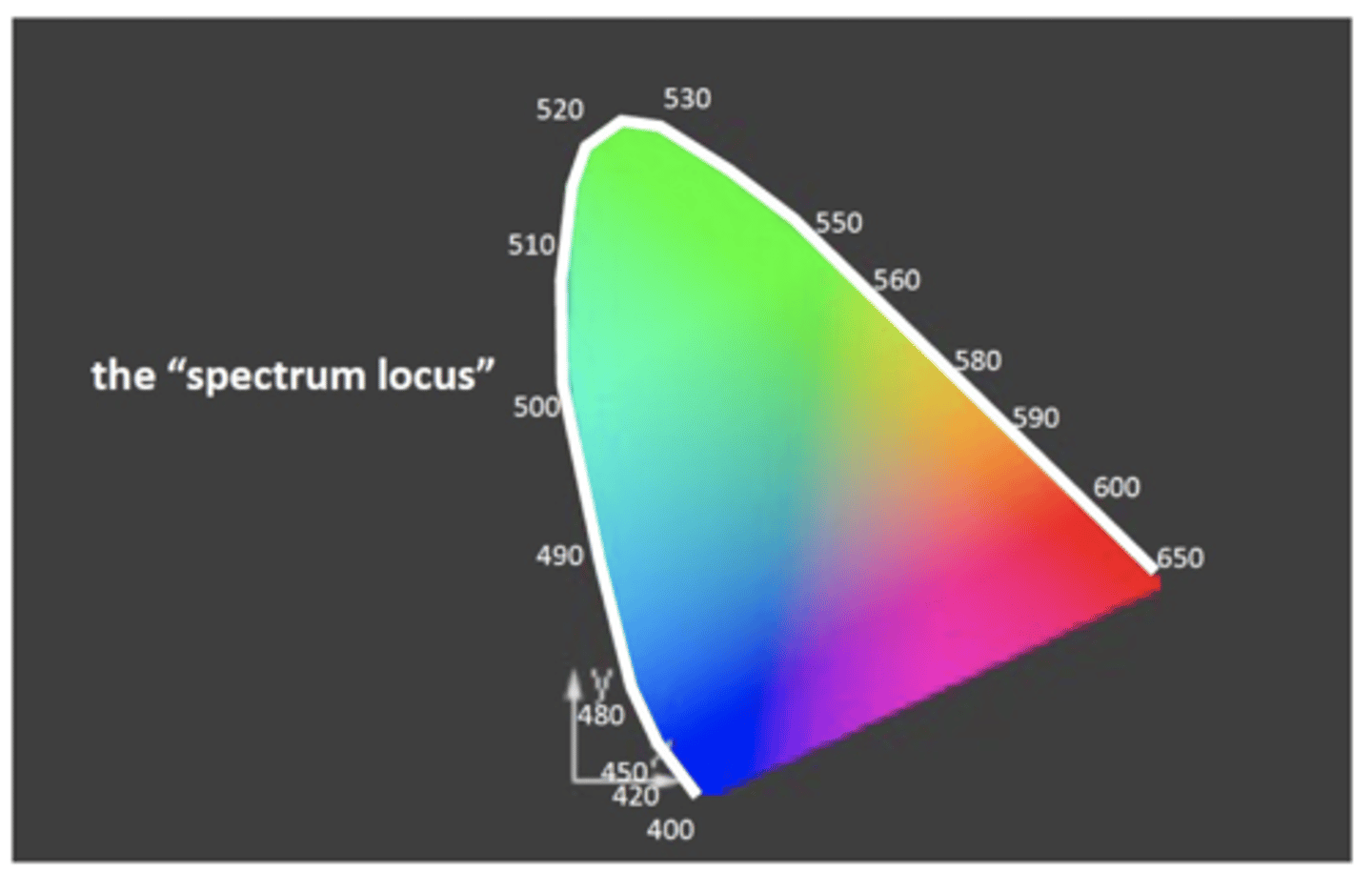
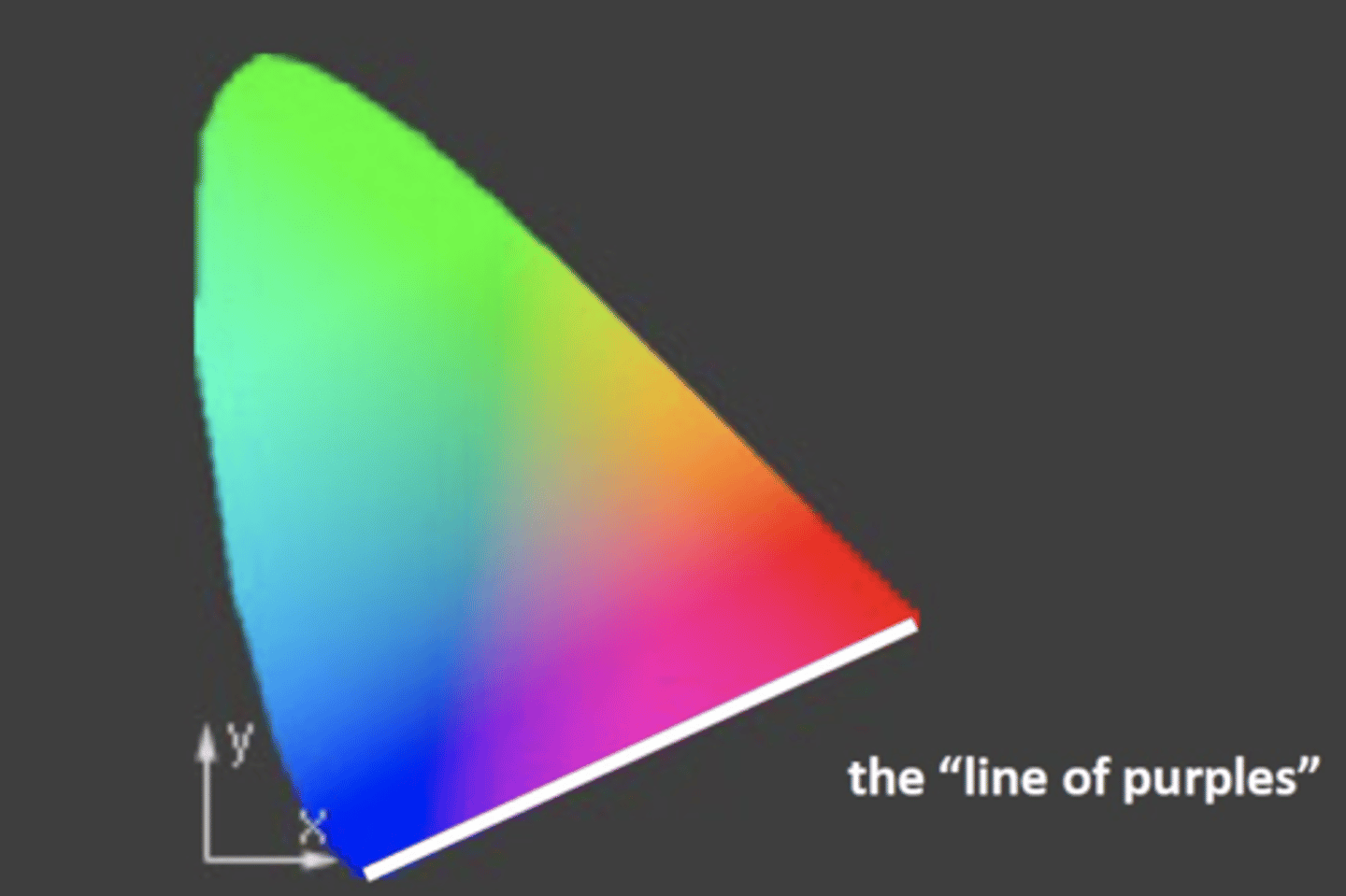
What does the bottom border of the CIE color space represent?
aren't monochromatic wavelengths that exist in nature
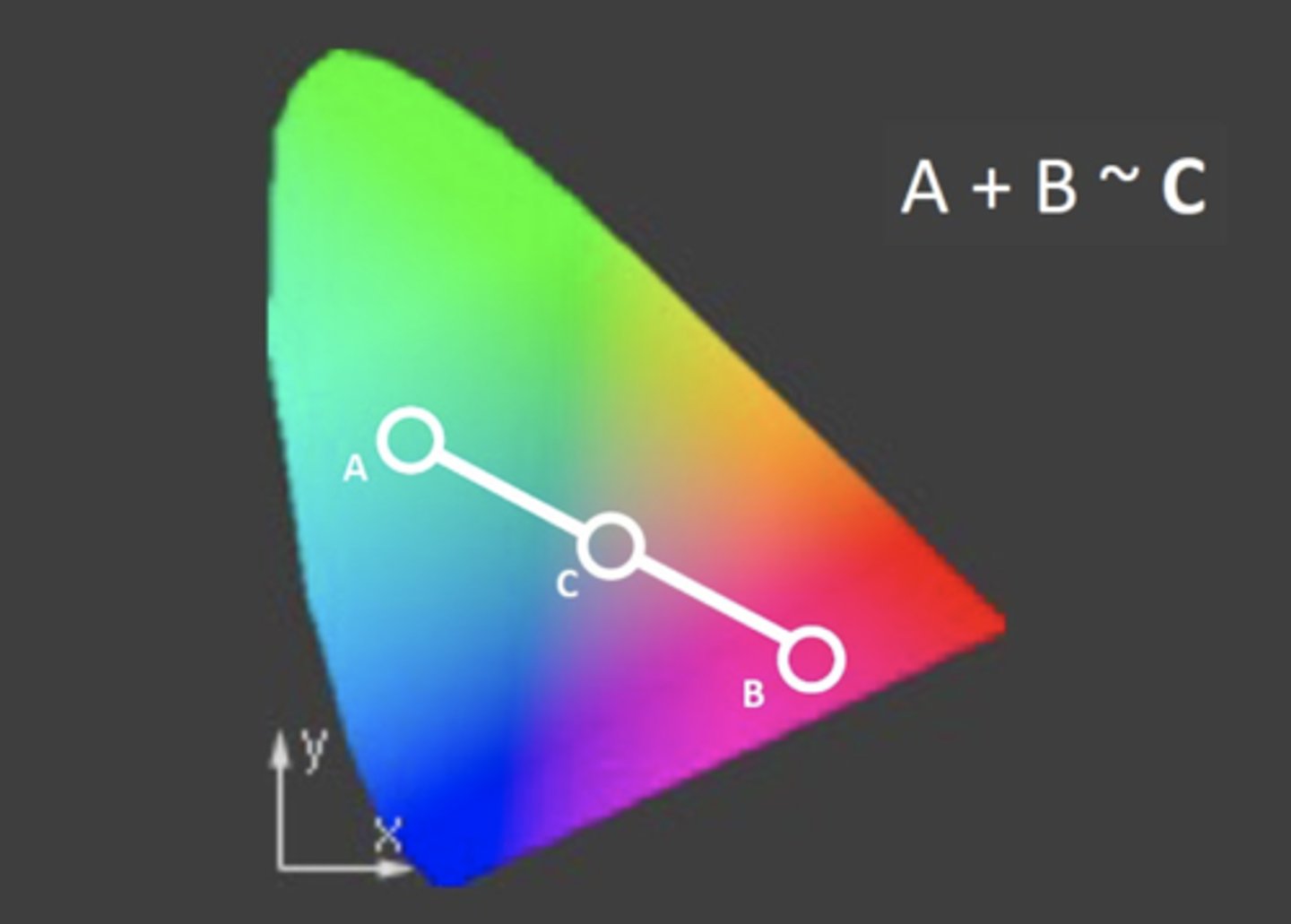
How would you model mixing colors in the CIE color space?
a "Rayleigh" match, in the Nagle Anomaloscope
What would a triangle in the CIE color space represent?
all the colors that are possible to produce if you mix them together
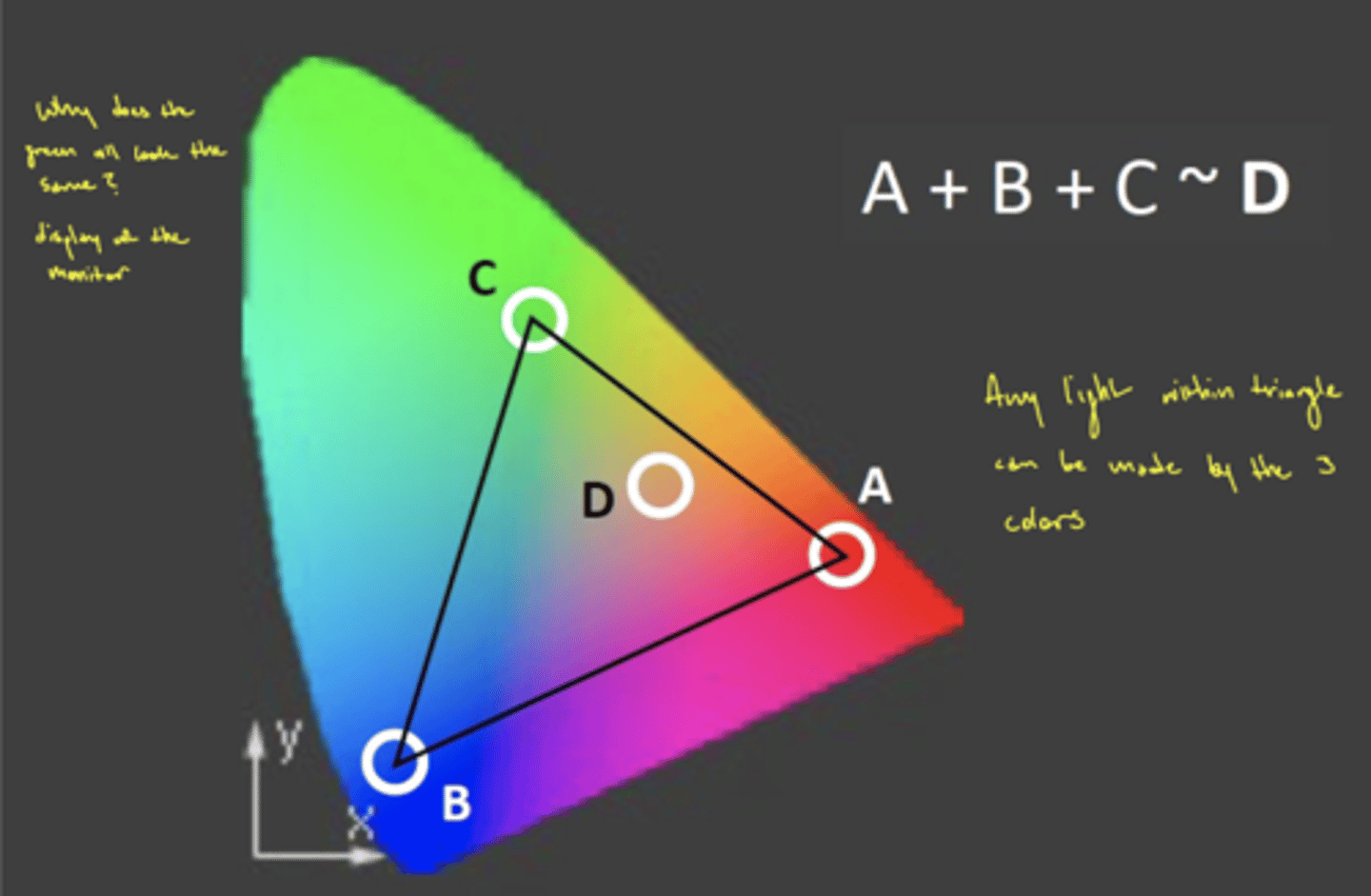
What is the name for the a triangle/shape in the CIE color space?
"gamut" - entire area within the triangle can be made from the three colors
What do the variables (x,y,z) represent in the CIE color space?
x values - redness
y values - greenness
z values - blueness
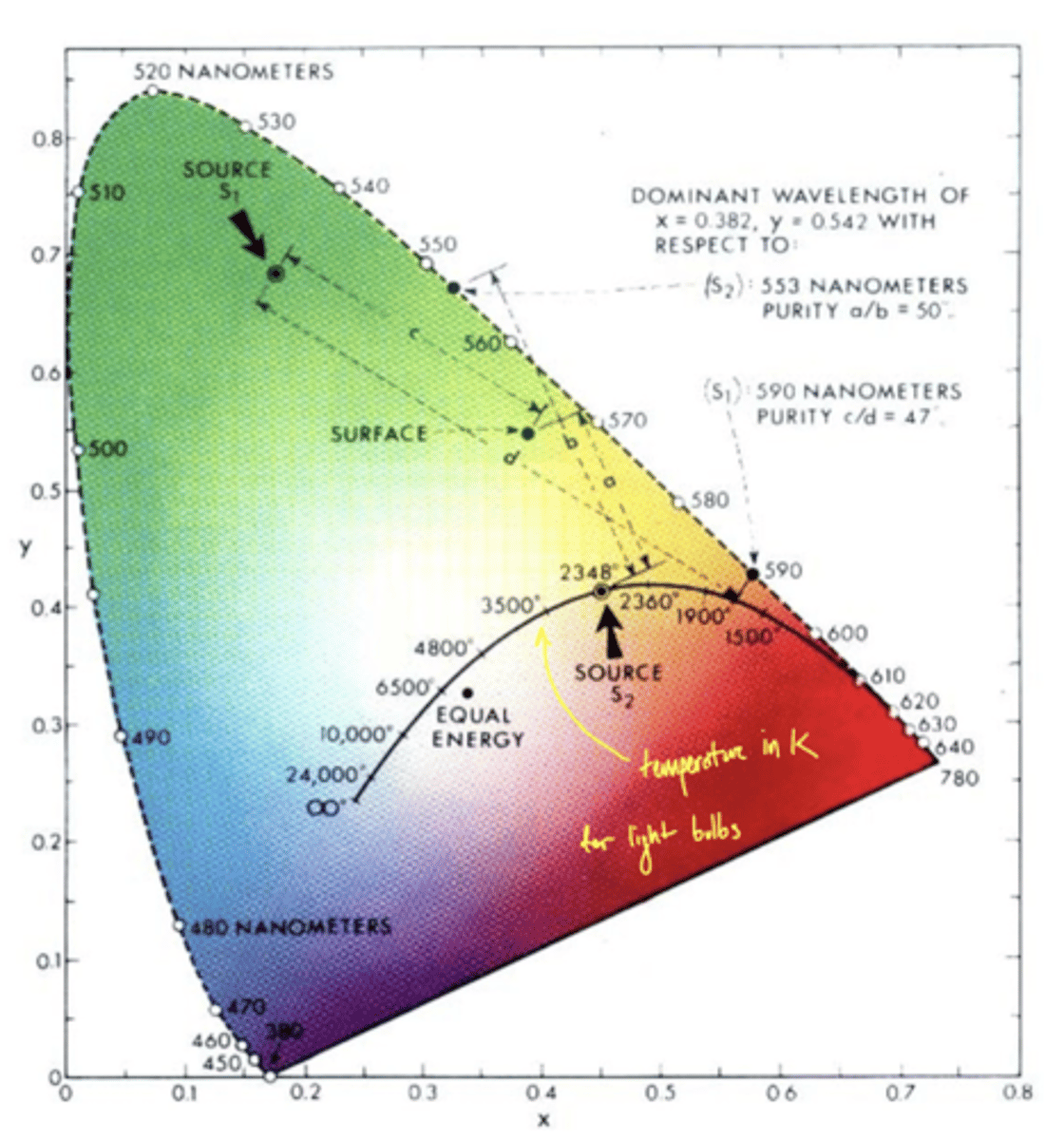
What is the assumption of the variables (x,y,z) in order to make the CIE space 2-dimensional?
x + y + z = 1
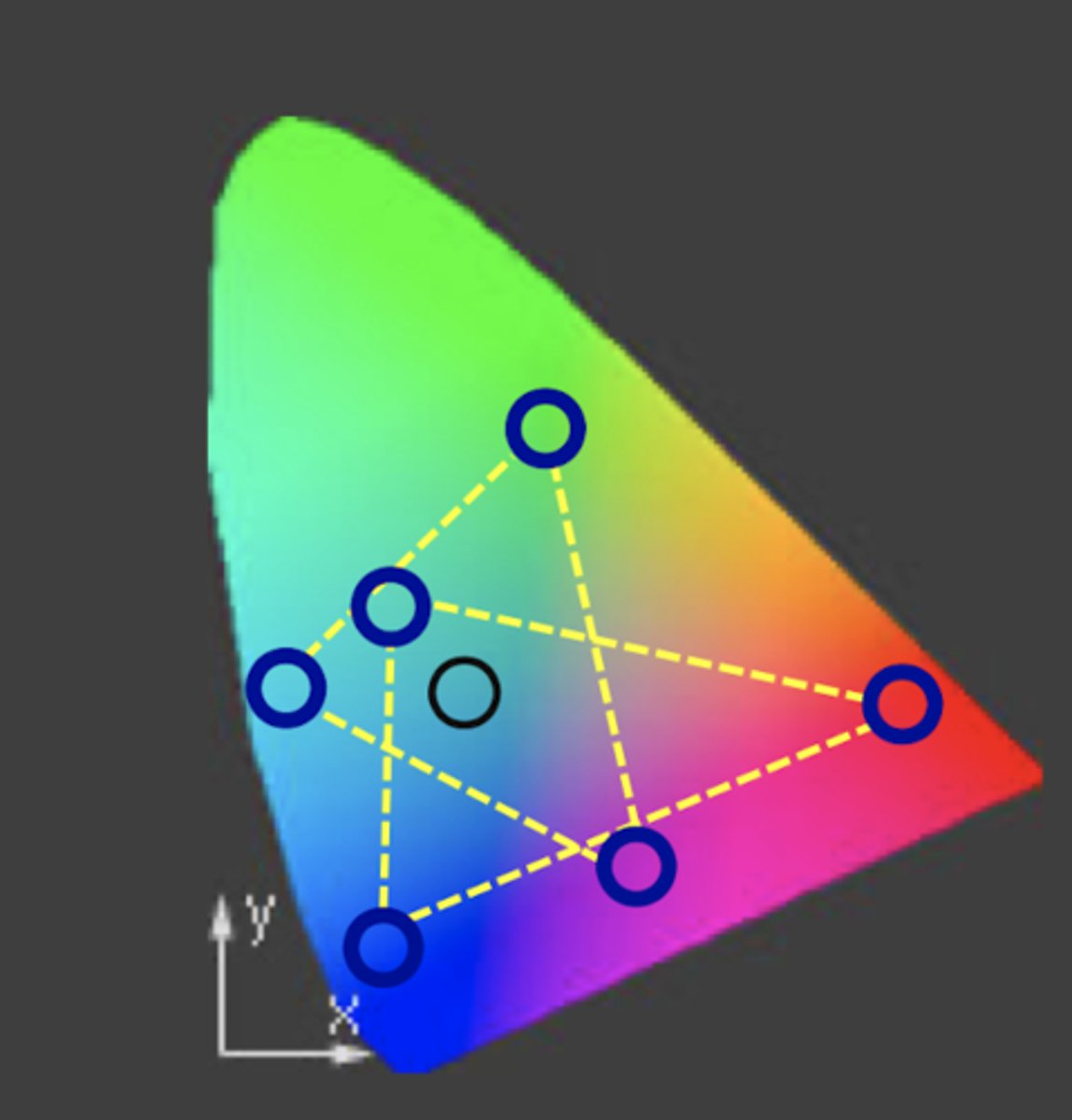
How many combinations are there for an individual color in the CIE space?
infinite number of mixture combinations
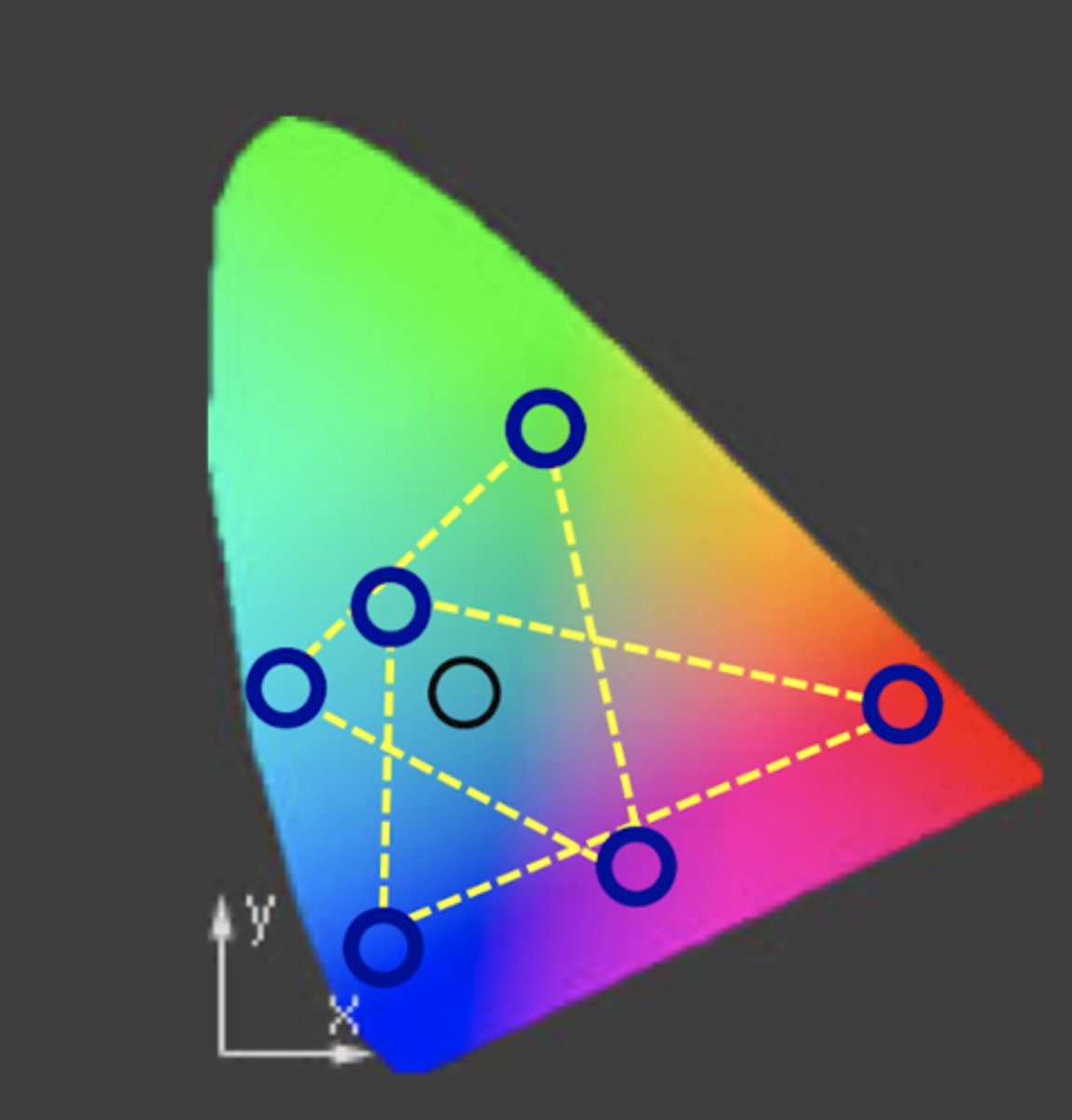
What is an example of the term gamut being used?
standard gamut of many displays (TVs, computers, etc.)