essay 12 - regional block Anaesthesia of the mandible (intra- and extraoral) . Anatomic and topographic features. Techniques
 Call Kai
 Learn
Learn Practice Test
 Spaced Repetition
 Match
Match Flashcards
 Knowt Play
1/16

There's no tags or description
Looks like no tags are added yet.
Name | Mastery | Learn | Test | Matching | Spaced | Call with Kai |
|---|
No analytics yet
Send a link to your students to track their progress
17 Terms
describe mandibular nerve block
anesthetises the mandibular branch of the trigeminal nerve
intraoral methods; manual or visual
extra oral methods
What are Manual Intraoral Methods
it is where we use the operator's finger to palpate anatomical structures
list the manual intraoral methods
inferior alveolar nerve block (halsted)
gow gates
akinosi - vazirani
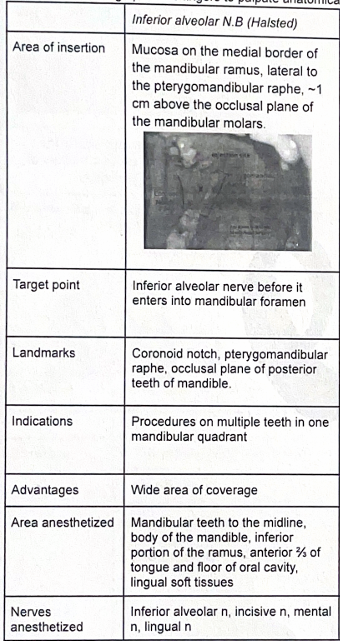
describe inferior alveolar nerve block (Halsted)
Patient = semi supine. Wide open mouth
procedure:
retract cheek laterally
palpate the coronoid notch with your thumb
insert needle 1CM above mandibular molar occlusal plane, the lateral pterogroid mandibular raphe
advance needle ~20-25mm until bone is contacted
withdraw 1mm, aspirate
slowly inject
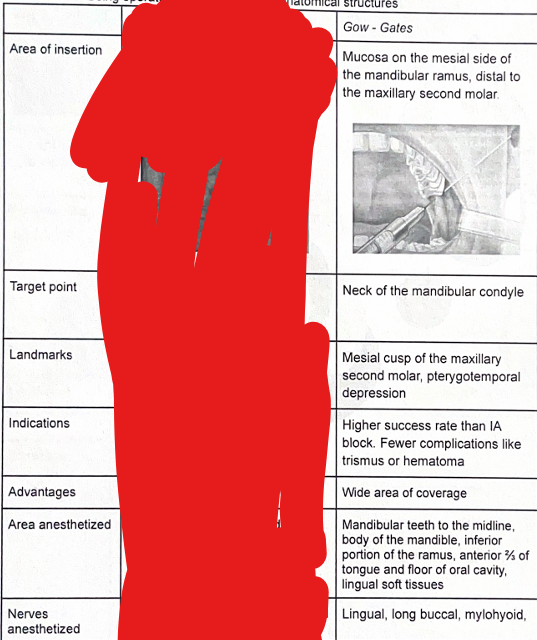
describe Gow- gates
nerves anaesthetised - (cut off in the picture) auriculotemporal
Patient = wide open mouth, Extended neck
procedure:
ask the patient to open mouth as wide as possible
retract cheek
locate the mesial cusp of Maxillary second molar (intraoral landmark)
insert needle distal to second molar at the height of the mesolingual cusp
aim for neck of condyle (needle directed toward tragus)
advanced needle until bone is gently contacted
withdraw slightly, aspirate
inject
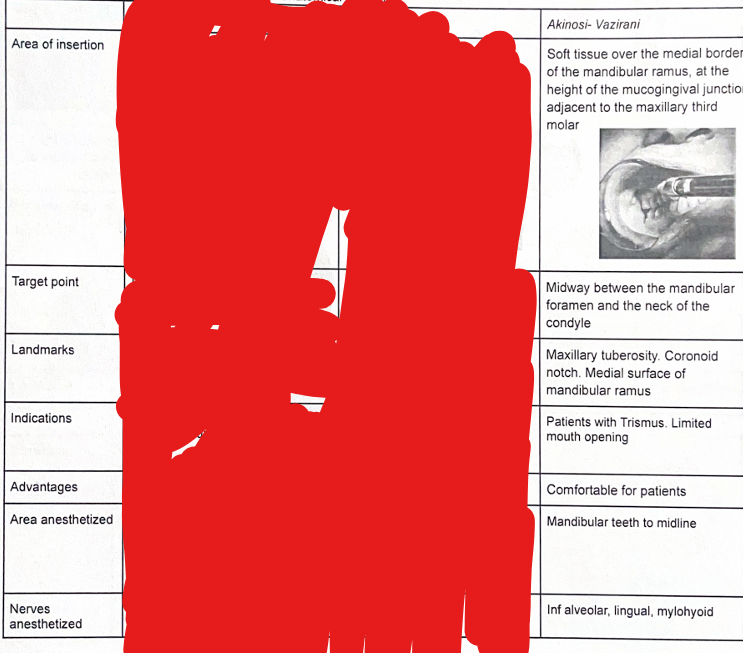
describe akinosi-vazirani
Patient = head tilted backwards and teeth closed gently
procedure:
ask the patient to gently close teeth
retract cheek; locate maxillary tuberosity
insert needle at Mucogingival junction above the mandibular 3rd molar area
keep the needle parallel to the maxillary occlusal plane
advance ~25mm Without contacting bone
aspirate
aspirate inject slowly
What are visual methods
without palpation of anatomical structures
list of visual methods
Torusal anesthesia ( Weisbrem)
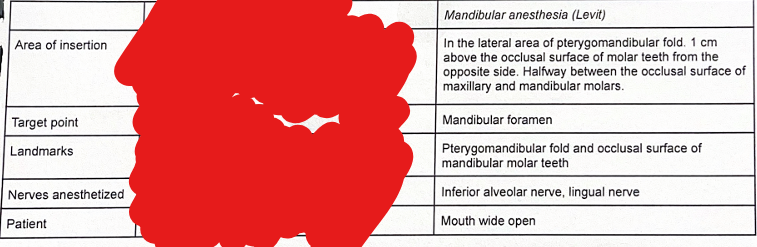
Mandibular anesthesia (Levit)
describe the Torusal anesthesia (weisbrem) technique
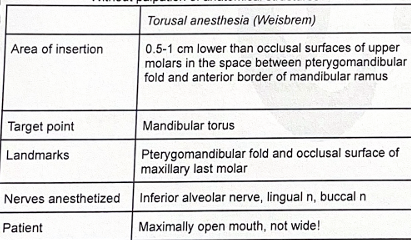
Describe the Mandibular anesthesia (Levit) technique
other visual methods that weren't mentioned (look into if you have time)
long buccal nerve block
mental and incisive nerve block
Dr G said it's not necessary for erin
list the extra oral methods of regional block anaesthesia of the mandible
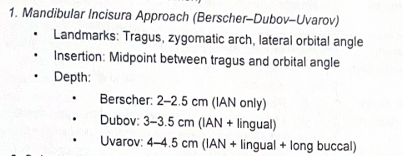
Mandibular incisura approach (Berscher-Dubov-Uvarov)
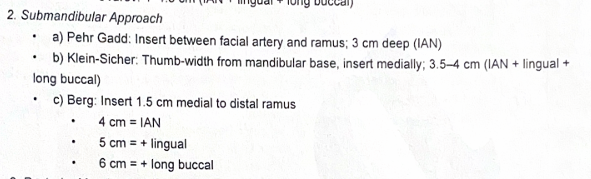
Submandibular approach
Posterior mandibular approach (Pekkert-Wustrow)
Anterior mandibular approach (Fetissov)
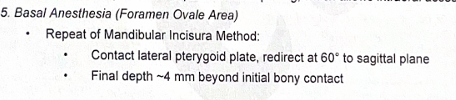
Basal anesthesia (foramen ovale area)
Describe Mandibular incisura approach (Berscher-Dubov-Uvarov)
Describe Submandibular approach
describe posterior mandibular approach (Pekkert-wustrow)
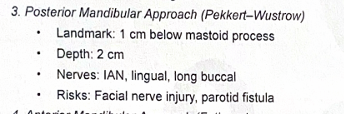
describe Anterior Mandibular approach (Fetissov)

describe basal anesthestia (foramen ovale area)