Chapter 3: Financial Statements, Cash Flow & Taxes
 Call Kai
 Learn
Learn Practice Test
 Spaced Repetition
 Match
Match Flashcards
 Knowt Play
1/37

There's no tags or description
Looks like no tags are added yet.
Name | Mastery | Learn | Test | Matching | Spaced | Call with Kai |
|---|
No analytics yet
Send a link to your students to track their progress
38 Terms
Annual Report
A report issued annually by a corporation to its stockholders. It contains basic financial statements as well as management's analysis of the firm's past operations and future prospects.
Verbal and financial statements
2 Sections of Annual Report
Balance Sheet
Shows what assets the company owns and who has claims on those assets as of a given date
Income Statement
shows the firm's sales and costs during some past period
Statement of Cashflow
shows how much cash the firm began the year with, how much cash it ended up with, and what it did to increase or decrease its cash.
statement of stockholders' equity
shows the amount of equity the stockholders had at the start of the year, the items that increased or decreased equity, and the equity at the end of the year.
Balance Sheet
A statement of a firm's financial position at a specific point in time.
Assets, Liabilities, common equity
3 main topics of Balance Sheet
Stockholders' equity
It represents the amount that stockholders paid the company when shares were purchased and the amount of earnings the company has retained since its origination.
retained earnings
They represent the cumulative total of all earnings kept by the company during its life.
Stockholders' Equity
=Paid-in Capital + Retained Earnings
Stockholders' Equity
=total assets - Total liablitlies
Current assets
Working Capital
net working capital
=Current assets - current liabilities.
net operating working capital (NOWC)
=Current assets - (Current Liabilities - Notes Payable)
Non-interest-bearing current liabilites
Total Debt
= Short Term Debt + Long Term Debt
Total Liabilities
= total debt + (Accounts payable + accruals)
income statements
Reports summarizing a firm's revenues, expenses, and profits during a reporting period, generally a quarter or a year.
Operating income
Earnings from operations before interest and taxes (i.e., EBIT).
EBIT
=Sales - Operating Costs
Earnings Per Share (EPS)
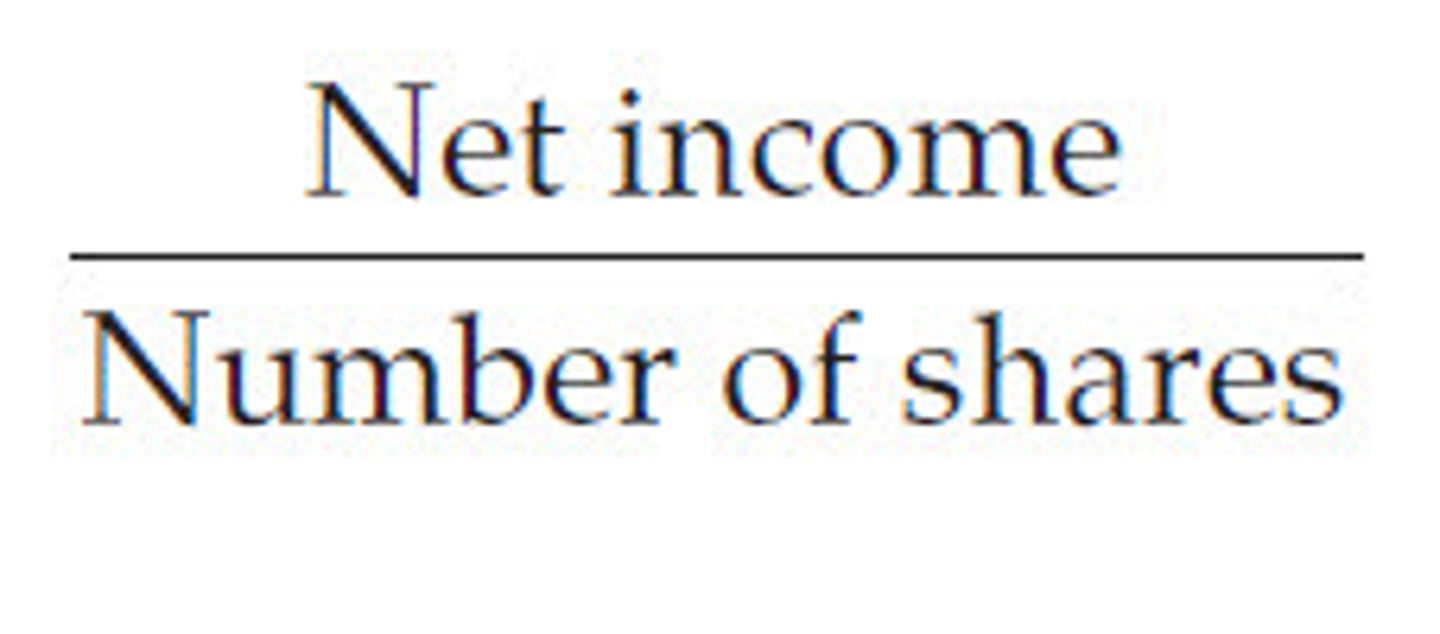
Dividends Per Share (DPS)
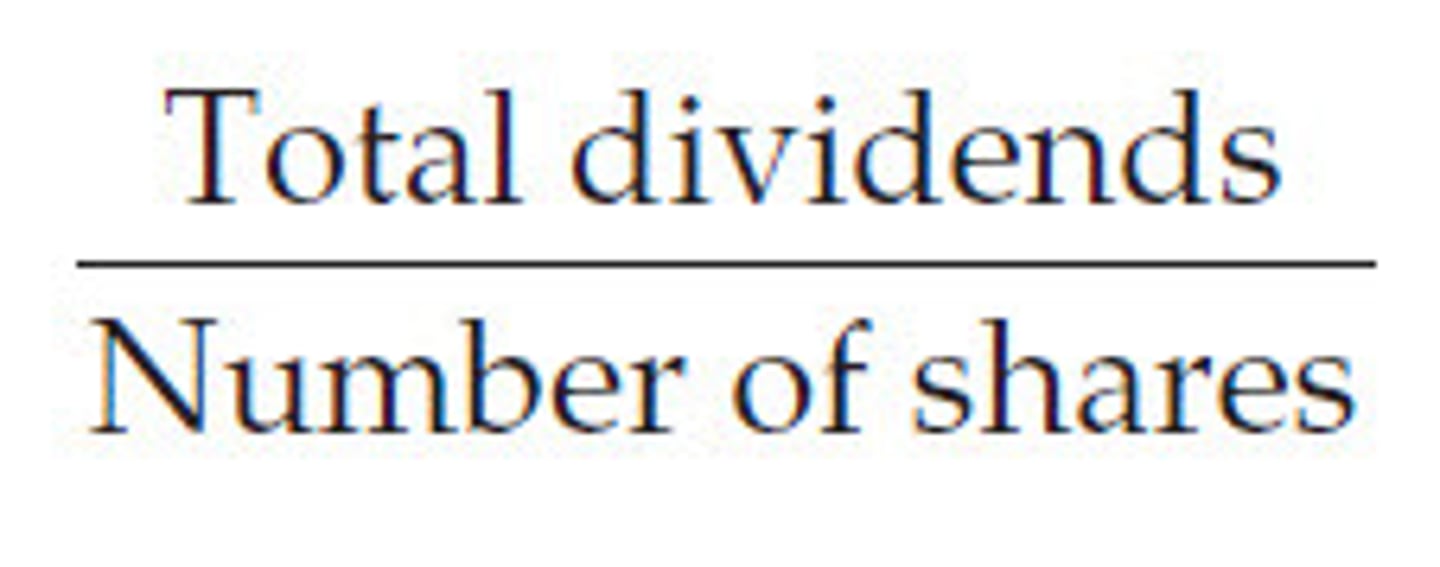
Book Value Per Share (BVPS)
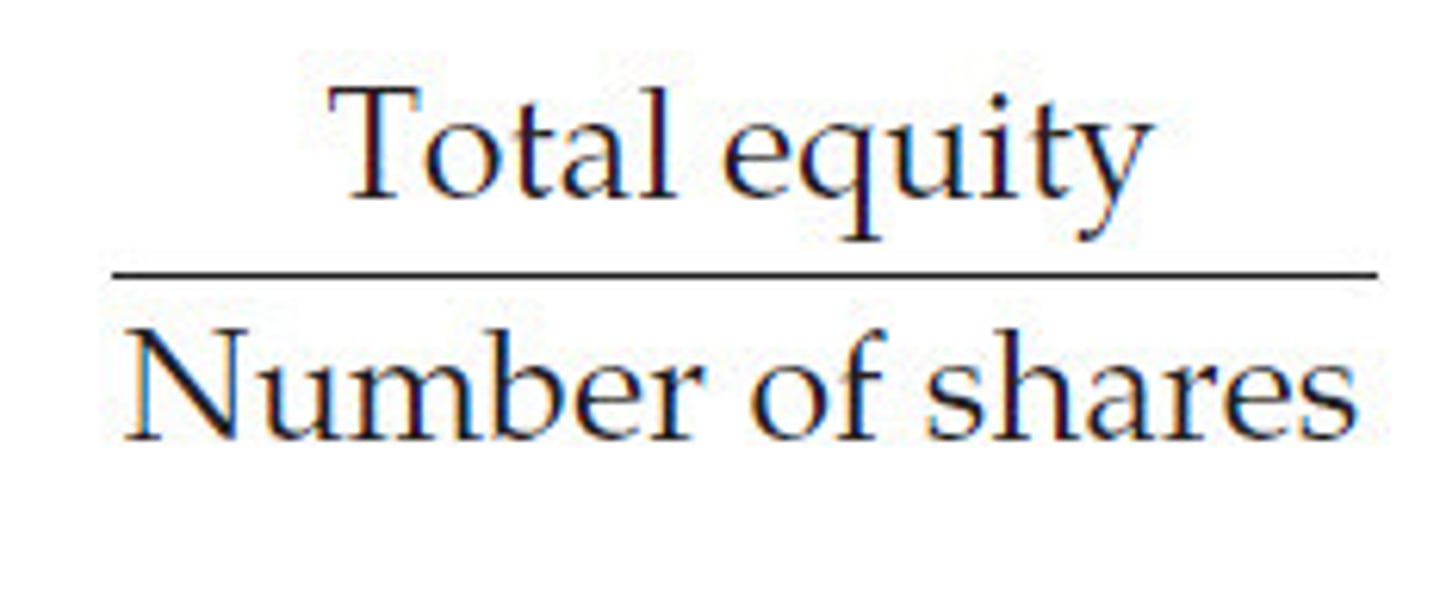
Depreciation
The charge to reflect the cost of assets depleted in the production process.
***not a cash outlay
Amortization
A noncash charge similar to depreciation except that it represents a decline in value of intangible assets
EBITDA
Earnings before interest, taxes, depreciation, and amortization.
statement of cash flows
A report that shows how items that affect the balance sheet and income statement affect the firm's cash flows.
operating, investing, financing
3 different sections on statement of cash flows
statement of stockholders' equity
A statement that shows by how much a firm's equity changed during the year and why this change occurred.
Retained Earnings
________ ________ as reported on the balance sheet do not represent cash and are not "available" for dividends or anything else
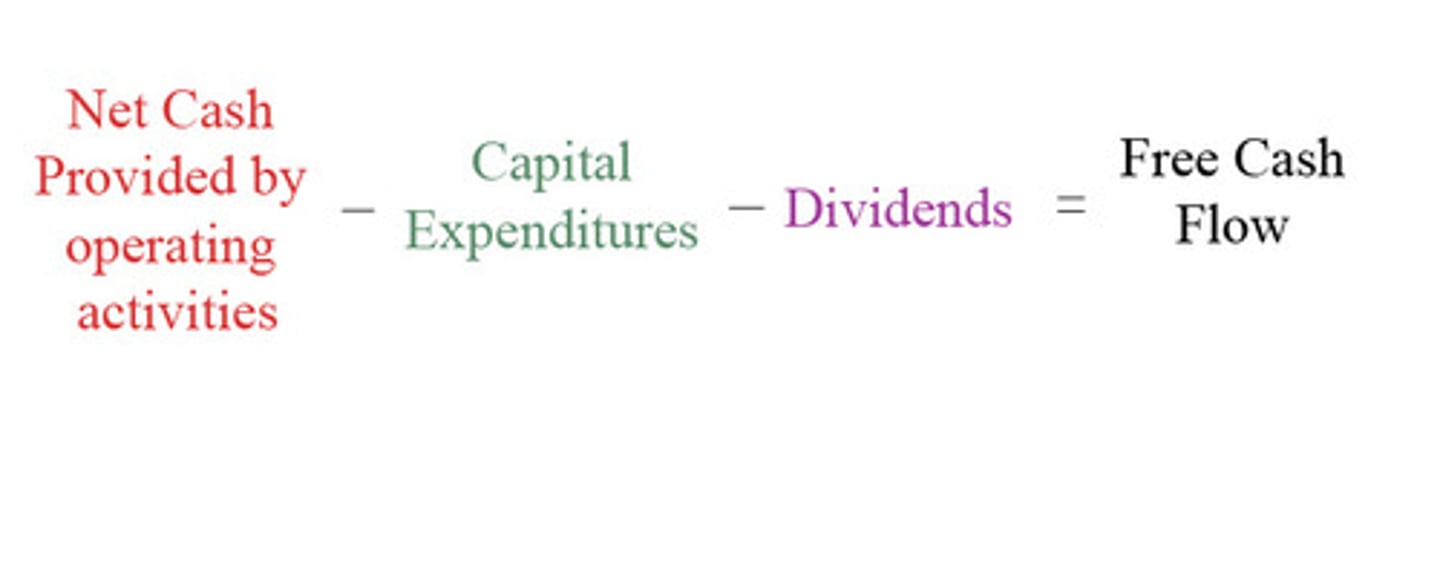
free cash flow (FCF)
The amount of cash that could be withdrawn without harming a firm's ability to operate and to produce future cash flows.
free cash flow (FCF)
Dividends= Change in Net Operating Working Capital
Add back depreciation and amorization
net operating profit after taxes (NOPAT)
The profit a company would generate if it had no debt and held only operating assets.
market value added (MVA)
The excess of the market value of equity over its book value.
MVA
= Market Value - Book Value
Market Value = stock price outstanding shares
economic value added (EVA)
Excess of NOPAT over capital costs.
EVA
=NOPAT - Annual dollar cost of capital
Annual dollar cost of capital
= Total invested Capital * After Tax Percentage cost of capital