4 - 01 Earth's Neighborhood
 Call Kai
 Learn
Learn Practice Test
 Spaced Repetition
 Match
Match Flashcards
1/8

There's no tags or description
Looks like no tags are added yet.
Name | Mastery | Learn | Test | Matching | Spaced | Call with Kai |
|---|
No analytics yet
Send a link to your students to track their progress
9 Terms
Planet
A celestial body moving in orbit around a star, which is spherical in shape, and has enough mass to clear its orbit of other similar sized bodies. Earth is a planet.
Star
A massive self-luminous celestial body of gas that shines by radiation derived from its internal energy sources.
Solar System
A star and all the celestial bodies which orbit it due to the
gravitational pull of its mass.
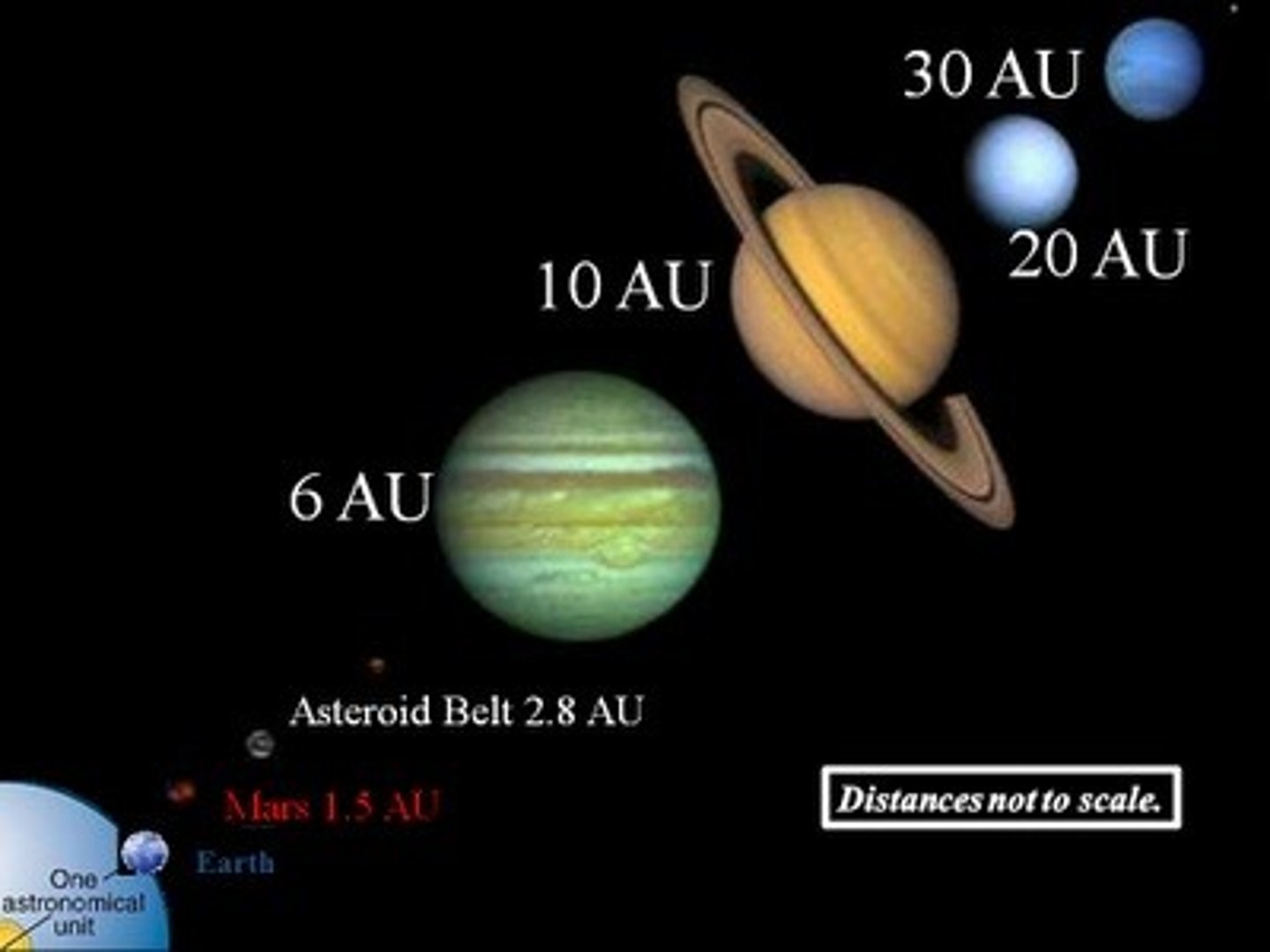
Astronomical Unit
The distance from the center of the earth to the center of
the sun. Equal to 149.6 million kilometers.
Gravitational Pull
The pull that exists between all objects caused by the force of gravity. Larger objects have a larger gravitational pull.
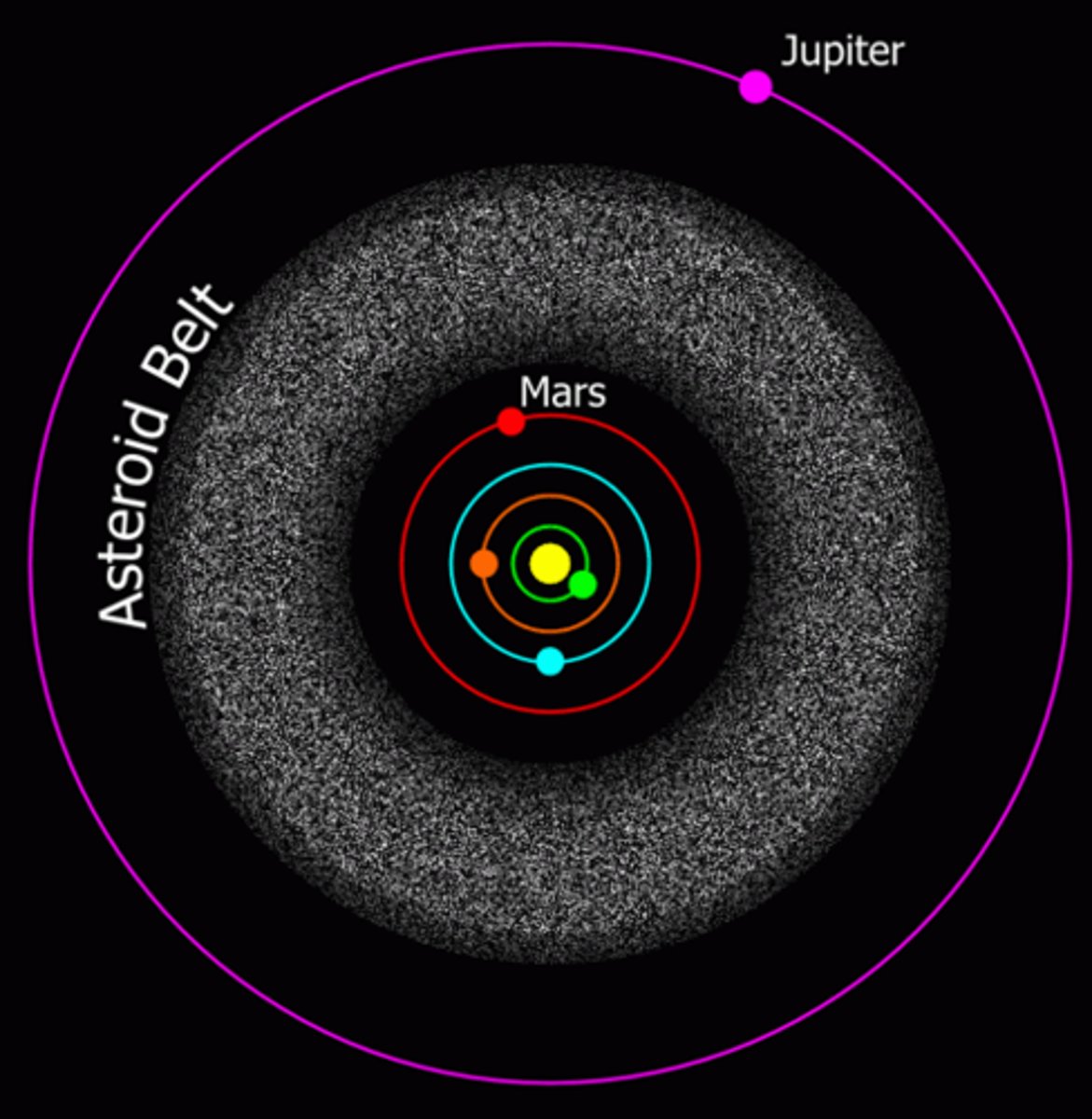
Asteroid Belt
A belt of asteroids separating the inner planets from the outer planets.
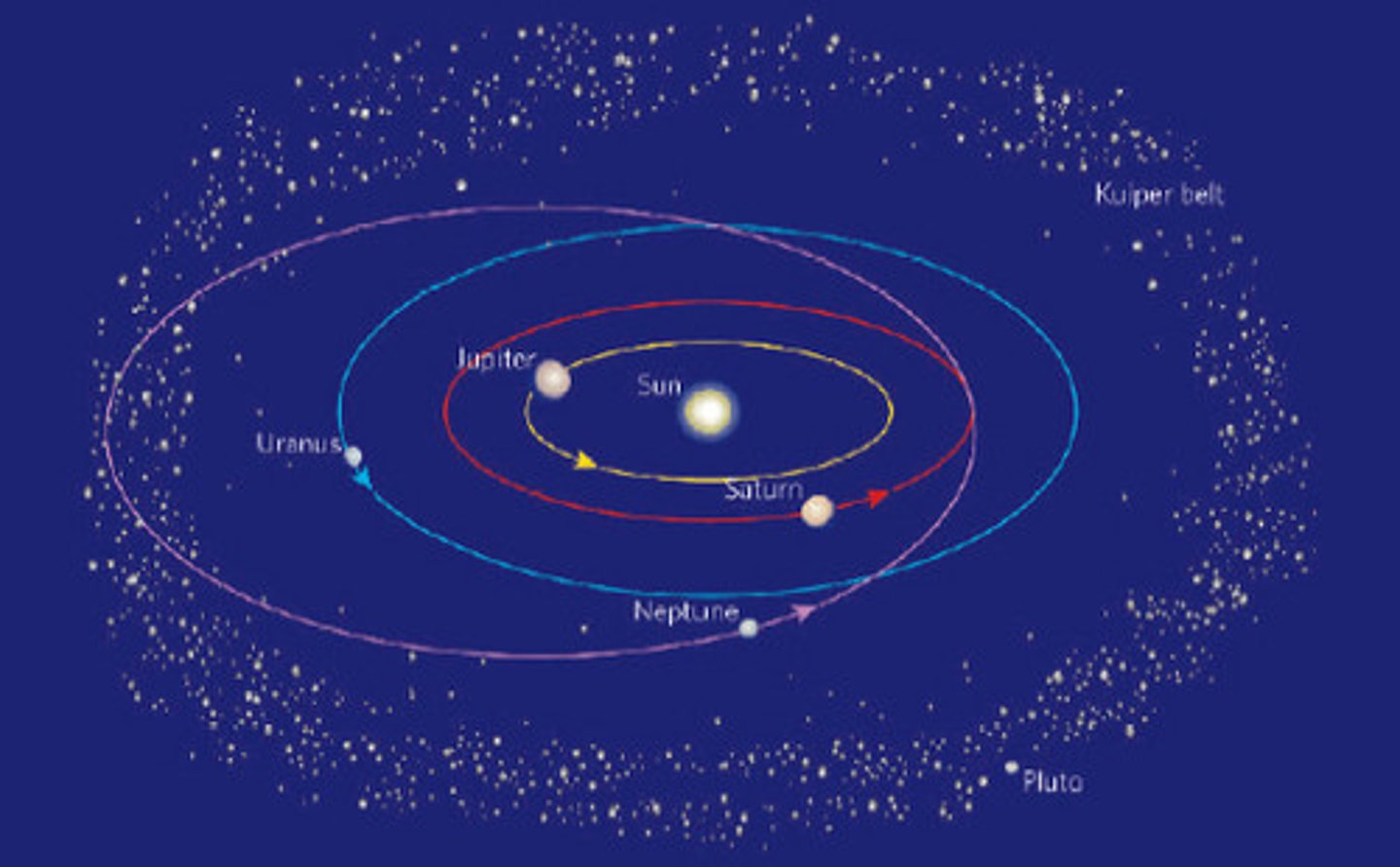
Kuiper Belt
A disc-shaped region beyond the orbit of Neptune containing thousands of small icy bodies, including 4 dwarf planets.
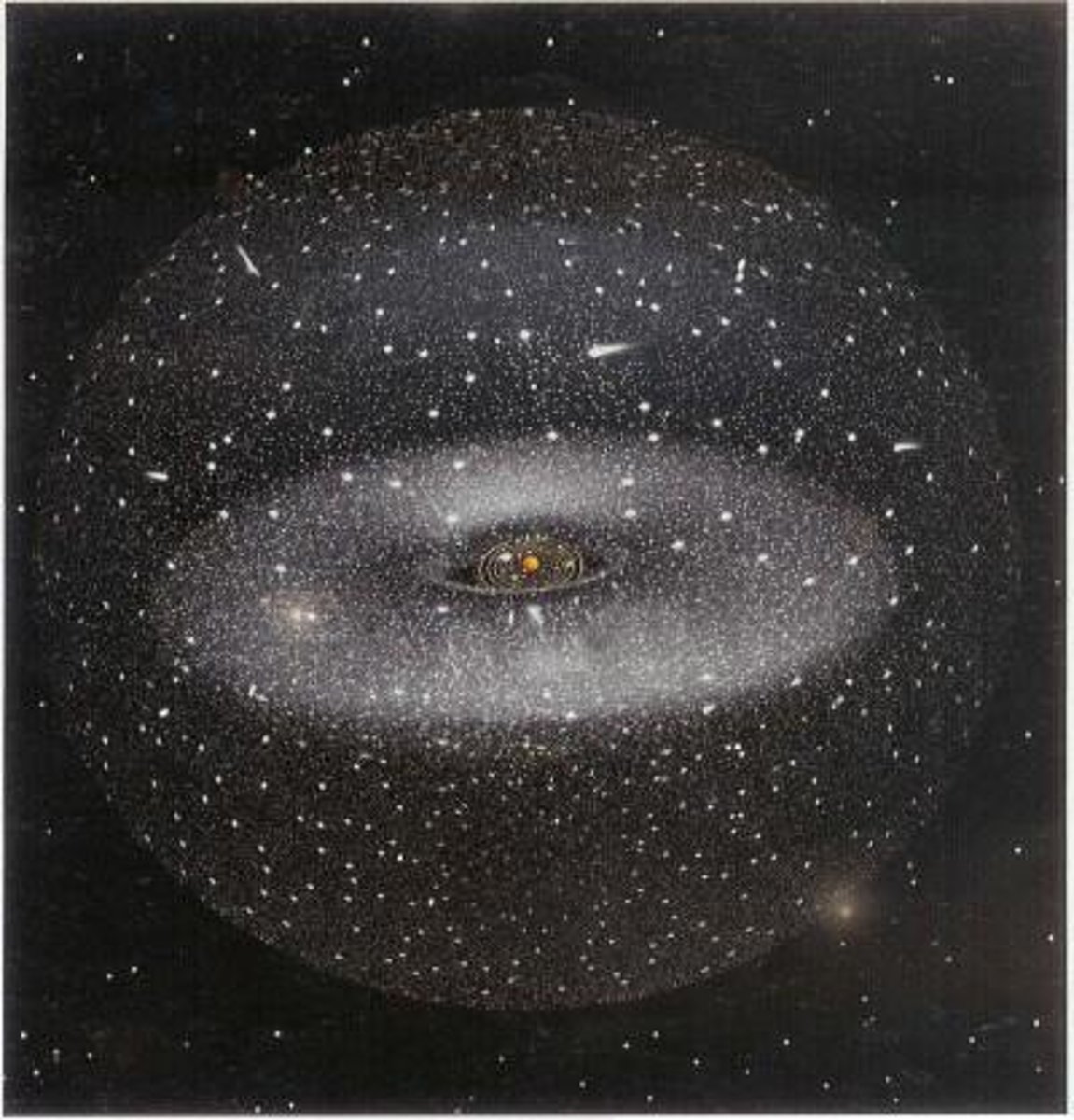
Oort Cloud
A spherical layer of icy objects surrounding our sun, at a distance of 2,000 to 100,000 AU. Origin of long-period comets.
Galaxy
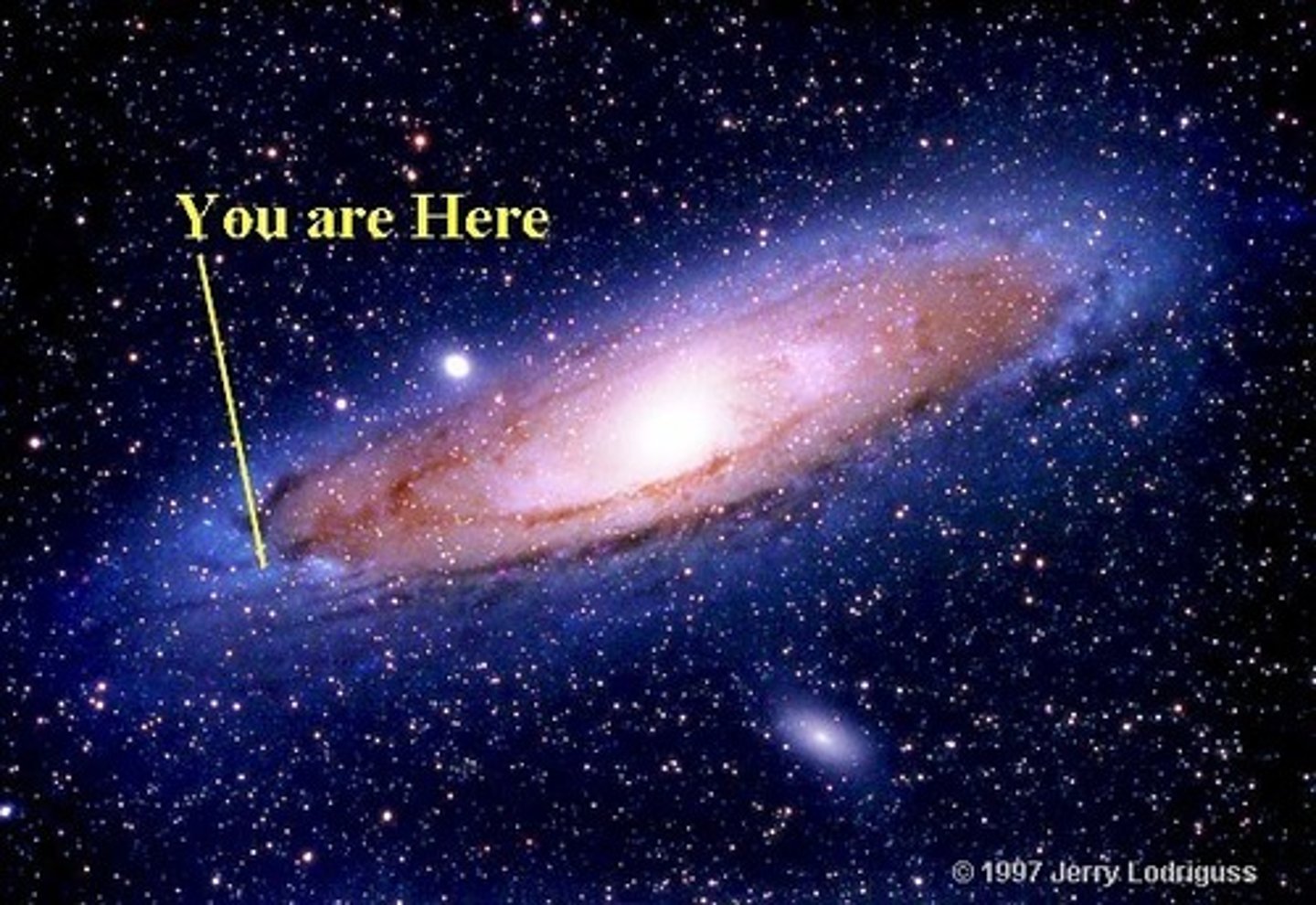
A massive collection of gas, dust, and billions of stars with their planetary systems, held together by gravity, often with a black hole at the center. Our galaxy is the Milky Way.