Test 16 Chapters 50 & 52 Study Guide
 Call Kai
 Learn
Learn Practice Test
 Spaced Repetition
 Match
Match Flashcards
 Knowt Play
1/61

There's no tags or description
Looks like no tags are added yet.
Name | Mastery | Learn | Test | Matching | Spaced | Call with Kai |
|---|
No analytics yet
Send a link to your students to track their progress
62 Terms
What causes scleroderma?
It is caused by "excess collagen production which leads to thickening and tightening of the skin." The etiology is unknown, but genetic and environmental factors are thought to contribute
(Note:) The body makes too much “skin glue,” so the skin gets tight and hard.
What is used in the treatment of gout?
Treatment includes NSAIDs, colchicine, and corticosteroids.
(Note:) Medicines reduce the painful swelling in the joints.
What are the initial presenting symptoms seen in >90\% of Systemic Lupus Erythematosus patients?
Fatigue, malaise, fever, anorexia, and weight loss.
What is the Mucocutaneous Clinical Manifestation of Systemic Lupus Erythematosus?
The hallmark skin lesion is the malar rash or the butterfly rash on the cheeks and nasal bridge; alopecia and sun sensitivity.
What are the Musculoskeletal manifestations of Systemic Lupus Erythematosus?
Arthralgias, polyarthritis, tenosynovitis, rupture of the intrapatellar and Achilles tendons, and avascular necrosis.
What are the SYSTEMIC clinical manifestations of Systemic Lupus Erythematosus (SLE)?
It can involve the kidneys (nephritis), lungs (pleural effusion), heart (pericarditis), and blood (anemia, leukopenia).
What causes osteoarthritis?
Age-related and/or trauma-induced.
(Note:) The joints wear down over time, like old hinges.
What is the difference between primary and secondary osteoarthritis?
Primary OA: intrinsic defects in articular cartilage.
Secondary OA: caused by congenital defects, trauma, infection, metabolic disorders, or inflammatory diseases.
(Note:) Primary happens on its own; secondary is caused by something else damaging the joint.
What does juvenile dermatomyositis (dermato=skin, (myo=muscle, itis=inflammation) cause?
Causes inflammation of the connective tissues in the body, such as tendons, blood, and adipose tissue, which in turn cause muscle weakness and a skin rash.
(Note:) Kids get weak muscles and a rash because their tissues are inflamed.
What is juvenile spondyloarthropathies (spondlyo= spine, arthro=joint, pathy=disease) associated with?
Peripheral joint involvement (large lower limb joints), axial skeleton (spine and sacroiliac), enthesitis, and human leukocyte antigen (HLA) B27 positivity.
(Note:) It makes leg joints and the spine stiff, sore, and inflamed.
What are the clinical manifestations of osteoarthritis?
• Pain that is typically worse later in the day and relieved by rest.
• Joint swelling and tenderness, with or without crepitus.
• Bony enlargement in prolonged or severe OA.
• Joint pain, minimal morning stiffness, and functional impairment in patients older than 50 years.
How does juvenile systemic lupus erythematosus (jSLE) differ from adult SLE?
jSLE shows increased disease activity, damage, and requires more aggressive treatment compared to adult-onset SLE.
(Note:) Kids get a more aggressive, stronger form of lupus.
What are the clinical manifestations of juvenile idiopathic arthritis (JIA)?
Inflammatory joint disease - synovitis, joint effusion, soft tissue swelling, osteopenia, bone edema, and erosions
Developmental age - epiphyseal growth disturbances, premature physeal fusion, and limb length inequality.
(Note:) It causes swollen joints and can affect how bones grow.
What is the most prevalent form of arthritis in adults?
Osteoarthritis (OA).
(Note:) The most common arthritis is the one where joints wear down.
What does ankylosing spondylitis produce?
Produces an inflammatory erosion of the sites where tendons and ligaments attach to bone. This results in the destruction of joints with ankylosis or posterior fusion of the spine.
(Note:) It causes the spine to stiffen and fuse together over time.
What are the 5 subgroups of psoriatic arthritis?
Asymmetric (mild form)
Spondylitis (spine/neck stiffness)
Symmetric (∼50% of cases)
DIP (Inflammation and stiffness occurring near the ends of the fingers)
Mutilans (most severe).
(Note:) Psoriatic arthritis can show up in several different ways affecting joints or fingers.
What causes reactive arthritis?
Usually occurs weeks after gastrointestinal or urogenital infections, upper respiratory infections, or BCG treatment for bladder cancer.
(Note:) It happens after certain infections trigger joint inflammation.
How is dermatomyositis diagnosed?
Based on characteristic rash or preceding subacute muscle weakness, plus physical exam, blood tests (to check muscle enzymes, antibodies), MRI, ultrasound, and muscle biopsy.
(Note:) Doctors look for a special rash, weak muscles, blood findings, and imaging/biopsy results.
What is the initial phase of scleroderma?
“Puffy finger phase” – inflammation and non-pitting edema of the hands.
(Note:) Fingers get swollen and puffy.
What happens in the fibrotic (second) phase of scleroderma?
Skin fibrosis and thickening (sclerodactyly).
(Note:) The skin becomes hard and stiff, limiting movement.
What occurs in the final skin-softening phase of scleroderma?
Skin may soften and return to clinically normal, but underlying subcutaneous tissue remains fibrotic.
(Note:) The skin feels softer, but the inside tissues stay tight.
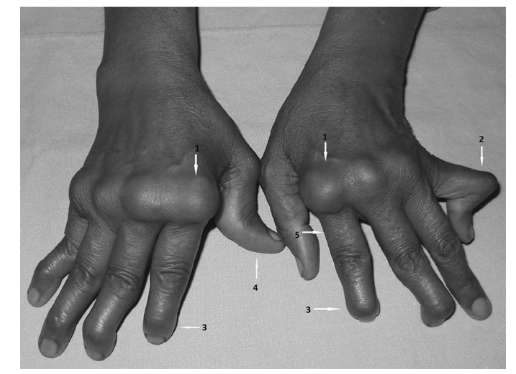
What disease is shown in a late-stage image with joint deformities?
Rheumatoid arthritis (RA), late stage.
(Note:) The hands become misshapen from long-term inflammation.
What are risk factors for rheumatoid arthritis?
Female sex, older age, family history, and smoking.
(Note:) Being a woman, older, having RA in the family, or smoking increases risk.
What characterizes xerosis?
Excessively dry skin; symptoms: scaling, itching, and fissures.
(Note:) The skin becomes very dry and flaky.
What causes vitiligo?
Absence of pigmentary cells in the epidermis, causing white macules and patches.
(Note:) The skin loses color in some spots because pigment cells disappear.
What are the clinical manifestations of albinism?
Pale complexion, white/fair hair, and eyes that may appear red, greenish-blue or light brown depending on iris pigment.
(Note:) People have very light skin, hair, and eyes due to lack of pigment.
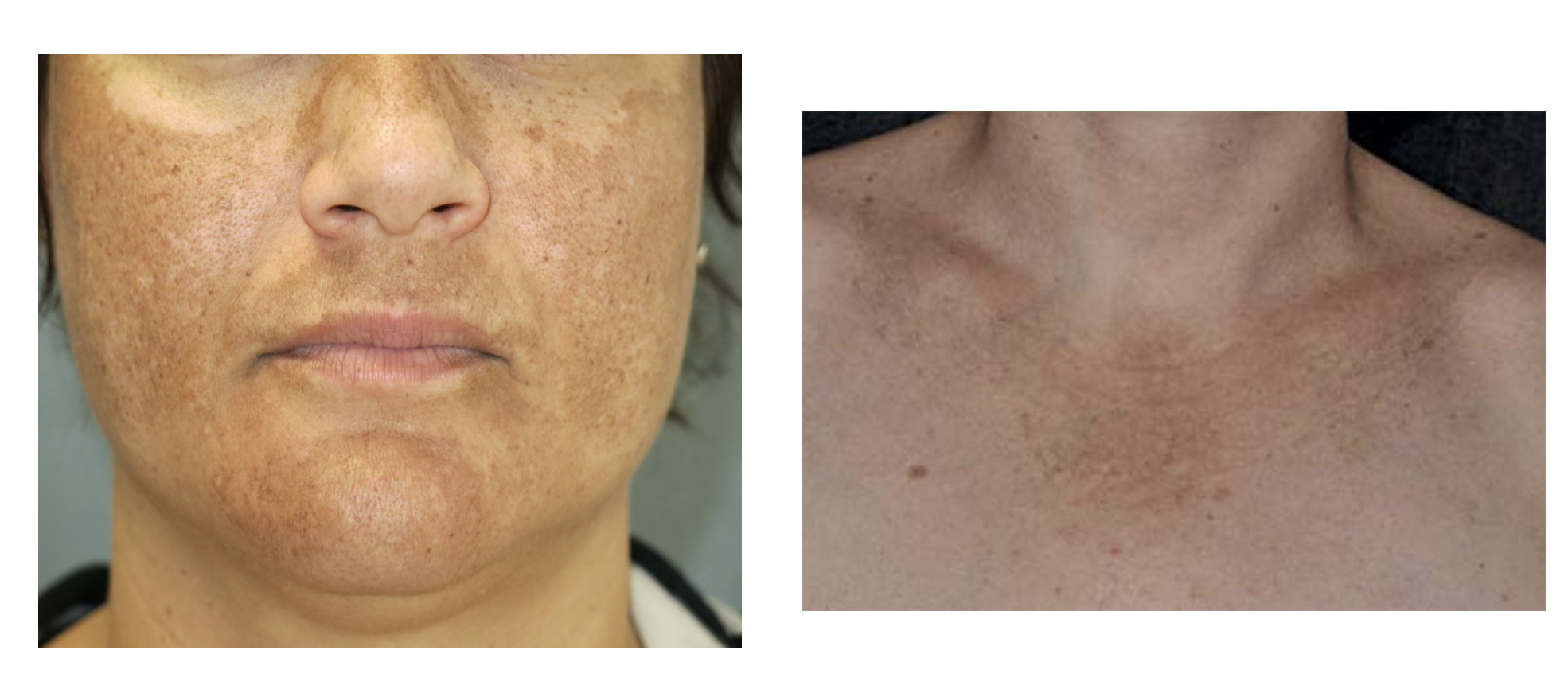
What characterizes melasma?
Characterized by irregular brown macules symmetrically distributed on sun-exposed areas of the body (especially the face).
(Note:) Brown skin patches appear in areas the sun hits.
What is the most common fungal infection in adolescents and adults?
Tinea unguium (onychomycosis).
(Note:) A fungal infection of the toenails or fingernails.
What is tinea cruris?
“Jock itch,” usually in adolescent/young adult males, affecting upper thigh opposite the scrotum, sparing the scrotum.
(Note:) A fungus causes an itchy rash on the inner thighs.
Know who the different types of tinea fungal infections affect.
• Tinea corporis and tinea capitis: Most common in prepubertal children.
• Tinea capitis: Most commonly affects children of African heritage between ages 3-9.
• Tinea cruris (jock itch): Most commonly affects adolescent and young adult males.
• Tinea unguium (onychomycosis): Most common in adolescents and adults
What causes tinea incognito?
It is caused by corticosteroid (systemic or topical) that is prescribed for a pre-existing disease or given mistakenly for the treatment of misdiagnosed tinea.
(Note:) Steroid creams hide the infection and make it worse.
What causes verrucae?
Benign papillomas caused by human papillomavirus (HPV).
(Note:) Warts are caused by a virus.
What is the treatment for impetigo?
Topical and oral antibiotics, plus symptomatic care.
(Note:) Antibiotics clear the skin infection.
What does ecthyma cause?
Causes ulcerative lesions to penetrate through the epidermis and deep into the dermis. These appear as "punched out" lesions."
(Note:) It makes deep, sore skin ulcers.
Which body part is most commonly affected by cellulitis?
Lower limb.
(Note:) Cellulitis usually affects the legs.
Where are verrucae plana commonly found?
Face or dorsal surfaces of the hands.
(Note:) Flat warts appear mainly on the face or hands.
What causes herpes zoster?
Reactivation of the varicella zoster virus (chickenpox).
(Note:) The chickenpox virus wakes up again and causes shingles.
What causes and characterizes rosacea?
Chronic inflammatory disease of the centrofacial region (cheeks, chin, nose, forehead, eyes), with recurrent flushing, persistent erythema, papules/pustules, and telangiectasia.
(Note:) The face gets red, flushed, and bumpy over time.
Caused by anaphylaxis allergic reaction
Urticaria (hives).
(Note:) Allergic reactions can cause itchy red welts.
What is irritant contact dermatitis?
Inflammatory cutaneous condition caused by skin barrier disruption, in combination with the activation of innate immune responses.
(Note:) Something harsh touches the skin and irritates it.
Who is more likely to have allergic contact dermatitis?
People with eczema since childhood.
(Note:) People with eczema are extra sensitive to allergens.
What is Stevens-Johnson syndrome (SJS)?
It is a dermatological condition (skin reaction) occurring from severe epidermolysis, presenting as severe exfoliative reactions affecting mainly the skin and mucous membranes.
(Note:) A rare severe reaction that makes skin blister and peel.
What causes scabies?
Parasitic mites transmitted via skin-to-skin contact.
(Note:) Tiny bugs burrow in the skin and cause itching.
Where is pediculosis found?
Head lice: scalp;
Body lice: clothing/bedding, move to skin to feed;
Pubic lice: pubic area, or sometimes in the beard or axillae.
(Note:) Lice can live in hair, clothes, or the pubic area depending on type.
What is a keloid?
Hypertrophied scar tissue from excessive collagen during healing; elevated, irregular, red.
(Note:) A scar grows too big and becomes thick and raised.
What are the types of non-melanoma skin cancers (NMSC)?
Bowen’s disease, basal cell carcinoma (BCC), squamous cell carcinoma (SCC).
(Note:) These are the common skin cancers not caused by melanoma.
What are the characteristics of a first-degree burn?
affect the uppermost layer of the skin (epidermis only); red skin; pain is limited.
(Note:) Like a mild sunburn.
What are the characteristics of a second-degree burn?
Superficial partial-thickness; painful, weepy, requires dressing, may scar, but does not require surgery.
(Note:) Causes blisters and hurts a lot.
What are the characteristics of a third-degree burn?
Full-thickness through dermis; usually not painful due to nerve damage; requires infection protection and often surgical management.
(Note:) The nerves are damaged, so it doesn’t hurt but is very serious.
What are the characteristics of a fourth-degree burn?
injury to deeper tissues, such as muscle or bone, is often blackened and frequently leads to loss of the burned part.
What is a Stage I pressure ulcer?
Persistent redness in lightly pigmented skin or an area of persistent redness with blue or purple hues in darker skin.
(Note:) The skin is irritated but not broken.
What is a Stage II pressure ulcer?
Partial-thickness loss of skin involving epidermis or dermis or both; ulcer is superficial and presents as abrasion, blister, or shallow crater.
(Note:) The skin breaks open or blisters.
What is a Stage III pressure ulcer?
Full-thickness skin loss with damage/necrosis of subcutaneous tissue; ulcer appears as a deep crater.
(Note:) The sore goes deeper under the skin.
What is a Stage IV pressure ulcer?
Full-thickness skin loss with extensive destruction; may involve muscle, bone, and supporting structures.
(Note:) The sore is very deep, reaching muscle or bone.
What are port wine stains?
Pink or red patches that represent slow-growing capillary malformations that grow proportionately with the child and persist throughout life.
(Note:) Birthmarks made of tiny blood vessels.
What is psoriasis?
Chronic skin condition caused by skin cells that multiply faster than normal due to a dysregulated immune system.
(Note:) Skin grows too fast and forms red, scaly patches.
What does lichen simplex chronicus look like?
Characterized by itchy, reddened, thickened, and scaly patches of dry skin, "tree bark" appearance.
(Note:) The skin gets thick because it’s scratched a lot.
What is lichenification?
Thickening and roughening of the skin or accentuated skin markings that may be secondary to repeated rubbing, irritation, or scratching.
(Note:) The skin becomes tough and leathery.
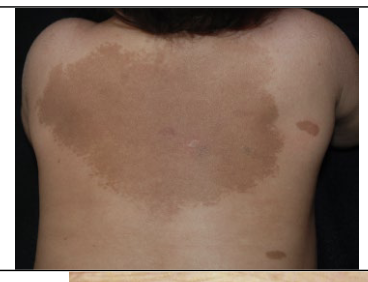
Plaque.
(Note:) A big, raised patch on the skin.
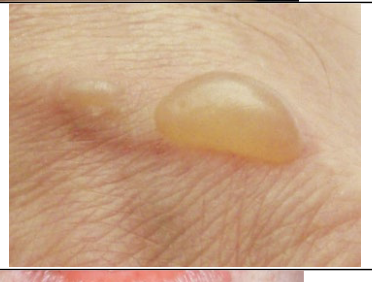
Bulla.
(Note:) A large blister filled with fluid.
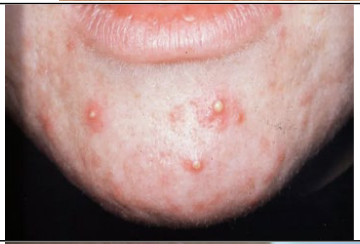
Pustule.
(Note:) A tiny bump filled with pus.
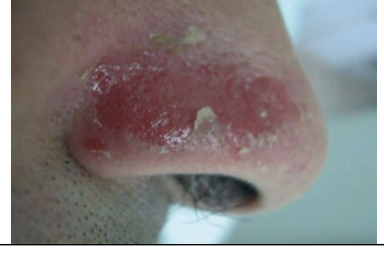
Erosion.
(Note:) A shallow spot where the skin surface is missing.