A.2.3 Energy Systems
 Call Kai
 Learn
Learn Practice Test
 Spaced Repetition
 Match
Match Flashcards
 Knowt Play
1/26

Earn XP
Description and Tags
Adapted from class notes.
Name | Mastery | Learn | Test | Matching | Spaced | Call with Kai |
|---|
No analytics yet
Send a link to your students to track their progress
27 Terms
Energy Systems - Introduction
Macronutrients help determine the amount of energy available
Carbs and lipids can be stored and are metabolized more slowly
Proteins are not stores, so they are metabolized quickly
Proteins, then carbs, then fats
Metabolized meaning broken into monomers to enter the blood
Nutrients in food not digested are excreted as faeces
Not all the energy in food is release during metabolism, e.g. urea and ammonia
Metabolism
Metabolism refers to all the reactions in the body that maintain life
Anabolism:
Reactions that build up
Consumes (or stores) energy
Excess glucose can be stores as glycogen
Catabolism:
Reactions that break down
Releases energy
Glucose metabolizing to produce carbon dioxide
Food > Catabolism (releases energy) ~~> Anabolism (requires energy)
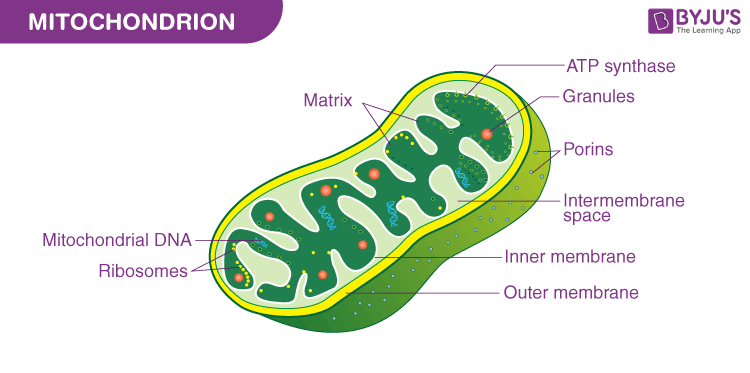
Mitochondria
Mitochondria are organelles present in eukaryotes (including animals, humans)
Found in high concentration/number in muscle cells
Produce most (not all) of the cells energy
REQUIRES oxygen
This is where the Krebs cycle and electron transport chain take place
ATP
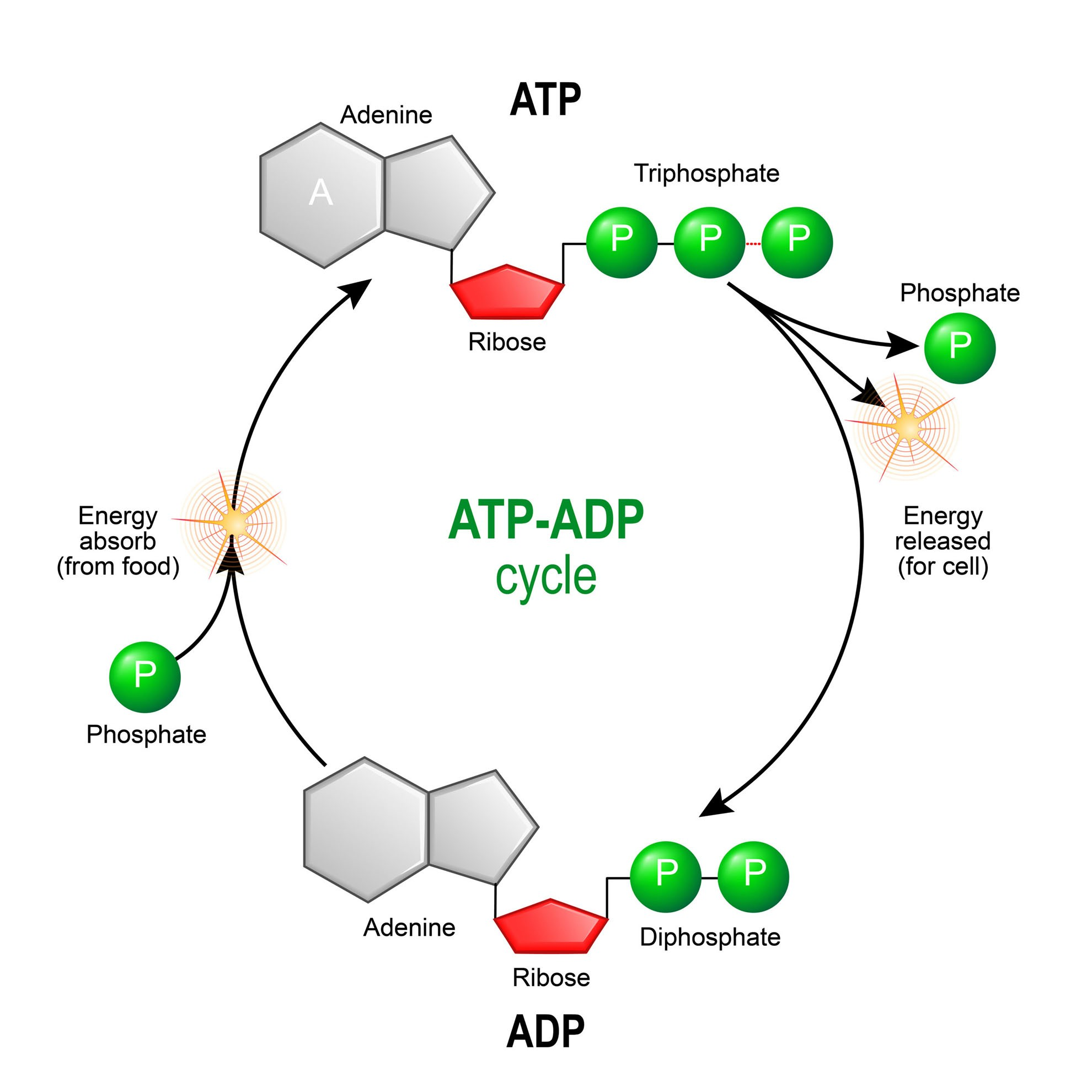
ATP, Adenosine Triphosphate
This is the cells energy carrying molecule, cellualr energy “currency”
Cell respiration - the controlled release of energy in the form of ATP through catabolism or organic molecules
When ATP is used, the third phosphate (P) group is broken off, and results in the net release of energy for use (such as during muscle contraction)
Phosphorylation is the process of adding a phosphate (ADP to ATP)
Muscle Contraction
The contractile force for muscle contractions requires ATP energy
Muscle cells use macronutrients to produce ATP
Muscles have enough ATP at any time to do about 2 seconds of work; longer than that needs some energy production through the energy systems
Carbohydrate Metabolism
Dietary carbs are first broken down into glucose, fructose, and galactose. Fructose and galactose are converted into glucose in the liver
Glucose is transported via blood to muscles (and other organs)
Reaction Summaries
Glycolysis: The breakdown of glucose into pyruvate
Glycogenesis: The use of glucose to make glycogen (when more glucose is eaten/present than is required)
Gluconeogenesis: The production of glucose from lactate
Glycogenolysis: The breakdown of glycogen into glucose (when there isn’t enough glucose in blood/muscle)
Lipolysis: The breakdown of triglycerides into glycerol and 3 fatty acids
Beta Oxidation: The breakdown of fatty acids from the methyl and into acetyl-CoA
Glycolysis (Glycolytic)
This happens in the cytoplasm of the cell (outside mitochondria)
This si the first stop in glucose breakdown
Splits glucose (C6H12O6) into 2 pyruvate (C3H9O6) molecules
Also makes 2 ATP!
Also converts NAD into NADH (which is used later)
Glycolysis - Lactate
If there is not enough oxygen present, an additional step of converting pyruvate into lactate (lactic acid) occurs
Anaerobic
This converts NADH back into NAD
The NAD allows glycolysis to continue
No additional energy is made converting pyruvate to lactate!
Aerobic (Oxidative) - Glucose
If oxygen is present, pyruvate does not turn into lactate
Pyruvate is converted into Acetyl-CoA (2 carbon atoms, so 1 CO2 is released here)
Each 1 glucose molecule generates 2 Acetyl-CoA molecules
Acetyl-CoA enters the Krebs Cycle
Aerobic (Oxidative) - Fatty Acids
If oxygen is present, and exercise intensity is faily low
Fatty acids have two carbon atoms from the end of the chain removed to generate a molecule of Acetyl-CoA
Fatty acids are variable length. 1 Acetyl-CoA are made for every two atoms of C in the fatty acid
Saturated fats are harder to metabolize
Aerobic (Oxidative) - Krebs Cycle
Acetyl-CoA feeds in to the Krebs cycle
Krebs ONLY HAPPENS IF THERE IS OXYGEN!!!!!
Oxygen is not a part of Krebs
Krebs generates NADH, which is a reactant of the electron transport chain
Krebs is where the majority of CO2 is made (2CO2 for energy Acetyl-CoA)
Makes small amount of ATP (1 per Acetyl-CoA)
Happens in the mitochondria matrix
Aerobic (Oxidative) - ETC (Electron Transport Chain)
The electron transport chain is the largest producer of ATP
Requires oxygen as a reactant
Also uses NADH/FADH2 as electron carriers
For every molecule of glucose, ~34 ATP made
Anaerobic - Phosphagen (Creatine Phosphate)
Creatine phosphate (PCr) is an energy storage molecule
During rest, ATP shifts a phosphate to creatine. This generates PCr and ADP
During periods of maximal intensity exercise and early exercise, PCr rapidly regenerates ATP
PCr is more stable than ATP, so can exist for a longer period of time than ATP
Up to 20 seconds of all-out (maximal) effort
Depletion of PCr means another energy system has to take over to continue exercise
Summary: Phosphogen
Aerobic or Anaerobic
Reactant(s)
Product(s)
Location
ATP: Reactant Ratio
ATP Per Glucose
Use
Other
Anaerobic
Creatine Phosphate
Creatine
Cytoplasm
1:1
N/A
maximal effort
Fastest producer of ATP; first to run out. Up to 205
Summary: Glycolysis
Aerobic or Anaerobic
Reactant(s)
Product(s)
Location
ATP: Reactant Ratio
ATP Per Glucose
Use
Other
Anaerobic
Glucose and NAD
Pyruvate and NADH
Cytoplasm
2:1
2
High intensity
fast producer of ATP; produces NADH for ETC
Summary: Lactate
Aerobic or Anaerobic
Reactant(s)
Product(s)
Location
ATP: Reactant Ratio
ATP Per Glucose
Use
Other
Anaerobic
Pyruvate and NADH
Lactate and NAD
Cytoplasm
0
0
High intensity
Follows glycolysis if no O2, allows glycolysis to continue. Can only sustain for about a minute
Summary: Beta Oxidation
Aerobic or Anaerobic
Reactant(s)
Product(s)
Location
ATP: Reactant Ratio
ATP Per Glucose
Use
Other
Aerobic
Fatty acids
Acetyl-CoA
Mitochondira
o
N/A
Low-moderate intensity
Fats carry lots of energy, large sotrage, difficult to deplete
Summary: Krebs
Aerobic or Anaerobic
Reactant(s)
Product(s)
Location
ATP: Reactant Ratio
ATP Per Glucose
Use
Other
Aerobic
Acetyl-CoA (from glycolysis or Beta Oxidation)
CO2 and NADH
Mitochondrial matrix
1:1
2
Low-moderate intensity
Only runs if O2, ETC uses products
Summary: ETC
Aerobic or Anaerobic
Reactant(s)
Product(s)
Location
ATP: Reactant Ratio
ATP Per Glucose
Use
Other
Aerobic
O2 and NADH
H2O and NAD
Mitchondrial invermembrane
~6:1
36
Low-moderate intensity
Uses up products of Krebs and glycolysis
Aerobic vs. Anaerbic Intensity
Aerobic is main energy systems at low and rest intensity
As intensity increases, fats stop being used first
Anaerobic takes over more as intensity increases to high/maximal
Phosphogen is main energy source in maximal
No fatty acids above 90% effort
Hormonal Regulation - Insulin
Eating leads to rise in blood sugar
High blood sugar causes pancreas to release insulin
Insulin helps to transport sugar into cells (nucleic and liver)
Insulin causes GLUT4 to transport glucose into cell
Stimulates: Glycogenesis, glycolysis
Inhibits: Glyconeogenesis, glycogenolysis, lipolysis
Hormone Regulation - Glucagon
When blood sigar is low (fasting or after exercise), pancreas secretes glucagon
Glucagon works like the opposite of insulin
Stimulates: Glycogenolysis (makes glucose), lipolysis, epinephrine release
Epinephrine (during exercise) works similarly to glucagon. Glucagon mainly works on liver, epinephrine on muscles
Hormone Regulation - Exercise
During exercise, muscle contraction carries GLUT4 to let glucose into cell without the need for insulin
Exercise lowers insulin concentration, can also increase insulin sensitivity
Maximal Oxygen Consumption (VO2max)
VO2max is the maximum rate O2 is taken in and used
High VO2max = high cardiovascular function
Absolute and Relative VO2max
Absolute = Liters O2 per minute
Relative = mL per minute per kg
Relative is more important when the person’s weight matters (e.g. if they have to move themselves)
Lighter body weight translates to higher relative VO2 max
Males typically are higher relative VO2max than female
Highestn found in cross country skiers at around 90mLkg-1min-1
Untrained health is 40-45 (male) or 35-40 (female)
Higher relative means being able to run faster for longer
Contributing factors to difference between males and females:
Cardiac output (smaller heart size in females)
Blood volume
Haemoglobin concentration
Lung capacity
Body composition (males have lower body fat on average)
VO2max decreases with age (about 1% per year)
Training and VO2max
Central adapatations (of the cardiovascular system)
Stroke volume increases with training
Left ventricles hypertrophy
Peripheral adaptations (of the muscle)
Increased capillary density
Increased ability for muscles to capture oxygen
More muscle use activities induces high trained VO2max (cross country skiing > running > cycling)
Running Economy (RE) - the VO2 at a given running velocity
good RE use less O2 at a given speed