3. National Minimum and Maximum Wage
 Call Kai
 Learn
Learn Practice Test
 Spaced Repetition
 Match
Match Flashcards
 Knowt Play
1/16

There's no tags or description
Looks like no tags are added yet.
Name | Mastery | Learn | Test | Matching | Spaced | Call with Kai |
|---|
No analytics yet
Send a link to your students to track their progress
17 Terms
Define absolute poverty.
When income levels are so low that it threatens survival from basic human needs not being met for food, shelter, etc.
Define relative poverty.
Low income as compared to others in society.
What is one impact of relative poverty?
Increased inequality.
Define national minimum wage.
A price floor on hourly pay set by the government.
Give 5 advantages of national minimum wage.
1. Helps those on low incomes.
2. Reduce relative poverty.
3. Moral boost to workers = higher productivity?
4. Greater rewards for working hard = reduced unemployment?
5. Tax revenue may be higher if it increases.
Give 6 disadvantages of national minimum wage.
1. Rising costs for firms.
2. Increased unemployment.
3. Lower competitiveness against overseas firms.
4. Many poorest people in UK are not in work, e.g. elderly, disabled. It will not help them.
5. Firms cannot pay workers at a higher level than their MRP.
6. Restricts firms from making more profit, growing faster, and hiring more workers.
What 5 things does the national minimum wage aim to do?
1. Stop exploitation through low wages.
2. Ensure an equal distribution of income.
3. Encourages people to work rather than claim benefits. (work = rewarding)
4. Improves replacement ratio (may reduce unemployment).
5. Improves participation ratio - (good for economy, increases labour supply).
Define replacement ratio.
The proportion of an individuals income that is replaced by a pension or welfare benefits when they are not working.
Define participation ratio.
The percentage of the working-age population that is either employed or actively seeking work.
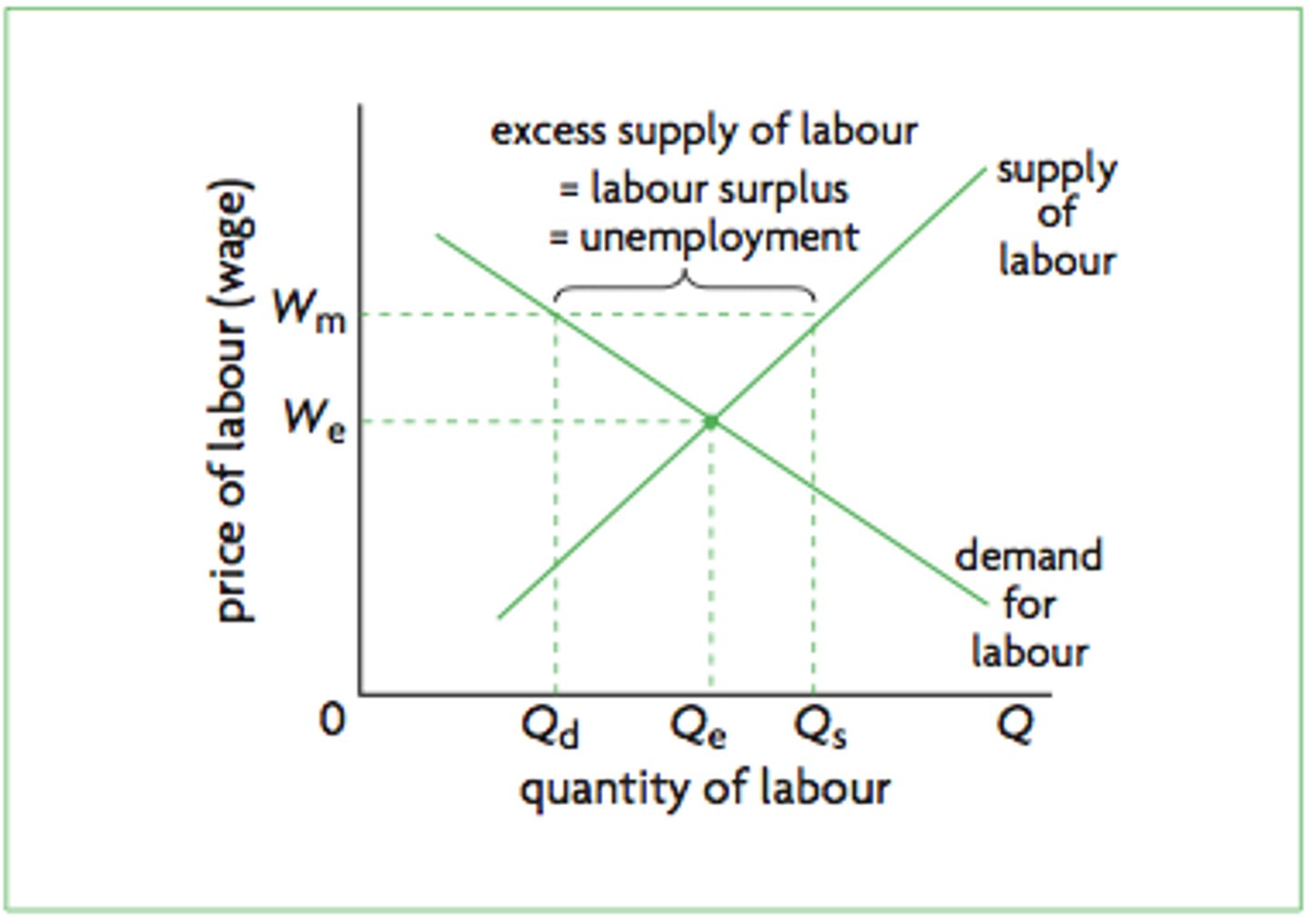
Draw a diagram to show how national minimum wage may increase unemployment.
- Not in equilibrium.
- Qd labour demanded.
- Qs labour supplied.
Draw a diagram to show how national minimum wage may reduce unemployment.
Explain how national minimum wage may reduce unemployment.
1. Workers have more income.
2. Levels of disposable income increase.
3. Consumption and aggregate demand rise.
4. Demand for labour is derived to rise with aggregate demand.
5. Demand curve shifts right.
6. Employment levels rise.
What 8 things does the effectiveness of minimum wage depend on?
1. How much + how often it is increasing by.
2. Inflation.
3. If people in poverty and employed or not.
4. Regions. e.g. London vs Newcastle.
5. How many people are paid it.
6. Age of recipients. e.g. older workers have more responsibilities.
7. Types of firms in the country. e.g. high vs low skilled jobs? can the firms increase prices?
8. Elasticity of demand for labour (many jobs are elastic).
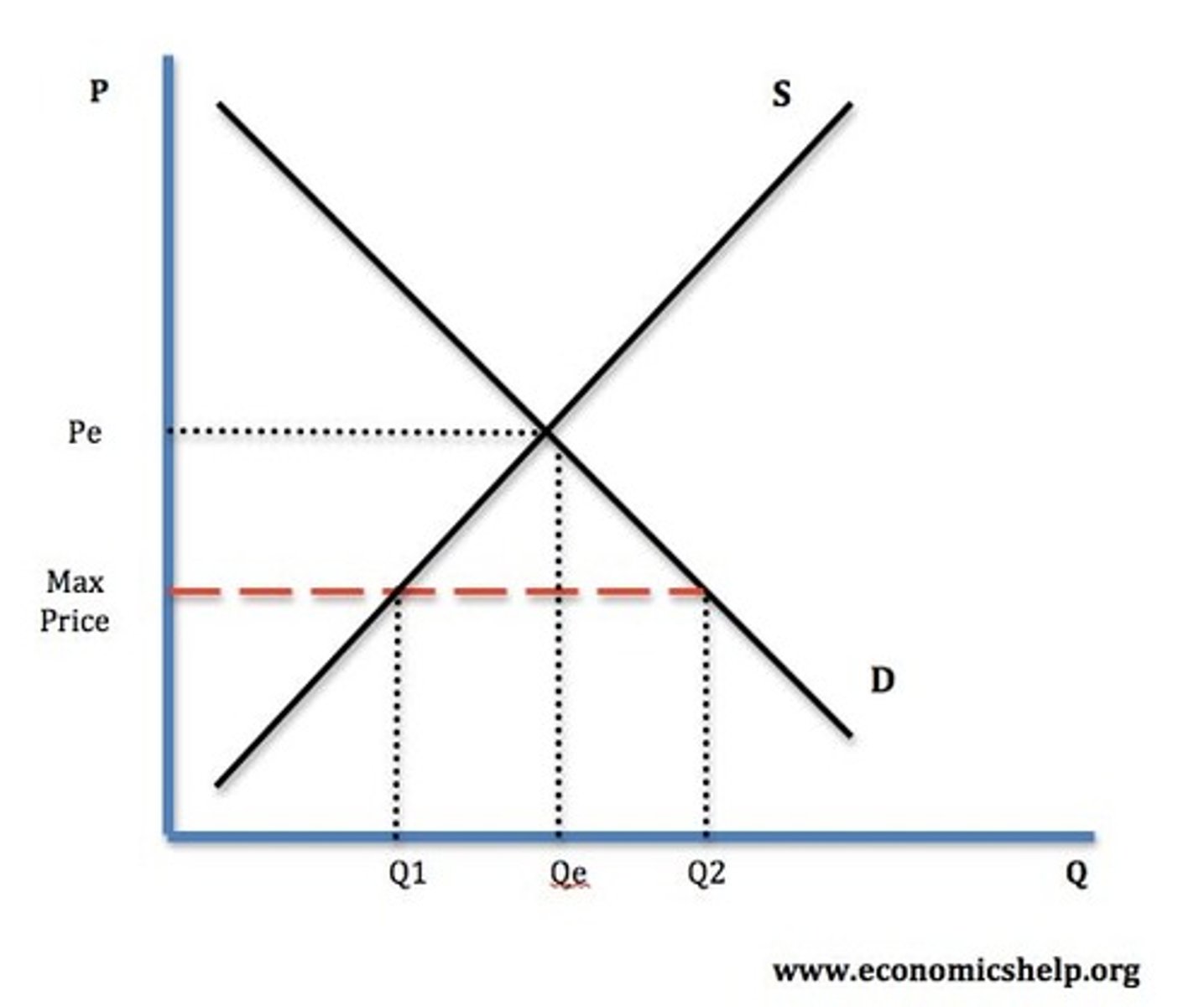
Define maximum wage.
A price ceiling set on the highest amount of earnings allowed in certain jobs or industries.
Give 6 advantages of maximum wage.
1. Reduces excessive pay.
2. Reduces unfairness + inequality.
3. Reduces costs for firms.
4. Firms may reinvest money saved or reduce prices. (good for consumer)
5. Firms may use savings to increase the wages of other workers.
6. Public sector workers have Max wages due to pay bands.
Give 6 disadvantages of maximum wage.
1. 'Brain drain' - Talent/ skills move abroad.
2. Creates a shortage of labour.
3. Complex to administer - what will max be, who decides, which industries?
4. Only effects small number of people.
5. Government and information failure arguments.
6. May be better to adjust tax bands.
Draw a diagram to show maximum wages.